A Chabad Heart on the Ukrainian Front
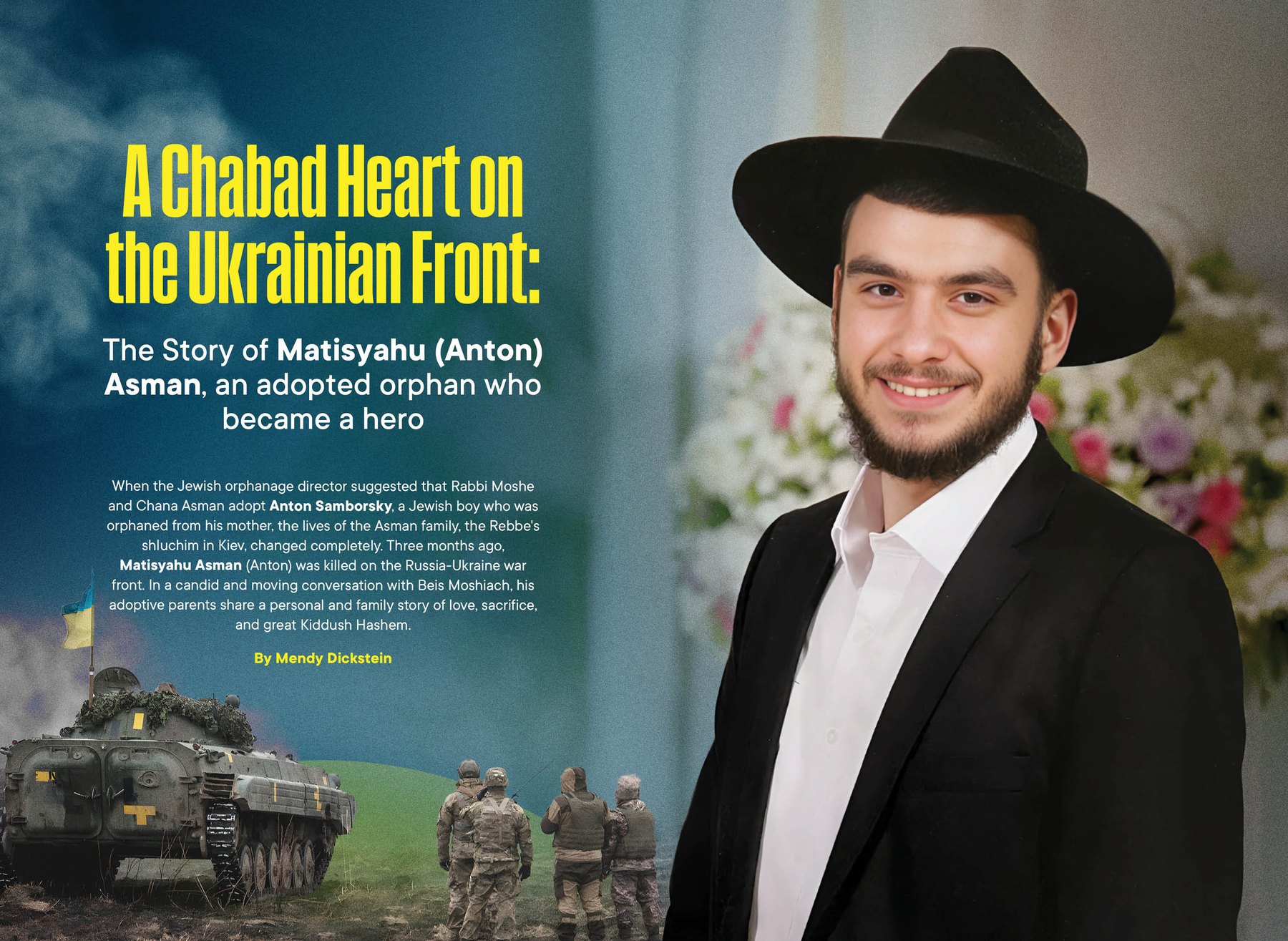
When the Jewish orphanage director suggested that Rabbi Moshe and Chana Asman adopt Anton Samborsky, a Jewish boy who was orphaned from his mother, the lives of the Asman family, the Rebbe’s shluchim in Kiev, changed completely. Three months ago, Matisyahu Asman (Anton) was killed on the Russia-Ukraine war front. In a candid and moving conversation with Beis Moshiach, his adoptive parents share a personal and family story of love, sacrifice, and great Kiddush Hashem.
Sadly, Matisyahu (Anton) Samborsky, the adopted son of Rabbi Moshe Asman of Ukraine, was killed while serving in the Ukrainian army. In a phone interview, Rabbi and Mrs. Asman share the moving family story behind the headlines.
Catching Rabbi Asman for a conversation isn’t easy. The war in Ukraine, which has been going for two and a half years now, depletes him of emotional and physical resources. His role as shliach and chief rabbi were enough to fill his daily schedule even before the war. Nevertheless, I managed to speak to him.
First, on the part of our readers, I want to console you for this painful loss. Perhaps we can start at the beginning. How did Matisyahu come to join your family?
“It was in 5762, 22 years ago, when a ten-and-a-half year old boy was brought to us by the administrator of an orphanage, a warmhearted Jewish woman. She told us that the Jewish mother of the boy had died.
“When we saw Anton, as he was called then, he was a pathetic, small boy who was afraid of everything. My wife and I pitied him and decided to adopt him; otherwise, we were afraid he would be lost.”
Rabbi Asman’s voice trembles slightly as he recalls the first time he met the boy who would become his son. In his voice, one hears the love and concern that filled his heart during those fateful days when a little, frightened Jewish boy found a new home.
Thus began a moving journey that lasted many years, a journey that led to a story of heroism and mesirus nefesh which moved the Jewish community of Ukraine.
What were the first days like, having Matisyahu in his new family?
“At first, it was challenging, of course, but over time, we saw how he blossomed with us. He was a good, sweet child, quiet but happy. He attended our school and he received a full Chabad chinuch.”
One can only imagine the feelings of the young child who for years did not know what a loving family is and who suddenly was surrounded by warmth and love and was learning about his Jewish heritage.
Life Challenge
Since Rabbi Asman was busy with communal needs up to his neck, the one who put the most into raising Matisyahu was his wife. Mrs. Asman agreed to speak to me though she was hesitant about doing so.
The truth is, this wasn’t planned; it was more like being swept up in something. At that time, our life was difficult. Our youngest daughter, who was six, struggled with severe asthma. I spent entire nights awake at her side, listening to her every breath, afraid that the next breath wouldn’t come.
Then one day, my husband called. “There is a boy,” he said, “a Jewish boy whose mother died and if we don’t take him, he will go to a state orphanage.” I understood what he was saying and felt torn. On the one hand, how could I take the responsibility when we were barely managing as it is? On the other hand, how I could refuse?
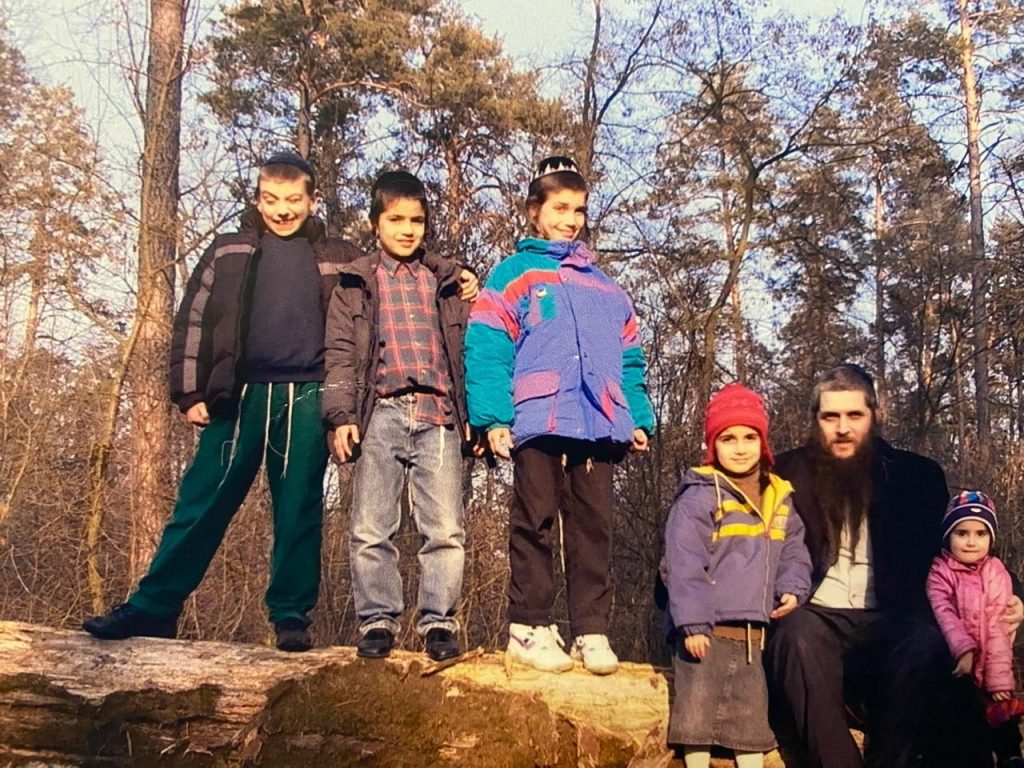
The decisive moment was when our older children, 14 and 12 and a half came to me and said with shining eyes, “Ima, let’s take him. We will help you.” I saw the compassion and desire to do the right thing in their eyes and could not refuse.
I realized that it wasn’t just about taking a child into our home; it was about teaching our children what real Ahavas Yisrael is and what is unconditional giving. That is when I understood that it wasn’t only Matisyahu who needed us; we needed him.
Were you concerned about his health or emotional problems?
It’s kind of funny when I think about it now. I was so naive, so sure everything would be fine, that I didn’t check out his situation. I didn’t ask anything about him. I just opened my heart and my home. Life taught me a difficult lesson.
One day, Matisyahu returned from school after a routine tuberculosis exam. When I saw the averse reaction at the site of the test, I felt the world collapsing. Suddenly, all the fears and all the things I hadn’t thought about, came over me.
We ran to doctors, did tests and spent long nights full of worry. I also had my other children tested in fear I may have inadvertently endangered them. From this situation I learned something important, that love is not always enough and you also need responsibility and caution. I also learned that when there is love, it is possible to overcome every fear and challenge.
Boruch Hashem, it all worked out in the end, but those moments, the fear, taught me to appreciate every moment and every breath. This turned me into a better mother, not just for Matisyahu but for all my children.
How did you handle the initial challenges of including a new child in the family?
It was like learning a new language; the language of the heart. At first, every day was a challenge. He came to us with so much pain and fear. I remember how I would find food hidden under his pillow. Every time I saw this, my heart broke. I understood how deep was his fear that tomorrow he might not have what to eat.
There were definitely many frustrating moments like when I would ask him to bring a plate and he would only bring for himself. At first I would get angry but then I realized that this is what he learned in life, to first take care of himself. But really, every challenge like that was an opportunity for me to teach him what a family is and what unconditional love is. Every time he hid food, I would sit with him, hug him and promise him there would always be food to eat. Every time he thought only of himself, we gently taught him what it means to think about others.
Slowly, we saw the changes in him. We saw how the fear in his eyes was exchanged for confidence, how he learned to give and not just take. It was like seeing a flower opening slowly, carefully, and so beautifully.
How did the adoption affect your family dynamics?
When Matisyahu came to us, it was like adding a new color to the family palette. At first, I was very nervous about how he would fit in but he fit in so quickly as though he was always there. The family dynamics just continued to work; it was like a small stream that joins a big river. It changes the current a bit, but doesn’t stop it. It wasn’t always easy, but it was natural.
Our young children were faithful to their promise and they simply accepted him. To them, he was another brother. Even now, after he was killed, they ask, “What, he wasn’t our brother?” It breaks my heart but also fills me with pride because it tells me that we did something right. We truly created a family.
How did Matisyahu do as far as religion which was foreign to him?
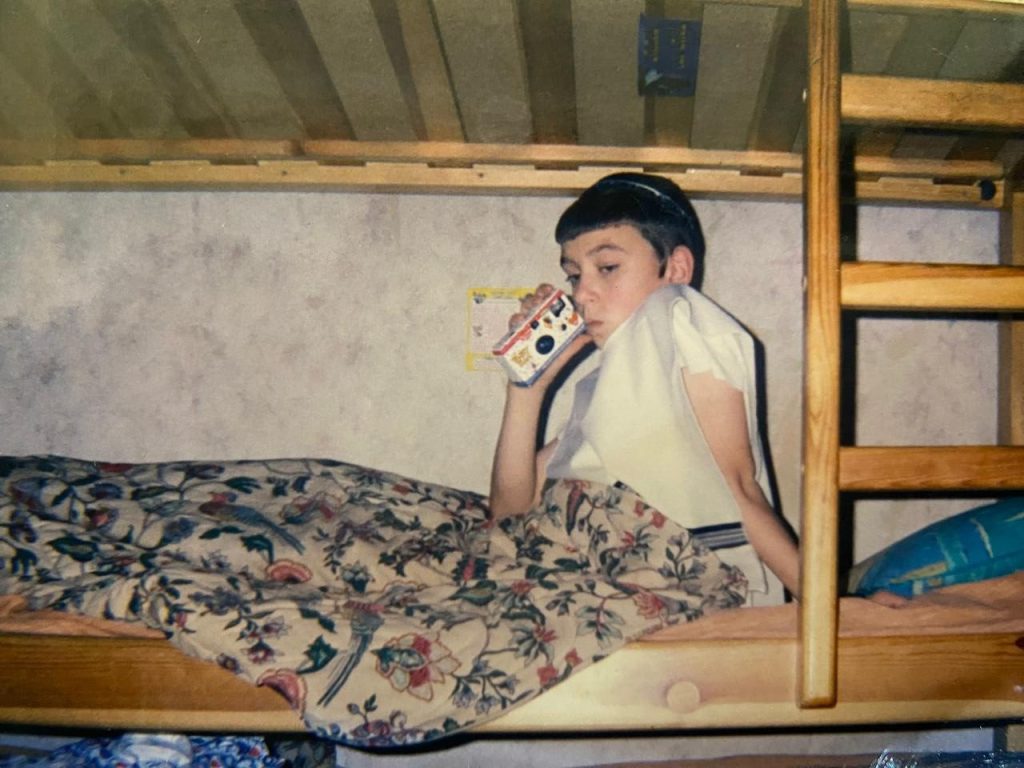
When Matisyahu came to us, one thing was clear to me; he wasn’t just some boy that we were raising. He was our son, period. As our son, we wanted him to experience all the richness and beauty of Jewish life as we lived it. We included him in everything. When the other boys went to cheder, he went too. When they went to yeshiva, he went too. We didn’t differentiate. We didn’t let him feel different for even a moment.
When did I realized how deeply he had integrated? It was his first Seder night. When we got to Ma Nishtana, Matisyahu got up confidently and asked the questions. I saw his eyes sparkle and the pride in his tone. That’s when I knew that he wasn’t just learning tradition but was also living and breathing it.
There were also challenging times, of course. Sometimes it was hard for him to understand why we did certain things. When this happened, we would sit down and explain and answer his questions. We saw his curiosity grow and his love for Yiddishkeit becoming deeper. In hindsight I can say that Matisyahu taught us no less than we taught him. He taught us to appreciate anew every mitzva and minhag. Through his eyes we saw the beauty of our tradition. The tremendous investment was definitely worth it.
I imagine that when he grew up and began looking into his past, questions about his identity and where he belonged came up.
Questions of identity were a tough part of this journey. Matisyahu was always among Jews, it’s true, but identity? That’s something deeper, something that grows from within.
There were times that he was close to us and times he was distant, but the bond with Yiddishkeit never left him. It was like a thread that kept him always connected even when he tried to distance himself.
I remember the time when he reached the stage of wanting to search for his roots. It was very painful and I felt like someone was plucking a piece from my heart. But I realized that this is part of his journey. It was like seeing a bird that you raised, flying from the nest. I must admit it was frightening and painful but also full of hope.
I learned that when you adopt a child, you need to be ready for this and understand that one day he is likely to want to find himself and his roots, and this is perfectly fine. In the end, all this searching only strengthened his bond with us because he always returned and found the path back to us, to Yiddishkeit. This was the most important lesson for me and for him.
What are the main lessons you learned from adopting and raising an orphan?
Each day with Matisyahu was a shiur onto itself, a lesson in love, in patience, and a lesson in halacha and understanding, but if I have to choose the main lessons, they are:
First, I learned that love is not enough; you also need deep understanding, endless patience, and willingness to accept a child as he is, with all the difficulties and challenges.
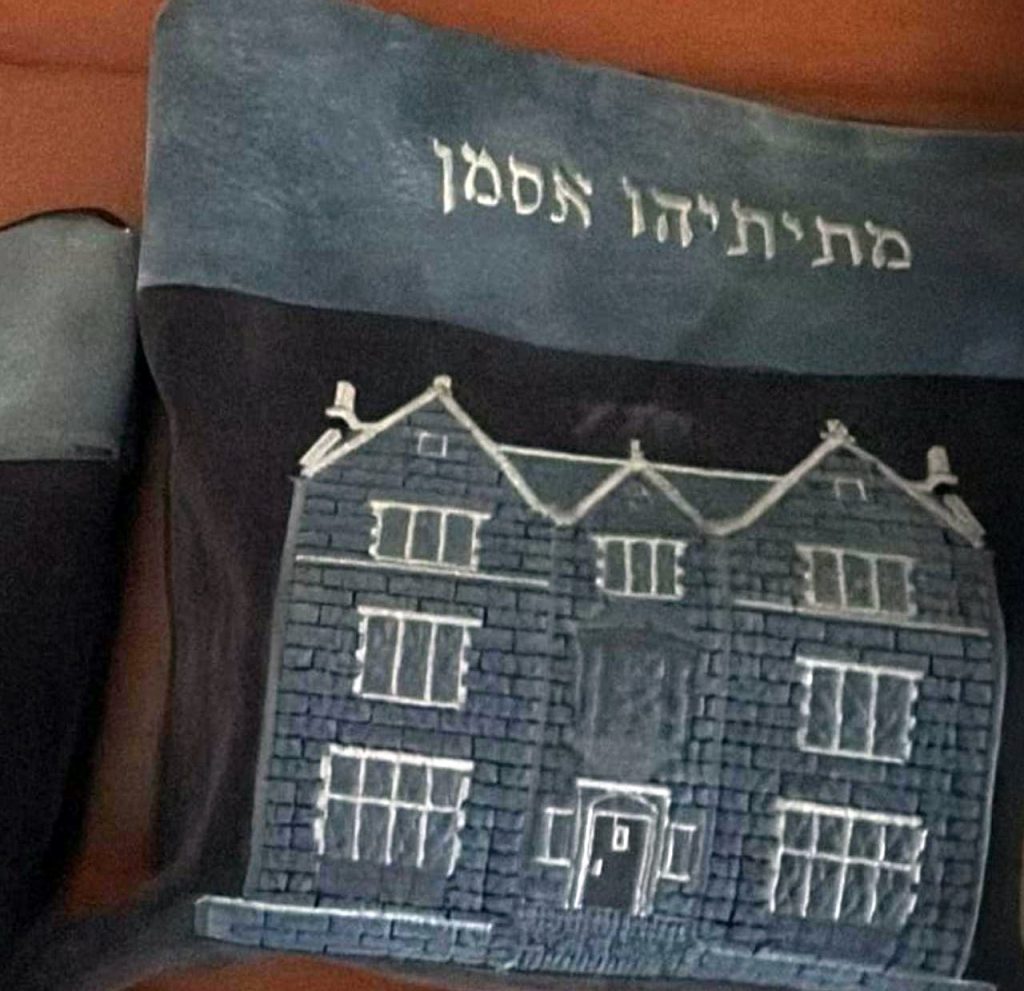
I also learned that it’s important to give an adopted child roots but also wings, to make him feel he belongs but also enable him to search for himself. This was a daily struggle, keeping him close but not choking him.
I learned that sometimes it’s the little things that are the most important. It taught me that sometimes, what a child needs is simply to feel loved, protected, that he belongs. There is nothing like seeing a boy like Matisyahu grow up, develop, become a good person; there is nothing more satisfying in the world.
Test of Loyalty and Love
During the adoption process, the Asmans underwent a tremendously difficult time.
When Matisyahu was fourteen, something happened that shook us all up. His grandmother, who was a distant figure but present in his life, would occasionally send him presents through a friend. I always felt somewhat frustrated because the presents weren’t always what Matisyahu really needed. It was like an attempt to bridge a gap that couldn’t really be bridged with gifts.
One day, everything changed. His grandmother called and in a firm voice she announced that she wanted a Ukrainian woman to adopt Matisyahu and take him with her to America. It felt like someone was trying to rip out part of my heart. Matisyahu was already our son, an inseparable part of our family, and obviously, I refused.
What happened next was like something out of a suspense film. The grandmother submitted a criminal complaint against us, accusing us of forcibly holding on to the boy! We suddenly found ourselves in the police station, facing interrogators, trying to explain our love and concern for Matisyahu.
The interrogation was a surreal experience. The policemen asked Matisyahu about his life with us, about yeshiva, about his activities. When Matisyahu described his day, limudei kodesh and limudei chol, swimming, bowling, skiing, I saw the surprise in their eyes. They didn’t expect to hear about such a full, rich life.
Then came the moment that broke my heart. It was the first time that I heard the full story of Matisyahu’s past, about his mother, who apparently contended with emotional difficulties, who lived with him in abandoned train cars. About the fierce cold, the constant lack of food, and about his mother who died because of all these difficult circumstances. I suddenly understood the wounds Matisyahu bore, the pain that hid behind his smile. I was stunned. I had never asked him about his past.
Why?
Because I wanted to focus on the future, his new life with us, and less on old wounds. But at that moment I realized how important it was to acknowledge and understand his past.
The policeman who interrogated us was amazingly humane. I saw tears in his eyes when he heard the story, and when the grandmother came with the authorities, yelling and accusing, he stood by us. He saw the love, the concern, the good life we had given Matisyahu.
The critical moment was when the policeman asked Matisyahu where he wanted to be. My heart was pounding. Then, unhesitatingly, he said, “I want to be with my father and mother.” At that moment, I felt that the whole struggle, all the worry, all the love that we had invested, was all worth it.
It was an enormous challenge! It was a moment that tested everything we had built together, but in the end, it only strengthened our connection. We more deeply understood the meaning of being a family, the power of love to overcome every obstacle. Matisyahu wasn’t just a child that we raised; he was, and will always be, in inseparable part of our hearts. It taught me that sometimes, the love that we give and the home we provide, are stronger than any blood connection or legal document.
‘chabadnik’ on His Military Dog-tag
When the Russia-Ukraine war broke out, Matisyahu was a young man, newly married and father of a newborn.
How did he end up in the army?
Rabbi Asman explained, “Matisyahu was drafted in Iyar. A week or two before he was drafted, his daughter was born. He tried to defer his service by two weeks but it was already too late.”
The contrast between the joy of being married and having a child and the tough reality of the war, underscores the tragedy of this painful story. Matisyahu, like many young people in Ukraine, had to leave his young family in order to defend his country.
Rabbi Asman:
When Matisyahu went to the army, he chose ‘Chabadnik’ for his personal dog-tag. I didn’t publicize this in fear that the Russians would see it and take revenge on Jews or Chabadnikim, but it shows how proud he was of his Jewish and Lubavitch identity.
Great Sorrow
After a month and a half of training, Matisyahu was sent to the most dangerous area, the eastern front, near Pokrovsk, close to Donetsk.
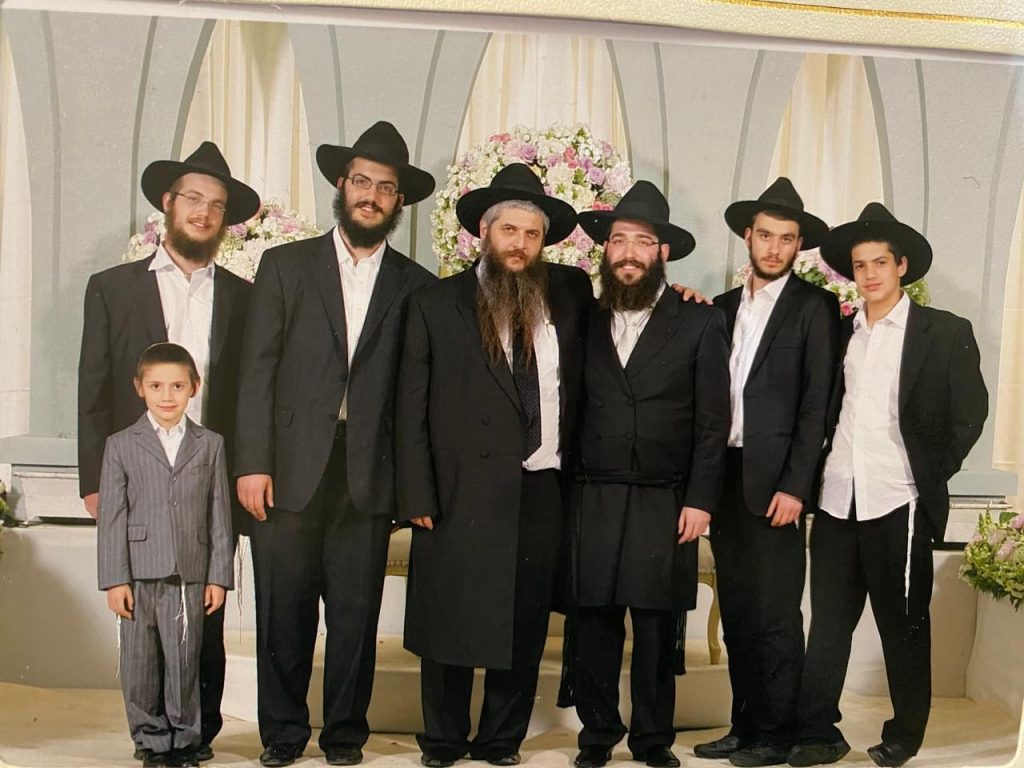
“On 11 Tammuz, there was a major attack by the Russians,” said Rabbi Asman. “The commander said that Matisyahu was killed by a mortar.”
The silence on the phone tells me of the deep pain Rabbi Asman is still feeling.
“Because of the fierce fighting, they were unable to get his body out for a month. Finally, they were able to bring him to the hospital in Dnieper. My son, Yoel, went there with Matisyahu’s wife to identify him. The next day, he had a Jewish burial in the cemetery in Kyiv along with a military ceremony. Numerous people attended the funeral including those who did not know him personally; his story touched them.”
The stress over the need to bury Matisyahu and the dangers due to war, convey the complicated situation which Ukraine is in.
How did Matisyahu’s death affect the Jewish community in Ukraine?
Many were saddened. Millions of people saw the story on Ukrainian television and it made a great kiddush Hashem. It showed the world that Jews defend Ukraine and are ready to give their lives for it, which countered prior opinions held by many Ukrainians.
How are you dealing with this personal loss?
It’s very hard, but we continue with life. We can’t go back to what was; we want to memorialize him. We are planning on putting up a building in his memory in Anatevka, a village that we established outside of Kyiv, to serve as a shelter for refugees and needy people. I think this is the right way to perpetuate the chessed ingrained in him.
What advice can you give families that are considering adopting orphans?
Mrs. Asman: After everything we went through with Matisyahu, I feel that I have so much to share. First, do it. If you can save a Jewish child, give him a home, a family, identity, do it. It’s not always easy but it’s always worth it.
However, and this is a big ‘however,’ be ready for challenges, tough times, and complicated questions about identity. Be ready for a child who might search for himself and his roots. It’s natural, it’s normal, and part of the process.
Another important thing, don’t forget the practical end of things. Check out the legal aspects, the child’s health. We learned this the hard way; it’s important.
Most importantly, give love. Unconditional love. Because in the end, this is what will make the difference; this is what will give the child the strength to deal with his past and build a new future.
Finally, remember, you are not only giving this child a home; you are giving your family a gift!
What gift?
A gift of love, of learning, of growing, because every such child is a world. He can enrich your lives in ways you cannot imagine.
General Shlichus and Family Shlichus
The conversation with Rabbi Asman wasn’t easy. As mentioned, he is a public figure and his proud Jewish persona is known not only to hundreds of thousands of Jews in Ukraine but to millions of people who have seen him in the media.
How is the war affecting daily life of the Jews of your city?
“The situation is very difficult. In Kyiv, for example, there are missile and Iranian drone attacks every day. In eastern cities like Charkov, the situation is worse. We deal with problems with the electricity, water and infrastructure. Our community works hard to provide basic needs like food, medication and places to shelter. We also look after Jewish soldiers in the army and provide them with kosher food and religious needs.”
Despite hardships, the community has been displaying unusual strength and unity. People aren’t just concerned for themselves; they also lend a hand to those in need.
Is there a change in the number of Jews who are leaving Ukraine since the beginning of the war?
There is no change. Whoever wanted to leave, left already at the start of the war. Remember, men who are 18-60 are not allowed to leave the country, so many families choose to stay together. Ukrainian Jews, like other citizens, are continuing to live here despite the difficulties.
How are you and the community’s leadership helping Jewish soldiers who are serving in the army?
I have an assistant, R’ Dovid Millman, who was recently appointed as chief rabbi of the army, an army major who serves as chaplain of the army. He deals with many Jewish soldiers. We arranged with the army to supply kosher food to all Jewish soldiers, wherever they are. We also send them religious items and everything they need from a religious standpoint. This is an outstanding example of how Jewish identity and Ukrainian patriotism go hand in hand.
What message do you convey to the community at this time of crisis and loss?
“I explain to people that what is happening in Ukraine is connected with what is happening in Eretz Yisrael; they are the same enemies: Russia, Iran and all their partners. I stress that we are in the era of the Geula and that with our spiritual strength in prayer, Torah study, and acts of kindness, we can decide the battle and bring Moshiach. True, there are crises and very difficult moments, but I palpably sense how the Rebbe is giving us the kochos to go on and even intensify the avodas ha’shlichus. I believe that soon, the vision of Geula, ‘and they will grind their swords into plowshares … and they will study war no more,’ will be fulfilled.”
The story of Matisyahu is testimony to the ability to find meaning even with the greatest pain and to carry on with the Rebbe’s shlichus to prepare one’s city and the entire world to welcome Moshiach.
Mrs. Asman: This nisayon with Matisyahu and all the difficult and sweet moments, all the challenges and joy, shaped us as a family. They taught us what true love is, what devotion is, and what a family really is. Even if the end is tragic, I know that every moment was worth it. Matisyahu was and will always be an inseparable part of our heart and our family story.
Beis Moshiach #1437 • pp. 26-35
© 2026 Beis Moshiach Magazine. All rights reserved.
This article originally appeared in Beis Moshiach #1437. You are welcome to share it with friends and family by email or in print, provided that you do not change, add to or omit any part of it, you credit the author and Beis Moshiach, and you include a link to archive.bmoshiach.org (written out in full in printed copies).
To republish this article in a newspaper, magazine, book or website, please request permission in advance at [email protected].