Singing The Baal Shem Tov’s Song
Einav Ben-Dakon is a popular singer-songwriter, as well as an actress and artist too. Her last concert was on a nascent settlement bordering Gaza. It wasn’t easy getting there in wartime from her home in Rechovot. But she wanted to give chizuk through her music to the courageous women protecting our borders by being there.
A Musical Family
“I grew up in a family that treasured Jewish traditions,” Einav opens our interview. “Although we weren’t ‘observant,’ my father ob”m and tblchtv”a my mother are both from families with strong religious roots in their countries of origin, Libya and Yemen, respectively. Their lives were Torah, tefilla and avodas Hashem, nothing else. Sadly, upon immigrating to Eretz Yisrael, they faced a culture clash with the secular establishment. Yet my parents still had a powerful dose of ruchniyus from their childhood, and it permeated our home nevertheless.
“My mother’s choice of storybooks for me was tales of tzaddikim. I was fascinated by them as a child, and still am, especially with stories of the Baal Shem Tov. They gave me strength that accompanies me until this very day. Decades have passed, and besides still having these storybooks on my bookshelf, I’m very passionate about spreading these tales with others.
“Musical talent runs in my family. My father, who had learned in cheder in Yemen, knew Tehillim by heart, and would sing them with a soul-stirring melody. My mother loves to sing, and as a child I’d hear her singing in the living room, in the kitchen, wherever she was. She also knows how to play the darbuka. My older brother Yigal was a famous singer in his youth, and one of his songs won a national prize. Then he became a welder, which was my father’s trade too, specializing in weaving delicate threads of gold and silver into magnificent handicrafts. Artists are never limited to one area. My sister Ronit also has a musical soul, and tells me that the melodies she heard as a child are her favorite tunes. Music uplifted the atmosphere of my childhood home.
“I always had an extremely close bond with my two brothers, Zohar and Noam,” Einav continues, and her face brightens even more as she speaks about them. “My brother Zohar Dovid and his wife Bracha are shluchim of the Rebbe in Rishikesh, a city in Northern India. It’s a popular spot for Israeli backpackers who are searching for true ruchniyus, even though they may not know it… Since Zohar himself had once been in these kinds of places, he understands and is able to relate to the youth in a deep way. On special occasions Zohar, who has been composing and singing from a very early age, inspires everyone in his Beit Chabad with his music.
“My brother Rabbi Noam Dovid, and his wife Mili, are shluchim of the Rebbe in Kfar Hanagid. He also teaches in the Talmud Torah Chabad. Noam has a magnificent voice and was once the lead singer in a popular band. Zohar was the first one of the three of us to become a baal teshuva and a Lubavitcher. He relentlessly kept sharing his new treasure of Chassidus with us, until Noam, and then myself, followed in his path. Zohar and Noam produce discs of their original songs and melodies based on Chabad Chassidus.” I love listening to their music! It elevates my neshama in a very profound way.
Disillusionment and Discovery
“For as long as I can remember I’ve been filling up notebooks with my original songs,” Einav shares. “I studied drama and in fifth grade began acting in plays. When I was fourteen my teacher heard me sing and, to my surprise, decided to give me a leading role singing in the school play. Dressed up in a glittery gown, with my long tresses of brown curls, I gave a great show.
“When I was in the IDF I served as a teacher in the school system. But once my fellow female soldiers discovered that I’m a singer they asked me to give concerts for them. Seeing how happy my music made them intensified my ambition as a singer.
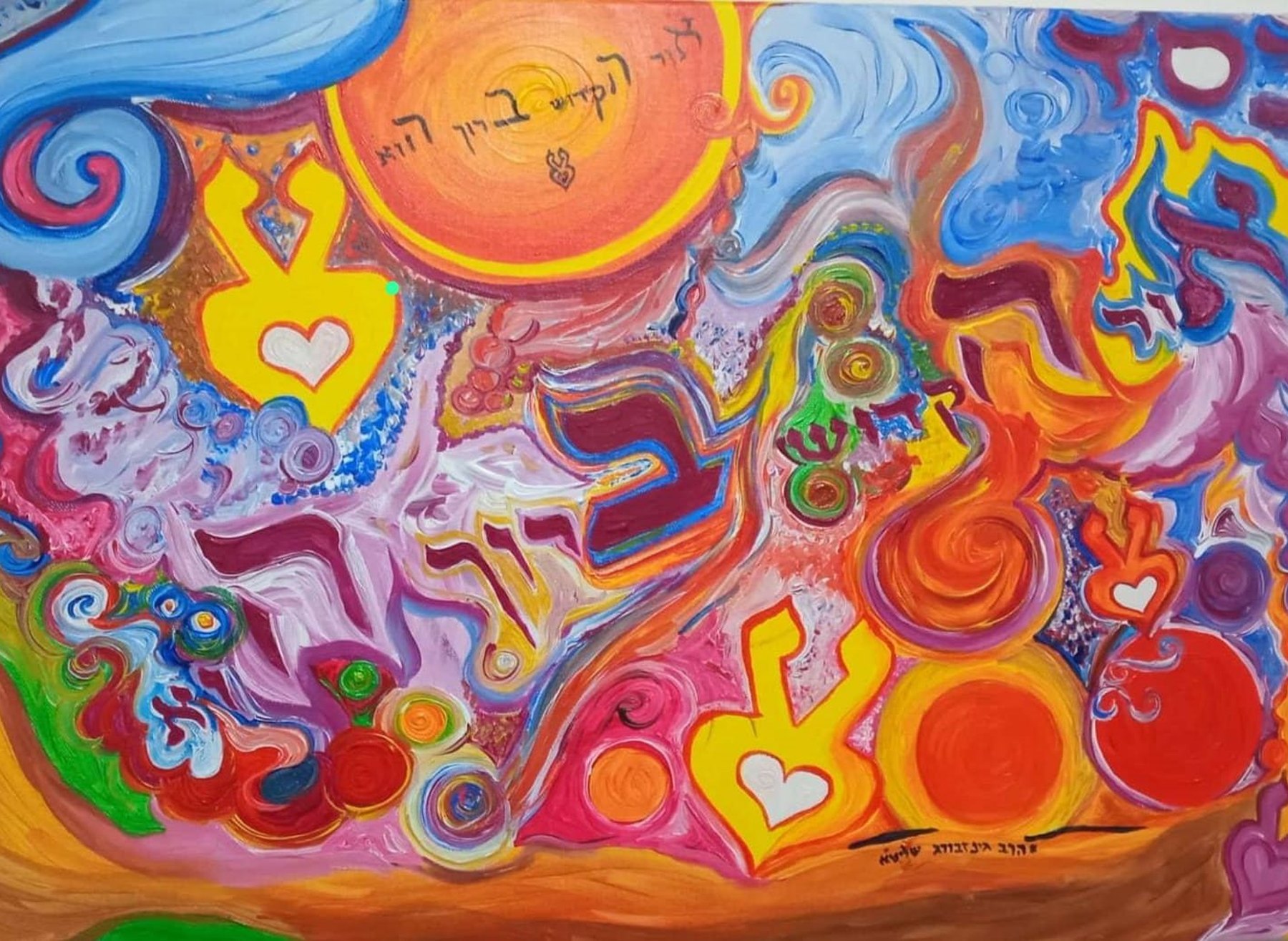
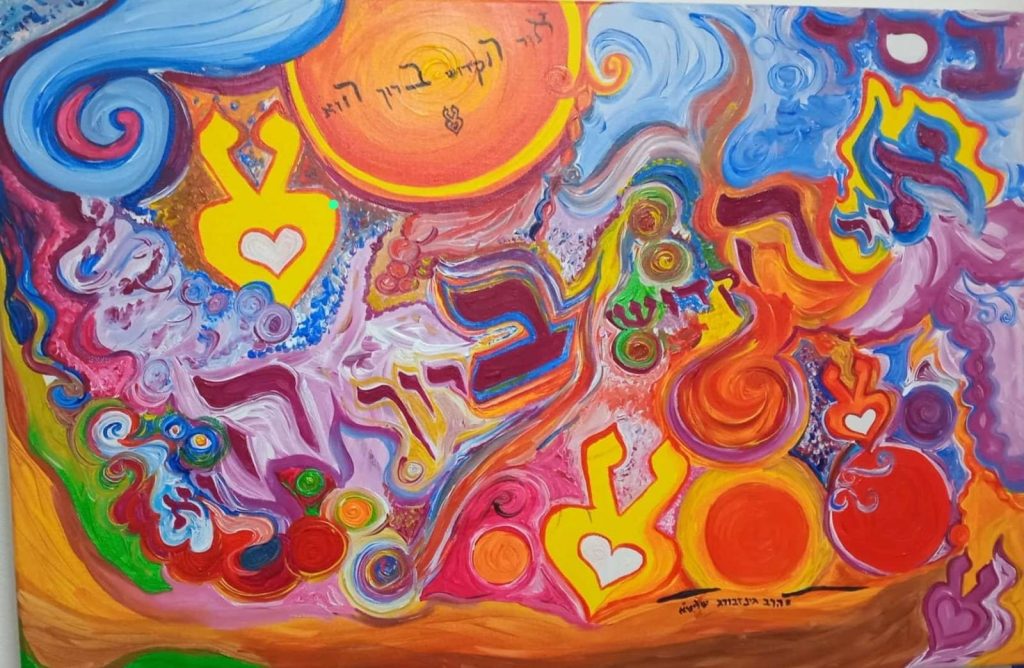
“After my army service I was living in a very bohemian neighborhood in Tel Aviv, and involved in education, drama and art. I worked endless hours painting huge art murals, a natural talent that I have, even though I never had any formal training in art. My paintings have very vibrant colors that express my powerful emotions, and their surrealistic style reflects a higher, unlimited reality. With the inspiration of Chassidus my art has become spiritual.
“At first it was exciting being in Tel Aviv and meeting popular singers and actors whom I’d admired since I was a child. But, up close, I saw that their personal lives were empty, it was just one big show. This kept happening, one after another, and very soon I realized that I was in a place that was antithetical to where my neshama belonged. After only a few months I felt Hashem’s Hand pulling me out of there.
“I was twenty-two, disillusioned, and went back home to live with my parents in Rechovot. When Elul came around Zohar and Noam arranged a big concert for youth in an outdoor field nearby. From their dress and hairstyles it was clear to me that the audience was totally out of the waywards, but miraculously they agreed to separate seating. At the time I was still skeptical about becoming ‘observant,’ and had no idea of the awesome experience that awaited me at the event…
“My brothers sang their soul-stirring songs, the crowd loved it, and then the renowned Kabbalist Rav Yitzchok Ginsburgh walked down the aisle and addressed us. Although over twenty-five years have passed, I still remember that he spoke about love and sang niggunim, one of which was ‘Ani L’dodi V’dodi Li.’ It was like a flash of lightning, piercing my soul and melting my barriers, and I couldn’t stop crying. I had found truth, but simultaneously realized how far away I was from it.
“I became a regular at Rav Ginsburgh’s shiurim in Chassidus, often attending with my brothers, and through him I heard about the Rebbe MH”M. I was finally finding answers to my questions. As I cleansed myself of spiritual toxins, I began to hear the pure voice of my neshama and to follow its lead.
“Soon afterwards I studied in Machon Alta in Tzfas, and then in Beis Rivka in Kfar Chabad. When I was with Zohar in Tzfas I discovered the maamarim of the Frierdiker Rebbe and learning them made me feel deeply connected.” She adds, “I named my first son Yosef Yitzchok.”
Singing and Storytelling
“My teshuva process was step by step, overcoming difficulties along the way,” Einav shares. “After learning the halachos of ‘kol isha,’ and internalizing that I was only permitted to sing for women, it was devastating. My dreams were shattered. But I picked myself up by telling myself that I was still able to perform for women, girls and young children, which became my shlichus for over twenty years.
“When I give a concert I intersperse my songs with stories of tzaddikim, especially of the Baal Shem Tov. The audience relates and gets uplifted, even those who are not yet religious, because the Baal Shem Tov’s loving spirit is embedded in each one of us. In my programs for young children I tell the stories in an animated way, and act them out wearing a costume.”
Throughout our conversation Einav brings in fascinating stories of tzaddikim. “This was how the Baal Shem Tov gave people hope, wandering from town to town, storytelling and singing, which he considered a way of serving Hashem.” She adds, “For me, too, music is much more than self-expression, it is avodas Hashem.
“Since Simchas Torah 5784 I’ve been filling up notebooks with new songs that I am composing,” Einav shares. “It’s how I express my feelings about all of the turmoil that we’ve been going through.
“Singing and listening to niggunim preserve my sanity. Niggunim are totally incomparable to any other genre of music, uplifting my spirits in an infinite way, since they have no words to limit them. I’ve given concerts in faraway places such as Siberia, where there was no common language between us, and saw firsthand that niggunim are a universal language that the neshama ‘understands.’”
Einav concludes with a heartfelt message, “We each have our gifts and strong points. With avoda pnimit they become more revealed, and can have immeasurable impact on others, just by being in our presence. The blazing light of the Rebbe ignites the souls of Jews in every corner of the world. As is written in the HaYom Yom of Yud-Gimmel Teves: ‘When a lantern is placed, those who seek light gather around – for light attracts.’”
Beis Moshiach #1437 • pp. 42-45
© 2026 Beis Moshiach Magazine. All rights reserved.
This article originally appeared in Beis Moshiach #1437. You are welcome to share it with friends and family by email or in print, provided that you do not change, add to or omit any part of it, you credit the author and Beis Moshiach, and you include a link to archive.bmoshiach.org (written out in full in printed copies).
To republish this article in a newspaper, magazine, book or website, please request permission in advance at [email protected].