Why Was the Mitteler Rebbe in Niezhyn?
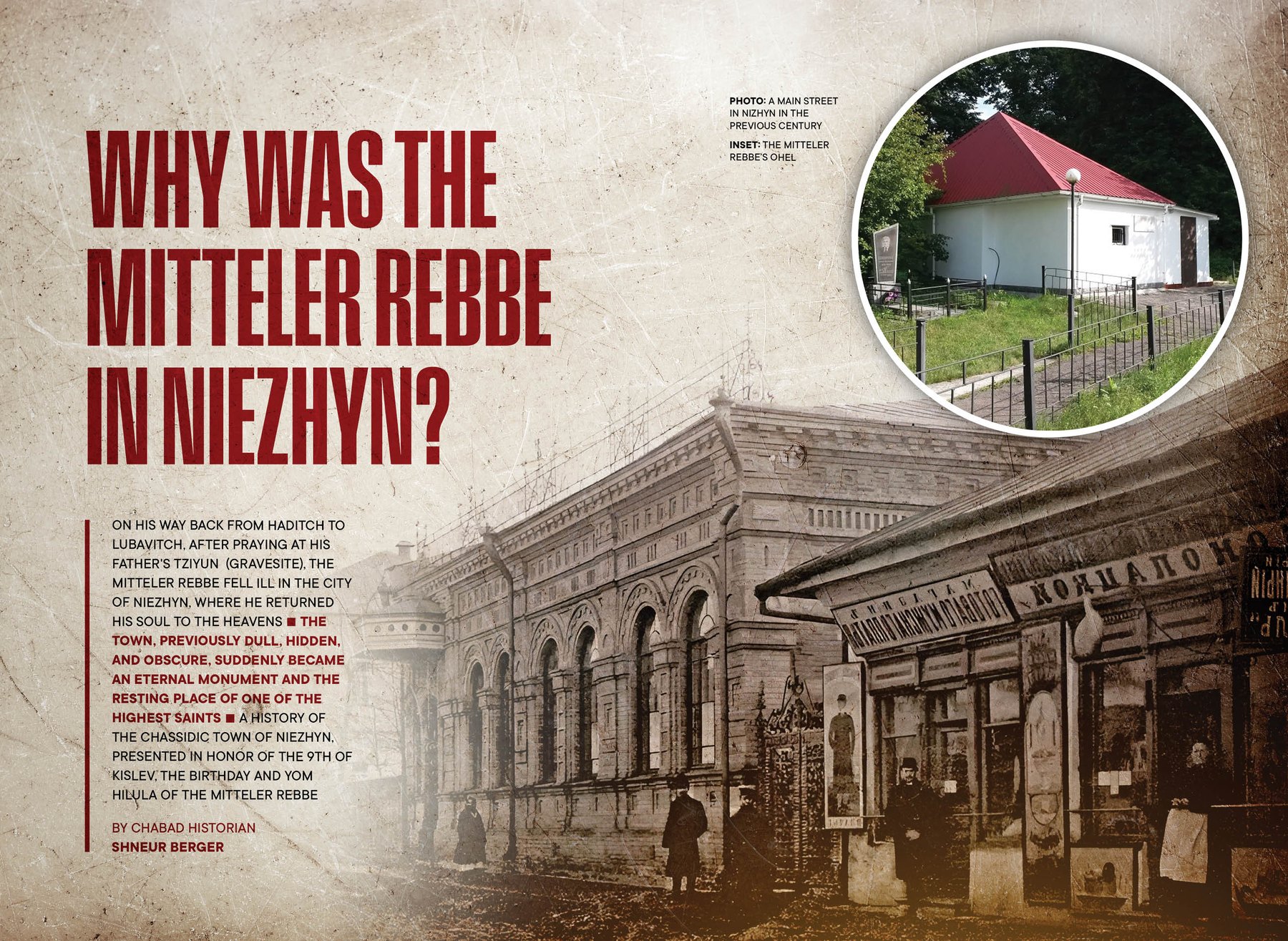
On his way back from Haditch to Lubavitch, after praying at his father’s tziyun (gravesite), the Mitteler Rebbe fell ill in the city of Niezhyn, where he returned his soul to the heavens. The town, previously dull, hidden, and obscure, suddenly became an eternal monument and the resting place of one of the highest saints. A history of the Chassidic town of Niezhyn, presented in honor of the 9th of Kislev, the birthday and yom hilula of the Mitteler Rebbe
The sudden histalkus of the Mitteler Rebbe in the city of Niezhyn on the 9th of Kislev, 5588, raises the inevitable question: How did the Rebbe specifically arrive in Niezhyn of all places? He himself established his kingdom in the town of Lubavitch. His ancestors did not live there either. So what was he seeking there?
In fact, the Chassidic dynasty in Lubavitch was established by the Mitteler Rebbe. Shortly after the passing of his father, the Alter Rebbe, and after escaping from the French army, he needed to find a new place to establish the Chassidic dynasty.
After many travails, the Mitteler Rebbe established his residence in the town of Lubavitch, located in White Russia. From there, the light of Chassidus spread westward, eastward, northward, and southward.
After his arrest and release, the Mitteler Rebbe traveled to the gravesite of his father, the Alter Rebbe, in the city of Haditch to daven and implore that the criminal case would turn out well. After he finished davening, he began making his way back to Lubavitch.
At a certain point, he stopped in Niezhyn, where a few Chabad Chassidim resided. It is not known exactly when the Jewish settlement in the city began, but it seems that the Chassidic community there did not start before the time of the Mitteler Rebbe.
During his stop in Niezhyn, he was struck by a severe weakness that kept him in place. The weakness grew worse, along with a serious illness that the doctors could not explain.
In those days, his conduct was wondrous and lofty. None of the Chassidim suspected that the Rebbe was beginning to part from this world. Everyone was certain that after recovery, he would be able to return to the royal court in Lubavitch. However, the illness worsened to the point that even the slightest touch would cause him to faint. They had to revive him with especially strong stimulants.
On the night of the 9th of Kislev, the Rebbe fainted again and was revived by a strong smell. That night, he fainted several more times. The last time, they could not revive him, and cries of anguish broke out in the house. Immediately, all the Chassidim and Jews of the city gathered, and even the Chevra Kadisha members arrived, explaining that they could see he was no longer with them and there was nothing to be done. But the Chassidim and family members did not despair and stood around his bed, looking at him for a long time until he opened his eyes with a smiling face. Those around him said, “Why is our Rebbe frightening us? Did you not hear the screams here?” But the Rebbe said to them, “I heard a voice calling out: What does such a soul need in this world.”
During that night, the Rebbe delivered two Chassidic discourses with unusual enthusiasm. Several times he stopped and asked if dawn had already broken. Before sunrise, he completed the discourse with the words, “For with You is the source of life – from the life of lives,” and immediately his soul departed, and he was only fifty-four years old.
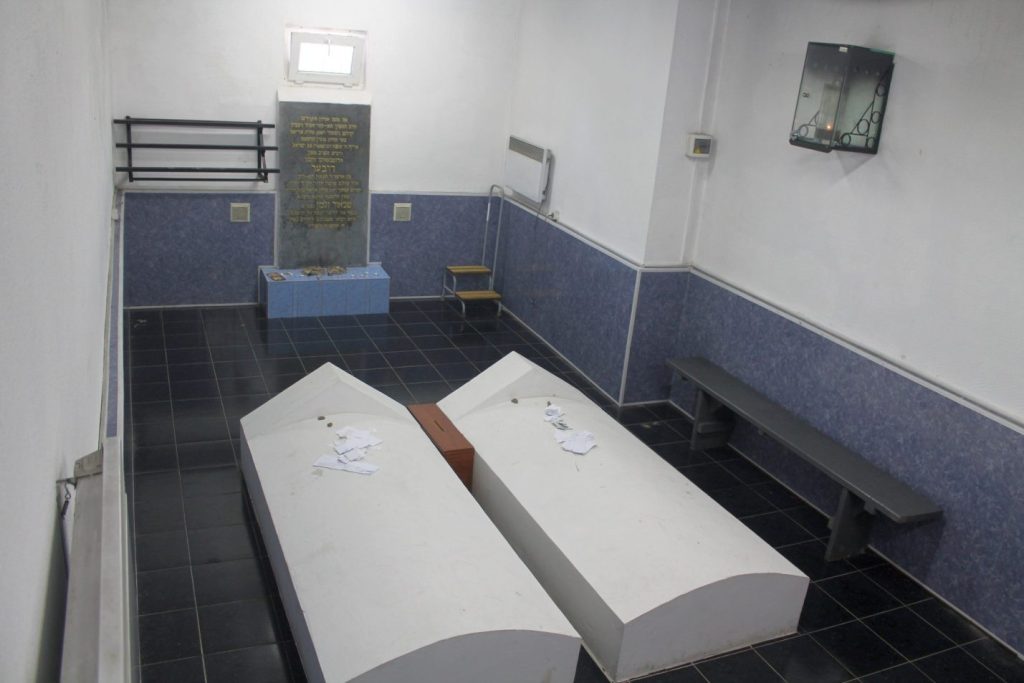
As such, the Mittler Rebbe was buried in the nearby cemetery of the city of Niezhyn. An Ohel was built on his gravesite, with a shul nearby.
Since then and until today, Chassidim and Jews of all walks of life come to Niezhyn to pour out supplications at the gravesite of the Mitteler Rebbe – and the place has already become known for salvations and many miracles.
The Rebbe of Niezhyn
The histalkus was difficult for the Chassidim, but they returned to Lubavitch and accepted the continued leadership of his son-in-law and successor, the Tzemach Tzedek.
One unique member of the group, Rabbi Menachem Nachum Schneerson, the son of the Mitteler Rebbe, was unable to part from his father’s resting place and remained to live in Niezhyn. Around him gathered a few more Chassidim and anshei maaseh (men of deeds).
A significant turning point for the Chassidic community in the city occurred when the son of the Tzemach Tzedek, Rabbi Yisroel Noach Schneerson, settled there and opened a Chassidic court (in his later years, he married Rebbetzin Chana Chisha, daughter of Rabbi Menachem Nachum Schneerson who resided in the city).
After the passing of the Tzemach Tzedek, the youngest son, the Rebbe Maharash, was crowned as the next leader of the Chassidim in Lubavitch, while his brothers opened Chassidic courts in various places. One of them, Rabbi Yisroel Noach, was appointed as the rabbi of Niezhyn and essentially opened a Chassidic court known as “Chabad Niezhyn.”
Rabbi Yisroel Noach was a great genius in both the revealed Torah and in Chassidus. He even established a yeshiva in the city, which continued to exist for many years after his passing.
In the book Beis Rebbe, it is written about his period of leadership in Niezhyn:
“…People flocked to him there from all the towns… to receive teaching from his mouth and seek spiritual and material advice, and he would also receive those who came to him with a pleasant and enlightening countenance and would immerse himself deeply in their matters. Throughout the country, they were in awe of his name and mention.”
His right-hand man in matters of Jewish law was the distinguished Rabbi Eliyahu Dovid, one of the prominent Chabad rabbis during the time of the Tzemach Tzedek. In the following years, Rabbi Eliyahu Dovid was appointed as the Moreh Tzedek of the Niezhyn community. Every halachic question or response that came to Rabbi Yisroel Noach passed through Rabbi Eliyahu Dovid, who was an outstanding Torah scholar.
During one of the wars between Russia and Turkey, a military regiment passed through Niezhyn on its way to the front. There were many Jewish soldiers in the regiment. They came to Rabbi Yisroel Noach to receive a blessing. He, in turn, gave each of them a coin and blessed them: “May the Holy One, Blessed be He, lead you in peace and return all of you in peace.”
Indeed, after the war, which lasted several years, all of them, without exception, returned home safely.
His leadership and rabbinate in Niezhyn lasted about fifteen years, until he passed away on the 17th of Nisan, 5643. He was privileged to be buried near his grandfather, the Mitteler Rebbe.
The press of those days published a report that on the first day of Pesach, he lectured in public; on the second day of Pesach, he was called up to the Torah reading, and the next day, on the first day of the intermediate days of the holiday, he suffered a stroke. Six doctors treated him, but the decree was sealed, and he returned his soul to its Creator.
After his passing, small orphans were left in his home, and Rabbi Yaakov Henkin, a Niezhyn Chassid, took spiritual guardianship over them. Rabbi Henkin was considered a respected Chassid and a genius (later he emigrated to Eretz Yisrael and after his passing was buried in the Chabad section on Har HaZeisim).
Kiev-niezhyn Pogroms
The “Kiev-Niezhyn Pogroms” broke out in the year 5639 (1879). Anti-Semitic hordes attacked Jews in various cities, including Niezhyn.
The pogroms began in the summer months, resulting from an anti-Semitic incitement campaign led by forest owners in the districts of Smolensk, Paskov, and Minsk. They were jealous of the success of Jewish timber merchants. As a result, they stirred up the villagers to carry out pogroms against the Jews. The incitement campaign was successful, and soon pogroms broke out in several towns and spread like wildfire. Among others, they severely harmed the Jews of Kiev, Niezhyn, and other locations.
In the wake of these pogroms, the Rebbe Maharash traveled repeatedly to Petersburg and Moscow with the aim of fighting to stop the attacks. He also went to Germany and France for meetings with influential Jewish activists.
The struggle was successful, with all district governors receiving an order to announce that if anyone is found inciting conflict between citizens of the state, or if anyone is found calling for pogroms, they would be punished with the full severity of the law.
The pogroms ended, and the Jews in Kiev and Niezhyn, as well as in all the towns of Russia, breathed a sigh of relief.
‘who Has Shown Me Many Troubles and Evils’
The Jewish community in Niezhyn suffered many troubles over the years. During a pogrom that occurred in 1888, the Jewish homes were severely damaged. During the Russian Revolution in 1905, about 30 of the city’s Jews were wounded. In 1919, during the bloody civil war accompanying the Communist Revolution, many Jews were killed by the “White Army” marauders. Later, their property was plundered by those on the other side of the barricade, the soldiers of the “Red Army.”
In 1939, on the eve of World War II, 2,725 Jews lived in Niezhyn, comprising about 7 percent of its population.
With the Nazi German invasion of Russia in the summer of 1941, many Jewish refugees who had fled from the Nazis arrived in the city. However, there too, their bitter fate caught up with them when the Nazis conquered the city in late summer 1941. Soon, the Germans deported a group of Jews to a labor camp, while Niezhyn’s Jews were forced to wear yellow stars and perform forced labor.
In the following months, hundreds of the city’s remaining Jews were murdered. Only in the summer of 1943 was the city liberated by the Russian army.
After the Holocaust, a small Jewish community was again established and maintained itself for many years.
The Rav of Niezhyn Who Served As an Inspiration
From time to time, our Rebbeim would come to Niezhyn to daven at the Ohel of the Mitteler Rebbe, but we do not have many details about these visits.
When the Rebbe Rashab visited Niezhyn he met, among others, with Rabbi Shlomo Aharonson, the city’s rabbi. Rabbi Aharonson and his wife were born into Chabad families and belonged to the Kopust Chassidic dynasty. In 1893, he was appointed as the rav of Niezhyn.
During a visit in early Shevat 1903, R’ Shlomo engaged in a debate with the Rebbe Rashab about his position on Zionism. The debate took place in the home of Rebbetzin Chana Vishia Schneerson. We know about the content of the debate from a letter written by the Rebbe Rashab.
In the following period, R’ Aharonson served as the rabbi of Kiev, and in later years as the rabbi of Tel Aviv. He maintained contact with our Rebbeim and helped with various Lubavitch matters.
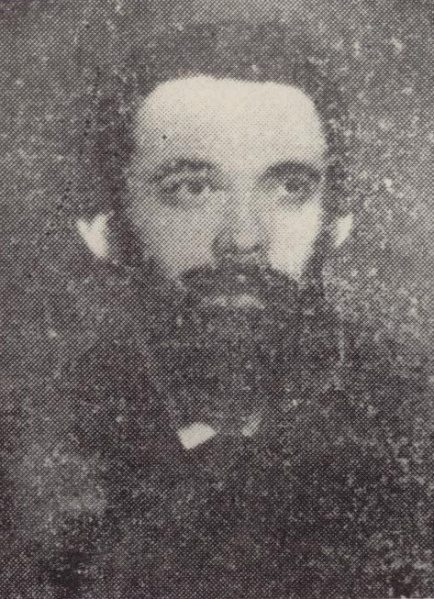
Another Chabad rabbi who served as the rav of Niezhyn was the distinguished Rabbi Shlomo Menachem Mendel Chein, may Hashem avenge his blood, son of the famous Chassid Rabbi Dovid Tzvi Chein, one of the prominent Chassidim of the Rebbe Rashab.
Reb Mendel Chein was born in Chernigov and received most of his Torah education from his father, Reb Dovid Tzvi. He quickly became known as a prodigy, sharp-minded and wonderfully versed in both Talmud Bavli and Yerushalmi, as well as the early and later commentaries.
In 1907, he was appointed as the rav of Niezhyn, replacing R’ Shlomo HaKohen Aharonson, who had left Niezhyn. In addition to his rabbinical role, he also served as the gabbai of Colel Chabad in the city.
Reb Mendel Chein’s extensive work for those in need, along with his knowledge of Jewish law, brought him public admiration. He quickly emerged as a rabbi and community leader both in the realm of halacha and public welfare. His instructions and rulings, whether regarding issur and heter or interpersonal matters, gained a reputation for their clarity and authenticity. He was particularly renowned for his responses to complex aguna questions. In this area, he received inquiries from near and far and responded with remarkable depth and genius.
The communal needs of the city consumed all of his time, but in the evening, after the last visitor had left his home, he would study for many hours and also write down his chiddushim in both Nigleh and Nistar of Torah.
Reb Mendel Chein, a true genius, was happy to find several important scholars in Niezhyn who became frequent visitors to his home. Additionally, his heart was full of compassion for needy Jews whom almost no one would support. He would rush to help them with an unusual dedication.
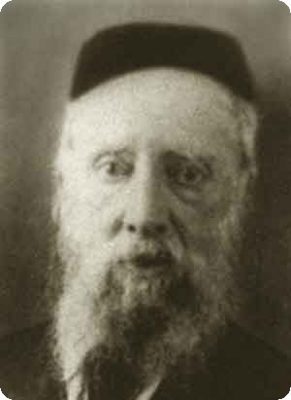
One who assisted him in tzedaka work with Niezhyn’s poor was Mr. Kapelushnik, as Rabbi Chein’s daughter Shoshana described:
“I remember a man named Kapelushnik who would spend entire days in our home. Kapelushnik owned a sewing workshop. His work was done by workers, and he himself was entirely devoted to tzedaka and acts of kindness. The special closeness the Rav showed to Kapelushnik was disturbing to important community members. Why did the Rav bring close a craftsman who was neither learned in Torah nor wealthy? But Kapelushnik had abandoned his business and labored in tzedaka for its own sake, and the Rav saw him as a loyal partner.”
Beyond regular community affairs, he was dedicated to caring for every individual, performing acts of kindness with his body and with his meager funds, which he would spend on tzedaka.
He showed special kindness to widows and orphans. For the widow of the previous rabbi, he arranged a suitable monthly stipend from the community fund and would visit her on every holiday and take an interest in her situation.
His wife, Rebbetzin Pesya, knew how to manage the household with great honor and elegance. Their home was wide open to guests and people who needed the rav for various matters. Travelers would also find their place in the rav’s home and be welcomed with love. People would stay days and weeks, with the rav’s home providing for all their needs, making them feel as if they were in their own home.
His tefillos lasted many hours, accompanied by profuse tears, even during his busiest times. Generally, he was a man of weeping and emotion. On Friday nights, a special minyan would be organized in his home, and he would continue davening even after all the others had dispersed to their homes.
On Shabbos, he would wake early and dedicate many hours to the study of Chassidus before davening. He would go to the shul to hear the Torah reading and continue his davening until late. Toward evening, the city’s residents – especially Chabad Chassidim who formed a significant part of the Niezhyn community – would gather in his home, singing niggunim of deveikus and hearing a Chassidic discourse from him.
In addition to his community activism, the Rebbe Rashab also enlisted him for broader Jewish askanus for the klal, recognizing his soul’s strengths and talents. During that fateful and turbulent period, they needed significant forces in the various struggles led by the Rebbe. Reb Mendel Chein was only twenty-five years old when he became one of the Rebbe’s confidants in askanus ha’klal.
In the year 1917, Niezhyn’s community leaders complained to the Rebbe Rashab that their rav was almost never with them, as he was occupied with general community matters. They therefore requested that the Rebbe appoint someone else to handle general affairs.
The Rebbe responded with a special letter, encouraging them that their rav’s missions would also stand to their credit, and that his help in public activism was particularly important at this time following the fall of the Czar’s rule and the establishment of the provisional government.
In the month of Tammuz 1912, there was a need to make urgent repairs and renovations to the Ohel of the Mitteler Rebbe, and this required donations. The Rebbe Rashab wrote about this to the wealthy Chassid R’ Shmuel Michoel Treinin:
“In Niezhyn, the Ohel has become very damaged, and they are currently repairing it at a significant expense. Therefore, would the honored sir please donate 25 silver rubles and send them to Niezhyn to R’ M.M. [Chein] or to my name in Lubavitch – and may the merit of the holy Mitteler Rebbe protect him for success in spiritual and material matters.”
With the outbreak of World War I in 1914, many Jewish refugees began to arrive in Niezhyn from districts close to battle zones. Rabbi Chein did everything in his power for the refugees and their welfare.
In the month of Marcheshvan 1918, the Communist Revolution began. Rabbi Chein, as an important rabbi and someone who had connections with the previous government, suffered greatly at the hands of the revolutionaries, to the point where he was forced to leave his residence in Niezhyn. However, he did not allow himself to abandon his community during difficult times, and despite the danger, he returned to his city of residence.
At the beginning of Elul 1919, Denikin’s “White” battalions captured Niezhyn and carried out pogroms. A few days later, Reb Mendel Chein, along with a Russian Orthodox priest named Andrievsky and another prominent community member named Mr. Zaslavsky, went to meet the city’s commander to request protection. As far as is known, the commander agreed to meet the delegation, but it is doubtful whether he promised them anything, as control was already slipping from his hands.
On their return, the pogromists began to rage. The priest and Mr. Zaslavsky fled to a nearby church, but Rabbi Chein refused to enter a place of idol worship and ran to a nearby Jewish hotel. However, a gang of pogromists swept through the hotel.
Among all those trying to hide in the hotel only one person survived, by playing dead. He later recounted the final moments of Reb Mendel. The latter turned to those gathered and requested to say vidui with them, asking that anyone who would survive should pass on from person to person the need to cleave to Hashem and His Torah. Reb Mendel was shot in the back and apparently killed on the spot, at around forty years old. May G-d avenge his blood.
He was fortunate to be buried near the Ohel of the holy Mitteler Rebbe.
When the tragic news reached the Rebbe Rashab, he mourned deeply and sent a letter of condolence full of sorrow to the family members.
Chabad Rabbis of the City
The next rav of Niezhyn was also a Chabad Chassid, Rabbi Menachem Mendel Gluskin, who had previously served as a rabbi in various Russian cities. Over time, he became renowned in the Torah world as a great Torah scholar, familiar with all of the Oral and Written Torah, as well as with the works of the early and later Poskim.
He served as Niezhyn’s rabbi for only a few years before moving to serve as the rabbi of Minsk in 1924.
After him, Rabbi Menachem Nachum Schneerson, son of Rabbi Yisroel Noach of Niezhyn and grandson of the Tzemach Tzedek, was appointed to the city’s rabbinate. Initially, he served as the head of the Jewish community in Niezhyn, and after Rabbi Gluskin’s departure, he was appointed as the city’s rav, encouraged by the Rebbe Rayatz.
Reb Nachum Schneerson was born in 1883 and named after his grandfather Rabbi Menachem Nachum, son of the Mitteler Rebbe. R’ Nachum was orphaned from his father, Rabbi Yisroel Noach, just a few months after his birth.
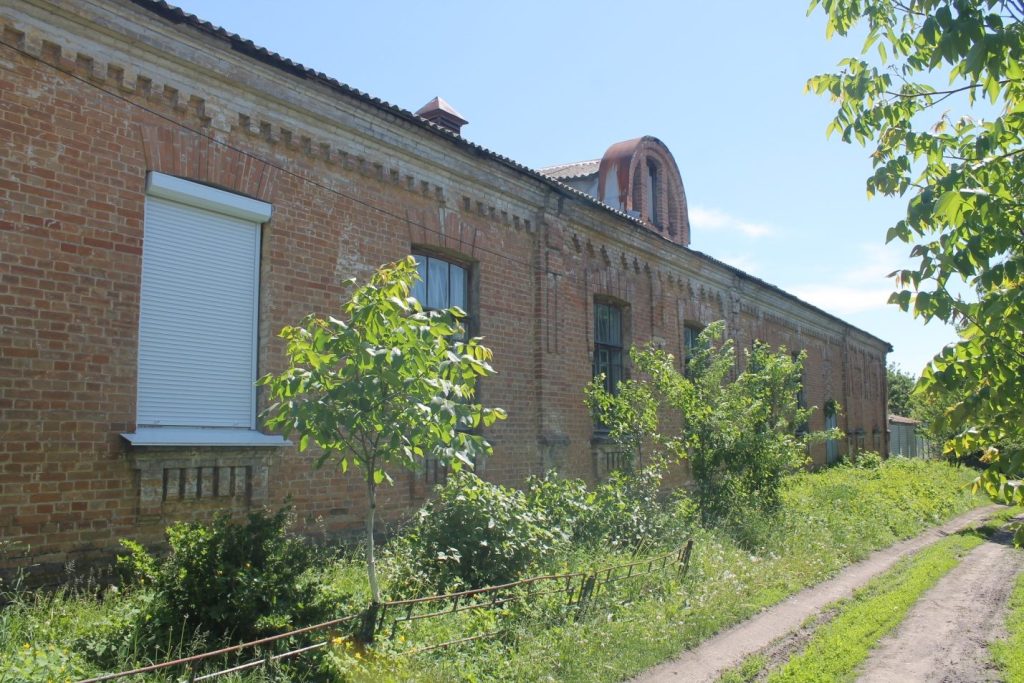
Adjacent to his home was the Chassidim’s shul – a long, single-story building, also known as the “Schneerson Shul.” In the 1920s, the shul was closed by the Communists. The building still exists today and currently houses the local police station.
Rabbi Nachum Schneerson was among the rabbis who continued to maintain the Jewish spark despite Communist threats. Because of this, he had to receive special support from the Rebbe Rayatz, after his official salary was not paid.
On the 13th of Adar I, 1938, he was arrested by the Communists. From Niezhyn, he was transferred to Chernigov, and he was executed on the 6th of Iyar, 1938.
Renovation of the Ohel
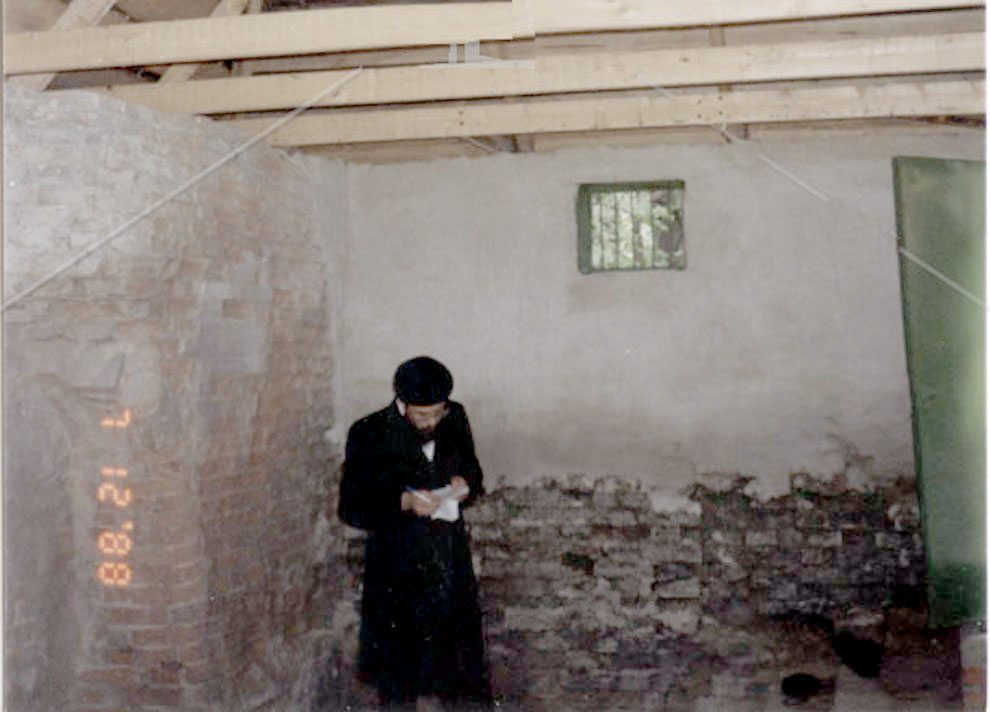
More than thirty years ago, R’ Avi Taub and R’ Dovid Nachshon conducted journeys across the Soviet Union to renovate and renew the gravesites of our Rebbeim.
In Niezhyn, they renovated and built the Ohel, transforming the place to be suitable for the tefillos of Chassidim at the kever of the Middle Rebbe.
Two years ago, after efforts by the Rebbe’s shluchim in Ukraine, authorities granted permission to build a central shul and large community center near the cemetery in Niezhyn.
Sources: Igros Kodesh, Beis Rebbe, Avnei Chein, Pardes Chabad, Sons of the Tzemach Tzedek. And many other sources, which cannot all be enumerated here.
The Yeshiva and Talmud Torah
Rabbi Yisroel Noach Schneerson, the Rebbe of Niezhyn, established a yeshiva in Niezhyn, which existed even many years after his passing.
When Rabbi Chein served as Niezhyn’s rabbi, he managed the yeshiva with a strong hand. During those years, dozens of talmidim studied there, led by Rosh Yeshiva Rabbi Benzion Yaakovson from Telz. Rabbi Chein breathed fresh life into the yeshiva and raised its learning to a high level.
His wife, the Rebbetzin, who was a help-mate to him in all rabbinical matters, dedicated herself to the yeshiva’s welfare. Instead of the traditional “teg” meals, she established a dining hall to provide meals for all students, managing it with exemplary dedication, not for reward.
It should be noted that Niezhyn’s residents themselves also ensured respectable financial support for the yeshiva.
Several yeshiva graduates became famous in subsequent years due to their positions: Rabbi Yehuda Leib Tzirelson, rabbi of Bessarabia; Rabbi Yehuda Leib Levin, rabbi of Moscow; and Rabbi Yosef Chaim Grossman, rabbi of Atashkov in the Cherson district.
An underground cheder was also established in the city, as we learn from a letter sent by the Rebbe Rayatz in 1928 to the Jewish leader Dr. Cyrus Adler. The update reveals that approximately 30 students studied in the cheder.
Beis Moshiach #1438 • pp. 24-33
© 2026 Beis Moshiach Magazine. All rights reserved.
This article originally appeared in Beis Moshiach #1438. You are welcome to share it with friends and family by email or in print, provided that you do not change, add to or omit any part of it, you credit the author and Beis Moshiach, and you include a link to archive.bmoshiach.org (written out in full in printed copies).
To republish this article in a newspaper, magazine, book or website, please request permission in advance at [email protected].