The Berditchev “Orphans”
An incredible story of Mesiras Nefesh by the Rebbe Rayatz’s young soldiers who fought to learn Torah in Communist Russia, presented in honor of the Yom Hilula on Yud Shevat
From the TzaddikStory.org collection
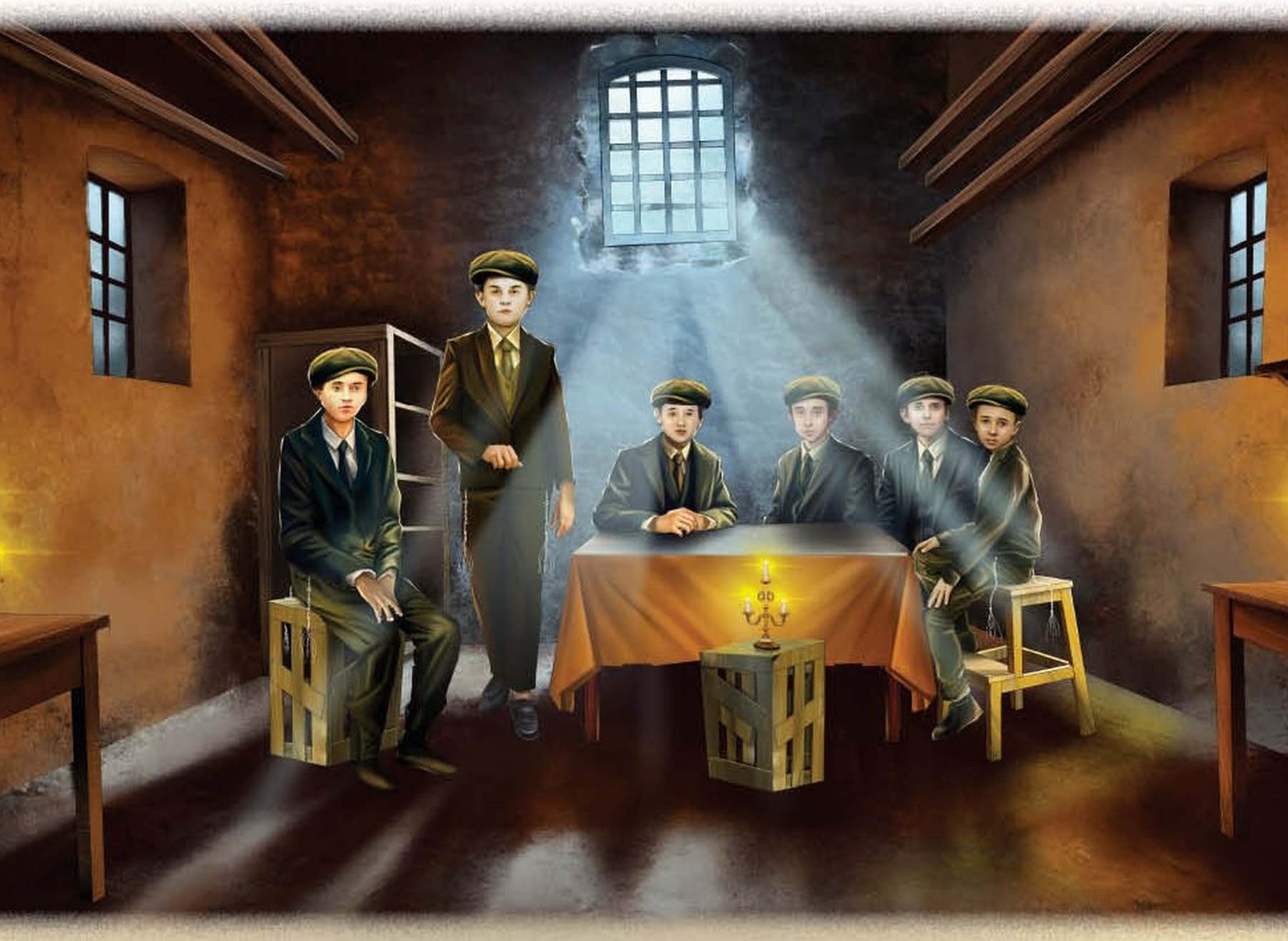
Six boys sat together in a dark cellar under a shul in Berditchev, Ukraine. The room was cold and empty, with dust on the floor. The boys were Velvel Averbuch, Yechezkel Brod, Sholom Ber Pevzner, Heshel Ceitlin, Refael Wilshansky, and Refael Bruk. Their teachers, R’ Moshe Robinson and Berel Gurevitch, were a little older, in their late teens or early twenties.
“Close the windows,” one boy whispered. Another grabbed some rags and quickly covered the tiny windows, so no light could escape.
The boys were part of a secret yeshiva in Berditchev. The yeshiva was hidden in the women’s section of a small shul. The shamash locked the doors from the outside, so it looked like no one was in there.
A small bottle of mashke was pulled out from under a torn jacket. Someone spread a tablecloth over the wooden table, and another boy set down two candles. They also brought food for the farbrengen—herring, bread, potatoes, and a few small treats. The flickering light from the candles made the dark room feel a little warmer.
A few moments later, three older boys and one of the teachers quietly entered the room. “Baruch Hashem,” the teacher said softly, smiling at the boys.
“L’chaim,” they all whispered, lifting their glasses.
It was Chof Dalet Teves, 5698 (1938)—the yahrtzeit of the Alter Rebbe. Learning Torah in Communist Russia was dangerous, but the boys and their teachers weren’t afraid. They sang a quiet niggun and talked about Torah and Avodas Hashem. The cold, dusty cellar felt far away, as they connected to Hashem.
But suddenly—
BANG! BANG!
* * *
“Open up, Jews!” a harsh voice shouted. “We know you’re in there! You’ve been caught!”
The boys froze, their hearts racing.
“Hide everything—now!” the teacher hissed.
They moved fast. The candles were blown out, the tablecloth ripped away, and the bottle hidden in a crack in the wall. Within seconds, the cellar looked empty again.
“Find a place to hide!” the teacher ordered.
They scattered, crouching in corners, barely daring to breathe as the pounding on the door grew louder.
CRASH! The door burst open. Policemen stormed into the room, flashlights shining everywhere.
“Don’t move!” one officer shouted.
The boys froze in fear. The flashlights quickly found them, one by one.
“There’s another one over here!” a guard yelled, dragging a boy out of a corner.
“We didn’t do anything wrong!” one boy cried, his voice shaking.
“Quiet!” the officer barked.
The boys were pushed into a line and marched outside. It was freezing cold, and the streets were empty.
As they walked to the prison, one boy whispered, “What will we do? They’ll try to make us tell them everything.”
“Don’t say anything,” another boy replied, firmly. “Not about our teacher. Not about the farbrengen. Nothing. We can’t let anyone else get caught.”
* * *
Six boys had been caught by the Communist police. A Ukrainian newspaper had written about their underground yeshiva, and someone must have told the police where to find them.
The boys were arrested, along with their teachers, R’ Moshe Robinson and Berel Gurevitch. The officers shouted at them as they were dragged away.
“Who else is part of your yeshiva?” one officer yelled.
“We don’t know,” one boy replied softly, his voice shaking.
“Don’t lie to us!” the officer barked. “We know everything!”
At the prison, the guards lined the boys up and laughed at them. They cut off their tzitzis and stole anything else they had.
“You won’t need these anymore,” one guard said, tossing a yarmulke to the ground.
The boys stayed quiet, their hearts pounding.
The next day, the boys were pulled out for questioning, one by one. The lead interrogator, the man who’d be asking all the questions, was a Jew named Khotruski, but he showed them no kindness. Instead, he leaned forward, glaring at the first boy in the room.
“You think you’re clever, don’t you?” the interrogator growled. “Tell me—who sent you to that cellar? Who are your parents? Where are the other boys hiding?”
“I—I don’t know,” the boy stammered, trying to stay calm. “I’m an orphan.”
“An orphan?” The interrogator laughed bitterly. “Do you think I believe that? Tell the truth!”
The boy took a deep breath and repeated, “I don’t know anyone else. I went there because it was cold, and I needed a place to rest.”
The interrogator slammed his fist on the table. “Liar! You think you can fool me?”
Meanwhile, in their cells, the boys whispered to one another.
“They’re trying to break us,” one boy said. “But we can’t give in. No matter what they say, we have to stay strong.”
It smelled awful in the cells, and there was barely any space to sit. Still, the boys found ways to support each other, determined to protect their yeshiva and their teachers.
“I don’t know anything,” the boy repeated. “I came to Berditchev to find food and work.”
Another officer leaned close to a different boy. “If you don’t talk, you’ll be sorry. Who was with you in the cellar?”
“I don’t know,” the boy answered, trying to sound calm. “I got scared and hid when I heard the police outside.”
The guards grew angrier. They shouted, stomped their feet, and pounded fists on the tables.
“Do you think we’re stupid?!” one officer yelled. “If you don’t tell us the truth, we’ll make you regret it!”
The boys were tired and afraid, but they refused to talk about their teacher, their friends, or the farbrengen. They didn’t say a word. Even when their tzitzis and tefillin were taken away, even when the guards shook the tables and threatened them, they stayed strong. R’ Moshe admitted that he was their teacher, hoping to protect the boys from bigger punishments.
Day after day, they were questioned, but they stayed quiet.
In the cells, they were given a small piece of stale bread and a bowl of soup.
“The soup isn’t kosher,” one boy said. “We’ll just eat the bread and drink water instead.”
Even though it was all they had to drink, the boys saved some water for negel vasser.
“Here, use this,” one boy whispered, passing his cup to another.
“But you’re thirsty!” the other boy said.
“I can wait,” the first boy replied. “Negel vasser is more important.”
Scared and hungry, the boys stayed strong. They promised themselves they would protect their Yiddishkeit, no matter what happened.
Eventually, the soldiers gave up. They stopped questioning the boys. The three older boys and their teacher were sent to a terrible prison in Siberia.
The six younger boys were sent to a Communist orphanage. This wasn’t a nice place where kids were cared for or loved. It was a strict, cold home, where mean guards watched the children all the time. They’d work the boys from morning until night, and treat them like they were nothing—especially because they were Jewish.
* * *
When the boys arrived, the head of the orphanage stood before them. His face was cold, and his eyes were sharp.
“Ah, some Jews,” he sneered. “Here are the rules, Jews. You can’t leave without permission. If you try, we’ll know, and you’ll regret it. You’ll follow every order. You’ll eat the food we give you, whether you like it or not. No kosher rules here! And take off those little Jewish caps—enough with this nonsense. You’ll be raised as good Russian boys now.”
He leaned in close and gave a cruel laugh. “If you forget your Jewish ways, you’ll be rewarded. You’ll get extra food, nicer clothes, and special privileges. But if you dare to follow your Torah or keep mitzvos…” His voice grew louder, and his face twisted into a nasty grin. “You’ll be punished.”
The boys stood quietly, their hearts pounding, but they didn’t show fear. They had been through so much already, and they’d learned how to stay strong.
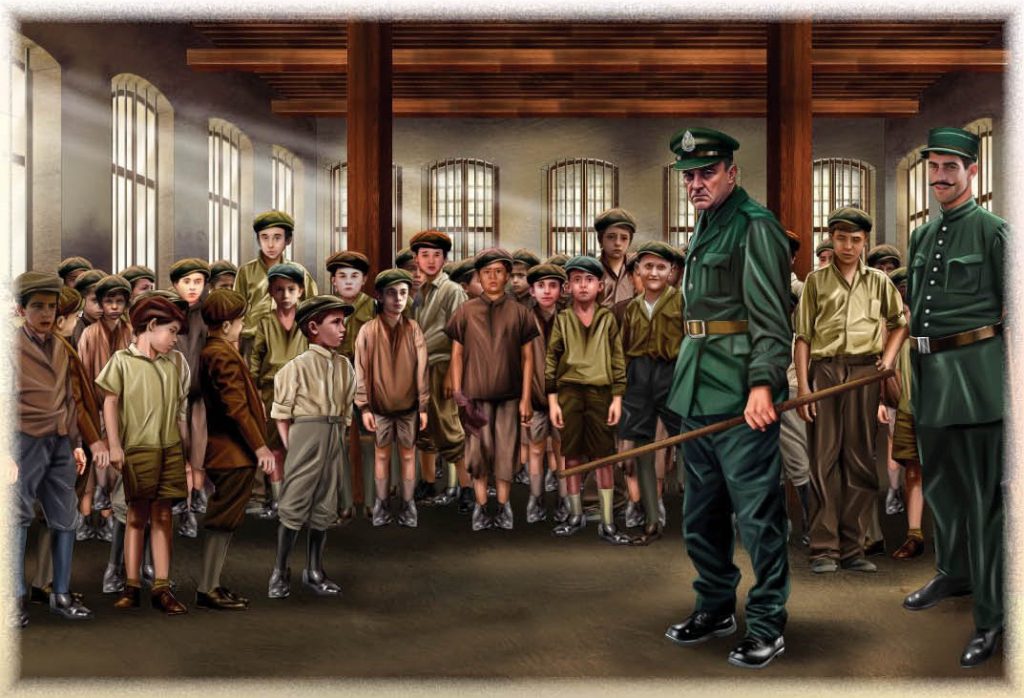
The orphanage was dark and cold. As the boys explored their new surroundings, they noticed something surprising. The building itself had once been Jewish. There were marks on the doorposts where mezuzos had hung, and outside, they even saw the remains of a sukka, with schach still attached. It was a reminder of what this place used to be—and what they would continue to fight for.
“We can do this,” one boy whispered to the others later. “We’ve kept mitzvos in secret before. We’ll find a way here, too.”
The guards tried to make them eat non-kosher food, but the boys were clever.
“I don’t feel well today,” one would say. “My stomach hurts. I can’t eat.”
Sometimes they would pretend to eat, but they’d hide the food in their pockets and throw it away later.
From the outside, it seemed like the boys were following all the rules, but secretly, they kept as many mitzvos as they could. It wasn’t easy, but they never gave up.
Every day, the boys were allowed to take a short walk outside the orphanage. Only two boys were allowed to go at a time. The guards didn’t want to risk all six escaping together.
“They won’t leave their friends behind,” the guards said to each other.
But the boys had their own plan. They just needed the right moment.
To be continued
Beis Moshiach #1446 • pp. 56-59
© 2026 Beis Moshiach Magazine. All rights reserved.
This article originally appeared in Beis Moshiach #1446. You are welcome to share it with friends and family by email or in print, provided that you do not change, add to or omit any part of it, you credit the author and Beis Moshiach, and you include a link to archive.bmoshiach.org (written out in full in printed copies).
To republish this article in a newspaper, magazine, book or website, please request permission in advance at [email protected].