Far East, Close Watch

Temperature checks and production calculations in a Thai pineapple packing plant, and factory floor stakeouts in a Chinese fish factory: kashrus professional Rabbi Yosef Dorfman’s unconventional methods of uncovering kashrus deception in Far East large-scale food industry plants
The table is carefully set in honor of Tes-Vav B’Shevat. Trays filled with dried fruits in a variety of colors—brown dates, orange apricots, and next to them, raisins in two colors.
Behind this lies a world of stories, challenges, and surprises, as revealed by Rabbi Yosef Dorfman, an international expert on food kosher certification and the person responsible for kosher supervision in many food factories worldwide. In addition, he gives lectures across the globe and is considered a pioneer in the field of insect inspection in food. R’ Dorfman dedicates his life to ensuring that these beautiful fruits are not only visually stunning but also worthy of being eaten.
Rabbi Dorfman, the custom of eating dried fruits has become an inseparable part of Tes-Vav B’Shevat over the years. Perhaps we can clarify whether there is a special reason for this or if it’s also ‘permissible’ to eat fresh fruits?
R’ Dorfman smiles and reaches for the bowl of dried fruits in front of him. “There’s a fascinating story here, a story that begins with the longing of Jews for Eretz Yisrael, passes through ancient trade routes, and reaches our holiday table.
“15 Shevat is the New Year for trees—a day when we not only celebrate the New Year for trees and the renewal of earth’s nature, but we also daven and ask Hashem to bless the fruits of the trees. But the truth is, from a pure halachic perspective, there is no difference between fresh and dried fruits.”
So how did the custom of primarily eating dried fruits develop?
“It’s a story that began in Europe. Imagine a Jew in Europe hundreds of years ago. Winter is at its peak, the snow covers everything, and he yearns for Eretz Yisrael. He wants to taste something from the promised land, to feel its flavor. But how could fresh fruits be transported on a journey lasting months?
“Well, drying was the only solution. It was the only way to bring the taste of Eretz Yisrael to distant communities. And so, what started as a technical solution became a tradition in itself…
“But there is another reason,” he explains. “Look at the fruits that Eretz Yisrael is praised for – olives, dates, grapes, figs, and pomegranates. These are all classic summer fruits. But Tes-Vav B’Shevat falls right in the middle of winter! How could we then taste these praised fruits? Once again, drying allows us to still eat from these fruits.
“There’s something very symbolic about it,” he concludes. “Just as dried fruits retain the sweetness of summer even in the midst of winter, so too, the Jewish people have maintained a sweet connection with Eretz Yisrael even in the stormiest periods of exile. It’s not just a custom – it’s a story of love for Eretz Yisrael, longing, and hope for Tziyon, wrapped up in every dried fig and raisin.”
Fruits—A Game of Light and Shadow
As mentioned, R’ Dorfman dedicates his life to matters of kosher certification, with his primary expertise being in insects – often hidden and concealed – found in the food we wish to eat.
“Let me tell you a secret,” he says very seriously, as if about to reveal something valuable. “In every lecture I give, I bring a simple, ordinary vegetable. I shake it gently in front of the audience, and like magic, a whole hidden world is revealed. Tiny insects that have always been there but no one knew how to look for them, let alone find them…”
In these days following the 15th of Shevat, it’s time to go on a journey through the fruits, both regular and dried. We’ll begin with the seemingly innocent fig.
“Look at it,” Rabbi Dorfman says as he takes a fig. Like an expert surgeon, he carefully cuts it in half. “Every fig is like an open book,” he explains, holding the fig halves close to a bright desk lamp. “You have to know how to read the signs – here, where the light passes through the juicy flesh of the fruit, we’re looking for any change in density, any suspicious spot. The insects hiding inside are true masters of camouflage – the color and texture of their bodies are so similar to the flesh of the fruit that sometimes it’s like searching for a needle in a haystack. This is why I recommend not eating dried figs at all. Interestingly, even in fresh figs, the worms and fly larvae know how to camouflage themselves with the colors of the living fig.”
Next, we move to dates. “And here are the dates,” he continues, holding up a random date to the light. “It’s like a game of light and shadow. When you see sparkling white grains in a date – don’t worry, that’s just natural sugar crystallizing, like tiny diamonds inside the fruit. But,” he takes another date, “if you notice brown grains or fine powder that looks like dust – well, that’s a whole different story.”
Again, with the skill of an expert, he demonstrates how to distinguish between natural sugar and warning signs. The gray powder is actually a type of mold that could be harmful to health, something that can also appear on onions.
At the corner of the table, the apricots are waiting. “Look how I hold the apricot against the light,” he demonstrates. “You need to turn it slowly, like checking a diamond. Sometimes you’ll see dark spots, like tiny freckles. People get scared, thinking these are aphids, but these are just natural sun spots.” R’ Dorfman cuts the apricot with skilled hands, “The real test is inside – looking for uniform orange-golden flesh without surprises. The key is to cut it, look carefully, and always – always – wash.”
When we get to raisins, R’ Dorfman becomes especially serious. “Look at this texture,” he says, scattering some raisins on a white sheet of paper. “A healthy raisin should be wrinkled, yes, but naturally so. If you see fine threads or suspicious white spots – stop everything.” He demonstrates how to wash raisins in warm water, ensuring the water stays clear, and how to spot troubling signs.
“Do you know what the most sprayed fruit is?” he asks, presenting a riddle. “Grapes! Yes, those innocent grapes that become our raisins. The problem begins right in the vineyard – bugs simply love grapes. Then, when they dry them in the sun on nets or surfaces, they become exposed and vulnerable to pests. That’s why, in recent years, I recommend switching to cranberries, which go through a simpler process.”

The cherries receive special treatment. “Every cherry is like a small lantern,” he smiles, holding a dried cherry against the light. “When you shine light through it, it should be semi-transparent with a uniform color. If you see an especially white or dark spot – it’s a red flag.” He notes that in recent years, dried cherries have become much less problematic.
“But the real challenge,” he adds, placing a line of dried strawberries, each a different shade of red. “A strawberry used to simply be a strawberry. Today? Look at these artificial colors. This is no longer nature – it’s chemistry. They undergo a complete whitening process, like erasing their identity, and then are re-colored. Sometimes, they use dyes made from insects – carmine or E120. This is no longer just a question of kashrus, but a reminder of how far we’ve strayed from the simplicity and naturalness of fruits.”
What has changed in recent times that there are so many concerns about insects in almost every fruit? As far as I remember, there were far fewer concerns than today.
“The world has changed. In the past, when we talked about fruits, everything was simpler. Today? It’s like a game of chess – you need to think several steps ahead.”
He pulls out a sheet from his pocket with a fruit chart and places it on the table. “We have a kind of road-map,” he explains. “On one side, we have fruits that are considered ‘clean’ – like melons, watermelons, apples, and mangoes. These are the fruits that you can readily eat. But on the other side of the map, we have problematic fruits that require special attention – thorough washing and careful inspection for fruit fly stings.
“As for your question—today’s real challenge is globalization. Today, in the era of bustling aviation, new insects arrive in Israel every year, like small, elusive migrants. Some arrive by plane, just like tourists,” he smiles, “and some? They’re simply ‘hitchhikers’ on the fruits people bring with them.”
R’ Dorfman shares an interesting phenomenon he encountered: “Take, for example, pineapples. In Israel, a small pineapple costs 30-35 shekels per kilo. But in Thailand? Two to four shekels for a two-kilo pineapple! It’s a temptation that’s hard to resist.” He points out that not by chance, pineapples are the fruit most caught at airports. “People return from a trip to Thailand, see these amazing tropical fruits at prices that seem like a mistake on the bill, and can’t resist… But really, there’s a reason why these fruits can’t be brought into Israel. Every smuggled fruit is like a small Trojan horse – it could bring with it unwelcome guests that could affect the entire local agriculture.”
R’ Dorfman believes that it’s not just a matter of kashrus but a reflection of the agricultural challenges in the modern era: “In the past, everything was local, simple, clear; from the land to the nearby market. Today, in the era of cheap flights and global commerce, our challenges are global. Every fruit we eat tells a story that sometimes begins at the other end of the world, and of course, with the accompanying kashrus problems.”
You mentioned dried strawberries earlier, and I would like to take this opportunity to expand the discussion to fresh strawberries: What has changed today compared to the past, when people used to eat strawberries freely?”
“Look, there’s a fascinating story here that teaches us a lot about the development of halacha in response to the changing modern reality. This is not just a story about strawberries – it’s a story about how we deal with changes in the world.”
He pulls a book from the shelf. “This is the sefer Beis Dino Shel Shlomo, written by Rabbi Rafael Shlomo Laniado, of blessed memory, who was a dayan in the city of Aleppo in Syria more than three hundred years ago. He tells an interesting story about grape leaves. In the past, he writes, everyone would eat them without concern, ‘and no one questioned it.’ But then something changed. ‘And now they tore some off and saw that they had very small worms, and the rabbis prohibited them.’
“There were rabbis at the time who argued that something that had been eaten for generations should not be prohibited. But the answer was clear and sharp – ‘The law of minhag does not apply here.’ Why? Because the minhag was established when they didn’t know about the insects. Once the problem was discovered, the new reality required a new approach.”
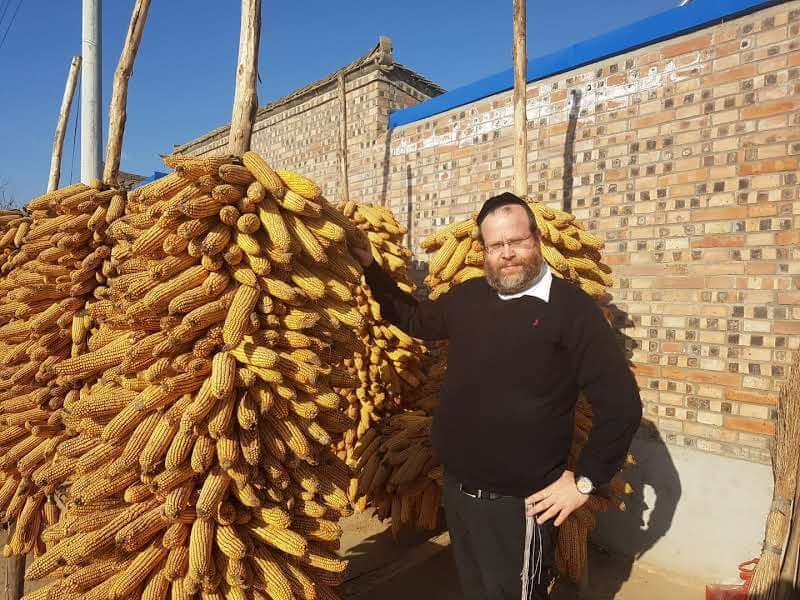
R’ Dorfman stands up. “And this is not just about strawberries. Take corn, for example. In the past, people would eat it off the cob, but today everyone knows that this is prohibited. Yalkut Yosef explicitly mentions this.
“And regarding your question – why are there more problems today? The answer is complex. We have global warming changing the environment, and we have insects moving from place to place – the Ministry of Agriculture is constantly discovering new varieties.”
He concludes thoughtfully: “As I said before – the world is changing and our knowledge is developing. What seemed simple in the past, today we understand is more complex. This isn’t being machmir – it’s being responsible. When we know more, we are obligated to act accordingly.”
Alone Against Deception and Fraud
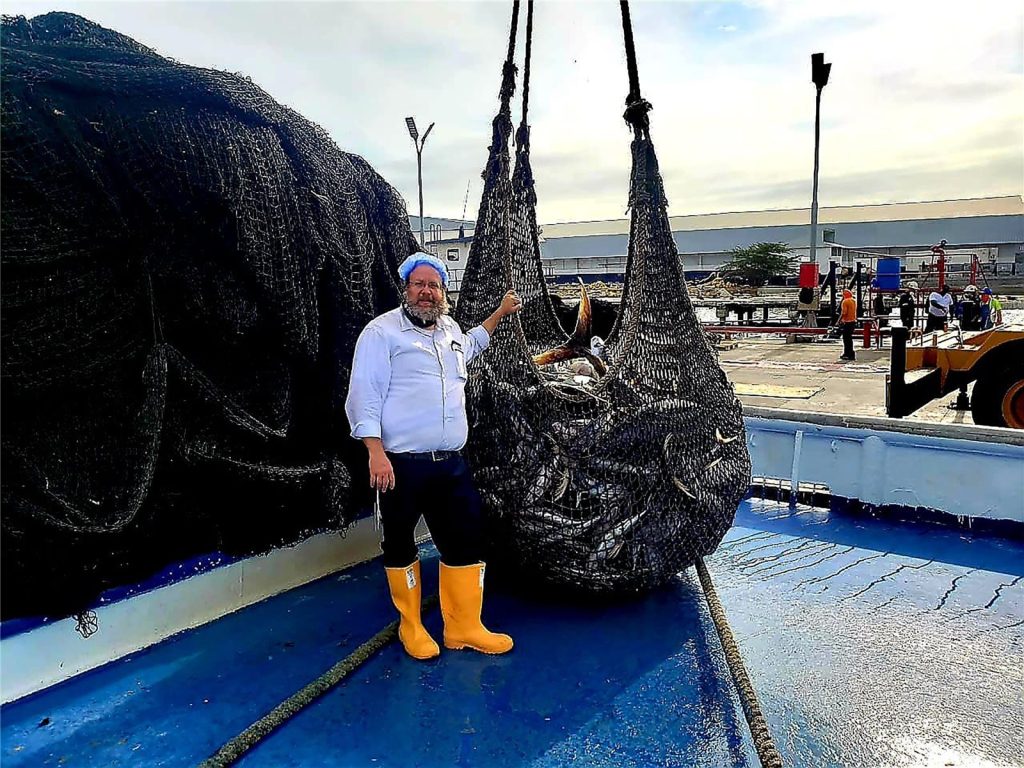
R’ Dorfman is away from home for large portions of the year. He frequently flies abroad to closely inspect food manufacturing facilities, both large and small, and supervise their operations. His journeys take him to distant and fascinating places. Through narrow alleys in Thailand, through massive factories in China, and to busy cargo ports. Everywhere he discovers stories that sound like real thrillers. “In the Far East,” he says as his voice shifts to a more serious tone, “the mentality is completely different. What looks like an innocent surface of cardboard boxes can turn out to be a real trap.”
At a fish factory in China, for example, one of the most fascinating stories took place. “I once arrived at a huge factory. Everything looked perfectly organized – piles of carefully arranged pallets. One of our supervisors, during a routine inspection, climbed onto one of the pallets to check – and suddenly, like in an action movie, the entire pallet collapsed beneath him!
“It turned out the factory was trying to deceive us: they had arranged a row of empty boxes to look like a full pallet… This is just one example of the sophisticated methods we encounter. In fish factories especially, we have countless such stories – attempts to switch fish types, hide non-kosher products, or even forge documentation.
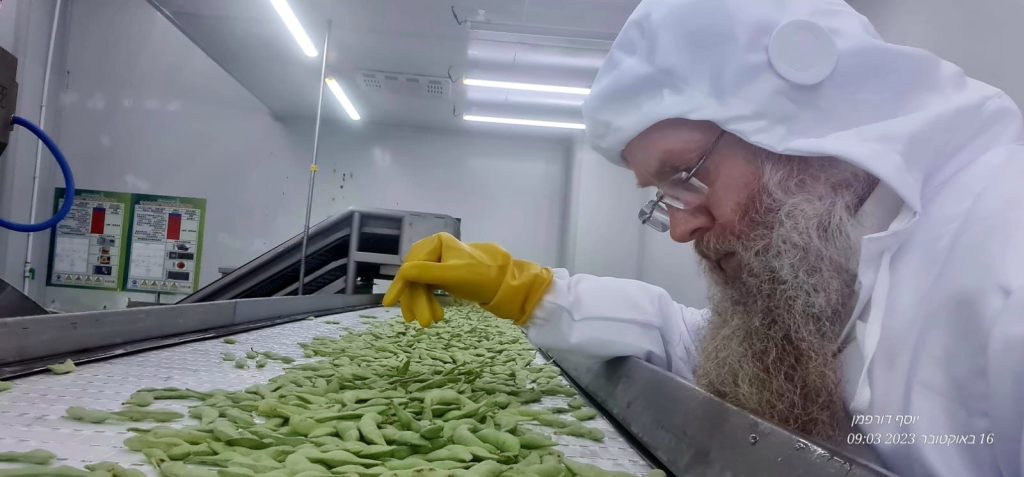
“Look,” says R’ Dorfman, pointing to an innocent-looking pineapple can, “each can like this tells a whole story.” He tells a story about the pineapple factory in Thailand. “As a mashgiach, the first thing I do is a comprehensive tour of the entire factory. I must know every stage of the production process. It’s like being a detective, as every small detail can be significant.”
At the pineapple factory, the story actually started with water. “In Thailand,” he explains, “there’s a special challenge even with the water flowing in factories, because the water there is infested with tiny insects that require special filters. But the real challenge waited for me at the coding stage. When I got to the stage where they seal the cans, they insisted that their regular code should be stamped immediately on the can as usual, but my supervisor code stamped on cans under my supervision would only appear the next day…
“I give them a new daily code every day, precisely to prevent a situation where they can prepare cans in advance. Their demand raised a red flag for me,” he continues. “When they insisted that my code wouldn’t be stamped immediately, I simply told them – ‘If so, there’s no production.’ Suddenly they offered a compromise – both codes would be stamped together on the can. But then came the sophisticated excuse – ‘You know, in Thailand it’s hot, sometimes the coding machine stops working…’”
For two days, R’ Dorfman sat in the packaging area, where cans come off the production line, and carefully watched that all cans under his supervision were sealed with both codes, the production code and the supervision code, despite all attempts by factory management to move him from there. “They tried everything,” he recalls. “They brought me fruits, invited me to the office, but I stayed attached to the packaging line, occasionally touring along the machines to check the water filters and the citric acid for Pesach, but most of the time I was there.
“On the first day we did 29 pallets, on the second day 31 – suddenly the factory worked 17 hours instead of the planned 12.
“And then came the crucial moment. I told them I wanted to go out to check the possibility of producing juice from pineapple peels,” he recounts. “They didn’t understand what suddenly happened. When I said I wanted to leave at ten in the morning, before anything came out of the pasteurizer, I saw they were nervous. When we returned, in less than two hours they claimed they produced nine pallets. I understood this was impossible – if in 17 hours we made 30 pallets, how suddenly in two hours are there nine?”
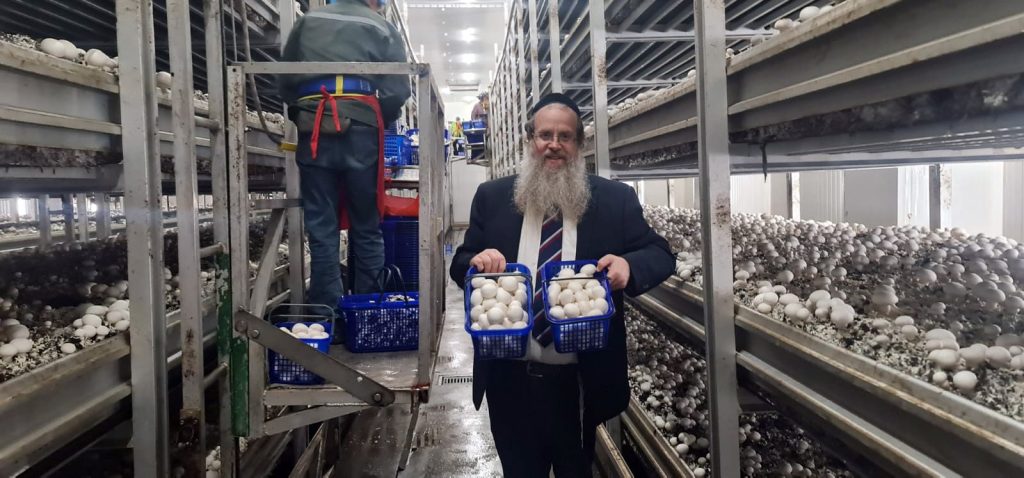
“I touched the cans,” he describes. “And half the pallet was hot – fresh cans from production. The other half? Completely cold, and without a code. They simply mixed old cans with new ones. In the end they admitted the deception to me, after I proved to them that the numbers simply didn’t add up.”
R’ Dorfman emphasizes an important point: “As a mashgiach, you must know the numbers well. How many cans can go into the pasteurizer? In this case, if 5,000 cans go in, there can’t suddenly be 6,000 or 7,000. If the line is full and running at 60 cans per minute, you can’t suddenly produce 80 per minute. The numbers don’t lie.”
A similar story occurred at a clementine factory, and also at a sole fish factory. “These tricks repeat themselves in many places,” he explains. “The attempts are similar – empty boxes, mixing merchandise, forging documentation. But if you know the processes in depth, it’s very hard to deceive you.”
With the Shluchim
As mentioned, Rabbi Dorfman’s kosher supervision journeys span across all of East Asia. “Each place is a world of its own,” he says, “from Thailand through India to China, each place has unique challenges – and also special moments.”
During these journeys, he relies heavily on the Rebbe’s shluchim, staying with them and enjoying kosher meals, and sometimes also Shabbos meals.
Despite the workload and frequent travels, he tries to be home for Shabbos. “Usually I return for Shabbos,” he explains, “but sometimes, especially in China when there’s two weeks of continuous production, it’s not possible.”
In New Delhi, for example, he visits the shliach, Rabbi Shneur Kupchik. In Beijing, he used to visit the shliach, Rabbi Freundlich. “After a whole week of work without a minyan, having Shabbos with a community is like reaching an oasis,” he describes with a smile.
“These Shabbosos during hashgacha trips are truly special moments.”
Can you tell us some of your experiences from these and other Shabbos meals with shluchim, particularly regarding kiruv?
“You know, after a long week of work in factories, of inspections and hashgacha, what I seek on Shabbos is actually the quiet, the intimacy.”
He describes Thailand, but not the one familiar to tourists. “There’s the famous Shabbos at the main Chabad House of Rabbi Nechemia Wilhelm with 450 people every Shabbos – it’s like a buzzing beehive. For my part, I prefer the quieter places like Rabbi Kantor’s, or the warm home of Rabbi Moshe Hadad, who always invites me for Shabbos meals.
“Sometimes it happens that a group of mashgichim from all kosher certification bodies sit at a Shabbos meal, exchanging experiences and knowledge. Each one contributes from his experience, tells about the deceptions they’ve encountered and the challenges they need to deal with. This sitting together has a completely different atmosphere – quiet conversations, exchanging experiences, a feeling of family.”
Thirty-Two Kilo Suitcases
Today, when he flies to Eastern countries like Thailand, India, etc., R’ Dorfman takes two suitcases each time, each weighing 32 kilos. “This isn’t just luggage,” he explains. “These are kosher products for the local community and the Rebbe’s shluchim first and foremost. Despite the quite extensive industry of kosher products in Thailand, there are products that they still don’t produce there, like cheese and other dairy products. When the shluchim thank me and say ‘thank you for the deliveries you brought,’ I always respond that this is an inseparable part of our work – not just supervising kashrus, but also ensuring kosher food for Jews in the most remote places.”
R’ Dorfman describes a recurring scene: “I sometimes sit in the kosher restaurant of the Chabad House, eating something light, and suddenly people come in – without a kipa, without anything religious about them. Women, men, young travelers or adults. They approach the small store, look at the products I brought. Some buy for their home, others are travelers looking for kosher food. And then you understand – these heavy suitcases, the trouble of bringing them from Israel, is worth everything. Every package of kosher food sold there contains something much bigger than just food. It’s a connection to home, to tradition. It’s a bridge built between a Jew and their roots, even if they themselves aren’t yet aware of it.”
In Thailand, he meets each time with the Chief Rabbi of Thailand, shliach Rabbi Yosef Chaim Kantor, and shliach Rabbi Moshe Hadad. “It’s moving to see how in the most remote place imaginable, a warm Jewish heart beats. Rabbi Kantor is responsible for the entire kosher system in Thailand, and Rabbi Hadad leads the work in the field. They’re not just kosher supervisors – they’re ambassadors of caring and faith.”
The Chabad House kitchen has over the years become a kind of lighthouse of kashrus in the entire region, a place where almost all kosher certification agencies turn for help and support.
“In the end,” he concludes, “our work is not just to maintain food kashrus. We’re part of something much bigger – a chain of mesirus nefesh that continues for thousands of years, connecting Jews in all corners of the world, and keeping the Jewish spark alive even in the most surprising places.”
Towards the end, with the plate of dried fruits before us still full, R’ Dorfman pulls out a quote from the sefer halacha Chochmas Adam: “Even something that’s presumed clean is worth examining before eating.” And adds: “Many times I’ve thus been saved from issurim. It turns out this isn’t just halachic advice – but a reminder for life: sometimes you just need to stop for a moment, observe, and appreciate what you have in front of you.”
Beis Moshiach #1449 • pp. 12-21
© 2026 Beis Moshiach Magazine. All rights reserved.
This article originally appeared in Beis Moshiach #1449. You are welcome to share it with friends and family by email or in print, provided that you do not change, add to or omit any part of it, you credit the author and Beis Moshiach, and you include a link to archive.bmoshiach.org (written out in full in printed copies).
To republish this article in a newspaper, magazine, book or website, please request permission in advance at [email protected].