How the Rebbe Saved the Grandson of the Holy Miser
From the TzaddikStory.org collection
Hi, my name is Rabbi Dovid Schochet, and I want to share an amazing story that taught me that Hashem plans everything, even when we don’t realize it.
I was born in Switzerland and grew up in Europe after World War II. When I got older, I traveled to New York to study at the Lubavitch yeshiva in Crown Heights. At first, I wasn’t planning to become a rabbi. My original goal was to go into business, but Hashem had something else in mind for me.
In 5717 (1957), when I was just 25 years old, the Lubavitcher Rebbe sent me to Toronto, Canada, as his Shliach. I was so confused. I’d planned to be an electrical engineer. I wasn’t looking for this kind of job! But the Rebbe gave me this mission, and I took it very seriously. Toronto’s Jewish community was small but growing, and my job was to help connect them to Yiddishkeit and Torah.
* * *
One day, after I had been in Toronto for some time, I got a phone call from Rabbi Mordechai Zajac, the Rebbe’s Shliach in Buffalo, New York.
Life in 1960s America felt very different from today. People were focused on their families and communities. Neighbors knew each other well, and everyone looked out for one another. At the same time, it was also a time of change.
Many young people were starting to question the world around them. They wanted to understand big ideas, like peace, justice, and how to make the world a better place for everyone in it. College campuses were full of energy, with students talking about their hopes for the future and searching for meaning in their lives.
It was in this atmosphere that Rabbi Mordechai Zajac called me with a special request to speak to university students in Buffalo, New York.
“Rabbi Schochet,” he said, “I’d like to invite you to Buffalo to talk to the university students here.”
“University students?” I asked. “Are they Jewish?”
“Well,” Rabbi Zajac said slowly, “there will be some Jewish students, but most of the audience will be non-Jewish. And there will also be speakers from other religions as well.”
I paused for a moment, unsure of how to respond.
“That doesn’t sound like the kind of event I’d normally attend,” I said honestly. “I’m used to speaking to Jewish groups, not mixed audiences. And besides, I’m very busy here in Toronto. I’m sure you can find someone better. You don’t need me.”
Rabbi Zajac didn’t push me. “I understand,” he said. “But maybe you should ask the Rebbe what to do. It could be an important opportunity.”
He was right. I didn’t want to say no without asking the Rebbe first. So, I contacted Rabbi Chodakov, the Rebbe’s secretary – who also happened to be my uncle! Great connections, huh?
I sent a message to the Rebbe’s office, explaining the situation and asking if I should go.
Not long after, I got the Rebbe’s answer. The Rebbe said it was worthwhile to reach non-Jews in a positive way, especially about the mitzva of Tzedaka – giving charity which is one of the mitzvos that even goyim should do.
Why Tzedaka, of all things? I didn’t know, but if the Rebbe had said so, that’s what I would do.
Around that time, an idea came to me… I wanted to share a specific story – one connected to the importance of Tzedaka. It was about Rabbi Yom Tov Lipmann Heller, also known as the Tosfos Yom Tov. I don’t remember if it was the Rebbe’s idea or mine, but it felt like the perfect way to explain the power and importance of giving.
“Looks like I’m going to Buffalo,” I said to myself with a smile.
I called Rabbi Zajac back. “I’ve decided to come,” I told him.
“That’s wonderful!” he said, excited. “The students are going to learn so much from you.”
With the Rebbe’s encouragement, I felt ready for the challenge. I began preparing my speech, focusing on how to explain the beauty of Tzedaka in a way everyone could relate to. I also spent time researching the story of the Tosfos Yom Tov.
* * *
I showed up as expected at the college campus in Buffalo. Let me tell you – it was a strange place in those days.
The students looked so different from what I was used to. Some had long hair, wild clothes, and big beads around their necks. Others were wearing jeans and T-shirts with slogans I didn’t understand. They were sitting in groups on the grass, laughing, talking, or even playing guitars.
I was a Chassid, but having grown up in Switzerland, I had a worldly side to me. People liked that I could talk to all kinds of people – even though I had grown up in yeshiva and now worked as a Rabbi in Toronto.
But college campuses in the 1960s? That wasn’t a place rabbis like me usually visited. It felt like I’d stepped onto a different planet. It was almost like a Rabbi walking on Mars!
As soon as I walked in, I felt all eyes on me. People started looking at my clothes and whispering to each other.
“Who’s that guy?” I overheard one student ask his friend.
“I think he’s a rabbi,” the other said, tilting his head in curiosity.
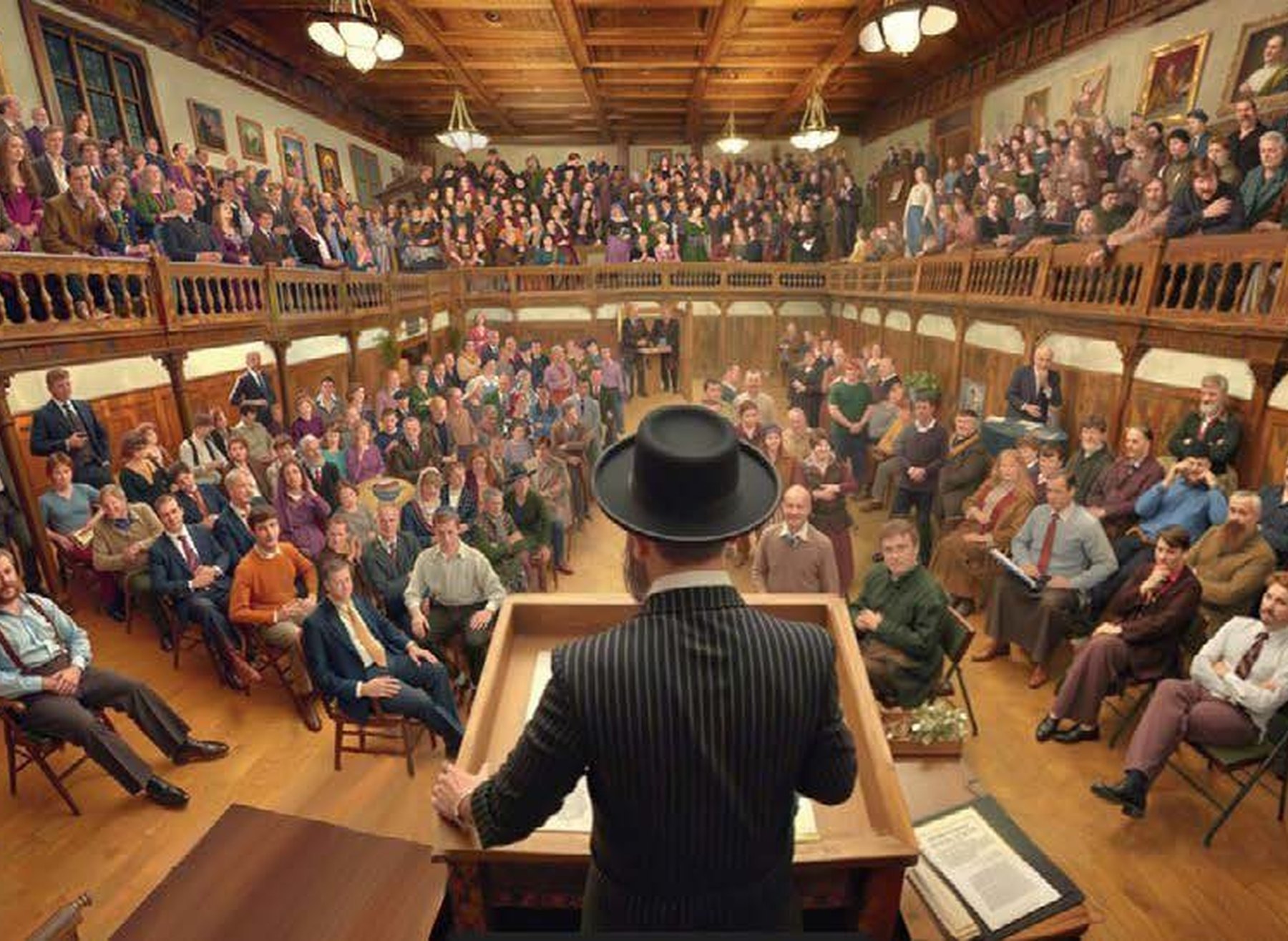
Some were Jewish, but most weren’t. It was a big room, with a lot of people talking to one another. And then I saw it – a huge table, set up with microphones for priests, ministers, and people from all kinds of religions.
“Is this really where I’m supposed to speak?” I thought to myself, looking around nervously.
But I knew why I was there. I was a Chassid, and I had my marching orders. The Rebbe had told me exactly what to talk about: Tzedaka.
I stood off to the side, listening as the other speakers talked about their religions. A priest spoke about kindness, a minister talked about helping others. They all seemed so comfortable in front of the crowd.
Then it hit me: This is it. I’m here to represent Yiddishkeit. I’m the one who’s going to show these people what the Torah says about helping others.
I straightened my hat and took a deep breath. “Let’s do this,” I thought, stepping toward the podium.
As I walked up, the room quieted down. All those people – Jewish and non-Jewish – were waiting to hear what I had to say.
* * *
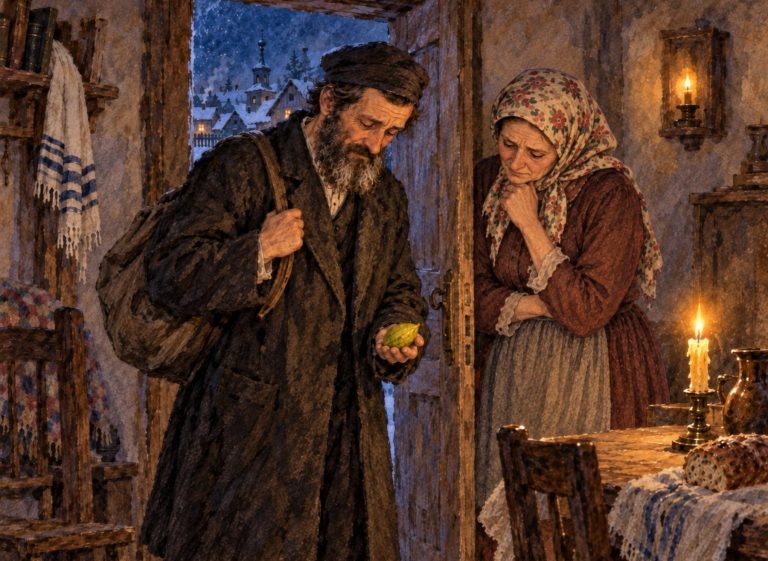
A long time ago, in the 1600s, in the busy city of Kraków, Poland, there lived a man named Yisroel. He was very rich, but everyone in town said he wasn’t the type to share. They called him “Yisroel Goy” because he didn’t seem to act as a Jew should.
“Don’t bother knocking on Yisroel’s door,” people whispered. “He won’t give you a single penny for Tzedaka!”
Children would sing as he walked by: “There goes Yisroel Goy, so rich and mean, He won’t give a crumb, not even a bean!”
Yisroel heard the kids singing and the people talking, but he never said a word. He just kept walking, his face serious. He hardly ever talked to anyone, and his door stayed locked all the time.
Years went by, and Yisroel grew old and weak. Before he died, he made a strange request: “When I pass away, please inscribe on my tombstone the name everyone calls me: ‘Yisroel Goy’.”
The Chevra Kadisha was shocked. Why would anyone want such a shameful name on their tombstone? But they had to respect his final wish, and to be honest, they didn’t really mind. He was such a mean person…
When Yisroel passed away, the people of the town were still angry about his seemingly selfish ways. The Chevra Kadisha felt he was unworthy of being buried next to respectable members of the community. Instead, they buried him in an area of the cemetery called Hekdesh, which was reserved for society’s outcasts and the destitute. They wrote on his tombstone exactly what he had requested: “Yisroel Goy.”
A few days after the funeral, something strange happened in Kraków. The town’s butcher and baker, two prominent members of the community who had always been extremely charitable, suddenly stopped giving money to the poor.
The poor people who had relied on them were desperate.
“Rabbi, please help us!” a woman cried to Rabbi Yom Tov Lipmann Heller, also known as the Tosfos Yom Tov. “The butcher and baker no longer give us Tzedaka for food. How will we feed our families? Are our children going to go hungry?”
The Rabbi was surprised. These two businessmen had always been known for their generosity. He called them to his study to ask why they had stopped their charitable giving.
They looked at each other nervously before answering.
“Rabbi,” the butcher said quietly, “the truth is, we were never the ones giving the Tzedaka.”
“What do you mean?” the Rabbi asked, confused.
The baker explained, “It was Yisroel—the man everyone called a miser. For years, he would give us large sums of money every week and make us promise to distribute it to the poor. But he made us swear never to tell anyone where the money came from. He wanted to give Tzedaka in secret, without anyone knowing.”
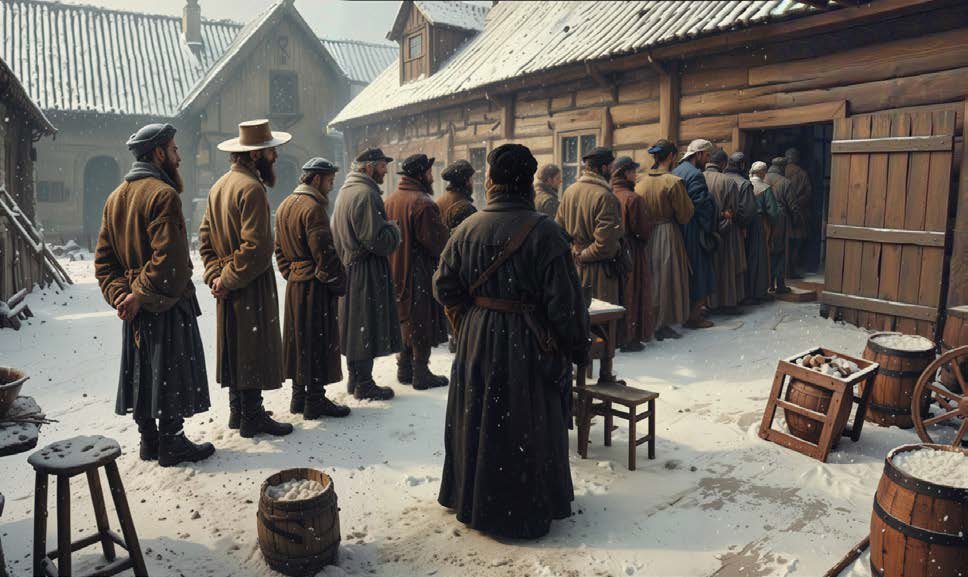
“He warned us never to reveal his identity,” the butcher added. “He said the greatest mitzva is to give charity without seeking honor or recognition. Now that he has passed away, we no longer have funds to distribute.”
The Rabbi sat in stunned silence. All this time, the man everyone had thought was stingy and selfish had actually been supporting the entire community’s poor! And he had chosen to accept the town’s scorn rather than reveal his good deeds.
Tears filled the Rabbi’s eyes. “All this time, he hid his kindness. He didn’t want honor or recognition. He only wanted to fulfill the mitzva of Tzedaka in secret. What a holy man he was.”
From that day forward, Rabbi Yom Tov Lipman could not rest. He davened for hours every day, begging Hashem for forgiveness – for himself and for the community – for the way they had treated Yisroel.
The Rabbi stood in the synagogue that Shabbos and addressed the community.
“My friends,” he began, his voice steady but filled with emotion, “we owe Yisroel an apology. We thought he was selfish, but he was a Tzaddik, who gave Tzedaka quietly, so no one would feel embarrassed. We must honor his memory.”
The Rabbi then asked that they add the word “Kadosh” (holy) to Yisroel’s tombstone. This changed the inscription to read “Yisroel Goy Kadosh,” which forms the words of a passuk meaning “Israel is a holy nation.” What had once been an insult was now transformed into words of honor and holiness.
Years later, as the Rabbi neared the end of his life, he made a special request. “When my time comes,” he told the Chevra Kadisha, “bury me near Yisroel. He was truly a Tzaddik. I want to rest near someone so holy.”
So Rabbi Yom Tov Lipman Heller was buried beside Yisroel the Holy Miser in the Hekdesh section of the Rema Cemetery in Kraków, Poland. To this day, their graves lie side by side, teaching us all never to judge others too quickly and to value their hidden acts of kindness.
* * *
All this time, I’d been standing on stage, telling the story of Yisroel the Holy Miser, sharing every detail. When I finished, I gave a speech about the importance of giving charity, whether in public or in private. I explained how it helps people and brings kindness into the world.
When I finished speaking, the audience clapped loudly. I nodded, thanked them, and stepped off the stage.
As I reached the bottom of the stairs, I noticed a young priest from another religion running toward me.
“Rabbi! Rabbi!” he called, a little out of breath. “Please, can you tell me that story again?”
I was surprised. “Tell you the story again?” I asked. “Well, my English isn’t going to get any better than it was on stage. Are you sure hearing it again will help?”
“Yes, please,” the priest said eagerly, nodding. “I just need to hear it again. It’s such an amazing story!”
I studied him for a moment. What could he possibly want? I thought to myself. Maybe he had questions about Judaism, or maybe about his own religion. Whatever it was, it seemed like it could take a while. And honestly, I wasn’t too thrilled about being seen in public, having a conversation with a priest.
“Well,” I said, trying to sound polite but firm, “I’ve had a long day of traveling, and I’m pretty tired. But if you really want to talk, you can come to my hotel later tonight. I’ll have more time then, and I’d be happy to discuss it.”
The priest nodded again. “Thank you, Rabbi. I’ll see you later.”
As I walked away, I thought to myself, “He probably won’t come. People say these things all the time, but they don’t follow through.”
But little did I know, this was just the beginning of something much bigger.
* * *
I wasn’t sure if the ‘galach’ would actually show up, but sure enough, that evening, there was a knock at my hotel room door. When I opened it, there he stood, looking a little nervous.
“Rabbi,” he said quickly, “can you tell me the story again?”
I raised an eyebrow. “The same story? You already heard it. Are you sure you need to hear it again?”
“Yes, please,” he said, his hands fidgeting. “I just need to hear it again.”
So I repeated the story, step by step. As I spoke, I noticed that the galach looked even more nervous. He kept looking back and forth, like he was checking if anyone else was watching.
When I finished, I leaned back, thinking that would be the end of it. But then he said, “Can you… can you tell it to me, just one more time?”
“One more time?” I said, trying to hide my frustration. “Look, this story isn’t short. It’s got a lot of details, and I’ve already told you twice!”
The galach nodded quickly, “Please, Rabbi. It’s important. I need to hear it again.”
So, I told the story for the third time. By now, I was really wondering what was going on.
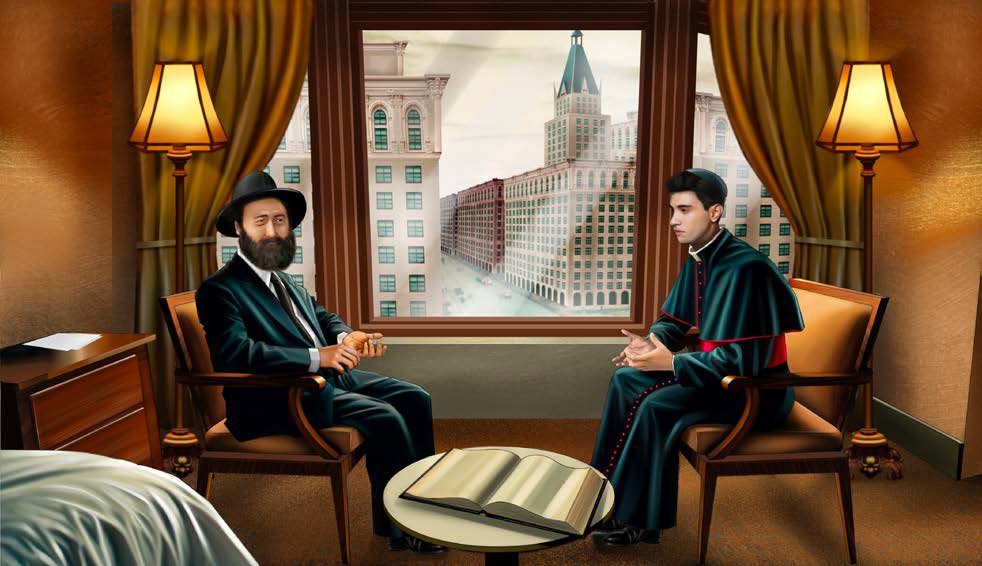
When I finished, he looked at me nervously and said, “One more time?”
Now, I was annoyed. “Listen,” I said, “as much as I enjoy telling stories, this is getting ridiculous. This isn’t a two-minute tale. Why do you keep asking me to repeat it? What’s going on here?”
He stammered, “I just… I just want to make sure I understand everything.”
I sighed and shook my head. “By now, you should know it by heart! You’re not a fool – you seem like a smart person. So why do you need me to say it again and again? Just tell me – what do you want with this story?”
The galach looked at me, his face pale, but he didn’t say anything right away. I sat there, staring at him, waiting for an answer. Whatever he was hiding, it was clear this wasn’t just about the story.
* * *
Eventually, the galach looked at me and said softly, “I think the man you’re talking about – the guy who didn’t give money, the miser in the story – was my grandfather. Well, maybe my great-great-great-grandfather, way back up the family tree, but… still a family member.”
“Your grandfather?!” I asked, raising an eyebrow. “But this story happened hundreds of years ago, and all the people in the story were Jewish.”
He paused and looked around the room nervously, even though it was completely empty – like he wanted to make sure no one was listening.
“The thing is,” he said slowly, “I heard this same story from my mother, when she was passing away. She told me that we’re that man’s family – the miser.
“At the time, I thought she was just making up some crazy story. She was really sick, and I didn’t know how to check if it was true or even who I could ask. And, well, me being a priest and all… you can imagine how strange it felt.”
I pointed to the cross around his neck. “You’re sitting here, as a priest, telling me this is your family? How could this possibly connect back to you?”
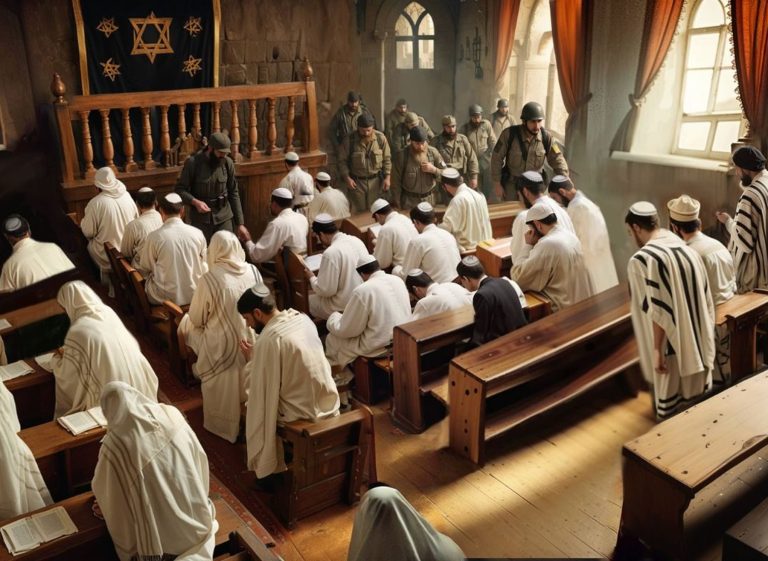
The galach took a deep breath and finally said quietly, “…I’m secretly Jewish. My father met my mother after World War II. She was a Jewish refugee. My father was an officer in the army, and they met while he was stationed in Europe. They became friends, and he wanted to marry her.
“When he brought her back to the United States, there was one condition: she had to promise never to tell anyone she was Jewish. Not his family, not the neighbors – no one.”
“In the South, where my father was from, Jews weren’t accepted, and my father didn’t want anyone to know. Maybe he was scared for her, maybe it was for himself, but whatever it was, my mother agreed to the promise and kept it her whole life. She never told anyone – not my father’s family, not our neighbors. She raised me as a non-Jew. I went to church, and later, I became a priest. That’s what my father wanted for me.”
He paused, his face heavy with emotion. “But my mother passed away recently,” he continued. “Just a few weeks before she died, she called me to her side. She told me the truth: You are a Jew, she said. I kept it hidden, but it’s who you are. And that story of the miser, Yisroel… he was your great-grandfather.”
“At the time,” the galach said, “I just thought my mother had lost her mind. It didn’t make sense to me. But now, you’re repeating the story exactly the way she told it to me. And now I remember her last words: she told me that she was Jewish… which means that I am Jewish.”
As you can imagine, I was completely shocked. I stood up, walked over to him, and gave him a big hug.
“If what your mother said is true,” I told him, “then you are 100 percent Jewish! You should get in touch with a local Chabad Shliach in your city. He’ll help you figure out the next steps.”
I got him the Shliach’s number, and he thanked me, looking like a weight had been lifted off his shoulders.
When I left Buffalo, I couldn’t stop thinking about what had happened. Meeting this galach, who turned out to be a Jew, was incredible. I felt in my heart that this was the reason the Rebbe had sent me to Buffalo to speak. And not just to speak – but to share the story of Yisroel the Holy Miser, and the power of Tzedaka.
* * *
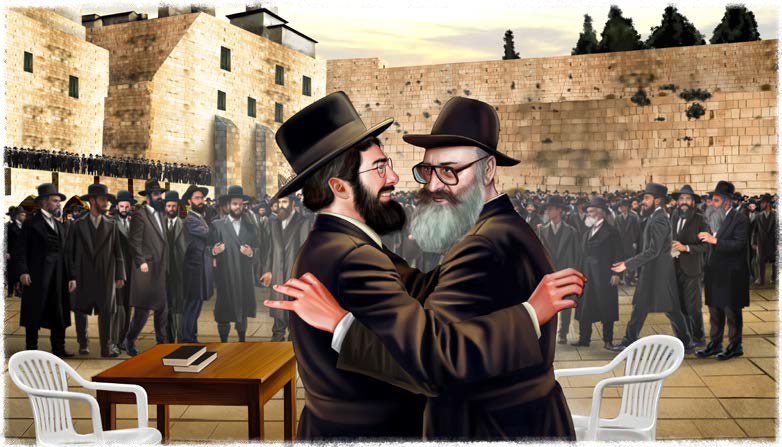
Years later, I was traveling to Eretz Yisrael, and I visited the Kosel. As I stood there, taking in the holy sight, I suddenly heard someone call out, “Shalom Aleichem, Rabbi Schochet!”
I turned around, surprised. “Shalom Aleichem,” I replied. “Do I know you?”
The man smiled at me. I looked him up and down, trying to figure out who he was, but I didn’t recognize him.
“I know you from one day in Buffalo,” he said, “but you know the old me. I am the galach – the priest – related to the Jewish miser from Kraków.”
Then it clicked. I remembered who he was! But he looked completely different now. He wasn’t dressed like a galach anymore. He looked like a fully frum Yid – a Chassid, in fact.
“Now do you recognize me?” he asked with a wide smile on his face. “I took your advice and called a Rabbi in my city. That phone call changed my life. I decided to start over and become a Jew. I even moved to Eretz Yisrael!”
He continued, “My rabbi suggested I go through something called a giyur l’chumra. That’s a special conversion some people do when there’s doubt about their family history, just to make everything clear according to halacha. I wanted to make sure there was no question about my Jewishness. And now, Baruch Hashem, I’m fully Torah-keeping, and I’ve even become a Breslover Chossid! It’s so nice to see you again, Rabbi!”
I stood there amazed, smiling back at him. The priest I met in Buffalo, who had come from the family of the miser who didn’t give Tzedaka, was now a pious Chassid, standing at the Kosel! Wow! Just Wow!
* * *
I was amazed at how this man had turned his life around, all from the one meeting we had in Buffalo. That’s when I knew for sure that he was the reason the Rebbe had sent me there that day.
There are no coincidences. Hashem had drawn him to my lecture that day, just as Hashem sent me to speak in Buffalo. Each of us has a journey, and Hashem is the One guiding us along the way. Every journey is part of Hashem’s special plan. How amazing it is when we get to see that plan unfold, right before our eyes!
* * *
But wait – if you thought that was an amazing story, I have one more detail to share.
Just a few years ago, I learned something incredible: I am a descendant of the Tosfos Yom Tov – the famous rabbi in the story!
Think about it. Hashem had planned for a descendant of Yisroel, the man who secretly gave so much Tzedaka, and a descendant of the Tosfos Yom Tov, the Rabbi who was connected to the story, to meet hundreds of years later… in Buffalo, New York, of all places! And what for? So the Rabbi could help save this precious Neshama and bring him back to Yiddishkeit.
You never know. You just never know.
This inspiring story was told by Rabbi Dovid Schochet, of blessed memory, who passed away on January 28, 2024 (18 Shevat 5784). May his memory be a blessing.
Salute #1455 • pp. 18-25
© 2026 Beis Moshiach Magazine. All rights reserved.
This article originally appeared in Beis Moshiach #1455. You are welcome to share it with friends and family by email or in print, provided that you do not change, add to or omit any part of it, you credit the author and Beis Moshiach, and you include a link to archive.bmoshiach.org (written out in full in printed copies).
To republish this article in a newspaper, magazine, book or website, please request permission in advance at [email protected].