The Chozeh & The Clock
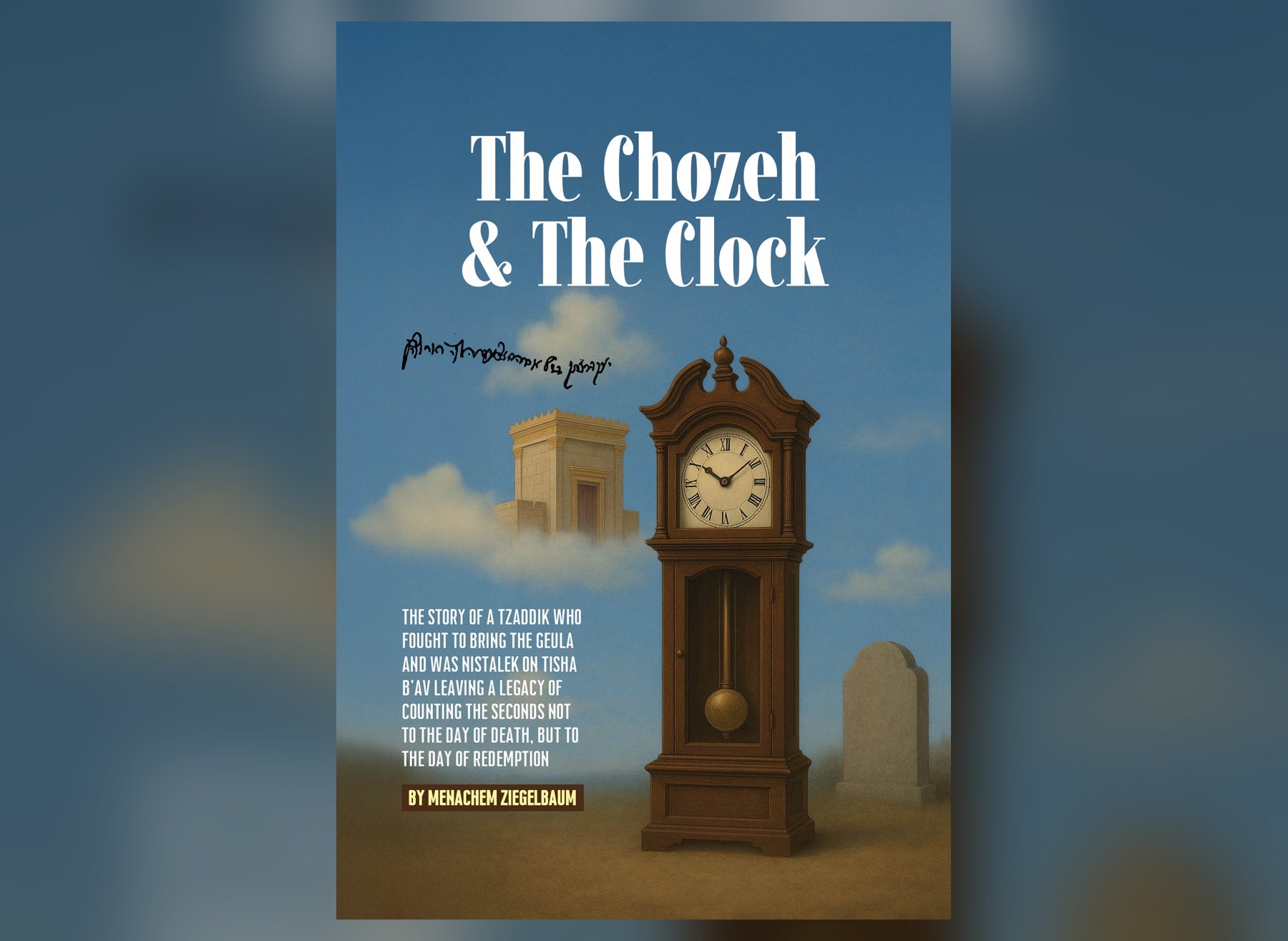
The story of a tzaddik who fought to bring the Geula and was nistalek on Tisha B’Av, leaving a legacy of counting the seconds not to the day of death, but to the day of Redemption.
I
All his life, the Chozeh of Lublin burned with anticipation for the Geula of the Jewish people. Chassidim recount that every night, before going to bed, the Chozeh would ask his shamash to wake him immediately if the footsteps of Moshiach were suddenly heard.
However, the Chozeh did not settle for mere anticipation. He made numerous efforts to draw near and hasten the actual arrival of Moshiach and the Geula of the Jewish people – even to the point of self-sacrifice.
One year, the Chozeh immersed himself in lofty and exalted meditations and prayers, until he was certain that the hour of Geula was at hand. At that time, he confided in his great student, Rabbi Yaakov Yitzchok – the “Yid HaKadosh” of Peshischa – that from the perspective of the simple Jews, the Geula could already have arrived. But it was precisely the men of stature, due to their pride – each one saying, “I will reign” – that delayed it.
Once again, the Chozeh made another attempt to hasten the Geula. This time, he joined forces with other tzaddikim, hoping that together, with combined strength, they would succeed in their heavy mission. He summoned his dear and faithful friend, Reb Mendel of Rimanov, to Lublin. The Chozeh hoped that Reb Mendel would stay with him for five consecutive Shabbosos, during which they would perform all the necessary mystical yichudim (spiritual unifications).
But the Satan was on guard and disrupted their plans, preventing the effort from coming to fruition. Still, the Chozeh did not despair and began to wait for another opportune moment.
II
That opportunity came on the night of the Pesach Seder, in the year 5573 (1813), the Yom Tov marking the Geula of the Jewish people from Egypt. A group of tzaddikim gathered around him, all dedicated to hastening the Geula, hoping that together they would succeed. The Chozeh chose a group that represented all regions of Chassidus: from Poland, Reb Yaakov Yitzchok, the “Yid HaKadosh”; from Russia, Reb Mottel of Chernobyl; from Hungary, Reb Eizik of Kaliv.
The Seder night arrived – a wondrous Leil Shimurim. The Chozeh’s preparations reached their peak; he intensified his kavanos and tefillos. Many Chassidim came to his home to have the Seder with him. But early on, he sensed that the moment had passed – his holy companions were not joining him in his mystical unifications, and he was left alone.
Still, the Chozeh did not retreat. A man of self-sacrifice, he continued his efforts to hasten the Geula with the same devotion. But even the next attempt, scheduled for the solemn and joyous days of the month of Tishrei in 5575 (1814), failed. The Chozeh himself once said that the times were extremely tense and the situation was dangerous. “I fear,” he said to his great talmidim at the time, “those years that even Moshe feared when he said, ‘For I was afraid of the anger and wrath’…
The final attempt also failed on the night of Simchas Torah. That night, the Chozeh encouraged his Chassidim to keep dancing, saying: “Drink and rejoice! If we have a joyful Simchas Torah, we will also have a joyful Tisha B’Av.” He was referring to the hope that the Geula would arrive by then.
At one point, the tzaddik withdrew from the dancing to rest in his room. But the sitra achara (the “other side”—forces of evil) does not sleep either…
The Chozeh entered his room, sensing both a moment of favor and danger. He called his wife and warned her to stay with him the entire time until he rose. He knew that when two people are present, the samech-mem cannot harm them. The rebbetzin stood watch, her eyes open the whole time – but Satan tricked her. Suddenly, a baby’s crying voice was heard, desperate and loud. The rebbetzin could not hold back and stepped out briefly to calm the child. The moment she left the room, the unthinkable happened – – –
What happened was later passed along by Chasidim from mouth to ear, but few truly knew what exactly occurred. Among Chassidim, it became known as “The Fall.”
When the rebbetzin returned to the room, she was terrified to see that the Rebbe was no longer in his bed. All she could say in shock was that she had just managed to see a pair of hands reaching out and lifting the Rebbe from his bed and throwing him out the room’s window. The window was very narrow, small, and high off the ground. No one could understand how the Rebbe’s body could have fallen through such a narrow, high window…
A mystery it was – and a mystery it remains to this day – – –
In Lublin, shock and despair followed.
The singing stopped. The dancing stopped. Everyone rushed out to search for the Rebbe who had disappeared through the window. After long hours of searching, Reb Eliezer of Chmelnik saw, about 25 meters away, a crumpled, injured figure writhing among the trees. Because it was dark, it was difficult to identify the person. As Reb Eliezer got closer, he heard a moan of pain. He could not recognize the Rebbe’s voice.
“Who are you?” Reb Eliezer asked hesitantly.
The answer came quickly: “Yaakov Yitzchok ben Mattil,” came the pained reply.
Reb Eliezer burst into wails that summoned the rest of the group.
As a result of the fall, the Chozeh became ill and never rose from his bed again. His great talmid, the famed baal teshuva, Professor Chaim Dovid Bernhard, was summoned to his bedside, but even he could not find a cure. The professor tried to diagnose the ailment and asked where the Rebbe was hurting. The Rebbe answered: “In the left thigh.” The professor attempted various treatments, but the tzaddik dismissed them. “The entire sitra achara has united against me,” he told his talmid-doctor. “The generation is still not ready.”
And so, the Chozeh remained bedridden from Simchas Torah until Tisha B’Av – the day of his passing. Only then were his words understood: “We did not merit a joyful Simchas Torah, and we did not merit a joyful Tisha B’Av – quite the opposite…”
III
After the Chozeh of Lublin passed away on Tisha B’Av 5575 (1815), his three sons divided his inheritance. His son, Rabbi Yosef of Turtshin, received the wall clock that had always hung in his holy father’s room, along with his sacred garments, made of silk; clothing the tzaddik wore on Shabbos and Yom Tov.
After the shiva, Reb Yosef did not delay and set out for his town, Turtshin, along with the precious heirlooms. Since these items were dear to him, he guarded them carefully.
Upon leaving the city, the sky darkened, lightning flashed, thunder roared, and a heavy rain began to pour. The road was ruined, and the wagon sank deep in the mud. With no choice, Reb Yosef sought shelter in a roadside inn owned by a simple Jewish villager on the outskirts of a settlement.
Reb Yosef remained at the inn for three days and nights until the storm passed and the land calmed. Only then could he resume his journey. However, the innkeeper demanded a fair payment for hosting and providing food during those days. Reb Yosef, lacking any money, was left with no choice but to offer, with deep sorrow, one of the few items he had just inherited as payment.
The villager called his wife, and together they discussed which item to take. After a short discussion, they decided they had no use for the clothes or the belt. “Better we take the clock,” they said. “At least it will tell us when it’s time to milk the cows…”
They took the clock and hung it on their wall. In those days, clocks were rare in ordinary homes – only nobles and lords owned them – so this was considered a real luxury.
A few years later, the holy Rabbi Yissachar Ber of Radoshitz came to the same inn. The villager honored him and gave him a fine room. But all night long, the tzaddik could not sleep. He got up, sang, played music, and even danced with immense joy.
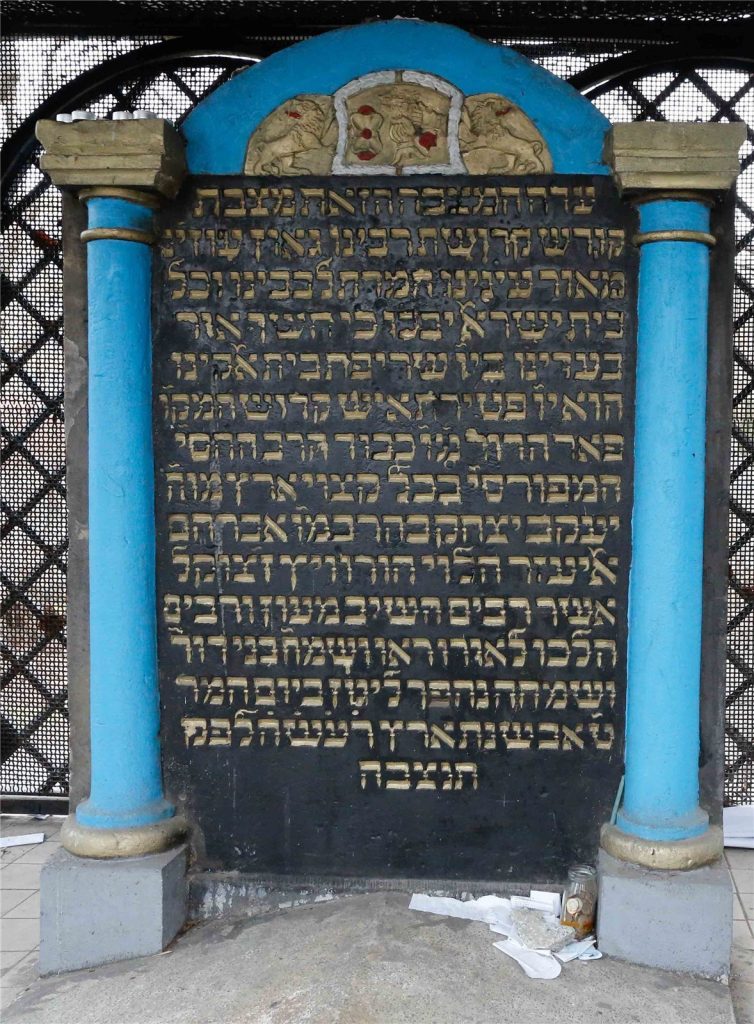
In the morning, the villager, unable to restrain himself, asked the Rebbe why he had been so joyful all night.
“Where did you get the clock that hung in my room?” the tzaddik asked.
The villager told the whole story of how the clock came into his possession. The Rebbe asked him to describe the man who gave it up. When the villager did so, the Rebbe’s face lit up with joy:
“Indeed, I felt it – this is the Chozeh of Lublin’s clock! For while a regular clock, with every tick, tells its owner he is one moment closer to his death, the Chozeh’s clock, with every tick, proclaims: ‘We are one hour closer to the true and complete Geula!’
“That is why I couldn’t sleep, out of pure joy.”
(From “The Chozeh of Lublin” by Y. Alfasi; Kodesh Hilulim)
Beis Moshiach #1470 • pp. 34-37
© 2026 Beis Moshiach Magazine. All rights reserved.
This article originally appeared in Beis Moshiach #1470. You are welcome to share it with friends and family by email or in print, provided that you do not change, add to or omit any part of it, you credit the author and Beis Moshiach, and you include a link to archive.bmoshiach.org (written out in full in printed copies).
To republish this article in a newspaper, magazine, book or website, please request permission in advance at [email protected].