Beneath the Shtreimel
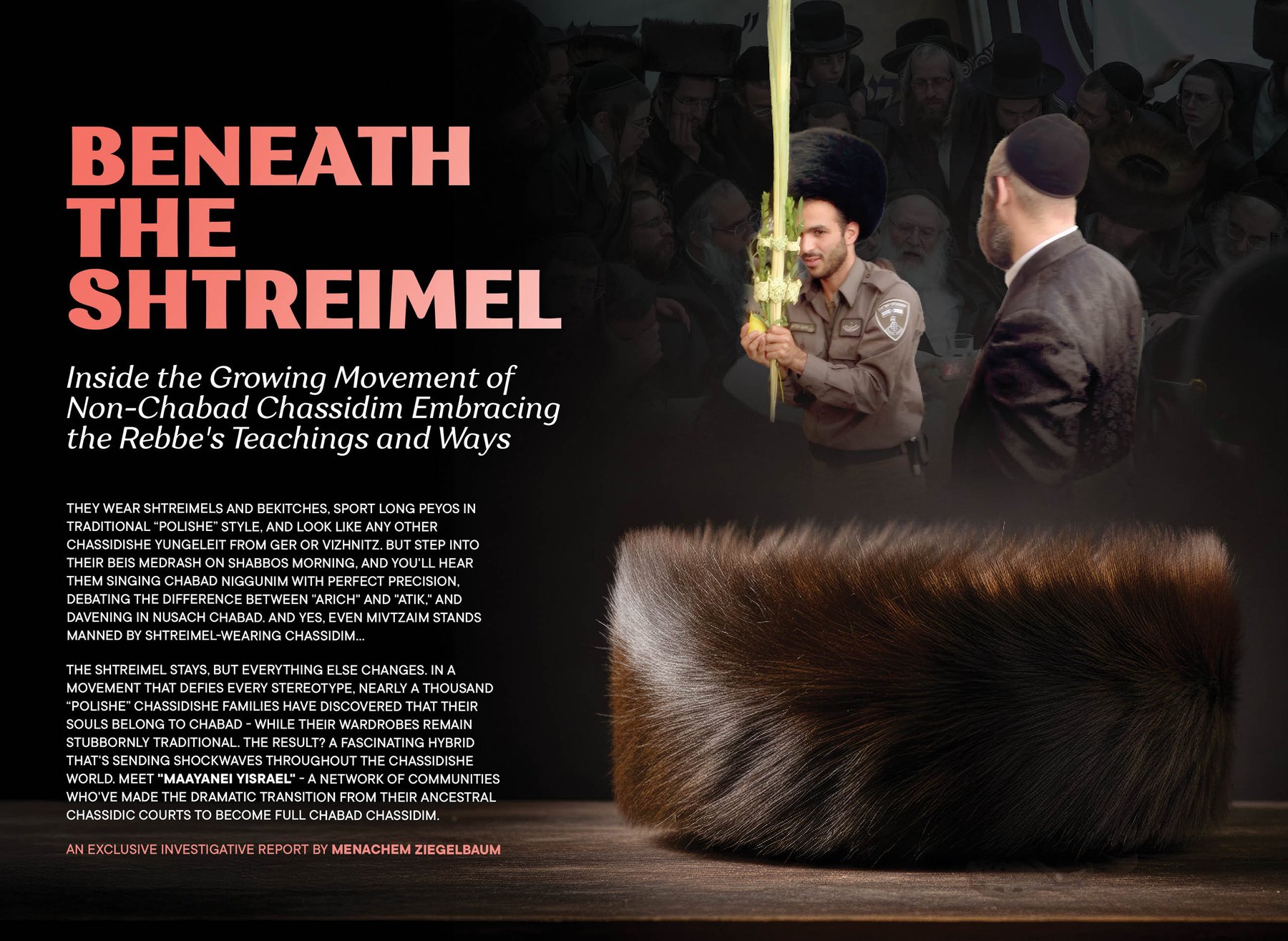
Inside the Growing Movement of Non-Chabad Chassidim Embracing the Rebbe’s Teachings and Ways
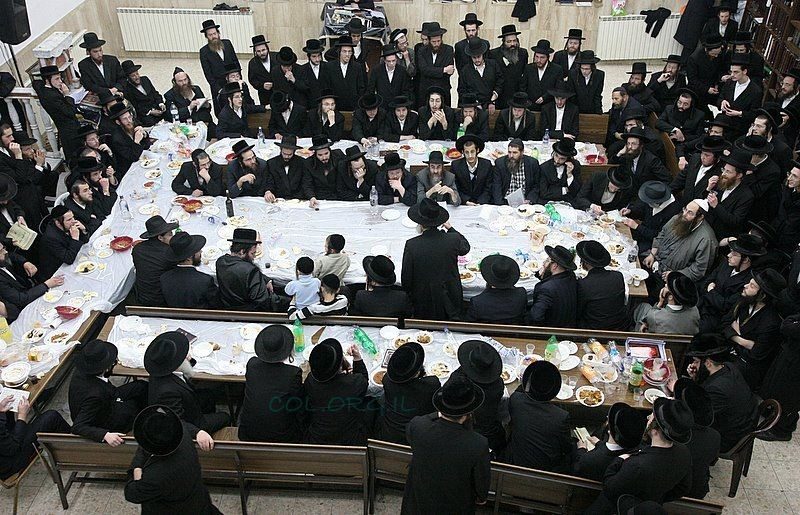
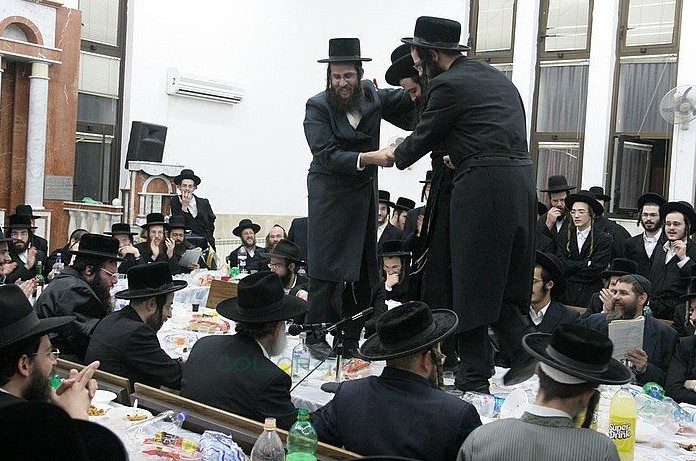
They wear shtreimels and bekitches, sport long peyos in traditional “Polishe” style, and look like any other Chassidishe yungeleit from Ger or Vizhnitz. But step into their beis medrash on Shabbos morning, and you’ll hear them singing Chabad niggunim with perfect precision, debating the difference between “Arich” and “Atik,” and davening in Nusach Chabad. And yes, even mivtzaim stands manned by shtreimel-wearing Chassidim… The shtreimel stays, but everything else changes. In a movement that defies every stereotype, nearly a thousand “Polishe” Chassidishe families have discovered that their souls belong to Chabad – while their wardrobes remain stubbornly traditional. The result? A fascinating hybrid that’s sending shockwaves throughout the Chassidishe world. Meet “Maayanei Yisrael” – a network of communities who’ve made the dramatic transition from their ancestral Chassidic courts to become full Chabad Chassidim. An exclusive investigative report.
When you see them, you won’t really know they’re Chabadniks. They wear shtreimels or spodiks, kapotes or Chassidic chalats (plain or floral), “half-pants” (halbe hoizen) and white or black stockings pulled to the knees. From both sides, long peyos dangle in various styles, each Chassidic group according to its ways.
But in the morning or evening, you’ll be surprised to find them sitting and studying Likutei Torah or Sefer HaMaamarim Melukat, or perhaps even delving into a deep maamar by the Rebbe Maharash. Some sit with a chavrusa and clarify “Arich” and “Atik,” debating “natural love and fear” versus “intellectual love and fear.”
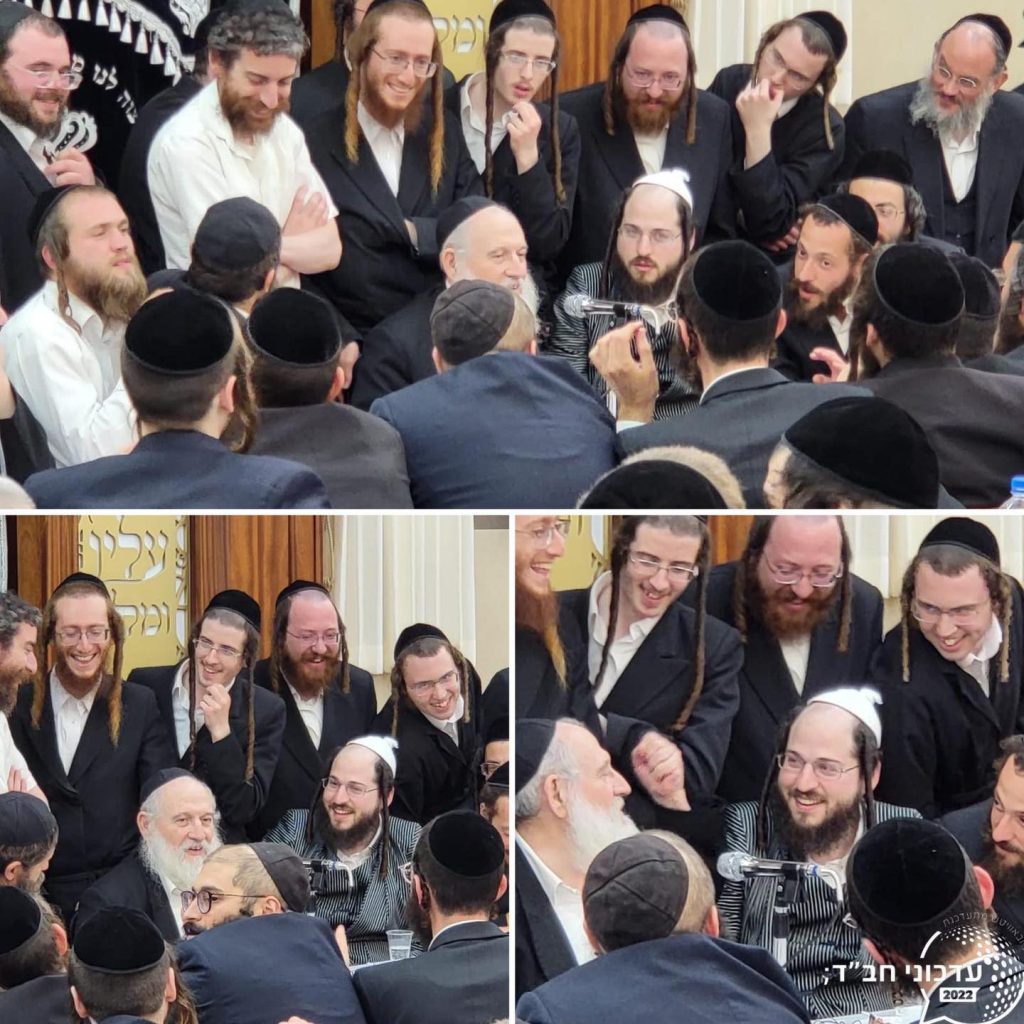
At farbrengens they’ll surprise you with deep, lesser-known Chabad niggunim, without missing even a single “kneitch.” In short, a Chabad farbrengen in every respect.
Quietly (and perhaps not so quietly, depending on whom you ask), a new movement has emerged and developed in recent years where married yungeleit who came from various Chassidic courts study Chassidus daily, in depth, participate in farbrengens, send their children to Chabad mosdos chinuch, and essentially – are Chabad Chassidim in every respect.
Meet the “Maayanei Yisrael” movement. Perhaps ‘movement’ isn’t the word; and maybe it should be called a ‘group.’ Either way, the Maayanei Yisrael organization is a nationwide organization for spreading the study of Chassidus, founded by Rabbis Mordechai Lustig, Aharon Gross, and Mordechai Yoel Schwartz, with the leading mashpiim piloting the group being Rabbi Zalman Gopin, Rabbi Chaim Sholom Deitsch, and Rabbi Yekusiel Farkash. The mashpia Rabbi Mendel Wechter also teaches large groups and farbrengs extensively.
About a thousand families are in the ‘Maayanei’ organization and its periphery, with dedicated shuls in fifteen locations throughout the country, including: Ashdod, Yerushalayim, Bnei Brak, Beit Shemesh, Elad, Haifa, Beitar, Tzfas, Kiryat Gat, Beitar Illit and more. In addition, they have about thirty dedicated kollelim for studying Chassidus throughout the country.
As mentioned, these are married men who grew up and were raised in various Chassidic courts, studied in their mosdos, participated in “tishen” and various events of their Admorim and were their enthusiastic Chassidim. But one day they decided to make a change in their lives that led to a real transformation. They discovered Toras Chabad. This is what their souls desired. This is what fills their souls with spiritual pleasure. As far as they are concerned, they found the truth they yearned for and sought.
What really stands behind the revolution they brought about in their spiritual lives? How did the families regard this? How did the children react when they were transferred to Chabad schools, not to mention shidduchim… and how did they themselves relate to the stigmas they had previously held against the “Chabadtzkers” (a derogatory nickname common for Chabad Chassidim among various Chassidic courts)?
I therefore set out on a fascinating journey through the pathways of Maayanei Yisrael. Generally, I was received warmly, but not always. There are those who felt less comfortable talking. They prefer to study another maamar rather than clarify the change in their lives. There were those who agreed to share, but most did not agree to be quoted by name.
Momentum from the Beginning
The organization started about fifteen years ago in Yerushalayim, where a kollel for married men was established for studying Chassidus and Nigleh under the leadership of Rabbi Menachem Mendel Fogel. Within the framework of the kollel, dozens of married scholars (called “Poilishers” among Chabadniks) drew closer to Chabad Chassidus. Among the organization’s founders was the mashpia Rabbi Fishel Weingarten.
Subsequently, another dedicated kollel for studying Chassidus was established in Bnei Brak. Dozens of married men who got a peek into Chabad Torah discovered a new light that captivated their hearts. They began learning Tanya, Likutei Torah, and over time also moved to additional maamarim and sichos by additional Rebbeim, up to the Rebbe MH’M.
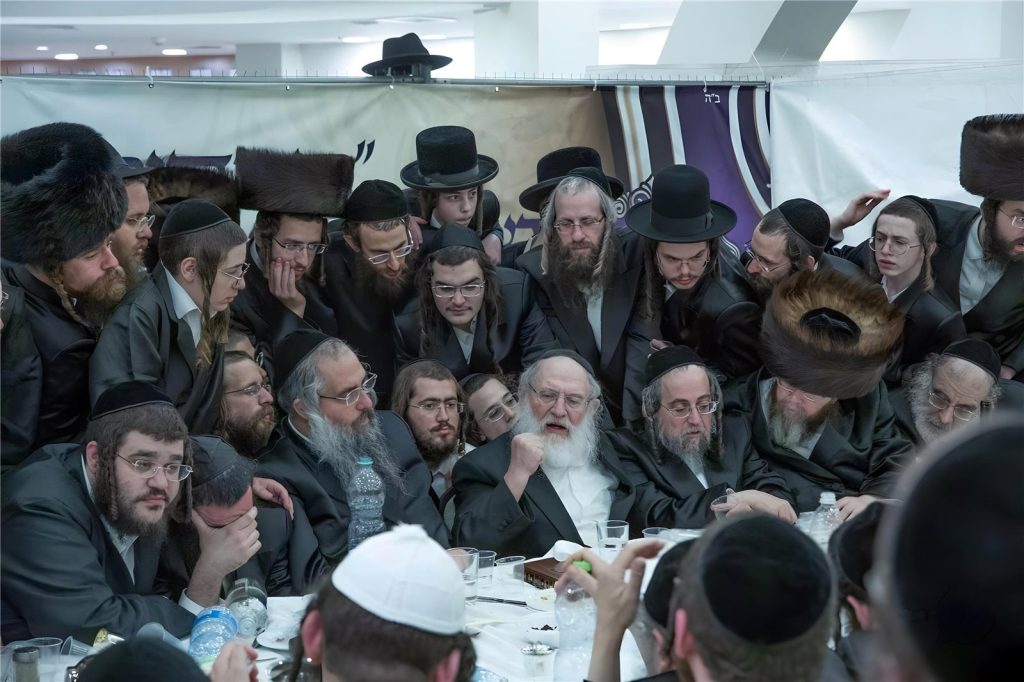
If you enter, on a regular Shabbos, the Maayanei Yisrael Beis Medrash in Yerushalayim, you might get confused. While all the men arrive in Polish Chassidic garb, before davening you can join deep classes in Chabad Chassidus by the mashpia of the Beis Medrash, Rabbi Chaim Shalom Deitsch. The nusach is nusach Chabad.
The shul hosts farbrengens on Chassidic holidays, and other times. Every Shabbos Mevorchim, the men remain for long farbrengens, accompanied by Chabad niggunim.
The movement expanded in the winter of 5774, when a “Yeshivas Boker” was established in the Maayanei Yisrael Beis Medrash in Yerushalayim for young men from Chassidic yeshivas whose souls desired to study Chassidus as preparation for Shacharis. The activity within the framework of the “Igud Bachurim Lomdei Chassidus,” was expanded by Rabbi Yisroel Weinstock (formerly a Boyaner Chassid), with its graduates working to open additional branches of the Maayanei Yisrael community throughout the country.
In 5781, there was tremendous development in the organization with the completion of purchasing a huge building in Yerushalayim that will serve as the national center for spreading Chabad Chassidus.
During a group trip of Maayanei men on Gimmel Tammuz 5784, a significant decision was made to expand the spreading of the wellsprings by opening Yeshivas HaMaor Sheb’Torah for youth from the chareidi public. This yeshiva operates similarly to Tomchei Tmimim yeshivas, although its talmidim are not those coming from rooted Chabad homes. The yeshiva quickly achieved widespread success when dozens of young men registered.
As mentioned, today the married men are organized into about fifteen central communities, which are developing well, boruch Hashem.
They ‘Tasted’ and Drew Close
To understand the magnitude of the revolution, I asked to speak with several married men who made the big change in their lives, not without courage.
“For Polish Chassidim, Chabadniks are an anomalous body in the Chassidic world,” opens R’ Eli Friedman, a married man who made the long journey from the Siget Vizhnitz Chassidus in Haifa to the Chabad community in Beitar Illit.
In a candid conversation, he opens with the background of the revolution, and the background isn’t painted in bright colors.
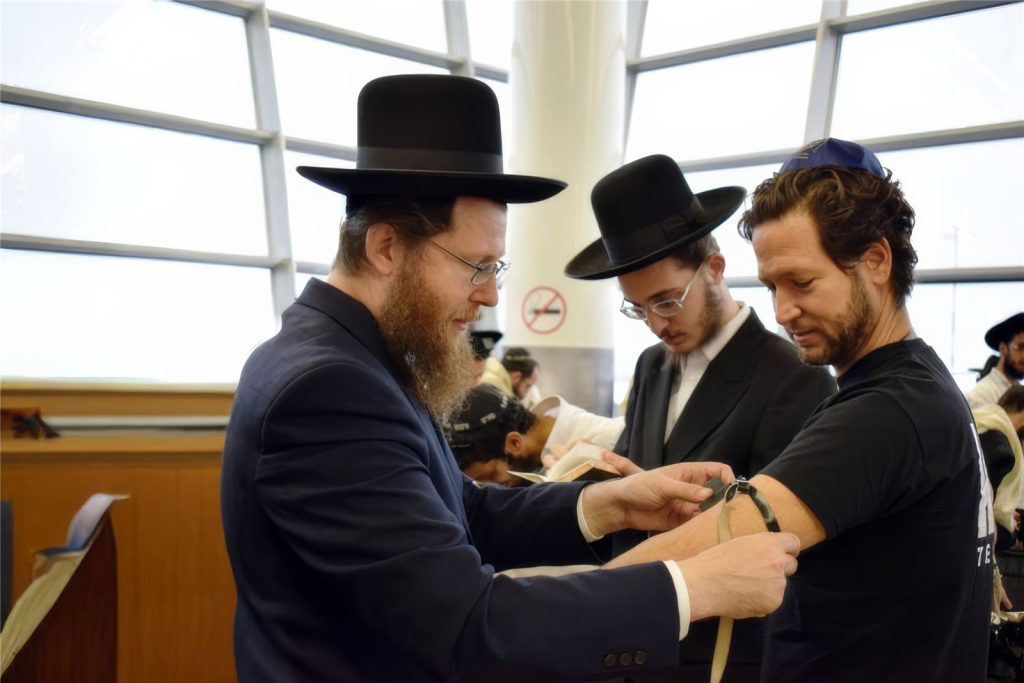
“Not all Chabadniks are aware of this, but for the ‘Poilishers’ – Chabad is a movement that requires double-checking. In our Chassidic court we always said mockingly that Chabad isn’t really a chareidi movement, and it doesn’t have the culture of the ‘real’ chareidi world,” he explains. “They go to immodest streets, and put tefillin on secular Jews (we also didn’t know they don’t call them ‘secular’). For these and other reasons, to us, Chabadniks were outside the framework of the Chassidic world. ‘They’re another world.’”
R’ Shaya, formerly a married scholar from the Kretchnif Chassidus in Rechovot, agrees with this. “Chabad with its kiruv approach always deterred the bachurim and married men in other Chassidic courts.” R’ Shaya relates that he personally knows married men who indeed tasted from Chabad’s flavor, but its ways deterred them from drawing closer.
“It’s a completely different culture,” he says. “I know someone who began coming to Maayanei Yisrael classes, but at a certain stage left saying ‘I don’t want to be a Chabadnik, I don’t want to draw close to this culture, I don’t want these ‘open’ modern lives. I prefer to remain chareidi…’
“These statements toward Chabad rest upon rooted stigmas from childhood years. I remember, for example, about ten years ago, there was a bachur who moved to Kiryat Gat and there were friends who literally begged him to ‘come back…’ there were even those who were angry at him.
“The Maayanei community in Ashdod is among the pioneers. The Ashdod married men were called ‘extremists’ because they sent their children to learn in Chabad. This was unusual in the Chassidic landscape.
“I’m telling all this so you understand how much the married men had to muster spiritual strength and personal courage to take the step of transitioning.”
R’ Eli Friedman: “I indeed remember that bachur’s case well, and I can tell you that today his children are already learning in Chabad…”
With such fear and not-simple confrontation – how did this phenomenon succeed in becoming such a large group, almost a movement in itself?
“The idea of Maayanei Yisrael didn’t open to bring people to Chabad, but in order to spread the teachings of Chassidus. The founders’ intention was for people to enjoy the sweetness that exists in the depth of Chabad Chassidus, in the way of ‘taste and see that Hashem is good’; to be strengthened by the ideas of Chassidus that place man in a new perspective before his Creator, as well as the additional meaning that Chassidus gives to avodas Hashem. No one intended to become Chabad Chassidim, because truly Chabad wasn’t for them…”
In other words: they essentially wanted to remain with the shtreimel and kaftan, with the peyos etc., and only enjoy the Chabad content…
“This is indeed so until today. Almost all remained in their original levush. The emphasis was more on drawing close to the Alter Rebbe, to learning Tanya or Likutei Torah and the like.
“I say this carefully – in the beginning there were also those who didn’t like when the Rebbe was mentioned, and didn’t want to be his Chassidim because he doesn’t wear a shtreimel, or because he receives secular Jews warmly, and many other reasons… they didn’t know how to ‘digest’ the phenomenon of the Rebbe’s leadership.”
So what went ‘wrong’ along the way?
“Slowly the revolution happened where the chevra tasted from the flavor of Toras Chabad, and over time drew close and came to Chabad itself and didn’t settle for just its ideas. When learning Chassidus, you feel this is the truth.
“Over time, trips to the Rebbe were also arranged that brought about the great transformation in their lives. This was like the ‘final hammer blow’ of the inner change; the horses had already left the stable and galloped forward…”
Today Maayanei isn’t what it was eight years ago. You could say that today, the absolute majority of Maayanei Yisrael married men are Chabad chevra in every respect, and if you ask one of them ‘which Chassidus do you belong to,’ he’ll immediately answer ‘I’m a Chabadnik.’ Very many send their children to Chabad chinuch, despite all remaining in their previous levush.
As mentioned, in the past it was completely different; no one sent their children to Chabad. “There was one such person here in Beitar who did this, and everyone looked at him like he was crazy,” says R’ Eli Friedman.
It’s worth noting that even within Maayanei Yisrael there are several streams. There’s another, not insignificant group, where they learn Chabad Chassidus copiously, but they don’t consider themselves Chabad Chassidim and don’t travel to the Rebbe. They draw from Chabad Torah, but not from its customs or its formal frameworks.
Don’t Be Second-Rate
It happens without notice. One day, someone from some Chassidus encounters Toras Chabad. He gets a glimpse, is impressed, and continues reading, deepening his understanding, and feels this is exactly what his soul searched for; this is exactly what his soul sought all along, and he didn’t realize how much…
Following this, he begins participating in Chassidus classes. Initially it’s a Tanya shiur or a maamar Chassidus, and this expands to active participation in farbrengens and activities. He continues and traverses a far from simple road, while giving up his previous lifestyle, leaving behind a closed conservative world, sometimes even fanatical.
Can you give me a glimpse into the spirit accompanying a person making such a difficult decision in his life to separate from his community and begin a new life journey toward a place that until recently was ‘modern’ and ‘chitzoni’ in his eyes?
R’ Eli Friedman: “No one gets up in the morning and leaves or separates from the court where he grew up. This isn’t a process that happens in one moment; it’s a prolonged process. Initially, everyone comes only to glimpse. However, the more you learn Chassidus, the more you’re drawn with cords of love to the ideas, to the Torah and to this inner world. You understand this is the place your soul searched for, and this is what gives real meaning to your personal avodas Hashem.”
Can you pinpoint the beginning of the change process?
R’ Simcha Bunim is a Yerushalmi who belongs to Maayanei Yisrael. His name indicates he comes from the Gerrer Chassidus. He also prefers to remain semi-anonymous: “Among Polish Chassidim, the main educational style says thus: What my father did, this is what I do, in the way of ‘hear my son your father’s teaching and don’t forsake your mother’s Torah.’ The idea is that it’s forbidden to ask questions in emuna or about Hashem; everything should be done with simplicity and sincere faith. And then one day you suddenly encounter Chabad teachings, and things begin to change. There are new perspectives on the world, on Hashem, not to mention the unusual zmanei tefilla etc. This isn’t something you readily accept.
“I remember myself sitting initially at farbrengens and suddenly you get hit with a ‘boom’: So why did they tell me such-and-such? Why did they tell us that anything else is forbidden? The entire perspective on your relationship with Hashem changes completely. Suddenly you discover all sorts of new things, not as you were educated and not as you learned 18-20-30 years. Yes, it’s definitely difficult. You need to change your views, and your perspective on the world.
“Take another example: in all Chassidic courts, learning Chassidus is a completely different style. It’s standing by the bookshelf and browsing a few minutes in one of the sifrei Chassidus; you learn some nice vort, roshei teivos or a brilliant gematria, and that is the sum of the Chassidic learning, and you continue onward.
“A significant part of the change a bachur or married man makes is consciousness-related. In every yeshiva, you get up in the morning, and after davening there’s the learning of Gemara. You arrive at Chabad, and you begin the day with a seder Chassidus. I remember how in yeshiva we laughed about Chabad having a seder Chassidus. We didn’t understand what there was to learn for an entire study session… it’s a completely different world of concepts.
“But over time the change deepens, permeates and bubbles within you, and finds expression in practical conduct.
“As a Siget Vizhnitzer Chassid, initially I continued traveling to the Rebbe’s court in Haifa, mainly on Yomim Tovim. But once I made a courageous decision – not without some heart palpitations – to spend Simchas Torah with the mashpia, Rabbi Chaim Shalom Deitsch. I felt unusual spiritual elevation there. The next year I didn’t want to give up on this. I gathered courage to stay another Yom Tov and another Yom Tov, without traveling to my Rebbe. This was a process of prolonged connection and disconnection.”
Among Polish Chassidim there’s strong emphasis on externals, and often there’s fear of abandoning those external parts…
The answer I received from all interviewees was uniform: “Who abandons? More than ninety percent of the married men in the various groups don’t abandon the external signs of Polish Chassidus. Everyone continues wearing a shtreimel on Shabbos, round hat or velvet on weekdays; kaftan and other clothing.”
Which essentially creates a sort of Chabad stream flowing alongside the more traditional Chabad… Chabad Chassidim, but distinctive in their previous clothing.
R’ Simcha Bunim: “Definitely. Even the children continue going to Chabad ‘cheder’ with their curly peyos without changing. When they want, they’ll make the change. It’s truly difficult. People have difficulty changing clothing. And truly, there’s also no need for this, so what for?”
R’ Eli Friedman: “On the reverse level, it’s completely different. You have no idea how much it bothers Poilishers that Chabadniks go about with short jackets, with kneitch hats, and so on; how is it they don’t go with a shtreimel on Shabbos?! For them this is second-rate. You’re modern, you’re not one of us.
“Among Polish Chassidim, the matter of clothing is an inviolable law.”
Children were mentioned here. How do children aged 12-13, who are at an age where they can already understand, accept such changes the family suddenly makes?
“Changes are easier for a child. The younger he is, the easier it is. But certainly the children are also partners in the processes. He sees his father davening more deliberately, more with contemplation of mind; he goes to farbrengens, he sees that his father is happier; he understands how much the Rebbe is even currently impacting the world, and this influences him for the good.
“Over time he also meets additional children in the community, and goes through a process. No one gets up in the morning and tells a child: ‘Come, we’re moving to Chabad…’ it’s a multi-stage process.”
Buyers Remorse?!
Wait, stop. Look for a moment at this not-simple situation.
A married Gerrer or Vizhnitzer Chassid, for example, married a woman from his same Chassidus. The wedding was according to that Chassidus’ custom, and the parents are so proud of their son or their new son-in-law – a talented Chassidishe yungerman, a lamdan and with good middos. They pray wholeheartedly that the match will succeed and the young couple will build their home in the way they were educated.
But the dear yungerman suddenly glimpsed Toras Chabad – that same Chassidus that some make faces at when mentioning its name – and was smitten. He begins participating regularly in Chassidus classes and from there progresses to farbrengens. His wife, an isha kesheira osah retzon baalah, follows him.
What do the parents feel? How should they react? For some there’s a sort of sense of having gone ‘astray,’ or at least to a foreign world.
Like in Chassidic historical stories about married scholars who were electrified by the Chassidic movement in the time of the Baal Shem Tov or the Alter Rebbe and paid heavy family prices for it, this happens in our times too. These married scholars, young couples or families, often pay dear prices for the change in their lives and the new path they chose.
Parents persuade, entreat and even get angry; some turn a cold shoulder. There are families – though few – that even cut contact with the son/son-in-law. “This isn’t our way,” “we didn’t choose a Chabadnik for our daughter,” they’re angry, and justifiably from their perspective.
“I know several far from simple cases,” relates R’ Shaya, “some less and some more – each one with his story: this one with his mother, the other with the in-laws. Each one with his battles.”
R’ Eli Friedman: “My brother made his way to Chabad, and his wife went after him and connected wholeheartedly to classes and farbrengens. The children also learn in Chabad, but his father-in-law and mother-in-law were angry at him, mainly when he would return from the davening on Shabbos at a late hour. They didn’t understand why he begins davening at such late hours. They would eat Shabbos meals without waiting for him.
“The anger is certainly about the son or son-in-law going in a way that is, ostensibly, more modern and ‘open.’
“I myself became a Chabadnik slowly. One day I put the tallis katan under the shirt, unlike the custom among Polish Chassidim where the tzitzis are spread over the shirt. This wasn’t a minor thing for my parents. My mother was stressed and called my uncle to convince me to put the tzitzis back over the shirt…
“However, as time passes and parents see their sons aren’t going off the derech, and on the contrary they strengthen and are happy in their emuna, they calm down. My brother-in-law, who also came from the Siget Vizhnitz Chassidus, became Chabad over the years, and his parents didn’t like it initially. Today he’s the most religiously ‘serious’ son they have. He gives them the most Chassidishe nachas…”
Not to Offend the Admorim
The yungerman’s difficulty in making change isn’t only from parents, family or friends who surrounded him over the years. There’s also difficulty from figures he respected and valued, primarily his Rebbe. Leaving the Chassidic path can be interpreted as an insult to the Rebbe who was a lofty and elevating figure for him. There’s an element of a suspension of belief involved.
How do the Admorim react to this? With encouragement? With turning a blind eye or acceptance?
R’ Shaye: “This is truly interesting, because every Admor reacts differently, depending on his character. There are Admorim who are more possessive of their Chassidim, and they absolutely do not look favorably on their departure. The departure of a certain bachur or yungerman can be a beginning whose end might be fateful. Who knows how many additional yungeleit he’ll drag after him…
“There was a maggid shiur in one of the Chassidic yeshivas who drew close to Chabad. An outstanding talmid chacham. The more he drew close to Chabad Torah – and was even appointed as a mashpia – the more distanced he became from the culture of his place of employment, and at a certain point they stopped employing him in the yeshiva. They were fearful…
“The discomfort is intensified mainly in the smaller courts, where each person has more individual weight. I know that these transitions weren’t received favorably in other Chassidic courts like Zhvil, Boyan, Sadigura, and more. In contrast, in large Chassiduyos like Ger or Vizhnitz, departure of an individual or several individuals is less noticeable, and therefore matters less.”
R’ Eli Friedman: “When I was a bachur, I brought several sifrei Chassidus to the yeshiva of the Siget Vizhnitz Chassidus where I learned. After I moved to Maayanei, several more bachurim came after me. Following this, the Rebbe requested that Chabad sefarim not remain in the yeshiva’s library. He always emphasized that one must serve Hashem in the way of simplicity and straightforwardness, and needn’t seek new ways.
“There was a period when in Siget Vizhnitz the married men would sit before davening and learn Chassidus Mevueres or Tanya, and this definitely bothered certain people. Today, as I heard, the Rebbe has already made peace with this.”
In a conversation I held with other married men, it turns out most, perhaps even all, cut ties with the court where they grew up and were educated.
R’ Simcha Bunim: “In one of the courts, which will remain anonymous, the Rebbe didn’t like the departure phenomenon. It was difficult for him. Once there was a bar mitzva celebration for one of the chevra’s sons, and there were several of his former Chassidim who became Chabad. After the formal event they sat for a farbrengen. And suddenly the Rebbe came to participate in the joy. The baal simcha asked, really entreated, to arrange the table in a way that wouldn’t look like a farbrengen, to remove the mashke bottles etc. He simply didn’t want to hurt the Rebbe.”
R’ Eli Friedman: “One of the Rebbes from one of the smaller courts, who didn’t like the phenomenon, refused to approve learning Shiurim B’Chassidus at his Beis Medrash. He agreed to Tanya learning, but emphasized that the learning would be ‘not like they learn in Chabad…’”
One could say you left one Chassidus, and now you’re organized as a Chassidic group called Maayanei Yisrael. You’re together, support each other and constitute a group?
R’ Eli Friedman: “Look, no one one was upset with his previous Chassidus, but there are those where the ties were naturally severed and they don’t have much connection with the past. I personally am a social person and continue being in touch with my friends. I can’t tell you they come to simchas that I make, because basically I’m not in their Chassidus, I’m not there on Yomim Tovim and I don’t daven with them on Shabbos. But there’s no anger or quarrel. Each with his own type of friendships and with whom he feels it’s important to maintain contact.”
Mivtzaim Is Also ‘Breaking’ Oneself
One of the difficult parts in transferring one’s Chassidic allegiance is the part of mivtzaim. Every Chabadnik from early childhood knows of the concept of ‘going out on mivtzaim.’ Many go regularly with a mivtzaim package: tefillin, mezuzas, Moshiach cards etc. The approach is simple enough; meet a Jew, say something nice, offer to put on tefillin with him, give him a Moshiach card and continue onward…
As part of the change, Maayanei Yisrael people gather courage and also go on mivtzaim. For them this is jumping into deep water. It’s fine to sit in the Beis Medrash and learn a shtickel maamar, nu… you can also extend staying in shul in a late farbrengen – this is also ‘bearable’… but to go out to the street for mivtzaim?!
“The perception of a child from Polish Chassidim is, that whoever doesn’t have a yarmulka is a half-goy,” explains R’ Eli Friedman. “And suddenly he must go out to the bustling street, do mivtzaim, approach a non-religious Jew and greet him warmly – this is really ‘iskafia’…”
Is this a type of ‘break’ from the past?
“Certainly!” exclaims R’ Shaye. “After all, all our childhood years we mocked the Chabadtzkers standing in the street and offering tefillin to people, and suddenly you yourself are doing it…
“I learned in Rechovot – we were forbidden to even speak with secular people; we never thought to look at a secular person. What do I have to do with him? He’s not one of us! And now you look at him as a great neshama, exactly the perspective the Rebbe gives us to look correctly at the neshamos of Klal Yisrael. You look at a Jew who doesn’t have a yarmulka or tzitzis, and see him in a completely different way, and even speak with him affectionately…”
R’ Simcha Bunim: “Take another example, the change on Purim. Do you know what Purim is among Poilishers? Dancing in houses, dancing in the streets, there’s a tish and dancing on the bleachers; jumping a bit from joy… and suddenly you arrive at Chabad – and already from the morning going out to mivtzaim, reading the Megillah thirty times… I remember taking the Maayanei chevra to Purim mivtzaim at IDF bases in Gush Etzion. It was so difficult; you think to yourself, wait, it’s Purim! We’re not dancing in the streets, not jumping at a Purim tish. Here I am, sitting on Ben Yehuda and reading the Megillah, or distributing mishloach manos. These are types of things you can’t just absorb all of a sudden…”
A Living and Life-Giving Rebbe
The conversation with the married men, partly by phone and partly in person in one of the Maayanei Yisrael shuls in the center of the country, goes on and becomes more and more fascinating.
“You know,” R’ Eli Friedman suddenly tells me, “I remember initially we mocked the Chabadniks who have a Chassidus but don’t have a Rebbe. After I drew closer, I suddenly realized how much the Rebbe is alive. What can I tell you – the Rebbe illuminates souls. Something that isn’t alive can’t enliven so much – and this itself testifies how much the Rebbe is alive…
“One of my brothers learned in the yeshiva ‘Amalah Shel Torah’, a small yeshiva of Polish Chassidim. He learned in Polish Chassidishe yeshivas until he got engaged. Before that he was afraid of problems with shidduchim. ‘A Chabad girl won’t take me because I wear a shtreimel. From a Polish Chassidic home they won’t take me if I learn in Chabad,’ he explained. A day after becoming engaged, he switched to learn in Tomchei Tmimim in Migdal HaEmek.
“He lives today in Bnei Brak, and has a kollel. Between sedarim he learns Chassidus with bachurim from various Chassidusen, makes farbrengens for them etc. He also has a ‘Likutei Sichos kollel’ and is very involved in spreading the wellsprings.
“Just before Shavuos this year, he traveled for the first time to the Rebbe with his wife. All these years he didn’t understand why he needed to go. He said ‘I’m a Chabadnik anyway’. But since he returned, his entire life changed. He told me ‘there’s before the trip to the Rebbe and there’s after.’ He adds that everything he learns or davens has taken on a whole new form and meaning…
“Come and see the Rebbe’s power – you don’t see the Rebbe with physical eyes, yet people come, draw close and get chizuk. They write to the Rebbe in the Igros Kodesh, request advice, brachos and guidance. They live with the sichos and maamarim, and their entire physical and spiritual lives are conducted according to what the Rebbe said.
“This entire phenomenon is a revelation of the wellsprings in an unusual way, truly Yemos HaMoshiach. There’s no other explanation for this…”
R’ Eli Friedman with the Ohel in Haditch in the background
YES, THE WOMEN TOO
An inseparable part of the complicated transition is the wife. Sometimes, the changes are made while still a bachur but others do it as young married men or even when they have children already. While the man is immersed in learning Chassidus and changing his inner world, the wife is less connected to the learning. Often, she loyally follows her husband but she is not fully connected.
Two or three years ago, R’ Yosef Filmer of Bnei Brak arranged a trip of women from Maayanei to Crown Heights. The trip was planned for Lag B’Omer. About thirty women, men and mothers participated.
“I can tell you about my sister-in-law,” says R’ Eli Friedman. “She came back from the trip to the Rebbe mamash a Chabadnikit. Not only did she agree for her husband to attend farbrengens and shiurim but she herself attends farbrengens and shiurim. Today, all three of their children attend a Chabad cheder.
“This trip saved a lot of homes,” agrees R’ Shaye. “Lots of shalom bayis was strengthened following hiskarvus to the Rebbe. Whoever travels to the Rebbe, even one time, enters another world; he becomes ‘one of us’ …”
Over time, the people of Maayanei Yisrael realized that the women also need to connect to the ideas and ideals and they initiated gatherings for chagim and shiurim in Chassidus for women from the Chassidic/chareidi tzibbur. Those attending are the wives of yungeleit who attend Chassidus shiurim at Maayanei Yisrael as well as wives of those who learn in Maayanei Yisrael kollelim. The women also participate in Shabbosos Achdus.
Beis Moshiach #1478 • pp. 22-34
© 2026 Beis Moshiach Magazine. All rights reserved.
This article originally appeared in Beis Moshiach #1478. You are welcome to share it with friends and family by email or in print, provided that you do not change, add to or omit any part of it, you credit the author and Beis Moshiach, and you include a link to archive.bmoshiach.org (written out in full in printed copies).
To republish this article in a newspaper, magazine, book or website, please request permission in advance at [email protected].