Saved by the Shabbat
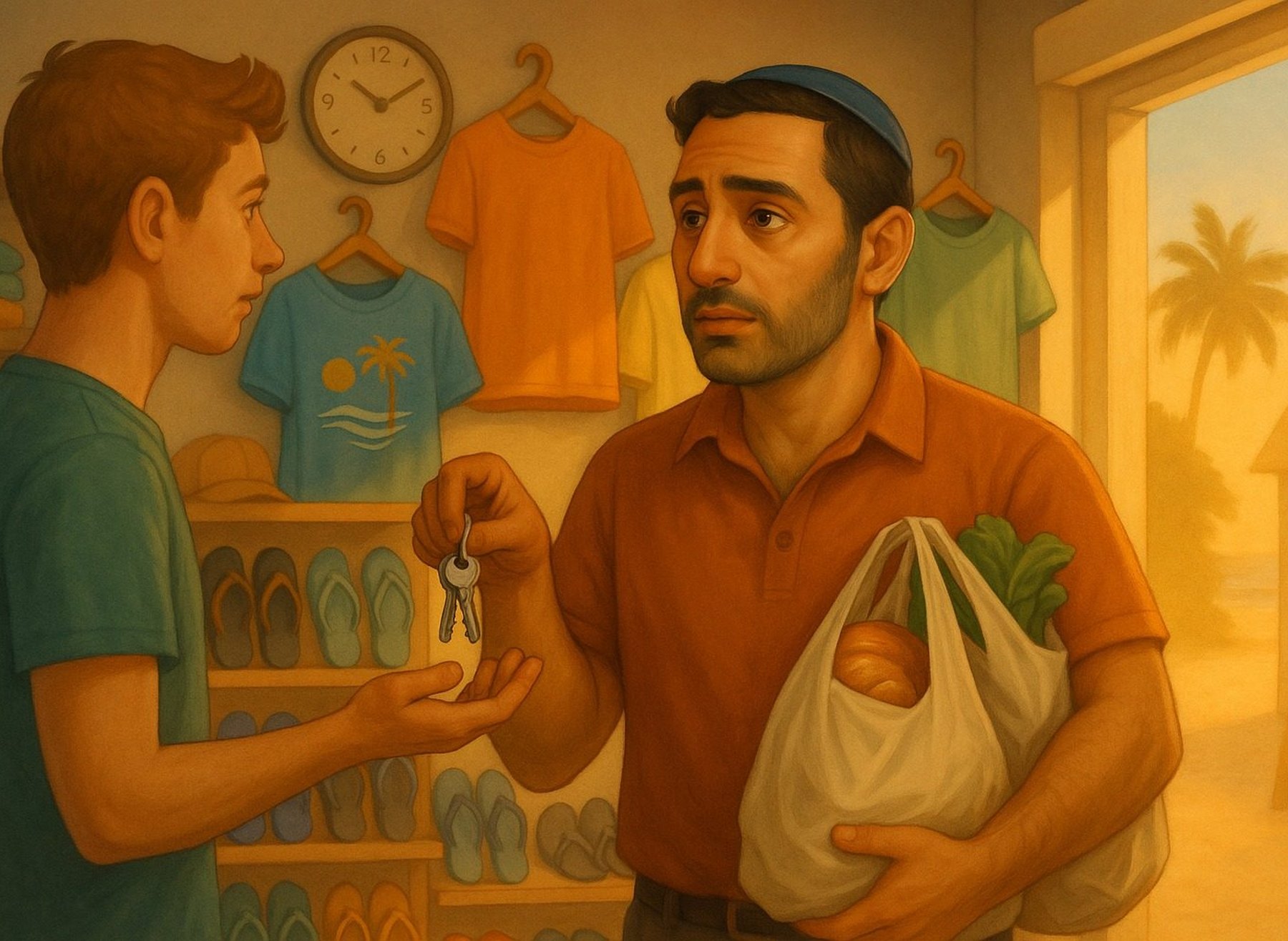
Nissim was a hardworking man. He had a car, and every morning, he loaded it with loaves of fresh bread, to deliver to the groceries and stores in town.
The smell of warm bread filled his car, but his heart was heavy. Because sometimes – too often – he had to drive on Shabbos.
As his car rumbled down the road one Saturday morning, he whispered to himself, “Why? Why do I have to work on Shabbos? Hashem gave us this holy day to rest, to daven, to spend with family. Why am I delivering bread instead of keeping Shabbos?”
It burned inside him. His father had always kept Shabbos, growing up in Israel. Sometimes his family struggled, things weren’t always perfect, but Shabbos was Shabbos.
Nissim wanted to keep it too. But here in America, it seemed things were different.
Every Friday night, when mothers lit candles in Jewish homes, when fathers were blessing their children, when families were singing sweet songs, and the tables were filled with challah and grape juice – Nissim was at work. His heart ached.
So, he began to daven. He davened while he drove. He davened while he counted money at the store. He davened late at night before falling asleep.
“Hashem, please, please help me find a job where I don’t have to work on Shabbos. I just want to keep Your day, like every Jew is supposed to.”
But the weeks kept passing, and Nissim kept working. And no new opportunity where he wouldn’t have to work on Shabbos showed up anywhere.
After many years in California, Nissim moved across the country to a new place – South Carolina, known to many as the Palmetto State. On the northern coast was a long strip of beach called the Grand Strand.
Millions of American tourists visit the beaches here and enjoy tourist attractions. While on vacation, many like to buy souvenirs, t-shirts, and gifts. The beach shops are the best place for this – and that’s where Nissim got his next job.
“Maybe here,” he thought, “things will be different.”
But the new job he found was even harder than his old one. Seven days a week, long hours, always busy. Customers, products, sales. He barely saw his family; they’d stayed behind in California, while he tried a few months out alone to see if he could make things work. And still – Shabbos was out of reach.
But while in South Carolina, something happened. Nissim found Chabad. He met Rabbi Doron Aizenman, who brought a lot of good energy.
Rabbi Doron made friends easily. When he met Nissim, Nissim could tell the Rabbi believed in him.
One Thursday evening, just before Chanuka, Nissim walked into the Chabad House and sat down with the rabbi. His voice trembled as he spoke.
“Rabbi, I want to keep Shabbos. I can’t keep living like this. Please help me, so I don’t have to work on Saturdays and holidays.”
Rabbi Doron thought for a moment, then said, “Nissim, I can’t make that choice for you. I suggest you write to our Rebbe – The Lubavitcher Rebbe, in New York. He’s the leader and heart of all the Jewish people. Tell him everything – exactly how you feel and what your problem is.”
Nissim nodded. “But how do I send the letter…?”
The rabbi smiled and pointed to a clunky machine in the corner of the room. “With this fax machine. Write your letter, feed it into the machine, dial this number, and listen for the whistle. That means the Rebbe’s office received it.”
Later that night, Nissim’s hands shook as he wrote his letter:
“Dear Rebbe, I want so much to keep Shabbos. Please bless me to find a job where I don’t have to work on Saturdays. With respect, Nissim Mizrachi.”
He signed his and his mother’s names, slid the letter into the machine, and pressed the button. Beep. Whistle. The letter went through.
Nissim left the empty Chabad House at 7 P.M., locking the door behind him.
All the way home, he was hoping, wishing something would come of this. He needed an answer.
Nissim remembered that Rabbi Doron explained, “The Rebbe is very busy, especially since there are thousands of guests in New York right now for Simchas Torah, which just ended. Usually it takes two months to receive an answer. At this time of year, maybe even longer.”
Nissim sighed, but smiled. “Two months is nothing. I’ve been waiting for years. I can wait a little longer.”
That night, Nissim locked up the store at midnight, went home, ate dinner, and went to bed. At three or four in the morning, something woke him.
He opened his eyes – and there, in front of his bed, stood the Lubavitcher Rebbe.
Nissim’s heart pounded. His eyes widened. Was this a dream? Was it real? The Rebbe’s face was clear. His beard moved as he spoke. His voice was strong.
“Assur la’avod b’Shabbat. Neged Aseret Hadibrot.”
(It is forbidden to work on Shabbat. It goes against the Ten Commandments.)
In shock, Nissim jumped out of bed and ran to the kitchen. Then to the hallway… then back to his bedroom.
“What’s happening to me?!” he whispered, trembling.
But deep inside, he knew. He’d written the letter, and this was the answer to his prayer. Nissim tried to relax, calm down, and go to sleep. But he simply couldn’t – what he had witnessed had been too real.
The next morning, the Rebbe’s words still rang in Nissim’s ears. He drove to work in a fog. He didn’t know what to think about what happened the night before.
He called Rabbi Doron. “Rabbi, something happened last night. I saw the Rebbe. He spoke to me. He was in my bedroom.”
Rabbi Doron wasn’t sure what to say. “It could take months for an answer, Nissim… Are you sure?”
Rabbi Doron stayed on the line as Nissim repeated what he saw and heard in the middle of the night. Of course Nissim was sure. Slowly, the two of them tried to make sense of the vision. Just an hour later, the phone rang in Rabbi Doron’s office.
It was Rabbi Groner, the Rebbe’s secretary.
“Do you know someone by the name of Nissim Mizrahi?”
“Yes, yes!” Rabbi Doron nearly jumped out of his chair.
“There’s an answer to his letter from yesterday.”
How can it be? thought Rabbi Doron
That moment was Erev Shabbos Bereishis. The Rebbe’s desk is covered in thousands of letters from all over the world. Among those piles, the Rebbe chose a short fax from one Jew in South Carolina. The Rebbe called in his secretary and asked him to deliver the reply.
“Do you have a pen and paper? Are you ready to copy the answer?” asked the secretary.
“Of course,” said Rabbi Doron, standing up.
“Okay, I’ll read his handwritten reply.”
“Rachmana litzlan, Rachmana litzlan. Hefech Aseret Hadibrot. Azkir al hatziyun.” (May Hashem protect – may Hashem protect. Against the Ten Commandments. I will mention you at the holy resting place.)
The first four words were underlined for emphasis.
Wow, was all Rabbi Doron could think. Surely, thousands of people were waiting for a response, and here Nissim got his within hours.
Rabbi Groner then asked another question, “Will Nissim begin keeping Shabbos tonight?”
Tonight…?
“I’ll call him immediately,” said Rabbi Doron.
Why’d the Rebbe answer so quickly? Because the Rebbe wanted to know: What are you going to do this Shabbos? Tonight!
This was not just an answer, but an emergency.
If the Rebbe hadn’t put his full attention on this matter, there was no way Nissim’s life would change so quickly. He had to call the beachwear store owner, who lived in New York.
This owner had many, many stores and hundreds of workers. Each worker was responsible for making sales, collecting cash, and locking up the cash register and store. Would the boss make an exception?
It was Friday at 2:30 P.M, just a few short hours until Shabbos would begin at 4:30.
The phone rang at Nissim’s store. Rabbi Doron told Nissim every word of the Rebbe’s speedy reply.
“Nissim,” Rabbi Doron said, “will you keep Shabbos, starting tonight?”
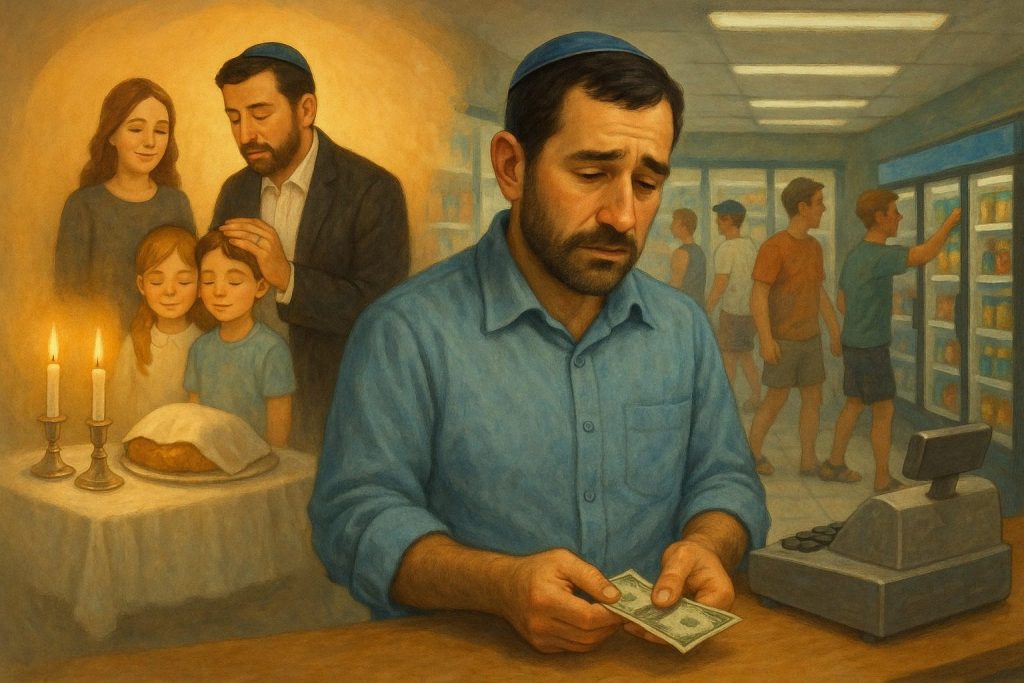
Nissim felt chills. His heart raced.
“Yes, Rabbi. I will.”
“Chazak u’baruch!” said Rabbi Doron joyfully. “I’ll let the Rebbe know.”
Nissim hung up and let out a huge breath.
“Yes,” Rabbi Doron told Rabbi Groner. “Yes, Nissim Mizrahi will keep Shabbos tonight.”
Of course. The Rebbe knows everyone, and what they could change in their lives. The Rebbe answered thousands of letters, but the most important were the letters made of words that led to people doing things, because that’s what matters.
* * *
Finally! Finally! He could keep Shabbos, like every other Jew. The Rebbe gave him the strength – and the courage – to do what his neshama had been begging him to do. How many tears had he cried, how many delivery drives and sales had he made on Shabbos, just wishing he could be in shul or resting at home instead?
And now, finally, he did it… Wait, but now what? Who will work instead of him? He called his boss – no answer. Called again – no answer. He called one more time.
To be continued
Beis Moshiach #1487 • pp. 56-59
© 2026 Beis Moshiach Magazine. All rights reserved.
This article originally appeared in Beis Moshiach #1487. You are welcome to share it with friends and family by email or in print, provided that you do not change, add to or omit any part of it, you credit the author and Beis Moshiach, and you include a link to archive.bmoshiach.org (written out in full in printed copies).
To republish this article in a newspaper, magazine, book or website, please request permission in advance at [email protected].