Fish From Heaven
I
At a young age, Rabbi Dov Ber – who would later become known and celebrated throughout the land as “the Maggid of Mezeritch” – married Kaila, daughter of Rabbi Sholom Shachna of Torczyn.
Even after his marriage, he continued to serve his Creator through acts of tzedaka and self-imposed ascetic practices that he had undertaken from his youth, all done in secrecy, without anybody observing his deeds.
Although his father-in-law did not recognize his greatness, he was blessed with insight and he provided the young couple with an isolated house where he could devote himself undisturbed to Torah and avoda with extreme asceticism, as was his custom.
Many years passed before the couple was blessed with a son who would later illuminate the world with his righteousness, and he was named ‘Avrohom,’ or as he was known over the years, “Rabbi Avrohom the Malach,” for he was closer in his righteousness to a malach Hashem than to a human. They also had a daughter whose name was Doba.
II
Obviously, his withdrawal from the world did not bring him any real parnassa. His father-in-law Rabbi Sholom Shachna’s support also diminished due to a decline in his business. At a certain point, the Maggid was forced to move to a nearby village and earn his living there as a children’s teacher, as his father had done. He was paid by a simple villager who gave him his children to teach.
Rabbi Dov Ber was not a simple melamed. When a child was brought to his Talmud Torah, he would start by asking him: “Do you remember the event at Har Sinai where all the neshamos of Yisrael were present?” This was not merely a question intended to awaken the child’s soul. With this question, he delved into the depths of the child’s soul and would awaken in him that sublime and awesome majestic event when the Jewish people stood at the foot of Har Sinai and received the Holy Torah with “naaseh v’nishma – we will do and we will hear.”
Not many years passed and he was forced to leave this small village with his Rebbetzin and his children.
During those years, his ascetic practices and withdrawal from the world became more intense and revealed even to those not blessed with sharp perception. The Maggid added fasts upon his fasts and ascetic practices upon his ascetic practices with the aim of purifying and refining his body.
One who noticed this was also his employer, the villager. As the Maggid became more elevated like a saraf and malach Elokim, the villager felt very inferior in his coarse way of life. At first the villager tried to ignore it, then mocked the “tzaddik’l” dwelling with him, but over time the antagonism turned into hatred that grew stronger. It wasn’t long before he began to harass him in every possible way and created difficulties upon difficulties in his life, which the tzaddik and his family endured in silence, accepting the judgment of Heaven.
As long as the harassment was limited to mere disturbances, Rabbi Dov Ber bore his suffering in silence, accepted the afflictions with love, and continued in his ways of serving Hashem. However, when the disturbances began to affect even matters concerning the soul and spirit, he began to consider leaving the village and returning to the city from which he came.
One day, it was unbearable and Rabbi Dov Ber had no choice. Despite it being the middle of Chol HaMoed, he was forced to pack his few belongings, hire a wagon, and return with his household to the city of Torczyn.
III
Over the years, the Maggid and his family wandered between several cities. First he served as a Maggid in the city of Torczyn, but later also reached the cities of Koretz and Rovna. In every place he went to, Rabbi Dov Ber chose to live in a small, dilapidated house.
As if this were not enough, over the years he was very ill in his legs, and he limped permanently on his left leg.
Due to his position as Maggid, he received a small sum of money as support from the community fund. Needless to say, this sum was not sufficient for household needs, and they could barely subsist on it. As the holy Shabbos approached, the righteous wife went to her husband and asked him for money for Shabbos needs. The Maggid searched his pocket and drew from it a small coin he found, while nothing remained for him.
The Rebbetzin wandered around the market here and there, wondering what to buy first with the coin in her hand. Suddenly she encountered a tall gentile who was holding a bowl for kneading dough. The tzadekes looked at the kneading bowl and decided to buy it. She saw in it what others did not see…
When she returned home, she held the bowl but had nothing for Shabbos.
“Why did you buy this?” her husband wondered aloud. “Where will you now get money for Shabbos expenses? You know I don’t have even one more coin.” The Rebbetzin did not need time to think, and immediately responded with cleverness and simple faith: “If we have a bowl with which to receive, surely Hashem will help us and arrange something to put in it.”
It was Thursday night, and the tzaddik left his house and went to the Beis Medrash to learn as was his holy custom. That night he did not return home but devoted himself to Torah study with spiritual delight and sweetness. The next day, Friday, he also did not return home, as he knew well that he had nothing to give the Rebbetzin for Shabbos expenses so what would he do?
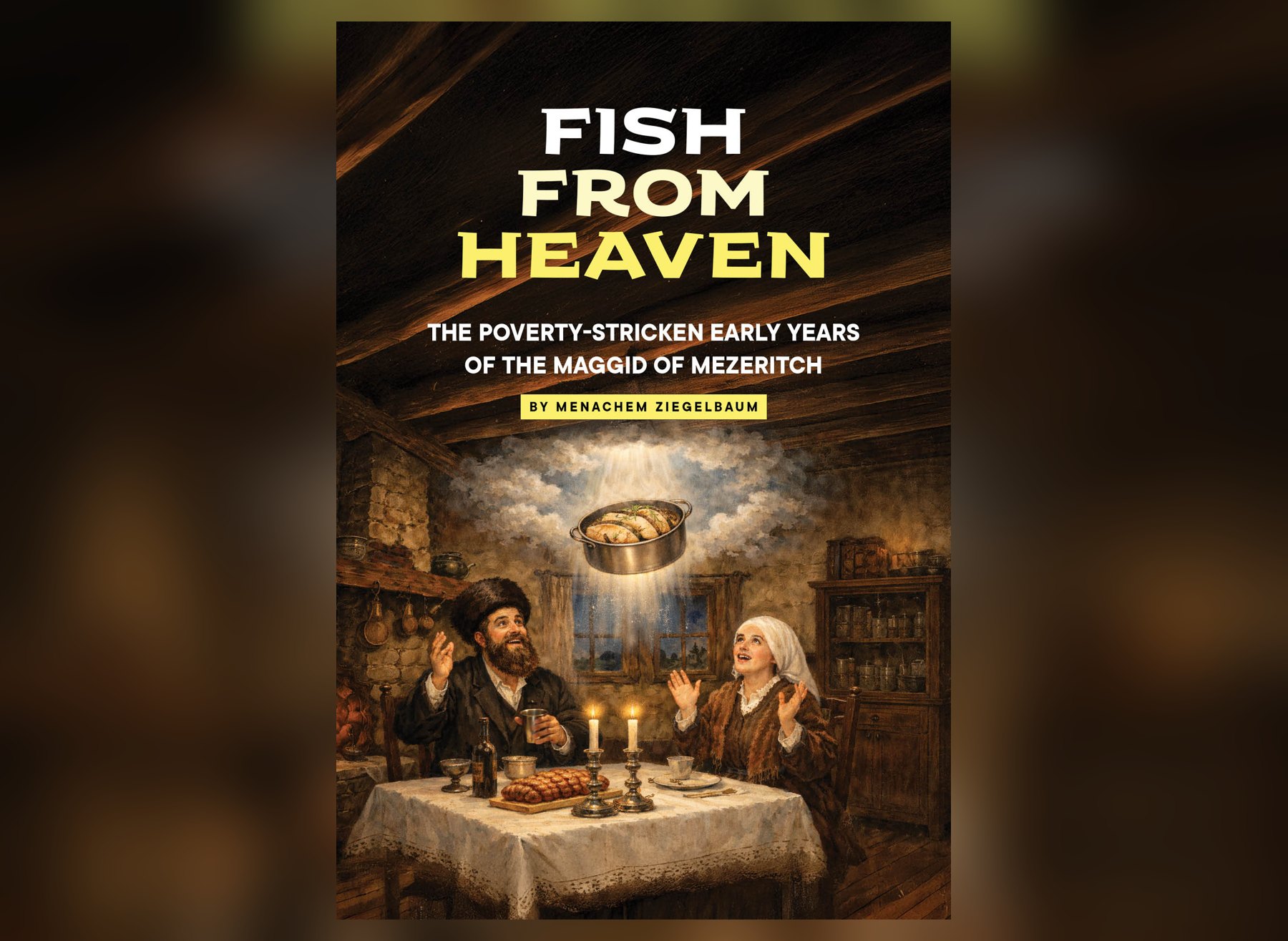
Only on Friday night after davening, did he make his way home, with heavenly angels accompanying him on his right and left. He did not know what he would find in his house; he hoped perhaps he would at least find there an k’zayis of bread to fulfill the obligation of the Shabbos meal. How great was his surprise when as he approached his house, he saw through the windows pleasant light pouring into the street. The tzaddik entered his house and to his great surprise saw a properly set table, lit candles, challos and wine, and an atmosphere of abundance reigning in the house.
“Gut Shabbos,” said the Maggid joyously to his wife, and she responded pleasantly, and immediately he began with words of blessing for the angels with him. “Shalom aleichem malachai ha’shareis,” he sang. He made Kiddush over the wine, washed his hands and ate challa. Only when they settled comfortably for the Shabbos meal did he not hide his wonder and asked his wife where such abundance came from.
“Boruch Hashem, we have a Shabbos with all good things,” the Rebbetzin responded, without elaborating. But she added, “Only fish are missing, and a Shabbos without fish…” she said and did not finish.
The Maggid chuckled: “Well, Hashem will help us, and we will also have fish…”
Since the words came from this holy mouth, at that very moment – according to Chassidic legend – a hand appeared above the table, holding a large bowl full of portions of fish. The tzaddik took a piece of fish, and the Rebbetzin also took a piece of fish for herself. The tzadekes tasted it and felt that the taste of the fish was like the taste of Gan Eden and wanted to take more. Her husband stopped her and whispered: “Do not take more. Let the remaining fish be preserved for our descendants who come after us”…
Only before Birkas HaMazon did she tell her distinguished husband:
“Shmarya the wealthy man, a fellow townsman – surely you know him – was supposed to marry off his eldest daughter yesterday evening. However, in recent days the kalla fell ill and took to her bed. He hoped that by the wedding day she would recover and be able to stand under the chuppa, but by Hashem’s decree her condition worsened. With no choice, the wedding was postponed to another time. He therefore arranged for all his servants to take the pots and bowls laden with food and distribute them to the poor of the city.”
The Rebbetzin lowered her eyes and whispered: “He remembered us too…”
IV
During those years of deprivation, the tzaddik lived in a pathetic hut, a real ruin that only by miracles held together and did not collapse under the weight of itself…
Near the hut passed the river that crossed the village, and on the riverbanks were abundant reeds, rich vegetation within which countless frogs swarmed and disturbed his rest with the sound of their croaking that never ceased. These disturbed the Maggid’s concentration in study, and he found no rest for his soul.
‘Oy oy Berel,’ he chastised himself with open rebuke. ‘See the frogs, small and lowly creatures that never cease singing to their Creator even for one moment, not even in the dead of night, and you? You lie sleeping on your bed’…
* * *
One period was an extremely difficult period. While the Maggid secluded himself in purity and holiness amid poverty and hardship, the situation at home was extremely difficult. For some time there was not a penny to spare.
The righteous Rebbetzin came to him and told him tearfully about their hungry children, who also had no decent clothing to speak of, not to mention that those winter days were colder and more frozen than usual. they did not even have money to buy wood chips for heating the stove.
The Maggid sighed heavily. At that moment he heard a voice from heaven: ‘Berel, you have just lost your share in Olam Haba.’
The tzaddik sat shaken, wondering why he was punished with such a severe punishment. Not only did he not have even crumbs of this world, but he had also just lost the World to Come… Could it be that for merely a sigh that escaped from his mouth, he deserves to lose all the reward for his toil in this world?
As he contemplated this, joy began to fill his heart, pure joy. ‘From now on I will serve Hashem in true avoda not in order to receive reward. I will only seek to give nachas to my Creator.’
The Maggid looked at the sefer in front of him and began to plunge joyfully into his learning; his eyes burned with holy fire. There was no limit to his heart’s joy at that time.
But not much time passed and again he heard a voice from heaven: “Berel, you have gotten back your Olam Haba. However, guard yourself that you do not sigh again over your difficulties in this world. Know that there is no greater mercy in the world than the mercy of the Holy Shechina”…
V
Years later, when he became famous in the Jewish world, and his genius and holiness became publicly known, many began to flock to his Beis Medrash. This troubled him greatly, for all his days he had labored for modesty and fleeing from publicity.
The Maggid sanctified himself in seclusion and asked that it be revealed to him from heaven why he was punished so much that his name became known and publicized.
It didn’t take long and from heaven they answered him that this “punishment” came to him for two reasons: First, because of the distress he suffered in his youth from the villager’s harassment during the period when he taught his children. For a tzaddik of such stature as himself, it was incumbent to accept even spiritual suffering with love, and not only material bodily suffering. An additional reason – because he left the village in the middle of Chol HaMoed and returned to the city, a journey that could have been postponed until after Yom Tov.
And to this very day, the name of the Maggid of Mezeritch is known as the leader of Chassidus, and the rav of myriads of thousands of Jewish people.
Sources for the stories: Rachamei Ha’Av, letter 41; Kerem Yisrael page 8; Igra D’Pirka letter 2 and similarly – Shmuos V’Sippurim Vol. 1 page 24, Likutei Sippurim page 45; HaMaggid MiMezeritch page 12
Beis Moshiach #1492B • pp. 28-31
© 2026 Beis Moshiach Magazine. All rights reserved.
This article originally appeared in Beis Moshiach #1492B. You are welcome to share it with friends and family by email or in print, provided that you do not change, add to or omit any part of it, you credit the author and Beis Moshiach, and you include a link to archive.bmoshiach.org (written out in full in printed copies).
To republish this article in a newspaper, magazine, book or website, please request permission in advance at [email protected].