Where Foxes Once Walked, Torah Now Lives
The miraculous restoration of Buenos Aires’ century-old synagogues from desecration to houses of Jewish life
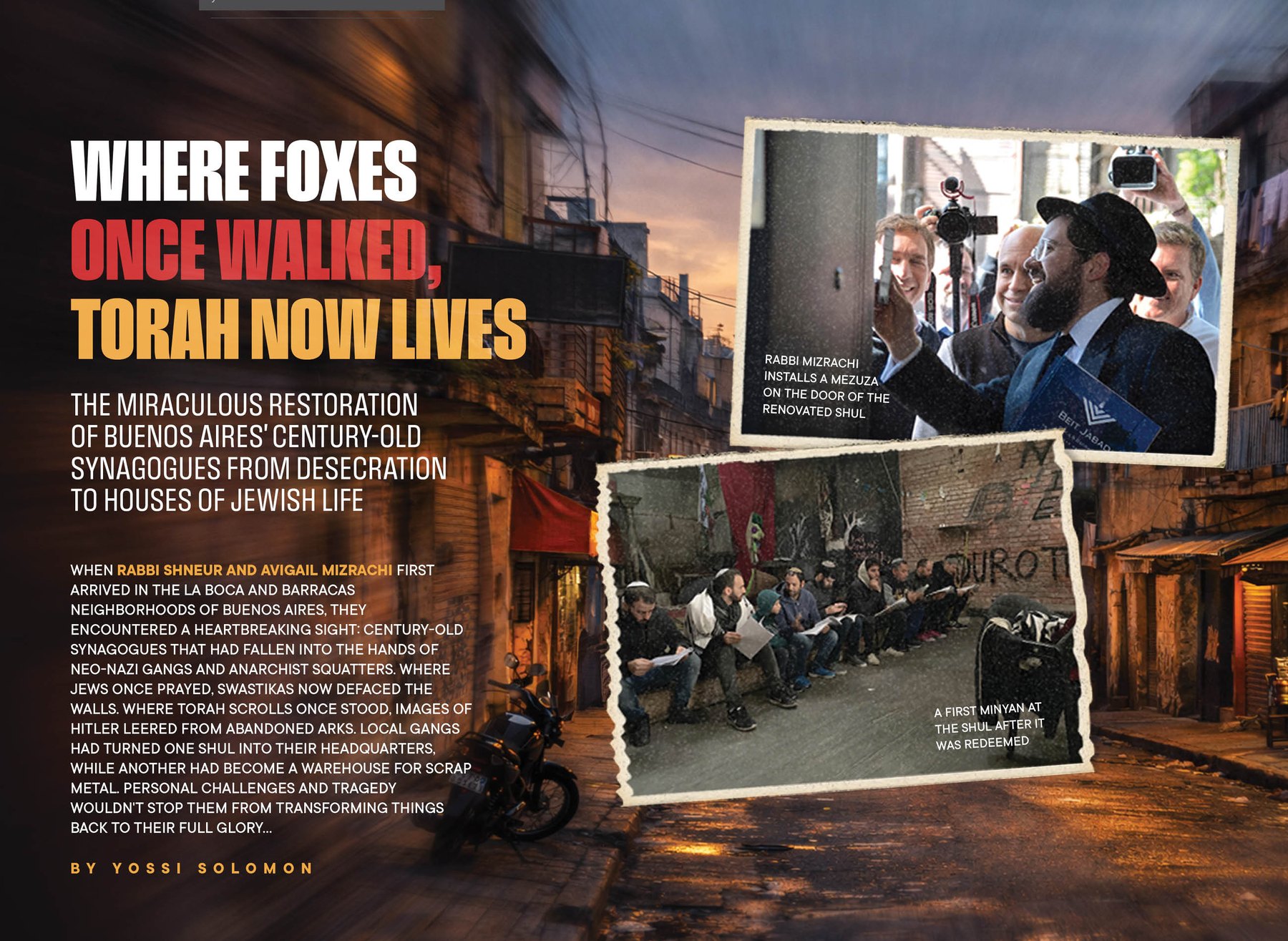
When Rabbi Shneur and Avigail Mizrachi first arrived in the La Boca and Barracas neighborhoods of Buenos Aires, they encountered a heartbreaking sight: century-old synagogues that had fallen into the hands of neo-Nazi gangs and anarchist squatters. Where Jews once prayed, swastikas now defaced the walls. Where Torah scrolls once stood, images of Hitler leered from abandoned arks. Local gangs had turned one shul into their headquarters, while another had become a warehouse for scrap metal. Personal challenges and tragedy wouldn’t stop them from transforming things back to their full glory…
Chapter 1: Sowing in Tears in Argentina
It all began ten years ago, when Rabbi Shneur Mizrachi first arrived in the ‘La Boca’ and ‘Barracas’ neighborhoods of Buenos Aires on dates with his future wife Avigail. He didn’t imagine then how deeply his soul was connected to the place. “My grandparents were married here, in this neighborhood shul, in 5710,” he says.
This deep-rooted connection was the first sign of what was to come.
The neighborhoods themselves were complex; on one hand, a large and vibrant Jewish community with Torah schools and chareidi education. On the other hand, built-in opposition to everything related to Chassidus and Chabad. He tells of a mashpia who would come to teach his father-in-law, Rabbi Shimon Chamra, at six in the morning, “so they wouldn’t see him.”
This was the reality which he and his wife faced after they married. The potential was enormous: thousands of religious Jews, and many more who were not religiously observant, alongside tens of thousands of tourists who visit the area thanks to the famous soccer stadium of the ‘Boca Juniors’ team.
Despite the potential, their path of shlichus was not strewn with roses. Not at all.
The first attempt to start programming encountered an iron wall. They found a small, abandoned shul, obtained the keys, even found a donor who promised to fund the renovation. But when the seriousness of their intentions became clear, strong opposition arose from within the frum community. “They blocked the place from us, and a dispute arose until they wanted to take the place away from us,” he recalls. The decision was difficult for the shluchim, but principled: “We said, we won’t do activities here. If there’s machlokes, there’s no bracha.”
They retreated from the building, but not from the shlichus. The spiritual thirst was too great.
Even before they were official shluchim, they began activities that proved their necessity. His wife suggested setting up a giant menorah, and immediately about 200 people gathered for a successful event. This success led to additional activities: a public Seder on Pesach, an organized Tikkun Leil Shavuos, and Purim events. The great demand showed that specifically here, in a place where no shliach had ever operated, Chabad activity was needed to spread the wellsprings. From the moment they recognized the potential, they wrote to the Rebbe and approached the Rebbe’s shliach in Argentina, Rabbi Tzvi Grunblatt, to give his approval for them to operate as shluchim in these neighborhoods.
Chapter 2: “And I Will Redeem You” – ‘Didan Notzach’ in La Boca
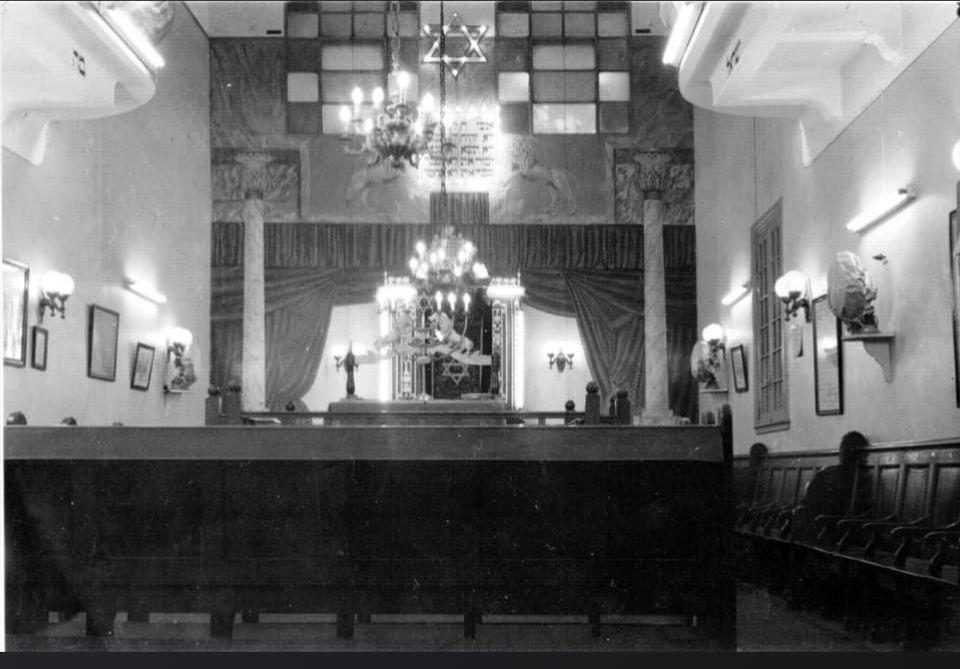
In the heart of La Boca were two old Ashkenazi shuls, about 100 years old. These shuls were built by immigrants who came from Europe to Argentina’s capital, most of them without means. Nevertheless, they made sure to establish and beautify the Beis Hashem.
Over the years, as the community became established and moved to more upscale neighborhoods, or many made aliya, the shuls were abandoned. The operating organizations accumulated heavy debts until non-Jews took control of them.
“The number of congregants in both shuls decreased, and with it the budget for operating the place,” explains R’ Mizrachi about the disintegration process.
The reclaiming of these shuls became a central part of their shlichus. The operation to redeem the Zincavo shul, named after the town from which the Jews who established it in 1932 came, and which over the years became a warehouse for vehicles and scrap metal, was complicated. It required covert action. The owners, who were connected to local politics, stubbornly refused to sell the building to Jews. The solution was creative. Rabbi Mizrachi sent a non-Jew as a “straw man” to purchase the building for them. Only after the deal was legally signed was the property transferred to Chabad’s name.
The Jewish light returned to the place where darkness had dwelled.
The Hachnosas Sefer Torah which was held in the redeemed shul was a defining moment. “We felt that our shlichus is to reach all the Jews who were previously connected to this neighborhood,” says R’ Mizrachi. “Many of them had grandparents who would regularly come to daven in these shuls.”
The moving event reconnected many Jewish families to their roots and symbolized the beginning of a local Geula.
The success of the first move paved the way for redeeming another shul – “Knesses Israel” from Magallanes, located four blocks from its predecessor. In its glory days, the place served as a flourishing and vibrant Jewish center. On the ground floor there was an Ashkenazi minyan, and on the upper floor a Sefardic minyan operated. It had a respectable library and guest rooms for immigrants who arrived in the area and hadn’t yet found a place to live. The proximity to the port and availability made these places accessible and sought-after among the immigrant population.
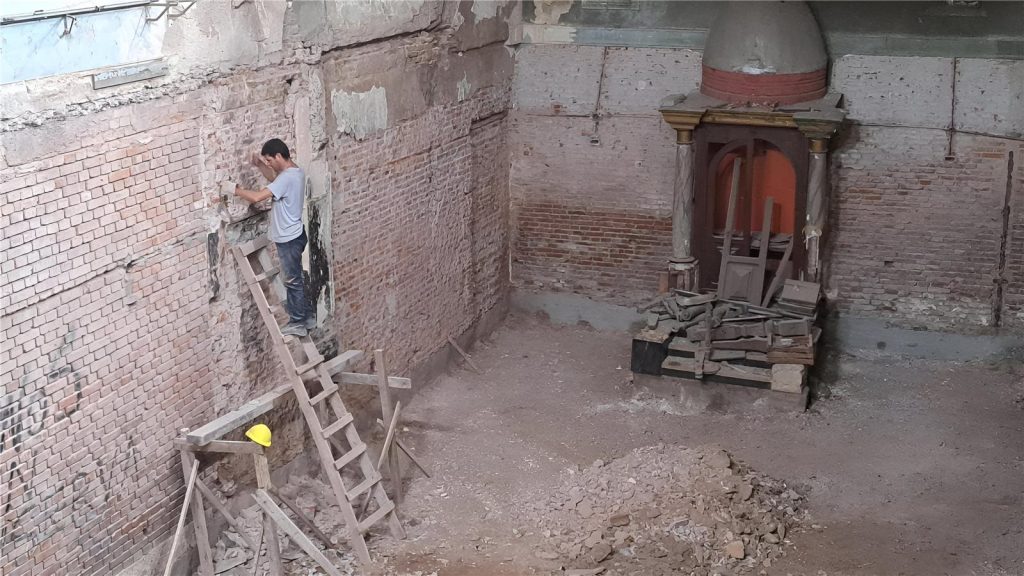
Over the years, the shul ceased functioning as a spiritual center and was desecrated by anarchist elements. For over twenty years, the shul building was forcibly controlled by members of a local gang. The guest rooms became a refuge for unwanted guests, who painted swastikas there as well as the image of the German tyrant alongside various anti-Semitic caricatures.
Every time R’ Shneur Mizrachi passed by this (former) ‘mikdash me’at,’ he felt terrible when he saw how “foxes walked through it”…
Nevertheless, the shliach and his wife did not despair. The squatters tried to intimidate anyone who tried to approach on behalf of the Jewish community. Yes, they even threatened the Rabbi himself.
However, after a stubborn legal battle, in which the community of Jewish lawyers in Argentina threw their weight behind it, this place too was redeemed.
Following the terrible desecration to the shul and its poor condition, a need arose to begin renovations to transform it into a magnificent place for the community’s activities and Chabad House. Indeed, already in the midst of renovations, they began holding minyanim there on Shabbos.
The COVID period stopped the renovations and tefillos for a time, but after it passed, the shluchim returned to conduct activities there. R’ Mizrachi ensures that every Sunday morning a Jewish historian comes and tells anyone who wants to hear about the history of the shuls.
Chapter 3: A Revealed Supernatural Miracle
Wait, even before the story of the shuls’ ‘Didon Notzach,’ the shliach himself has a personal story, a real miracle!
At the end of 5781, Rabbi Shneur contracted the coronavirus. His condition deteriorated rapidly and he struggled to breathe: “Suddenly I ran out of air,” he recounts. Within less than 24 hours from the moment of hospitalization, the department staff announced to his wife: he must be sedated and put on a ventilator. The doctors gave him virtually no chance.
In the few moments before he lost consciousness, his only concern was for his shlichus. He called his brother, Rabbi Avraham Chaim Mizrachi and gave him the Rebbe’s dollar, asking for a commitment: to continue and ensure the renovation project of the old shul. This was the clear guarantee, faith above all logic, that the Rebbe’s blessing would accompany the work.
R’ Mizrachi was on a ventilator in intensive care for seven days and seven nights. His father, Rabbi Shaul Mizrachi, who obtained exceptional permission, stayed by his bedside and spoke to him divrei Torah, tefilla and Chassidishe niggunim.
The miracle occurred on the 20th of Cheshvan, when Rabbi Shneur Mizrachi miraculously awoke The recovery was so rapid that within two days he was transferred from intensive care to a regular hospital room.
Even in his complex medical condition, moments before they sedated him, he didn’t let go of his shlichus. When he discovered that one of his doctors was Jewish, he asked to write down the doctor’s phone number. After he miraculously awoke, the first thing he asked was: “Did the doctor put on tefillin?”… The doctor turned out to be a karkafta and thanks to Chassidishe persistence, he put on tefillin for the first time in his life! Since then he has grown closer to Torah and mitzvos and has put on tefillin several more times.
The Rebbe’s brachos served him as a spiritual shield. R’ Mizrachi relates that “the Rebbe’s blessings protected me.” It turns out that in 5749 his mother passed by the Rebbe during the distribution of dollars, and when she asked for a bracha for her son to grow up to be a Chassid, yerei shomayim and lamdan, the Rebbe replied: “Amen, may there be good news.” After he awoke from the coma, his mother told him that despite his severe condition, she believed with all her heart and soul that in light of the Rebbe’s brachos, everything would work out.
Two years before that, on Purim Katan 5751, when he was three years old, his leg got stuck in an elevator shaft. The building guard, who was alert enough, managed miraculously to pull him out of the elevator because if they had waited for the firefighters to arrive, he might have been killed ch’v.
With Rabbi Grunblatt’s help, his parents found one of the Chabad Chassidim in Argentina who was staying with the Rebbe at that very moment. He approached the Rebbe during the distribution of dollars and asked for a bracha for Shneur, that the accident wouldn’t harm him. The answer was: “May there be good news, that in the future his ‘accident’ will be a difficult question in Gemara and Tosafos…” Miraculously, he was completely healed.
“We always lived with this bracha from the Rebbe,” he says. “I didn’t believe that anything bad could happen, because I have the bracha from the Rebbe.”
His miraculous recovery from COVID caused a great kiddush Hashem, reached the media, and led to exceptional unity in the community as he received brachos and well-wishes from all circles, even those who had opposed him over the years.
Chapter 4: Severe Tragedy Alongside Steadfast Faith
At the heart of the shlichus story of Rabbi Mizrachi and his wife, the struggles and successes they experience, stands a personal story of faith facing the most difficult kind of nisayon.
In Adar 5783, the family traveled to vacation in the town of Tigre near their shlichus location. During the vacation, their son, Shalom Dovber a’h was hit by a truck in a severe traffic accident, and he was killed on the spot. He was three years old.
The pain was terrible and the shock severe, but instead of sinking into questions and pain, they immediately turned to the sources of life – to the Rebbe’s sichos, to the Zohar, and to Chapter 11 in Iggeres HaKodesh of the Tanya – “L’haskilcha Bina,” where it is written that no evil descends from Above, and if a person only contemplates, he will see that everything Hashem does is for his good. “We studied all of the Zohar on this subject, and all the Rebbe’s sichos,” shares R’ Mizrachi. “We held onto this with all our strength. The study was not an escape from reality, but a dive into a deeper, inner truth that gave our souls a different perspective on the disaster that befell us.”
The Rebbe’s bracha that “from now on the questions will be about the Gemara” was also in the forefront of R’ Mizrachi and his wife’s minds. He tells of a scholarly discussion that arose between him and his wife around Tosafos in meseches Avoda Zara, which discusses inyanei Geula and the malchus that will be in the end of days. “I said to my wife, maybe this is the Rebbe’s question, when will Moshiach come?” The nisayon of the question of Geula placed the entire event in the context of anticipation and preparation for the coming of Moshiach.
R’ Mizrachi decided to begin investing more of his time in studying Geula and Moshiach, and established a weekly chavrusa in Dvar Malchus with the shliach, Rabbi Moshe Blumenfeld. R’ Blumenfeld is also known as someone who distributes books on Geula and Moshiach that he translated into Spanish.
Mrs. Avigail Mizrachi also began teaching Tanya and Geula and Moshiach classes to women who are not Chabad, including wives of kollel yungeleit from the local community. The success is dizzying. The messages also reach the husbands. “Many people hear it afterwards and say, ‘Wow, we didn’t know Chabad, we didn’t know what this is’.” The shlucha herself became a mashpiah, as she instills her faith and strength in hundreds of women who took on good hachlatos.
Additionally, following the terrible disaster that befell them, the shluchim decided to start a project l’ilui nishmas their son. The project that grew from the pain is the “Sholom’s House” initiative – establishing a huge library open to the general public, entirely dedicated to books of Chassidus and Geula.
The library is located in an apartment they rented near the schools and kindergartens of the community’s children in the city.
“There is no new sefer that comes out, especially about Moshiach and Geula, that is not found in our library,” he says. The goal: to spread the wellsprings in an accessible way to every child.
The great consolation came with the birth of their son Shmuel, about a year after the tragedy. “We felt that the situation was turning around,” he shares. “We felt that Hashem paid us back with another son in the zechus of the emuna with which we continued the shlichus.” The Mizrachi couple saw concretely how mesirus nefesh and uncompromising faith bring a yeshua.
Chapter 5: Continuing the Shlichus
One of R’ Shneur Mizrachi’s main places of outreach is at the stadium of the well-known Boca Juniors soccer team. R’ Mizrachi knows the Jewish sponsors of the team, and they are the ones who helped him enter the VIP complex of the stadium and establish a kosher food stand at the stadium. They also arranged for him to enter the soccer fields to do mivtzaim, where he enables thousands to do mitzvos.
Among those attending the games was once a chareidi boy who didn’t like Chabad. One day when a game was held, that boy was in a rush in the morning and forgot to put on tefillin. When he arrived to watch the game at the stadium, he saw R’ Mizrachi by his tefillin stand. The youth was agitated and immediately said “Lucky you’re here, I forgot to put on tefillin. If not for you, I would have missed it.” After that, that boy connected with R’ Mizrachi and his activities.
R’ Mizrachi has stories, most testifying to how he doesn’t neglect any Jew, whoever he may be:
“Once I was walking with my family in a local park. During the walk I met a Jew. I offered him to put on tefillin, but he refused. Nevertheless, we exchanged phone numbers.
“When we held the dedication of the first shul we redeemed, he came, and even said that his parents were among the shul’s founders. Nevertheless, even at this event he didn’t agree to put on tefillin. I didn’t give up and continued to stay in touch with him.
“A few more years passed, and on one Erev Rosh Hashana his Jewish soul finally awakened, and he agreed to leave the category of karkafta.”
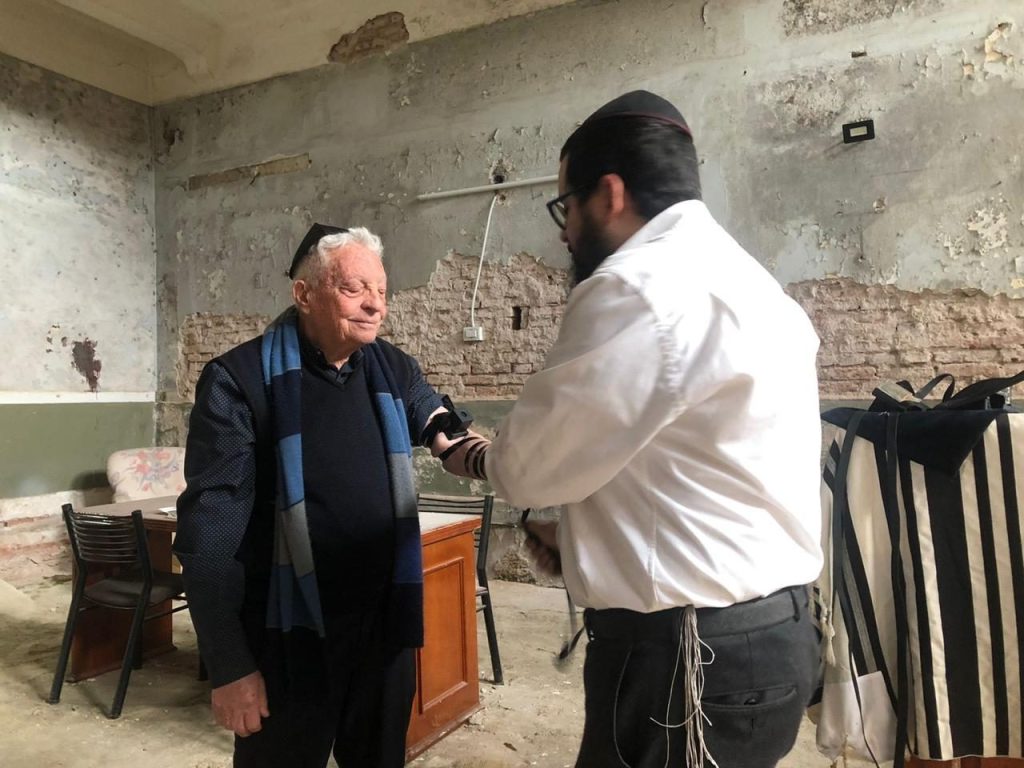
The shliach has more stories testifying to his work in ‘collecting’ and finding Jews: “I began to know the neighborhood’s Jews through mivtzaim that we do every Friday, during which we distribute 60 challahs and put tefillin on with people. Usually I drive to Tomchei Tmimim and recruit bachurim there to join me. Once, when I drove there, I parked the car near the yeshiva, and someone crashed into my car.
“The man was 75 years old. I asked, ‘What’s your name?’ and he answered ‘Lieberman.’ I asked him if he was Jewish, and he answered affirmatively. And so, instead of getting angry, we put tefillin on him and also took him out of the category of karkafta”…
Among his activities, R’ Shneur Mizrachi is in contact with a community of Jewish lawyers from Argentina. They helped him with legal procedures to redeem the shuls.
Last Yud-Tes Kislev he went with them to Eretz Yisrael and traveled with them to holy places throughout the country. During the trip he met a lawyer who didn’t know at all about his Jewish identity. “Since I didn’t know him, I asked if he was Jewish,” says Rabbi Mizrachi. “He answered no, but because his aunt is Jewish, he also joined the trip. At first I thought perhaps she was his father’s sister, but I still asked him how the aunt is related and he said, ‘my mother’s sister.’ I explained to him that he too is Jewish, and I put tefillin on him for the first time in his life…
“There are many Jews like this in Argentina, and in Buenos Aires in particular, who don’t know at all about their Jewish identity. Our task is to find them, ignite the Jewish soul in them and bring them closer to Torah and mitzvos and prepare them to greet Moshiach.”
Beis Moshiach #1492B • pp. 20-27
© 2026 Beis Moshiach Magazine. All rights reserved.
This article originally appeared in Beis Moshiach #1492B. You are welcome to share it with friends and family by email or in print, provided that you do not change, add to or omit any part of it, you credit the author and Beis Moshiach, and you include a link to archive.bmoshiach.org (written out in full in printed copies).
To republish this article in a newspaper, magazine, book or website, please request permission in advance at [email protected].