Focus on the Edge
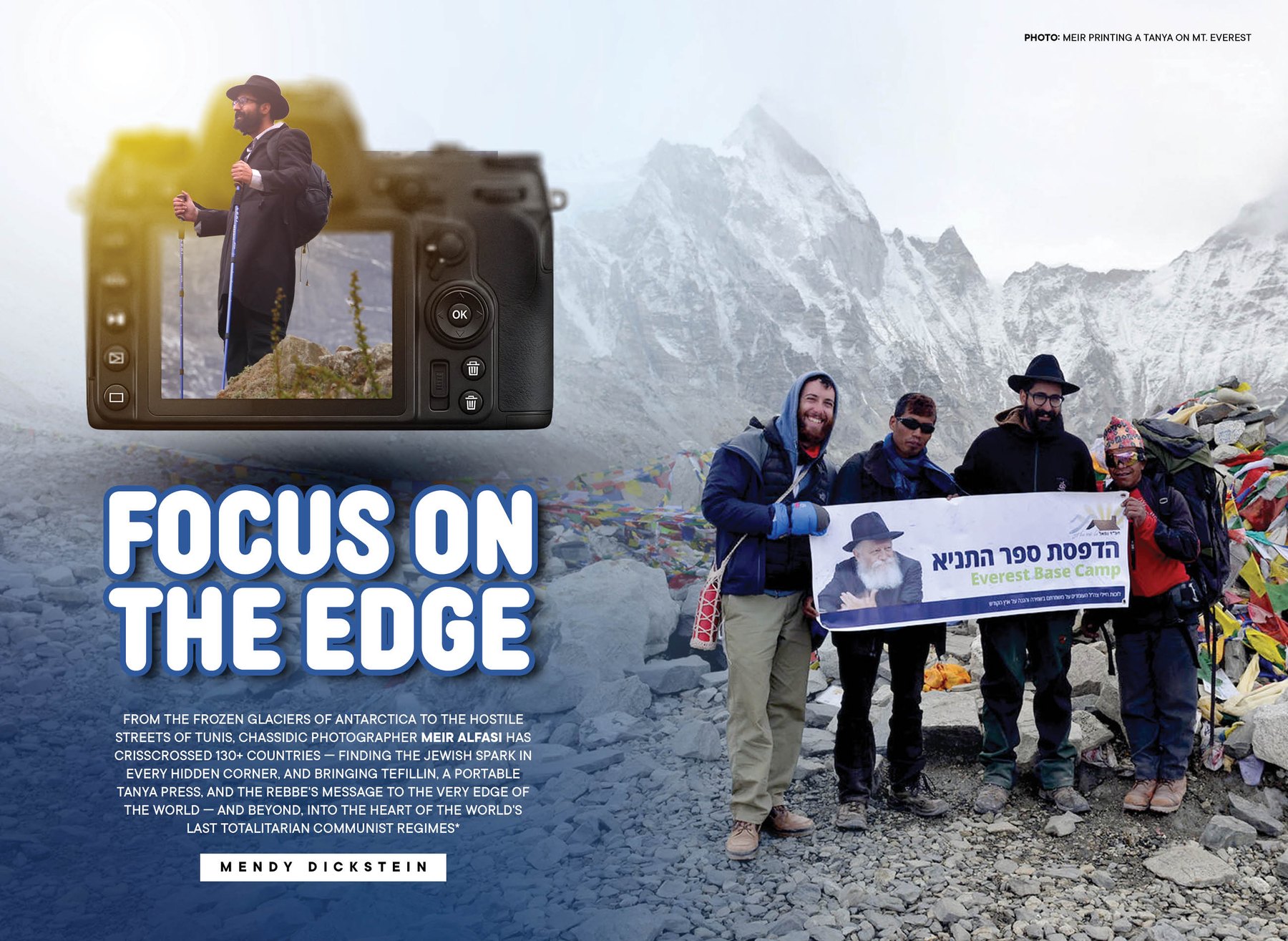
From the frozen glaciers of Antarctica to the hostile streets of Tunis, Chassidic photographer Meir Alfasi has crisscrossed 130+ countries – finding the Jewish spark in every hidden corner, and bringing tefillin, a portable Tanya press, and the Rebbe’s message to the very edge of the world – and beyond, into the heart of the world’s last totalitarian communist regimes.
A late twilight hour, one of those that paint the sky in vivid hues no digital filter could ever recreate. Photographer R’ Meir Alfasi takes us to a remote point on the globe, a place where the air is so thin that every breath feels like a supreme effort. The silence is almost painful to the ears.
Before R’ Meir stands an elderly Jewish man who for the first time in decades is wearing tefillin. His wrinkle-lined face is living testimony to a Jewish history full of hardship, but within those eyes burns a spark that has no age and knows no time. Alfasi breathes deeply, steadies his hand, presses the camera’s shutter, and knows with the inner certainty of a Chassid: another spark of holiness has just been gathered into his personal album of Geula. Another moment of hashgacha pratis has been documented for eternity.
Growing Up with the Camera
The new book, Alfasi ba’Derachim, recently released, is far more than a stunning photo album or a collection of breathtaking landscape shots. It is a moving Chassidic manifesto – a journey whose pages weave together stories of mesirus nefesh, burning emuna, and eager anticipation of the hisgalus. It takes the reader to places where the concept of “the end of the world” takes on physical meaning. Alfasi proves that in every such place – whether in the dark alleyways of hostile Arab countries or on the peaks of the Himalayas – the Rebbe is there, and so is his personal shlichus.
When we sit down to speak with Meir in his workroom, surrounded by sophisticated camera equipment and memories from countless countries (more than 130 countries, as of now!), the first question that arises is obvious:
What drives a Chassid, a family man, to leave the comfort of home, the blessed routine, and set out again and again into the unknown?
Alfasi smiles – the smile of a man who has seen everything, yet still manages to be surprised by the world every single time. He takes us back to his childhood in Beitar Illit and the yeshiva in Rechovot in the 1980s and 90s: “For as long as I can remember, my parents tell me they already saw me fiddling with cameras as a child. It wasn’t just a hobby – it was a language.” For Meir, the camera was not a plastic toy but an additional organ of his body, a tool through which he tried to decode the secrets of the world.
He recalls moments when he would lie for hours in the backyard of his parents’ home, documenting the world of tiny plants and insects, discovering that precisely in the smallest details – those that most people pass by in a rush – the most wondrous greatness of the Creator is hidden. “Over time,” he explains, “my horizons expanded. I discovered that the wonders of creation are an inexhaustible source of inspiration. More than once I found myself standing before the shifting sands of the Namibian desert, or under a star-filled sky in the middle of the savanna at night, feeling an immense wonder that was hard to contain. From that experience alone, one can be inspired by awe to serve the Creator.”
But the road from the backyard in Rechovot to the scorching deserts of Africa was not direct. There was a long period of intensive spiritual preparation.
Alfasi went through the standard Chabad yeshiva track, immersed himself in the world of Torah and Chassidus, passed his examinations successfully, and earned semicha l’rabbanus. “In my youth,” he recalls, “I was in yeshiva. I had rabbanim who directed me to immerse myself in learning, to understand that a Chassid must first be filled with inner tochen before going out to influence others.”
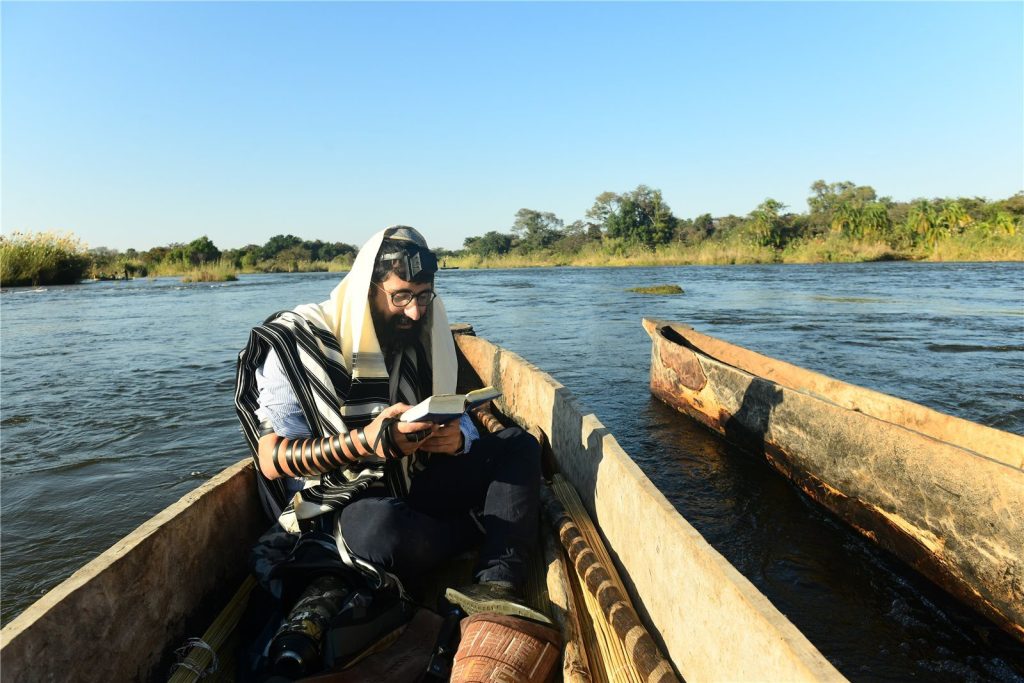
During those years, the camera was tucked away in the boidem. In its place came the old atlas. During off-hours bein ha’zmanim, he would sit and study names of remote lands, memorizing their geographic locations on the map and dreaming. “I filled entire notebooks with hundreds of words and phrases in different languages – Chinese, Hindi, Amharic, French. I learned geography through the pages of books, imagining myself arriving there not as a tourist, but as a Jew bringing a message.”
Not Everyone Is a Photographer, Even with a Sophisticated Phone in Their Pocket
The great turning point came when he was already married. The constraints of earning a living, as happens to many, pushed him to find a source of income. At that point the camera was retrieved and became a working tool. “Hashem directed me to the happiest profession there is – photographing simchas.
“But within the air-conditioned event halls, within the Jewish joy of weddings and bar mitzvas, a wanderlust always burned within me,” he says. It is worth noting that all of Alfasi’s travels take place during periods when there are no weddings or events, allowing him to combine wedding photography for income with landscape photography as a hobby.
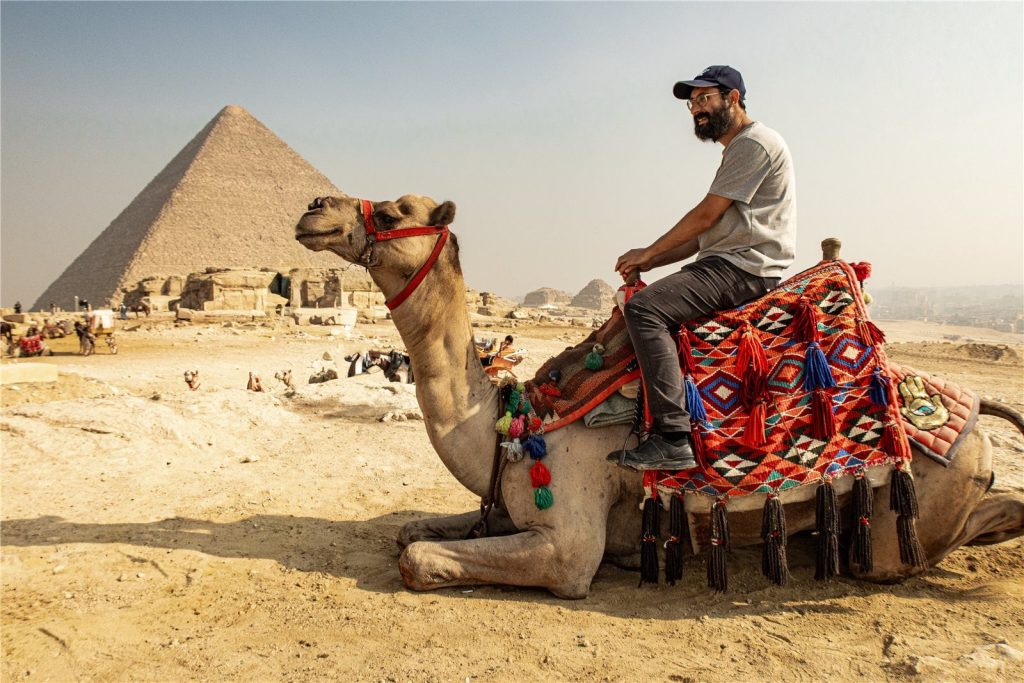
When I ask him what he considers a “photographer” – what transforms a person with a camera into an artist – he offers a definition worthy of being engraved on the heart: “It is first and foremost a way of looking at the world. A true photographer never goes on vacation. Even if he puts the camera in a heavy bag and locks it, his eye will keep working. It will keep calculating angles, checking perspective, searching for the right composition. It becomes second nature, something instinctive,” he smiles. For him, every frame is a moral and spiritual decision.
He passionately disagrees with the modern notion that “anyone can be a photographer” just because they have a sophisticated phone in their pocket. “It’s true that technically anyone can press the button, but real photography requires seeing the world from a different angle. It requires paying attention to the small details that most people miss in the race of life – to see the soul within, the spark of creation hidden within the slope of a mountain or within the wrinkle on an old man’s face.”
Alfasi’s travels, as reflected in the book Alfasi Ba’Derachim, are not the journeys of an ordinary tourist seeking beautiful scenery. These are the journeys of a full-time “roving shliach.” As such, they are filled with breathtaking moments of drama and dangers that make the heart skip a beat (“and… no, this is not recommended for everyone,” he laughs). He describes in chilling detail how he nearly became trapped inside a sudden volcanic eruption in Congo, a place where the earth opens up and lava threatens to burn everything.
But the dangers don’t come only from wild nature. At times, human beings are far more dangerous. Alfasi shares the relentless tension of visiting hostile Arab countries under a false identity. In Tunisia, for example, he found himself in a small, damp interrogation room, under suspicion of being a member of the terrorist organization ISIS. “They looked at me, at the sophisticated equipment, at the foreign passport, and didn’t believe a word I said,” he recounts in a quiet tone. “My heart pounded with an intensity impossible to describe, but I kept a composed face.
“In those nerve-shredding hours of interrogation, what held me together was a Chassidishe niggun playing on an infinite loop in my head. I felt that the Rebbe was there in the room with me, protecting me. When I was finally released through an open miracle, the first thing I did was take out my tefillin and put them on in a hidden corner of a Tunisian alleyway. That was my Jewish revenge against the darkness – to bring the light of holiness to a place where just moments earlier they had suspected me of absolute evil.”
This tension – between the necessary human caution and the inner fire of the shlichus – is the central axis around which the pages of the book revolve. Alfasi does not seek danger for its own sake. “I am very careful about ‘v’nishmartem’ and avoid unnecessary risks,” he clarifies. “In every country I do my homework, rely in advance on local contacts, try to understand the terrain. But as everyone knows, sometimes completely unexpected things happen, and then you do what Jews have done throughout all the generations: you lift your eyes to Heaven and pray, you ask for the Rebbe’s blessing, and you hope for the best.”
The North Koreans Firmly Insisted on Opening the Tefillin
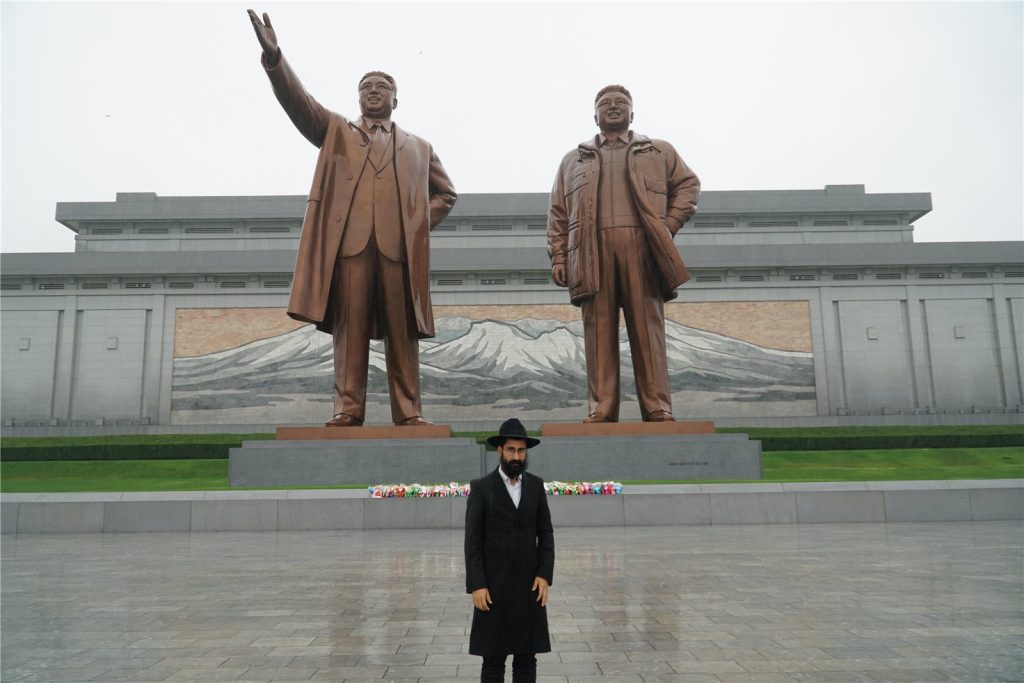
One of the most fascinating chapters in the book deals with the last remaining communist countries in the world – China, Cuba, and North Korea. There, under the cold, probing eyes of suspicious regime agents who followed him everywhere, he managed to document the concept of “subjugation in all its horror,” as he defines it.
In North Korea especially, he felt the incomprehensible contrast between the absolute communist darkness and the Chassidic light in which he had grown up. “I saw people living in constant fear, and it made me reevaluate the enormous freedom we have today to live and spread Judaism without fear.”
The visit there was one of the most unsettling journeys documented in the book. In a place where walls not only have ears but also watchful eyes, Alfasi found himself in the heart of Pyongyang. The drama began during the meticulous security check. The Korean guards, who had never seen religious articles, fixated on the black leather boxes – the tefillin. “They were certain it was a sophisticated listening device or a means of sabotage,” he says, and it is clear that even now, years later, the memory sends a shiver through him.
The tension reached its peak when one of the guards pulled out a screwdriver and intended to forcibly open the tefillin cases to check what was inside. Alfasi felt his knees buckle. For him, opening tefillin with a screwdriver is not merely financial damage and a desecration of the holy, but a literal mortal danger – because in this atheist state, the discovery of parchment with ancient Hebrew writing carried the penalty of death. In a stubborn struggle, using body language and improvised explanations, he managed to convince them to leave the tefillin alone by threatening to leave the country and return to China. The threat worked and they backed down. Later, in his hotel room, when he put them on, he felt immense relief. In the heart of a kingdom that worships flesh and blood, he connected to the King of Kings, knowing that every chapter of Tehillim he whispered there was piercing walls of iron.
In Cuba too, in the heart of crumbling Havana, he found the Jewish spark that refused to be extinguished. He describes a small Jewish minyan, a handful of people keeping the flame alive under difficult conditions. The rusting gates of the shul in Namibia, or the tormented gaze of a solitary Jew he encountered on the steppes of Kazakhstan – all are for him living, breathing testimony that the exile, painful as it may be, is only a thin outer shell. Beneath it burns a Jewish fire waiting for someone to come and fan the embers.
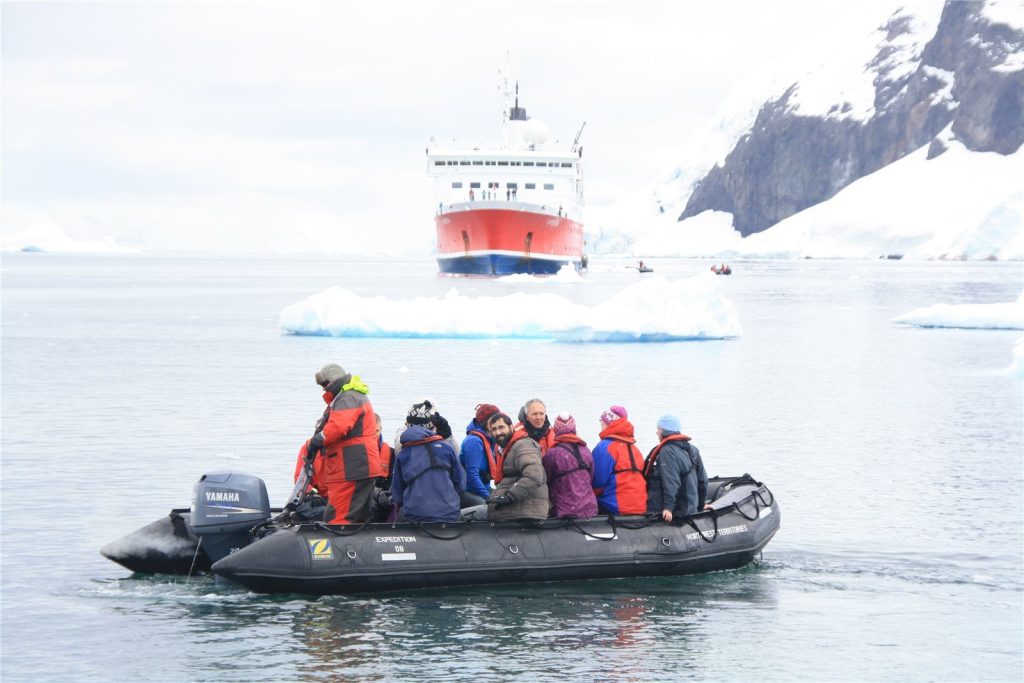
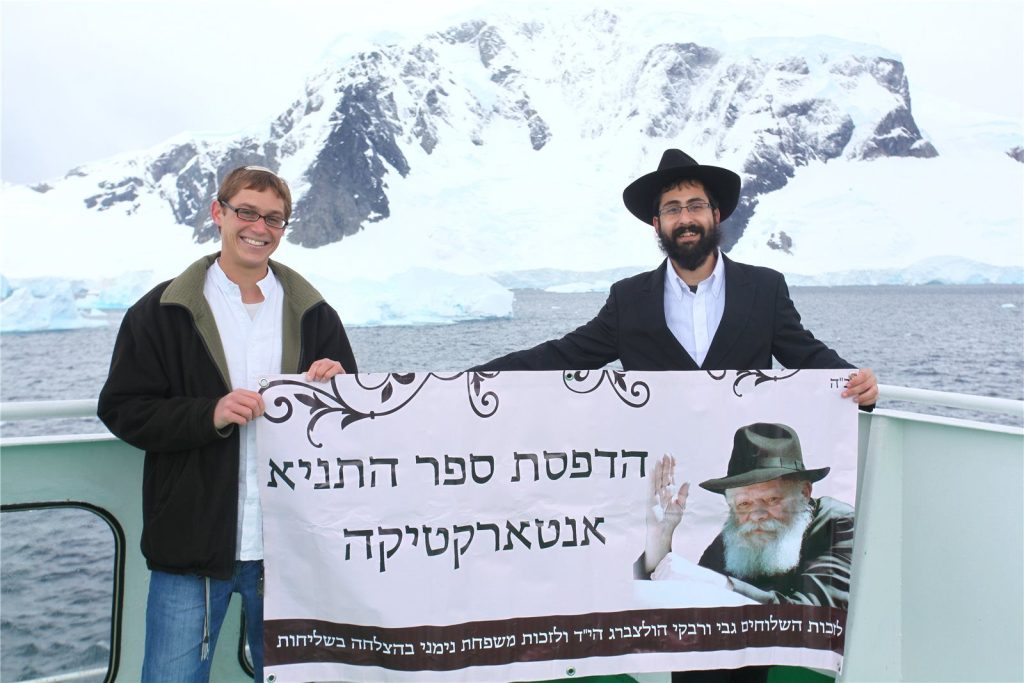
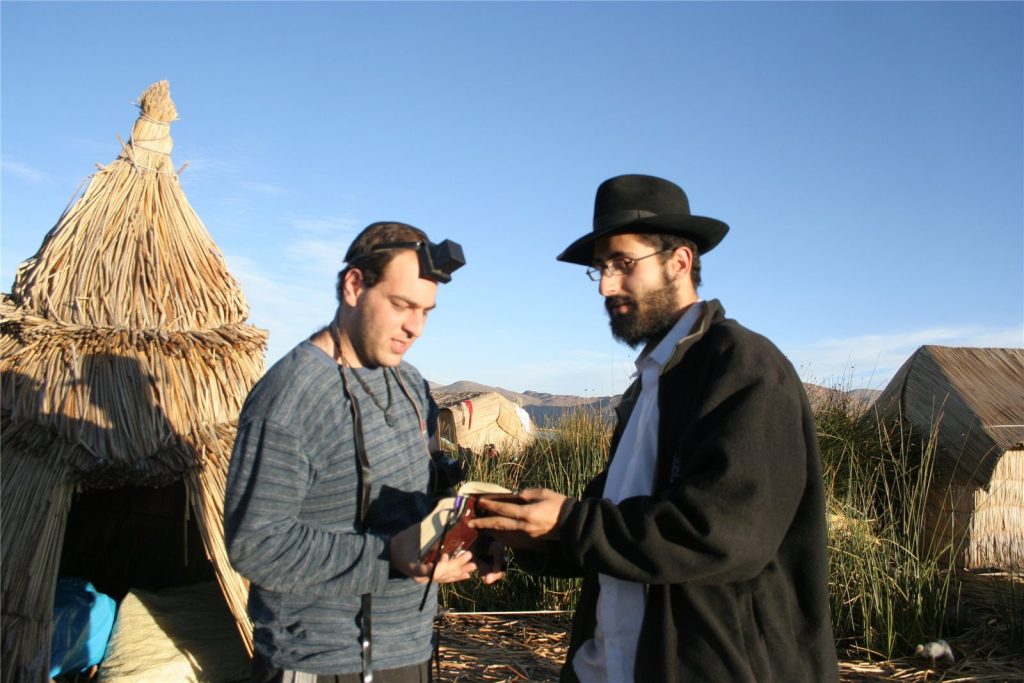
But the crowning achievement of his travels, the project that has become Meir Alfasi’s trademark, is undoubtedly the project of printing copies of the Tanya at the furthest points of the globe. The Rebbe instructed that the Tanya be printed in every place where there is even a single Jew. Alfasi took this mission seriously. He has printed the Tanya on the slopes of Everest, at an altitude where oxygen runs thin and breath is taken away, as well as on the vast white glaciers of Antarctica.
“A Chassidic Jew never wanders the world ‘just like that,’” he writes at the opening of this chapter in his book. “He understands that every place he reaches is destined to become ‘Eretz Yisrael’ in holiness. When I operate the portable printing press in the freezing cold of minus forty degrees, or in the stifling tropical humidity, I feel that I am physically conquering the world for the King, the King of the universe! I am not only documenting reality – I am pouring new tochen into it; I am connecting the most lowly or most remote place to the Alter Rebbe and the teachings of Chassidus.”
In those moments of shining solitude, when he is thousands of kilometers from home, from family, and from an embracing Chassidic community, Alfasi finds his strength.
The two words “Tayere Brider” have become his motto – “Dear Brothers.” In every Jew he meets on the road, even if dressed in strange local clothing and speaking a language with no resemblance to Yiddish or Hebrew, he sees a brother. He embraces him, puts on tefillin with him, brings him the Besuras HaGeula.
As I look into the eyes of this young man who has seen more landscapes than most of us ever will, I ask him about the complex relationship between art and shlichus.
Is there ever a moment when you simply want to be a professional photographer without the “yoke” of shlichus on your shoulders?
He smiles. “The shlichus is not a burden,” he states firmly. “It is my wings. Without it, the photographs would be nothing but beautiful color stains on expensive glossy paper. With my shlichus, they become the story of a soul, a wake-up call of Geula. Yes, I have photographed thousands of weddings in my life, and I am still moved by every chassan and kalla standing under the chuppah; but to see a lone Jew at the edge of the world – a Jew who had no idea what Judaism was – put on tefillin for the first time… that is a frame that no lens in the world can contain in its full power.”
A Shliach for Shluchim
You are not only a roving shliach – you also meet many shluchim around the world…
“Of course! Everywhere I go where there is a shliach, I make a point of visiting him. In addition, I ask every shliach in each country I visit about his needs and his family’s needs, and I try to load my suitcases as much as possible to help them in their life on shlichus. A person like me who sees the day-to-day lives of shluchim in every corner of the world understands very well the need for a bar of chocolate for the children, or even a cup of chalav Yisrael milk for a cup of coffee in a place where it is not readily available. I see the lives behind the concept of ‘shlichus’ and feel so small in comparison to these people who have sacrificed their entire lives and the lives of their children for the Rebbe’s shlichus.”
When I ask about a special case of hashgacha pratis etched in his memory, it’s not hard for Meir to pull out a story: “On every trip to Africa I make a point of stopping at the Chabad House in Ethiopia with my good friend Rabbi Eliyahu Chaviv. Every time, I am moved by the difficult shlichus he carries out on the African continent.
“Once, on my way to Madagascar, I stopped by Rabbi Chaviv and casually mentioned the next stage of my journey. Suddenly his eyes lit up. He told me that he had just learned of a Jew imprisoned in Madagascar on charges of turtle smuggling – a serious offense in that country – and since I was already going there, perhaps I could visit him and lift his spirits. Of course I agreed. I felt how I was personally participating in the mitzva of Ahavas Yisrael, even for someone I had never met.”
When the Camera Becomes a Shield, and Prayer Becomes Oxygen
If in the first part of this article we dealt with the roots and philosophy of the Chassidic way of seeing, here we dive into the hours when the camera becomes a shield and prayer becomes oxygen. “People see the stunning photographs in the book,” says Alfasi, his voice becoming more serious, “they see the colors, the landscapes, the smiles. But behind every such frame there are sometimes hours of terror, of complete loneliness, and of knowing that only the Rebbe’s blessing stands between you and the abyss…’
What do you mean?
Here is an example: in Irbil in Iraqi Kurdistan, the suspicion against him was the opposite, yet equally dangerous – there he was suspected of being a Mossad agent. “That tension, of living a double identity, is wearing,” he admits. “You photograph the markets, the people, but your eye is always searching for the way out, the escape route.
“But within all that, there are moments of chessed. Suddenly you encounter a Jew living there in the alleyways, afraid of his own shadow, and the moment he sees you – without words, just from the look – he understands that you are a brother. These encounters, of which the new book is full, are the real reason I set out on the road. The camera is only the key that opens these doors.”
Not only volcanoes and hostile countries fill the book’s pages; Alfasi also takes us on an equally fascinating journey into the “subjugation states” – China, Cuba, and North Korea.
In North Korea especially he experienced communist darkness in its most extreme form. “At every step I took, a government-assigned ‘escort’ accompanied me. Every photograph was scrutinized under a magnifying glass. There, within that oppression, I was reminded of the stories we heard about Chassidim in Soviet Russia. Suddenly I understood what it means to give one’s life for Judaism. When I saw the poverty and fear in the eyes of the North Koreans, I understood how much we must be grateful that we have the ability to spread the wellsprings freely. It caused me to print the Tanya there in secret, in the hotel room, with the feeling that we must bring the light of the Alter Rebbe even to the most sealed place in the world.”
In Namibia he found himself facing the rusting gates of the last shul. “I stood there and wept,” he says emotionally. “The entire community had disappeared, the children had left, and only the walls and the gates remained, locked with chains. I felt that my camera was the last testimony to Jewish lives that once were and are no more. But then, on the way out of the town, I met the one last Jew who still remained there. I put on tefillin with him on the roadside, and in that moment the rusty gates no longer looked so sad…”
How do you combine a career as a photographer for global news agencies like Reuters with shlichus?
Alfasi explains the essential difference: “At a news agency, you look for the ‘item,’ for what sells, for the news drama. As a Chabad photographer, the drama is entirely different. It is internal. It’s found in a simple, warm embrace with a Jew at the edge of the world; in another printed page of Tanya emerging from the press in the middle of a glacier. There were cases where I was sent to cover difficult events, and amid all the commotion I found myself searching for a Jewish connection so I could put tefillin on someone. My eye works in the service of the Rebbe, not in the service of any news editor in the world.”
The conversation touches on the personal price as well. “There are nights when you lie in a thin tent, the cold penetrating to your bones, and you ask yourself: ‘What am I doing here? Why am I not home right now with my wife and children?’ The loneliness is very powerful. But then morning comes, you see the sunrise over the glacier, you open your Chitas and begin to learn, and you understand that you are not alone. Every step I take on the road is accompanied by the Rebbe’s blessings and the full support of my family. Without them, not a single photograph would have come to pass.”
Printing the Tanya in the Middle of Nowhere
The journey of R’ Meir Alfasi is not measured only in kilometers or in the number of stamps in his passport, it’s measured in the small moments of “nachas ruach” for the Rebbe – those moments when the camera becomes merely a tool.
“People ask me what the most beautiful photograph I ever took was,” he says, his voice echoing in the space of the newsroom, “and I always answer: the photograph I have not yet taken – the photograph of the Rebbe’s hisgalus. Until then, every frame is just another brick in this building.”
One of the most fascinating chapters in his new book – receiving its first detailed coverage here – is the immense logistical effort behind the scenes. To print a Tanya at the edge of the world, good intentions are not enough. It requires Chassidic audacity bordering on positive madness. “Try to imagine yourself dragging a heavy printing press, a generator, paper, and ink through the jungles of the Amazon or while climbing the Andes,” Meir describes vividly.
“More than once the machine gave up the ghost due to humidity, or the ink froze from the cold. In those moments, standing before a lifeless machine in the middle of nowhere, I simply speak to the Rebbe.
“I say: ‘Rebbe, this is your sefer, I am only the shliach. Help me complete the mission.’ And miraculously, suddenly the generator coughs to life, suddenly the technical solution is found. These are moments of hashgacha pratis that cannot be explained through natural means.”
Meir recounts, for example, a deeply unsettling encounter that took place in a remote village in Chile, a place where, according to rumor, descendants of Nazis who had fled Europe were living. “I walked around there with my Jewish appearance, with my tzitzis out, and felt the hatred in the air,” he recalls. “It was chilling. But then, within that village of darkness, I found a Jew. He lived there in fear, trying to hide his identity. When I spoke to him in Yiddish, he broke down. We put on tefillin inside his house while outside people passed whose grandfather had tried to destroy us. The photograph I took there – of the hand with the black straps facing a window looking out over the hostile village – is in my eyes the absolute victory of the Jewish people.”
The conversation also wanders to the halachic dimension of the travels. Many do not know, but Alfasi regularly consults with rabbanim before setting out to any complex destination. “The non-simple situations create non-simple questions,” he explains. “What do you do when the international date line passes in the middle of a flight? How do you calculate zmanei tefilla in a place where the sun does not set or does not rise for months? How do you maintain kosher observance in the heart of the Sahara desert? I go out into the field equipped not only with cameras, but also with halachic knowledge and spiritual preparation. I am first and foremost a Chassid, and only then a photographer.”
At times, as he recounts with excitement, he finds himself teaching the seven Noahide laws to remote tribes in Tibet or on the African plains. “I come to remind them that there is a Creator of the world,” he clarifies with a smile. “When I stand before a chief in Africa and show him a photograph of the Rebbe, he feels that there is something holy here. I explain to them about tzedaka, about integrity, about emuna. Our role as Jews is to be a light unto the nations, and the camera allows me to do this in a visual way that breaks through language barriers.”
As we approach the end of the conversation, I ask Meir about the book itself.
“The book Alfasi ba’Derachim is not a summary,” he declares. “It is an invitation! I want everyone who leafs through it to feel that fire in the heart. To understand that this world is not merely a collection of landscapes, but a field of action for bringing Moshiach. Every time someone looks at a photograph of a Jew putting on tefillin in China and it stirs them to add a good deed – in my view, I have completed the shlichus of that journey.”
His message to the younger generation echoes in his workroom: “Don’t wait for the perfect opportunity. Don’t wait until you have the most expensive equipment. Start acting with what you have. If you have a burning heart and a smile, you can conquer the world. The Rebbe is waiting for us at every corner, in every Jew who does not yet know that he is one. Go forth!”
Beis Moshiach #1498 • pp. 24-34
© 2026 Beis Moshiach Magazine. All rights reserved.
This article originally appeared in Beis Moshiach #1498. You are welcome to share it with friends and family by email or in print, provided that you do not change, add to or omit any part of it, you credit the author and Beis Moshiach, and you include a link to archive.bmoshiach.org (written out in full in printed copies).
To republish this article in a newspaper, magazine, book or website, please request permission in advance at [email protected].