From Leeds to Lubavitch
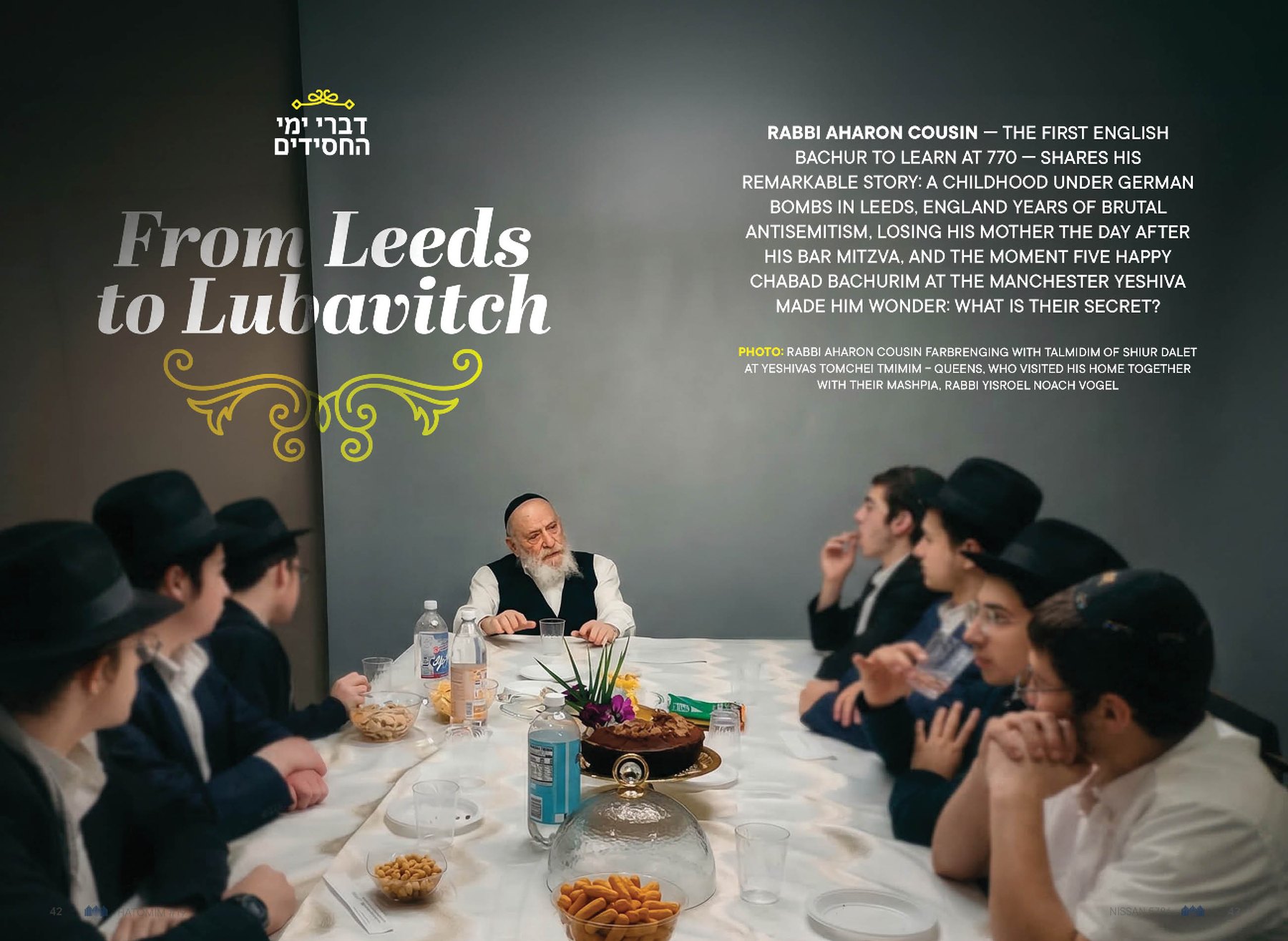
Rabbi Aharon Cousin – the first English bachur to learn at 770 – shares his remarkable story: a childhood under German bombs in Leeds, England, years of brutal antisemitism, losing his mother the day after his bar mitzva, and the moment five happy Chabad bachurim at the Manchester yeshiva made him wonder: what is their secret?
The year was 1938. The entire world stood on the edge of an abyss, with only a year and a half remaining until World War II. I was born in the city of Leeds in northern England, into a reality that the word “hardship” is too small to describe. I was a toddler of just 18 months when the sounds of war began to echo, and with them came the first and most significant separation of my life: my father was conscripted into the British Army.
For long years – almost my entire early childhood – my father was for me a faint memory or a distant photograph. He was sent to faraway fronts, fighting in the ranks of the British Army against the Germans. In fact, until I was about seven or eight years old, I hardly knew what it meant to have a father at home. He was a soldier, and we were a family struggling for its survival on the home front.
As the war progressed, the situation in Leeds grew worse and worse. German aircraft would arrive every night and drop bombs relentlessly. It was not merely a distant noise; death was very close. Houses across the road were bombed, houses two gateways away from us were destroyed, and people we knew were killed inside the ruins of their homes if they had not managed to flee to the shelter in time.
The main reason Leeds was such a favored target for the Germans was a large munitions factory that stood right at the end of our street. There they manufactured shells and bombs for British tanks and aircraft. The Germans tried again and again to destroy the factory, but they could not fly low because of the “barrage balloons” – enormous balloons that floated in the sky, tethered to the ground by strong steel cables. If a plane tried to fly low, its wings would be caught in the cables and it would crash.
Because they were forced to bomb from thousands of feet up, they were not accurate. The technology of those days was nothing like today; they simply dropped bombs and hoped to hit their target. And so the bombs fell on the residential homes surrounding the factory – on us. In the end, the government decided to evacuate all the residents of our neighborhood. They transferred us for three months to the countryside, to a remote farm. We lived there among non-Jews; there was no other choice.
People sometimes ask me: “What is the earliest thing you remember from your life?” My earliest memory is from that evacuation. I remember my mother a’h, carrying me in her arms. I was a very small child then, perhaps three or four years old, and I could not walk fast enough. I had an older brother and two sisters, and they clung to our mother’s clothes as she walked along the platform at the train station, searching for an empty carriage for us. That image – of my mother holding me at the station on the way toward the unknown – is the point at which my memory begins.
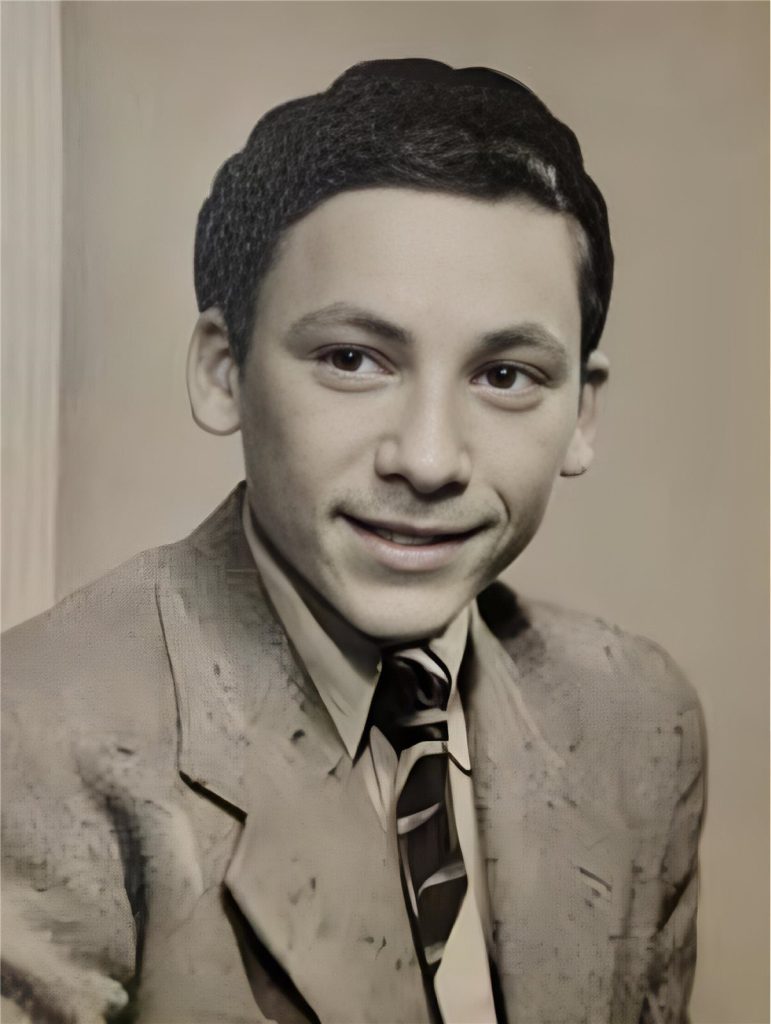
The war finally ended, and my father came home. But the quiet did not last long. As a Jewish child in post-war England, I was about to discover that the real front for me was only just beginning – the bitter front of antisemitism in the streets and schools.
Antisemitism in Leeds
In those years, between 1947 and 1948, England was not a safe place for Jews. Events in Eretz Yisrael directly affected us, the children in Leeds. The British were ruling Palestine at the time and behaving terribly toward Jews; they would not allow Holocaust survivors to escape from the camps in Germany and enter Israel, because of the Arabs. The Jews in Israel began to fight against the British, and that tension seeped deep into the English street.
Antisemitism was around every corner. On my way to school in the mornings, gangs of goyim would be waiting for us simply to beat us up. When I was eleven, I moved to a secondary school where there were 600 boys, and only 40 of them were Jewish. We were a persecuted minority. The situation was so bad that during every break, all forty of us Jewish children would huddle together in one corner of the playground. We knew that only when we were together would they not dare to start up with us. But if any of us needed to step out to the bathroom or move away from the group for a moment – the goyim were already waiting for him there. More than once we came back with black eyes.
But the harshest antisemitism came from the teachers. They were all goyim and they simply hated us. In my class there were 40 boys, and only I and one other child were Jewish. The teachers would pick on us over every small thing. It was enough for the non-Jewish pupils to hide our books or tear them up and report us to the teacher, and we would immediately be summoned for “punishment.” It was terrible. I could not concentrate on my studies; I was always afraid that something was about to happen.
The Breaking Point and Becoming an Orphan
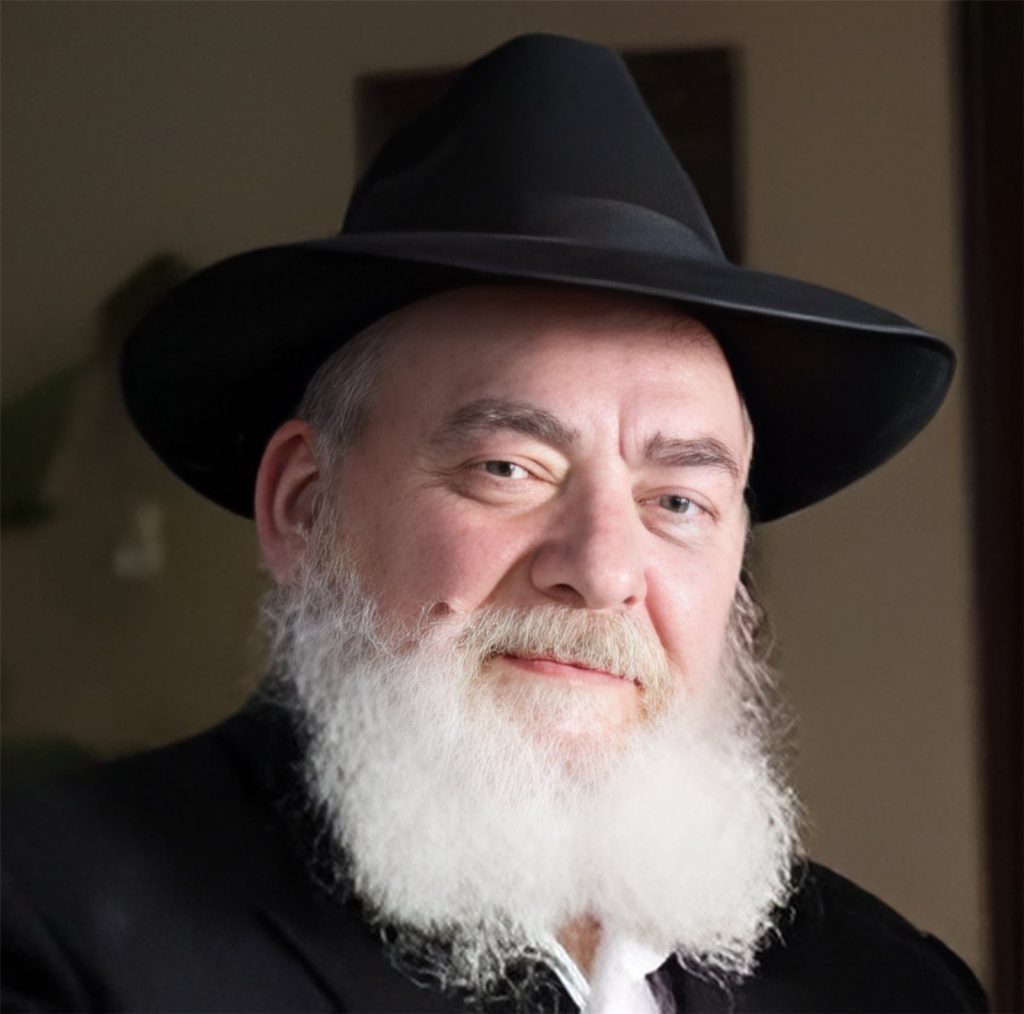
Within all this harsh reality – frightened, hating school, feeling stifled – there came the hardest blow of all, one that shook my world to its foundations. My mother fell gravely ill. I remember the chilling timing: she was hospitalized exactly one day after the celebration of my bar mitzva. For six months she fought for her life, and on Erev Rosh Hashana 5712 – she passed away.
I was only 13 years old, a young boy who had lost his only support. From that moment, life became for me a relentless nightmare. If before I had hated school and feared the goyim, now everything seemed way darker. The home that had once been a place of warmth became a large, empty, and dark house.
My older brother had already been drafted into the Royal Air Force since he was 18, and my two sisters were at university and were not at home. I would come back from school to that large, empty house in the evening hours of the English winter. Every small noise in the house made me jump in terror. I was the youngest in the family, and suddenly I found myself alone, coping with an enormous loss and with fears.
I hated everything: I hated school, I hated the hours after school. Nothing gave me any rest. The only thing that kept me going in some way was the need to go to shul to say Kaddish for my mother.
There, in the shul, in the midst of grief and pain, the first hashgacha pratis took place – the one that led me toward a new path. I met two bachurim who were learning at the Manchester Yeshiva. Until then, I had no idea what a “yeshiva” was. I had never heard of the concept and did not know what it meant to truly “learn.” In the cheder where I had studied in the afternoons, they taught Zionism and not Judaism, so the world of Torah was completely foreign to me.
These bachurim approached me and said: “You must come and learn at the yeshiva. It’s really good there.” I looked at them with puzzlement. “Yeshiva? What is that?” They described to me a place of learning and Jewish fellowship, and I, in the darkness of Leeds, could not believe my ears. I asked myself: “Wow, can there really be a better place than where I am right now?”
That hope – that something else was possible – ignited a fire within me. I felt this was my only chance to be saved from the hell of Leeds – from the fear of the goyim, from the beatings by teachers, and from the loneliness of the empty house. I said to my father with a resolve I had never known in myself before: “Father, you must take me to the yeshiva. I want to go and learn there.”
My father saw my distress and agreed. He arranged an appointment with the Rosh Yeshiva of the Manchester Yeshiva. One Sunday morning, we boarded the train from Leeds to Manchester. I sat on the train with my heart pounding; I knew I was traveling toward something I did not know, but I had no idea how fateful that meeting was about to be.
“I Want to Learn!”
When we arrived at the Manchester Yeshiva and entered the office of the Rosh Yeshiva, Rabbi Yehuda Zev Segal, I encountered a figure I had never seen the likes of before: a Jew with a thick beard, a man of majestic bearing, who had studied at the famous Mirrer Yeshiva in Lithuania.
The Rosh Yeshiva looked at me warmly and asked: “So you want to learn?” “Yes, Rosh Yeshiva,” I answered with reverent awe. He began an examination: “Which Gemara have you studied?” I looked at him with wide eyes. “Gemara? What is Gemara?” I had not the faintest idea what that word meant. The Rosh Yeshiva did not despair. “Well, and which Mishnayos have you learned?” “Mishnayos? I don’t know what that is,” I answered again. He raised an eyebrow. “Have you learned Chumash? Chumash with Rashi?” “I learned Chumash about Yosef and his brothers in cheder,” I said, “but I don’t know what Rashi is.”
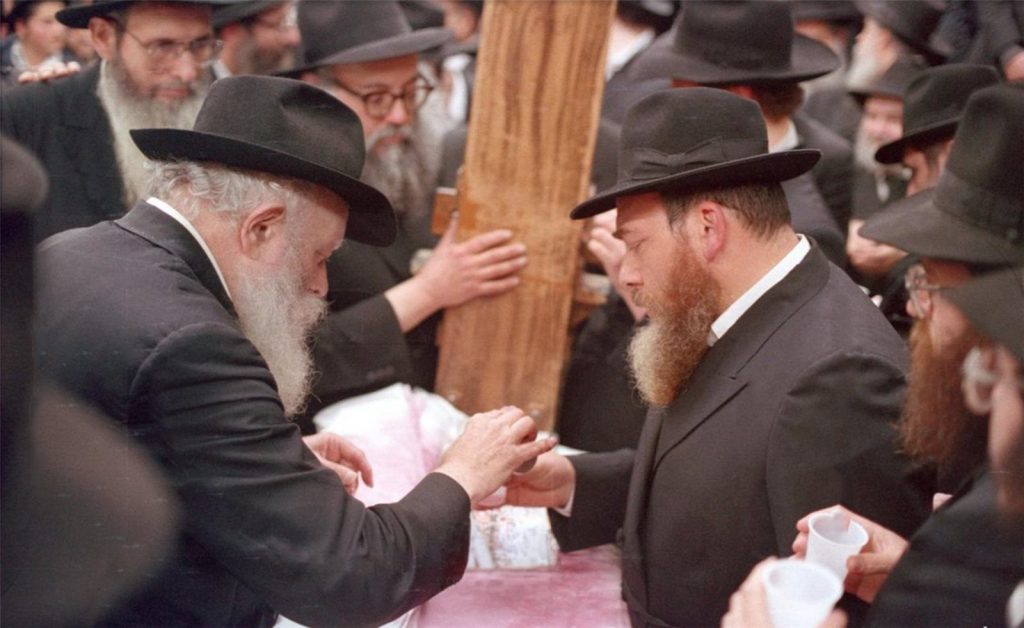
The Rosh Yeshiva sighed, took out a Chumash and asked me to read. I could read the words, since in cheder they had taught us technical reading, but I understood nothing beyond that. He looked at me, closed the Chumash, rose from his chair and walked toward the door. “I am sorry,” he said to my father in a firm voice, “I cannot accept him. He knows nothing. This is a yeshiva for Talmudic study at a very high level, and I have no class for him. I have no one to teach him and no place to put him.”
I saw my father pleading before him. “He is an orphan,” my father said in a broken voice, “there is no one at home for him, he is alone. Please, have mercy on him.” But the Rosh Yeshiva remained firm: “I wish you blessing and success, but I simply cannot.”
I stood there between them, a boy of 13, feeling as if my world had collapsed. In my terms, returning to Leeds meant returning to “hell” – to antisemitism, to loneliness, to darkness. In those days, children did not speak unless they were addressed, but at that moment I felt something stronger than myself pushing me to speak. I am certain that my mother was looking down at me from above, and perhaps the Rebbe – who was in New York but already knew everything – gave me the strength.
For the first time in my life, I raised my voice with a resolve I had never known: “But I want to learn!” I did not even know what it meant to “learn,” but that cry came from the very depths of my soul. “I want to learn!”
The Rosh Yeshiva froze. He looked stunned. He gazed at me with piercing eyes and asked: “Do you really want to learn?” “Yes!” I answered. He fell silent for a moment, and then a remarkable change came over his face. “All right,” he said, “today is Sunday. Tomorrow is Monday. Go home, pack your things, and come back here on Tuesday.”
The Secret of Michel Shor
When I returned on Tuesday, I felt I had entered Gan Eden. Suddenly I was surrounded by Jewish children, good and nice bachurim, without a trace of antisemitism or fear. Everyone helped one another. The Rosh Yeshiva, understanding that I arrived without the slightest background in learning, assigned to me an older bachur – a Chassidishe, G-d-fearing bachur by the name of Michel Shor. Michel was a unique personality; he was a genuine talmid chacham, a masmid and possessed of a deep Chassidic feeling. In later years, sadly, he suffered greatly from mental afflictions, but in those days he was my rescuing angel.
I remember the very first moment we sat down to learn. Michel opened a Chumash and chose for me a simple and straightforward pasuk: “And G-d spoke to Moses, saying.” He read the pasuk and translated it, and then asked me: “Aharon, repeat that.” I repeated the words exactly as I had heard them. The moment I finished, Michel reacted with an enthusiasm I had never encountered. “Wow! You are simply fantastic! You are brilliant!”
I froze on the spot. I looked at him and could not believe my ears. “Me? Brilliant?” My whole life – especially in the non-Jewish school in Leeds – I had heard only words of contempt. The teachers had always put me down, the non-Jewish pupils had tormented me, and I had always felt inferior, that I was worth nothing. And suddenly, here in the Beis Medrash, a bachur, a lamdan, told me I was “brilliant” simply because I had repeated a single pasuk.
That word, “brilliant,” brought about an actual physical change within me. I felt something inside me awakening. Years later, when I had already studied Chassidus in depth, I found a wonderful explanation for that moment in the teachings of the Tzemach Tzedek, who asks: What is the reason we praise the Holy One, blessed be He, and say to Him “Blessed are You” or “Merciful and Gracious”? Does He really need our praises? Rather, explains the Tzemach Tzedek, when a person praises someone and calls them by a certain title – such as “merciful” or “wise” – he awakens within that person that very quality.
This is exactly what happened to me with Michel Shor. The fact that he called me “wise” and “brilliant,” even though at that time I knew almost nothing, awakened within me the midda of chochma. Suddenly I felt that I was capable. My self-confidence, which had been ground to dust, began to rebuild itself. I started to learn one more pasuk and then another, and I progressed at an unbelievable pace. From a boy who did not know what Rashi was, I became a bachur who thirsted for every word of Torah.
The Chabad Group
The lessons with Michel were only the beginning. In those years – the early 1950s – the Manchester Yeshiva was full of bachurim who were survivors of the Holocaust. I saw Chassidishe bachurim with numbers on their arms, survivors of the concentration camps. There were Chassidim of Belz, Ger, Satmar, and also Chabad Chassidim. Each group had its own customs, its own dress, and its own niggunim.
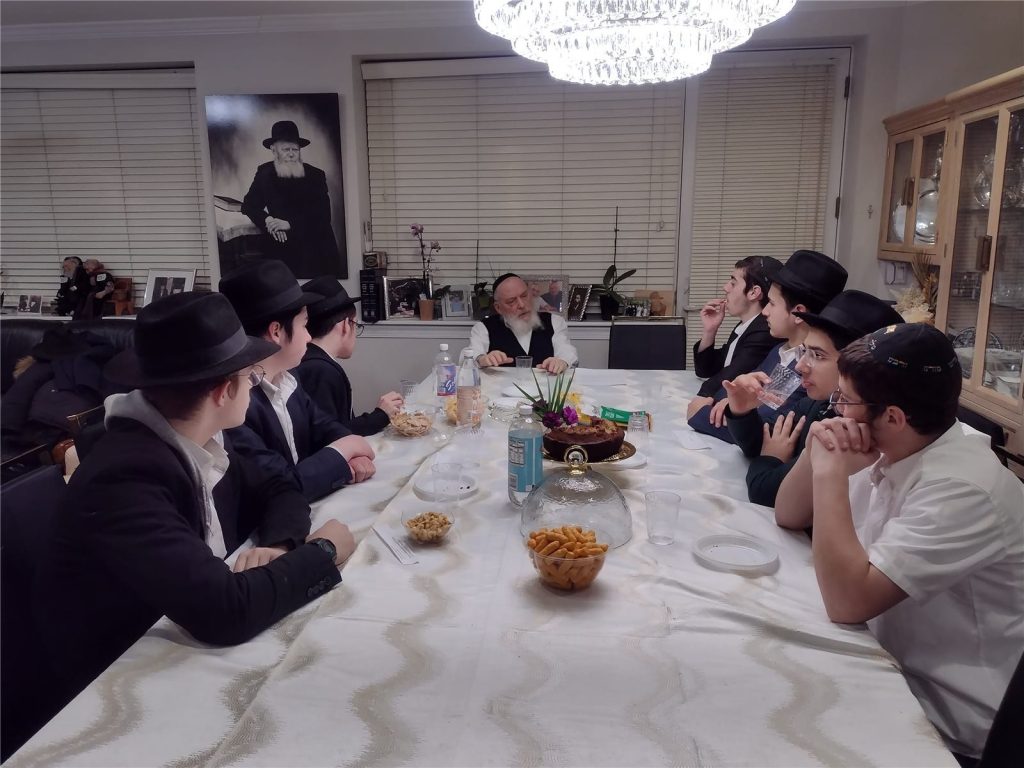
Naturally, everyone got along with one another, but there was one small group that drew my attention. These were five Chabad bachurim: Avremel Shemtov and his younger brother Yisroel; Shalom Ber Gurkov and his brother Shmuel Dovid; and Berel Futerfas, son of the famous Chassid, Rav Mendel Futerfas.
I watched them from the side and noticed something strange. For 90% of the bachurim in the yeshiva, Yiddishkeit was perceived as a heavy burden. Truly, that was the general feeling. We felt that Torah was a collection of prohibitions: “Don’t do this,” “You’re not allowed to eat that,” “It’s forbidden to go to movies,” “You’re not allowed to go there.” Everything we wanted to do – the Torah said it was treif or forbidden. Every single thing.
But the Chabad bachurim were an entirely different story. They were happy. Genuinely happy. They did not look as though Yiddishkeit was a burden upon them; on the contrary, they loved Yiddishkeit more than any of us. They were more serious, more sincere, and above all – happier. I looked at them and wondered: “How can this be? Why do these bachurim love Torah and mitzvos, while for us it feels like a burden?” The curiosity burned within me. I began to ask them what their secret was. Their answer was short and simple: “We learn Chassidus.”
That was the moment I decided I wanted to try it. I turned to one of the rabbis of the yeshiva, Rabbi Yitzchok Dubov. He was a maggid shiur in Nigleh and he was a veteran Chabad Chassid who had studied back in the town of Lubavitch itself. I asked him: “Rav Dubov, I want to learn a little Chassidus.”
He agreed and began to learn with me. The moment I opened the Chassidus sefarim, I felt something in my soul beginning to expand. Suddenly the prohibitions were not merely a “do not” but part of a larger and brighter picture. The attraction to Chabad transformed from watching from the sidelines into an inner and deep connection.
The Battle Over the Beard
As the days in the Manchester Yeshiva went by, the decision in my heart deepened: I belong to Lubavitch. The learning with Rav Dubov and the bond with the Chabad bachurim had done their work. When I was 18, I began to grow my beard. In those days, in a Litvishe yeshiva like Manchester, that was a highly unusual step.
The Rosh Yeshiva noticed immediately. One day he turned to me and said in Yiddish: “Ich zei az du vakst a bord” (I see that you are growing a beard). I answered him honestly that I wanted to be a Lubavitcher Chassid, and that according to the Tzemach Tzedek this was a Torah prohibition. The Rosh Yeshiva reacted sharply: “No, no, no! Take it off!”
I was terrified. In those days, we feared the Rosh Yeshiva with a mortal dread. If you did not obey him, he was capable of throwing you out of the yeshiva that very moment without batting an eye. I was obligated to listen to him, but my neshama wanted otherwise.
To understand the nisayon, one must understand the prevailing mindset in the yeshiva. Almost all the bachurim shaved every Friday in honor of the holy Shabbos. Since electric shavers were forbidden, they used a special powder. They would mix it with water, apply it to the face for a quarter of an hour, then scrape everything off with a piece of wood. The face would be left completely smooth. I remember entering the Beis Medrash on Friday night and feeling as if I had entered a mikva; everyone was walking around with smooth, gleaming, completely beardless faces.
With a heavy heart I went to Rav Dubov, the Chabad maggid shiur, and asked him: “What should I do? The Rosh Yeshiva has instructed me to shave, and I do not want to.” Rav Dubov – a Chassid of the old school who had never known a razor – answered me with confidence: “Zolst lozn” (Leave it). Do not shave.
A few days later the Rosh Yeshiva encountered me again. “I told you to shave – why have you not done so?”
“I asked Rav Dubov,” I answered carefully, “and he told me not to shave.” The Rosh Yeshiva did not want to enter into a direct confrontation with Rav Dubov, who was a greatly respected figure, and he left me alone. And so my beard was saved – thanks to Rav Dubov.
The Rebbe’s Pound Note and the Voyage to Beis Chayeinu
Days passed, and my heart was already across the ocean with the Rebbe. I waited impatiently for the moment I could leave Manchester and arrive at the source of the living waters. In order to reach the Rebbe, I needed two basic things I did not have: a student visa and money for a travel ticket. I waited long months in tense anticipation, until at last the long-awaited form arrived.
Now I faced the financial problem. I was a bachur without a single penny to my name – literally. The only thing I had in my possession was a one-pound sterling note. This pound had an enormous spiritual significance: it had come from the Rebbe. The Rebbe had given pound notes to Reb Bentzion Shemtov to distribute to bachurim who were studying Chassidus, and so I too merited to receive “a pound from the Rebbe.”
It was hard for me to part with that note, but there was no choice. I needed to obtain a passport, and obtaining a passport cost exactly one pound. And so the pound that had come from the Rebbe was the one that opened for me the first bureaucratic gate on the road to him.
But a passport alone is not enough to cross an ocean. I went to a travel agent and asked what the cheapest way to get to New York was. “The cheapest way,” he said, “is to sail on the ship the Queen Mary. It takes four and a half days to cross the Atlantic Ocean.” The price? Sixty pounds sterling.
For me, sixty pounds sterling was like a million dollars. I didn’t have sixty cents, so where would I get sixty pounds sterling?
Here, hashgacha pratis appeared in the form of my sister, Esther Leah Klein (today she lives in Eretz Yisrael). In those days my sister had already completed her university studies and had begun to work. Her wages were very modest – only three pounds sterling per week. She saved penny by penny, week after week, until she managed to accumulate sixty pounds sterling in her bank account. That was the equivalent of five months of hard-earned wages.
Without hesitation, my sister gave me all her savings. Thanks to her self-sacrifice, I was able to buy the longed-for ticket. (Incidentally, in later years she became a central figure in N’shei U’Bnos Chabad in Manchester and merited receiving many letters from the Rebbe – all because of that initial connection that was forged through me.)
And so, in the month of Cheshvan 5717, I boarded the Queen Mary. Four and a half days of sailing on the open sea, with my thoughts already on the corner of Eastern Parkway and Kingston. I had no idea what awaited me, but I knew I was sailing home.
Wait Until Rosh Chodesh Kislev
I landed on the shores of the United States in Cheshvan 5717. A short time after my arrival, I merited my first yechidus with the Rebbe. The date was the 27th of Cheshvan. As someone who had grown up in a distinctly Litvishe family and had davened nusach Ashkenaz all his life, one of the central questions occupying me was the question of the nusach ha’tefilla. I knew that a Chabad Chassid davens with nusach Arizal, but I wanted to receive the Rebbe’s explicit agreement and blessing for this.
I wrote this on the note that I submitted to the Rebbe. I asked whether I should change my nusach from Ashkenaz to the Arizal. The Rebbe read the note, looked at me, and answered in Yiddish: “Yo, zolst yo baytn” (Yes, you should indeed change).
But then came an instruction that greatly surprised me. The Rebbe continued and said: “Ober… zolst vartn biz Rosh Chodesh Kislev” (But… you should wait until Rosh Chodesh Kislev).
At the time, this seemed puzzling. Rosh Chodesh Kislev would fall in only three more days. Why wait? After all, the principle states that “one hour sooner is better,” and especially when it concerns something as good and holy as changing one’s nusach to the Arizal – why delay three days?
The question is compounded by the fact that other Chassidim received a completely different response. Rav Eliyahu Vogel, for example, asked the Rebbe the exact same question in a yechidus, and the Rebbe instructed him to begin immediately! The Rebbe even asked him during that same audience: “Have you already davened Maariv?” When he answered in the affirmative, the Rebbe said: “In that case, begin tomorrow at Shacharis. If you had not yet davened Maariv, I would have told you to begin from Maariv already.”
In my case, by contrast, the Rebbe set a target date: Rosh Chodesh Kislev. I have no simple explanation for why the Rebbe instructed me to wait those three days, but it showed me even then that the Rebbe has a precise and personal accounting for each and every soul. With the Rebbe there is no fixed template; every bachur is an entire world, and each one has their own precise moment to grow.
Continuing the conversation about switching the nusach, the Rebbe asked me a practical question: “Du host a siddur?” (Do you have a siddur?) “Nein, ober ich vil koifn” (No, but I will buy one), I answered. The Rebbe looked at me and said: “Nein, nein, ich vel dir gebn” (No, no, I will give you one).
The Rebbe began searching on his desk, which was laden with piles of sefarim, to find a siddur for me. He searched and searched, but apparently could not find an available siddur among the stacks. The Rebbe did not give up; he pressed the buzzer that was fixed to his desk.
Within a few seconds, Rabbi Chodakov – the Rebbe’s secretary – entered the room. The Rebbe said something to him, and Rabbi Chodakov left the room, apparently to look for a key to one of the cabinets or to find a siddur at the Merkos L’Inyonei Chinuch.
Meanwhile, the Rebbe continued to ask me questions about my sister and various other matters. Time passed, and Rabbi Chodakov did not return. The Rebbe looked at me and said: “Ich veys nit farvos er brengt nit, ober ich vel zen du vest es bakumen” (I don’t know why he hasn’t brought it yet, but I will see to it that you receive it).
I understood that the audience had come to an end. As is customary, I left the room walking backward, without turning my back to the Rebbe, and closed the door. I entered the small zal and sat down in a corner to write down what had transpired in the audience. I wanted to remember every word, every expression, and every turn of phrase the Rebbe had used.
“Daven with Joy” – Motto for Life
I sat there for about ten minutes, absorbed in writing, when suddenly shouts were heard in the corridor. A bachur of Russian background ran into the zal and shouted: “Kazen! Who is Kazen?” I did not respond immediately, because my English name “Cousin” was pronounced differently, so I did not think he meant me. The bachur went out and returned a minute later, even more agitated: “Kazen! Where is Kazen? The Rebbe wants you!”
I leaped to my feet. Could it be? The Rebbe was calling me back inside? I had completely forgotten about the siddur in all the excitement. I ran to Gan Eden HaTachton, where Rabbi Leibel Groner was standing. He looked at me and said: “Nu, gei arein” (Well, go in).
I opened the door with awe – and my heart sank. Inside the room stood someone else in the middle of his own private audience! It was Rabbi Yitzchok Ushpal, a special Chassidic personality and a member of the yeshiva’s administration. As an English “gentleman,” I felt embarrassed to the depths of my soul. How could I barge in like this during another person’s private conversation with the Rebbe? I immediately closed the door and said to Rabbi Groner: “There’s someone in there!”
But Rabbi Groner was unmoved. “Nein, gei arein!” (No, go in!) I had no choice. I went in again. The sight I saw was astonishing: Rabbi Ushpal was standing right up close to the Rebbe, reading his pidyon nefesh aloud. Normally Chassidim would stand on the other side of the desk, but he was standing on the Rebbe’s side of the desk, right beside the Rebbe, so close that the Rebbe was forced to raise his head to look at him.
Despite being in the middle of Rabbi Ushpal’s audience, the Rebbe stopped everything. I saw that the Rebbe was holding a siddur in his hand. Evidently the siddur had arrived while I was sitting in the small zal, and the Rebbe had not wanted me to wait one moment longer.
Then something happened which I will never forget: the Rebbe rose to his full height. It is known that the Rebbeim explained that the most difficult thing for them during yechidus is the matter of halbasha v’hafshata – “dressing and undressing” – the ability to clothe oneself in the troubles and situation of the Chassid standing before them, and then to strip away from those in order to clothe oneself in the situation of the next Chassid. I saw that between one audience and the next, the Rebbe would raise himself slightly in order to “strip away” from the previous state. Here, the Rebbe stood up completely – in order to hand me the siddur.
The Rebbe leaned over the desk, extended the siddur to me with his holy hands, and said to me a sentence that is seared in my heart to this day: “Zolst davenen b’simcha un matzliach zayn” (May you pray with joy and be successful). When I left that night after the audience, holding the siddur the Rebbe had given me with his very own hands, those short yet powerful words reverberated in my head: “Zolst davenen b’simcha un matzliach zayn.”
There is no person in the world like the Rebbe, who diagnoses with precision the essence of every matter. As someone who had grown up in an environment where Yiddishkeit was often perceived as a burdensome yoke – as a collection of “thou shalt not” directives and a system of limitations and prohibitions – this instruction of the Rebbe was revolutionary for me. The Rebbe did not merely ask me to daven with dveikus or with kavana; he asked me to daven with joy.
That simcha is the foundation of everything. To be happy that you are a Jew, to be happy that you are a Chabad Chassid, to be happy that you stand within the dalet amos of the Holy One, blessed be He. The Rebbe gave me as a gift not only a siddur, but the correct way to approach tefilla – and life in general. The blessing that I would succeed was bound up with and dependent upon that very joy.
Ashreinu!
I often reflect on the remarkable transformation I underwent. How does a Jewish child from Leeds – without any Chassidic background – find himself at the very heart of Chabad? I am filled with gratitude and thanksgiving to Hashem for this tremendous privilege. The joy that the Rebbe commanded me in that audience is what has accompanied me for seventy years already, reminding me always that we must be grateful that the Rebbe chose us and drew us close.
I sit here today and look back at the road I have traveled. When I close my eyes, I can still hear the air-raid sirens of the war and feel my heart pounding before the closed door of the Rosh Yeshiva of Manchester Yeshiva. But above all of that shines the holy gaze of the Rebbe and the words that have accompanied me from then until this day: “Zolst davenen b’simcha.”
When I see the young generation of bachurim today, I remember those Chabad bachurim in the Manchester Yeshiva – Shemtov, Gurkov, and Futerfas. They were my magnet, because they were happy. They did not see Yiddishkeit as a burden, but as a privilege. This is my message to you: Yiddishkeit is the best thing in the world. To be a Chabad Chassid, to be mekushar to the Rebbe – there is nothing greater than this.
Ashreinu ma tov chelkeinu!
HaTomim #19 • pp. 42-53, 63
© 2026 Beis Moshiach Magazine. All rights reserved.
This article originally appeared in Beis Moshiach #1500. You are welcome to share it with friends and family by email or in print, provided that you do not change, add to or omit any part of it, you credit the author and Beis Moshiach, and you include a link to archive.bmoshiach.org (written out in full in printed copies).
To republish this article in a newspaper, magazine, book or website, please request permission in advance at [email protected].