Could We Present This to the Rebbe?
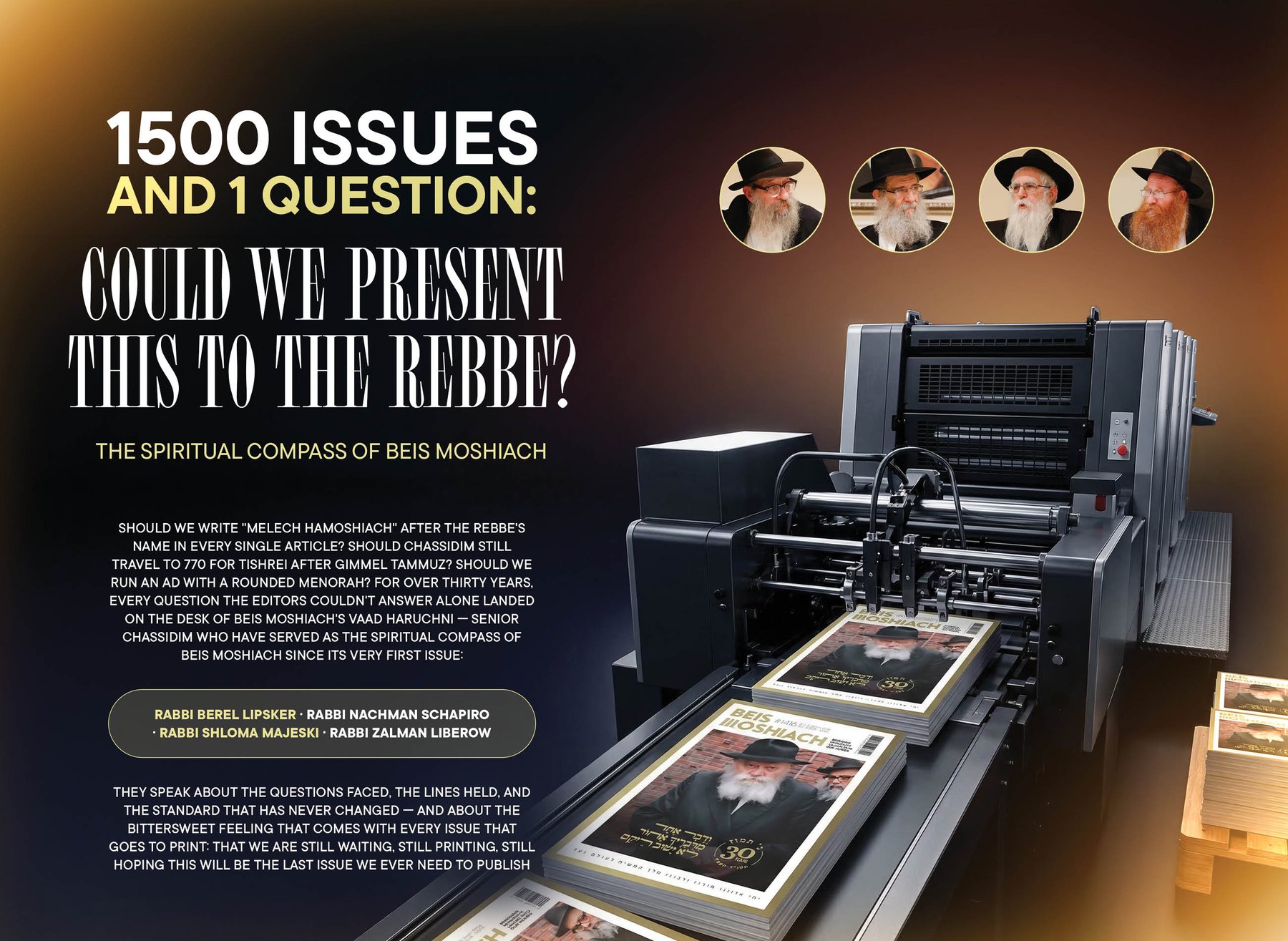
Should we write “Melech HaMoshiach” after the Rebbe’s name in every single article? Should Chassidim still travel to 770 for Tishrei after Gimmel Tammuz? Should we run an ad with a rounded menorah? For over thirty years, every question the editors couldn’t answer alone landed on the desk of Beis Moshiach’s Vaad HaRuchni – senior Chassidim who have served as the spiritual compass of Beis Moshiach since its very first issue: Rabbi Berel Lipsker, Rabbi Nachman Schapiro, Rabbi Shloma Majeski, Rabbi Zalman Liberow. They speak about the questions faced, the lines held, and the standard that has never changed – and about the bittersweet feeling that comes with every issue that goes to print: that we are still waiting, still printing, still hoping this will be the last issue we ever need to publish.
The editors of Beis Moshiach do not attempt to compete with other Charedi news-magazines. Its reporters do not focus on sensational stories, and its readers do not buy the magazine to read news from the wider world.
The editors, reporters, and readers have one goal: to awaken and strengthen hiskashrus to the Rebbe Melech HaMoshiach, and the fulfillment of all his directives without exception – especially in inyanei Geula and Moshiach. The entire weekly magazine is focused on this goal, across all its sections – beginning with the cover photo, which will always be a photo of the Rebbe, continuing with Dvar Malchus and Otzar HaMelech which arouse hiskashrus to the Rebbe and his directives, the diary of a tamim with the chayus of 770, the Chassidishe farbrengen and additional thought pieces that fan the flames of emuna, miracle stories illustrating that the Rebbe is alive and present despite the concealment and hiddenness, articles about the shluchim with emphasis on spreading the Besuras HaGeula, and on to in-depth interviews with rabbis and mashpiim who awaken and strengthen emuna in the light of the Rebbe’s sichos.
Given this editorial team, these reporters, and these readers – the Vaad HaRuchni [Spiritual Advisory Committee] must also be composed of first-rank Chassidim, well-versed in the Rebbe’s sichos and directives, who live and breathe his instructions and activities, and whose entire focus is devoted to bringing about the complete hisgalus in actual practice.
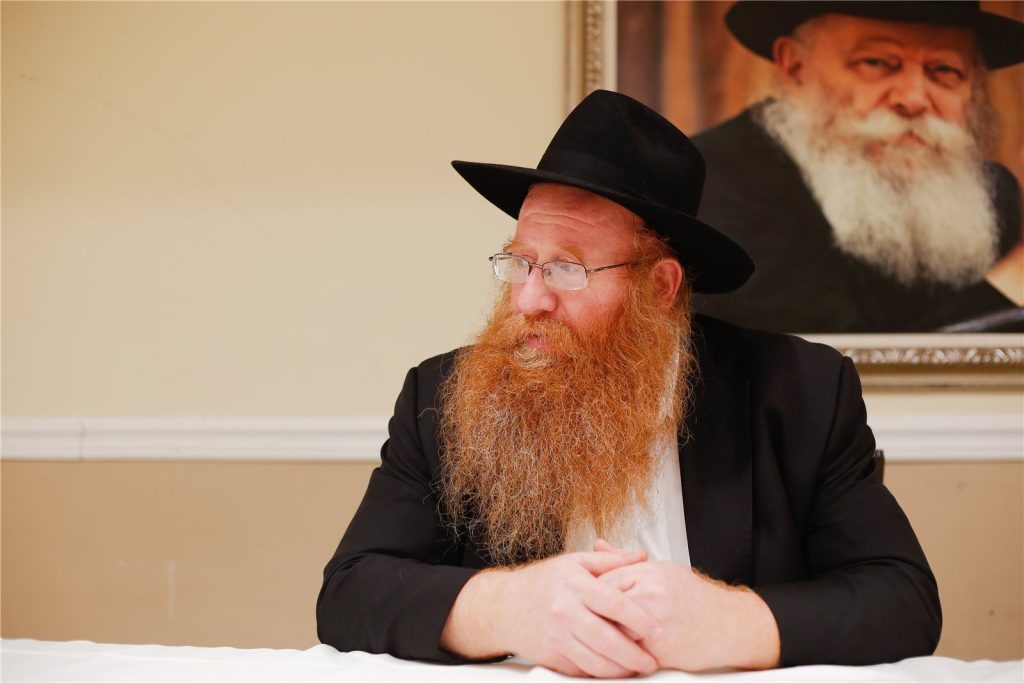
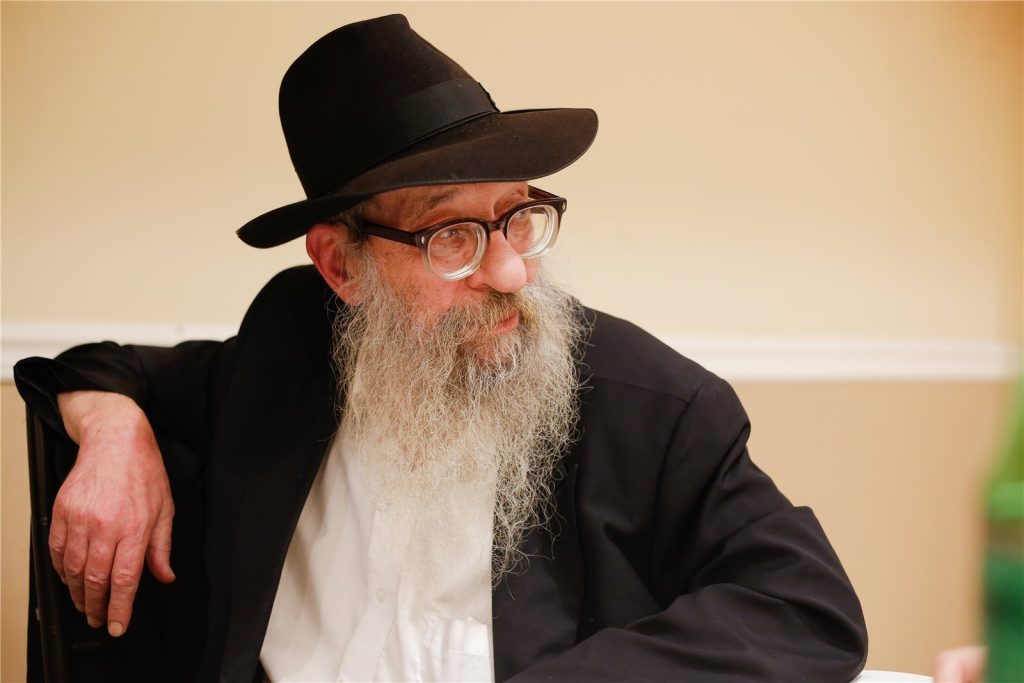
Indeed, alongside the founding of Beis Moshiach, the Vaad was established, comprising five Chassidim: Rabbi Zalman Liberow, the Rebbe’s shliach to Flatbush, New York, known for his unique chayus in all inyanei Geula and Moshiach; Rabbi Chaim Sholom DovBer (Berel) Lipsker, mashpia at Yeshivas Chovevei Torah and a member of the Vaad L’Hafotzas Sichos; Rabbi Shloma Majeski, director of ‘Machon l’Yahadus’ and a tremendous expert in the Toras HaGeula, whose lectures have earned a wide reputation throughout the United States; and Rabbi Nachman Schapiro, a member of the Vaad L’Hafotzas Sichos and a senior mashpia at Yeshivas Oholei Torah.
In anticipation of the thousandth issue of Beis Moshiach, we gathered the members of the weekly’s Vaad for a special discussion on the central principles of Beis Moshiach, the great responsibility borne by the magazine’s editors, the test criteria of the Vaad, the magazine’s influence on its readers, and the battles of Beis Moshiach against attempts to change its direction after Gimmel Tammuz.
“Yechi Adoneinu” – Not Only on the Cover
One of Beis Moshiach’s stated purposes is the publicizing of the identity of Moshiach. This begins with the declaration of “Yechi Adoneinu” appearing regularly on the magazine’s cover, continues with articles and columns dealing with this topic intensively, and of course with the repeated mention of the title “the Rebbe Melech HaMoshiach” throughout the pages of each issue. All Chabad Chassidim believe that the Rebbe is Moshiach – and yet there are those who ask: why the insistence on noting in nearly every article that the Rebbe is Moshiach? Is this not excessive?
Rabbi Shloma Majeski: As Chassidim, we must engage with special chayus in every inyan the Rebbe MH’M engages in. In the sichos of recent years, the Rebbe decidedly placed special emphasis on the topic of the identity of Moshiach. Already in the sicha of Shabbos Parshas Tazria-Metzora 5751, the Rebbe spoke at length about how in every generation there were disciples who said of their Rebbes that they were worthy of being Moshiach, and in continuation of this said that “we follow in their path” – that we too must say so – and linked the name of the Rebbe Rayatz to Moshiach.
Subsequently, in the winter of 5752, nearly week after week, the Rebbe was particular to mention that the leader of the generation is the Moshiach of the generation, with additional clear hints that he is Moshiach. To such an extent that in the sicha of Shabbos Parshas Mishpatim – filled with extraordinary expressions about the Rebbe being Moshiach and having already begun his activities in the world – the Rebbe added a note dealing with the three Chabad Rebbes of recent generations: the Rebbe MH’M, the Rebbe Rayatz, and the Rebbe Rashab, and their connection to the expression often used by the Rebbe regarding the complete Geula that will come immediately – “in which the acronym of ‘miyad’ alludes to the three eras connected to the Rebbe Rayatz, the leader of our generation, in order of their closeness to us: Moshiach (Menachem is his name), Yosef Yitzchok, DovBer (the Rebbe Rashab’s second name).”
This answer applies as well to those who raise another issue that Beis Moshiach elicits: why must we emphasize and repeatedly return to the pure Chassidic belief that the Rebbe is alive and present? The answer is the same: as Chassidim, we must engage with special chayus in every matter the Rebbe MH’M engages in. And after the passing of the Rebbe Rayatz – the Rebbe engaged with a koch in the belief that the Rebbe is alive in a physical sense and that the entire matter of the passing is nothing but a nisayon. The Rebbe then frequently quoted three Talmudic passages: “Moshe Rabbeinu did not die,” “Yaakov Avinu did not die,” and the entire story of Rabi Yehuda HaNasi who came to his home every Shabbos, made Kiddush, and discharged his family’s obligation of Kiddush. Since we are Chassidim of the Rebbe, we must engage fervently with that which the Rebbe himself engaged in with passion.
Rabbi Zalman Liberow: In practice, this question is asked about the entire issue of publicizing the identity of Moshiach. People argue: “We believe the Rebbe is Moshiach, but why is it so important to publicize and emphasize this?” The answer is simple: if it were not so important – the Rebbe MH’M would not have mentioned it in sichos.
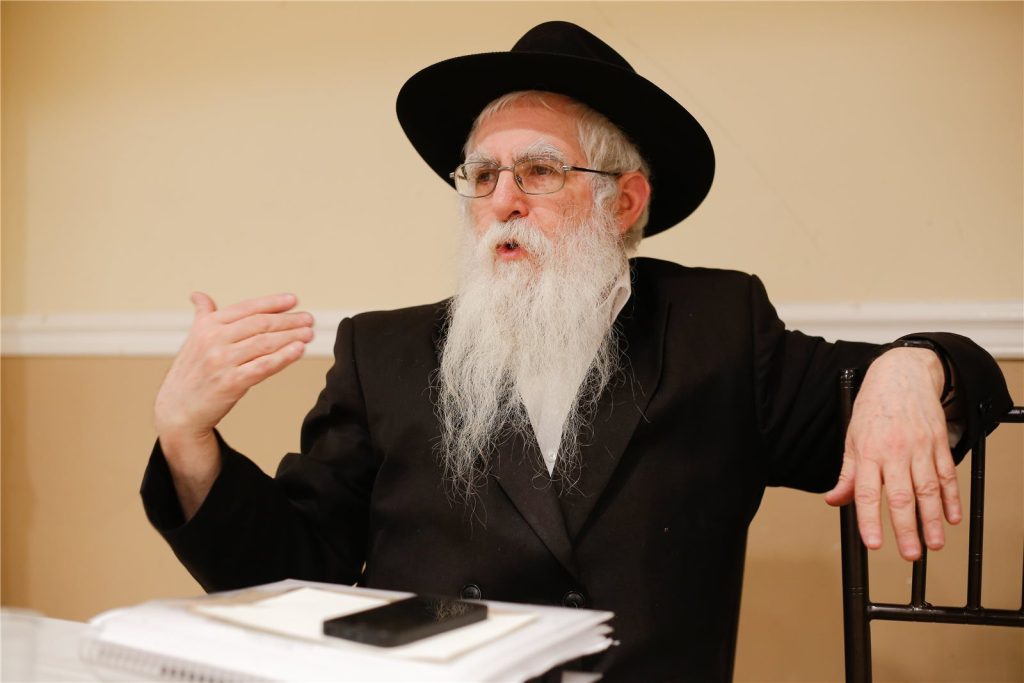
Whoever has studied the Rebbe’s sichos knows that in recent years the Rebbe began frequently quoting the words of the Bartenura – that “in every generation one is born from the seed of Yehuda who is worthy of being Moshiach for Israel” – as well as the words of the Chasam Sofer about “one who is worthy by virtue of his righteousness to be the redeemer, and when the time comes, the Almighty will reveal Himself to him and send him.” These citations were not at all common until recent years. But from 5751 onward, it was important to the Rebbe to repeatedly bring these citations. One might say that while the Rebbe did not say the words “I am Melech HaMoshiach,” he gave clear and transparent hints from every possible angle. And if this is important to the Rebbe – it is certainly and certainly important for Chassidim.
Of course, alongside the insistence on mentioning the full title “the Rebbe Melech HaMoshiach” and declaring “Yechi Adoneinu” at every appropriate opportunity – one must work on an inner conduct that expresses our bittul to the Rebbe MH’M. But the claim that one should focus only on inner work and there is no need for external declaration and emphasis is like saying one should only arouse love and awe and there is no need to recite the words of davening. Just as tefilla without kavana is like a body without a soul, concentrating on Yechi without practical expression in daily life is like a body without a soul. Clearly, both are needed!
Rabbi Nachman Schapiro: Continuing from the citations of the Bartenura and the Chasam Sofer, the Rebbe mentioned several times that Chassidim in their generation believed that their Rebbe was Melech HaMoshiach, and in our generation – the Rebbe Rayatz. In recent years the Rebbe also frequently attached the title “Moshiach Tzidkeinu” to “Nesi Doreinu,” and many times we could hear the Rebbe say “the leader of our generation, the Moshiach of our generation” and similar expressions. The Rebbe mentioned this both verbally and in writing – as in the sicha of Shabbos Parshas Vayeitzei 5752, where after quoting the Bartenura and the Chasam Sofer, the Rebbe added in his holy handwriting: “And in our generation, the leader of our generation, the Rebbe Rayatz.”
And since “a person is obligated to speak in the language of his teacher [b’leshon Rabo] – it is clear that there is a special purpose in mentioning that the Rebbe is Melech HaMoshiach.
In those same years the Rebbe also explained several times the greatness of Moshiach – that he is the general yechida (and later added that he is the very essence of the soul). Whoever examines the sicha of Shabbos Parshas Toldos 5752 will see that the Rebbe speaks of a new kind of avoda, stemming from the fact that Moshiach’s essence is the very essence of the soul, the essence of Israel that transcends the level of yechida.
This means that the knowledge that Moshiach is the very essence of the soul is something that touches upon the entire service – in every detail of a person’s avoda – since everything is done “to bring the Days of Moshiach.”
When the whole issue of kabbolas ha’malchus began, I sat at the Kinus HaShluchim with some of the senior shluchim, and one of them said: we already wrote a letter of hiskashrus to the Rebbe in 5710 – why do we need to accept his malchus again? I replied: (a) Most of those sitting around this table weren’t even born in 5710, and those who were were small children – so you have never actually signed a letter of commitment to the Rebbe. (b) Since a new dimension of the Rebbe has been revealed, the commitment one signed at the time is insufficient today. We must connect also to this newly revealed dimension of the Rebbe.
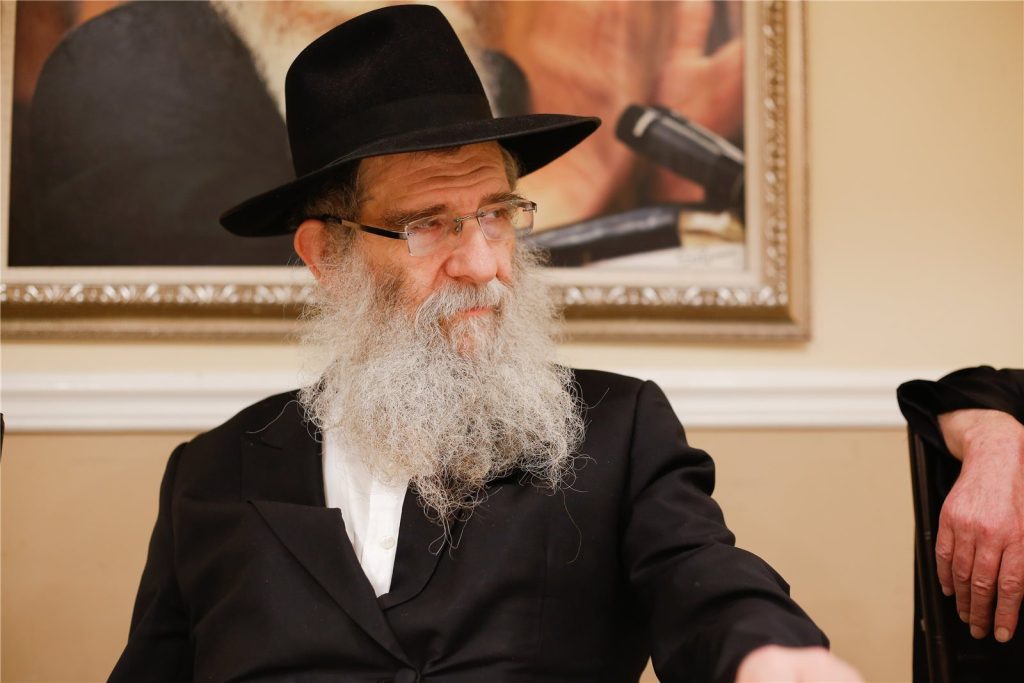
Rabbi Chaim Sholom DovBer Lipsker: Before all the explanations and interpretations, one simple thing must be said: this is the truth! Since the reality is that the Rebbe is Melech HaMoshiach, therefore we must write it – because it is the truth.
This question was already asked in 5751, when the koch began around kabbolas ha’malchus of the Rebbe Melech HaMoshiach. Those who opposed using the title “Melech HaMoshiach” for the Rebbe tried to present their position in a “Chassidic” light and quoted our Rebbeim that for a Chassid there is nothing above the Rebbe. As in the well-known story of the Chassid who was asked if his Rebbe had ruach ha’kodesh. The Chassid replied that this was not his concern. If the Rebbe needs to have ruach ha’kodesh, he surely has it; and if he doesn’t need it – it doesn’t bother me that he doesn’t have it. This expresses the idea that for a Chassid, the Rebbe is not measured by this or that virtue. The greatest virtue is the very fact of being a Rebbe.
To be honest, I initially had no logical answer to this question. I only knew that if it was important to the Rebbe to mention that the leader of our generation is the Moshiach of our generation – there is certainly great significance in this, and as Chassidim we must adopt the Rebbe’s own formulation when referring to the Rebbe himself.
But on Shabbos Parshas Toldos, the Rebbe began one of the sichos at the farbrengen with the words: “Something must be added and corrected,” and explained that the level of Melech HaMoshiach is not merely the general yechida of the souls of Israel, since yechida is only one of the five names called to the very essence of the soul. The special quality of Melech HaMoshiach is that he reveals “the very essence of the soul itself.” And this is “the true nature of Moshiach.”
This was an enormous chiddush. Until then it was known that Moshiach is the general yechida, and from that standpoint there was room to argue that ‘Moshiach’ holds no advantage over ‘Rebbe’’ – since the Rebbe is also the general yechida, so what more does one need beyond a Rebbe?
But after the Rebbe established that Moshiach is “the very essence of Yisrael transcending the level of yechida” – it is clear that Melech HaMoshiach has a great and wondrous quality. And since the reality is that the Rebbe is also Melech HaMoshiach – meaning he reveals the very essence of the soul – it is certainly important to mention this again and again, since in doing so one awakens and reveals this.
It is interesting to note the language of the Medrash: “And He called [Vayikra] to Moshe. What is written before this in the passage of the Mishkan? – ‘As Hashem commanded Moshe.’ A mashal of a king who commanded his servant, saying: Build me a palace! For every thing he built, he would write upon it the king’s name. He built walls and wrote upon them the king’s name. He erected pillars and wrote upon them the king’s name. He laid ceiling beams and wrote upon them the king’s name.
“In time, the king entered the palace; everywhere he looked he found his name written. He said: All this honor has my servant done for me – and I am inside while he is outside?! Call him to enter before me into the inner chamber. So too when the Holy One Blessed Be He told Moshe: Make me a Mishkan – for every thing Moshe made, he would write: ‘As Hashem commanded Moshe.’ The Holy One Blessed Be He said: All this honor has Moshe done for me – and I am inside while he is outside?! Call him to enter before me, as it is written: ‘And He called to Moshe.’” The lesson is understood!
Rabbi Liberow: It is important to emphasize that in Elul 5753, the Rebbe agreed for the first time that in the preface of Kehot publications, the words “Melech HaMoshiach” would be added to his title – and since then, dozens of Kehot works have been printed with the Rebbe’s title in the preface as “the Rebbe Melech HaMoshiach shlita.” After the Rebbe gave his consent to write “Melech HaMoshiach” in an official Lubavitch publication, someone who asks why this is important resembles the person who after Yud Shevat 5711, when the Rebbe agreed to be addressed as “the Rebbe shlita,” would have asked what is the importance of writing this title for the Rebbe…
Rabbi Schapiro: In Kesser Shem Tov, in the famous letter describing the Baal Shem Tov’s encounter with Melech HaMoshiach, it is written that Moshiach also told the Baal Shem Tov that his revelation would come when “your nature will become revealed in the world.” This means that alongside spreading the wellsprings, there is an additional matter: to reveal the nature of the leader of the generation in the world. And this is accomplished when one publicizes the Rebbe’s identity as Melech HaMoshiach – thereby revealing the Rebbe’s ‘nature’ in the world.
This should be a simple matter for every Chassid. After all, Chassidim have always been careful to tell everyone about the Rebbe. Everyone agrees about this – that the Rebbe should be publicized as much as possible. But why, one might ask? What does it matter to us that people know who the Rebbe is? When did the Rebbe charge us with this task? And yet all Chabad Chassidim perform this task, and with joy.
For the Rebbe’s inyan to be complete within us, it must be so in the entire world. And the more we act in the matter of “your nature will become revealed in the world” and connecting more and more Jews to the Rebbe – we are in effect acting within ourselves, so that we become more connected to the Rebbe.
Combining ‘Lights of Tohu’ with ‘Vessels of Tikkun’ Demands Heavy Responsibility
Throughout the conversation, the members of the Vaad Ruchni emphasize the heavy responsibility resting upon the shoulders of the magazine’s editors – and of course upon the members of the Vaad themselves. When halachic questions arise, the question is directed to the Beis Din of Crown Heights; but when it comes to the Chassidic level, the matter comes to the doorstep of the members of the Vaad.
Rabbi Liberow: In the sicha of Chof-Ches Nissan 5751, in which the Rebbe instructed us to do everything in our power to bring Moshiach Tzidkeinu in actual practice, the Rebbe clarified that our actions must combine “lights of tohu” with “vessels of tikkun.” With these words one can essentially summarize the heavy responsibility placed on us as members of the spiritual Vaad:
One could focus exclusively on “vessels of tikkun” – and then there aren’t many dilemmas. Anything that appears somewhat like “lights of tohu” is simply removed from the agenda. On the other hand, one could focus on “lights of tohu” and write about every “tohu-like” idea that someone decided might hasten the revelation. Had Beis Moshiach chosen one of these options, life would have been easy for both the editors and the members of the Vaad…
But since the Rebbe commanded us to combine the “lights of tohu” with “vessels of tikkun,” we cannot ignore activity that appears “tohu-like,” nor can we report and deal only with “tikkun” ideas. This creates a very complex reality, and questions frequently arrive at our door about whether and how to cover this or that idea – and we must carefully weigh the balance between “lights of tohu” and “vessels of tikkun” and decide accordingly.
In practice, the primary responsibility for this rests with the working editors, since as an advisory committee we convened several times and charted the general guidelines of Beis Moshiach. So not every such question reaches us. But periodically there are activities that sit on the borderline between “lights of tohu” and “vessels of tikkun,” and then they come to us for a ruling.
Rabbi Majeski: Take for example the issue of writing to the Rebbe after Gimmel Tammuz, and the responses the Rebbe provides through the Igros Kodesh. When stories began arriving at the Beis Moshiach editorial office about people who wrote to the Rebbe, inserted their letter between the pages of the Igros Kodesh, and received answers – there were those who had difficulty accepting such practice, arguing that it has no precedent and that one cannot invent new ways of hiskashrus.
We examined the matter in depth, and it became clear that beyond the fact that Chassidim in earlier generations practiced something similar – when they had no way to send a letter to the Rebbe, they would insert it between the pages of the Tanya or a sefer of the Rebbe’s maamarim – the Rebbe’s own Torah contains fairly detailed references to this subject:
On Yud-Tes Kislev 5715, the Rebbe related about the Baal Shem Tov and the tzaddikim who followed him, “that it would happen that when they were asked something, they would sometimes open a sefer and say what would be – and the explanation is that the matter being asked has its root as it exists in the Torah, and thereby the tzaddikim knew from the Torah all the particulars as they existed in the world, and it is explained in the later authorities that this is not a matter of divination and is permitted.”
And if the above applies to tzaddikim, there is also a reference from the Rebbe for people of our stature. Thus it appears in Heichal Menachem (Vol. 2, p. 217) that in response to a question about various marriage proposals, the Rebbe replied: “There are those who have the practice of opening a Chumash or Tehillim, and from the first pasuk that presents itself al pi din they derive what to do.”
On Shabbos Parshas Noach 5749 the Rebbe spoke about this practice as something relevant to everyone: “We find a source for this practice – to search in the Torah for guidance on how to act in practice – in the stories of our Sages (Chagiga 16a, Gittin 56a, 68a, Chulin 95b, and elsewhere) about Tannaim and Amoraim who encountered a child and said to him ‘recite your verse for me,’ and based on this decided how to act in practice… and as is well known, the custom of many among Israel – including great Torah leaders, ordinary people, and women alike – that before performing a certain action they open a ‘sefer kodesh’ and look at where it opens and where their eyes first fall, and based on this decide in practice.”
Moreover, the Rebbe said in the sicha of 15 Shevat 5748, that answers to questions regarding avodas Hashem can be found in the Torah of the leader of the generation, and there in note 62 the Rebbe adds and innovates “that even in matters of reshus (optional conduct) there are instructions in the Chassidic Torah of the leader of the generation.”
After examining the above sources and additional ones, it was clear that this is a practice with a well-grounded basis. However, at the same time, it was necessary to qualify matters and clarify that – as in the past – writing to the Rebbe cannot serve as a substitute for the explicit instructions and guidance that the Rebbe established (in the sicha of 21 Adar 5748, Hisvaduyos Vol. 2, p. 429, and elsewhere):
“Regarding questions in inyanei avodas Hashem, Torah and its mitzvos – one should ask the rabbinic authority (moreh horaah) or Beis Din in one’s city, including the instruction of the Mishna to ‘make for yourself a teacher.’ Regarding questions seeking advice in matters of livelihood and the like – ‘salvation comes through many advisors,’ to consult with knowledgeable friends. And regarding questions of medicine – ‘you shall guard your lives,’ to conduct oneself in a way that prevents illness from occurring in the first place, including in cases of need, following the guidance of an expert physician… and best of all – a physician who is also a friend, and in special cases, ‘salvation comes through many advisors,’ two expert physicians, and where there are differences of opinion – according to the majority view.”
[It sometimes happens that the question was brought before the appropriate authority according to the Rebbe’s instructions – for example, when a spiritual question was referred to a mashpia, and the mashpia cannot reach a decision. In such cases the mashpia directs the questioner to write to the Rebbe and request his response.]
An additional qualification also mentioned in the Rebbe’s sichos is that the question via opening ‘sifrei kodesh’ is only when “one wishes to clarify how to act in matters of reshus (a matter in which Torah has not specified clearly to do this or that)” (Shabbos Parshas Bamidbar 5749, Hisvaduyos Vol. 3, p. 224). Or in other words: “One key point must be clarified: searching for signs in the Torah regarding practical conduct – is only in matters where there is room for doubt, and more broadly in matters of reshus… in which there is a need to search the ‘heavens’ (Torah) for a ‘sign’ as to how conduct should be in practice; but in a matter that one knows with certainty must be done according to Torah – there is no need to search for signs, and it is certainly not permissible to delay doing the thing because of some sign” (Shabbos Parshas Noach, Hisvaduyos 5749 Vol. 1, p. 310).
Of course, all these limitations apply when dealing with a question of whether to do this or that – but even when, following the Rebbe’s instructions, one consults a physician and so on, it is important to simultaneously request the Rebbe’s blessing for success in the matter. Thus, in that same sicha in which the Rebbe set out the aforementioned limitations, he concluded: “Regarding requests for blessings, pidyonos, etc. – we inform again that in such matters there is a chazaka that with Hashem’s help these requests will continue to be fulfilled.”
One further important clarification: since sometimes different interpretations can be derived from the Rebbe’s responses – it is appropriate in every case not to rely on one’s personal interpretation alone, but to present the matter before a mashpia, a rabbinic authority, a friend, and so on – as instructed by the Rebbe in the above sichos and in the sicha of 2 Adar 5748. As the Rebbe said in the sicha of 15 Shevat 5748: when one has difficulty understanding the Rebbe’s words – “the rav will help him find the correct answer and advice, without the ‘bias’ of self-love.”
The Litmus Test – To Publish or Not to Publish
Beis Moshiach was fortunate that all members of its Vaad Ruchni are thoroughly versed in the teachings of the Rebbe MH’M and his directives throughout the years. Thus when a dilemma arises, the Vaad members almost always recall a similar episode the Rebbe addressed, from which the Rebbe’s view on the matter can be derived.
What happens when a novel dilemma reaches you, and you cannot find the Rebbe’s treatment of a comparable case in his sichos and directives – what is your “litmus test” for deciding whether to publish or not?
Rabbi Majeski: Over the course of decades we merited hearing sichos and directives from the Rebbe. By virtue of the roles we filled over the years, the members of the Vaad were also exposed to hundreds of the Rebbe’s responses on almost every subject – so that even if there is no direct treatment by the Rebbe of the topic in question, usually one of us will recall the Rebbe’s treatment of a similar case, and we decide accordingly. In rarer cases, we must think – in the light of all we merited hearing and seeing from the Rebbe – what the Rebbe would have answered to such a question. In such cases we of course pray and request the Rebbe’s bracha that we merit to align with the truth and the Divine will.
Rabbi Shalom Yaakov Chazan, the magazine’s editor and the liason between the magazine’s editors and the Vaad – says: The litmus test is: Could we bring this edition to the Rebbe? Sometimes the questions involved are not simply black or white but when one activates one’s Chassidic sensitivity and reflects on whether one would bring such an article, or such an advertisement, to the Rebbe – one can arrive at a clear answer.
Here’s an example of such a dilemma: Regarding the menorah of the Beis HaMikdash, the Rebbe ruled unequivocally (in accordance with the Rambam) that it had diagonal branches. Regarding Chanuka menorahs, the Rebbe did not say that one must change to diagonal branches, but expressed in Likkutei Sichos (Vol. 21, p. 168) that “it is worthwhile to make the branches diagonally.”
What should we do when an advertising agency sends an advertisement with a rounded menorah? On one hand, the Rebbe did not prohibit this, since the Rebbe spoke primarily about the Menorah of the Mikdash. On the other hand, it is certainly the Rebbe’s wish that Chanuka menorahs also have diagonal branches. In light of the above litmus test, we concluded that when a rounded menorah appears in an ad, it is inappropriate – and we will inform the advertising agency that they must either change the ad, or we will forgo it, even if we lose out financially.
The Magazine Influences the Conduct of Its Readers
Over the years, Beis Moshiach was compelled to wage battles around several issues when certain forces tried to weaken the fire of faith and activity in inyanei Geula and Moshiach. But not only that – even in other areas not directly connected to inyanei Geula and Moshiach, Beis Moshiach fought and again and again brought the Rebbe’s view on the matter, until the message filtered into the consciousness of all Chabad Chassidim, and today these issues have again become accepted by the entire Chabad community.
For example: the trip to the Rebbe for Tishrei – which was a foundation of Chassidic practice for generations, and reached its peak in our era – stood in danger after Gimmel Tammuz. Some believed that under current circumstances, when the Rebbe is not seen with physical eyes, the entire journey for Tishrei should be canceled, and instead the focus should be on traveling to one’s place of shlichus and so on. They also sought to cancel the Kevutza year travel for the same reason.
Beis Moshiach stood as an unbreakable wall against all attempts to change even the slightest thing in the ways of hiskashrus and Chassidus – publishing thought pieces, interviews, and columns on the importance of traveling to the Rebbe. It was a fierce battle over the conduct and hiskashrus of Chabad Chassidim to the Rebbe MH’M. On one side stood those who believed that after Gimmel Tammuz there is a change and consequently the practices must change – and on the other side Beis Moshiach stood as an unbreakable wall with an unequivocal declaration: the concealment and hiddenness is nothing but a nisayon, and since there is no change in the Rebbe’s eternal life – nothing in the practices of connection to the Rebbe MH’M may be changed in the slightest!
Boruch Hashem, the battle succeeded, and Chabad Chassidim in general – and the tmimim in particular – voted with their feet and began coming in their multitudes to Tishrei with the Rebbe, as well as to the Kevutza year. The position Beis Moshiach presented – rooted in the Rebbe’s sichos and letters – was accepted by all Chabad Chassidim, who in recent years come in multitudes to 770, as do all tmimim without exception, who come for their Kevutza year. So much so that even those forces who in the early years ignored 770, themselves now encourage the trip to the Rebbe and the stay at Beis Chayeinu.
At our meeting with the members of the Vaad, I asked:
In your view, what is the secret of Beis Moshiach’s success?
Rabbi Majeski: When one engages with chayus in inyanei Geula and Moshiach, when one believes that the Rebbe Melech HaMoshiach is alive and present – this naturally awakens chayus in all inyanim of the Rebbe, since we are not speaking of directives from the distant past, but the directives of a Rebbe who is alive and present, who guides with all his directives today as well, and continues to demand all the practices today as well.
One can see tangibly that the belief that the Rebbe is alive and present influences action in practice. In the Rebbe’s sichos from 5710, the Rebbe speaks several times about the difference between those who believe the Rebbe is with us physically and those who think there was a passing – and the difference manifests in two ways:
1) Whoever believes the Rebbe is alive – the Rebbe channels all divine influence to him as a living Rebbe physically present with him; while one who does not believe this and thinks the passing was literal – the Rebbe channels influence to him as one who is above and he below…
2) Among those who believe the Rebbe is alive there are no changes in the avoda of shlichus, whereas among those with weakness in their belief that the Rebbe is alive there is also weakness in the Rebbe’s shlichus work – because when one does not believe the Rebbe is alive, arguments and ideas and reasons begin to arise for not fulfilling the Rebbe’s instructions, with the claim that since there is a change in the Rebbe himself, there is room to say his directives are no longer relevant today, and since the Rebbe is not here, ch’v, to say whether one should continue – “sit and do nothing” seems preferable.
Today one can see tangibly: those who believe and live with the faith that the Rebbe is alive and present – their avodas ha’shlichus has not changed and has not weakened; on the contrary, it grows stronger from day to day.
These two points are relevant not only for Chabad Chassidim, but for every Jew. When a Jew hears that the Rebbe says one must prepare for the coming of Moshiach – if he hears that the Rebbe is alive, the instruction is received by him as a current instruction. And when he fulfills the Rebbe’s instructions with the belief that the Rebbe is alive and present – just as water reflects a face back to its source – he receives the Rebbe’s brachos and counsel in wondrous ways, as is known and widely testified.
Rabbi Schapiro: Thirty years ago, we sat at a farbrengen with one of the greatest mashpiim, and he said that if we truly believed that the Rebbe is Melech HaMoshiach and we stand within his dalet amos – we would look entirely different. Our entire conduct, our entire approach to the Rebbe’s inyanim, would be completely different. At the time, this statement had a very strong impact on us.
When a person reads again and again the formulation “the Rebbe MH’M,” this should arouse him to conduct himself as befits a Chassid of “Melech HaMoshiach” – in keeping with the Rebbe’s words at the end of the sicha of Shabbos Parshas Vaeira 5752: “The knowledge that the Rebbe Rayatz, the leader of our generation, is imminently walking in (since ‘those who dwell in the dust will awaken and sing’) and is looking at each of the Chassidim and mekusharim to examine their standing and situation – this arouses and effects the completion (also in the sense of wholeness) of all our deeds and service.” – Similarly, when a Chassid has it firmly in mind that the Rebbe is Melech HaMoshiach, and he believes and anticipates the Rebbe Melech HaMoshiach’s revelation at every moment – this affects him both in the faith and anticipation of Moshiach in general (which becomes more tangible) and in his own standing and state in all aspects of avodas Hashem (where everything is done in the mode of “stand ready, all of you”). One feels that one stands before the Melech HaMoshiach!
Rabbi Lipsker: Usually when speaking about the virtue of declaring Yechi, one cites the Rebbe’s words about the addition to the king’s life and so on – but one must not forget the most basic significance of declaring Yechi HaMelech (“Long live the King”): that the people are accepting the malchus of the King!
The same applies when writing “the Rebbe Melech HaMoshiach” – this is an expression of kabbolas ha’malchus ; and when a Chassid reads this or writes it, and he pauses for a moment and thinks about the significance of the matter, he understands that he must accept the malchus of the Rebbe Melech HaMoshiach. And since the most fundamental aspect of accepting kingship is “accept my decrees,” this generates special reinforcement in fulfilling all the directives of the Rebbe Melech HaMoshiach.
(This interview was originaly conducted in honor of publication of Issue #500)
Beis Moshiach #1500 • pp. 12-23
© 2026 Beis Moshiach Magazine. All rights reserved.
This article originally appeared in Beis Moshiach #1500 Milestone. You are welcome to share it with friends and family by email or in print, provided that you do not change, add to or omit any part of it, you credit the author and Beis Moshiach, and you include a link to archive.bmoshiach.org (written out in full in printed copies).
To republish this article in a newspaper, magazine, book or website, please request permission in advance at [email protected].