Why “Who Started It?” Is the Wrong Question
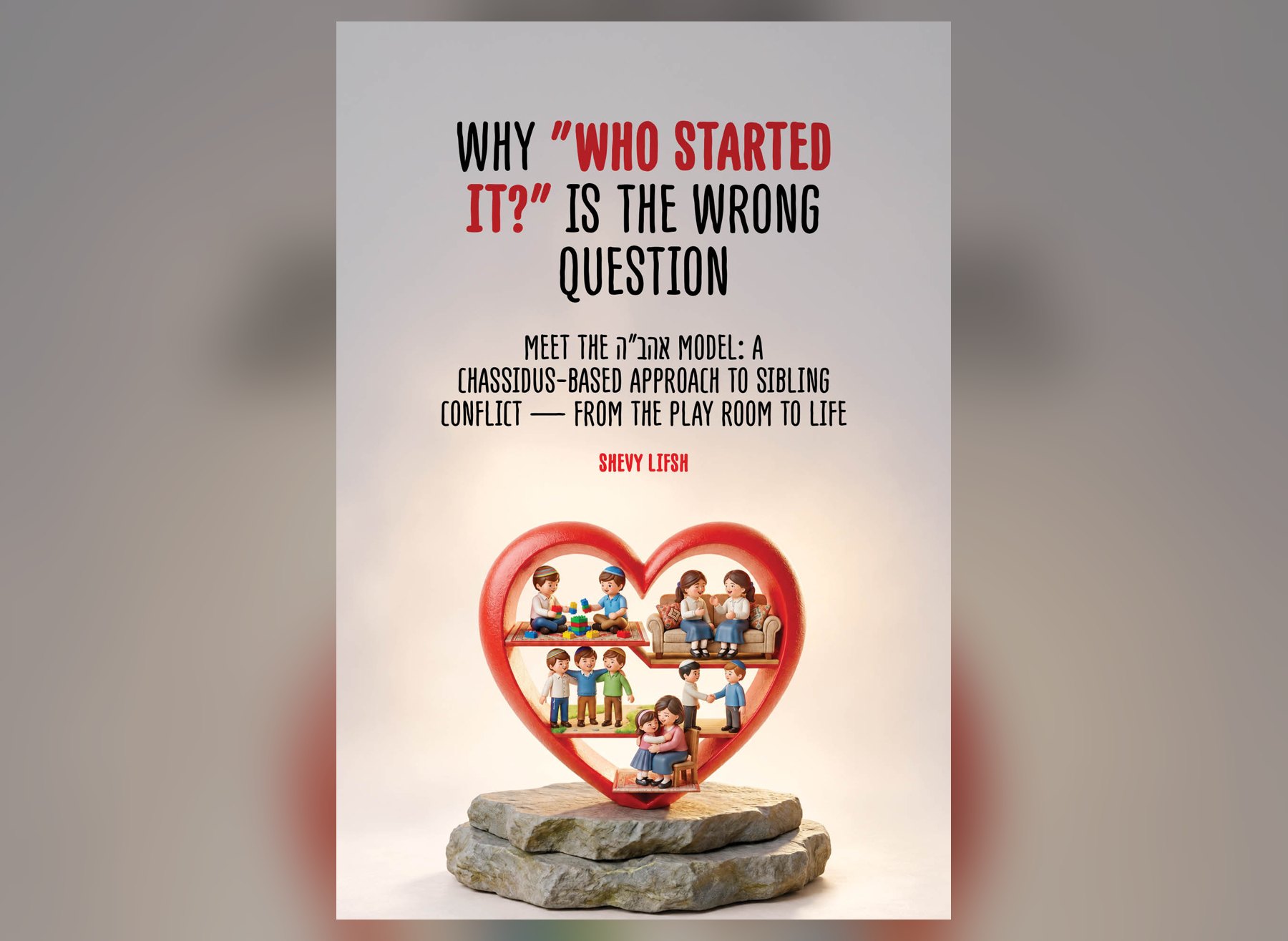
Meet the אהב”ה Model: A Chassidus-Based Approach to Sibling Conflict – From the Play Room to Life
“And Israel camped there, opposite the mountain – as one person, with one heart.” We all know this pasuk and its interpretation by heart. The days of counting the Omer are over. Schools ran “V’ohavta” contests, teachers spoke about Rabi Akiva’s students, and at home we studied Chassidus, delved into Perek 32 of the Tanya, and spoke loftily about Ahavas Yisrael and “being in a state of bitul.” We genuinely want to be there.
But between you and me? Sometimes it seems far easier to be “one person with one heart” facing Har Sinai than in a room shared with a younger sibling who took the phone charger without permission.
Somewhere in the afternoon hours, the gap between “lights of Tohu” and “vessels of Tikkun” hits us hard. The kids start fighting over who sits next to whom, the older brother gets annoyed that the younger one is “always breathing on him,” and the teenager shouts from her room that nobody in this house understands her. Suddenly all the beautiful talk about how “the neshama is primary and the body secondary” evaporates. In a moment of conflict, when our ego or our children’s ego is wounded, the heart closes up. The beautiful words stay in the sefarim, and from our mouths come words in the “language of blame”: “She’s always like this,” “He started it,” “You’re doing this to me on purpose.” We parents also lose our mochin d’gadlus, fall into judgment, and start running court cases: “Who started this? Why do you always bother her? When will there be some quiet around here?!”
It’s frustrating. We study so much Torah and Chassidus, but at the critical moment, on the ground itself, our hands are empty. How do we break out of this loop? How do we bring this work down from theory into practice – onto a floor covered in magna-tiles?
For this we need focused tools suited to our generation. This is precisely where Nonviolent Communication enters the picture. This approach is not just some psychological trend; it is the most practical, precise, and profound way to implement the Chassidic avodas ha’middos in life itself. It gives us and our children real tools to stop being “judges” handing out blame, and to start speaking truthfully, from the heart.
Uprooting the “Language of Blame” at Its Root
Nonviolent Communication is a worldview that completely transforms the way we understand conflicts, anger, and relationships. Most of us grew up and were raised on what is called the “language of blame” (or blocking communication) – a language of judgment, criticism, labeling, and dividing the world into “right” and “wrong,” “okay” and “not okay.”
In this language, when desires clash, the survival instinct is to attack or find the guilty party: “Why are you always late?”, “You’re rude,” “You’re inconsiderate,” “It’s your fault.” This language, which comes from a place of harsh judgment, immediately produces defensiveness in the listener, distance, entrenchment, and a closing of the heart. When attacked, people attack back or flee.
Nonviolent Communication, by contrast, is the “language of the heart” and the “language of needs.” It starts from the premise that every action a person takes – even if it appears negative, aggressive, or hurtful – is actually an attempt (sometimes misguided, clumsy, or even tragic) to meet a basic human need. These needs might include belonging, respect, security, certainty, space, or quiet. The approach teaches us to stop looking for “who is guilty” and to start being “detectives of needs” – listening to the feelings and inner needs hidden behind outward behavior, both our own and others’.
Internal vs. External Locus of Control
The deepest foundation of this approach, which connects in a remarkable way to Chassidus, is the shift from a consciousness of external locus of control to one of internal locus of control.
External locus of control (a consciousness of galus and victimhood): A person with an external locus of control lives with the constant sense that their environment, other people, and circumstances are running them and their emotions. They will say: “He annoys me!”, “They insulted me,” “It’s because of you that I’m angry.” In this view, the person is a helpless victim. The power to calm them or make them happy lies entirely with others, and until the other person changes or apologizes, they will continue to suffer. This is a psychologically weakened stance that breeds endless blame.
Internal locus of control (a consciousness of Geula and responsibility): A person with an internal locus of control understands the most important principle: the other person’s action is only the trigger (the external stimulus), but it is never the cause of my emotion. The one who inflates the feeling inside me is myself, due to an unmet inner need of my own. Therefore, instead of saying “you’re making me angry,” say: “When you’re late, I feel worried, because I have a need for certainty and a predictable schedule.” The person takes full responsibility for their emotional world and from that place has the power to change it.
The Trap of Interrogations
When a fight breaks out between children, our parental and educational instinct is to put on the judge’s robe. We immediately intervene and ask: “Who started it?”, “Why did you ruin it for her?”, “Who did that to you?” We may imagine we are seeking justice, but in fact these questions are destructive to the development of good middos and Ahavas Yisrael, for several reasons:
An invitation to defensiveness and lying: When you ask a child “Why did you hit?” you immediately put them in survival mode; they are sitting on the defendant’s bench. When threatened, they defend themselves, justify themselves, or lie (“It wasn’t me!”, “She started it!”). In this state they have no mental space to take genuine responsibility for their actions.
Reinforcing victimhood: Questions like “Who did that to you?” strengthen the injured child’s external locus of control. The child learns that they are a helpless victim whom the world is cruel to, and that responsibility for repair and comfort rests solely with the one who hurt them, or with the judging parent.
Stuck in the past instead of repairing the future: Hunting for culprits and investigating “who took it first” is digging through the past which can no longer be changed. Better to focus on the future: what is the pain present in the room right now, and what request can prevent similar incidents going forward.
The אהב”ה Model: From Blame to Connection
To turn this lofty theory into daily practice, we use the אהב”ה model – four simple, clear steps that will help us and our children move from a discourse of judgment to a discourse of kindness:
א־אירוע: Present the dry facts, exactly like a camera lens documenting what happened. No interpretive language, no judgment, no generalizations (like “you always…,” “you never…,” “you did it on purpose”). The goal is to neutralize the listener’s defensive wall.
ה־הרגשה: Share the inner emotional experience arising in me right now (for example: sad, frustrated, frightened, worried, disappointed). This is the stage of taking responsibility for my own emotion, rather than placing responsibility on the other (“you’re annoying me”).
ב־בירור הצורך: Dive inward to the root of the matter – what inner need of mine does this feeling rest upon? Which needs went unmet here? (a need for personal space, security, certainty, respect, belonging, order, quiet).
ה־הזמנה לפעולה: Instead of hurling blame about what happened, we turn our gaze forward and offer a positive, concrete, and practical request for the future. Why a “request” and not a demand? Because a forceful demand provokes rebellion; a request opens a door to partnership and finding a solution together. (For example: instead of “don’t interrupt me,” say “I’m asking you to play in the other room for the next ten minutes.”)
Scenarios: From Kindergarten to Yeshiva
Here is what the shift from judgment and interrogation to nonviolent communication using the אהב”ה model looks like, adapted to different developmental stages:
Ages 3–5: At this stage the child is not yet capable of articulating their inner experience, and the parents’ role is to give them the words through reflection.
Situation: Chavi (age 4) grabbed a toy train from Yossi (age 3), and he starts crying.
Blaming communication (the judge): Mommy shouts from the kitchen: “Chavi! Why did you grab it from him? You’re a big girl, give it back right now! Such selfishness!” (Result: Chavi gets scolded, feels terrible, and starts crying herself. No social learning took place.)
אהב“ה reflection (Mommy comes down to eye level and mediates): “Chavi, when you take the train from Yossi’s hands without asking (Event), Yossi feels very sad (Feeling), because he wanted to finish building his track (Need). I’m asking you to give him the train back now (Request), and ask him: ‘Yossi, when will you be done and can bring it to me?’”
Ages 6–8:
Situation: Tami (age 8) worked hard on a clay creation. Her sister Shira (age 6) touched it and changed it slightly.
Blaming communication: Tami screams: “You’re the most annoying kid in the world! You always ruin everything for me!” Tatty intervenes angrily: “Who started here? Shira, go to your room right now!”
אהב”ה: “Shira, when you touch my clay and change what I built (Event), I feel really frustrated and angry (Feeling), because it matters to me that my creation stays exactly the way I made it (Need). From now on, if you want to help me, I’m asking you to ask me first (Request).”
Ages 9–11:
Situation: Moishy discovers his younger brother took his bicycle without permission and left it lying outside in the yard.
Blaming communication: Moishy yells: “You’re a thief and a brat! I’m never letting you borrow anything again!” (The brother gets defensive, shouts back: “Cheapskate, I’m allowed to!” and a fight breaks out.)
אהב”ה: “When you take the bike without permission and leave it outside (Event), I feel worried and angry (Feeling), because I need my things to be safe and looked after (Need). My request to you is that from now on, if you want to ride, you ask me first, and return it to its place (Request).”
Ages 12–14:
Situation: Shira and Esti share a room. Shira wanted to rest in the afternoon, but Esti brought two friends into the room who were laughing and talking loudly.
Blaming communication: Shira explodes in front of the friends: “You have no consideration at all! You’re selfish, this room is mine too!” (Esti is embarrassed and humiliated; a rift forms and the atmosphere is tense for an entire week.)
אהב”ה: “Esti, when you bring friends over in the afternoon without coordinating with me (Event), I feel overwhelmed and irritable (Feeling), because I’m coming off a long day and I need quiet and privacy to rest (Need). I’d like us to agree that on days when you want to have guests, we coordinate in advance, or you sit in the living room (Request).”
Ages 15–16:
Situation: Yehuda and Levi learn together. Levi is consistently 20 minutes late to the morning seder.
Blaming communication: Yehuda attacks: “You have no respect for me. Is my time worthless? If you can’t be bothered, I’ll find a different chavrusa!” (Levi feels judged and shuts down; Yehuda has no idea that Levi is genuinely struggling to get up in the morning.)
אהב”ה: “Levi, when you arrive late to the morning seder several times a week (Event), I feel helpless and frustrated (Feeling), because I need consistency, productivity, and certainty in our learning (Need). I’m asking that we agree on a time that we can both genuinely commit to, or at least that you send me a message when you’re running late so I can start learning (Request).”
Putting It Into Practice
The question echoing in every parent’s heart is: “How can we realistically expect a child who feels hurt or angry to speak in the language of needs and requests?” The answer lies in a deep understanding of our generation. Our children are “children of the generation of Geula,” elevated and sensitive souls who cannot accept authority based on fear, coercion, or external punishments; they seek truth, inner meaning, and respectful dialogue that truly sees them.
For our children to adopt the אהב”ה language, we must understand that this is a way of life, and it begins with personal example. The way we parents speak to each other, the way we react to the delivery person at the door or the driver who cut us off on the highway – that is the vocabulary our children are memorizing. Additionally, we must stop trying to “manage” their fights as judges in a courtroom, and instead serve as mediators. During conflict, our role is to be “translators” of their hearts, to take a child’s blaming shout and reflect it back in connecting language: “I hear that you’re very angry (Feeling) because fairness in the game matters to you (Need).” When a child feels understood at the level of their need, the flames die down on their own.
A Toolkit for Embedding the אהב”ה Language
Here are some practical tools to help you make this model a way of life:
1. Practice during calm moments: Never try to teach this language in the middle of a fight. When the brain is in “storm mode,” a child cannot learn.
How: During a calm time (at dinner or before bed), play “role-play games.” You can use playmobil etc. figures to act out a situation that happened today and ask: “How could the ‘mentchie’ have said what it needs instead of hitting?”
2. Build a “feelings and needs vocabulary”: Sometimes children use blame simply because they lack the words, so give them the words.
How: Hang an illustrated list of feelings (sad, frustrated, lonely, scared) and needs (space, cooperation, order, belonging) on the fridge. When there’s a difficulty, go to the fridge together and try to pick the right word.
3. The delayed-response technique: The most powerful tool is pausing before responding.
How: When you see a fight beginning, take a deep breath before intervening. Tell yourself: “I’m not coming to judge, I’m coming to listen to needs.” This pause shifts the entire energy in the room.
4. Empathic reflection: Instead of asking “What did you do to him?” try to guess the need.
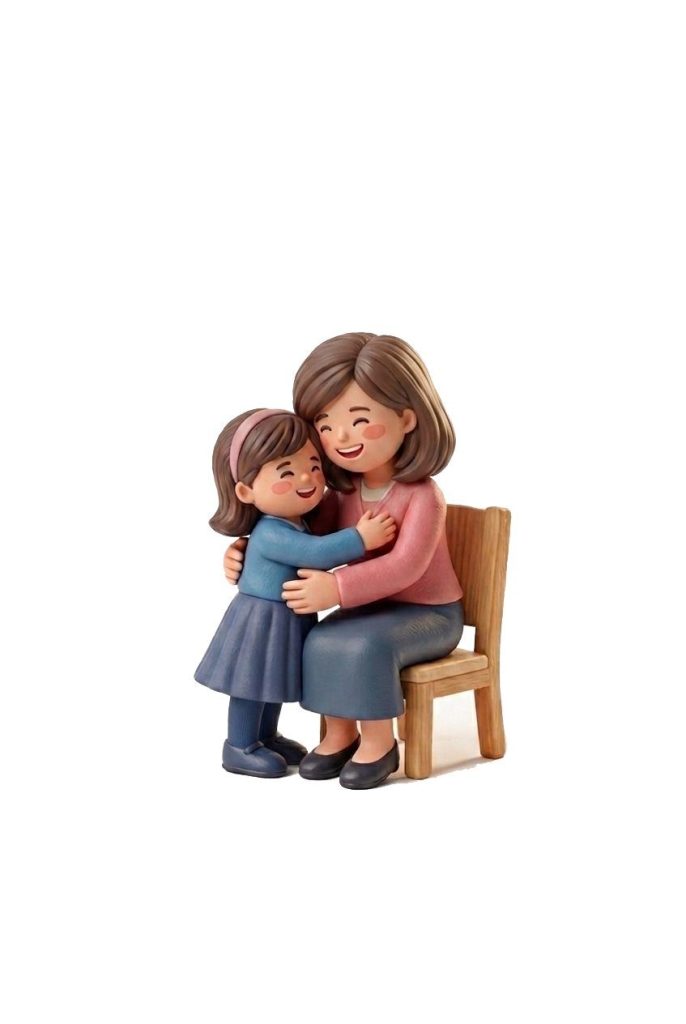
How: “Yossi, I see you grabbed the game. Are you feeling frustrated because you really wanted to play with it right now?” When a child hears their own need spoken aloud, they no longer have to keep fighting for it through aggression.
5. A family “creative solutions” meeting: Make the children partners in building the Request.
How: Once a week, raise a recurring issue (for example: keeping the room neat or table manners on Shabbos). Use the אהב”ה model to bring up everyone’s feelings, then invite the children to suggest solutions. When a child proposes the Request, they are far more committed to it.
6. Celebrate the wins: Don’t focus only on the failures.
How: When you hear a child say “This is bothering me, I need quiet,” give immediate positive reinforcement: “Wow, how wonderful that you said what you need! That really helped me understand you.”
This is the true avodas ha’middos, to take the ideals of Ahavas Yisrael from the sefarim, bring them down into the home, and raise the children of the generation of Geula.
The author holds a Master’s degree in Education and is a parenting coach.
Beis Moshiach #1508 • pp. 40-45
© 2026 Beis Moshiach Magazine. All rights reserved.
This article originally appeared in Beis Moshiach #1508. You are welcome to share it with friends and family by email or in print, provided that you do not change, add to or omit any part of it, you credit the author and Beis Moshiach, and you include a link to archive.bmoshiach.org (written out in full in printed copies).
To republish this article in a newspaper, magazine, book or website, please request permission in advance at [email protected].