The Will to Live
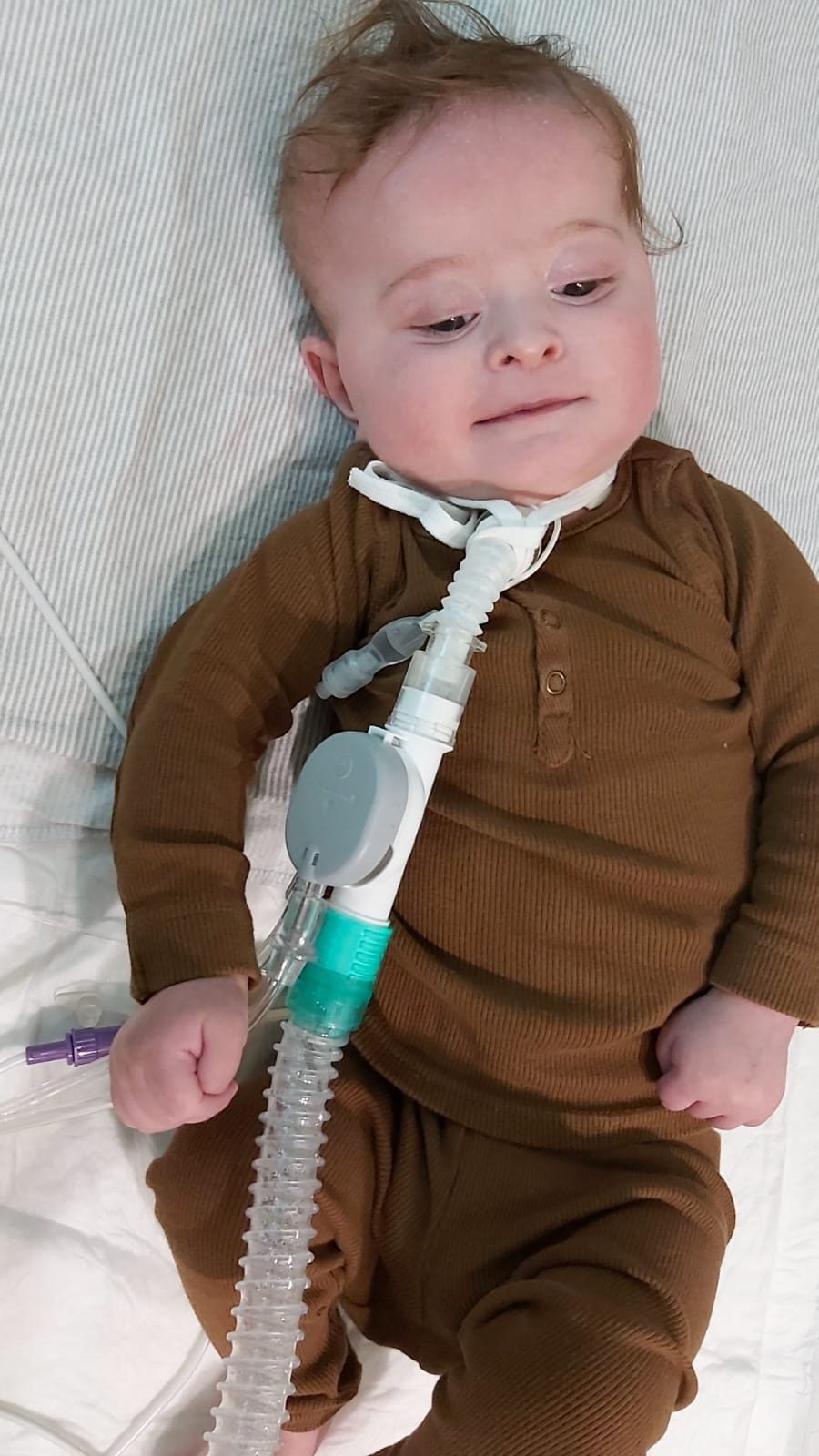
“Life has its challenges, and after a nisayon, you don’t take anything for granted,” Miriam Rozenbaum opens our interview. From the moment he was born, her son Chaim Emanuel ben Chananel a’h, struggled to live. At two-and-a-half years old the battle ended, but his precious soul lives on in so many ways.
One Day at a Time
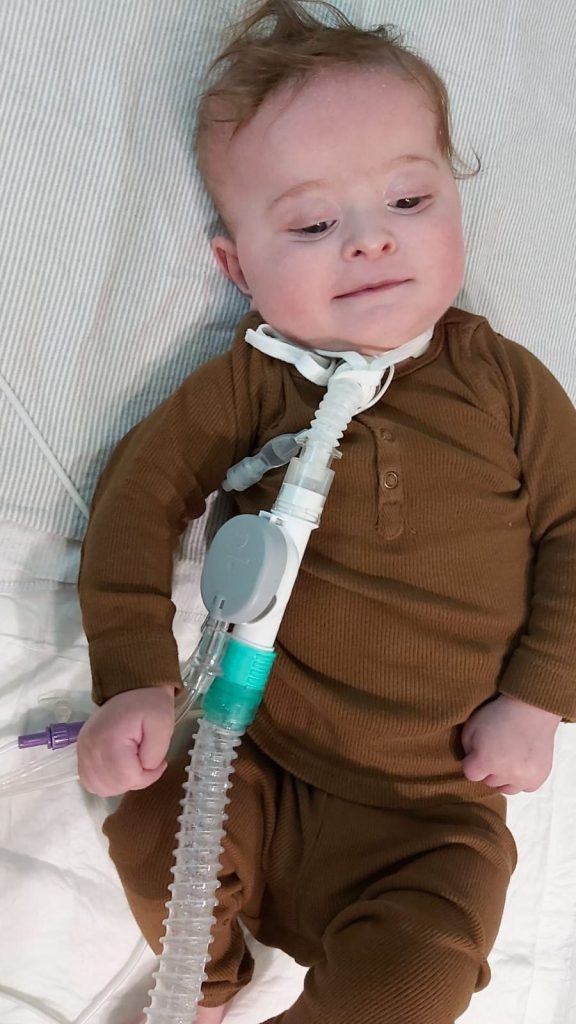
“Emanueli was my fourth child,” she begins. “He was born when my oldest was five years old. Upon seeing the results of an ultrasound during the pregnancy, the doctor expressed concern regarding the developing fetus. My husband and I wrote to the Rebbe in the Igros Kodesh and received a bracha for a newborn son whose name was Chaim Emanuel. I told him that we should remember that name, and it was what we later named our baby.
“I had a normal birth, but my intuition was telling me that something wasn’t right. A mother’s heart feels it. Soon after the birth Emanueli suddenly lost his breath and had to be resuscitated. That was how his life began, and the medical staff at Sheba hospital kept doing everything possible to keep him alive.
“I spent as much time as I could by Emanueli’s side. Family members and volunteers took upon themselves shifts with Emanueli, which enabled me to spend several hours at home. B’hashgacha pratis my husband, who was a rabbi in the IDF, served in a base that was right next to the hospital. Hashem arranged everything in such a way that lessened the tremendous load we were carrying.
“When he was ten months old, Emanueli was transferred to ALYN Hospital, a world-renowned rehabilitation center for children in Yerushalayim. In the ambulance, as they were transferring him, I shed tears of gratitude that Emanueli was alive.
“Everything was complicated, but there were several milestones that made me feel like a mother. I was able to pick up Emanueli by myself, and to put him down on the carpet, where he could play. I bought a baby carriage so that I could stroll with him outside. It was a pleasure to finally buy him clothes. Until then Emanueli was dressed minimally in order for the medical staff to have a better clue of his health through his skin color. There were times that Emanueli smiled at me. It was the most radiant smile, and I felt it lighting up the world!
“My husband and I would make every decision together, with the guidance of a rabbi whose expertise is in dinei nefashos. When Emanueli was a year old we decided to bring him home, which was my dream. Walking in the door with him was an exciting, pivotal moment! Our children had waited for this for a long time too!
“We turned one of the rooms in our small apartment into a mobile intensive care unit, with an oxygen tank and all necessary life-saving equipment. But this period only lasted a few months. On numerous occasions we had to rush Emanueli off to the hospital for emergency medical treatment.
“A child psychologist was advising us, and we were open with our children regarding the fragility of Emanueli’s health, yet in a way that they could process. They understood that their brother was ‘different,’ and loved him dearly.
“Watching Emanueli struggling to survive, I told myself that to have to suffer so much he must be a high soul,” Miriam shares openly. “We know someone who has a son on the spectrum. When he was sixteen he began using an iPad to communicate, and it became clear that he is privy to a deeper spiritual awareness. When our friend asked his son about Emanueli, he immediately wrote on his iPad that Emanueli has a high neshama, that he communicates with tzadikim, and that the prayers of his mother and father are what’s keeping him alive.
“It wasn’t easy. On the surface what I was seeing was an infant who was intubated. But there is a hidden level beyond what we see. I began questioning whether I was raising Emanueli in the way that befits his soul, and decided that I would only play niggunim in his presence.”
When I asked Miriam if Emanueli had been healthy enough to undergo a circumcision, she paused, and responded emotionally, “You wouldn’t believe how many people there were who fought for Emanueli! Each one was the most amazing piece of the puzzle of his life, and it wasn’t like I had to find them, Hashem was sending them to me. There was one doctor, who was also a mohel, who asked advice around the world about how to safely do a bris for Emanueli. He obtained a medicine, costing thousands of dollars, which was necessary for the bris to be done safely. Boruch Hashem, everything went well.”
I asked Miriam if she was able to work during this period, and it surprised me to hear that she reached new accomplishments. “I’d been a first grade teacher and would have continued on that path. I stopped teaching when Emanueli was born, but felt very driven to create something new, from my neshama. Once a day, for an hour, I’d disconnect from all the stress, and create. It was my therapy.
“Since I always loved teaching reading comprehension, I developed a digital Hebrew reading program for children, ‘Nikudi,’ enriched with songs, images, games and clips. I’m passionate about this project. I teach teachers my method, and also give private lessons to children with major challenges in reading.”
She adds, “The circle closed when I heard that the little boy on the ventilator who’d shared a room with Emanueli five years ago learned to read from my program. It’s all in Emanueli’s zechus.”
“We’re in this Together”
“Emanueli’s health was failing,” Miriam continues. “He returned to the hospital and we didn’t try bringing him home again. Every day that he continued to live was truly a miracle, and I kept davening for his refua shleima. Yet simultaneously I prepared Emanueli for the end of his journey in this world. I kept embracing him and communicating to him that we’re in this together. It was Shabbos afternoon, on the Shabbos before Rosh Hashana, when his heart stopped beating… But we were in this together, and he felt it.
“Three weeks later, on Motzaei Chag HaSukkos, I gave birth to a daughter. We did not take it for granted that she had a healthy, beating heart, and we named her Libi Chaya. She fills my heart with joy. I get excited by even the smallest things, like putting her in a baby carriage, or in a playpen. It takes ten seconds to move her from room to room. With Emanueli it would take half an hour arranging all the medical equipment in order to move him safely into another room.
“We can’t take everything we’re told so seriously,” Miriam concludes. “We’re not the ones making the decisions, we’re just a leaf blown by the wind. It is Hashem who is in charge and decides our fate. I saw that many times.
“The doctors would consult with each other, and then call us to part with Emanueli. But there was a sudden turnaround, and he lived.” Her face is glowing as she cites the well-known verse (Yishayahu 8:10): ‘עוצו עצה ותופר, דברו דבר ולא יקום, כי עימנו א-ל.’
“Emanueli is alive, he is with us, and his mission in this world is continuing. I tell my story to doctors, and to those in similar nisyonos to give them chizuk. Emanueli’s light will shine forever.”
Miriam can be contacted at [email protected]
Beis Moshiach #1530 • ג׳ כסלו תשפ״ז • pp. 40-41, 47
© 2026 Beis Moshiach Magazine. All rights reserved.
This article originally appeared in Beis Moshiach #1530. You are welcome to share it with friends and family by email or in print, provided that you do not change, add to or omit any part of it, you credit the author and Beis Moshiach, and you include a link to archive.bmoshiach.org (written out in full in printed copies).
To republish this article in a newspaper, magazine, book or website, please request permission in advance at [email protected].