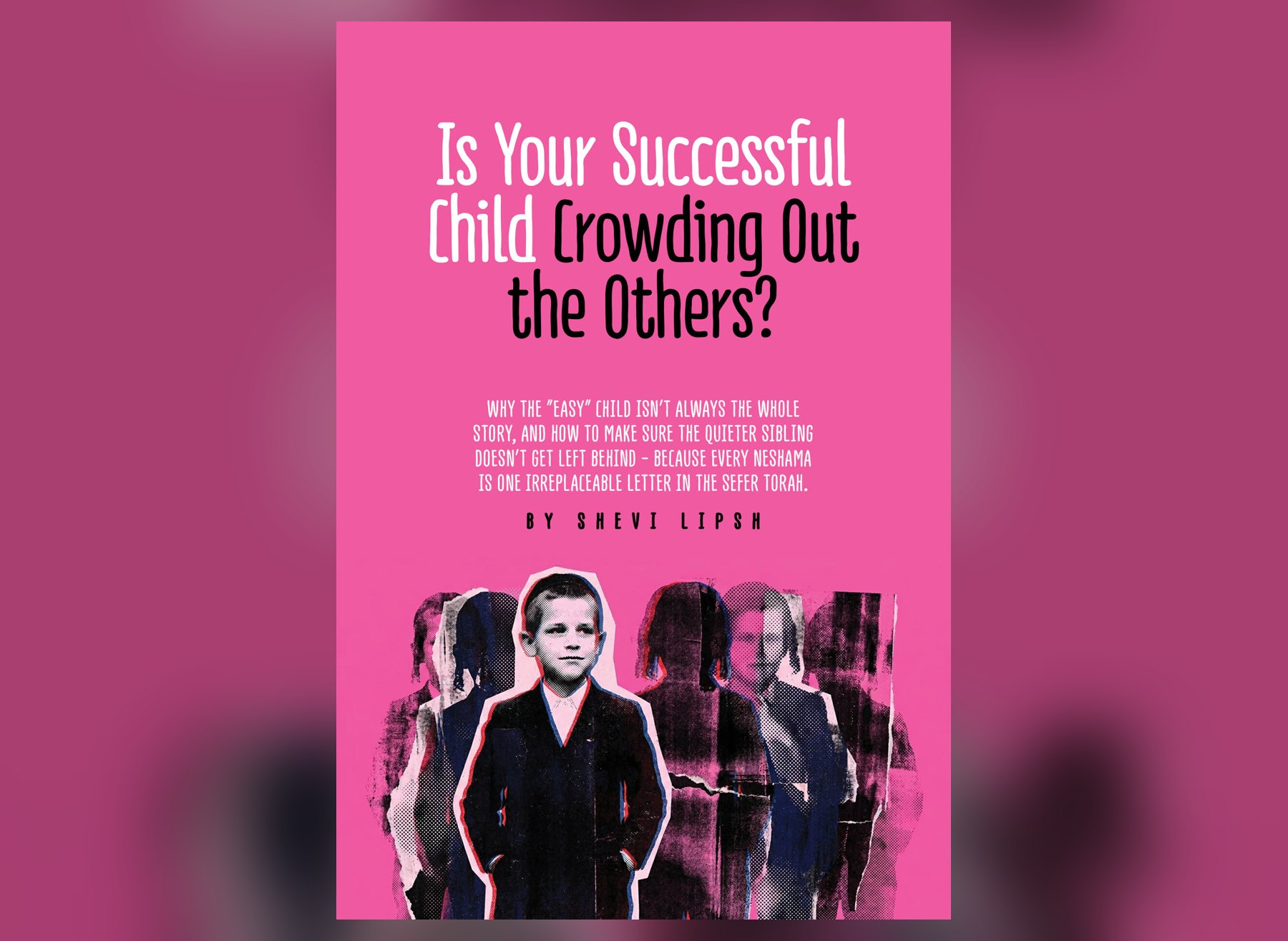
Is Your Successful Child Crowding Out the Others?
We’re all familiar with the story of Rabi Akiva’s 24,000 students who died because they failed to give proper honor to one another. However, when we stop and think about this huge and unfathomable number, this raises the inevitable question: These students weren’t evil or irresponsible people. On the contrary, each and every one of them was a spiritual giant, a tremendous Torah scholar, a “star” in his own right.
So, how did this tragic lack of respect come about?
The word “kavod” (honor) comes from the root “kaved” (heavy). Giving honor to someone else means giving true importance, presence, and value to his existence. Their tragedy does not stem from evil or simple baseless hatred, rather an inability to make room for others. All of them were great, all of them were right, and so successful until they left no “oxygen” for verifying the truth and setting aside a place for their colleagues. They couldn’t manage to give any respect or legitimacy to a differing point of view expressed by someone seeking to develop his aptitudes and serve Hashem truthfully. Each of them was certain that his light was the only light necessary to illuminate the world.
We run an active and lively home, and we maneuver between our children’s education, routine domestic activity, mountains of laundry, Shabbos meals, and our nonstop daily shlichus. Within this sacred burden, we usually direct our focus to revealed difficulties and challenges. However, let’s talk honestly about a much quieter, more evasive, and sensitive phenomenon: What happens when there’s one child in the house who’s a—“star” successful, easy-going, relaxed—the kind who always volunteers to help, gets things organized, does tasks quickly and efficiently, gives his parents some real yiddishe nachas?
Let’s admit the truth, without any guilt feelings: When we’re in the middle of a pressure cooker of activity, it’s easy for us to connect to such a child. He broadcasts on our frequency, understands matters, doesn’t challenge our boundaries, gives us a little domestic tranquility, and quick results. Our tired mind and body are starving for quiet, and this child provides it.
However, it is precisely here that we find hidden the greatest danger to the family structure. This child doesn’t do anything bad, but his radiant presence is liable to transform him, without any evil intention on his part, into an “oxygen siphon.” His perfectionism simply doesn’t let his siblings make mistakes, be vulnerable, work at their own pace, or grow up slowly and disorderly. He takes up all the “importance” at home, and he doesn’t leave any respect or presence for the uniqueness of others.
Why Is This Happening?
As a means of changing the dynamics, you first have to understand what the potential triggers are. One can say that the family works like a mobile dangling from the ceiling. All members of the household are connected through invisible strings. As soon as one child draws strength in the direction of “the most successful and responsible child”, the family mobile tilts on its side, and the whole system, in an effort to restore its balance, might push another child to the opposite side.
In addition, we have here what is commonly known as “the halo effect.” When we get Chassidishe nachas from one of our children who is very helpful in preparing for Shabbos or doing his homework by himself, his halo tends to blind us. Without even noticing it, we start quietly broadcasting our expectation that they should all “straighten up and fly right” according to this standard. As for the sibling who feels that he can’t compete with the “successful” sibling’s task performance, he’ll find some other way to stand out.
Why Does He Become Such A “Dishrag”?
This happens before our very eyes during the busiest of times. We can imagine ourselves getting the house organized for Shabbos. The house is in disorder. The successful eldest daughter is standing in the kitchen, making salads, and receiving words of praise. At that very moment, the youngest sibling is lying on the living room couch, refusing to put on his shoes, crying uncontrollably over the annoying seam in his socks, and he becomes a regular “dishrag,” literally and figuratively.
We call this “misguided goal-directed behavior.” The child isn’t crying over his socks. His sub-conscious is running the show: “The spot assigned to the talented helper is already occupied. My sister has taken all the honor and respect that go with it. To avoid remaining unseen and unheard, I must draw my mother’s attention towards me by appearing totally helpless.” He’s prepared to endure the anger and criticism—just as long as they see him. Negative attention is always preferable to clarity.
Don’t Turn Off The Engine
How should we react when the child in the shadows tries to stand out in problematic ways that disrupt the whole household? The Rebbe, MH’M has given us special eyeglasses, which reveal much deeper levels and change the whole picture. In Igros Kodesh (Vol. 12, Letter #4008), the Rebbe replied to a frustrated parent complaining about his son’s negative energy and problematic conduct.
The Rebbe explains that the child is not rotten; he is compared to “a machine of the greatest strength”—a powerful engine. The problem is only created when the engine operates on an improper track, resulting in the engine derailing and causing serious damage. The job of a parent is not to block the energy or yell to turn off the engine to let the child feel more “comfortable,” rather he should leave him a clear path enabling him to direct his strength to effective action. When the child helps to draw all the fire at home towards him by appearing to fall apart, he operates a powerful engine of presence and drama. We must take this strength and find a more positive track for him where he will receive respect and carry his own weight.
Between Leadership And Arrogance
Here, we come to one of the most complex points in the dynamics of a large family: the moment when a successful child takes authority into his own hands. We have numerous tasks, and we desperately need this help—and we’re grateful for it. However, what about the other children in the family? How do they perceive all this?
When the older sibling becomes a natural leader, organizing the little ones to play a game or taking responsibility for serving dessert—the younger children often admire him and they’re more than happy to cooperate. However, there’s a very fine line, almost transparent, between leadership and stifling domination. When does the whole concept of authority turn into a problem? When the successful child assumes more control and becomes a kind of “deputy commander.” He starts giving out orders, comments to his siblings about the manner of their work, and involves himself in their education.
The degree of influence from this leadership depends upon two critical factors:
The state of the child receiving guidance: If the child to whom the instruction is being directed has self-confidence, he’s happily prepared to cooperate. However, if he’s stuck in the shadows, every instruction given by the “star” sibling is like an experience in diminishment, thereby proving that he isn’t worth anything. In practical terms, the sibling’s authoritativeness takes up the rest of the oxygen he still had in his room.
The motivating force of the child with leadership qualities: Here we measure true leadership. Does the successful sibling organize and make comments out of a sense of genuine concern and true love, showing respect for his brother’s pace, or does his guidance stem from a place of haughtiness and arrogance, and the need to establish his supremacy at home? When the orders are a form of criticism, a means to show “how successful I am”, the siblings pick up on the phoniness immediately.
We must teach the successful sibling the secret of the tzimtzum and respect. Just as Hashem contracted His infinite light to give the physical worlds a place to exist, similarly, true leadership is measured in a person’s ability to “contract” his success, thereby giving significance and respect to others. “You organized things so nicely,” we’ll show him, “but now ease up a little and let your brother do it his own way at his own pace.”
Handy Tools
To distribute the oxygen and the honor at home in the most proper and balanced manner possible, not just put out fires, we’ll use three tools:
Volume of controlled compliments: We’ll praise the successful child, mainly in private, and less in an extended family forum. In addition, we’ll stringently compliment his efforts (“I saw how much effort you invested in arranging the chairs”) and not on his natural skills.
Areas of complete control: A child in the shadows must have an area that is his and his alone, where the “successful” or “domineering” sibling has no opportunity to make comments or corrections. If the “successful” sibling organizes the living room, the other child will have a total monopoly on tasks such as being in charge of “welcoming guests” or helping Mommy take care of the baby. Thus, he will have his own place of honor, without competition or criticism.
Oxygen in advance and the right to fail: The best way to prevent breakdowns to provide some spiritual oxygen before the pressure starts. Before the Erev Shabbos tumult sets in, take the child likely to disappear into the shadows for a brief chore, just the two of you. At the same time, you should also release the “star” from the need always to be perfect. When we allow the “successful” child to fail and say, “No problem, things like that do happen”, the other siblings realize that the house contains imperfections and they respect one another’s weaknesses.
Two Tools For Emergencies
As is known, the most profound psychological tools are concealed within the Tanya. We only need to extract them:
The mind rules the heart: When the child falls apart, our automatic reaction is anger and fear. The Tanya demands that we hold off for a moment. The “mind”—the intellectual realization that the child is crumbling because he has no place, or because he feels diminished in the face of his brother’s control—must guide his reaction. We don’t react to conduct; we react to the need to give him respect and value.
The two souls: Hidden under this animalistic and survivalist behavior, there lies a Divine soul. When Mommy looks at the child in the middle of an emotional outburst and makes the choice to see his G-dly potential—the respectful and trusting look infuses the child with a deep sense of confidence that calms his stormy emotions.
Divine Providence In The Family’s Composition
Many mothers wonder with frustration if they’re to blame for this dynamic. The answer often reveals itself only when the child grows more mature. A child in his youth who was virtually transparent grows up, leaves the nest, establishes his own home, and then suddenly reveals that he possesses amazing skills. He takes initiative and becomes a true leader.
Where were these skills up until now? They were always there, in the shadows. When he freed himself from the strings of the family mobile, a space opened for him where he could thrive. Thus, we must rely upon the knowledge that everything is by Divine Providence. The family composition is not by chance. If by precise hashgacha pratis, Hashem has chosen to place this specific child under the successful and dominant sibling, he has paved a path here. Rubbing against the shadow, dealing with the brother who “takes command”—these aren’t glitches. This is a spiritual polishing that the neshama needs in order to develop its middos. There are no mistakes in the family’s composition that G-d outlines. Every sibling contributes to the development of the other children.
Dancing Around The Pot: The Virtue Of The Child In The Shadows
In the sefer “Ohel Elimelech”, we read the story about two holy brothers, Reb Elimelech of Lizhensk and Reb Zushe of Anipoli, who were sent to prison. In their cell, there was a pot for relieving oneself, making it impossible to utter words of Torah and tefilla there.
In contrast to Reb Elimelech, Reb Zushe, who was always very humble, started jumping and dancing. When he was asked why he was so happy, he replied: “The same Creator Who commanded us to daven, commanded us not to daven in a place of filth. If we are fulfilling His Will at this moment—why shouldn’t we be happy?”
The successful child (similar to Reb Elimelech) functions excellently when the conditions at home are sterile and proper. However, specifically a child in the shadows, who knows his difficulties and finds himself in imperfect situations—he is the one who can teach all of us to show flexibility and respect for those in need. His shlichus is concealed precisely there—in his ability to bring light and joy to the murkiest and most disorganized places in life.
Geula’dike Eyeglasses And A Hug
There’s another story about a father who came to one of the great Torah scholars. He was in utter despair over his son who had turned away from the path of Torah. The tzaddik’s response was brief and to the point: “Love him more.” When the child collapses, looking desperately for attention or protection from his successful brother, every logical utterance merely sucks out more of his oxygen. This is the moment to bypass the logic, approach the child, and give him a big hug, which says without a sound: “I’m giving you respect. I see you. You are wanted and you exist, and your presence is meaningful here, regardless of whether you succeed.”
When we put on our “Geula’dike eyeglasses”, we realize that the Redemption is not designed to remove all variances. “And a wolf shall live with a lamb”—the wolf remains a wolf, and the lamb remains a lamb. Yet, they learn to live together in harmony with mutual respect. The personal redemption within our own home starts when we manage to see the G-dly truth in every child, as he is.
The 24,000 students of Rabi Akiva tried to force a uniform sense of perfection upon their associates, not giving any respect to the other’s position. They corrected their world through Rabi Shimon bar Yochai, who revealed according to the hidden teachings of Torah that every neshama has one unique letter in the sefer Torah, and if it’s missing—the whole sefer is unfit. Our home is not a factory producing identical stars. When we make room for others and give respect to every child, using proper elements of leadership, we build a “small sanctuary” where they all know with absolute confidence that they are an integral part of the family Redemption puzzle.
Beis Moshiach #1513 • pp. 42-47
© 2026 Beis Moshiach Magazine. All rights reserved.
This article originally appeared in Beis Moshiach #1513. You are welcome to share it with friends and family by email or in print, provided that you do not change, add to or omit any part of it, you credit the author and Beis Moshiach, and you include a link to archive.bmoshiach.org (written out in full in printed copies).
To republish this article in a newspaper, magazine, book or website, please request permission in advance at [email protected].