Rehearsing Redemption
Meet “Mishmeres HaKohanim,” a group of kohanim who turn the wait for Moshiach into hands-on preparation
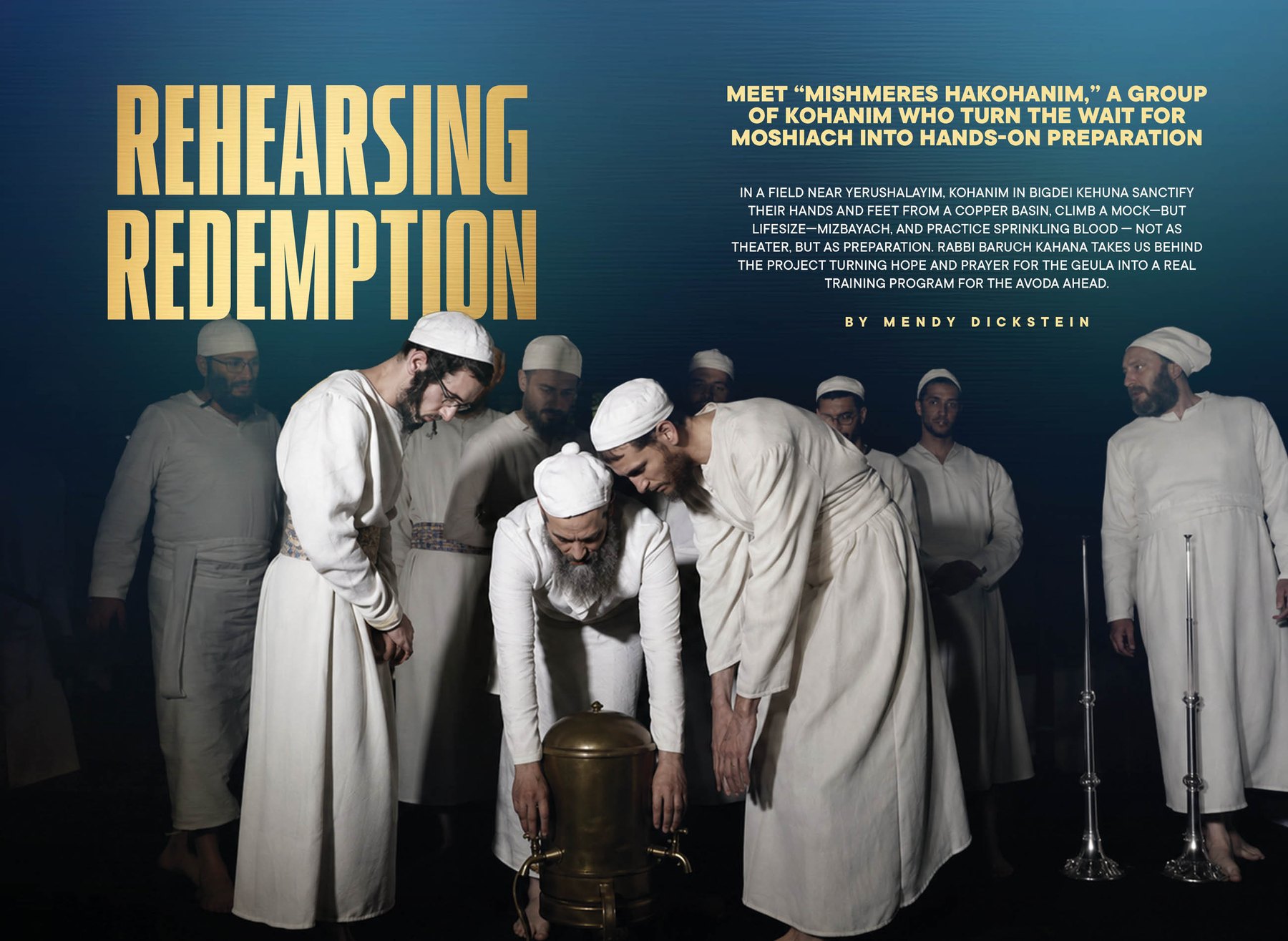
In a field near Yerushalayim, kohanim in bigdei kehuna sanctify their hands and feet from a copper basin, climb a mock – but lifesize – mizbayach, and practice sprinkling blood – not as theater, but as preparation. Rabbi Baruch Kahana takes us behind the project turning hope and prayer for the Geula into a real training program for the avoda ahead.
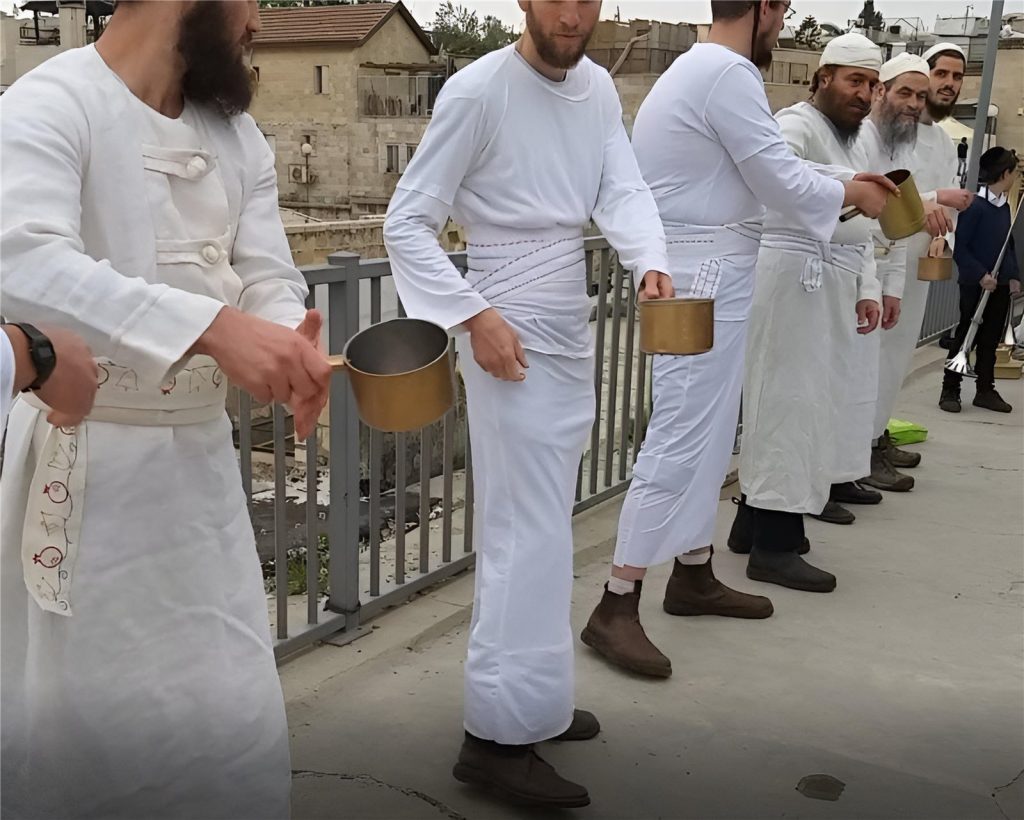
In a quiet spot on the outskirts of Yerushalayim, as close as possible to the site of the Mikdash, an unusual and moving scene is taking place. Kohanim in pure white bigdei kehuna climb barefoot onto a large structure shaped like a mizbayach. Beforehand, they sanctify their hands and feet with water from a special metal basin, arrange the Lechem HaPanim on the Shulchan, and pass metal sprinkling basins from hand to hand with impressive dexterity.
The scene looks like something out of the future, or perhaps the distant past, and it is happening in the present, as part of a unique and stirring initiative of preparing members of the kehuna for the great day when the third Beis HaMikdash will be built.
Meet Mishmeres HaKohanim HaRishona (the First Watch of Kohanim), a groundbreaking project that turns the anticipation of Moshiach’s coming from prayer into practical, tangible avoda. “Our goal is to prepare practically for building the Beis HaMikdash, by studying the halachos and practicing the actions,” explains Rabbi Baruch Kahana, one of the project’s founders and leaders.
“The Chofetz Chaim and the gedolim of the generations, and of course especially the Lubavitcher Rebbe, urged the need to study the halachos of the avoda so that we would be ready when the Beis HaMikdash is built. Over time we saw that theoretical study alone wasn’t enough—practical drills were needed.”
Can you tell us a bit about the unique project you established, and why you decided to move from theoretical study to practical training?
Rabbi Kahana explains that the idea grew within a group of enthusiastic people who look forward to the Geula, who understood that preparing for the Geula shleima requires more than just studying the halachos.
“We understood that when Moshiach comes, we kohanim will need to be ready and trained for the avoda. There are actions that require practice, like sprinkling the blood, sanctifying hands and feet, taking the handful (kemitza) of the mincha, burning the ketores; these are actions that require manual skill, beyond studying the halachos.”
The project began in 5773 (2013), when a group of kohanim decided to carry out a first drill of the morning daily korban Tamid, with about fifteen kohanim participating.
The name “The First Watch of Kohanim” was born out of a greater, deeper aspiration. “At first we tried to establish twenty-four watches, as existed in the time of the Mikdash,” he recounts. “We divided the land into 24 regions, appointed a coordinator for each region, and named each region after the names of the watches mentioned in Divrei HaYamim. Unfortunately, though, we couldn’t recruit enough kohanim for all the watches.”
Rather than give up on the dream, they decided to take one practical first step: “We established a single watch, nicknamed ‘The First Watch of Kohanim,’ in the hope that more watches would join it. About seventy kohanim registered for this watch.”
Rabbi Kahana describes their excitement during the first drill: “We reenacted the morning korban Tamid as described in the Mishna and Gemara in meseches Tamid, and of course according to the halacha as ruled by Rambam. Afterward we did drills around the moadim: the water libation (nisuch ha’mayim) on Sukkos, a drill close to Pesach, a drill leading up to Shavuos.”
Where did this initiative come from?
The initiator of this is Professor Hillel Weiss, a member of the Jewish Leadership movement and of the Forum of Professors for National and Economic Resilience, and chairman of Temple Mount advocacy groups. To this day he is the driving spirit behind the project and the trainings.
What kinds of training do you conduct, and what distinguishes them from ordinary learning?
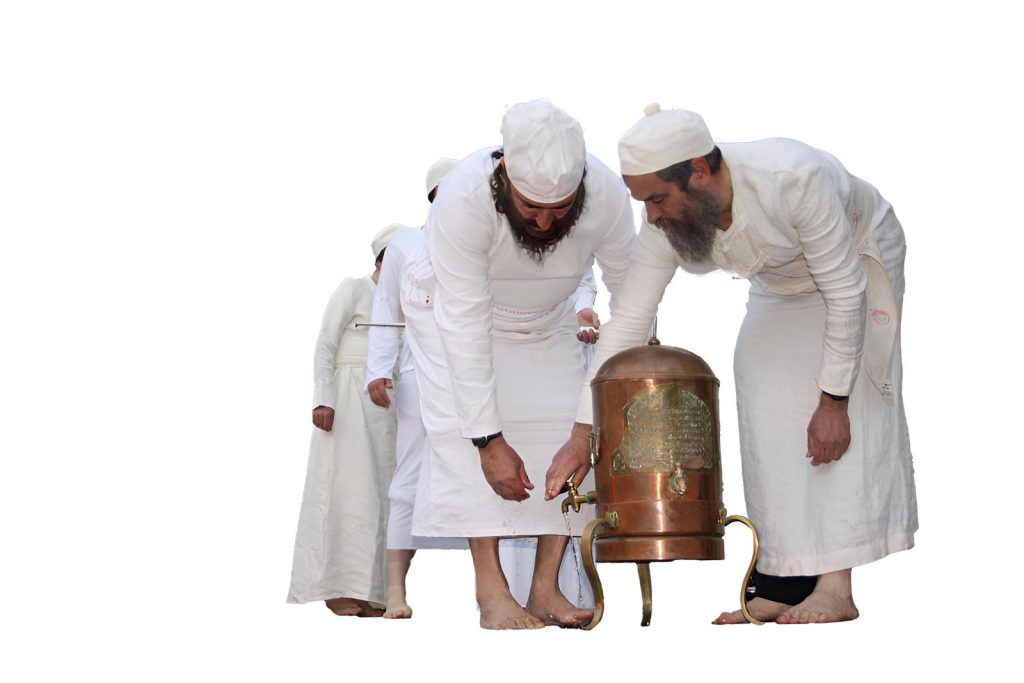
The trainings the ‘watch’ conducts are spread across the holidays of the year, in cooperation with Machon HaMikdash (the Temple Institute) and other Mikdash-related organizations.
I organized a program for training kohanim, [covering] the tasks kohanim need to learn and practice. There are simple things that don’t need much study or many drills, like carrying korbanos or animal body parts from place to place. But sprinkling the blood, sanctifying hands and feet, taking the handful of the mincha offering, burning the ketores, and more—these are things that need to be studied and practiced at the level of actual performance.
The ‘watch’ holds regular drills: the Omer drill on the 16th of Nissan, the Two Loaves on the day after Shavuos, the Nisuch HaMayim during Chol HaMoed Sukkos, lighting the Menora, and a drill of the Korban Pesach on the tenth of Nissan.
In every drill we clearly emphasize that this is only a demonstration and not an actual korban.
It’s a comprehensive two-to-three-hour training program. Each kohen studies the halachos, hears the explanations, and then practices the actions himself, so that in addition to theoretical knowledge he also gets the hands-on training required: sprinkling blood, nisuch, and all the other actions. There are several different methods for each action, and that’s how, b’ezras Hashem, the kohanim learn.
Learning Through Practical Experience
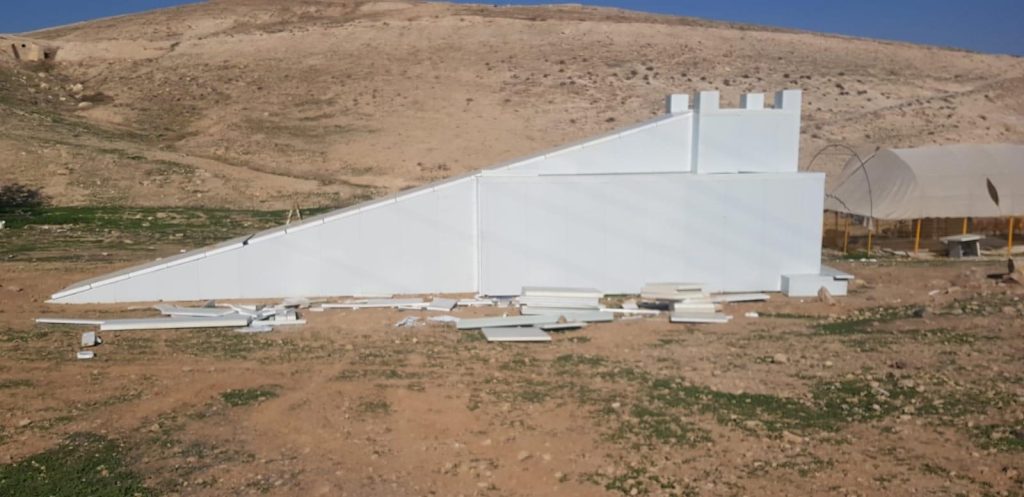
Recently, a new and exciting element was added to the trainings. The organization “Mamleches Kohanim,” headed by Yehoshua Landau and Uri Englard, recently built an altar-like structure specially constructed at the “Lechatchila” farm near Mitzpeh Yericho. The mizbayach was built to true height (though narrower than the actual width), with the goal of giving the trainee kohanim a work environment as close as possible to the real thing. Some of the drills take place there. And so, in Yericho, the place from which the Jewish people heard and smelled the avoda in the Mikdash, the avoda is practiced on a mizbayach replica that allows the kohanim to train under conditions as close as possible to the real thing.
What do you learn from the practical drills that can’t be learned from books?
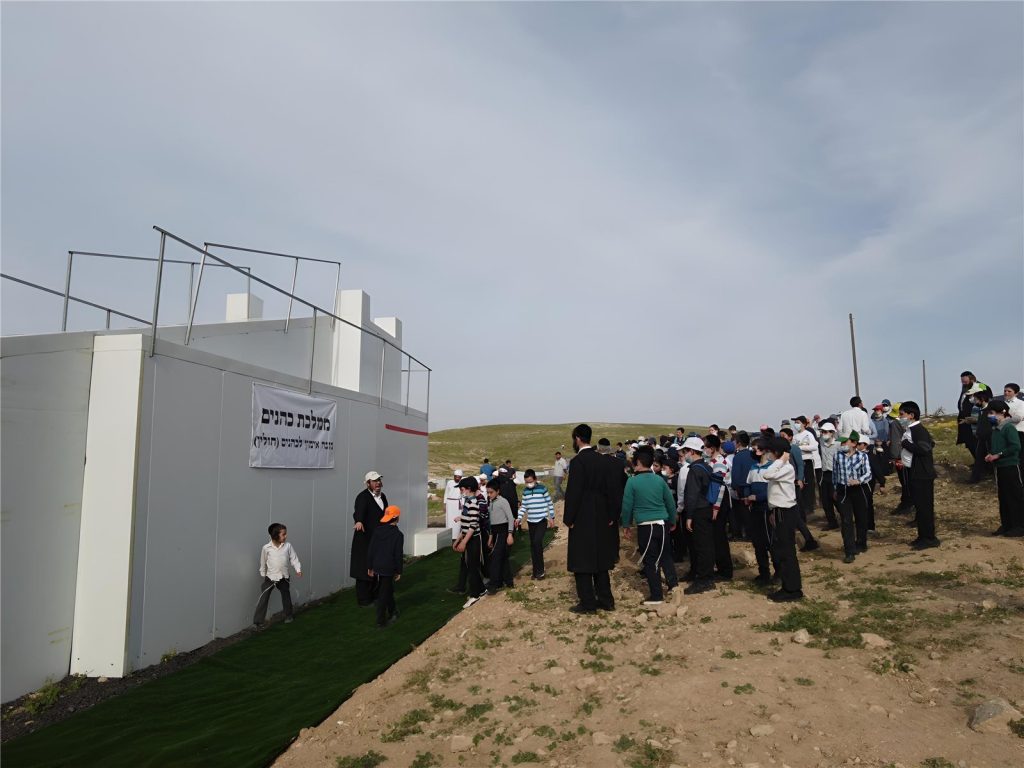
That’s the more fascinating part of our project, the learning that is revealed only through practical experience, since there are things that only emerge through physical practice. That’s how the practical challenges come to light, things you wouldn’t learn from books.
Can you give an example of that?
Sure. For instance, we did a drill of the Korban Tamid. After dissecting the korban, the limbs are carried to the mizbayach, with six kohanim carrying the limbs of the olah in their hands and three more kohanim carrying the accompanying items: the fried cakes, the wine, and the fine flour. In the first stage, everything is set down on the ramp from its middle downward, and then the kohanim go to the Chamber of Hewn Stone for a short prayer, after which they return and bring the limbs and additions up from the ramp onto the mizbayach itself.
When you read this in the text, it seems simple and straightforward. But in the practical stage we struggled a great deal. How do you stand a jug of wine on the sloped ramp without it slipping and without the wine spilling out? After many attempts and much thought, we solved the issue using a special triangular device placed on the ramp, which holds the jug upright so the wine doesn’t spill…
Another practical issue that came up concerned the kiyor (wash basin). We learned about the basin through the practical work itself. We had to figure out the best way to install the taps since the kohen needs to put his hands and feet under the tap at the same time, so it has to be long enough. On the other hand, the tap needs to be low enough that the kohen can bend down to bring his hands to his feet without his knees hitting the tap…
We also learned that sprinkling the blood is easier with a vessel that has a wide opening. These issues, and many others, we learned only through practical, hands-on drills.
Were there any particular challenges you encountered?
One of the most complex challenges we dealt with concerned waving the Two Loaves together with the lambs on Shavuos. The Gemara states that the Two Loaves are waved together with the lambs. There are several opinions on how this is done, and the psak halacha is that they are all waved side by side. How can this practically be done?
The lambs, as you can imagine, don’t sit quietly and wait to be waved in the air… Besides that, they aren’t exactly lightweight… The Two Loaves themselves are sixty centimeters by seventy centimeters, and a kohen’s hands can’t hold them.
The solution came through practical ingenuity: we developed a device, like a long board with spaces to safely lay the lambs on the sides so they wouldn’t fall, and the Two Loaves in the middle, so that they could all be waved together…
Another area that requires special expertise is the burning of the ketores. This is a complicated avoda since the ketores mustn’t fall from between the kohen’s fingers.
Even with the meal offerings, details emerged that only became clear through the practical side: the mixing of the fine flour with oil for the mincha needs to be done in a smooth vessel, so that whatever sticks to the sides can easily be scraped out.
How do you deal with the need for special bigdei kehuna for the avoda, or klei Mikdash to train with?
That is indeed no small challenge. As for the bigdei kehuna, I personally use authentic bigdei kehuna I purchased from the Machon HaMikdash. These are expensive garments, woven with special threads in a special ‘checkerboard’ weave. The other kohanim who train use synthetic garments shaped and sized like the authentic bigdei kehuna.
There’s a special challenge with the avneit (sash). The avneit is made of linen embroidered with wool dyed sky-blue, purple, and crimson, and it constitutes shatnez, so it may only be worn during actual avoda in the real Mikdash, not during drills. So we made a sort of sash from synthetic fabric. Even so, there is still a special challenge in putting it on, because the Gemara Yerushalmi states that the sash is 32 amos long (about 15 meters), and you have to practice how to wind a 15-meter-long sash around yourself comfortably…
After many attempts we learned that the best method is to roll it into a taut coil, and pass it from hand to hand while turning the body, so you can then quickly gird your entire body with it. That too was a practical problem we solved through the drills themselves.
Hope Turning Into Daily Avoda
The “First Mishmeres Kohanim” project represents a unique phenomenon in today’s Jewish world, turning passive anticipation of the Geula into active, productive preparation. Instead of settling for hoping and praying for Moshiach’s coming, the kohanim study, train, and prepare concretely for the day the third Mikdash will be built. It is a rare model of emuna expressed through action; hope turning into daily avoda.
The trainee kohanim understand that when the Moshiach comes and the Beis HaMikdash is built, there won’t be time to relearn the halachos or practice the actions from scratch. On that very day they will be obligated to begin the holy avoda. That is why the kohanim seek to be ready ahead of time, so that when the great hour comes and the Beis HaMikdash is built, the avoda can begin immediately. This is a practical emuna that drives practical action; hope turning into daily avoda.
How many kohanim have gone through the training so far, and what kind of reactions do you get?
After more than a decade of activity, the numbers are impressive: I can say that dozens of kohanim have gone through training through our organization, but that’s of course not enough. Each kohen undergoes a two-to-three-hour training in which he performs all the actions, practicing blood-sprinkling and all the other actions.
The basic training is a one-time session, and Rabbi Kahana admits that “you can’t make do with just one training session, but as a start, the lessons provide an important foundation for further study and practice.”
One example of the need to repeat the training over and over is blood-sprinkling: For burnt offerings, guilt offerings, peace offerings, and thanksgiving offerings, the blood must be sprinkled in the manner of ‘two applications that are four,’ meaning it must be delivered in two throws at opposing diagonal angles. Each throw must strike at an angle so that it splits onto two walls of the mizbayach simultaneously. In addition, you have to make sure not to throw all the blood on the first angle, so that blood remains for the second angle. During the training you practice and try it many times until you achieve the desired result. It takes training, a lot of training.
The project faces financial challenges. The leaders of the mishmar aspire to train as many kohanim as possible ahead of the renewal of the avodas ha’Mikdash. Like everything else in the world, this requires a budget the founders don’t have readily available. Even so, their determination hasn’t waned: “The activities we conduct are a great contribution to understanding the Mikdash and to preparing for the building of the Beis HaMikdash, which will soon be built, b’ezras Hashem.”
The Public Gets Swept Up in the Excitement Too
The project has also attracted fascinating related activities. The Savir family from Alon Moreh, for example, reenacts the process of preparing the menachos of various kinds: the Two Loaves, the Lechem HaPanim, and thanksgiving breads. “Through trial and error they arrive at the correct method,” Rabbi Kahana recounts admiringly.
When there are halachic questions, and there are many, the activists turn to experts from Machon HaMikdash and the “Machon Toras HaKorbanos,” who have studied and delved deeply into these halachos for years.
Some of the drills are held in front of an audience, aiming to raise public awareness about preparing for the Mikdash and feeling its absence. These drills stir great excitement among the participants. “We feel we’re doing something real to hasten the coming of Moshiach,” says R’ Yosef Cohen, one of the kohanim participating in the drills. “When I stand there and practice the blood-sprinkling, or the incense-burning, I feel a real connection to what once was and to what will be in the future, in the building of the Beis HaMikdash.”
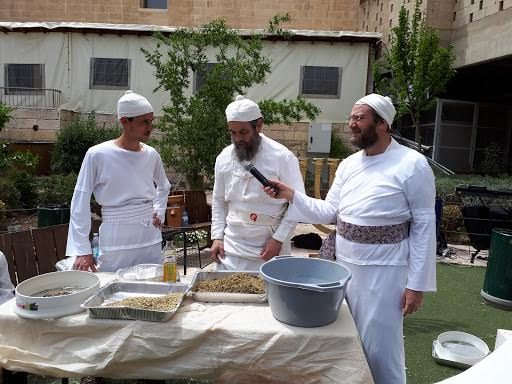
Rabbi Kahana doesn’t rest. He wants to expand the circle of kohanim who are familiar with the avoda and who will, when the time comes, be ready to offer korbanos in the Mikdash.
He uses our conversation to issue a heartfelt call “to kohanim to come learn the halachos and train in practical drills. This is also a statement and a heartfelt cry to Heaven: Ribono shel olam, we are ready! You too, fulfill what You promised us!”
And what is the message for the “ordinary Jew” who is not a kohen?
The kohanim project reminds all of us that the Geula shleima isn’t something that happens to us from the outside, but a process we are partners in. Each of us can and must prepare ourselves in our own way for the Geula: the kohanim through learning the avoda of the Mikdash, the Levites through song and music, and Yisrael through teshuva and increasing good deeds. The kohanim project serves as an inspiring example that the anticipation of the Geula can be turned from a distant dream into a close and tangible reality.
Beis Moshiach #1515 • pp. 24-31
© 2026 Beis Moshiach Magazine. All rights reserved.
This article originally appeared in Beis Moshiach #1515. You are welcome to share it with friends and family by email or in print, provided that you do not change, add to or omit any part of it, you credit the author and Beis Moshiach, and you include a link to archive.bmoshiach.org (written out in full in printed copies).
To republish this article in a newspaper, magazine, book or website, please request permission in advance at [email protected].