The First “Hookup”
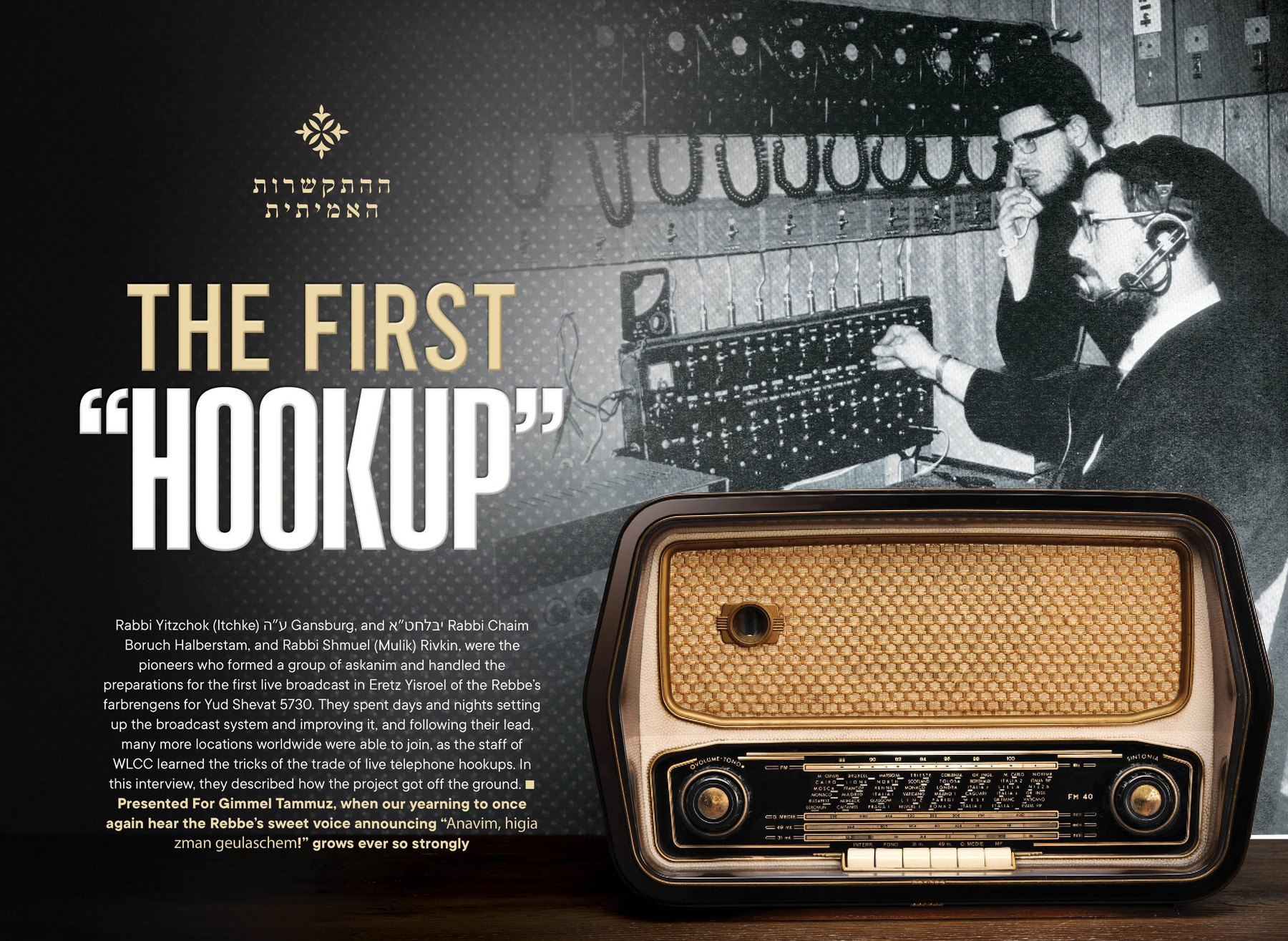
Rabbi Yitzchok (Itchke) Gansburg ע״ה, and Rabbi Chaim Boruch Halberstam יבלחט״א, and Rabbi Shmuel (Mulik) Rivkin, were the pioneers who formed a group of askanim and handled the preparations for the first live broadcast in Eretz Yisroel of the Rebbe’s farbrengens for Yud Shevat 5730. They spent days and nights setting up the broadcast system and improving it, and following their lead, many more locations worldwide were able to join, as the staff of WLCC learned the tricks of the trade of live telephone hookups. In this interview, they described how the project got off the ground. Presented For Gimmel Tammuz, when our yearning to once again hear the Rebbe’s sweet voice announcing “Anavim, higia zman geulaschem!” grows ever so strongly.
The tension was enormous. The curiosity and anticipation ran high. Everybody knew that in 770 a great drama was being played out, but nobody knew exactly what was happening. What did the Rebbe do, and above all else, what did the Rebbe say?
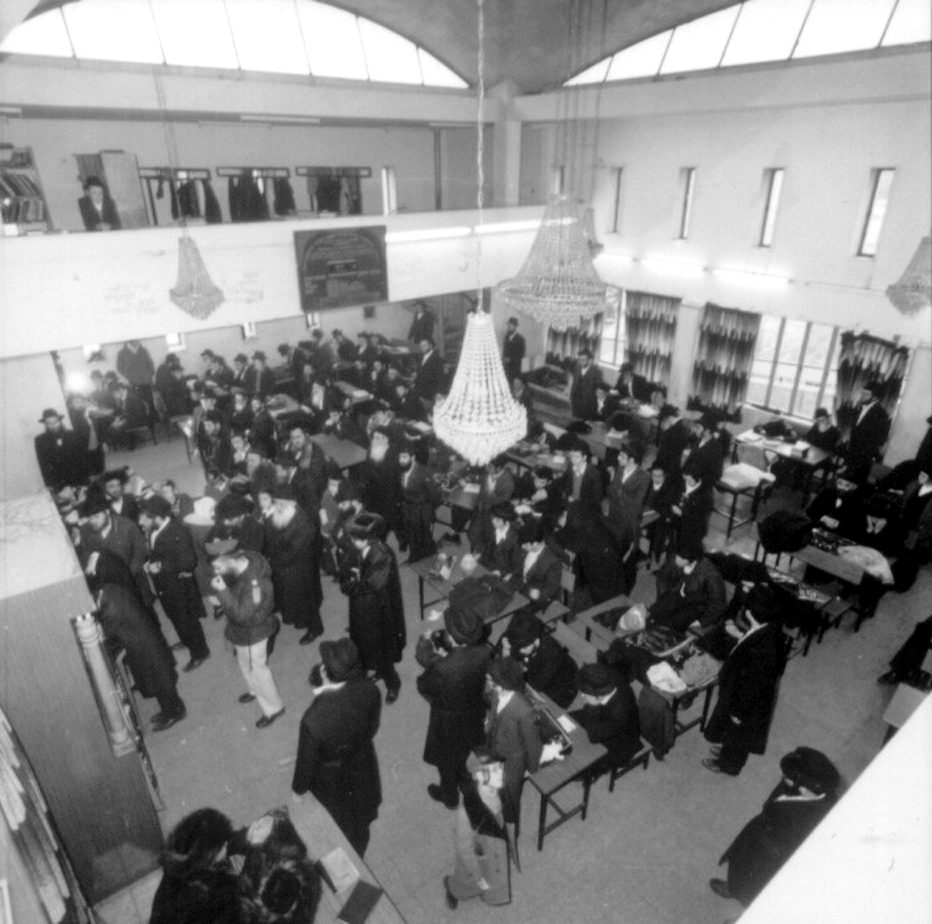
On Motzoei Shabbos, Yud Shevat 5730/1970, the first live broadcast to Eretz Yisrael took place. For the first time, they could hear the Rebbe’s voice in real time. Early Sunday morning, hundreds of Chassidim began streaming towards the large zal of Yeshivas Tomchei Tmimim in Kfar Chabad. The muddy paths, the wintry chill, the call of warm beds – nothing could stop the Chassidim from hearing the Rebbe’s voice.
There were noises on the line and a hush in the big zal. Then the Rebbe’s voice could be heard! Many a tear was shed.
* * *
Many decades have passed since the first live broadcast from 770 to Eretz Yisrael. Over the years, broadcasts of farbrengens were able to reach nearly every place in the world, but that was the first attempt.
I think the first initiative regarding a broadcast of the Rebbe’s farbrengen was made by the Chassid Rabbi Yona Eidelkopf (see Beis Moshiach issue #775 about him) for Yud-Tes Kislev 5720. Reb Yona, who was always coming up with original ideas, asked the Rebbe for his consent, but the Rebbe wrote him (5 Kislev 5720): “Transmission to Kfar Chabad via radio or telephone from here of the Yud-Tes Kislev farbrengen is not possible because of technical reasons.”
Ten years had gone by since then. On Erev Rosh Chodesh Shevat 5730, the Rebbe announced that he wanted to complete Moshiach’s Sefer Torah. Many people made a mighty effort to buy tickets to fly to New York from Eretz Yisrael even though it cost a fortune. There were many others who yearned to go but could not; one of them was Rabbi Itzke Gansburg a”h.
He related:
“Back then, I worked in chinuch and could not take a leave of absence. However, I wanted very much to hear the Yud Shevat farbrengen. I called the secretary, Rabbi Binyamin Klein and suggested that they broadcast the farbrengen to Eretz Yisrael via telephone. I urged him to ask the Rebbe.
“When I got a positive answer, I began looking into how to arrange a broadcast like this and quickly discovered how complicated it is. I found a relative of mine who guided me through the technical aspects for the broadcast.”
Rabbi Yosef Hartman of Nachlas Har Chabad, then principal of the Chabad Vocational School in Kfar Chabad, describes how excited Anash in Eretz Yisrael were about the upcoming broadcast:
“We all waited impatiently to find out what was happening in 770. On Friday, Erev Yud Shevat, there was a siyum of the Torah L’Kabbolas Pnei Moshiach. In Eretz Yisrael it was already Shabbos. Before Shabbos they had said the broadcast would take place on Motzoei Shabbos in the yeshiva’s new hall in the center of Kfar Chabad. When Shabbos was over, relatives who were staying the night with me until the broadcast would begin, came to my house. One special guest was a reporter from HaTzofeh, Simcha Aharoni, who came to cover the first broadcast.
“It is hard to explain our feelings in words. We were very excited since we knew that in a short while we would be hearing the Rebbe’s voice, in real time, in Kfar Chabad.”
The other part of the broadcast, originating in New York, was arranged by Rabbi Shmuel Rivkin and Rabbi Chaim Boruch Halberstam. R’ Mulik tells us about the broadcast:
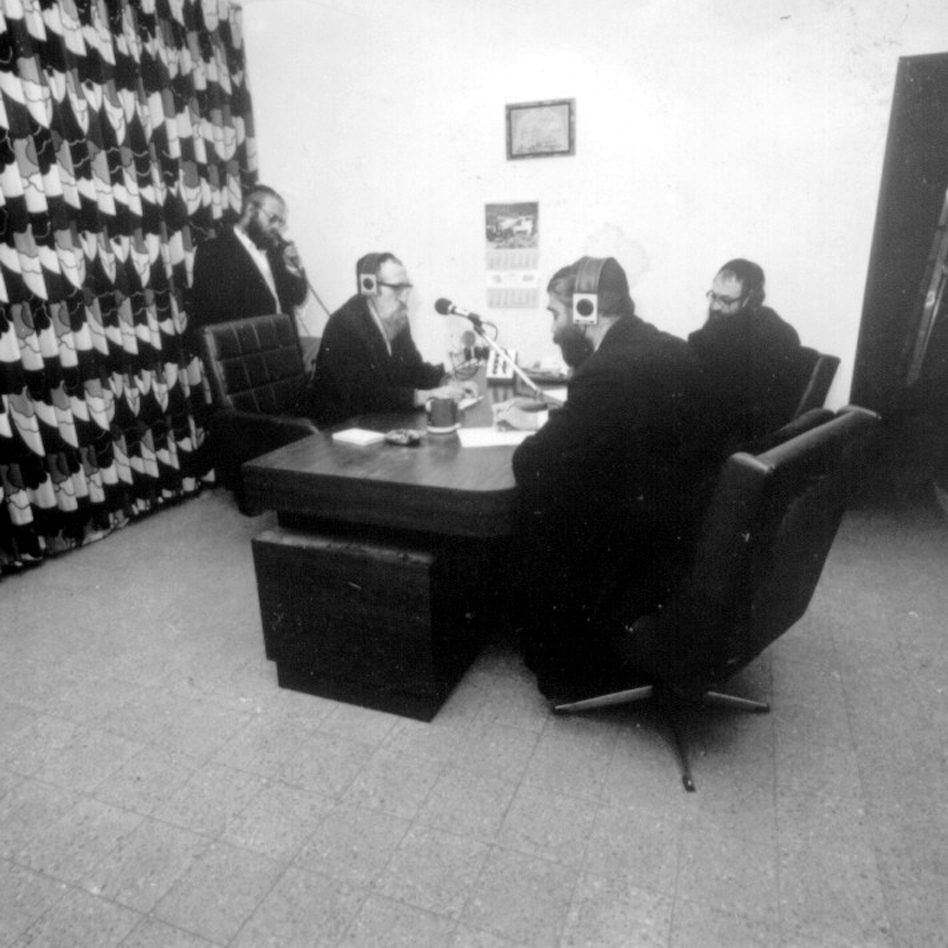
“Chaim Boruch and I decided that the broadcast would take place in the room of the Rebbe’s secretary, Rabbi Moshe Leib Rodstein. This room had the necessary elements for a broadcast, a phone line and a window that overlooked the shul. Technically, the transmission of the broadcast was simple. We extended a long cord with a microphone out the window and down into the shul. The other end of the wire was in the room and connected to a tape recorder with a loudspeaker next to two phone lines, one to Eretz Yisrael and one to Montreal. And that is how, without any special equipment, we transmitted the broadcast to those two locations.”
Before the broadcast, tickets (to cover the costs) were grabbed up like hotcakes. Anash were afraid there wouldn’t be any tickets left and they rushed to buy them. Rabbi Lipa Kurtzweil, a resident of Kfar Chabad at the time, was responsible for arranging the zal of the yeshiva and selling tickets. He worked very hard to enable as many Chassidim as possible to hear the broadcast.
About 1000 people attended the first live broadcast that took place in the yeshiva in Kfar Chabad.
“The tension preceding the broadcast was enormous,” said R’ Itzke Gansbourg. “The quality of the phone lines back then was very poor. We were very nervous. Late Motzoei Shabbos, Menachem (Manny) Wolf, who was in 770 at the time, called and briefly told us about the siyum for the Torah to greet Moshiach that took place the day before. He also told us about the farbrengen that day.
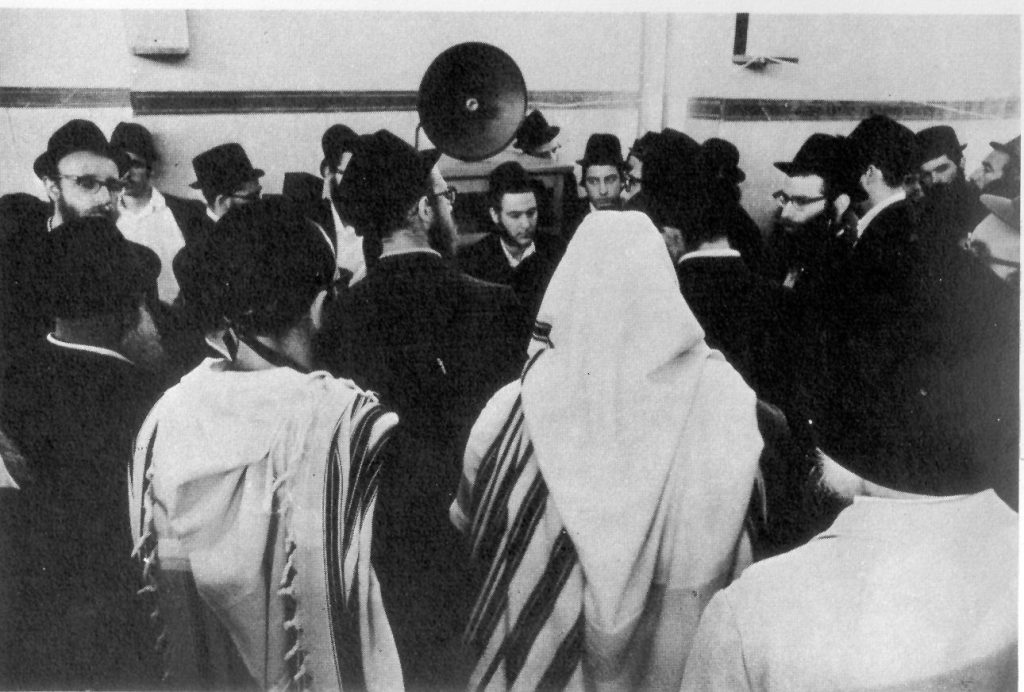
“The broadcast began a few minutes after he finished talking. The Rebbe’s voice could be heard over the loudspeaker and I cried. I saw that many others were crying too. It was so moving to hear the Rebbe farbreng ‘live.’”
There were problems on the line during the first minutes, but then things settled down and most of the broadcast took place without any problems. The farbrengen was transmitted over loudspeakers so everyone could hear it.
Rabbi Yosef Hartman:
“When the broadcast was over, I translated what the Rebbe said into Hebrew. When I was finished, I sat down to write the main points the Rebbe had spoken about. I gave this to Rabbi Berke Wolf who submitted it to the Israeli newspapers so the Rebbe’s words could be read by everybody in the country.”
How Did The Rebbe React To The Broadcast?
It was the first time the Rebbe agreed to broadcast the farbrengen (also for the first time, the Rebbe allowed a photographer to be present). People felt that the Rebbe wanted to bring about a change in the world.
After Yud Shevat, the Rebbe was given a report about the broadcast and he asked, “Why did they broadcast to only two locations?”
The day after the broadcast, the Rebbe gave a bottle of mashke to Rabbi Tzvi Hirsh Gansbourg and told him to give it to his brother, R’ Itzke along with his “yashar koach.”
Some time later, R’ Mulik Rivkin had yechidus in which the Rebbe gave him a hundred dollar bill “for the broadcasts.”
The next broadcast was planned for Purim 5730. The Rebbe’s secretary, R’ Klein, told R’ Itzke Gansburg when the farbrengen would begin. R’ Itzke publicized this among Anash and began preparing for the second broadcast.
Along with the preparations amongst Anash, the journalist, Rabbi Naftali Krauss publicized “the live broadcast of the Lubavitcher Rebbe on Purim” in the major newspapers of the time. This time, the broadcast was transmitted to six locations.
In the meantime, the system was undergoing improvements in 770. A “broadcast room” was set up. It wasn’t very modern or sophisticated, but it had ten phone lines. Apparently, it wasn’t all so simple since smoke began rising from the wires! R’ Chaim Boruch Halberstam and R’ Mulik Rivkin made the necessary repairs and the broadcast continued.
R’ Itzke Gansburg told about the Purim broadcast:
“We saw that the hall of the yeshiva was too small for the many hundreds of Chassidim who wanted to hear the Rebbe’s voice. This time, we set up the broadcast in the outdoor plaza in front of the yeshiva. However, financial concerns plagued me. The organizers needed to be paid for arranging the benches, cleanup, tickets, and mainly the cost of the lengthy trans-Atlantic telephone call. It was very expensive. It was hard for me to carry the entire burden.
“In those days, people could not estimate how long the farbrengen would last, and sometimes it took seven or eight hours. After several hours of the broadcast (in which the line was lost a few times and we had to call 770 and start again), I realized that if the broadcast continued, I would not have the money to pay for it. I temporarily stopped the broadcast and said briefly to the crowd, ‘I don’t have money to pay for this. If money will be collected now to cover the costs, the broadcast will continue.’ Within a few minutes a nice sum was raised and the broadcast continued.
“For this little ‘caper’ of mine, I got a ‘chelek’ from the Rebbe. A few days after the Purim broadcast, a note came out for me which said, ‘Did you consult with the elders of Anash in this regard?’”
* * *
The next farbrengen was on Yud-Alef Nissan. This time, the broadcast worked better than on the previous occasions, since a new transmission system was built in the broadcast room and tested a few times before the broadcast.
From then on, the broadcasts were in more professional hands when R’ Mulik Rivkin returned to Eretz Yisrael and took responsibility for the technicalities.
R’ Itzke Gansburg was in charge of the broadcasts for about two years:
“Today, when you make a call from Eretz Yisrael to the United States, it’s not a problem. The quality is as good as a call made within Eretz Yisrael itself and the cost is very low. However, back then it was hard to get a line to the United States. In the middle of the broadcast, you heard noises on the line from other phone conversations or from a radio broadcast. Sometimes, in the middle of a broadcast that lasted for hours, we did not hear the Rebbe for half an hour or more. We did not give up, and from time to time we managed to improve the quality. Much was done thanks to R’ Mulik Rivkin. He even bought a special machine to help with the recording.
“The broadcast was hosted in various places like Beis Rivka and the Vocational School of Kfar Chabad. Before every farbrengen we got a call from R’ Binyomin Klein as to what time it would begin so we could make our arrangements.”
However, they did not always know ahead of time when a farbrengen would take place, such as in the case of a sudden surprise sicha or farbrengen.
Who Would Notify The Residents Of Kfar Chabad About An Upcoming Broadcast?
One of the old-timers from Kfar Chabad, Rabbi Avrohom Meizlich a”h, answered this question in an interview with me:
“If there was going to be a farbrengen, the Rebbe would announce it after Maariv and they would call from 770. Then Rabbi Moshe Slonim would drive around Kfar Chabad and announce ‘shidur’ (broadcast) over a loudspeaker. It was usually before dawn. Lights in people’s homes turned on and you would see old men and boys rushing in the direction of the yeshiva where they eagerly listened to the Rebbe’s farbrengen.”
R’ Itzke Gansbourg has letters about the broadcast of the farbrengen of Purim 5731 from which we can learn about the rest of the broadcasts. On 19 Shevat 5731 R’ Itzke wrote:
To my friend Binyomin Klein,
I would be most grateful if you would clarify and respond quickly to:
1- What time will the Purim farbrengen be (day, time, etc.)?
2- Do we have permission to publicize in the papers that the Rebbe will speak about the issues of the day and the like?
I’d appreciate if you would respond as soon as possible.
Sincerely,
Itzke Gansburg
This is R’ Binyomin Klein’s answer, dated 1 Adar 5731:
To my friend Rabbi Yitzchok Gansburg, shalom u’v’racha!
I received your letter of 19 Shevat which the Rebbe responded to. Regarding whether you have permission to publicize in the papers that the Rebbe will speak on the issues of the day etc. – no (underlined twice in the original).
With blessings for all good always and a happy Purim,
Binyomin Klein
After the Purim broadcast, R’ Itzke asked his son R’ Yosef Simcha, who was in 770, to report to the Rebbe about the broadcast. This is what his son wrote:
B”H
25 Adar 5731
Dear parents, shalom u’v’racha
I just received a response from the Rebbe about the report I submitted regarding the Purim broadcast – the number of participants, that it was successful, and that there were excerpts the next day on the radio. The Rebbe’s response was: Many thanks and surely you will write in detail.
If Feldman is going, I will give this to him as a letter. There is nothing new here. Regards to all,
Your son, Yosef Simcha
The letter quickly reached its destination via Feldman, and R’ Itzke immediately wrote a detailed report as the Rebbe wanted.
B”H
Rosh Chodesh Nissan
Motzoei Shabbos kodesh Vayikra 5731
To the Rebbe shlita,
Regarding the Purim broadcast, I was involved in arranging it this time too. Two announcements were placed in the newspapers, Maariv and Yediot Acharonot. We heard until the niggun of the Alter Rebbe (?) and it was clear the entire time without any interference.
At 3:30 in the morning there wasn’t a large crowd, although afterwards it was full, about 500 men and women. The broadcast was held in Beit Shazar. Before that, I spoke on “Kol Yisrael” and at about six they came to record it so they could broadcast it on the radio on the program called “Chatzi Hayom.” They recorded a small segment about Yehuda and Yerushalayim and the future Geula. Then there were a few exchanges with the child Zelig Gopin and our daughter Freida. They recorded five minutes with Rabbi Tzvi Greenwald and it was successful. On that same program they mentioned Chabad a number of times. Before two o’clock, when there are many listeners, they broadcast the aforementioned.
Since the one in charge of maintaining order was easygoing, there isn’t money to cover the broadcast. And according to my calculations, I will have to add about 1500 liras, though I have the money to cover it from the Yud-Tes Kislev broadcast which was relatively cheaper.
All the newspapers wrote about the broadcast which could be heard for about seven and a half hours.
Yitzchok ben Doba Gansbourg
At the end of 5732, R’ Itzke moved to Natzrat Ilit where he ran the Chabad school under the auspices of Reshet Oholei Yosef Yitzchok. The broadcasting arrangements were then made by the menahel of the central Yeshivas Tomchei Tmimim, Rabbi Efraim Wolf. He made sure the broadcasts went well, were paid for, and had his son, R’ Berke publicize them in the newspapers.
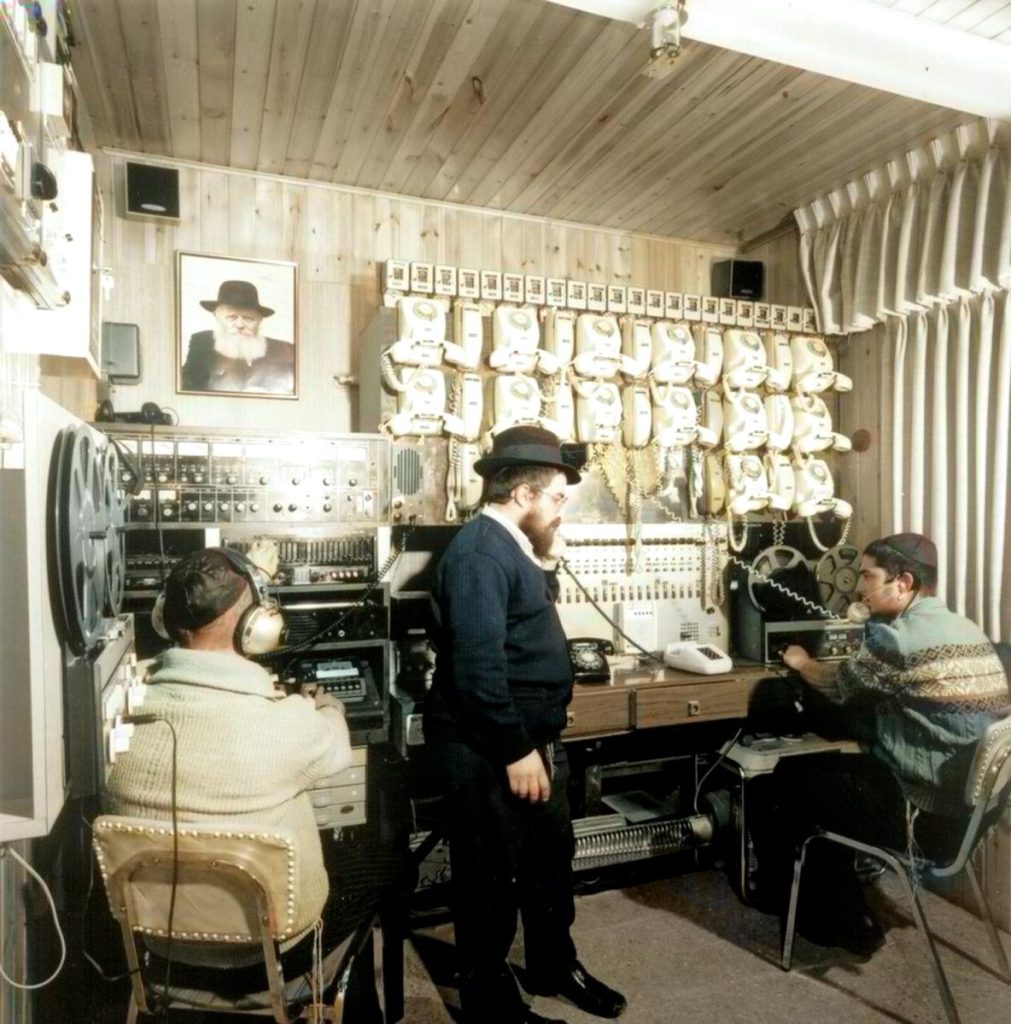
As the years went by, the broadcasts in 770 developed and improved, which enabled them to be recorded far better in Eretz Yisrael. At the first broadcast in 770, there were two phone lines; in 5733 there were twelve lines. A few years later, there were twenty-four. In 5753, a computerized system was constructed with 400 phone lines that simultaneously broadcast all over the world.
* * *
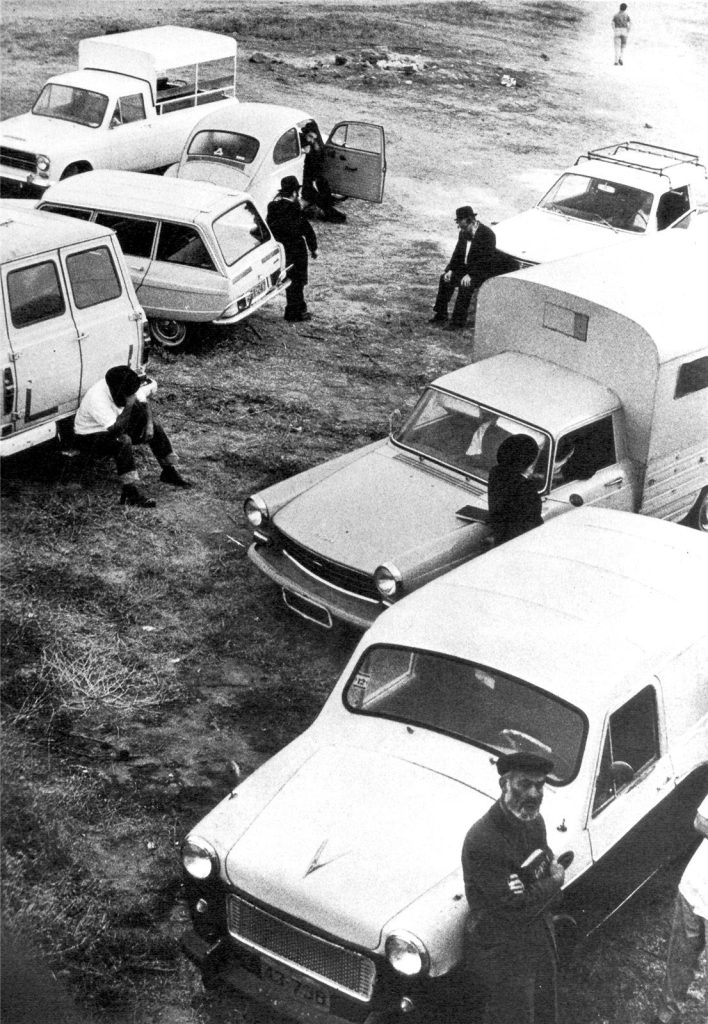
In the early years, the farbrengens were broadcast to a few other places, but aside from Kfar Chabad the reception was of a much poorer quality. Many Lubavitchers had to travel in the middle of the night to Kfar Chabad. They did not all have cars and the trip was difficult. Even harder were the unexpected farbrengens or sichos when they did not have time to make it to Kfar Chabad.
At the initiative of some askanim, the broadcasts reached Yerushalayim too. That was arranged by Rabbi Eliezer Lichtstein. He described the early broadcasts to Yerushalayim:
“It was 5735 when Rabbi Eliezer Mann and Rabbi Yaakov Bergman bought a loudspeaker system that could have two phone lines attached to them. They asked me to be in charge of the broadcasts. We started broadcasting at the Kosel where many people showed up before dawn. Rav Getz, rav of the Kosel was a big help. I did not know much about the mechanics, but I learned with experience.
“The broadcasts at the Kosel were of good quality and in order to significantly lower the cost of the calls, we contacted Chabad of London. The farbrengens were broadcast there and we got the broadcasts from them.”
As in anything having to do with holiness, opposition arose with the claim that loudspeakers could not be used at the Kosel since it disturbed the people who were there. Nevertheless, Rabbi Getz helped to the best of his ability and enabled the farbrengens to be broadcast in one of the inner chambers of the Kosel.
This is what Rabbi Getz wrote in his diary on Monday, 14 Tamuz 5736:
“At dawn, a broadcast of the Chabad Rebbe’s sicha is heard in the lower chamber. Most of the Chabad Chassidim of Yerushalayim are there. I allowed this by the personal request of the Rebbe…”
As a result of Rabbi Getz having approved the farbrengens, many threats were directed at him by those opposed to their transmission, and he soon found himself torn between his desire to broadcast Torah and the government order to cease and desist.
From his diary:
“Chabad Chassidim came to ask whether a farbrengen of the Admor Shlita could be broadcast tonight. I gently explained that what occurred on Monday generated much opposition within the government office… Despite my strong desire, I cannot countermand clear orders, especially when they are correct in principle — that loudspeakers are not to be used at the Kosel, and there is a clear position of the minister in this matter, although I am personally convinced that there are other hidden agendas at work here… The situation is particularly difficult because that Monday morning there was an unexpected inspection.” (Wednesday 16 Tamuz 5736)
Shluchim of the Rebbe reported to the Rebbe about the problems Rabbi Getz was experiencing despite his desire to help them. The Rebbe sent Rabbi Getz a letter of support and asked his shluchim to verbally tell him the content of the letter before the Three Weeks.
Rabbi Getz continued in his diary:
“I was brought a personal letter that was dictated over the phone by the Rebbe in which he expresses his sorrow over the anguish caused me in the matter of the broadcast, which is all about spreading G-d’s Torah and mitzvos, and how he encourages me with heavenly assistance.”
In his letter, the Rebbe writes:
“I was very sorry to hear the news that they are causing his honor anguish because of something I am involved with, a matter that is about spreading Judaism, Torah and mitzvos. May it be very soon and in ways of pleasantness that all obstacles to any matter of Torah and mitzvos be nullified including the above… May his honor fulfill his responsible role with peace of mind and body and with success…”
After some time, Rabbi Getz was able, with the help of Rabbi Dolgin and Mr. Yisroel Lippel, the Director of the Ministry of Religion, to allow the broadcast without disturbing the worshipers. The broadcast became official and established practice inside the adjacent halls to the delight of hundreds of people who packed the inner hall on days of a broadcast. The broadcasts continued for two years but then, due to internal considerations, the broadcast was moved to Yeshivas Toras Emes.
R’ Eliezer Lichtstein described the broadcasts in Toras Emes:
“At first, we only had three phone lines, two of the yeshiva and one of the nearby cheder. Through them, we were able to transmit the broadcast to additional locations.
“Over the years we expanded and used phone lines from Lubavitcher families who lived in nearby Shikun Chabad. We had eight lines, thanks to which we transmitted the broadcast to Chabad centers around the country.
“However, as expected, the eight lines did not suffice for all of Anash in Eretz Yisrael. Requests came from more and more places that wanted to hear the broadcasts. Our problem was that there were no available lines in the vicinity of Toras Emes. With the help of Rabbi Eliezer Klein (who worked for many years at the Communications Ministry), I contacted the right people there and within a short time I got twenty-five lines. Very soon, these lines were completely busy.
Where did you broadcast to?
We broadcast to Kfar Chabad, Lud, Rechovot, Tel Aviv, Migdal HaEmek, Afula, Natzrat Ilit, Tzfas, Eilat, Beer Sheva, Ashdod, Nachalat Har Chabad, Haifa, several places in Yerushalayim, and more.
How did you manage on the technical end of things?
I learned to make small repairs on my own, but more complex problems and the system development were taken care of by two very special people who dedicated themselves to the project once they realized that this was not a for-profit enterprise. The two worked hard to make the broadcasts successful. Mr. Ilan Shalev of Eilat Tikshoret set up the entire system in the broadcasting room of Yeshivas Toras Emes. He worked for years in telephone communications and he knew the profession. When I encountered a complicated problem, even if it was in the middle of the night, I would call him and he would come in less than ten minutes to fix the problem. The other man was Mr. Avi Yaffa who ran his own broadcast studios.
With the help of these professionals, I was able, in later years, to operate the entire system on automatic. The moment a line failed somewhere, instead of getting a phone call and being told about the problem, the line automatically connected to a different line. This saved us lots of aggravation.
Rabbi Shneur Zalman Gurary donated a large amount of money for the broadcast equipment and phone lines. Covering the cost of the broadcast was divided among the branches. In theory, each one paid a certain sum, but the ones who came to my aid were the shluchim Rabbi Yosef Yitzchok Liberow and Rabbi Shmuel Greisman.
How did you know when to get ready for a broadcast?
When the Rebbe announced ahead of time that there would be a sicha or farbrengen, Rabbi Groner would tell us and we were usually the first to know about upcoming farbrengens. Many people would call us to find out when the farbrengens would be and at what time.
As every Chassid remembers, in later years, the Rebbe often said sichos unexpectedly, mainly after Maariv. It was usually during the recitation of Aleinu that the Rebbe would motion with his finger that there would soon be a sicha. Rabbi Chaim Boruch Halberstam was always at the ready in the broadcasting room of 770 and he would call me. With the help of bachurim from the yeshiva we would call all the Chabad centers in the country and tell them the news.
As the years went by, the broadcasts improved. Translations were made for those who did not understand Yiddish. Rabbi Tuvia Blau would sit and write what the Rebbe said in Yiddish and during the singing between sichos, Rabbi Chanoch Glitzenstein would translate it. We provided the translators with special earphones to better hear what the Rebbe said. At the end of the farbrengen we played the recording and translation of the farbrengen for those who were interested.
* * *
Aside from the thousands who listened to the broadcast before dawn, there was an effort to air segments on Israel’s national broadcast network Kol Yisrael which, as a result of the efforts of R’ Berke Wolf, would often play them. After the broadcast, R’ Wolf would come and take the tape with the translation and an introduction prepared by Rabbi Tuvia Blau. Then he would submit it to Kol Yisrael.
“I remember,” said R’ Lichtstein, “two times when R’ Berke received an instruction from the Rebbe in the middle of the broadcast to submit portions to Kol Yisrael. He would immediately leave Nachalat Har Chabad for Yerushalayim and submit the recording to Kol Yisrael even before the farbrengen had ended.
“The portions they would play on the radio usually had to do with timely issues such as Mihu Yehudi, shleimus ha’aretz, etc.
“After every farbrengen, the Rebbe waited for a report from Eretz Yisrael. He always wanted to know how many locations heard the broadcast and would encourage the broadcast team in Yerushalayim with his responses. It is only thanks to them that I was able to continue running this costly project.
“Starting from Chaf-Zayin Adar 5752, I began broadcasting reports from 770 every day about the Rebbe’s health. At the time, reports kept coming in and I didn’t sleep for more than an hour or two in a row at night.”
Hitting The Airwaves
In 5740, a small radio station was started in Nachalat Har Chabad in Yeshivas Tomchei T’mimim run by Rabbi Mordechai Kozliner. This station broadcast farbrengens and sichos of the Rebbe to people in the area. R’ Lipa Kurzweil, director of the Chabad house in Kiryat Malachi, ran it.
The radio station was started and operated by Rabbi Meir Varzov. When they got word about a broadcast, someone would immediately drive around the streets of the neighborhood and announce over a loudspeaker, “shidur, shidur.” Then you’d see the lights turning on along with the radios. And so, Anash of Nachalat Har Chabad heard the Rebbe’s farbrengens and sichos.
Kfar Chabad also set up a radio station for broadcasts at the end of the 80’s. The mashpia, Rabbi Levi Yitzchok Ginsberg a”h set it up and ran it. He said, “There were sichos that lasted only ten minutes. By the time people got to the shul, the broadcast was over. I didn’t know much about radio and electronics but with lots of kochos from the Rebbe, I was able, with the help of some others, to set up the radio station that broadcast the Rebbe’s sichos as well as shiurim on various Torah topics and Chassidus.
“The transmissions could be picked up in the areas of Kfar Chabad and Lud. Rabbi Yossel Liberow would drive around the Kfar beeping his horn loudly, and that’s how people knew there was a broadcast.
“On Sunday night there was a chazara broadcast of the Shabbos farbrengen. At the end of every broadcast, I would translate the sicha into Hebrew and review it several times for anyone who wanted to know what the Rebbe said.
“(Smiling): The drawback of radio was that you could hear the broadcast in your pajamas at home. So many people, who did not want to doze off at three-four in the morning, would run to shul in order to hear the broadcast there. The advantage of radio was that you could tape and transmit the broadcast even with short sichos.”
* * *
We conclude this fascinating overview with the fervent hope that we once again be zoche to hear the Rebbe’s voice teaching us Toraso shel Moshiach, teikef u’miyad mamash!
HaTomim #13 • pp. 18-29
© 2026 Beis Moshiach Magazine. All rights reserved.
This article originally appeared in Beis Moshiach #1416. You are welcome to share it with friends and family by email or in print, provided that you do not change, add to or omit any part of it, you credit the author and Beis Moshiach, and you include a link to archive.bmoshiach.org (written out in full in printed copies).
To republish this article in a newspaper, magazine, book or website, please request permission in advance at [email protected].