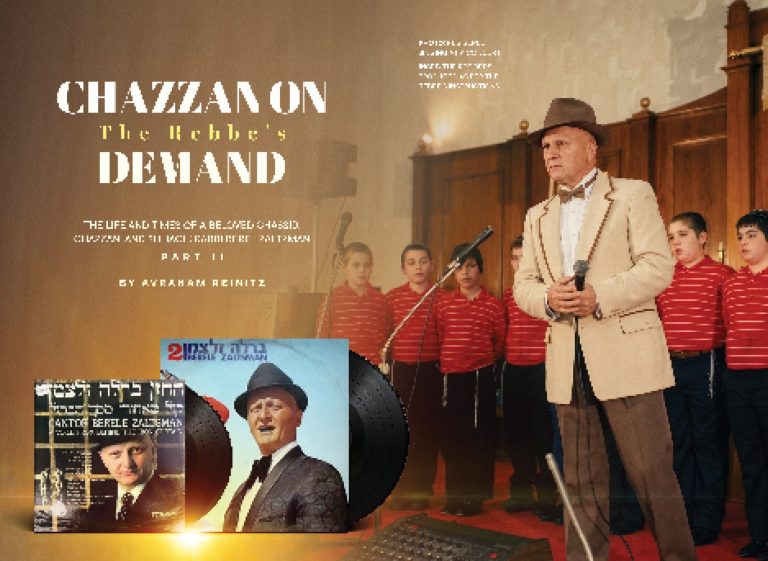
The Voice That Pierced The Iron Curtain: Rabbi Berel Zaltzman

The life and times of a beloved Chassid, chazan and shliach.
Anyone who ever met the Chassid Reb Berel Zaltzman a’h, could never forget him. And not only because of his extraordinary, captivating voice. He was a colorful, fascinating figure with a powerful presence, a Chassid in every fiber of his being who devoted his life to his shlichus. Behind the smile lay a whole world, a world of the underground, of daily childhood fear that at its peak caused his hair to fall out. But above all, there was a simple faith and pure devotion that never gave in, not to the communists in his time, not to the animal soul that craved a comfortable life, and not to the concealment that followed Gimmel Tammuz.
The truth is that R’ Berel’s entire existence was the result of his hiskashrus to the Rebbe, even when, by the natural order of things, matters did not work out. As R’ Berel himself once put it, he was a child who was not supposed to be born at all. Only years after the Rebbe Rayatz’s bracha, on 24 Tammuz 5694 (1934), did his mother conceive and he was born (his parents had already had another son and daughter).
Thanks to his parents’ mesirus nefesh, and thanks to his own Chassidic stubbornness all along the way, even though he was born some 15 years after the rise of Communism, during Stalin’s harsh years, and did not get to see our Rebbeim until he left Russia at age 37, R’ Berel merited to leave this world with over three hundred descendants, kein yirbu, among them shluchim, rabbanim, and mashpiim. As he emotionally said at a family gathering: Yaakov Avinu said to Yosef, “I had not thought to see your face, and behold, Hashem has shown me your children as well.” And I say: in Russia, my greatest hope was that my children would marry Jews and keep Shabbos. Hundreds of Chassidishe descendants and shluchim—I never even dared to dream of that…
* * *
R’ Berel grew up in the Chassidic underground of Kharkov and Samarkand. Much has been written about those years in the book by his brother, R’ Hillel Zaltzman, Samarkand. In the following lines we will try to focus on the main milestones of R’ Berel’s life, those that shaped his character for the future, beginning with his parents’ home.
Raising Children Without Compromise
His father, Reb Avrohom Zaltzman, made the chinuch of his children his life’s work, literally. When he discovered that a non-religious young man had begun associating with Berel, he ended it. He told the young man to his face that he did not want him as a friend for his son, expelled him from the house, and would not even let him into the yard. This was dangerous because that young man, who had no yiras shomayim, could have informed on what he knew about the Zaltzman family, but the father paid no attention to the danger. The chinuch of his children touched his very soul.
R’ Avrohom had learned in Tomchei Tmimim in Lubavitch and he was moser nefesh to teach the path of Chassidus to his children. R’ Berel used to tell how he once heard his father speaking with his mother on Erev Rosh Hashana, saying: “If my children do not walk in the derech of Torah and mitzvos, my life is not a life, and I would rather die.” This was not simply a wish that his children follow in his path, or shame if they strayed—at that time everyone around them had strayed… It was an expression of what he had learned and absorbed in Tomchei Tmimim (and the Rebbe Rayatz said of him that he was “pnimi” and a genuine person), that a life without connection to Hashem is no life at all. An expression of the yechida of the soul, for which “otherwise, there is no other way at all.”
That same devotion to the chinuch of his children passed in its purity to his son, R’ Berel as well. Even as a young married man, that same uncompromising determination regarding Chassidishe chinuch was already evident in him. This was already evident in the first weeks after his marriage in Malachovka (a suburb of Moscow) to Chaya Esther, daughter of R’ Yehuda Kulasher, who was at that time the (underground) Chassidic rav of Moscow.
His mother-in-law, Mrs. Basya Kulasher (Chein), very much wanted the young couple to settle near them. But R’ Berel well remembered the warning of his friends from Samarkand (5,000 kilometers from Moscow) not to settle in Malachovka but to return immediately and he refused. The argument continued for about two weeks, until he declared: “It’s either me or Moscow. If you don’t agree, I’ll have no choice but to write a get.” And then he turned to them with a question that came from the depths of his heart: “Un vos vet zayn mit di kinder?!” (“And what will become of the children?!”). These words had their effect, and from then on they never again mentioned staying in Malachovka.
Years later, R’ Berel was asked whether the spiritual gap between the two places was really so great as to justify such a dramatic step. He answered with far-reaching insight: Athough older Chassidim lived in Malachovka, it was frozen, there were no farbrengens to enliven the soul, and no Chassidishe chayus burned there. Samarkand, by contrast, was a bustling hothouse.
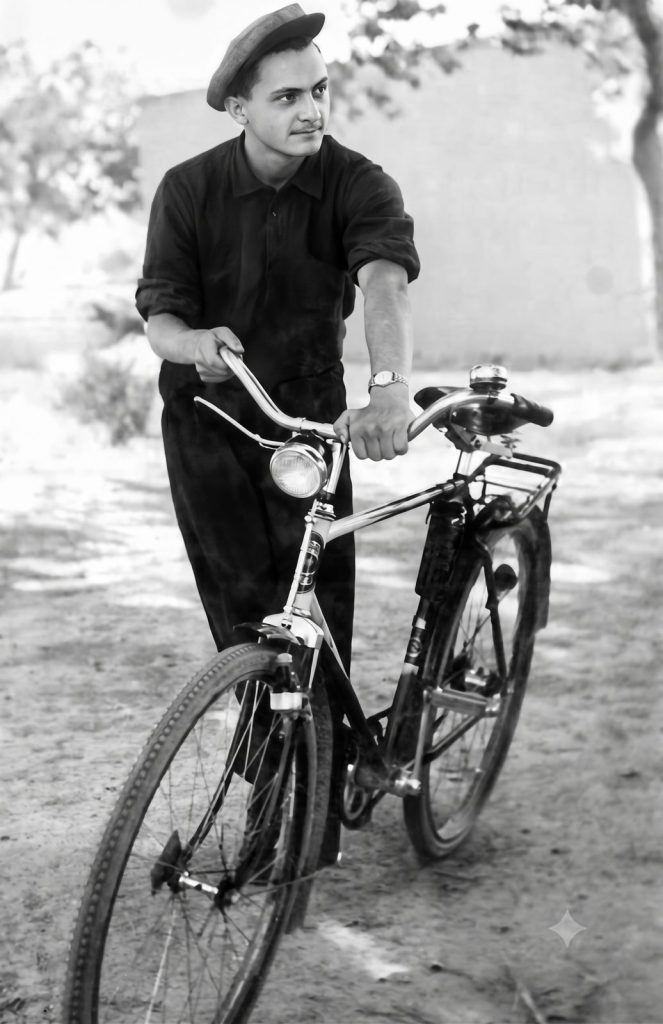
R’ Berel knew the danger of that coldness up close. He even pointed to one Chassid in Moscow whose son had drifted into becoming “modern,” G-d forbid—and understood that raising children with genuine Chassidishkeit was only possible in an environment with Chassidic fire, like Samarkand. And for that, he was willing to pay any price.
In later years, after his children were born, he followed in his father’s footsteps and just as his father had not sent him to the Soviet school, he too did not send his son Yosef Yitzchok there, even though in those days most of Anash did send their children to the “shkole” (arguing that these were no longer the schools of the Yevsektsiya that the Rebbe Rayatz had spoken of, which actively worked to educate toward kefira and the uprooting of Torah and mitzvos. By the 1960s the “shkole” was “only” a Soviet public school).
One of the older Chassidim rebuked him for being a “baal gaava,” thinking himself a greater Chassid than others who did send their children to school (even though of course they did not go to school on Shabbos, which itself involved mesirus nefesh).
This Chassid went further and warned him that a child locked at home ten months a year would lose his mind. R’ Berel answered simply: “I’d rather have an unhealthy Jew than a healthy gentile.”
He used to say, “That my son should sit seven hours a day without a yarmulka next to a shiktza (that’s how the classrooms were arranged in Soviet schools)—that will not happen!” His son had to stay home and not show his face on the street or near the window during the ten months of the school year, for seven years, because they told the neighbors he had gone to live with his grandparents in Malachovka and was attending school there. He did send his daughters to school, and it would take too long to describe the chain of hardships and daily mesirus nefesh so that they would not go to school on Shabbos.
“The Rebbe Saved My Children”
For about ten years (1960–1970), R’ Berel hosted part of the underground yeshiva in his home, despite the enormous danger involved. The yeshiva in Samarkand was the only Tomchei Tmimim yeshiva in the entire Soviet Union at that time. Over the years, bachurim arrived from all over the USSR—from Riga, Munkatch, Kaluga, Tashkent, and more—to learn in their home. Some of the bachurim even slept there, and the family took care of all their needs: food, laundry, a place to sleep, and so on. When asked why he endangered himself and his children this way, he turned the question around: It’s precisely for the children’s sake that I do this. I want them to see with their own eyes what a Jew is, what a Chassid is. I have nowhere to take them to show them this so I have to bring it into my home!
This devotion was not only about mesirus nefesh, about standing firm against outside obstacles and difficulties. R’ Berel invested his time and energy in actively and vigorously educating his children, understanding that without this, the winds blowing outside would take their toll.
His son, R’ Yosef Yitzchok, remembers how at Friday night meals only the family members sat (the bachurim ate separately), and R’ Berel would sit and tell them stories of the Alter Rebbe, stories about Chassidim and Jewish history. His daughter, Mrs. Sheina Browd, remembers how every so often, during supper, he would close the windows and shutters and take out from the attic a photograph he had somehow obtained of yeshiva students in America, with full beards, etc. (in those days in Russia, young men did not grow beards because of the danger). He would show her and her sisters the picture and tell them, “You will marry bachurim like these.”
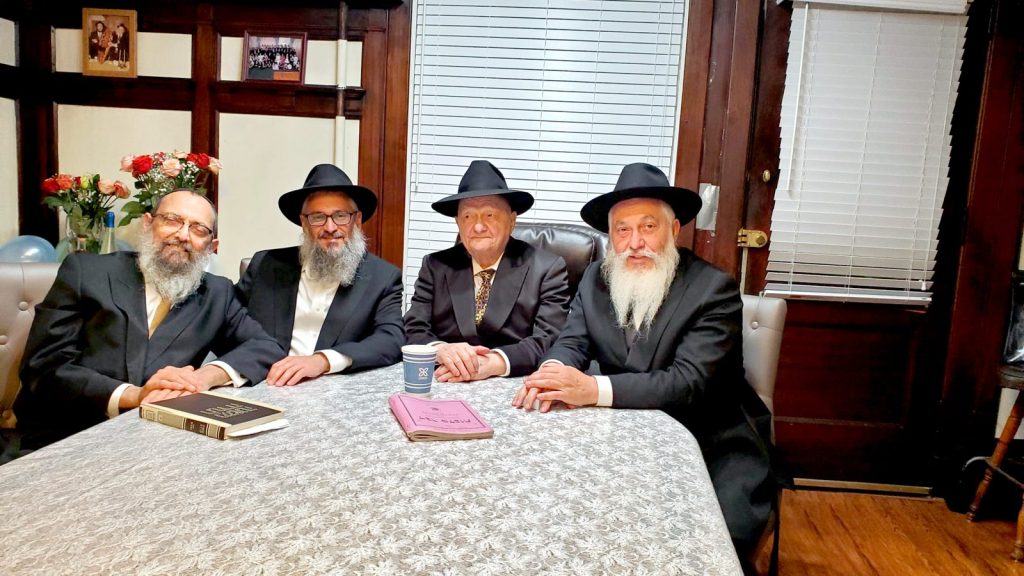
He often repeated to his children and grandchildren that when the Rebbe entered the first farbrengen he attended, Shabbos Parshas Nitzavim 5731, he looked at the Rebbe and cried from great excitement, love, and gratitude. “This is the man who saved my children,” were his words…
A few years ago, at a Shabbaton for his 85th birthday, surrounded by hundreds of grandchildren and great-grandchildren, he expressed the depth of his feelings and his longing that his grandchildren and great-grandchildren be G-d-fearing Jews, Chassidim, and faithful. This was his whole life, literally.
His grandson, R’ Avrohom Browd, said that he once asked him: Where is it harder to be a Chassidic Jew, here in America or in Russia? He answered without hesitation, “Here.” And explained: “In Russia there was opposition. ‘You can’t be a Chassid,’ so we showed them that they couldn’t tell us what to do. The opposition created a natural sense of the critical importance of keeping Torah and mitzvos and hiskashrus. Here in America, everything is free. Do it or don’t—nobody cares. You need to arouse stronger inner powers to withstand this.”
The Voice That Was Hidden Behind the Iron Curtain
R’ Berel was blessed with a clear voice and an excellent musical ear, and he always loved to sing whenever he found the chance. As a bachur, he went to study with a great vocal expert named Viktor Abramovitz-Vaisment, and as soon as he heard him, he promised him greatness. “I’ll bring you all the way to Vienna (the world center of opera performances)!” he said. He studied with him for a while and was even brought to sing on local radio in Samarkand.
R’ Avrohom, did not like his son’s singing lessons. The profession of singing in Russia, he said, was not fitting for a G-d-fearing Jew. Berel argued: when we leave Russia and come to Eretz Yisrael, I’ll be a great chazzan—after all, I didn’t go to school, so I have no other trade. His father, who himself was a baal tefilla and very musical, was not impressed, and answered with a line whose tone we’ve already encountered: “Before you become a great chazzan in Eretz Yisrael, you’ll first become a great goy here in Russia.”
Then came the words that changed his life. Every time R’ Berel repeated them, he became emotional. Hiding in their home at the time was Reb Berke Chein, who was hiding from the KGB, who were searching for him. When he heard the exchange between father and son, his face alternated between white and red, and he cried out from the depths of his heart, again and again: “Berel, you’re starting up with the Rebbe!” A few words, and they did their work. Berel decided to stop singing, saying: “Mit’n Rebbe’n vil ich zich nit onhoyben” (“With the Rebbe I don’t want to start”).
It is hard to imagine what inner strength this required. All the experts promised him a great future, and pleaded with him to travel to the music academy in central Russia, armed with their recommendations, to become a famous singer in the world. And Berel decided: no. A young man who had never seen the Rebbe in his life gave up “his whole world” for the Rebbe’s sake.
But a voice like his could not be hidden. In Samarkand he became the baal tefilla and chazzan, and when Reb Mendel Futerfas lived in Samarkand, he would ask him at farbrengens to sing special, heartfelt niggunim that he loved.
Once, when he was already married and went to visit his wife’s parents in Moscow, he went, as was his custom, to the main shul on Archipova Street, to check whether he could obtain siddurim of “Tehillas Hashem,” and sifrei Tanya and Chassidus that foreign tourists used to leave behind. The acoustics were very good, and he felt the urge to try his voice. He began singing and the gabbai, Kaploun, mocked him: “What are you singing there for?”
The mockery stung him. He walked to the center of the shul, where the acoustics were at their best, and began a piece of chazzanus. The gabbai and the other people present were amazed. They heard the outpouring of his soul and said to one another: this is no ordinary singer—you can tell he understands the meaning of the words! The very fact that a young Jew knew the meaning of the tefilla well enough to convey his feelings through his singing moved them deeply.
Rabbi Yehuda Leib Levin, the chief rabbi of the Soviet Union, came out of his office to see who this talented chazzan was. He offered that Berel stay in Moscow and become the chief chazzan of the shul. It was an enticing offer but R’ Berel did not take it. The voice that could have made him “leading” chazzan or brought him to an academy and world fame, had to wait. The voice was never the goal; it was a tool, and Berel did not yet know for what. Only years later, across the ocean, would the Rebbe tell him what this tool was meant for.
And incidentally, those same friends who chose the professional path, he would later note, were never heard from again; and it was he, who had set his voice aside, who would one day be heard in concerts around the world. But that road was still long.
“Traveling to the Rebbe”
For years the Iron Curtain was shut on the Chabad Chassidim behind it, and then for a few years a crack opened in it. Many of them left the Soviet Union for Eretz Yisrael and almost at once, one longing began to burn within them: to travel to New York, to see the Rebbe’s face.
Even while still in Samarkand, physically far from Beis Chayeinu, their souls and hearts were close to the Rebbe. R’ Berel’s children remember the occasions on which he managed to obtain a picture of the Rebbe. He would close the shutters, so that, G-d forbid, they would not be seen from outside, and then take out the Rebbe’s picture with holy trepidation and show it to his children with great emotion.
The longing that had been pent up in the depths of their souls, the same longing that would sometimes burst out at farbrengens in the well-known niggun, “May Hashem grant health and life, and may we yet see our Rebbe,” now erupted.
R’ Berel was swept up in this wave along with everyone else. He and his family arrived in Eretz Yisrael on 14 Menachem Av 5731 and immediately began preparing to travel to the Rebbe for Tishrei. In those years, flying to the Rebbe was a heavy financial burden for new immigrants who had just arrived but this didn’t stop them. Many took out loans and went into debt, just to merit being with the Rebbe for Tishrei. Logic said to wait; the heart said to go. And the heart won. He bought tickets for himself and his son Yosef Yitzchok, and prepared for trip.
In the Company of R’ Mendel
When they arrived at the airport in Lud, R’ Berel saw that many other Anash who had recently left the Soviet Union were flying with him. It is hard to describe the excitement that gripped him each time he thought, “Mir fahren tzum Rebbe’n – We’re going to the Rebbe,” four words, carrying so much feeling.
The flight went through London, where more Chassidim boarded on their way to the Rebbe. Suddenly R’ Berel saw R’ Mendel Futerfas boarding the plane. Before continuing, it’s worth noting who R’ Mendel was to him—for in the period before he left Russia, R’ Mendel had lived in R’ Berel’s home, and had been for him a Chassidic guide and was especially close to him.
R’ Berel used to describe how R’ Mendel would wake him at three in the morning, saying, “A young married man shouldn’t sleep past three,” and sit and learn Chassidus with him. They would open a maamar, learn two lines, and then R’ Mendel would begin farbrenging for twenty minutes, discussing this or that young man with him; then return to learning a few more lines, and farbreng again. During those months, when R’ Berel was already married with three children and running an underground yeshiva in his home, he received a firm foundation for the rest of his life.
One of the strongest points I received from R’ Mendel, R’ Berel would repeatedly say, was true ahavas Yisrael. Once, in the labor camp, R’ Mendel heard a drunk gentile tell his friend, “I love you,” and the other answered, “If you love me—tell me my what I lack.” From this R’ Mendel learned: to love another means to know what he lacks. And when a baby cries, he would say, only its mother knows how to calm it, because she knows what it lacks. That is love. R’ Berel too was very direct, like R’ Mendel, when he wanted to set someone on the path of truth and show them where they had erred and what they needed to fix.
R’ Berel later learned this lesson himself, the hard way. At his daughter’s “l’chaim,” he got up to speak, taking pride that he merited a son-in-law who was a chacham, a lamdan, a baal kisharon, and so on. The whole time he spoke, R’ Mendel kept tugging at his sleeve. When he sat down, R’ Berel turned to R’ Mendel and asked, “Vos?”—but R’ Mendel didn’t answer. Later, R’ Mendel told him privately: when you spoke, you should have thought about the effect your words would have on the listeners. Several of those present have older daughters who have not yet found a shidduch, and I saw that your words caused them heartache. “Men darf hoben a chush tzu fil’n vos deine reyd poyelt in dem tzveiten”—you need a sense of what your words are doing to the other person. When R’ Berel would retell this story, he would say it in a whisper, with emotion, as if reenacting the way R’ Mendel had said it: gently, but also with a strong demand.
Now, on the steps of the plane in London, mixed emotions overwhelmed him. On one hand, he was thrilled to see his mentor again; on the other, his heart ached for him: two weeks earlier, R’ Mendel had lost his daughter in a car accident, which left behind eleven orphans, and here he was already on his way to the Rebbe. R’ Berel loved him very much, and wanted to approach him, but did not know what to say to him at such a moment.
R’ Mendel noticed him from a distance, and in an instant rose from his seat, strode quickly toward him, and called out joyfully: “Berele!” R’ Berel, who knew what he had been through in recent days, could not hold himself back, and nearly burst into tears. R’ Mendel hugged and kissed him (every time he retold the story, R’ Berel would show with his hands just how loving the hug was) and repeated: “Berele, Berele.”
R’ Berel thought to himself how great the ahavas Yisrael of such a Chassid was, that despite what he had gone through in the past few days, his friendship toward him overrode his own grief. With great emotion, they talked about the upcoming meeting with the Rebbe. R’ Berel was happy that R’ Mendel would be by his side during his time in Beis Chayeinu, to guide him when needed.
They arrived on Thursday, for Mincha. In those years, weekday davening was held in the small zal upstairs, and the Rebbe stood and looked at each of them. R’ Berel saw the Rebbe for the first time in his life and recited Shehecheyanu. It’s hard to describe his feelings in those moments.
“Shliach Tzibbur” in the Rebbe’s Presence
On Shabbos, before Mussaf, the gabbai R’ Yankel Lipsker approached R’ Berel, apparently having heard he was a chazzan, and asked him to go up to the amud and lead Mussaf. R’ Berel refused. What, he thought to himself, should I stand as chazzan next to the Rebbe? In those years the Rebbe had no raised platform, and the Rebbe stood with his shtender not far from the chazzan.
R’ Mendel, standing nearby and overhearing, sensed his embarrassment and convinced him to go up. “Don’t be foolish,” he told him, “the Rebbe will enjoy hearing a Chabad nusach from someone born and raised without a yeshiva, who received his entire Chassidic education underground; you have an opportunity to give the Rebbe special nachas.” These words gave him strength, and he went up.
Truthfully, during the Kaddish before Mussaf he was overcome by emotion and already regretted having agreed. But it was too late. Only when he began the chazzan’s repetition, approaching “Kesser,” did he calm down somewhat, and began davening in the nusach he was used to in Samarkand. The Rebbe stood two meters from him.
Afterward R’ Mendel told him: you cannot imagine what nachas you gave the Rebbe. How many times during the chazaras ha’shatz did the Rebbe look at you, like a father looking at his only son who had just returned from twenty-five years of captivity…
That Shabbos, R’ Berel sat at his first farbrengen with the Rebbe, squeezed onto a bench among the crowd, his eyes fixed on the Rebbe. From time to time he would glance at R’ Mendel, wanting to see how a true Chassid behaves in the Rebbe’s presence. Suddenly, while the crowd was singing, the Rebbe motioned to R’ Mendel to come to him. R’ Berel saw R’ Mendel rise from his place at the end of the table, and within a moment he was already standing next to the Rebbe. He didn’t walk—he nearly flew, R’ Berel would later recount. I didn’t understand how he didn’t fall. He stood there with such total bittul. And when I saw that, I began to cry.
That bittul became a lesson to him. Those who had taught him Torah and the ways of Chassidus in his childhood were his father and his melamed; the one who now showed him, without words, what a Chassid before the Rebbe is, was R’ Mendel. Throughout the years, R’ Berel would repeatedly say that what shaped his Chassidic world more than anything was R’ Mendel, that simple bittul, boundless ahavas Yisrael, and uncompromising hiskashrus to the Rebbe.
R’ Berel’s eyes filled with tears until he could no longer see. He wanted to wipe them, but from sheer excitement he could not move his hand. Suddenly the people beside him nudged him: the Rebbe is calling you! With effort, he brought out his hand, wiped his eyes, and saw the Rebbe smiling at him. The Chassidim around him made way and within seconds he was standing beside the Rebbe.
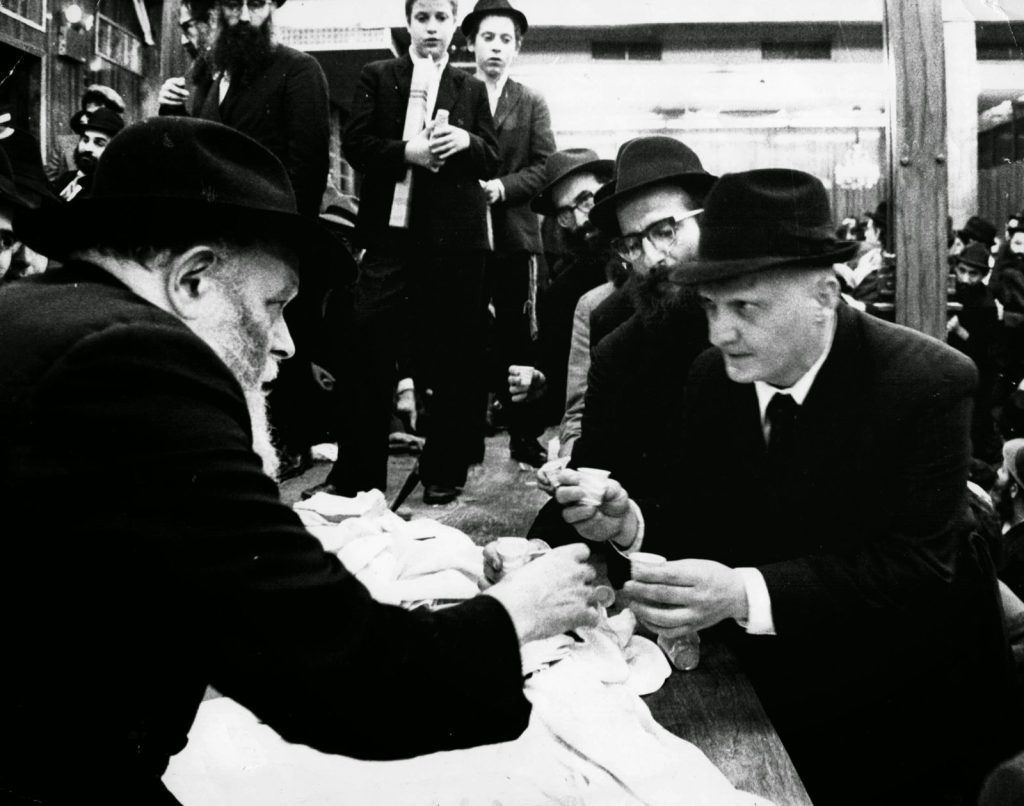
Rabbi Leibel Groner handed him an empty cup, and the Rebbe poured mashke into it from the bottle in his hand, and said “L’chaim.” R’ Berel answered “L’chaim,” but from sheer excitement he tilted the cup before bringing it fully to his mouth, and the entire drink spilled… The Rebbe smiled broadly, took the bottle in his hand, and filled the cup for him again. R’ Berel said “L’chaim” once more and drank from the cup. Afterward, the Rebbe gave him a bottle of mashke and said: “Since you are the shliach tzibbur, take this bottle and share it among those who came here with you.”
At that farbrengen, R’ Berel felt he was sitting in a place he had not dreamed of a year earlier. He tried to focus on every detail, so as not to miss anything.
“When Zaltzman Davened, the Walls Cried”
After the farbrengen, R’ Berel sensed that something was brewing among the bachurim. From their glances toward him, he understood it concerned him. When he inquired what the commotion was about, it turned out that indeed a storm was brewing: the bachurim had heard that the Rebbe had crowned him with the title “shliach tzibbur,” and decided that the Rebbe wanted him to be chazzan on the Yomim Noraim as well. And since Rosh Hashana would fall the following Monday, he should lead Mussaf on Rosh Hashana.
The Rosh Hashana prayers had long-standing traditions—certain baalei tefilla had held the same roles, year after year, for Mussaf on each day. When the bachurim raised the question of who should lead the davening, they brought it to the Mara D’asra, who decided a lottery should settle it. The lot determined that R’ Berel would lead Mussaf on the first day of Rosh Hashana—meaning the baal tefilla who had held that role for years, davening for many years in the Rebbe’s presence, had to give up his chazaka.
On Sunday, erev Rosh Hashana, the tamim Sholom Duchman told him: since you’ll be davening on Rosh Hashana before the Rebbe, you need to look the part. R’ Berel had arrived to the Rebbe dressed as they did in Russia—a simple suit, a gray plastic hat, and a black shoelace instead of a gartel. Duchman took him to a store and bought him a sirtuk, a gartel, and a black hat, so he would look like a proper Chassid.
The next day, preparing for Mussaf, R’ Berel was greatly excited and tense but relatively calmer than on Shabbos. He had already experienced his first “test by fire” at Mussaf on Shabbos. He approached the amud near the Rebbe’s place, and davened in the original nusach of the Yomim Noraim as he had learned from his father, who had heard the tefillos from R’ Yechiel the chazzan, who davened on the Yomim Noraim in the presence of the Rebbe Rashab in Lubavitch.
Though he had seventeen years of experience with the tefillos of the Yomim Noraim in the underground in Samarkand, he felt that davening in the Rebbe’s presence was completely different both in the clarity of his voice and in the warmth and emotion. After the davening, when he stepped away from the amud, he understood from the crowd’s reactions that his davening had pleased them greatly. People said: not only did people cry—even the walls cried. The Algemeiner Journal even published an article about it (by the Rebbe’s instruction to the editor, R’ Gershon Ber Jacobson), under the headline: “When Zaltzman Prayed—The Walls Cried.”
He davened with warmth and emotion, but it seems the crowd’s excitement stemmed mainly from something else. Many years had passed since most of Anash had left Russia in 1946, and the few who remained behind were left without any educational framework, under persecution. And now, suddenly, Chassidim arrived from there whom no one had dreamed of—and not only were they whole in their Yiddishkeit, but from there had also emerged such a chazzan and baal tefilla, capable of touching the strings of their souls with an authentic, heartfelt Chassidic tefilla.
To be continued
Beis Moshiach #1516 • י״ז מנחם אב תשפ״ו • pp. 10-19
© 2026 Beis Moshiach Magazine. All rights reserved.
This article originally appeared in Beis Moshiach #1516. You are welcome to share it with friends and family by email or in print, provided that you do not change, add to or omit any part of it, you credit the author and Beis Moshiach, and you include a link to archive.bmoshiach.org (written out in full in printed copies).
To republish this article in a newspaper, magazine, book or website, please request permission in advance at [email protected].