Kislev Is Here, Make Room!
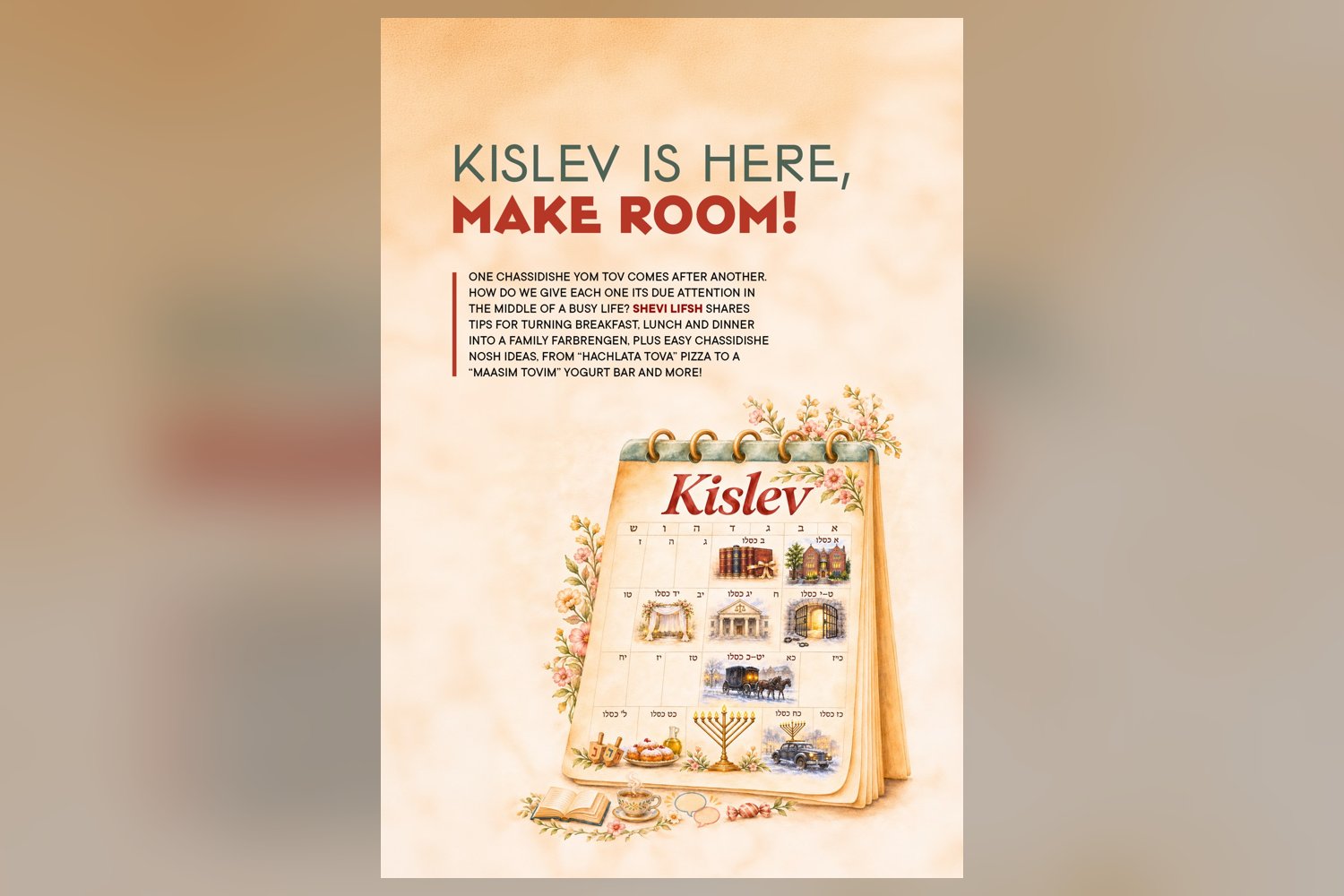
One chassidishe yom tov comes after another. How do we give each one its due attention in the middle of a busy life? Shevi Lifsh shares tips for turning breakfast, lunch and dinner into a family farbrengen, plus easy chassidishe nosh ideas, from “Hachlata Tova” pizza to a “Maasim Tovim” yogurt bar and more!
Kislev is here, and with it a special spirit of uplift fills our homes. The month of Geula, the most Chassidishe month of the year, is packed with dates, each one a world unto itself: Rosh Chodesh Kislev, Tes and Yud Kislev, Yud-Dalet Kislev, and the Yom Tov of yomim tovim, Yud-Tes Kislev.
As Chassidishe mothers, we want to celebrate, to be uplifted, to sit at long farbrengens and soak up all this light. But we have so much to do. The laundry is piling up, the kids need attention, the baby is crying, and the house has to keep running. That gap can be frustrating. How do we celebrate, and give every Chassidishe Yom Tov its due, in the middle of a busy routine?
The secret is realizing that we aren’t supposed to be event planners. No one expects us to spend hours in the kitchen or turn the house upside down. All we need to do is take the things we already do every day and fill them with meaning, attention, and the story of the Yom Tov. To do it right, we’ll divide our approach in two: general tips for the whole month, and specific ideas for each date.
General Tips for All of Kislev
A few words and a sweet snack for the road. In the morning, as you button the kids’ white shirts, tell them one short, to-the-point sentence about what today is. When they’re ready and you send them off to gan or school, give them something small and tasty for the way: a candy, a special cookie, or a snack. That treat, along with the short explanation, sends them off with Chassidishe pride. When the teacher asks the class, “Who knows what day it is today?” your child will have the answer ready. He’s bringing something from home.
A farbrengen of listening. When we picture a family farbrengen, we often imagine ourselves, the parents, delivering messages and speeches. But a truly good farbrengen is built on listening. Let the kids share. Ask them regularly, “What program did you have today? What story did the teacher tell about the Yom Tov?” Once we pass them the baton and really listen, with curiosity and an open heart, they become active partners. This tip works for every special day of the year. Our children are channels of light coming home from their schools, and our job is simply to give them the stage.
A relaxed farbrengen and an upgraded bedtime story. Breaking routine doesn’t have to mean sitting formally around a table laden with food. Sometimes the most moving farbrengen happens on the couch, with a cup of tea or hot cocoa. A relaxed atmosphere, even in morning clothes or pajamas, opens hearts amazingly and lets the conversation flow. The same goes for the usual bedtime story. On the evening of a Yom Tov, set the regular books aside and tell a story about the day, one that brings its holiness into the children’s minds right before they close their eyes, and maybe even into their dreams.
A hachlata tova (good resolution). Every special day in Kislev is a chance for the family to pause together and take on a hachlata tova. This works for every Yom Tov: ask the kids where we can grow as a family, and take on something small, realistic, and doable that will stay with us going forward.
Encouraging each other to go to farbrengens. When Mommy encourages Tatty (and vice versa) to go out to farbrengens, the kids see it, and that gesture shows them how precious and important a Chassidishe farbrengen really is.
When we run the days of Kislev with this outlook, we discover that Chassidus doesn’t compete with the home. It is the home. Through a little guidance in the morning, the responsibility we give our children, and our quiet listening at the end of the day, we turn our small living room into a shining point of Chassidishe light.
Day by Day
Rosh Chodesh Kislev: Joy, Thanks, and a Break from Routine
The day the Rebbe shlita, after his recovery, left 770 and went home for the first time is a day of thanks and boundless joy. You could call it the Geula of the seventh generation. Simcha is the foundation of everything in a Chassidishe family. In 770, the Chassidim broke into spirited dancing and tremendous joy, and we can bring that joy into our homes too.
In the afternoon, move the table in the living room aside a bit, put on some happy music, and just dance together for a few minutes. Moving the furniture and dancing freely tells the kids that something different and joyful is happening at home today, and makes the great Chassidishe simcha a living part of our routine.
Tes and Yud Kislev: The Mitteler Rebbe’s Birthday and Geulah
Tes Kislev is the Mitteler Rebbe’s birthday and yom hilula, and Yud Kislev is his Chag HaGeula.
How do you bring the story of the Mitteler Rebbe’s imprisonment and release to life for children? Make them the actors. Suggest that in the afternoon they prepare a short play before the meal, about the arrest and release, or any Chassidishe theme connected to mesirus nefesh. They can dig through the costume box, improvise props, and assign roles. You can even work a dance into the play. When it’s ready, everyone sits down to watch. The kids channel their energy into something positive, learn Chassidishe history through play, and help create a family moment that brings everyone closer.
Yud-Dalet Kislev: “The Day That Bound Me to You”
The wedding anniversary of the Rebbe and Rebbetzin is a Yom Tov of home, of marriage, and of the Chassidishe family.
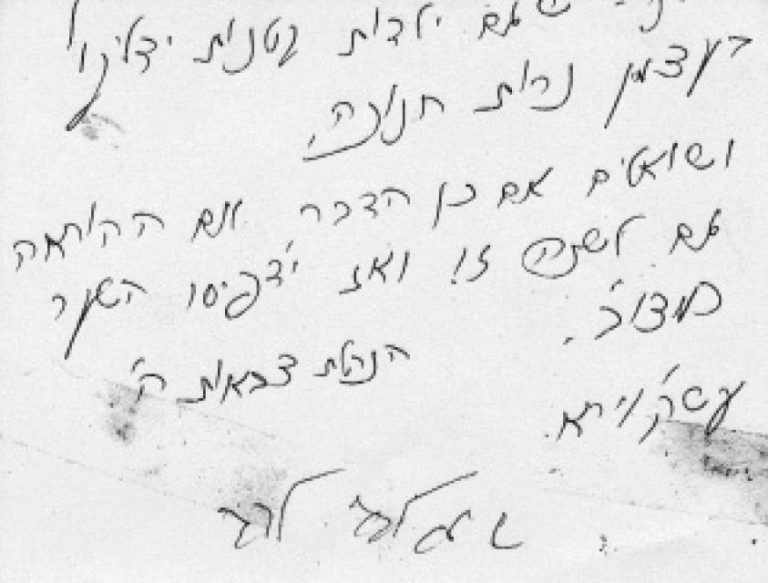
The wedding album and a joint letter. Children are always fascinated by old photos. Take out your wedding album, look through it together, and tell them how on this day the Rebbe and Rebbetzin built the home that belongs to all of us, and that’s how our own home came to be. It’s the perfect time for everyone, big and small, to sit together and write a letter to the Rebbe. Each person contributes good news of their own, a success in learning or a hachlata tova, and you can present it as an “anniversary gift.” This is the day that bound the Rebbe to us, and this is how we bind ourselves back.
Yud-Tes Kislev: The Yom Tov of Yomim Tovim, Rosh Hashana of Chassidus
This central day calls for the biggest stage of all, and to be celebrated like a real yom tov.
Make room for what they bring home. Before Yud-Tes Kislev, the kids come home with a pile of crafts, farbrengen booklets, and carefully made worksheets from gan and school. Instead of letting them get tossed on the couch and lost in the mess, let’s give them a place. Clear the table, sit down with your child, and go through what he brought. When we treat these activities as important, we strengthen the child’s Yom Tov experience and show him that his yom tov is ours too.
Tanya Baal Peh campaign. Rosh Hashana of Chassidus is the perfect time to launch a small, sweet family campaign of memorizing Tanya. Choose a line, a section, or a paragraph and learn it by heart with the kids. It gets engraved in their minds and becomes an asset for life. I’ll never forget the campaign to memorize Chapter 37, the chapter about Moshiach, when I was very young. The page of Tanya was printed large on the kitchen door, and we simply stood in front of it and memorized. Of course, that chapter is still engraved in me today, and over the years it has won me prizes in other campaigns too.
A joint farbrengen with friends. If you don’t have enough time to organize an elaborate family farbrengen where both parents can sit back and relax, or if your older children need a more special atmosphere, you don’t have to farbreng alone. Talk to a sister or a good friend and set up a joint farbrengen. You can split the dates: one Yom Tov at my house, one at yours. Sharing the load makes the preparations much easier, and turns the farbrengen into a bigger, livelier, more festive event for the kids.
Easy, Winning Nosh for Farbrengens (with a Chassidishe Twist)
1. Chassidishe fruit skewers: Colorful skewers of grapes, mango, banana and the like. (For very young children, a string of ring-shaped snacks and pretzels is safer.) The kids assemble them themselves, but to add a piece of fruit, they have to answer a question or a Chassidishe riddle about the day.
2. Veggie platter with placemats: A platter of vegetables cut into fun shapes, with dips. Each plate sits on a placemat with a short Chassidishe story, food for thought, and questions to spark family conversation during the farbrengen. (Easy to design with AI and print.)
3. Hachlata Tova Pizza: Hot pizza slices (store-bought or homemade), each with a toothpick and a decorated note stuck in the middle. Every note has an idea for a small, doable hachlata tova.
4. “Maasim Tovim” yogurt bar: Individual yogurt cups with bowls of toppings (granola, chocolate chips, fruit). Each topping stands for a different Chassidishe practice. Add a small note to each bowl (for example: chocolate = the sweetness of Chassidus; granola = something steady and strong), and the kids make their own combination while sharing a story they heard that day.
5. Hot cocoa and heart-to-heart talks: Hot cocoa in festive mugs with cookies. Under each mug, a paper “coaster” with a personal sharing question (like: “Which Chassidishe trait would you like to take on?”).
6. Tortilla roll-ups and a chassidishe story: Rolled tortillas, or wraps, big or small, or laffas, with spreads. Wrap each roll-up in paper printed with a story, a great chance to tell a Chassidishe story of arrest and release, and to talk about how events can “roll over” for the good.
7. Family baking with missions: Make chocolate balls or a biscuit cake with the kids. Each ingredient goes into the bowl only after a Chassidishe mission is completed: saying l’chaim, singing a stanza of a niggun, or sharing a short Chassidishe story.
8. Pancakes: A plate of mini pancakes stacked like a tower, with maple or chocolate syrup.
9. Decorated cake: A simple cake (even a few store-bought loaf cakes) topped with printed edible paper in a design that matches the day.
10. Open snack bags on plates: Let’s be honest, this is what kids love most at a farbrengen. It comes with a gentle reminder that real Chassidishe simcha and simplicity go hand in hand. You don’t need a huge production to be uplifted, celebrate with a happy heart, and bring the Geula now!
Beis Moshiach #1531 • 10 Kislev 5787 • י׳ כסלו תשפ״ז • pp. 48-51
© 2026 Beis Moshiach Magazine. All rights reserved.
This article originally appeared in Beis Moshiach #1531. You are welcome to share it with friends and family by email or in print, provided that you do not change, add to or omit any part of it, you credit the author and Beis Moshiach, and you include a link to archive.bmoshiach.org (written out in full in printed copies).
To republish this article in a newspaper, magazine, book or website, please request permission in advance at [email protected].