Reb Simcha Zissel Is Looking for a Rebbe…
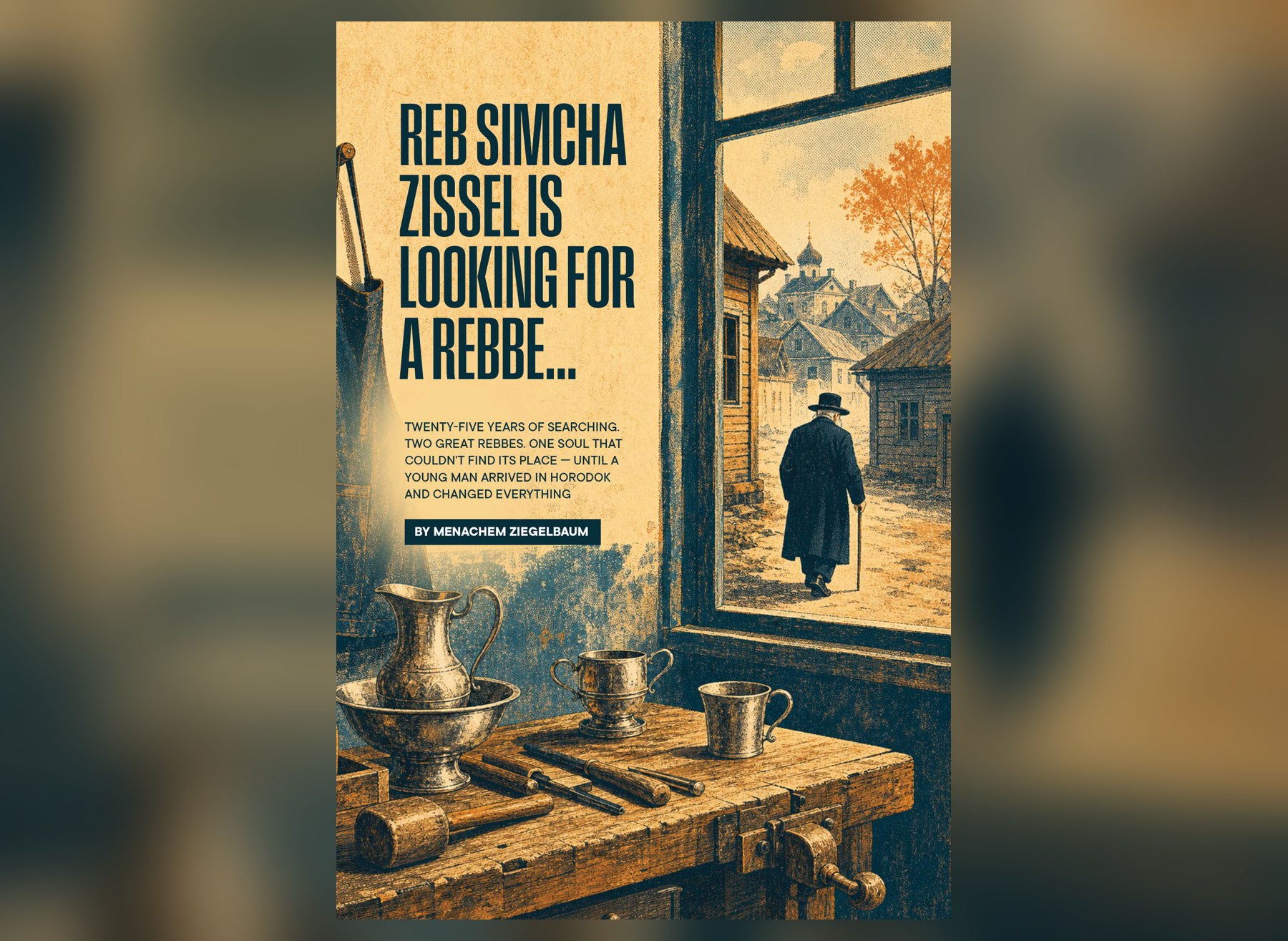
Twenty-five years of searching. Two great Rebbes. One soul that couldn’t find its place – until a young man arrived in Horodok and changed everything
I
Reb Simcha Zissel was a simple and wholehearted Chassid prone to enthusiasm, warm-tempered, and not of particularly great intellect. He did not stand out among the Chassidim of the Tzaddik Rabbi Menachem Mendel of Vitebsk.
For a certain period, Reb Simcha Zissel was among the devoted Chassidim of Rabbi Avrohom of Kalisk. These Chassidim conducted themselves according to the dictates of heartfelt emotion and the nullification of the self, to the point of humiliating themselves in the public streets. Part of their service of Hashem involved external physical movements that occupied a prominent place in their practice.
In time, these Chassidim began to conduct themselves in an exaggerated manner, and these behaviors reached their peak in the summer of 5530/1770. This gave the Misnagdim an opening, and they immediately pounced on the opportunity, proclaiming that the Chassidim intended to establish new mitzvos in the Jewish religion.
When the Maggid of Mezeritch and his leading disciples learned of this, they decided to issue a stern warning that such behavior must cease. The Maggid was well known for his exacting demands regarding orderly discipline and proper Chassidic conduct.
From that point on, the Tzaddik Rabbi Avrohom of Kalisk ceased to engage in guiding Chassidim. He himself attached to the Tzaddik Rabbi Menachem Mendel of Vitebsk, who was living at that time in Horodok, the city where Rabbi Avrohom also resided.
With the dissolution of Rabbi Avrohom of Kalisk’s community, Reb Simcha Zissel was left confused and disoriented. Together with his companions, he attached himself to Rabbi Menachem Mendel of Vitebsk, however, Rabbi Menachem Mendel followed a different path and system in Chassidus. He held to avodas ha’mochin (intellectual divine service) without displays of outward enthusiasm. His Torah teachings were profound, nearly without explanation, and his following was therefore small. It is no wonder, then, that Reb Simcha Zissel struggled to accustom himself to this new path in serving Hashem. He found it difficult to bridge the extreme difference between the world of emotion and the world of intellect; between a world that was calculated and one that was comprised of uncompromising bittul.
II
Each morning Reb Simcha Zissel would go out to his workshop, where he practiced the trades of locksmithing and tin-working. He had skilled hands and was a craftsman of considerable stature. Many commissioned new tools from him, and old ones were brought to him for repair; he always greeted every person in a friendly manner.
His bright countenance did not betray the pain in his heart. For many years he had been married to his wife Chava, yet they had no children. On several occasions he had received the brachos of Rabbi Avrohom of Kalisk and Rabbi Menachem Mendel of Vitebsk; they themselves had even mentioned him before the Maggid of Mezeritch – yet it was as though the gates of heaven were sealed before him. The years passed and his sorrow only deepened.
Being a man of cheerful nature, he could easily conceal the pain of his heart — but the grief of his wife Chava was unbearable. Alongside her bitter weeping, she multiplied her good deeds: assisting poor women in childbirth, helping orphans and the sick, and distributing generous sums to tzedaka, all in the hope of hastening her personal salvation. Yet it seemed as though a decree had been sealed, and the gates of heaven were shut before them.
After the passing of the Maggid of Mezeritch and his son “the Malach” Rabbi Avrohom, Rabbi Shneur Zalman began visiting Horodok more frequently, to spend time in the company of his dear friend Rabbi Menachem Mendel, with whom he had sat on the benches of the Mezeritch Beis Medrash.
During these visits to Horodok, Reb Simcha Zissel first became acquainted with Rabbi Shneur Zalman, who was then a young man. Since Reb Simcha Zissel was in a low state – both because he had no clear path in avodas Hashem and because he had not been blessed with children – he was quickly captivated by the charm and radiance of Reb Zalman’yu, and he invited him to lodge at his home, even setting aside a suitable room for that purpose.
The Alter Rebbe agreed to his request, and from then on, each time he visited Horodok, he would stay in the home of Reb Simcha Zissel.
The bond between the two grew ever stronger. Reb Simcha Zissel would share with his wife the treasure he had found, telling her at length of the praises of Reb Zalman’yu, the Maggid of Liozna, and how the Maggid of Mezeritch had chosen him to compose the Shulchan Aruch.
Chava needed no more convincing than that and she began to implore the Alter Rebbe to bless them with zera shel kayama. The young Rabbi Shneur Zalman, for his part, advised her to go to Rabbi Menachem Mendel and request his bracha but she, seasoned by experience and suffering, burst into tears and begged him to have pity and compassion on her.
Reb Simcha Zissel, who had devotedly observed the hidden ways of the Alter Rebbe in his avodas Hashem, understood that a great Tzaddik stood before him, and he attached himself to him with all his heart and soul.
Through the Alter Rebbe’s wondrous explanations in Chassidus, he succeeded for the first time in understanding the profound Torah teachings of Rabbi Menachem Mendel of Vitebsk. On that day, there was no one happier than he.
Gradually, a resolve formed in Reb Simcha Zissel’s heart to attach himself to the Alter Rebbe and be counted among his Chassidim. This decision matured over a long period during which the Alter Rebbe was absent from Horodok, and Reb Simcha Zissel’s longing for him was great. He understood that this was no minor affection or attachment, but a deep and lofty feeling of the soul.
Reb Simcha Zissel knew what a Rebbe was and how a Chassid ought to be. He also understood that before taking such a step, he must first seek the permission of Rabbi Menachem Mendel, so as not to arouse his displeasure. After long and careful preparation, he entered the holy presence and stood before the luminous face of Rabbi Menachem Mendel. It was a fateful moment in his life.
Before his mind’s eye passed the twenty-five years he had spent in the world of the Chassidic movement, first bound to Rabbi Avrohom, and afterward to Rabbi Menachem Mendel. He felt lost, having not had a single good week in the six years since attaching himself to Rabbi Menachem Mendel. He had not understood the Torah teachings and had not grasped the manner of intellectual divine service. He felt as though he were being flung about in a spiritual slingshot, finding no rest for his soul.
A paralyzing fear gripped him as he stood trembling before the probing gaze of Rabbi Menachem Mendel. What would he say to the Tzaddik? That he found no meaning in his manner of conduct? That his heart was drawn specifically to his colleague-talmid Zalman’yu?
The anguish in his heart constricted Reb Simcha Zissel’s throat and suddenly everything burst forth in a bitter, sweeping torrent of tears.
Reb Simcha Zissel stood and wept as he had never wept before. The Tzaddik Rabbi Menachem Mendel waited for him patiently, gazing at him with gentle eyes.
At a certain moment, Reb Simcha Zissel composed himself somewhat and began to pour out the anguish that had taken root in him over so many years. He revealed the innermost secrets of his heart, omitting no detail – as though placing himself for a thorough cleansing in the faithful hands of the Tzaddik.
He spoke of the rupture caused by the dissolution of Rabbi Avrohom’s movement; he dwelt at length on his difficulties integrating among Rabbi Menachem Mendel’s Chassidim; he unburdened the bitterness of his heart regarding the absence of children. He spoke too, of the new light he had recently discovered upon meeting the young scholar Rabbi Shneur Zalman, and the new chayus he received from him.
Then suddenly he gathered his courage and cast these fateful words into the air:
“I feel that my path is through the guidance of Reb Zalman’yu. I therefore wish to receive our Rebbe’s counsel, and if he agrees, then let him grant me his holy bracha that I may succeed in this new path, through the Creator’s mercy upon me and upon my soul…”
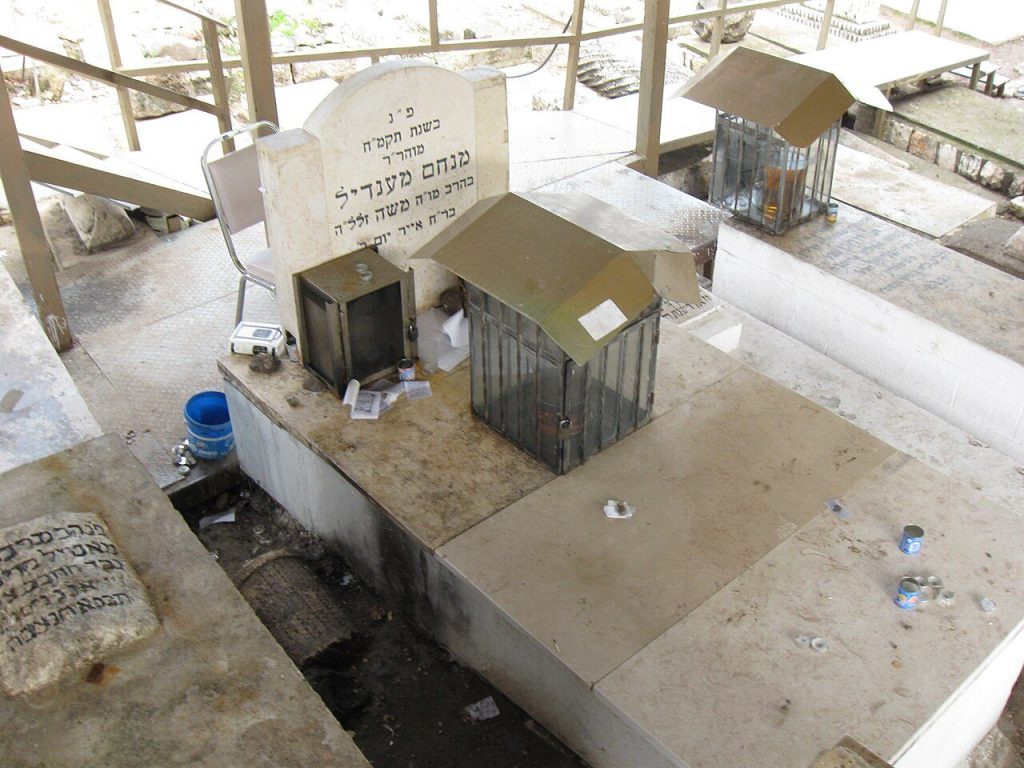
The face of Rabbi Menachem Mendel of Vitebsk remained pleasant and warm. He leaned forward, as if wishing to draw even closer to the broken soul of the Chassid standing before him. His voice was soft and gentle:
“Simcha Zissel, know that we have all received Torah from one single source, yet the remedy must be suited to the soul of each individual, specifically through a particular remedy and specifically through a particular person. Go to Liozna in peace, be truly attached, and Hashem will grant you happiness…”
III
Reb Simcha Zissel’s son, Rabbi Mordechai of Horodok, later became one of the distinguished young scholars who basked in the shadow of the Alter Rebbe. Already at the age of 18–19, shortly after his marriage, he went for the first time to the Alter Rebbe, and from then on was among his most devoted Chassidim. He was also a man of distinction and prominence among the Chassidim of the Mitteler Rebbe, and was celebrated among the elder Chassidim of the Tzemach Tzedek. ■
(Adapted from a letter of the Rebbe Rayatz to his daughter the Rebbetzin Chaya Mushka a’h, dated the 16th of Shevat, 5695. Note: Only a portion of the story has been presented here; the Rebbe Rayatz’s letter continues.)
Beis Moshiach #1505 • pp. 32-35
© 2026 Beis Moshiach Magazine. All rights reserved.
This article originally appeared in Beis Moshiach #1505. You are welcome to share it with friends and family by email or in print, provided that you do not change, add to or omit any part of it, you credit the author and Beis Moshiach, and you include a link to archive.bmoshiach.org (written out in full in printed copies).
To republish this article in a newspaper, magazine, book or website, please request permission in advance at [email protected].