The Rebbe In The White House
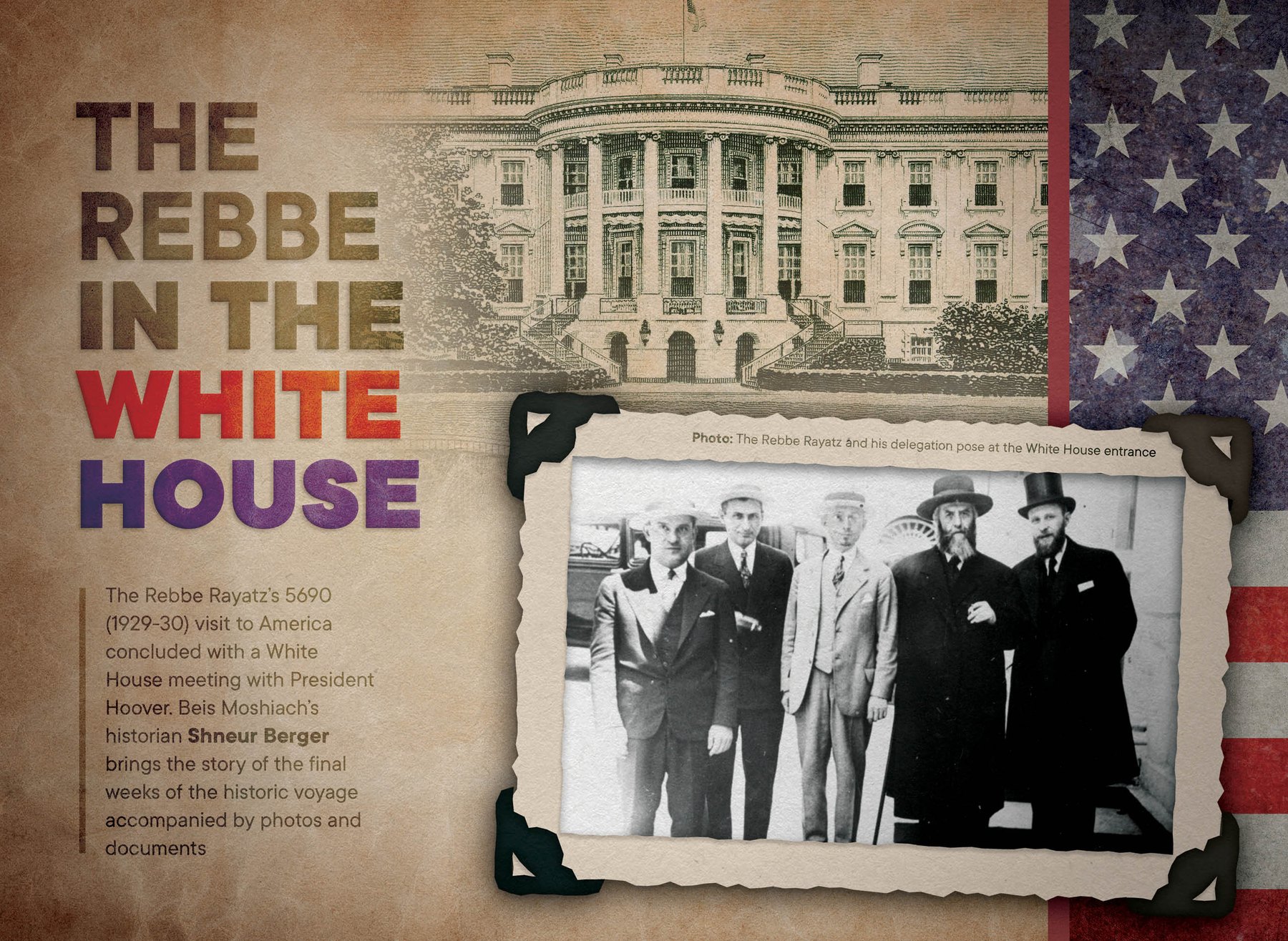
The Rebbe Rayatz’s 5690 (1929-30) visit to America concluded with a White House meeting with President Hoover. Beis Moshiach’s historian Shneur Berger brings the story of the final weeks of the historic voyage accompanied by photos and documents
The Rebbe and the President
Throughout his months-long visit to the United States eighty years ago, the Rebbe Rayatz stayed in numerous locations, met with hundred of dignitaries, and had direct contact with thousands of American Jews, who despite the coldness of America, wanted to see and get an up-close impression of the Rebbe, who had come from faraway Europe.
The Rebbe’s visit to the United States was reaching its conclusion, but there was still one very important stop left – Washington, D.C. The Rebbe Rayatz left New York en route to the White House for a meeting with the President of the United States to thank him for his tremendous help and assistance to the Jews of the Soviet Union. The Rebbe came to Washington accompanied by his son-in-law, the Rashag, and several prominent Chabad askanim in the United States.
The connection with the President of the United States was extremely important because of the numerous opportunities available to the President for pressuring the U.S.S.R. to improve the conditions for the Jews living within her borders. At the very beginning of the Rebbe’s visit, Rabbi Mordechai Dubin – member of the Latvian Parliament and an outstanding Lubavitcher chassid – arrived in the United States for meetings with government officials, foremost among them President Herbert Clark Hoover, in a meeting that received considerable coverage throughout the print media in those days.
Rabbi Dubin worked in Washington for the benefit of Russian Jews. His primary achievement was that he arranged that Soviet Jews should be able to obtain US visas in Latvia on their way to America. His meeting with President Hoover also dealt with Russian Jewry, and while the content of this part of the meeting was not made public, the courteous and diplomatic discussions regarding the nation of Latvia were disclosed in great detail. The President told his honored guest that just as he had been a friend of Latvia up until now, he would continue this friendship in the future. For his part, as a member of the Latvian Parliament, Rabbi Dubin thanked President Hoover for the tremendous assistance that the United States provided to Latvia.
Rabbi Dubin’s meeting with the American President was scheduled for the start of the Rebbe’s visit to the United States, while the Rebbe himself came to the nation’s capital towards the end of the visit.
The Rebbe boarded a train en route to Washington on the night of the 14th of Tammuz, after midnight. He was accompanied by his son-in-law, Rabbi Shmaryahu Gurary, Agudas Chassidei Chabad chairman Rabbi Chaim Zalman Kramer, and Attorney Asher Rabinowitz.
The Rebbe arrived in Washington at seven in the morning, and later that Thursday afternoon, the Rebbe Rayatz came to the White House. President Herbert Hoover greeted him with great honor and respect. The Rebbe thanked the President for the freedoms that America gives to its Jewish citizens and for the genuine concern expressed by the Government of the United States for the need to improve conditions of Jews in Russia and other countries throughout the world.
The visit received much publicity in the American newspapers and aroused widespread attention.
After concluding his visit to Washington, the Rebbe returned to New York.
Chag Ha’geula in New York
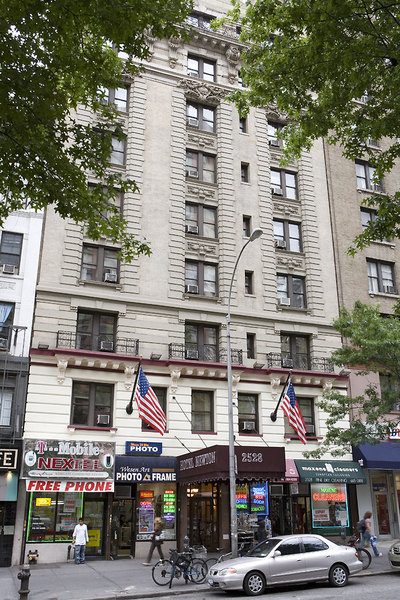
At the start of his visit, the Rebbe Rayatz stayed in New York for a relatively lengthy period of time, and only afterwards did he set out on his journey to strengthen Yiddishkeit in other cities throughout the country. Towards the end of the visit, he stayed in New York again for a few weeks, save for his brief trip to Washington, until his departure on the 22nd of Tammuz. During this time, he lodged at the Hotel Newton in Manhattan.
The highlight of this stay came during the Holiday of Redemption, Yud-Beis and Yud-Gimmel Tammuz. The story of the Rebbe’s imprisonment was still fresh in everyone’s mind, as it had only been three years since it had all happened. Together with the material preparations in organizing this great farbrengen, there were spiritual preparations as well: The Rebbe printed a special kuntrus of Maamarim in honor of the Chag HaGeula.
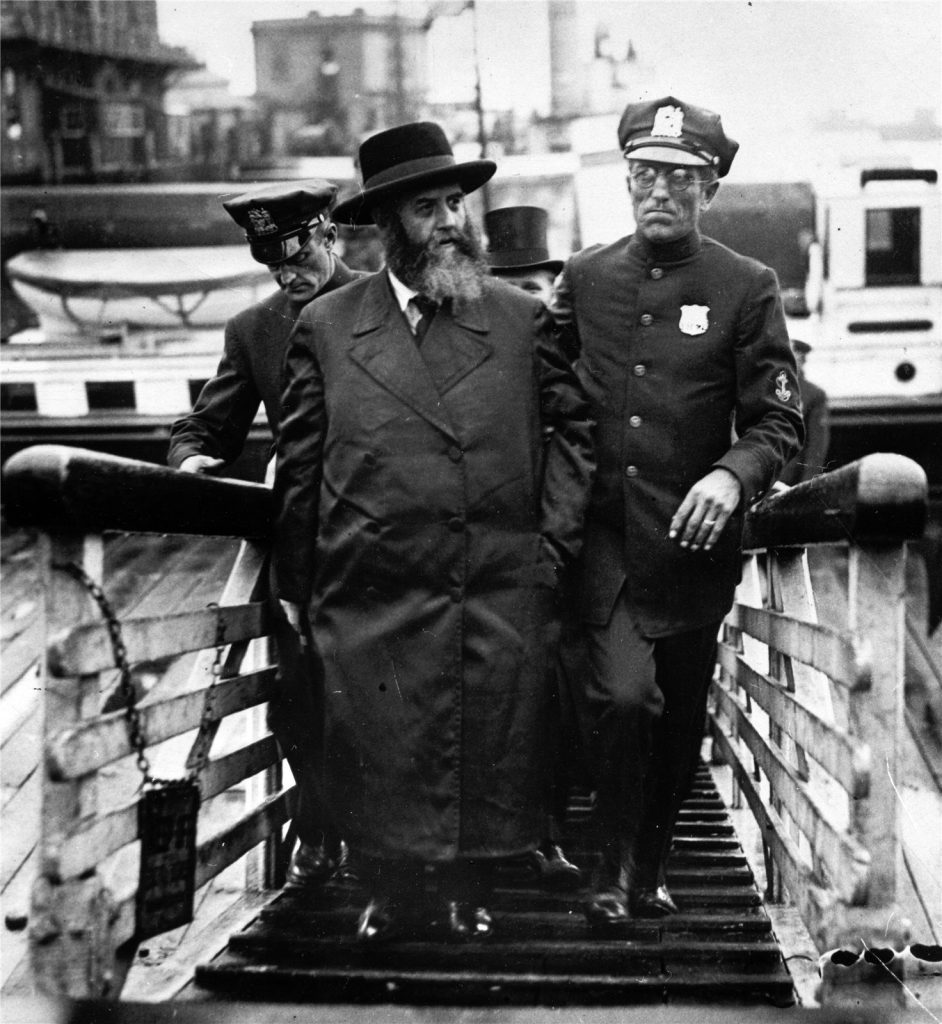
The kuntrus was called “Drushim For Public Study on the Days of Chag HaGeula, Yud-Beis and Yud-Gimmel Tammuz,” and contained three Maamarim from the Rebbe Rayatz: “Kol Ha’maarich B’Echad,” “Karov Hashem L’chol Korav,” and “Rabba Chazyei L’Rav Hamnuna.”
The Yud-Beis Tammuz farbrengen was celebrated with great pomp and splendor, as the Rebbe presided over a large assemblage at the Hotel Newton. In practical terms, this farbrengen also constituted a tzeischem l’shalom gathering prior to the Rebbe’s departure from America and his return to Europe.
As mentioned above, the Rebbe traveled on Motzoei Yud-Gimmel Tammuz to Washington, D.C., where he remained for only one day. He returned to New York on Friday, the 15th of Tammuz. Lubavitcher Chassidim, who knew that the coming Shabbos would be the Rebbe’s last before departing the United States, arrived early at the Hotel Newton where the Rebbe was staying and arranged accommodations there as well.
Chassidim davened the Shabbos tefillos with the Rebbe, and at the conclusion of davening, they all gathered together, made Kiddush on wine, and then waited for an announcement of an impending farbrengen with the Rebbe. However, the Rebbe davened Shacharis until five in the afternoon, and Mincha followed immediately afterwards. The farbrengen began only after Mincha, lasting for about an hour and a half, during which the Rebbe spoke words of rebuke.
In the days that followed, the Rebbe visited the various Jewish communities throughout New York City to give them support and encouragement. On Monday, the 18th of Tammuz, the Rebbe visited the Tzemach Tzedek Synagogue, where he delivered the maamar “Gefen Mi’Mitzrayim Tasia” before a large congregation.
The Material Is Already There
On the eve of his departure from the United States, Wednesday, the 20th of Tammuz, 5690, the Yiddish-language newspaper Der Morgen Journal published a special interview with the Rebbe Rayatz, by the journalist Ben Shlomo. During the interview, the Rebbe Rayatz expressed his opinion on the status of Judaism in the United States and his lengthy visit there.
The headline for the interview was: “‘There Is Great Potential For Yiddishkeit in America,’ Says The Lubavitcher Rebbe Before His Journey To Europe.”
In the interview, the Rebbe emphasized the importance of activities with young people, and how Orthodox Jews must be more organized and work with greater energy. The reporter, Ben Shlomo was very excited by the Rebbe’s strong faith in American Jewry. The newspaper reported that during the Rebbe’s stay, he visited cities throughout the U.S., strengthening not only adults but young people as well, and working in a variety of ways to awaken youth organizations.
During the course of the interview, the Rebbe added that the materials for building the great Jewish structure in the United States are already there, and now they have to erect it. “Those who so desire can make their new home in America, as was their old home overseas.”
The reporter noted that the Rebbe is not only asking for the support of Torah institutions overseas, he also believes that they will build new yeshivos and Jewish centers in America. In response to the reporter’s question, the Rebbe stated that the Yiddish language is the language that unites and strengthens the Jewish People in the Diaspora, and therefore, it is most important to speak Yiddish.
Departure
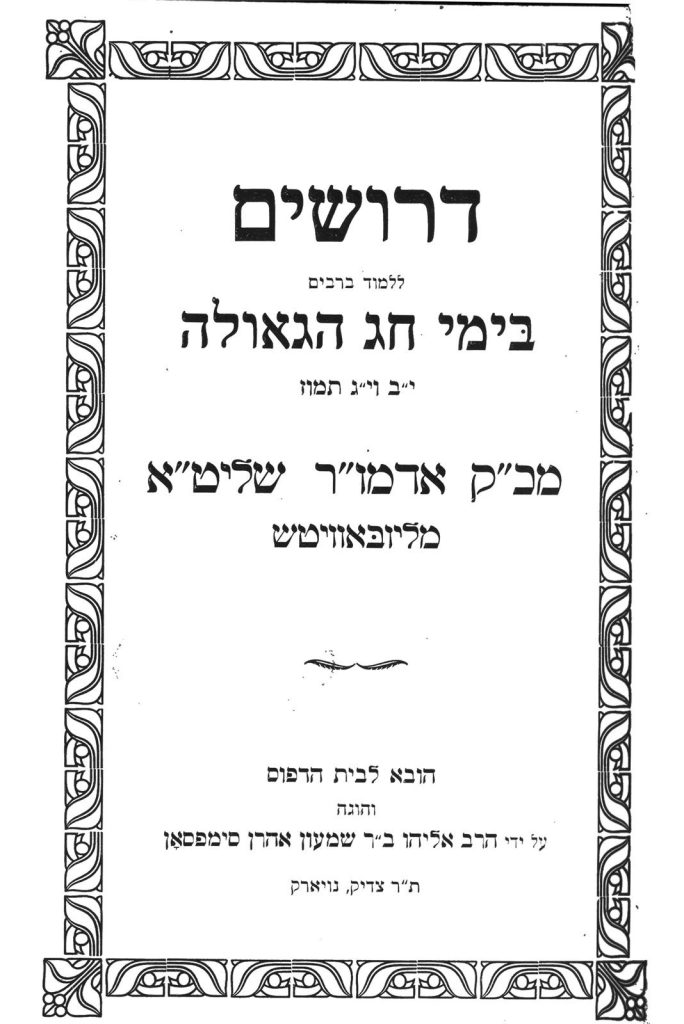
The visit was over. Ten months had passed since the 12th of Elul, 5689, when the Rebbe disembarked from the SS France before the thousands who come to the port to greet him.
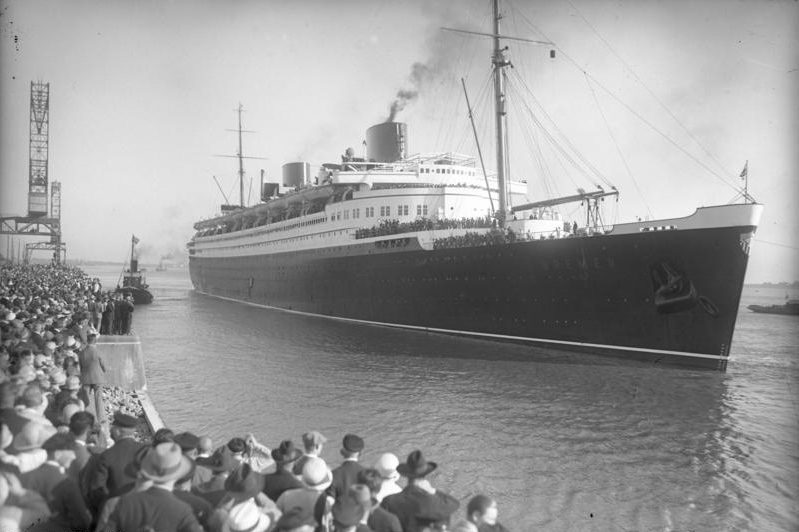
On Thursday, the 21st of Tammuz, 5690, a large crowd filled the square at the port to bid farewell to the Rebbe and his entourage. Special delegations from various American cities and many communities throughout New York City arrived to give the Rebbe a final send-off. The Rebbe spoke before those assembled, blessing them with warm words of encouragement.
At the conclusion of his address, the Rebbe boarded the German ship SS Bremen, setting sail for Berlin.
Upon his arrival in Berlin, he was greeted by his younger son-in-law, the Ramash, and his wife, the Rebbetzin Chaya Mushka, the Rebbe’s daughter.
* * *
The visit was over, but by no means was its impact.
During the visit, there was talk about the possibility of the Rebbe settling in the United States. Even after the visit had been completed, the plan remained viable and it periodically came to the forefront of discussion.
After the Rebbe left the Soviet Union in Tishrei, 5688, he settled in Riga, Latvia. However, this was not on a permanent basis, and the Rebbe was still a wanderer, his official place of residence not yet determined. On his letters from this period of time, there appear the words “Riga-Temporary.” During the ten months he spent in the United States, the possibility of settling in America was explored in depth, and at a certain point, it appeared to be a most practical option.
The discussions apparently began during the Rebbe’s visit to Chicago, where he stayed from Shevat to Nissan, 5690. The stop in Chicago was particularly long, and being so close to the Rebbe for such a lengthy period of time brought the Chassidim to a state of great spiritual awakening. Everyone felt that if the Rebbe would be close to the Chassidim in America, this feeling would merely intensify, and the wellsprings of Chassidus would spread to all cities throughout the country.
The Chassidim in Chicago also understood that it would be difficult for the Rebbe to settle in the United States as long as there was no Lubavitcher yeshiva there, not to mention a large Chabad community in the spirit of “der alter heim”. Despite these problems, the Chassidim in Chicago wanted the Rebbe to stay in America and not return to Europe. Proposals were made to the Rebbe towards the end of his visit to the city.
On Motzoei Shabbos, the night of the 29th of Nissan, there was a tzeischem l’shalom gathering in the Chabad Shaarei Tefilla Bnei Reuven Synagogue. The rav of the shul, Rabbi Chaim Tzvi Rubenstein, who also served as a member of the Agudas Chassidei Chabad administration in the United States, spoke on behalf of a large committee that suggested to the Rebbe that he remain in America or at least return to the States in the very near future:
“Providence has made it necessary for the Rebbe to visit America, which has such a large ingathering of Jews, kein ayin hara, and perhaps this is a sign for the Rebbe’s influence to flow directly to us, without the seas to divide us. We have come to ask the Rebbe to stay in America. We are not saying where the Rebbe should establish his residence; this we will leave to the Rebbe himself. Our desire is that the Rebbe should not return overseas. But if this does not prove possible and the Rebbe must go back to Europe, his journey should be a temporary one, and afterwards the Rebbe should come back to America.”
In reply to the request, the Rebbe Rayatz said that he would consider the matter. However, he immediately explained that he could not even begin to think about it, unless it was understood that his coming also meant the founding of an American branch of Yeshivas Tomchei Tmimim, for without a Chabad yeshiva, he would not come.
Correspondent M. Indritz, in the Chicago based Jewish Courier (Idisher Kuryer), wrote about the offer of the Chassidim, the Rebbe’s response, the subsequent steps, and the overall mood in the 1st of Iyar, 5690, edition of his paper:
“This response now leaves the whole question of the Rebbe coming to America in the hands of Chabad Chassidim. If they know how to rise to the moment, stand united, and work with great vigor to realize their aspiration, then it is by no means unrealistic for America to have the privilege for its distinguished guest to become a permanent resident. But this movement cannot remain a local one; it must take on a national character.
“Local Chabad Chassidim must immediately be in contact with other Chabad Chassidim in America. There are about two hundred and fifty Chabad shuls in the country, with very prominent members. When all these shuls unite and work together, it will be quite easy to establish a Yeshivas Tomchei Tmimim in this country, and maintain it just as easily – let’s say through a certain contribution from each synagogue, according to its size and ability. As for the location of the yeshiva – that’s already a question for a later stage.
“It’s conceivable that it doesn’t necessarily have to be in a large city such as New York or Chicago, rather in a small town, far from the noise and life of the city, in a central location between the East and the Middle West.
“As mentioned, Chabad Chassidim are in a state of yearning. They can’t live with the idea that the Rebbe will remain in Europe, and they want him closer to them. This movement also exists in Milwaukee and other cities along the way where Chabad Chassidim are found. It’s not impossible that even those other cities where the Rebbe visited and has yet to visit will join the movement, and the Rebbe will become a resident of America.
“However, as we have mentioned, the matter depends upon the activities that Chabad Chassidim will implement from now on. The selected body, known as Agudas Anshei Chabad, has already taken a step forward in this direction. Officials have been chosen and members have already been registered. If they continue their work to include all Chabad Chassidim here as members and bring the movement to other cities, wherever there are Chabad Chassidim, and if they work with vigor, their efforts will be successful and great spiritual strength will enrich American Jewry, strength that will contribute much, very much, to the development and strengthening of Orthodoxy in American Jewish life.”
The journalist was present in the synagogue, and put his observations in writing.
At the end of the shul event, at half past ten in the evening, the Rebbe Rayatz returned to his place of lodging. Half an hour later, a delegation of twenty Chassidim arrived at the location with some surprising news. The Rebbe wrote about this in a letter to his wife, the Rebbetzin:
“They told me openly that the Chassidim of Chicago and the surrounding area had become organized, and they asked that I give my consent to establish permanent residence in America. They were also joined by representatives of the misnagdishe groups, who also expressed enthusiastic interest… Their idea of my coming to America indicates their great excitement, and this from people who would not be expected to react in this fashion. They literally spoke with great emotion.”
The Rebbe’s answer to the delegation was short and non-committal, and they left without knowing what the future held in relation to his eventual settling in the United States.
The plans for the Rebbe’s transfer to the U.S. had their ups and downs. Various letters and announcements were passed among Chabad Chassidim in the United States. At a certain stage, a special committee was chosen to accept responsibility for dealing with the matter. Heading the committee were Rabbi Menachem Lokshin and Rabbi Chaim Zalman Kramer, members of the Agudas Chassidei Chabad leadership. They held meetings, sent letters to Chassidim, and even began to collect money to bring the plan to fruition.
About a month before the end of the visit, there was talk that the Rebbe would go back to Riga and then return to the United States shortly thereafter for the purpose of settling there permanently. This is based on a letter from the mashpia, Rabbi Shlomo Zalman Havlin, who was staying in New York at the time, and wrote to his son that the Rebbe Rayatz will return to his home in Riga within a month. “G-d willing, it is his intention to establish his residence in the United States, and he will come back from there with the members of his family.”
In the end, the Rebbe announced that the plans were canceled, and on the 21st of Tammuz, he sailed from America back to Europe.
Some time later, it turned out the plans had not been canceled completely, and there were various attempts to bring about the actual transfer of the court of Lubavitch to the United States. Evidence of this can be found in a letter written by the Rebbe’s secretary, Rabbi Yechezkel Feigin, about a month after the Rebbe’s departure. In this letter, he inquires of Rabbi Yisroel Jacobson from the United States on the subject of the “move”: “Please inform me if something has been done in relation to the move.”
Discussions and proposals began to go into high gear again, and during the month of MarCheshvan, 5691, the committee began to hold meetings on the issue. However, at this same time, it received a letter from the Rebbe categorically rejecting the plan:
“In reply to their suggestion of settling in their country… according to the present situation, nothing basic and organized has been done yet to enable a spiritual and material foundation for this purpose… As of today, I cannot tell you my decision on the matter of your caring and kind proposal to settle permanently in your country.” (Igros Kodesh, Vol. 2, Letter #495).
At the same time, the Rebbe sent personal letters to Chassidic leaders in the United States, clarifying in greater detail the reasons for canceling the plans. In a detailed correspondence to Rabbi Eliyahu Yachil Simpson, he explained that the spiritual considerations are stronger than the material ones, and therefore, he had decided to remain in Europe:
“I cannot consider the notion that this is the Will of G-d, and it is the holy thinking of my saintly and revered father, teacher, and Rebbe, of holy and righteous memory for a blessing of life in the World to Come, his soul rests in the hidden treasurehouses of Heaven, may his merit protect us, that ch”v material necessity will influence the process of soul-related matters that must be determined only from a spiritual viewpoint and outlook.” (ibid., Letter #497).
Yet, even after the explanations, the precise motives for the emigration plan and its cancellation remained shrouded and uncertain to the Chassidim.
One aspect to this matter was revealed only twelve years later, two years after the Rebbe arrived in the United States with the outbreak of the Second World War. During those days, he wrote that it was clear to him that had he remained in America for those ten years, he wouldn’t have suffered, but he couldn’t emigrate to the U.S. until the time came when it was absolutely necessary. And why did he refrain from staying in America back in 5690? The Rebbe specifies this in the following sentences:
“As I have seen in the customs of the country that even innocent people perceive some necessity to being drawn after the assumptions of the world”, and as a result, everyone is drawn after the conduct of the world: “What influence can a rav and shochet exert without a beard and peyos upon his flock – men, women, and children?” (Igros Kodesh Admor HaRayatz, Vol. 6, Letter #1616).
The Results of the Visit
In the articles connected with the Rebbe Rayatz’s historic ten-month visit to America, there were descriptions of festive greetings with thousands of participants, throngs of people going in for yechidus, farbrengens, enlisting assistance on behalf of American Jewry, and meetings with high government officials, foremost among them, the President of the United States.
The visit centered on attaining three primary objectives:
Meeting with and strengthening Lubavitcher Chassidim in the United States – This objective was achieved in the best possible way.
Strengthening American Jewry – The Rebbe succeeded in causing American Jews, their rabbinical leaders, and Jewish public officials to start taking action in various areas for the strengthening of Judaism, besides the direct enthusiasm caused by the Rebbe’s appearance before tens of thousands of Jews in the United States. This objective was also attained with great success.
Raising money for the Jews of the Soviet Union – This objective was achieved in part, but only in small measure. The hope was to raise large sums of money that the Rebbe could use to help provide those downcast Jews living behind the Iron Curtain with matzos and various holy items, and to arouse world Jewry and various influential people to pressure the U.S.S.R. to improve the conditions of its Jewish population. However, due to a variety of reasons, including the harsh economic effects of the Great Depression, the contributions did not come through as anticipated, and large sums of money were not raised. While there were some nice donations, they were not as the Rebbe had hoped.
At the conclusion of the visit, the Rebbe took an assortment of steps to maintain the spirit of re-awakening that started to develop in American cities. Letters were sent to Chassidim and rabbinical figures with whom the Rebbe met during his stay. Not settling just for that, the Rebbe sent his personal emissaries to the United States in order to continue the activities that began with the visit. The emissaries chosen were among the Rebbe’s greatest and most prominent Chassidim: Rabbi Yitzchok Horowitz, may G-d avenge his blood (R’ Itche der Masmid), Rabbi Mordechai Chafetz, may G-d avenge his blood, and Rabbi Shmuel Levitin, of blessed memory. They were sent to take action in a wide range of areas, including the strengthening of Lubavitch institutions, and raising money for the Rebbe’s activities in Europe. The three emissaries toiled with great success and with much encouragement from the Rebbe Rayatz.
Sources: Igros Admor HaRayatz, Sefer HaSichos 5689-5690, Toldos Chabad B’Artzos HaBris, Zicaron L’Bnei Yisroel, Chassid Neeman, HaMashpia (Havlin), Morgen Journal, Forward, Chicago Idisher Kuryer, Beis Moshiach, White House website, Hotel Newton website. “Drushim L’Yud-Beis Tammuz” provided by the archives of Rabbi Benzion Grossman.
Beis Moshiach #1419 • pp. 10-19
© 2026 Beis Moshiach Magazine. All rights reserved.
This article originally appeared in Beis Moshiach #1419. You are welcome to share it with friends and family by email or in print, provided that you do not change, add to or omit any part of it, you credit the author and Beis Moshiach, and you include a link to archive.bmoshiach.org (written out in full in printed copies).
To republish this article in a newspaper, magazine, book or website, please request permission in advance at [email protected].