The Gush Katif Yeshiva Bulldozers Couldn’t Break
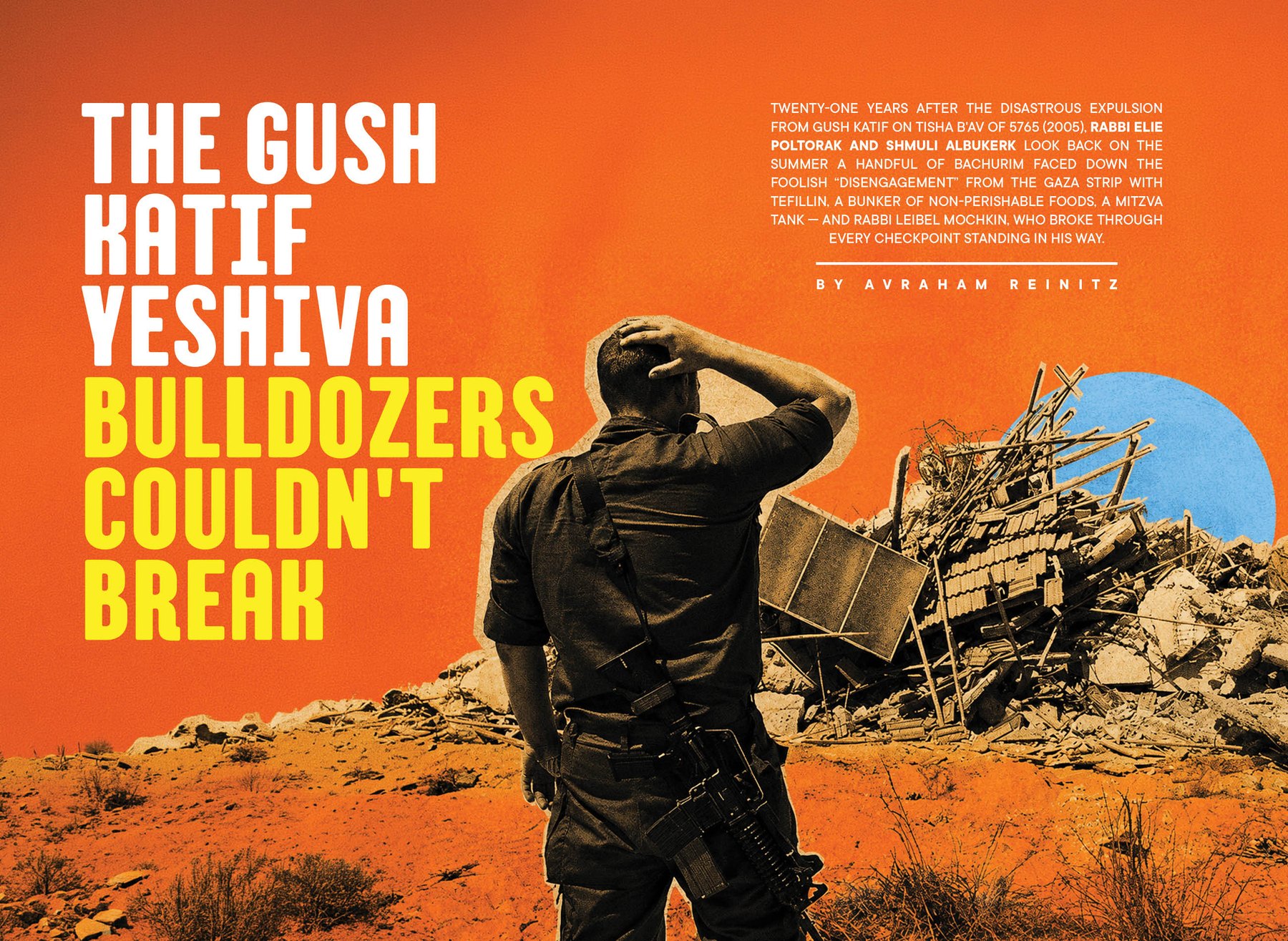
Twenty-one years after the disastrous expulsion from Gush Katif on Tisha B’Av of 5765 (2005), Rabbi Elie Poltorak and Shmuli Albukerk look back on the summer a handful of bachurim faced down the foolish “disengagement” from the Gaza Strip with tefillin, a bunker of non-perishable foods, a mitzva tank – and Rabbi Leibel Mochkin, who broke through every checkpoint standing in his way.
Tisha B’Av, 5765 (2005). Dawn rises over Neve Dekalim, but its light is pale, sickly. This is not the light of a new day, but a final light—a light of parting. The air is heavy, saturated with grief for both an old and a new churban.
Around the building of yeshivas “Tomchei Tmimim,” that island of holiness and Torah study in the heart of the dying Gush, rings of steel close in. Hundreds of soldiers, their faces set, surround the structure. They are not enemies; they are brothers, and that is what makes the scene unbearable.
Through the narrow windows of the reinforced shelter, the tmimim watch, their eyes wide with dread and disbelief, at a surreal scene, a scene out of a nightmare.
Atop a giant, monstrous truck stands a massive steel blade, an enormous cutting disc. The message was clear, cruel, incomprehensible. “They said they would cut the shelter door in half,” recalls Rabbi Elie Poltorak, who served as the rosh yeshiva, his voice still cracking two decades later. “It was clear we would have no way to stop them.”
Inside the fortified shelter sit forty bachurim. Forty hearts beating as one. Ten of them had come straight from Crown Heights, filled with burning faith and a sense of mission. The rest, their Israeli brothers, gathered around them, drawing strength and courage.
Around them, silent testimony to the grand plans: food supplies for several months. Cans, bottles of water, everything that could be stockpiled, purchased for tens of thousands of shekels in preparation for a long siege—a heroic siege that never came.
When the first soldiers arrived at the site, the yeshiva’s dean, R’ Elie Poltorak, was not in the miklat. He was certain that, as in the evacuation of Yamit, the women and children would be evacuated first, and only afterward would they reach those who had chosen to barricade themselves in. In practice, the army decided to act the opposite way, catching them completely by surprise.
Given the number of soldiers and the breaching equipment they brought with them, it was clear that resistance would not delay the expulsion, and would only risk causing a chilul Chabad.
R’ Elie wrote to the Rebbe MH’M about the situation, and received a startling reply (found in volume 5, page 88, in Yiddish), the content of which was: the fact that you find yourself among Jews who do not yet observe Torah and mitzvos—surely you are making an effort to draw them closer to Torah and mitzvos. At first a little, and afterward much more, particularly regarding the mitzva of tefillin. The Rebbe went on to write about soldiers, that every Jewish soldier has protective measures, one of which is putting on tefillin, and when it isn’t possible to put them on in the morning, they can do so at any point during the day.
Then came the astonishing sentence that today can be seen as prophetic: “The accounts of the Almighty cannot be known, and it is possible that this is one of the reasons someone is being held in this place, and when he carries this out, it is possible that he will then return home, with the government’s consent”!
In accordance with the reply he received from the Rebbe, he approached the senior commander. There were no pleas, no despair. There was the strength of a shliach. “Let’s make a deal,” he said, his voice steady. “If all the soldiers here put on tefillin, we won’t fight you.” The commander, perhaps stunned by the unexpected proposal, nodded in agreement. His hand rose in the air, and the order echoed: “Everyone, roll up your sleeves and put on tefillin!”
The bachurim approached the soldiers who, moments later, were supposed to evacuate them, and wound the tefillin straps around their arms. In the moments that followed, something broke. Not the steel door, but the dam of tears. Many of the soldiers burst into uncontrollable weeping, the weeping of a Jewish soul that had, for a moment, touched the truth, and understood the enormity of the rupture.
A Warning That Came True in Fire and Blood
Twenty years. A period long enough to remember, and too short to forget. Today, after the brutal massacre of Simchas Torah 5784, led by the terror organizations from the Gaza Strip against Israel, in which more than a thousand Jews were killed in a single day, the prophetic warnings of the Rebbe about the existential danger of surrendering even one centimeter of the Holy Land, cry out from every headline, every funeral, every story of bereavement and horror.
When US President Donald Trump declares publicly that “I don’t understand why Israel gave up such a beautiful place,” when the whole world is beginning to understand the scale of the strategic folly, and when the horrors of the Black Shabbos of Simchas Torah 5784 made clear, in smoke and blood, the direct and chilling connection between the uprooting and the massacre—everyone understands that it all really began on that dramatic morning in Gush Katif.
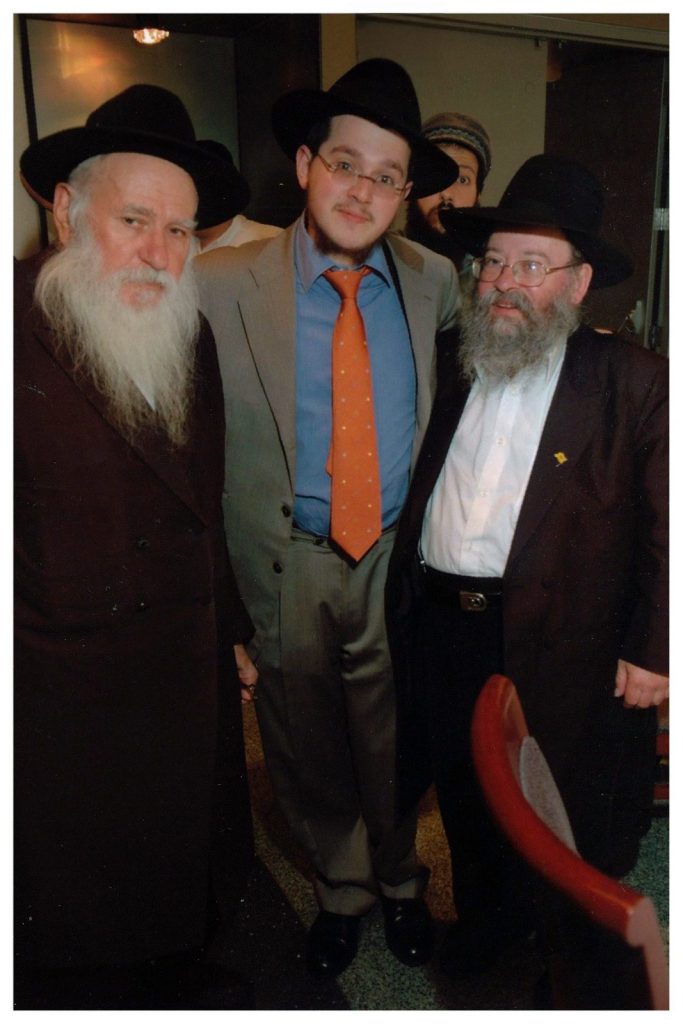
“It was a ‘slow motion train wreck’—a train wreck in slow motion that took twenty years, but it was one hundred percent predictable,” says R’ Elie Poltorak, in an interview with Beis Moshiach. He sits beside Shmuel (Shmuli) , who was then a young bachur at the yeshiva and experienced the whole upheaval firsthand. Both of them return in memory to those days, and their gaze is a mixture of endless sorrow and a spark of eternal faith that never went out.
“Everyone who was there and had straight thinking understood exactly what was about to happen,” R’ Elie continues. “It wasn’t any kind of surprise. We, as Chabad Chassidim, knew, and we warned. We knew this in advance, just as the Rebbe foresaw everything decades earlier.”
“How Can You Sit in Crown Heights and Do Nothing?”
The story does not begin with the expulsion, but with an awakening. A year earlier, 5764. The government of Israel, headed by Ariel Sharon, the man who had been the symbol of the settlement movement, was pushing forward with all its might the expulsion plan that received the sanitized name “Disengagement.”
R’ Poltorak, a lawyer by profession, an enthusiastic Chassid and veteran activist in the struggles for shleimus ha’aretz, felt deep frustration. Months of activity led by Rabbi Kuti Rapp a’h—demonstrations outside the consulate, campaigns, thousands of phone calls to Likud Central Committee members ahead of the referendum—it all seemed like a fruitless effort. “Nothing worked,” he recalls sadly. “We worked hard, we worked with everyone we could. In the Likud referendum there was success, but it was trampled. We felt like we were talking to a wall.”
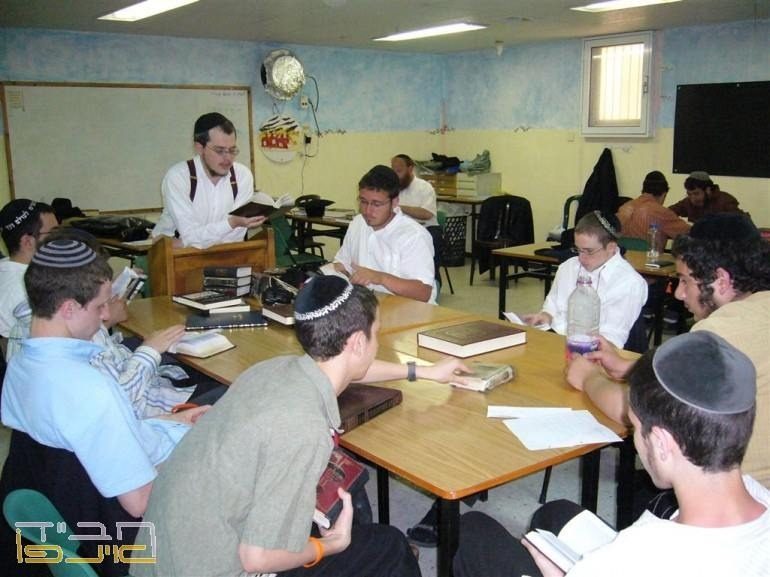
At one of those activist gatherings, the idea was born. No more activity from a distance. No more phone calls and letters. “I decided we simply needed to go there,” he says. “To open a branch of Tomchei Tmimim and spread the light of Torah, to fight in the Rebbe’s way, with the Rebbe’s tools.”
The thought was revolutionary. To leave everything? Their livelihood, the comfort of Crown Heights, and move into the eye of the storm, into a place growing more dangerous by the day? “We wrote to the Rebbe, and received a clear bracha and great encouragement through the Igros Kodesh,” he explains. “From that moment, we knew what we had to do: to establish a Tomchei Tmimim yeshiva there.”
The idea was to establish a lighthouse of Torah, Tefilla, and Geula in the heart of the area slated for destruction. To prove that the answer to despair is not only protest, but adding light. But how do you establish a yeshiva with no budget, overnight? “It was truly a miracle,” Rabbi Poltorak recounts. “We started looking for donors. We held a big dinner at the new Children’s Museum in Crown Heights. The place was packed, many people came to show support. Most of the money came from small donations, from simple, caring people who understood the magnitude of the hour and gave from the heart.”
Ten American bachurim, filled with a sense of shlichus, enrolled in the yeshiva, which didn’t even have a building yet. Along with them, the dedicated counselor Rabbi Chaim Seewald and two shluchim-tmimim signed on. A small but high-quality group packed their belongings, their sefarim, and their burning faith, and set out into the unknown, on a journey that would be etched in their memory forever.
Shmuel Albukerk, then a young man of seventeen, explains how he got drawn into the heart of the story. “My father is a good friend of Elie’s, and heard from him about the struggles for shleimus ha’aretz. One day he came to me and said: ‘Listen, in the place they want to hand over to the Arabs, Elie is establishing a yeshiva. Maybe that’s the place for you?’”
The offer captivated Shmuli. “I was looking for something meaningful for the summer, not just another camp or a regular yeshivas kayitz program,” he explains. “I wanted something real. And the idea of establishing a yeshiva in the most important, most burning place at that moment was exactly what I was looking for.”
Disappointment That Became Opportunity
The initial plans were grandiose. “It was supposed to be at the famous Shirat HaYam hotel, right on the coastline,” Rabbi Poltorak recounts. “We were already dreaming big dreams.” But reality dashed their hopes. “Two days before we arrived, the army took over the hotel and demolished it. The place that was supposed to be our home was destroyed by the IDF before we even had the chance to enter it.”
They had to find an alternative location immediately. B’chasdei Hashem, a solution was found. With the help of Elchanan Hellinger, who was one of the leading activists against the expulsion, “we turned to the Torat HaChaim yeshiva of Rabbi Tal (a yeshiva that had originally been religious-Zionist, but during the expulsion period became disillusioned and abandoned their faith in the state), which was in Neve Dekalim. They agreed to rent us part of their campus—a dining hall, a dormitory, a Beis Medrash. We based ourselves there, together with a great deal of help at every step from the legendary shliach, Rabbi Yigal Kirshnzaft and his devoted family, and we began our activities.”
The “Mitzva Tank” That Transformed the Gush
One of the most significant spiritual weapons at their disposal was a Mitzva Tank which they received from Rabbi Dovid Nachshon, director of Chabad’s mobile units in Eretz Yisrael.
“Rabbi Nachshon took care of us and gave us the tank for the whole summer,” R’ Poltorak recounts with deep gratitude. “It was an incredible tool, it simply changed the whole picture. Kol ha’kavod to him.”
Shmuli adds: “The tank was our vehicle, our mobile office, our center. We would drive around in it throughout Gush Katif, from yishuv to yishuv, from junction to junction.”
R’ Elie recalls with excitement: “We turned the whole Gush upside down with that tank. We made a huge amount of holy noise. We reached every soldier, every outpost, even the most remote ones, places no one else reached. We put tefillin on hundreds and hundreds of people, we handed out Shabbos candles, we encouraged, we strengthened, and we brought the Rebbe’s light to every corner.”
The Chassid Who Broke Through Every Checkpoint
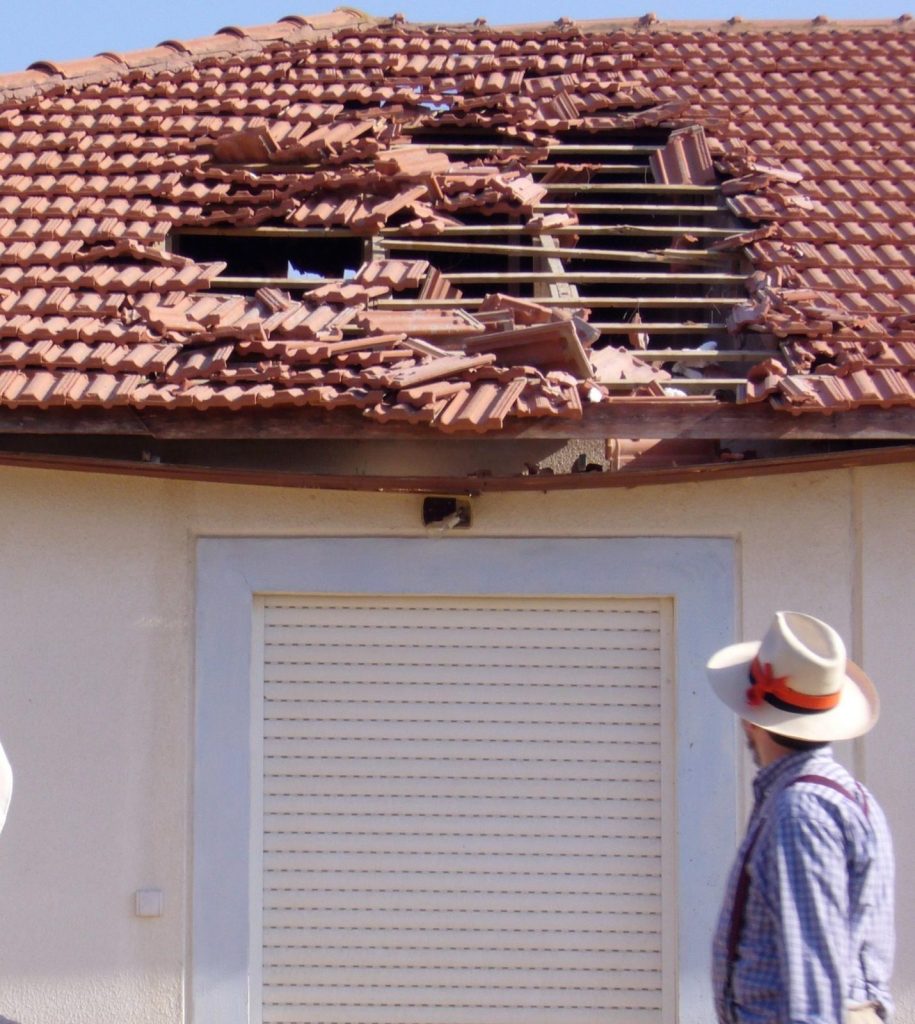
If the Mitzva Tank was the physical-spiritual power, then the spiritual peak came in the form of the unforgettable Chassid, the late Rabbi Leibel Mochkin a’h. The story of his arrival in Gush Katif proves what the willpower of a true Chassid can achieve. “One day, about a month before the expulsion, my phone rings. On the line, Rabbi Mochkin. He doesn’t ask, he announces: ‘Tomorrow I’m coming,’” recalls R’ Poltorak. “Of course I was very happy, but I didn’t understand how he intended to do it. The Gush was already hermetically sealed.”
Minutes later, one of his family members called, worried. “Explain to him that this is madness, that it’s impossible and dangerous!” he asked. R’ Elie told him what everyone who knew Rabbi Mochkin knew: “He can’t be talked out of it. If he’s decided, he’ll come.”
What happened the next day is beyond belief. “I get a call from an Israeli driver, completely confused. He tells me: ‘I’m driving near Ben Gurion Airport, and suddenly some elderly Jew with a white beard stops me, and asks me to take him to Gush Katif…’”
The kind-hearted driver took pity on him and agreed to take him, at least to the first checkpoint. “They reach the checkpoint, and the soldiers stop them. Rabbi Mochkin gets out of the car, approaches the young commander, and begins speaking to him forcefully in Yiddish and Russian: ‘You will not stop me! Stalin didn’t stop me, and you won’t stop me! Open the checkpoint now!’” The stunned commander, who had never encountered such a scene, began calling his superiors. Meanwhile, Rabbi Mochkin simply crossed the checkpoint on foot, and instructed the astonished driver to follow him. In the end, they let him through.
“The driver was on the line with me the whole time, going crazy,” R’ Elie laughs. “He was sure they were about to be stopped any second. Meanwhile, word had already gone from the first checkpoint to the second that an ‘elderly Chassid’ was coming. At the second checkpoint, an even more senior commander was already waiting. And again, the exact same scene! Rabbi Mochkin gets out, speaks forcefully, starts singing the ‘Napoleon’ march and marches past the checkpoint, and they simply don’t know what to do with him.” And so, through the power of faith, Rabbi Mochkin passed through every checkpoint, one after another, until he reached Gush Katif.
His impact was immense. “He was an inspiration to the whole Gush,” R’ Poltorak testifies. “Everyone looked at him with admiration. They didn’t understand much of what he said with his heavy Russian accent, but his presence, his white beard, his burning eyes—that spoke for itself.” Rabbi Mochkin insisted on sleeping in the dormitory and eating and studying with the bachurim; a Jew who, despite his advanced age, conducted himself exactly like one of the tmimim, a living example of a Chassid entirely devoted with mesirus nefesh!
The Moment of Truth: A Personal Prophecy Amid the Destruction
As the date of the expulsion approached, reality struck them with full force. “We thought it would be like Yamit, that they would leave the fortified positions for last. We prepared for a long siege,” he explains. “But they did exactly the opposite. On the morning of the expulsion, they went straight to the places where they expected resistance—to us, to Kfar Darom, to Netzarim—in order to break the spirit.”
When the forces arrived, R’ Poltorak felt terrible frustration. All the preparations, the food, the fortifications, all seemed for naught. “As I mentioned earlier, after receiving the Rebbe’s reply, we agreed with the commander that all the soldiers would put on tefillin, and in exchange we would not fight them.”
The story doesn’t end there. After the commander demanded that they leave, R’ Elie replied to him: “We said we wouldn’t fight; we didn’t say we’d leave of our own will.” The soldiers were forced to evacuate them one by one, without a struggle, but with a great deal of pain.
The Emuna That Shattered and the Faith That Grew Stronger
When they were taken out of the Gush and brought to a gathering point near Ashkelon, they met the expelled residents of Neve Dekalim, and the sight broke their hearts. “They were in utter shock,” R’ Elie recalls. “They simply didn’t believe such a thing could happen. They had lived in complete denial until the very last moment, certain there would be a miracle, that it would all be called off. And suddenly, their whole world collapsed on them.”
Their feeling was one of total collapse. “A whole group of them came up to us and said: ‘Boruch Hashem, you, Chabad, are here! We can learn from you.’ They told us that our presence, the presence of Chabad Chassidim, showed them that it’s possible to have emuna and bitachon, but without the illusions and delusions of religious Zionism, which, despite all the horror, continued to believe that the state expelling them was the ‘beginning of the Geula’”…
The terrible crisis also gave birth to spiritual awakening. Shmuli recalls a young Israeli man who joined them: “In the first photos you can see him with an ordinary kippa, not looking especially religious. He was with us in the shelter during the hardest moments. Today he is married, a Chabad Chassid, and serves as a shliach in Mexico. That extreme situation made people look inward, to ask real questions about life.”
The Eternal Message: When the Rebbe Speaks, You Listen!
When the conversation reaches its conclusion, the message that remains from those terrible days, R’ Poltorak’s voice becomes sharp. “The first and most important thing is the message that one must be careful and heed everything the Rebbe says. That is the main message. The Rebbe sees everything in advance, he is the faithful shepherd of the generation. And when people don’t listen to the Rebbe, then what happened, happens.”
He continues sharply: “The ideologies of the ‘right wing’ and their slogans are worthless. Why? Because one day Ariel Sharon was the greatest of the right wing, and suddenly he flipped and became the greatest destroyer. Whoever doesn’t go with Torah, with emuna in Hashem and with hiskashrus to Nasi Doreinu through whom the Almighty leads His people, all his ideologies, all his Zionism, all his ‘strength and might of my hand,’ are worth nothing. They collapse at the moment of truth.”
Yerida L’Tzorech Aliya and Bitachon in the Geula
Despite the pain and sorrow, R’ Poltorak sees the bigger picture, the divine plan. “Second point: that in the end, despite the doubled and redoubled darkness, despite the terrible disaster, we see that Hashem runs the world and has a plan. And out of all this darkness, in the end came a great victory, that now, following the events of Simchas Torah, Am Yisrael have awoken, are striking their enemies, and with Hashem’s help the victory will be decisive, all the way to the end, and we will return there with even greater strength. Now we must right this terrible wrong and rebuild the communities of Gush Katif. As for me, I am ready to return there today and reopen the yeshiva.”
He sees this as a recurring pattern. “Just as the Rebbe spoke about the Geula and suddenly there were setbacks, like the developments the Rebbe spoke about in 5751–5752 that seemed like a step backward, but in the end the Rebbe’s prophecies are fulfilled in their entirety. When you look at history, you see that Hashem is directing things. Sometimes there is a yerida l’tzorech aliya (descent for the purpose of an ascent). We recently saw with our own eyes how the terrible calamity of Simchas Torah brought about miracles and wonders the likes of which we haven’t seen since the Exodus from Egypt! In the end, there is no doubt whatsoever that everything the Rebbe said will be fulfilled in its entirety, and very soon, the Rebbe will redeem us.”
Beis Moshiach #1514 • pp. 24-32
© 2026 Beis Moshiach Magazine. All rights reserved.
This article originally appeared in Beis Moshiach #1514. You are welcome to share it with friends and family by email or in print, provided that you do not change, add to or omit any part of it, you credit the author and Beis Moshiach, and you include a link to archive.bmoshiach.org (written out in full in printed copies).
To republish this article in a newspaper, magazine, book or website, please request permission in advance at [email protected].