The Vitebsk Files, Discovered
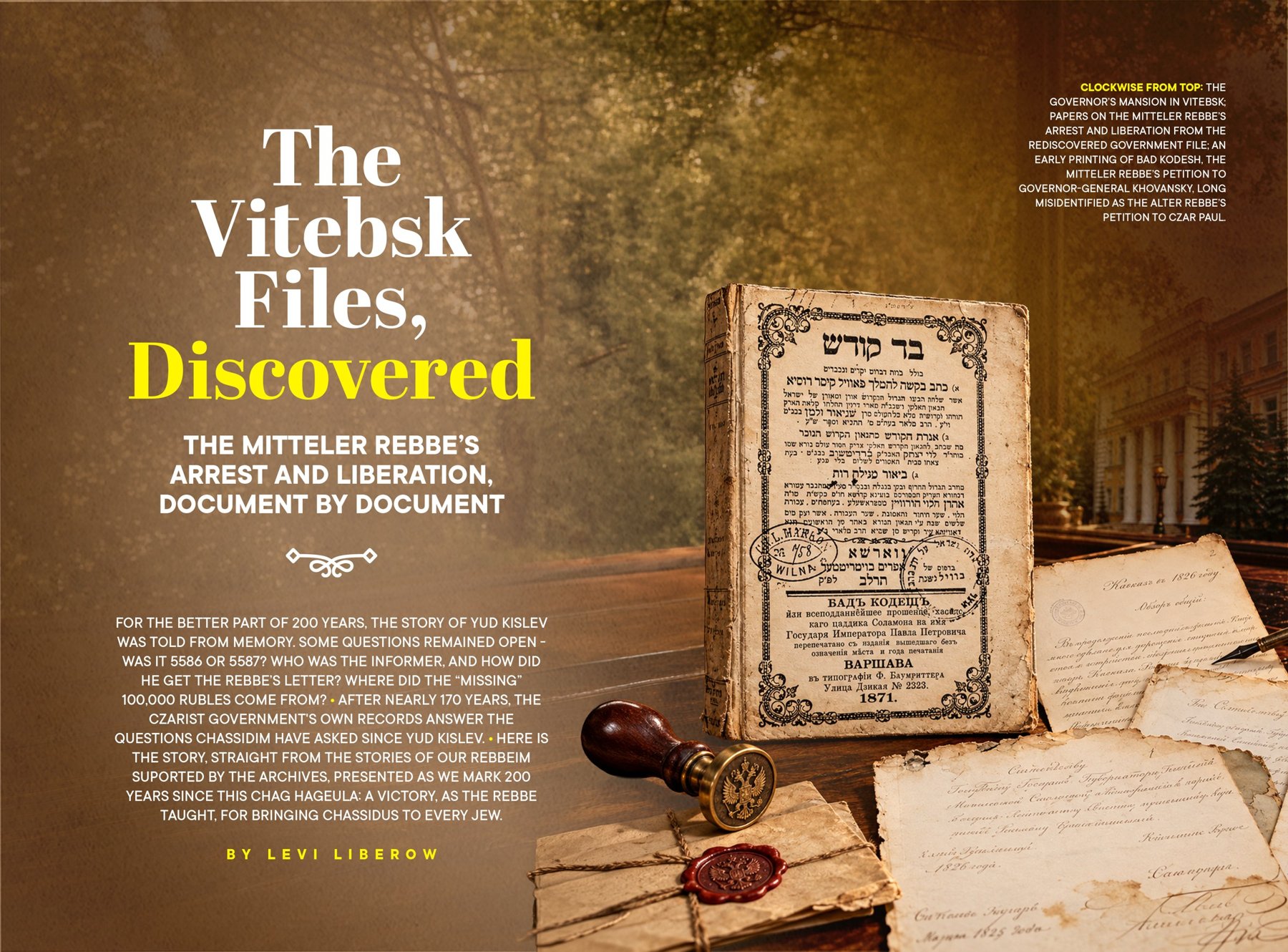
The Mitteler Rebbe’s Arrest and Liberation, Document by Document
For the better part of 200 years, the story of Yud Kislev was told from memory. Some questions remained open: Was it 5586 or 5587? Who was the informer, and how did he get the Rebbe’s letter? Where did the “missing” 100,000 rubles come from? After nearly 170 years, the Czarist government’s own records answer the questions Chassidim have asked since Yud Kislev. Here is the story, straight from the stories of our Rebbeim, supported by the archives, presented as we mark 200 years since this Chag HaGeula: a victory, as the Rebbe taught, for bringing Chassidus to every Jew.
PROLOGUE: The Fax from Minsk
On 2 Nissan 5754 (March 1994), a fax arrived on the desk of Rabbi Sholom Ber Levine, chief librarian of the Library of Agudas Chassidei Chabad. The sender, R’ Betzalel Schiff, one of the founders of Shamir, had just received word from Minsk that a file had been found and photographed. He had a simple question:
“I would be very grateful if I could get an answer to the question: Are there known documents of the Mitteler Rebbe within Chabad? I received some 120 pages on this subject from the city of Minsk.”
R’ Schiff did not yet know the story behind those pages. Rabbi Levine knew it exactly. For six years, he had been hunting for them.
They came from the office archive of Prince Nikolai Khavansky, Governor-General of Vitebsk, Mohilev, Smolensk and Kaluga. Inside were an informer’s denunciations of “the rabbi of the Karliner sect, Berke Shneur,” the questions his interrogators put to him, and his answers, signed in Hebrew “because he does not know Russian.” There were two court rulings, a furious appeal from the governor, and a verdict from the Senate in St. Petersburg.1
For nearly 170 years, Chassidim told the story of Yud Kislev from memory and tradition, and the memories did not always agree. In his diary of Kislev 5693 (1932), the Rebbe Melech HaMoshiach himself wrote: “There is doubt whether he went free in 5586 or 5587.”2
Now the Czar’s own clerks gave the answer. It was both.
This Yud Kislev marks two hundred years since the Mitteler Rebbe’s geula (liberation), by the year the Rebbe gives in HaYom Yom.3 The case file is open. Let’s read it.
BACKGROUND · THE SEARCH: The Cold Case
The hunt had started long before the fax. In 5736 (1976), the Rebbe suggested at a yechidus that R’ Hendel Deutsch, a Leningrad historian with Chabad roots, search the Russian archives for documents on the history of Chabad. In 5748 (1988), R’ Levine told him what mattered most: the file of the Mitteler Rebbe’s arrest.
The trail kept going cold. Archivists demanded permits that never came, and search after search turned up nothing on this case. Deutsch had a hunch, though: Khavansky’s papers had ended up in Minsk.
The break came through Shamir, Prof. Herman Branover’s organization, whose work on an encyclopedia of Russian Jewry had opened the archives. R’ Levine laid out the case in writing: “Where is Khavansky’s archive? Has it survived to our day? And perhaps we can find in it the petition Bad Kodesh… in the Russian version!?”
Two Shamir researchers, Igor and Wagner, took the assignment. Half a year later, they told R’ Levine they were heading to Minsk.
Then came the fax.
EXHIBIT A · DOCS. 1–3, 5: The Informant
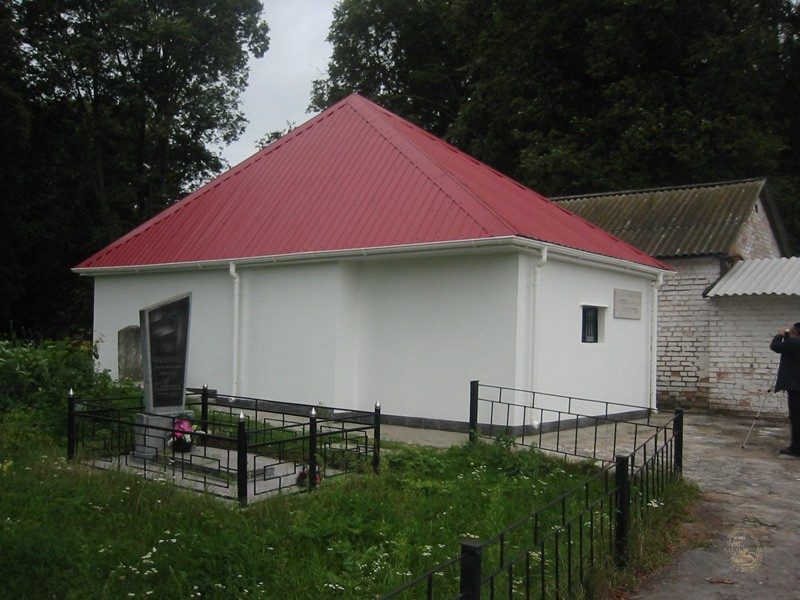
In the summer of 5585 (1825), the Mitteler Rebbe was abroad, taking the healing waters at Karlsbad, in Austrian Bohemia (today’s Karlovy Vary, in the Czech Republic). In Vitebsk, a man named Simcha Kisin was writing to the governor. Over the months of Tammuz and Av he filed three denunciations.
The first attacked the movement as a whole. The “Karliners,” Kisin wrote, lured young men with “stories and fables” about their Rebbe’s miracles, forced a new kind of shechita on the community, printed prayer books in an “Asiatic” nusach, and had even seized a room in the great shul of Shklov. His request was blunt:
“With great humility I permit myself to ask that the authorities take measures, with all the force of their power, to persecute and destroy this sect.”4
R’ Levine notes that the opening lines echo the denunciation filed against the Alter Rebbe in 5559 (1798). The second denunciation named “Berke Shneur” and came with evidence: a document in the Rebbe’s own hand about distributing money. The third offered to explain it in person.
Who was Simcha Kisin? The file gives his full name: Simcha ben Chananya Litman Kisin. According to Beis Rebbi, he was a relative of the Mitteler Rebbe on his mother’s side. And the file holds proof that the families had once been close.
To convince the governor that the distribution document was in the Rebbe’s handwriting, Kisin attached two other letters in the same hand. One had been written to Kisin himself, years earlier, from Liadi during the Alter Rebbe’s lifetime, by the Mitteler Rebbe together with HaRav HaTzadik Reb Aharon HaLevi of Strashelye. It opens:
“May Hashem increase peace and blessing to my kinsman, my beloved, wise and understanding, renowned doer of kindness, Reb Simcha… It gave my master, my father, great pleasure to see that your heart is wholly with us.”
It is signed: “From me, your kinsman, who always seeks your welfare with heart and soul.” The informer’s key exhibit for proving handwriting was a warm letter addressed to the informer.
EXHIBIT B · DOCS. 2, 4: A Letter from a Dead Man’s Papers
The real weapon was the distribution letter, written in Teves 5574 (1814). After the Alter Rebbe fled Liadi in Napoleon’s war, the family home burned to the ground. When the Alter Rebbe passed away on 24 Teves 5573 (1812), the Chassidim raised 35,000 rubles to rebuild the household. A year later, the Mitteler Rebbe arranged the distribution through one of the great Chassidim, Reb Pinchas Schick (Reizes) of Shklov, and appointed Reb Shlomo Freides and Reb Zalman Reizes to oversee it.
How did the letter reach Kisin? His own strange story goes like this: in 5582 (1822), during a fight over the Shklov shul, Reb Pinchas handed it to him “as collateral,” to be used if Reb Pinchas failed to make the Rebbe stop “harassing” the true Jews. Then Reb Pinchas died suddenly in Lubavitch.
Beis Rebbi tells it more simply. Reb Pinchas was childless, and his heir, a nephew described as “an evil man,” found the letter among his papers. He first tried blackmail. When the Rebbe refused to pay “even a penny,” he joined forces with “the man from Vitebsk.” When Reb Pinchas passed away, the Mitteler Rebbe escorted him and said: “The field marshal of the Chassidim has passed away.”
Kisin’s Russian translation contained one line that would become the heart of the case. The money, it said, was distributed “together with the regular gifts, which are about a fourth of the total sum.” Read that way, 35,000 rubles was only a quarter of the take. Where were the other 105,000?
Chassidic tradition remembers this detail slightly differently, as a forged letter rather than an intentionally mistranslated line. We will return to that below. Notably, the accounts preserved by the Rebbeim themselves, in the Rebbe Rayatz’s reshima and the Rebbe’s introduction to Bad Kodesh, do not mention this matter at all; it comes from Beis Rebbi which cites it among things heard from one of the Rebbe’s grandchildren.
EXHIBIT C · DOCS. 7–8: The Pickup
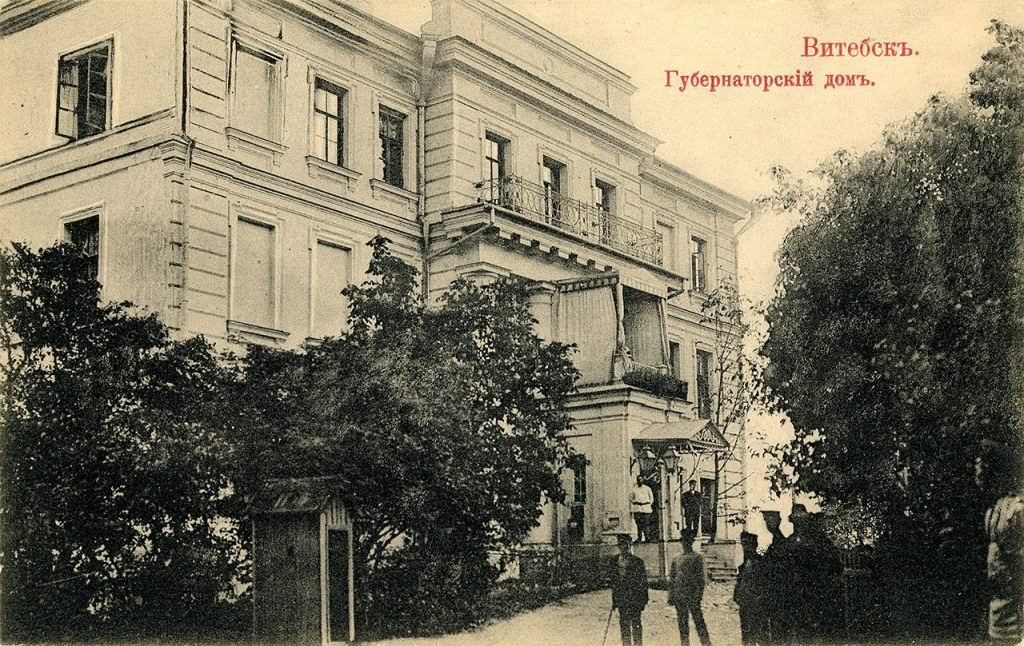
Order no. 4767, dated Tishrei 5586 (September 1825), went to Korvitsky, an officer of the Vitebsk provincial police:
“I require a private meeting regarding several matters with the Jewish rabbi, merchant of the third guild, Berke Shneur, residing in Mohilev province in the town of Lubavitch. I propose that you travel there, and after the rabbi sees this letter, invite him to come to me together with you to Vitebsk.”5
It was an arrest in velvet gloves. The treasury’s expense report fills in the rest: the governor ordered his men reimbursed for the trip, horse by horse, mile by mile. Korvitsky set out with a policeman and the governor’s own adjutant, an officer of the Imperial Guard, from Vitebsk to Lubavitch and on to Shklov, with six horses. They returned with nine. Shklov is not on the way to Vitebsk; most likely the convoy detoured to collect Reb Zalman Reizes and Reb Shlomo Freides, the overseers named in the letter. Two extra men, three extra horses.
Chassidic tradition preserves what the clerks didn’t. In 5667 (1906), the Rebbe Rayatz recorded the account of Reb Yeshaya Mekler of Vitebsk, as he heard it from his father, an eyewitness. The officials who came to Lubavitch were courteous, and since his doctors had forbidden him the cold air, the Rebbe would travel in short stages.
The night before he left, his court was filled with weeping and fainting. The Rebbe himself was completely calm. He wrote Chassidus, and at dawn spent two hours alone with his son-in-law, the Tzemach Tzedek. As he sat in the wagon, there was a slight smile on his lips. Hundreds followed on foot. In village after village, crowds came out to greet him with bread and salt, their elders at their head, non-Jews as well as Jews. In Dobromysl and Liozna he said maamarim along the way.
Then a courier rode into Liozna with a sealed letter. The informers had told Khavansky that the Chassidim were giving the Rebbe a king’s honor. The new orders were harsh: in Vitebsk, the Rebbe was to be taken straight to the cell where all criminals were held. He arrived under armed guard, feverish from the cold. Only Dr. Heiventhal, the medical inspector, persuaded the governor to hold him instead in a house in the courtyard of the administrative building.
Four men were held in Vitebsk: the Rebbe, the two Shklov Chassidim, and, later that month, Reb Aharon of Strashelye.
EXHIBIT D · DOCS. 9–13: The Interrogation Room
Khavansky handed the case to three officials, with a clear legal hook: the Statute on the Jews of 5565 (1804) warned rabbis “against amassing property and collecting money beyond the salary fixed for them by the community.” Was the document genuine? How much was collected each year? “Was there an accounting afterward? When, and to whom?”
The two Shklov Chassidim testified first. Everyone gave gladly after the war, they said; there was no fixed salary, and each Chassid gives according to his means. Reb Shlomo Freides added that he himself gives 15 to 25 rubles whenever such appeals are made.
Then came eleven questions for the Rebbe. Why are you not satisfied with your salary? What happened to the other three-quarters? And: “Why was there a need to hide the distribution document so secretly that no stranger’s eye could see it?”
The Rebbe began with the war. In 5572 (1812) his father abandoned his homes and books in Liadi and fled into Russia “out of his sincere love for the Russian homeland.” The French burned everything. Afterward, the Chassidim called him from Kremenchug to take his father’s place, and “Jews, Chassidim and non-Chassidim alike” came to his aid. The total was 35,000 rubles: “this I can say with a clear conscience.”
“After I read the translation that was made from the Hebrew, I was shaken and the hair on my head stood on end. Where did such a crude error come from?”
He had never seen a sum like 140,000 rubles in his life, he said. He asked for one thing: show me the original in my handwriting, “and I hope to find the source of the error.”
The “secret” received the most human answer in the file. His family had come to him “in tears,” asking that the money be divided per person, which left him only a third. He agreed, and kept it quiet so the Chassidim would not learn how small his share was. Even now, he said, he keeps “from ten rubles, only three rubles and fifty kopeks.” He closed his answers with a line of his own:
“As surely as my soul is within me while I live, and my words are true and just, so may Hashem gladden me and redeem me from this imprisonment.”
Below his Hebrew signature, Yehuda Yaffe of Kapust, the same Chassid who had translated for the Alter Rebbe in prison, signed the Russian document.
EXHIBIT E · DOCS. 14–15: The Missing Hundred Thousand
The investigators granted his request. On 13 October, the disputed line was copied exactly from the Hebrew original and retranslated into Russian by Yaffe. Both men signed a declaration that if the translation was wrong, they would answer for it “with the full severity of the law.” The original did not say “a fourth of the total sum.” It said “a fourth of this total sum.” One small word had disappeared in Kisin’s translation, and with it, the truth.
Why Was Chassidus on Trial Again?
This time, the question was how far it could go
In the teachings of the Rebbeim, each arrest of a Rebbe reflected an accusation above against a new stage in the spreading of Chassidus, and each liberation, a heavenly verdict in its favor.
The Alter Rebbe’s arrest, the Rebbe explained, was over the very idea of revealing Chassidus in a form the mind can grasp. Yud-Tes Kislev settled that. His second arrest, in 5561 (1800), came with lighter confinement but a more serious accusation, aimed at the teachings themselves.1 After Petersburg, the Rebbe Rashab said, the Alter Rebbe’s Chassidus took on a more inward, settled character,2 and once settled in Liadi, he taught Chassidus more regularly and systematically than ever.
The Mitteler Rebbe was treated with even more respect. He was escorted almost like a king, and in custody he was allowed a minyan and permitted to say Chassidus. What had been won before was no longer in question. The Mitteler Rebbe embodied binah, broadening the point of Chassidus until anyone could grasp it, and so his accusation was “not regarding Chassidus itself, but regarding the expansion of Chassidus.”3
We can perhaps connect this to the maamad, the Chassidim’s support of their Rebbe, which was at the heart of this case and which made the expansion possible. In his generation, Chassidus first went to print on a large scale: Derech Chaim, Imrei Binah, Shaarei Orah, and Toras Chaim, printed in 5586 (1825–26), the very year of the arrest. The Rebbe Maharash called Shaar HaYichud the key to Chassidus and Shaarei Orah its alef-beis.4
The charge was that Chassidim supported their Rebbe so he could teach them. The verdict was that they were free to do so.
1. Hayom Yom, 27 Kislev. 2. Toras Shalom, p. 26. 3. Sichos Shabbos Parshas Vayeitzei, Yud Kislev 5719 and 11 Kislev 5747. 4. Hayom Yom, 15 Adar II.
The Rebbe walked them through it word by word. There were two kinds of money: the one-time collection on his way back from Kremenchug, and the “fixed gifts” the Chassidim had always given his father. The fixed gifts were a quarter of this total, the 35,000 rubles that included both. “Since it says ‘this total sum,’ it cannot be explained except as the sum that was distributed.”
For generations, Chassidim knew a different version of this story. Beis Rebbi records that the informers “forged the letter with a small forgery,” adding the letter kuf, a hundred, to the sum. The file reveals what actually happened: not an added letter, but a missing word.
Still, Beis Rebbi holds up remarkably well. The mechanism and some of the numbers are slightly off, but for a secondhand account, heard from one of the Mitteler Rebbe’s grandchildren and written down some 75 years later, the essentials are all there: Reb Pinchas’s papers, the letter on the distribution, the overseers from Shklov, the man from Vitebsk, and an extra hundred thousand rubles that never existed.
EXHIBIT F · DOCS. 16–22: The Inspector Counts the Books
Next the investigators wanted to know where the money had gone. The Rebbe itemized: the shul in Lubavitch, 6,000 rubles; four Sifrei Torah, 1,500; sefarim, up to 3,000.
Khavansky did not take his word for it. Korvitsky was sent back to Lubavitch, and his report reads like a surveyor’s notebook. The shul: about 70 by 42 feet, worth no more than 2,000 rubles by his estimate. Three “Ten Commandments,” his term for Sifrei Torah. Seven bronze chandeliers. And in the rabbi’s house, 611 sefarim in four bookcases.
Then he took sworn testimony from 18 local Jews with no special connection to the rabbi. The shul, they said, had cost 4,000 to 5,000 rubles; the chandeliers came from Petersburg; the Sifrei Torah were written by Reb Reuven of Yanovitch, the Alter Rebbe’s own scribe. He could not finish the job, he reported: the rabbi’s entire family “had left Lubavitch for Vitebsk.”
The same day, investigators showed the Rebbe a list of donations “found among the papers in your house.” He had never seen it. R’ Levine suspects it was actually seized from Reb Aharon of Strashelye, and shown to the Rebbe by mistake, or as an interrogation trick.
EXHIBIT G · DOCS. 23–24: Tenth of Kislev
For about two weeks, the Chassidim of Vitebsk heard nothing. Then the break came, at a party. At the governor’s table, two young noblemen, among them Prince Lubamirski, spoke up for the rabbi whom Jews and non-Jews alike called the svyatoy rabin, the holy rabbi. On Friday, 17 Cheshvan, word came: a minyan of twenty, three times a day, and twice a week the Rebbe could say Torah before fifty people. Within the hour, the Chassidim were drawing lots for the places. That Shabbos after Mincha, he said the maamar Vayita Eshel. So it went every Shabbos: Chayei Sarah, Toldos, Vayeitzei.
On 6 Kislev 5586 (November 1825), the Rebbe sent the governor a short note:
“The sense of justice with which the Creator has graced Your Excellency gives me great hope that the truth will come to light in complete victory. A wicked slander was hurled at me without cause, and I await the clarification of the matter at every moment. However, my very frail health and its decline force me to gather strength to trouble Your Excellency and to request urgently a speedy decision regarding my fate.”
The file does not record the day he walked out. The investigators’ final report is dated 12 Kislev 5586 (10 November 1825), which R’ Levine places two days after the release. The tradition supplies the rest. On Shabbos, 9 Kislev, at Mincha, the Mitteler Rebbe was saying the maamar Ata Echad V’Shimcha Echad when word of his release arrived. On Sunday, 10 Kislev, he went free.6
Beis Rebbi preserves another scene. On the morning of the release, the Rebbe’s daughters brought his petition to the governor, and wept. “Why are you crying?” he told them. “Go home in peace. Your father will soon be freed.” By the time they reached the house, the guard was gone. The house filled with Chassidim, and the Rebbe sat down and said Chassidus.7
As far as the Chassidim were concerned, the case was over. The file shows it had barely begun.
EXHIBIT H · DOCS. 25–31: The Governor Won’t Let Go
On 19 Kislev 5586 (1825), of all dates, Khavansky sent the case on to Mohilev, “so that the guilty be dealt with according to the full severity of the law.” He even added a new charge: arbitrating disputes between Christians and Jews.
At the local peace court in Babinovitch, the file sat untouched until Khavansky passed through personally and ordered it hurried. “I am losing sleep,” the district inspector assured him, “over the speedy handling of this case.” Questions were sent to the Rebbe, who was ill; his answers were somehow lost on the road, and a second messenger had to fetch them. Then courts in Kapust, Orsha, Shklov and Mohilev were ordered to take sworn testimony from the Chassidim: had they really invited the Rebbe from Kremenchug and promised to support him?
EXHIBIT I · DOCS. 65–68: Coded Letters
Meanwhile, in short, cryptic letters, the Rebbe guided his Chassidim through the questioning. The governor, he warned, “has risen against me, to watch with an evil eye, only to uproot.” Answer “with understanding and calm, without any fear.” The stakes were high: “If, G-d forbid, no foundation is laid for the future before this governor, we have, G-d forbid, no place to live here.”
To Chassidim in Shklov he wrote with unusual candor. His opponents, he said, “have set their eyes on me, to make the bear dance,” a wry play on his own name, Dov Ber. And:
“I have grown old. I cannot stand in the ranks of such a war as my father did, for who can compare to him in G-dly wisdom and in courage of heart like a lion.”
So he let the Chassidim speak for themselves, reminding the court of the liberty the Czar had granted the Alter Rebbe. The Mohilev court’s ruling would cite exactly that.
EXHIBIT J · DOCS. 46–56: Three Verdicts
On 11 Kislev 5587 (1826), the Superior Court of Mohilev acquitted the Rebbe of all charges. Its reasoning survives only because Khavansky quoted it in order to attack it: the Chassidim’s support was voluntary, and “one cannot forbid a person to do something with his own private property.” Khavansky refused to sign off. On Rosh Chodesh Sivan 5587 (1827) he appealed to the Senate in St. Petersburg. Since general amnesties ruled out punishment, he proposed something else: the rabbi should be barred from serving as rabbi of the Chassidim and from receiving their support, and all rabbis in Russia should be restricted.
The Petition That Lost Its Author
For generations, Bad Kodesh was known as the Alter Rebbe’s petition to Czar Paul. Early printings presented it that way, and the name, apparently chosen by the first publisher, stuck.
In 5707 (1946), the Rebbe published a corrected edition and set the record straight. The petition addresses an official to whom the Czar had given “almost a tenth of all his dominion.” That describes no Czar, but it fits a governor-general who ruled four provinces at once: Khavansky.
The mistake is understandable. Bad Kodesh is built on a similar petition the Alter Rebbe wrote to Czar Paul, and it opens by citing “a few propositions” its writer’s father had explained before the Czar. (An English translation of the Alter Rebbe’s petition appears in In Defense of Chassidus, Principles Press.)
The petition reads less like a legal brief than a maamar. In eight short chapters, the Mitteler Rebbe develops the Kabbalistic idea of malchus: an earthly king’s justice flows from the Supreme King, and so does the justice of his ministers. “Therefore,” he concludes, “I desire specifically his judgment.”
The Senate took half a year. It noted that 160 Jews, questioned under oath, confirmed every donation was given freely. Then the verdict:
“Having found no legal basis whatsoever for the denunciation made by the Jew Kisin: the Jew Shneur is not found guilty of any criminal offense, and is to be acquitted of the charges in this case.”
The decision is dated 21 Kislev 5588 (1827). Twelve days earlier, on 9 Kislev, his birthday, the Mitteler Rebbe had passed away. The Senate did not know.
The maamad, the voluntary support of the Rebbe by his Chassidim, remained legal. It remained the livelihood of the Chabad Rebbeim for generations.
OPEN QUESTIONS: What the File Doesn’t Say
Chassidic tradition preserves more than the archive does, and in several places the two describe the same events from opposite sides.
Beis Rebbi says the informers claimed the Rebbe’s shul was built to the dimensions of the Beis HaMikdash, and that officials measured it and found otherwise. The file has no such charge, but it does have Korvitsky’s measurements of the shul, down to the arshin. Beis Rebbi also says he was accused of sending money to the Sultan, and that officials seized his accounts, which turned out to be tzedaka records for the poor of Eretz Yisrael. The file has the mysterious list of donations “found among the papers in your house.”
The Rebbe Rayatz’s reshima makes mention of wealthy, haughty relatives of the Rebbe’s mother in Vitebsk, who were jealous of him and offended that he had declined to marry into their family despite large dowries. With influence in Khavansky’s house, they helped “the villain of Shklov.” The file names the informer: Simcha Kisin of Vitebsk, the Rebbe’s relative on his mother’s side.
And Beis Rebbi records a scene the file does not: a face-to-face confrontation before the governor. The Rebbe came in his white Shabbos clothes, and the governor had a chair brought for him. The flustered informer slipped and called him “Rebbe.” “Enough of your barking,” the governor told him.
The file, after all, is incomplete. What survived is the governor’s office copy; the investigation itself, with the Chassidim’s testimony, the peace court’s decision, the full acquittal and the Rebbe’s original Hebrew letter, has not been found.
For Chassidim, as throughout Jewish history, the mesorah remains the primary source, above all what was handed down by the Rebbeim and the sources they trusted. From time to time, documents like these come to light and show, in their own way, how faithfully that mesorah was preserved. This file even explains why the Rebbe himself left room for both years.
EPILOGUE · THE VERDICT ON THE YEAR: Both Were Right
Which year was it? Back in 5701 (1940), the Rebbe Rayatz had already laid out the views: “Regarding the Yom Tov of Yud Kislev, there are differing opinions as to which year it was. In Beis Rebbi it says 5586. Some say the Yom Tov began only after the histalkus. And there is another view, that the beginning of the arrest was in 5586, and it dragged on until 5587, and the Yom Tov began in 5588.”8
Half a century later, the governor and his clerks confirmed this conclusion. On 10 Kislev 5586 (1825), the Rebbe walked out of confinement in Vitebsk and went home. A year later, on 11 Kislev 5587 (1826), a day after Yud Kislev, the Superior Court of Mohilev acquitted him of every charge.9 In Kislev 5588 (1827), the Senate in St. Petersburg made the acquittal final, a few days too late for the Rebbe to hear it in this world.
So the old dispute was never really a contradiction. Beis Rebbi, held in high esteem by the Rebbeim,10 remembered the first release; the tradition in the Rebbeim’s own household, which placed the geula in 5587 (1826), remembered the court that cleared his name. And the celebration planned for the following year, perhaps once the appeal was settled, never took place. On 9 Kislev 5588 (1827), the eve of the first anniversary, the Mitteler Rebbe passed away.
FROM THE FILE: 119 Rubles, 52 Kopeks
In Nissan 5588 (March 1828), with the case closed, the Vitebsk treasury raised one last question. The trip to bring Reb Aharon of Strashelye in for questioning had cost 119 rubles and 52 kopeks, advanced “on account of the guilty.” From whom should it be collected? The clerks reviewed the entire file and wrote the expense off. There was no one guilty to bill.
Notes
1. Documents are quoted from Rabbi Sholom Ber Levine, ed., Maasar U’Geulas Admur HaEmtzai (Kehos, 5758), published with Agudas Shamir; the Exhibit headings give the book’s document numbers. Tradition accounts are from Bad Kodesh (Kehos, 5724 ed.).
2. Reshimos, booklet 69, p. 11; see also Bad Kodesh, p. 9 and note there.
3. HaYom Yom, 10 Kislev: the Mitteler Rebbe was released “5587.”
4. The “new shechita” refers to the polished knives the Chassidim insisted on; the “Asiatic” nusach is Nusach Sefard/Nusach HaArizal (pp. 16–17, notes).
5. The Russian idiom is literally “a meeting of four eyes.”
6. Sichas Shabbos Parshas Vayeitzei, Yud Kislev 5719, citing the Rebbe Rayatz in 5693; Sichas Shabbos Parshas Vayeitzei, 9 Kislev 5729.
7. According to Beis Rebbi, the news arrived as the verse Pada b’shalom nafshi, “He redeemed my soul in peace,” was being said; the tradition of the Rebbeim places it during the maamar Ata Echad. Either way, the Rebbe noted, the verse falls in the Tehillim of the tenth of the month, so the Mitteler Rebbe said it on the day of his geula, the same verse with which the Alter Rebbe had been freed (Bad Kodesh, p. 22; maamar Pada b’Shalom 5746; Igros Kodesh Admur HaZaken, letter 38).
8. Sefer HaSichos 5701, p. 50 (Yiddish).
9. Author’s suggestion: Yud Kislev is celebrated as the day of the geula, even though the court’s acquittal in the papers is dated 11 Kislev. Perhaps it parallels the geula of the Rebbe Rayatz, who was told of his release on 12 Tammuz 5687 (1927), while the official release papers were handed to him only the next day, 13 Tammuz.
10. See Toras Menachem 5732, vol. 68, p. 329; 5742, vol. 2, p. 1058.
Beis Moshiach #1530 • ג׳ כסלו תשפ״ז • pp. 20-29, 35
© 2026 Beis Moshiach Magazine. All rights reserved.
This article originally appeared in Beis Moshiach #1530. You are welcome to share it with friends and family by email or in print, provided that you do not change, add to or omit any part of it, you credit the author and Beis Moshiach, and you include a link to archive.bmoshiach.org (written out in full in printed copies).
To republish this article in a newspaper, magazine, book or website, please request permission in advance at [email protected].