My Master, My Father, My Teacher
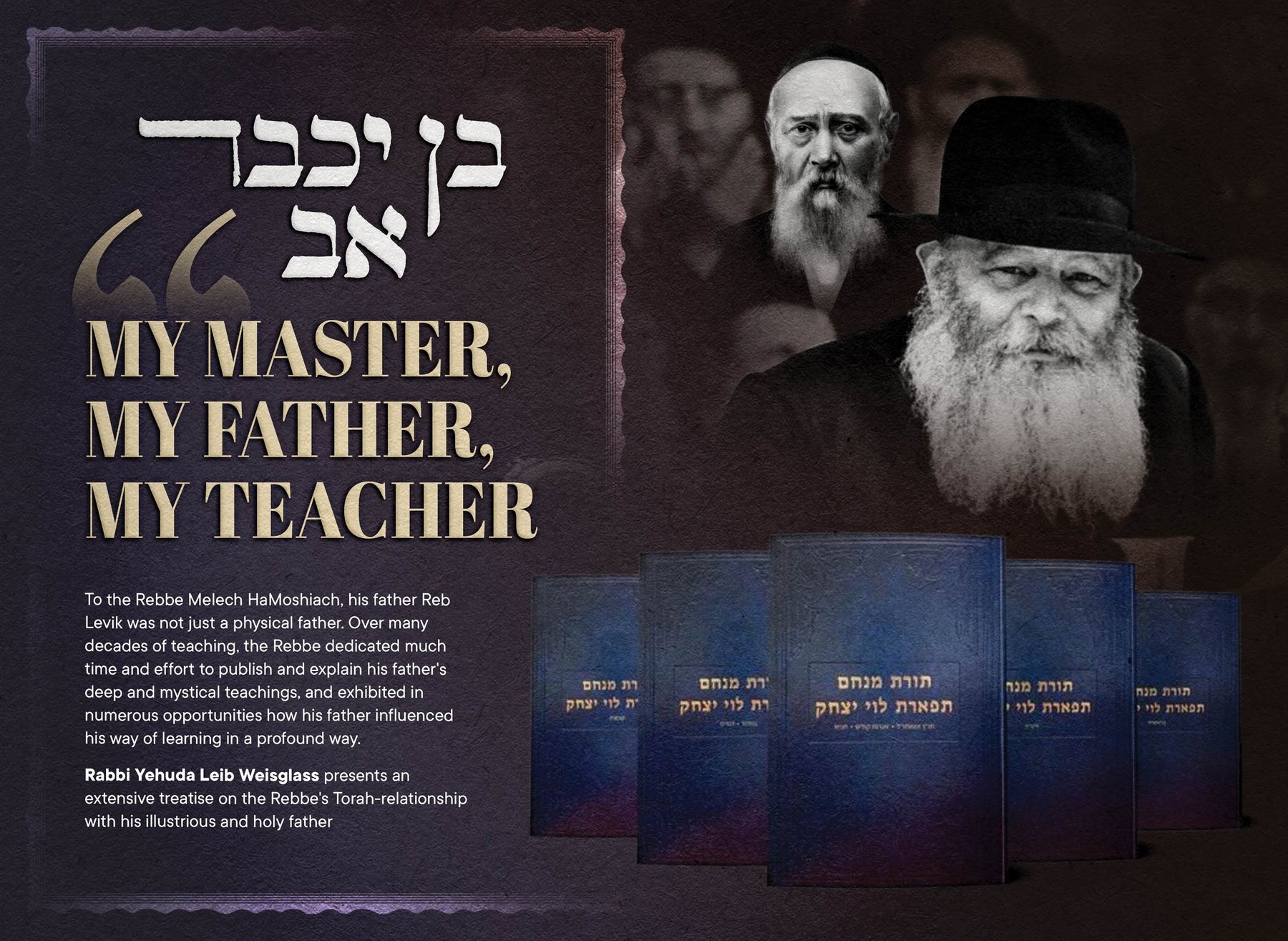
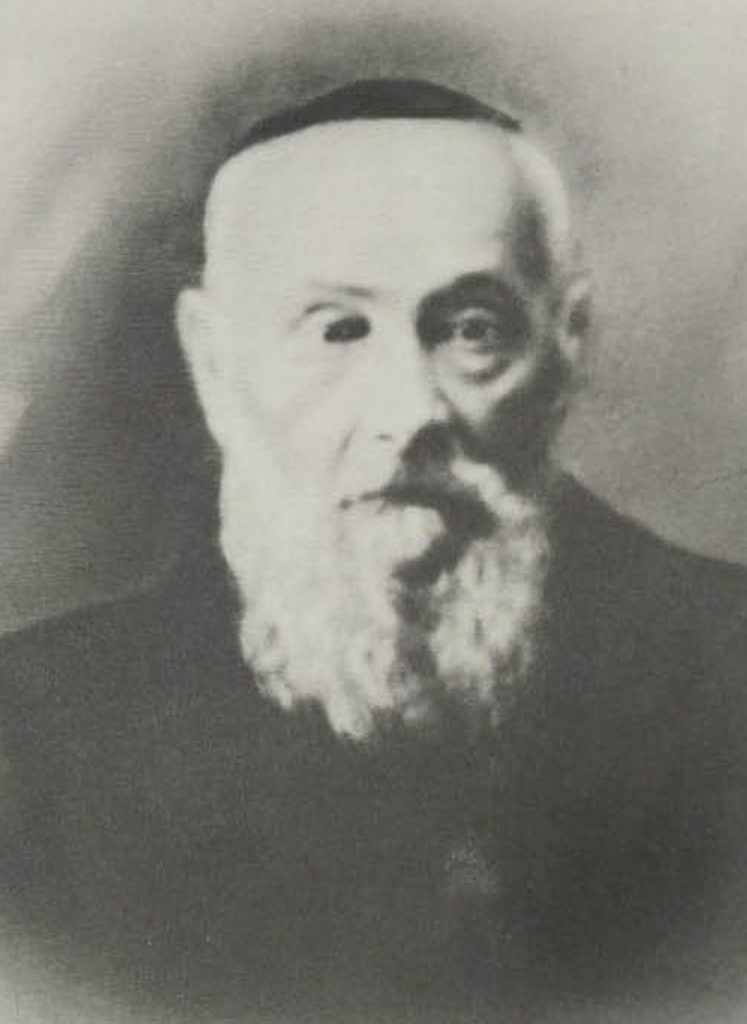
To the Rebbe Melech HaMoshiach, his father Reb Levik was not just a physical father. Over many decades of teaching, the Rebbe dedicated much time and effort to publish and explain his father’s deep and mystical teachings, and exhibited in numerous opportunities how his father influenced his way of learning in a profound way. Rabbi Yehuda Leib Weisglass presents an extensive treatise on the Rebbe’s Torah-relationship with his illustrious and holy father
My Master, My Father, My Teacher, and My Rebbe
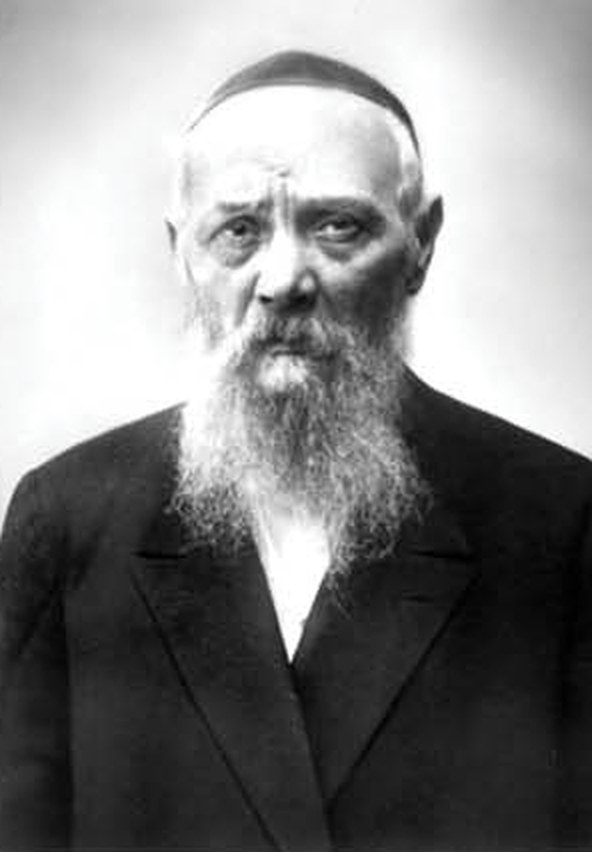
– The special title by which the Rebbe Melech HaMoshiach’s father is titled in all the sichos and maamarim, “Adoni Avi Mori V’Rabbi” – or in short “אאמו”ר” – can teach us more than anything that just as Reb Levi Yitzchok was the Rebbe’s father, he was also his teacher and rebbe, or perhaps we should say his rabo muvhak – his primary teacher.
From his early youth in Nikolayev, and later (starting in 5669) in Yekaterinoslav [Dnepropetrovsk] when his father was appointed as the city’s rav, the Rebbe merited his father’s close guidance in learning, as well heard and received wisdom from his father, who was a wellspring of Nigleh, Kabbalah and Chassidus.
Apparently from that period, the Rebbe recounted a special psak din (halachic ruling) of his father that was etched in his memory:
“My father once received a shailah regarding aveilus – whether an avel (may we be spared) could wear house slippers on Shabbos, since that was his custom every Shabbos of the year, or if this would constitute ‘public mourning.’ My father responded that even if there’s no significant problem with this on all Shabbosos of the year, on such a Shabbos, since someone (or he himself) might think he’s doing so because of aveilus, it should not be done.”
The Rebbe learned from this story a hora’ah for the Shabbosos of Bein HaMetzarim – that one should be more cautious about the concern of aveilus than on all other Shabbosos of the year. Therefore, one needs to add in oneg and simcha (pleasure and joy), to negate any possibility of concern about diminishing the pleasure and joy of Shabbos.
Another teaching that the Rebbe repeated in his father’s name, also likely from the period when the Rebbe was with his father, concerns the authority and virtue of the gabbai of the shul. This occurred during the first farbrengen of Shabbos Bereishis 5745 (after Shacharis) when it was customary to conduct the annual “selling of mitzvos” to benefit the shul. In the midst of explaining his father’s notes on Zohar, Rashi, and the daily Rambam, the Rebbe paused and said in a slightly humorous tone:
“Regarding the explanation of perush Rashi and my father’s hearos – we’ll leave that for the next farbrengen, because the shul gabbaim are standing full of concern: What will happen with the custom of ‘selling the mitzvos’?!… They are waiting impatiently to hear a promise from so-and-so — in front of the entire congregation — that he will give such-and-such amount for a particular mitzva. And instead – we’re discussing Torah matters!… Everything is fine and good, they think, Torah study is indeed the highest matter, but nevertheless, they are concerned about being able to count the cash… Not just ‘istakel b’Oraysa – looking into the Torah,’ but also ‘boro alma – creating the world’ in actual practice, to the extent that this worry disturbs their Shabbos rest!
“I once heard from my father, of blessed memory, that ‘gabbai’ is a [rearranged] acronym for אנא בכח גדולת ימינך —’Ana B’koach Gedulas Yemincha’ (Please, with the strength of Your great right hand), meaning, the gabbai doesn’t go by his own power, but by the power of the Holy One, Blessed be He – ‘Please, with the strength of Your great right hand’. And since this is so, and especially since he is the gabbai of the entire congregation – we need to take him into account!…
Therefore, we’ll leave the explanation of Rashi and my father’s notes for the next farbrengen, to allow the gabbaim to sell the mitzvos, as is customary every year.”
Torah Correspondence
Even after the Rebbe left Yekaterinoslav and moved to live near his second primary teacher, the Rebbe Rayatz (“my teacher and father-in-law”), the Torah connection between father and son did not cease.
An extensive Torah correspondence was conducted between father and son, with Reb Levi Yitzchak sending his son and daughter-in-law long letters full of novel Torah insights in his unique style, which combines Chassidus and Kabbalah with Nigleh, intertwined in a wondrous manner.
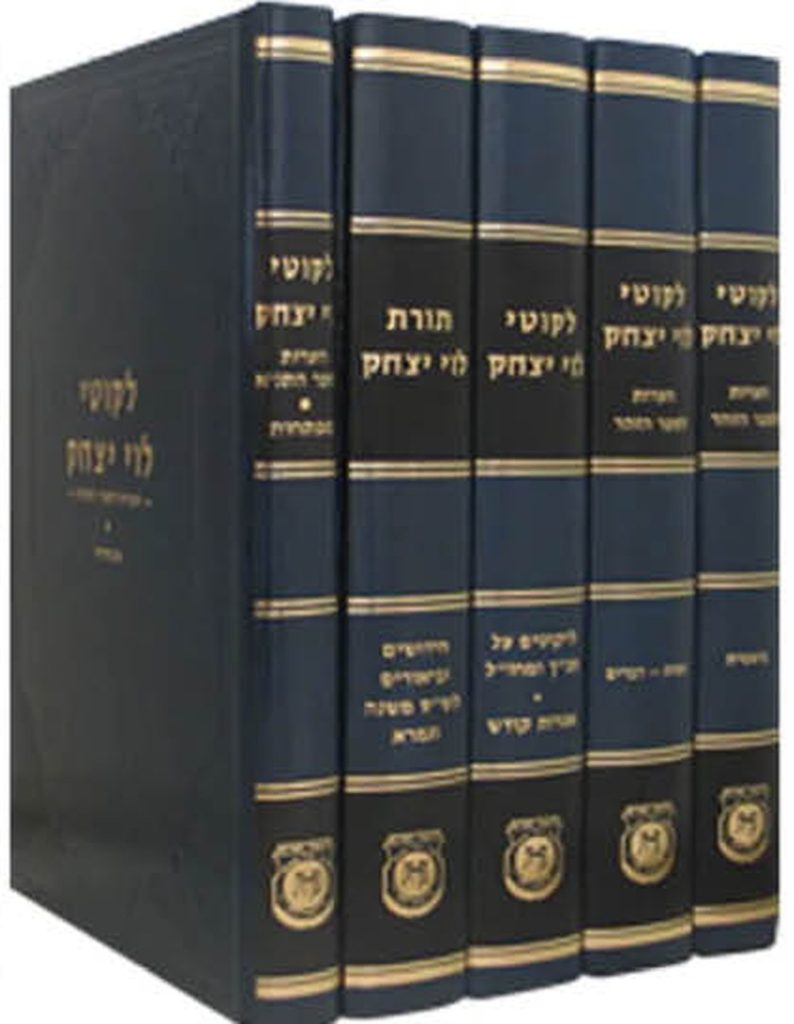
Likkutei Levi Yitzchok
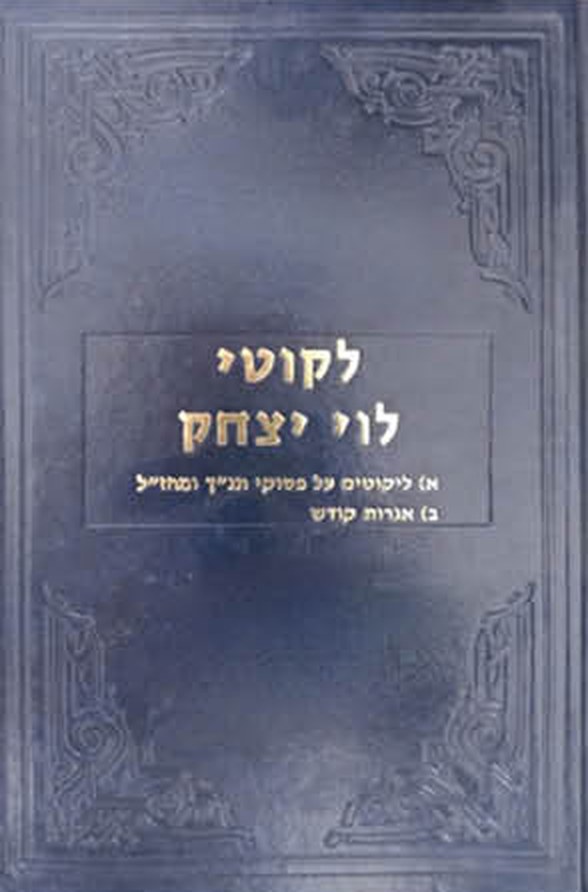
It is from this correspondence that dozens of letters were preserved by the Rebbe and were published in the book “Likkutei Levi Yitzchok on Tanach, Maamarei Chazal, and Igros Kodesh.”
All the letters were written between the years 5688-5699 (1928-1939), that is, between the Rebbe’s departure from Russia and Rabbi Levi Yitzchok’s arrest by the NKVD of the evil Soviet Empire, may their names be erased.
Among all his father’s letters, one letter was privileged to be explained and mentioned in the sichos kodesh more than all the other letters. In this letter, in fact the first in the book, Reb Levi Yitzchak explains the matter of matzos and dalet kosos according to Kabbalah (which is the unification of Zeir Anpin and Nukva), he writes the remez that the Rebbe mentioned many times (as mentioned above), that “כשר” is an acronym for: כמוצא שלל רב – “Like one who finds great spoil,” hinting at the refinement of the sparks that the Jewish people brought out from Egypt, as it is written “and afterwards they shall come out with great wealth” through the matza.
We said “correspondence.” Indeed, the route these letters traveled was not a one-way street. The Rebbe responded to his father’s letters with comments and insights, and even sent his own Torah novellae to his father for him to express his true opinion on them (as will be discussed later).
Without Embellishment
Reb Levi Yitzchok greatly rejoiced in his son’s chiddushim (“regarding your comments on my letter, I enjoyed them very much, and ‘if my son is wise, my heart rejoices..’”), but at the same time, he sometimes comments and guides how to explain matters according to the teachings of the Sod (esoteric wisdom).
Thus writes Reb Levi Yitzchok to his son:
“Regarding your letter with the chiddushei Torah that Hashem has graced you with… and you ask to know my opinion without embellishment or concealment, be it known to you that the discourse as a whole is very good, containing sharpness and erudition in both Nigleh and Nistar, and a straight and deep intellect in understanding the Torah in both Nigleh and Nistar… However, my beloved son, my faithful advice to you is that in every such matter, you should add more ‘spice and salt’, meaning to ensure that the words are more and more founded on the wisdom of truth, according to Kabbalah, which is the truth of Torah, and it is the dew and the light within the Torah, for then the words will be clearer and more illuminating, and all matters will then blossom kaftor va’ferach (lit. like a knob and flower, meaning perfectly)…”
Another example, in which Reb Levi Yitzchok illuminates his son’s chiddushim with the light of Kabbalah’s teachings, is reflected in a letter from 5694 (1934) where he writes to his son: “I enjoyed your explanation of the Chazal’s statement about Rabbah and Rav Zeira who ate the Purim feast together, and Rabbah slaughtered Rav Zeira. In general, the matter is very close to the truth. And I remember that I spoke similarly when you were still with us… However, be it known to you that it is more correct that Rabbah alludes to mochin d’gadlus as his name (lit. ‘great’) implies, and Rav Zeira alludes to mochin d’katnus as his name (lit. ‘small’) implies, and it aligns with the concept that Rabbah represents the aspect of chasadim and Rav Zeira the aspect of gevuros…”
Another, more striking, example of this is from a letter from 5697 (1937):
“I received your letter… and I will make some comments on it. I’ll start from the end to the beginning. It’s about what you wrote that the partition of the Mishkan’s courtyard made of linen curtains alludes to faith in the One G-d. That this is what separates between the courtyard of the Mishkan within each person and the public domain of this world, etc.
“In my opinion, the allusion doesn’t fit well, because faith is within Yisrael themselves, and isn’t a partition separating them from others outside. Moreover, the entire Machneh Yisrael was located outside the curtains, and certainly within their place there was faith in the One G-d. Also, the power of faith can be found outside the sitra d’kedusha (side of holiness), as in ‘the thief calls out to the Merciful One at the entrance of the tunnel’.
“In my view, the partition of the curtains, which alludes to gevuros (severities), is that first and foremost needs to be the aspect of a gibor (mighty one) who conquers his yetzer (inclination). Only then can one separate from the sitra d’leumas zeh (the opposing side). This matter is the beginning with which the Tur and Shulchan Aruch Orach Chaim starts. The partition of the curtains alludes to gevuros because any concept of partition and separation alludes to gevuros, as is known regarding the concept of parsaos (curtains of separation in the spiritual realms)… especially since it’s made of linen, which specifically alludes to gevuros…”
The Rebbe’s many explanations that combine Nigleh and Chassidus, and derive from this instruction in avodas Hashem, are a wonderful illustration of the guidance that the Rebbe received from his father, his master and teacher. As will be further explained below.
Early Publication of Reb Levi Yitzchok’s Thoughts by the Rebbe
With the arrival of the Rebbe to the lower hemisphere, a new phase began in the dissemination of the wellsprings outward, as the Rebbe was appointed as chairman of the executive committee of the “Merkos L’Inyonei Chinuch” and Kehot Publication Society, and as chief editor of the Otzar HaChassidim – Lubavitch library.
Even in these years before his leadership, the Rebbe published teachings of his father, his master and teacher.
The first mention is in a letter written during the year of mourning for his father’s passing, explaining the Mishna that mourners study, “A needle that is placed on top of the burial cave”:
“[It can be explained as] I heard from my father of blessed memory… There are many terms for the soul… and one of the main purposes of its descent is to connect the lowest with the highest… This is the function of a needle, which sews and connects so that the revelation below will be like above… And how does it reach this level, which is higher than before it descended to this world? It is through immersion in many waters, which are particularly the troubles of the time of exile…
“Although it is a great descent — to a deep pit, a cave, nevertheless it is for the purpose of ascent, the advantage of the cave, and the manner of immersion is molich u’meivi, going and coming, ratzo v’shov. This is then proof that one is not enslaved to the nature of one’s body… since the wave has passed over it, it is pure…”
The second mention is in the Rebbe’s Haggadah published in 5706 (1946), where in the Simanim of the Seder, the Rebbe comments:
“From my father and teacher, of blessed memory, I heard a thought to explain, according to Sod (the esoteric dimension), the precision of the vav (in ‘Urchatz’), and another change that exists in these two words, which are the only ones said in the imperative form and not as a narrative. Because Kadesh and Urchatz allude to the first three of Chochma (holiness) and the first four of Bina (purity, washing) in which there was no separation and breaking, for Atik took them for its portion, unlike the remaining 13 aspects. This is why Kadesh and Urchatz come with the connecting vav, and only they come in the imperative form – as an allusion to sanctify and purify from the higher aspects the remaining 13 aspects, which are alluded to in the 13 simanim of Karpas through Nirtza.”
Also at the Simchas Beis HaShoeiva farbregen in 5706 (1946), the Rebbe repeated a Chassidishe explanation in his father’s name on the Gemara in Berachos which teaches that “One should not recite the Shema while lying on one’s back… But didn’t Rabbi Yochanan pray and recite in this position? Rabbi Yochanan was different because he was a baal basar (corpulent)”: That baal basar means that Rabbi Yochanan was a master over his physical flesh, by imposing form over matter, and therefore he could recite the Shema even while lying on his back.
The Writings Reach the Rebbe
After accepting the leadership of the Dor HaShvii, the seventh generation of Chabad Chassidus, “the last of galus and the first of Geula,” the Rebbe occasionally mentioned his father’s chiddushim and explanations.
It was only after the redemption of some of his father’s chiddushim in writing from captivity, the Rebbe began to cite his father’s notes on the Zohar and explain them regularly, thereby effectively revealing a novel discipline of Torah study. This reached its peak with the printing and publication of these writings in the series “Likkutei Levi Yitzchok” and “Toras Levi Yitzchok.”
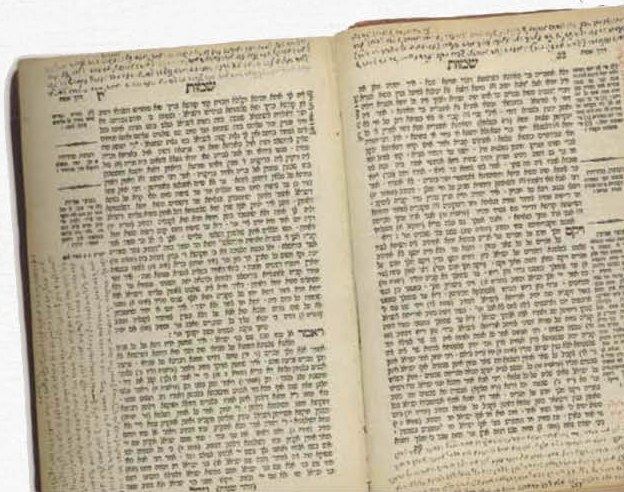
Unfortunately, the lion’s share of Reb Levi Yitzchok’s writings disappeared for various reasons and to this day their whereabouts are unknown. However, when Reb Levi Yitzchok was in his place of exile, some books were brought him there – a set of Zohar, a Tanya, and a few other seforim on which he wrote brief notes in the margins, with ink prepared by Rebbetzin Chana – the Rebbe’s mother.
Rebbetzin Chana left these books in a safe place in Russia, and did not take them with her when she left Russia with a forged passport in 5707 (1947). Only in 5720 (1960) did the volumes of Zohar with Rabbi Levi Yitzchok’s notes leave Russia.
[In many sichos, the Rebbe mentions his mother’s merit and her part in writing his father’s chiddushei Torah. Perhaps this can be explained according to Kabbalah, for as is known, in the world of Tohu where there is no unity and inclusion between Chochma and Bina, middos are not born through Daas. However, in the world of Tikkun, there is inclusion of Chochma and Bina through Daas, and from this are born the middos of the world of Tikkun. According to this, it’s understood why specifically through the mother, who is Bina, and her inclusion in the Torah of the father, which is Chochma, produces fruits, until through the son – a tzaddik yesod olam (righteous one, foundation of the world) – the words of the father were published and explained in the physical world, spreading his wellsprings outward, in the aspect of the sefira of Malchus.]
The writings published in Toras Levi Yitzchok and Likkutei Levi Yitzchok on Tanach and Maamarei Chazal were not margin notes but were found in a manuscript that somehow reached the library of the Rebbe. The Tanya with Reb Levi Yitzchok’s annotations reached the Rebbe’s possession only in 1967.
Over the years, treasure troves of additional manuscripts were discovered and added to the new edition that was published in 5745 (1985).
The first time the Rebbe mentioned his father’s notes on the Zohar and explained a section of them was on Shabbos Parshas Beshalach 5720 (1960), but the hanacha (written record) of that farbregen is incomplete.
Over the following years, the Rebbe explained more and more of his father’s notes on the Zohar on various occasions, but when the Rebbe began to publish his father’s books in 5730 (1970) — the first two that were published (Rosh Chodesh Menachem Av 5730) were “Likkutei Levi Yitzchok” on Tanya and on Zohar — the Rebbe began to deliver (almost) at every Shabbos farbregen explanations on his father’s notes.
On Shabbos Parshas Eikev of that year, the Rebbe began to give explanations on his father’s notes on Iggeres HaTeshuva, and from Shabbos Parshas Tzav 5731 (1971) — around the time the second volume on Zohar was published — the Rebbe began to give explanations on his father’s notes on the Zohar.
This became the custom at every Shabbos farbrengen for approximately eighteen years: At least twice a month on average, the Rebbe would explain a section from his father’s notes on the Zohar or from other seforim. Each Shabbos, the meshamshim b’kodesh would place a Chumash and Likkutei Levi Yitzchok on the Rebbe’s farbrengen table for the duration of the farbrengen.
In the Rebbe’s words that can be read in any transcript of those farbrengens: “It is customary every Shabbos to explain a pasuk from the parsha with Rashi’s perush, as well as an inyan from my father’s notes on the Zohar of our parsha…”
Typically, during the farbrengen, after the Rebbe delivered a maamar Chassidus and explained the difficulties in Rashi’s commentary, a section from Reb Levi Yitzchok’s notes would be mentioned. The Rebbe would explain what “needs to be understood” in this heara. Only afterwards (usually after moving on to another topic or even several other topics) would the Rebbe return to explain the Rashi and his father’s hearos. During summer Shabbosim, also a commentary on Pirkei Avos was typically delivered, and in the “Three Weeks” a halacha from Hilchos Beis HaBechira was expected to be analyzed at the farbrengen.
[To provide some insight into the Rebbe’s seder of explaining his father’s hearos, we’ll briefly review the explanations given in 5742 (1982):
In 5742, farbrengens weren’t held every Shabbos, but every Shabbos when a farbrengen took place (28 in total), the Rebbe discussed an idea from his father’s notes on the Zohar of that parsha, or the Zohar discussed in the hearos (as background to his father’s brief explanations). For Parshas Mattos-Masei and Parshas Devarim, which don’t have any insights in Likkutei Levi Yitzchok, the Rebbe explained a topic related to the Beis HaMikdash from Toras Levi Yitzchok on Maseches Middos. For Parshas Reeh, which also lacks notes, the Rebbe explained the concept of haanaka (giving gifts to a freed servant) in avodas Hashem, based on an insight from Toras Levi Yitzchok on Shas.]
Tiferes Levi Yitzchak
As is famously known, after the histalkus of Rebbetzin Chaya Mushka on 22 Shevat 5748 (1988), the farbrengen schedule changed. The delivery of maamarim on Shabbos Kodesh was reduced until it almost completely ceased, as did the explanations on Rashi. The explanations of Likkutei Levi Yitzchok were also no longer delivered as regular.
Nevertheless, at almost every Shabbos farbrengen held in 5748 after the Rebbetzin’s passing, a section from “my father’s notes” was mentioned (at least briefly). This practice continued into early 5749, until Parshas Noach, which was the last time the regular order of explaining Rashi and the notes on the Zohar took place. This final explanation on the pasuk “tamim haya b’dorosav” was published in the edited likut released on Shabbos Parshas Noach 5751 (1990) (combined with the sicha from 5745/1984).
But this was not the end of the Rebbe’s involvement in the dissemination of his father’s hearos:
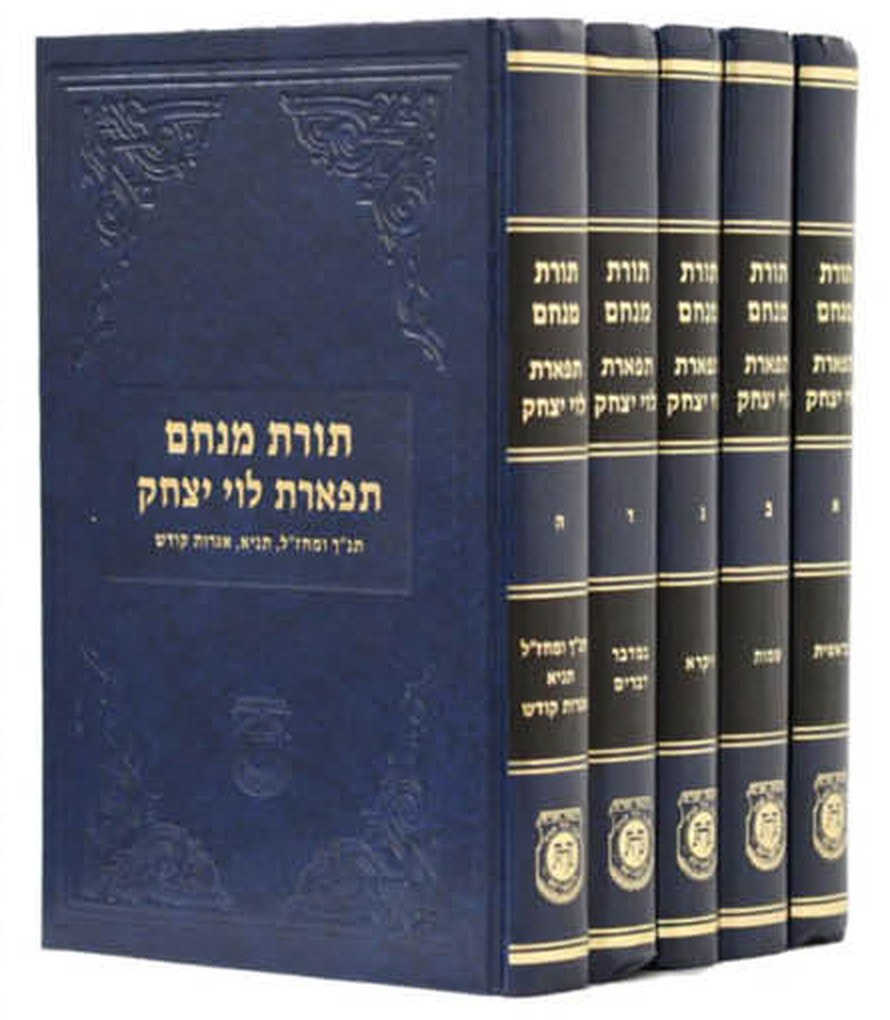
Just like the maamarim, which soon after being almost discontinued in oral delivery, began to be regularly mugah (edited) by the Rebbe and appear in kuntreisim at a high frequency starting from 5747 (1987) thereby creating the basis for the “Sefer HaMaamarim – Melukat” series, similarly, the Rebbe’s explanations on his father’s notes also received a “facelift” and compilation in book form in the series “Toras Menachem – Tiferes Levi Yitzchok.” The first book in the series on Chumash Bereishis was published on 24 Teves 5750 (redacted by Rabbi Dovid Feldman). The second, on Sefer Shemos, was released on 25 Elul 5751 (close to 6 Tishrei, the yahrtzeit-hilula of Rebbetzin Chana, in whose merit these seforim came to light). The third book in the series, on Chumash Vayikra, was published for 11 Nissan 5753, with the final sections in the book dealing with the Zohar on Parshas Bechukosai regarding the mitzva of kibud horim – “ben yechabed av,” that even after the father’s passing, “ischayev b’yakrei yatir”, one is obligated in his honor even more, which the Rebbe explained six times over the years! In 5733, 5738, 5740, 5744, 5745, and 5746!
Through his regular engagement with his father’s Torah, the Rebbe indeed led to countless learners becoming acquainted with it, and many began to study these teachings (a phenomenon that is growing, baruch Hashem). Truly, “ben yechabed av.”
[For some reason, the publication of the rest of the series was delayed until 5780 (2020), when it was completed with two additional volumes: the fourth on Chumash Bamidbar and Devarim (for which there are fewer notes in Likkutei Levi Yitzchok and fewer explanations were given), and the fifth volume collecting the Rebbe’s explanations on Reb Levi Yitzchok’s other sefarim – Toras Levi Yitzchok on Shas, Mishna and Gemara, and Likkutei Levi Yitzchok on Tanya and Iggeres HaTeshuva, Tanach, Maamarei Chazal, and Igros Kodesh.]
Another milestone in disseminating Reb Levi Yitzchok’s explanations was in the years 5739 (1979) and then once again 5750, and 5751 (1990-91), when from 20 Menachem Av onward, in these three years the weekly Likkutei Sichos contained the Rebbe’s explanations on his father’s notes on Iggeres HaTeshuva (appropriate for the avodas ha’teshuva of Chodesh Elul), not related to the weekly parsha. The first series was printed in Likkutei Sichos vol. 19 in Yiddish, and all 16 sichos were reprinted in Lashon Hakodesh in vol. 39.
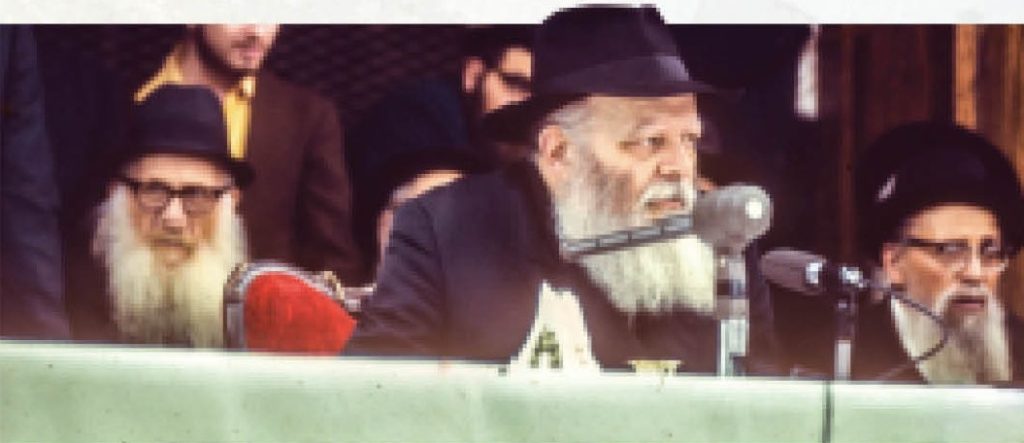
A truly unique phonmenon is the mention of Reb Levi Yitzchok’s name and teachings in maamarei Chassidus, when “the Shechina speaks from his throat,” and also in the “Basi LeGani” maamarim.
The “Reb Levik” Method
If we were to outline general principles of the Rebbe’s study method of his father’s teachings, especially on Tanya, the main point is that the notes were written very concisely due to the shortage of ink and paper, the result is that the ideas were not written with the necessary elaboration,
Therefore:
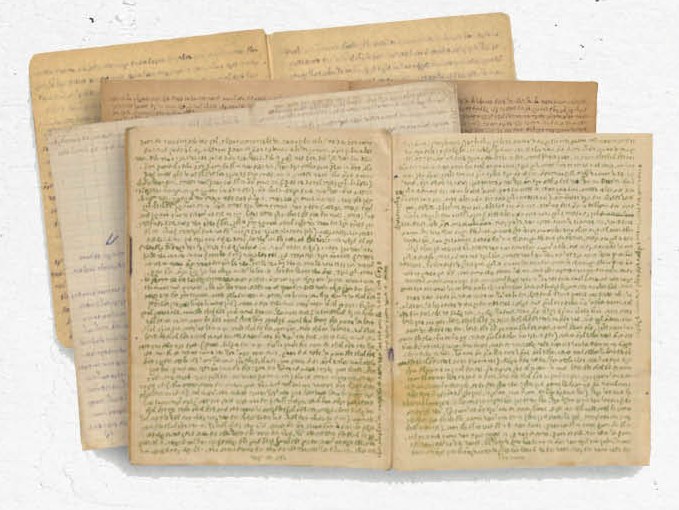
There’s no dwelling on simple questions that the learners can understand on their own, but only on difficult matters or those containing chiddushim.
There’s no derivation of instruction in avodas Hashem as required from every Chassidic contemplation.
The question that the gloss seeks to explain is missing.
It relies on the learner to understand the intention, resolution, and instruction in avodas Hashem on their own.
[Interestingly, the explanations on the brief notes themselves were often delivered very briefly themselves, and often the entire explanation revolves around “the known question” of what instruction in avodas Hashem can be learned from the Zohar’s words and the comment on them, or a simple question about the Zohar mentioned in the heora which apparently wasn’t explained due to brevity, and needs to be completed to understand the comment properly.]
The likkutim on Iggeres HaTesguva are characterized by a deep approach delving into the mysteries of Iggeres HaTeshuva, with each note intended to explain a question on the overall explanation in Iggeres HaTeshuva, not just specifying which levels each thing alludes to as a simplistic reading of the note would seem.
Kabbalistic Influences
The Rebbe not only regularly engaged with his father’s Torah, but (as reflected in many sichos) was noticeably influenced by the learning approach.
Here are a few examples:
Reb Levi Yitzchok’s method was to connect the name of the baal ha’maamar to his words, and of course explain this according to Kabbalah, following Rabbi Meir’s practice of “being meticulous with names.” Naturally, in the Rebbe’s sichos, he also connects the speaker’s name to his words, explaining it according to Kabbalah. For example, in Dvar Malchus Shemos 5752, the Rebbe explains the connection between Rabbi Elazar ben Azarya and his statement “All the days of your life to bring the days of Moshiach.” Or in Dvar Malchus “ of Parshas Tazria-Metzora in explaining the connection between Rebbi and his statement “Which is the straight path.”
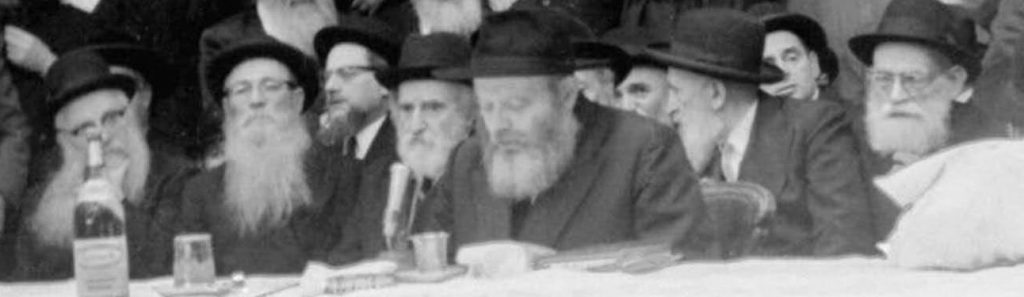
In this context, it’s worth noting the famous reshima where Reb Levi Yitzchok points to the explanation of his name according to Kabbalah. We find something similar in descriptions of the Rebbe’s farbrengens before his nesius, such as the farewell farbrengen with Anash in Paris in 1947:
The Rebbe conveyed so much Nigleh and Chassidus then. It was tangibly evident what “like an ever-increasing wellspring” means.
The Rebbe explained the content of each of the names of those present, connecting the name with the personality and traits of its bearer, and explaining it according to Nigleh, Kabbalah, and Chassidus. The Rebbe turned to each of those gathered and said: “Say l’chaim, and tell me your name,” and when the Chassid said his name, the Rebbe began his words.
Reb Levi Yitzchok’s method was to be meticulous in every matter, seeking in every detail something connected with pnimiyus haTorah. We find this also with the Rebbe, where a complete, deep explanation in Nigleh concludes with an inner explanation and instruction in avodas Hashem.
The Rebbe also uses concepts he received from his father as a foundation in learning Torah, such as when he explains what “shleimus haTorah” means, that is, “both these and those are the words of the living G-d, and as my father explains in his letters,” that even “the halacha about which they later said it was incorrect… all of them were literally spoken by Hashem… and He Himself said it was incorrect.”
Reb Levi Yitzchok’s method was to explain various expressions and sayings according to the order of Kabbalistic teachings, such as corresponding to the ten sefiros, three impure kelipos, etc.
We find this also in a sicha explaining the ten sayings at the end of Maseches Sotah “When Rebbi so-and-so died… etc.,” which are not in chronological order but according to the order of the ten sefiros.
Similarly, in the Dvar Malchus of Tazria-Metzora, the Rebbe parallels the halachos in Chapter 11 of Hilchos Melachim in the Rambam to the ten sefiros.
Thus, the Rebbe’s Torah, deeds, and avoda are imbued with the approach he received from his great father. As befits the last generation of exile and the first of redemption – they bring the Torah of Nistar and Chassidus to revelation in this physical world, leading to the revelation of “You have been shown to know that Hashem is G-d; there is none else besides Him” in the true and complete redemption, immediately and literally.
Beis Moshiach #1423 • pp. 18-28
© 2026 Beis Moshiach Magazine. All rights reserved.
This article originally appeared in Beis Moshiach #1423. You are welcome to share it with friends and family by email or in print, provided that you do not change, add to or omit any part of it, you credit the author and Beis Moshiach, and you include a link to archive.bmoshiach.org (written out in full in printed copies).
To republish this article in a newspaper, magazine, book or website, please request permission in advance at [email protected].