Elul: When Even Just-Hatched Chicks Start To Cluck…
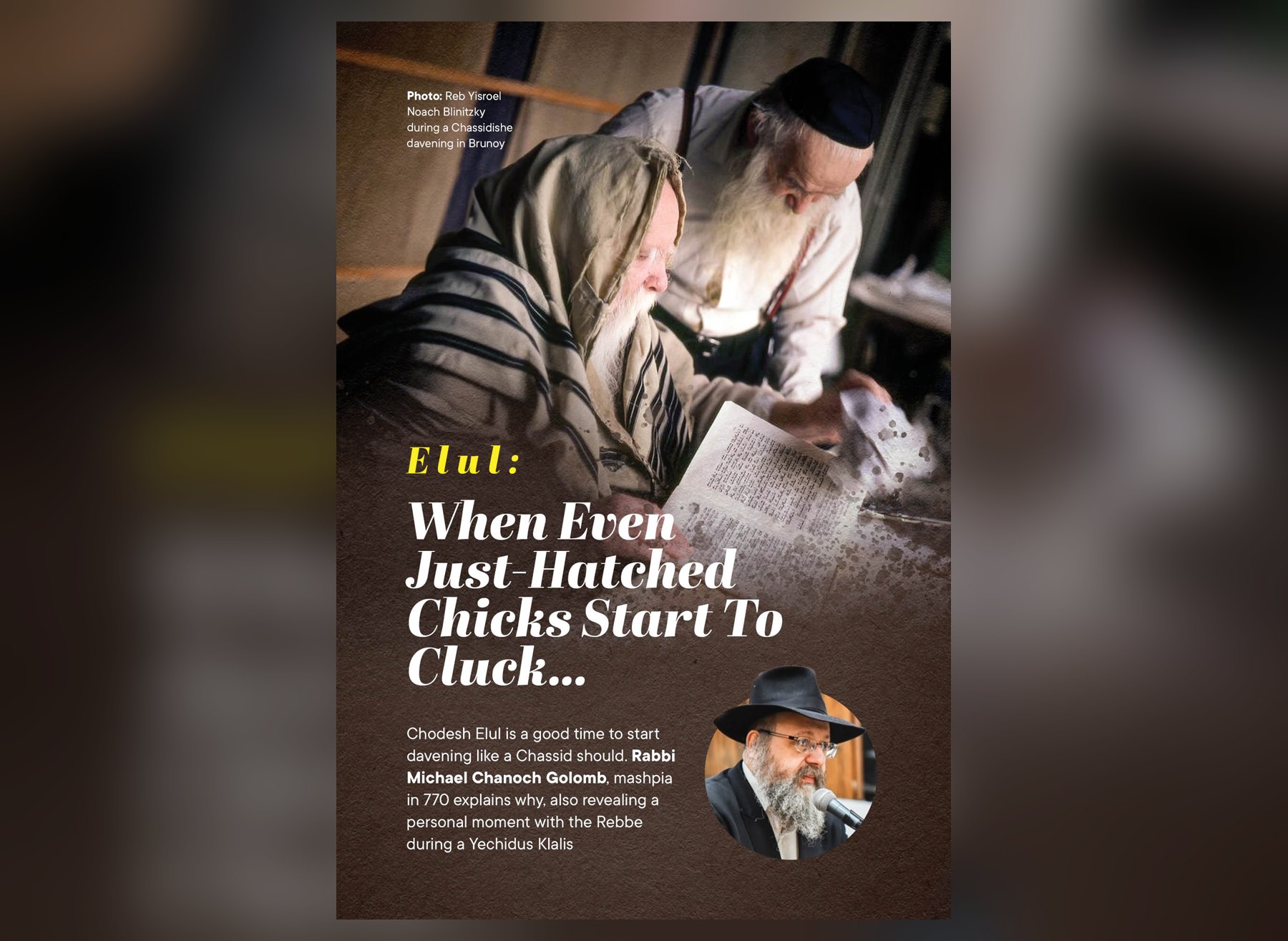
Chodesh Elul is a good time to start davening like a Chassid should. Rabbi Michael Chanoch Golomb, mashpia in 770 explains why, also revealing a personal moment with the Rebbe during a Yechidus Klalis
The foundation and connection between a Jew and Elokus is actualized through “avodas ha’tefilla,” because tefilla causes an inner bond with Hashem. When standing to daven with earnestness, and knowing that one is talking to Hashem, it’s altogether different. It creates an inner feeling and chayus in Torah study and the fulfillment of mitzvos, delight and desire in learning Chassidus and the ways of Chassidus. After davening properly, one feels strengthened. Whoever got a taste of “avodas ha’tefilla,” knows and feels how important and essential it is.
The Rebbe writes (HaYom Yom 23 Iyar), “The first stage in a person’s spiritual decline (Heaven forbid) is a lack of effort when serving G‑d in prayer. Everything becomes parched and cold. Even the routine performance of mitzvos becomes burdensome. One hurries [through their observance] and loses a taste for Torah study. The very atmosphere becomes more materially oriented. And it goes without saying that a person in such a state cannot positively influence others at all.”
Basic Requirement
“Avodas ha’tefilla” isn’t something that needs to be renewed, but is something basic. Tefilla is the means by which to “live.” Therefore, obviously “avodas ha’tefilla” is demanded of everyone, each on their level and the time allowed them, but each individual needs to see it as something basic.
Someone who calls himself a “Chassid,” needs to daven with avoda. I recently saw a response from the Rebbe to someone who asked why the Rebbe doesn’t agitate that much about “avodas ha’tefilla.” The sharp answer was: Do I need to agitate about answering “amen” and “boruch Hu u’voruch shemo” in the kaddeishim in davening? Must I farbreng about the importance of not going out of shiurim in yeshiva during seder?
These are obvious fundamental things that ought to be clear. Exactly so is “avodas ha’tefilla” the minimum requirement of a Chassid.
Immediate Response
One can see in many of the Rebbe’s letters how the Rebbe relates to tefilla at length as a basic requirement of everyone. The Rebbe quotes the command in the Torah to every Jew, “and serve Him with all your heart” and the statement of Chazal, “What is service of the heart – this is tefilla.” At farbrengens too, the Rebbe repeated the psak in Shulchan Aruch that one should contemplate the greatness of Hashem and the lowliness of man before every tefilla, and that the chassidim ha’rishonim would daven for hours with contemplation.
From all this, the Rebbe concludes that “avodas ha’tefilla” is necessary and pertinent to all. As the Rebbe put it, “The claim that he isn’t suited to engage in avoda of the heart at length is baseless.”
I remember that during the years that I learned in yeshiva, the mashpiim farbrenged with us about the importance of “avodas ha’tefilla,” and some claimed that it’s less demanded in our generation. At the end of Tishrei 5744, there was a “yechidus klalis” for tmimim. The Rebbe began speaking about learning Nigleh and Chassidus. For a split second, I had the “machshava zara” that since the Rebbe didn’t mention tefilla, maybe it was true that it’s not demanded of us as much. But the Rebbe immediately went on to say, “And all this through ‘blessing on the Torah prior’ through the preface of ‘avodas ha’tefilla’ as explained in kuntrus Eitz HaChayim…’ In that split second, the Rebbe answered my thought. I felt like it was truly a “yechidus pratis!”
Specifically In The Generation Of Geula
In 5751, the Rebbe spent hours giving out the kuntrus “Eitz Chayim” to men, women and children. After the Rebbe Rayatz printed the kuntrus “Eitz Chayim” in America, the Rebbe said that the very fact that the Rebbe Rayatz printed it in the “lower hemisphere” proved that it pertains to everyone.
If we think about the significance of the fact that the Rebbe not only printed but gave out this kuntrus, perhaps we will reach the conclusion that this is even more emphatic than the actual writing of the kuntrus. In a sicha about giving out the kuntrus (22 Cheshvan 5751), the Rebbe explained that all the topics written there are with greater measure and greater force in these days. In other words, specifically now in the peak moments of the “seventh generation,” a moment before the Geula, we need to add in inner avoda and in tefilla with avoda.
In Chassidus it’s explained that the most auspicious time to meditate and internalize is during tefilla, since that is when there shines forth “gadlus ha’mochin” up above. Consequently, there are special abilities to acquire daas and internal recognition in the matters we are trying to connect to.
Therefore, in order to “live with Moshiach,” one needs to meditate about this during tefilla, as it relates to inner avoda – to instill in ourselves in an internalized manner that we are at the entrance of “Yemos Ha’Moshiach.”
How Do We Daven?
What is actually demanded of us? How do we daven?
There are a number of levels and we will start with the most simple one. The first thing is to know that we are standing and speaking to the Creator of the world and He is listening to us. To think over some topic in Chassidus before davening. The Rebbe told many bachurim to think about the beginning of chapter 41 of Tanya. Then our brains will understand that we need to have basic respect for Hashem.
Whoever relates to a particular chapter of Tanya or any maamar of avoda, should think about it before davening and during davening. The Rebbe told some talmidim regarding meditating during the week when sometimes there isn’t enough time, that one can think about a maamar that he learned in seder that day and change topics each day.
After this, to daven and concentrate on the meaning of the words, or at least to take one portion and really have intention and connect to it. Slowly, the words of the davening will speak to us. The words will become “living and luminous” as the Rebbe Rashab says in the “Kuntrus HaTefilla.” For example, in the bracha of “Shema Koleinu” in Shemone Esrei, one can think about Hashem listening to all our prayers. At the same time we need to forget about time; to stop the race of life and get into the feeling of the content of the words. As time goes on, one can gradually add more sections of the davening.
Someone who is already used to this level, should take a chapter of Tanya or some topic in a maamar Chassidus and think about it on a regular basis in order to affix the point in the mind, such that it enters into his inner world.
I remember hearing a distinctive expression from the Rebbe at the farbrengen on Shabbos, parshas Shemini 5748, about the importance of hisbonenus. The Rebbe demanded: When was the last time that he contemplated Chassidus for an hour or at least half an hour?
When Is The King In The Field?
The mashpia, R’ Shlomo Chaim Kesselman once had yechidus with the Rebbe Rashab and asked him, “How does one daven?”
The Rebbe said: When an egg cracks and out comes a chick, the chick takes its first steps on earth and it keeps on falling. Only after many attempts does it manage to walk securely. The same is true for tefilla. One tries again and again until one is successful. Hashem helps and gives the ability to succeed, so you just need to start davening.
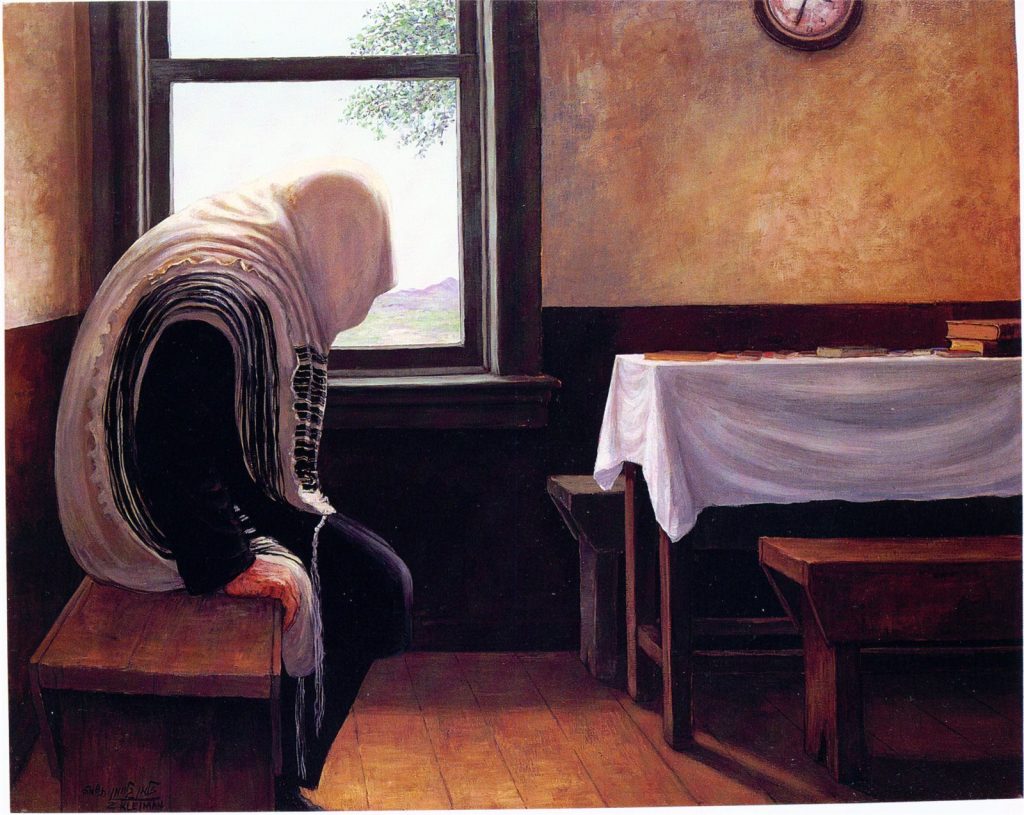
This is especially in force when we are in the days of Elul. The Rebbe asks (Likutei Sichos vol. 14, p. 246) about the Alter Rebbe’s mashal about the special quality of Elul, as the time when the King is in the field; how can one approach the king in the field? He explains that approaching the king is tefilla, when we stand face to face with the King, Hashem.
The month of Elul is a time when we should all spend more time on tefilla, even someone who is usually more involved with Torah or business.
The mashpia, R’ Pinchas Korf, quoted a saying they said in Lubavitch, that “In Elul, the little chicks begin to crow.” This means that in Elul, even the young tmimim start to daven at length.
Indeed, in Lubavitch, even the “cheder sheini” was full. I also heard from R’ Lazer Nannes that in Lubavitch even those who were not so involved in avodas ha’tefilla, were involved in it in Elul. This month has special kochos for davening as a Chassid.
In the merit of our investing more in internalizing Chassidus through “avodas ha’tefilla,” may we merit to see the revelation of the light of Hashem in the physical world with the Geula shleima, and our king, Moshiach, leading the way.
Beis Moshiach #1426 • pp. 10-13
© 2026 Beis Moshiach Magazine. All rights reserved.
This article originally appeared in Beis Moshiach #1426. You are welcome to share it with friends and family by email or in print, provided that you do not change, add to or omit any part of it, you credit the author and Beis Moshiach, and you include a link to archive.bmoshiach.org (written out in full in printed copies).
To republish this article in a newspaper, magazine, book or website, please request permission in advance at [email protected].