It Takes A City To Print A Tanya…

A chapter from the memoirs of Rabbi Leibel Zajac about the unusual yechidus he had with the Rebbe in the winter of 5752 in connection to his project of printing Tanya’s in the FSU
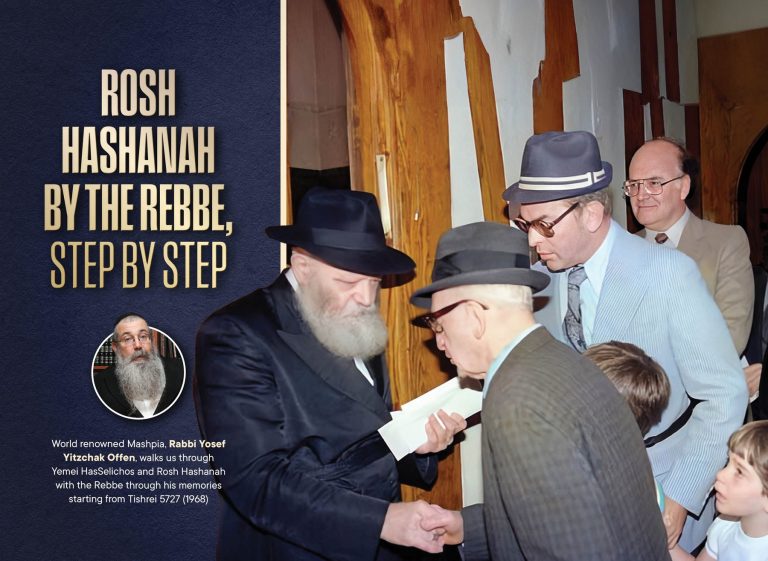
When we arrived in Moscow, we began working on binding Tanyas. The first plan was to take all the printed pages and bind them in New York, but since we were supposed to return to New York in the middle of Chanuka, and we really wanted to give the volumes of Tanya to the Rebbe as “Chanuka gelt,” we considered binding the sefarim before we went to New York.
On the way back, we were supposed to go via Eretz Yisrael (since, in those days, there were no direct flights from Moscow to New York), but we’d be there only from Friday through Sunday, so the only option was to try and bind the sefarim in Moscow.
We decided we’d bind at least one sefer from each place that we printed them in, so immediately upon arriving in New York, we could give the bound sefarim to the Rebbe.
The Hotel Room Became a Bindery
Since it was impossible to obtain a bookbindery in Moscow with a machine that would bind books like these quickly, we reverted to the binding method used in the time of the Alter Rebbe. We found some elderly Jews who worked in binding in their youth and had them come to our hotel room and get to work.
First, we had to fold the pages into booklets, and arrange the booklets in order. Then the seniors sewed them by hand, as in olden times, glued them and put them into a press to compress it well. The press was improvised out of two boards that were put under heavy beds. At the same time, they prepared the bindings and then glued the bindings into a book.
We did most of the work in the hotel room which was spacious. Some of the work was taken home by the seniors. Boruch Hashem, we managed to bind one or two copies of each book but were unable to stamp in gold the names of the places on all the sefarim because our binders did not have Hebrew letters, only Russian. We made a few copies with Russian inscription; the rest were not stamped. We printed the name of the city on a paper and stuck it on the bindings of the volumes.
By Friday, we had managed to bind at least one copy of each place where we printed, a total of 62 new Tanyas. Before we left Moscow, we started building the infrastructure for additional printing in Russia. We knew that the Rebbe would not let us rest on our laurels and we’d have to continue printing more Tanyas.
The Rebbe Wants You for Yechidus!
We arrived in New York Tuesday evening and on Wednesday already had an aliya and said the ha’gomel blessing in the Rebbe’s minyan.
Since the Rebbe was going to go that day to the Ohel, we arranged with the secretary, Rabbi Leibel Groner, that we would bring the Tanyas after the Rebbe returned from the mikva and he would give them to the Rebbe before he left for the Ohel. We assumed that the Rebbe would want to take these special sifrei Tanya to the Ohel.
Everything was arranged and we waited upstairs in 770 together with some other Anash and tmimim. Suddenly, at three o’clock, R’ Groner came out of gan eden ha’tachton and looked for me and Rabbi Chanin. When he saw us he said, “The Rebbe wants to see you in the yechidus room right away. He wants you, not an intermediary, to give him the Tanyas you printed in Russia.”
We were stunned. We hadn’t considered this for a moment. We were sure the Rebbe already had the Tanyas and that he would take them with him to the Ohel. A yechidus! Remember, this was in 5752, after nearly a decade of no private audiences.
We put on our gartels and ran to gan eden ha’tachton. We waited a few minutes and then the Rebbe’s door opened and we saw the Rebbe standing in the doorway, waiting for us to give 62 sifrei Tanya.
R’ Groner stood on the side and showed us where the Tanyas were so we could give them to the Rebbe. The Rebbe’s holy face was aflame, literally “the skin of his face radiated.”
The Best ‘chanuka Gelt’ a Jew Could Get!
Until we were ready with the sifrei Tanya, the Rebbe was busy doing things in his office. He moved items from here to there with great speed and it looked as though he was very busy and even a bit bent over.
That took a short time because when the Rebbe noticed us, he motioned to R’ Groner to go out to nearby room. We remained alone with the Rebbe, right outside his room and suddenly, the entire atmosphere changed. The Rebbe stood tall and smiled; a smile that expressed endless love. The smile expressed the great nachas ruach he had from the printing of the Tanya.
Then the Rebbe motioned to us to come in and he asked, “Where are the sefarim that you brought?”
The sefarim were on a small table on the side of gan eden ha’tachton, in three packages. I took one package and R’ Chanin took the other two. The Rebbe smiled more broadly, it was mamosh mora’dik, ah! He held out his hand to take a bundle. I wanted to hand the package to the Rebbe so that the Rebbe could bring them into his room and put them down in place.
As the Rebbe stood there and I wanted to hand him the sefarim, R’ Chanin whispered to me: Leibel, put the sefarim in the room; the package is heavy!
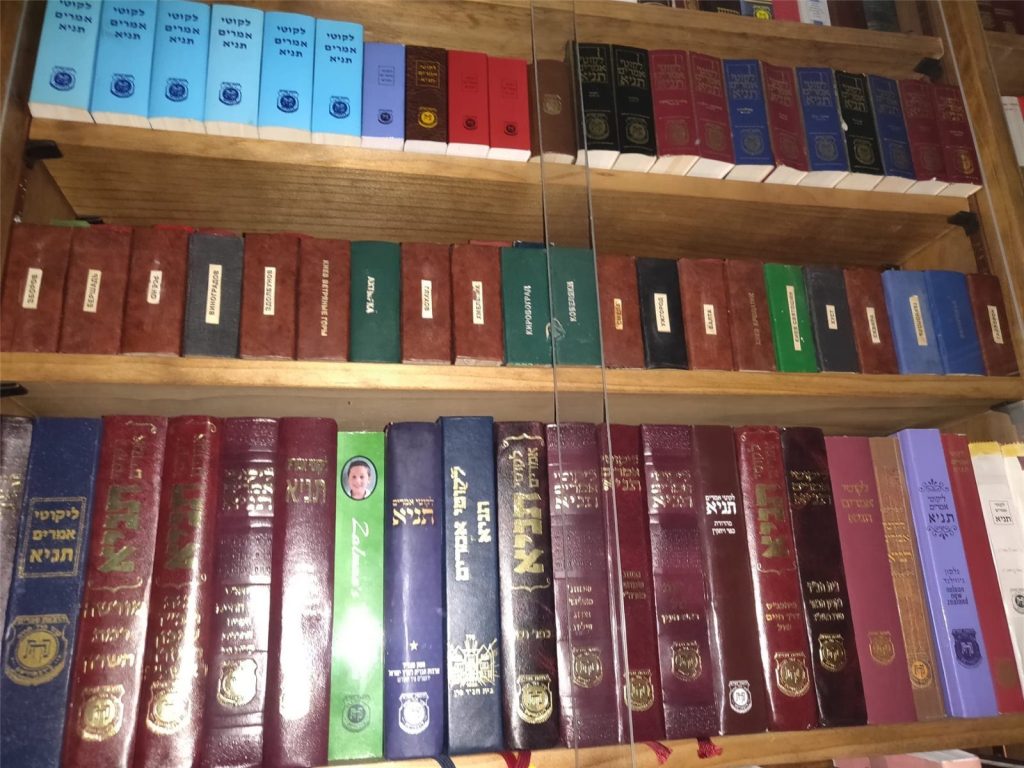
The Rebbe heard him and said, “A Tanya isn’t heavy,” and he took the package from me.
R’ Chanin did not give the other two packages to the Rebbe; he went into the Rebbe’s room and asked where to put them. The Rebbe pointed toward his chair and afterward, he also put the package that he took from me on the chair. Then the Rebbe said, thank you!
Since we gave the sefarim in three packages, the Rebbe asked: It’s all one thing, right? Again, thank you. This is the best Chanuka gelt a Jew could get. The Rambam paskens that the mitzva of Chanuka is to be happy [as he calls them] ‘yemei simcha,’ may it be happy the entire year and joy for all Jews and good news.
The Rebbe usually gave $20 as his participation for each Tanya. The Rebbe said to us with a smile: Regarding the cheshbon, figure out with him (pointing at R’ Groner who had edged closer to the room because the door was open), how much we owe in advance? Eh?
I had already made the calculation and said: We will already make the cheshbon among ourselves.
The Rebbe repeated: This is the best Chanuka gelt that a Jew could get. A freilichen Chanuka and good news.
We left the room and the Rebbe closed the door behind us.
In our rosiest dreams we did not imagine having a yechidus like this. We were very moved by the Rebbe’s holy face. We stood outside and thanked Hashem for the wonderful zechus that we got to have yechidus altogether when this was a rarity.
A Second Surprise: Another Yechidus!
Not even five minutes passed and we were still standing in the hall when R’ Groner came back out from gan eden ha’tachton and came over to us and said: The Rebbe is calling for you again!
R’ Groner opened the door to the Rebbe’s room and we went in with the door remaining half open. The Rebbe asked R’ Chanin: Perhaps you know which of the volumes of Tanya has the last publication number?
R’ Chanin said that the Tanya printed in the Rebbe Rayatz’s apartment in Leningrad, on 22 Machavaya Street was the last number.
The Rebbe asked: Do you know which sefer it is?
R’ Groner, who was standing outside, came in and said to the Rebbe: I’ll find it right away.
The Rebbe said to him: By the time you move he will already find it; he packed it!
R’ Chanin said he knew exactly which package this Tanya was in and it would take him a minute to find it. The Rebbe said: Please find it.
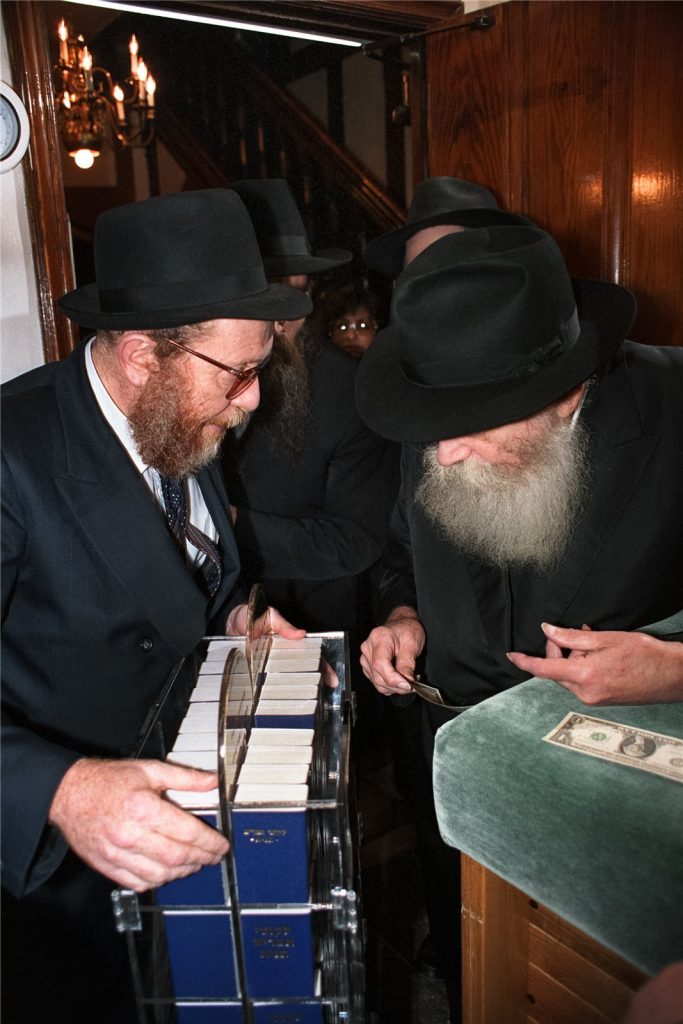
After R’ Chanin found the Tanya, he gave it to the Rebbe. The Rebbe took it and leafed to the page with a list of Tanya printings and soon found the page where the number was listed.
The Rebbe Asked About Every Detail
The Rebbe leafed through the Tanya and asked R’ Chanin: Was this really printed at 22 Machavaya in Petersburg? R’ Chanin said it was and the Rebbe asked: Where in the apartment? In which room did you print the Tanya?
Since he saw that the Rebbe was interested in the details, R’ Chanin said that after the communists nationalized the Rebbe Rayatz’s apartment, since it was a large apartment, they divided it into five-six units and each family slept in one room and shared the kitchen and bathroom. One of the people living there was a Jewish woman from whom we got permission to print in her apartment. Before printing, we explained to her what it was about and how much we appreciated that she let us in. We put a mezuza up for her and she was very moved by this.
R’ Chanin told the Rebbe that the people with us at the time of the printing in Leningrad said that they had a tradition that it was from this room that Rebbetzin Chaya Mushka told the Rebbe about her father’s arrest on 15 Sivan 5687.
The Rebbe said: It was a large room with high windows. How many windows were in the room? After R’ Chanin said there were two, the Rebbe asked: Did the windows face the big street or the courtyard? R’ Chanin said they faced the main street and the Rebbe said: Indeed, correct.
Then the Rebbe asked: When did you print at the Petropavl fortress? R’ Chanin said we began on the eighteenth and went into a little of the nineteenth, and in the Rebbe Rayatz’s apartment the night of Yud-Tes Kislev.
The Rebbe asked: You surely had a permit. R’ Chanin said yes and added that at the time we sent the permit via fax to the offices of the Vaad L’Hafotzas Sichos for them to give it to the Rebbe.
The Rebbe asked: Where did you print at the Petropavl fortress?
R’ Chanin saw that the Rebbe really wanted to hear all the details and he told the Rebbe that when you enter the area of the fortress, you have to pass a small bridge and then turn left where the former prison was, which is a museum now. He mentioned that there were difficulties entering with the vehicle holding the printing press but after bribing the guard, all was well.
He also told the Rebbe about the visit in the room where they claim the Alter Rebbe was imprisoned but it didn’t fit with some of the stories told by Chassidim. After questioning the tour guide, she said this was a completely new building and only at the other end were there still buildings from that era.
The Rebbe wanted to hear all the details and R’ Chanin told him at length everything we experienced in the building of the military press. When he told about the printing, the Rebbe asked: How long did it take you to print the Tanya at the Petropavl fortress?
He said the printing itself took about four hours because of the cold which hampered the printing and also because of the fuse which blew several times because of the electrical overload; the wires there are very old and they never used so much electricity at this print shop.
What about their printing press, asked the Rebbe. R’ Chanin said that their machines were ancient and didn’t even work with electricity but manually. I think that the machines in Lubavitch in the 1890’s and 1900’s called ‘copier’ were far more advanced than the machines at the military print house but it bears the name of ‘military print house.’
The Rebbe said: According to what you say, it seems that these buildings remain from that era.
As he related all these details, the Rebbe leafed through the Tanya, back and forth, examining the pages and especially the part that listed the editions of Tanya.
Occasionally, the Rebbe reacted to what R’ Chanin said and said, “yeah, yeah,” as someone listening to the details and interested in hearing more.
Get to Edition 4000 Within Five Days!
When R’ Chanin finished telling the Rebbe about the printing, the Rebbe looked up (until then, he was eyeing the sefarim) and said:
“The number of this Tanya is 3889. That means that another hundred plus are missing to reach the next thousand. It would be worthwhile to finish this by the end of the Chanuka.”
The truth is, we were taken aback. How could we print in the Russia of those days under those conditions, a hundred sifrei Tanya within a few days?
The Rebbe sensed what we were thinking and went on to ask with a smile: Is this possible?
R’ Chanin said we would try and said: “The king decrees and the mountain is uprooted.”
The Rebbe said: There are probably another 100 cities in Russia where the Tanya wasn’t printed yet and you can print it there. If not, it’s worth building an entire city, the main thing being to able to print a Tanya there! Until the end of Chanuka there are a number of days (and he began counting on his fingers). Today is Wednesday, Thursday, Friday, Sunday, and Monday is Zos Chanuka, and my father-in-law said that Zos Chanuka is still Chanuka. That means a total of five days (and he said this with a big smile). They should finish the printing and give the sefarim by Zos Chanuka so that I can take them to my father-in-law (to the Ohel).
We were in shock. To print over 100 sefarim in five days. How could we accomplish that? Then the Rebbe continued with a big smile: I realize that it’s impossible to print so many sifrei Tanya in a few days. Therefore, make a list of all the cities in Russia where they will be printed, G-d willing, and decide on it now that they will actually do it, and make a list till 4000 and bring me this list on Zos Chanuka before I go to my father-in-law so I can convey the decision.
And he said again: Don’t forget the psak of the Rambam that the days of Chanuka are days of joy, so that there won’t be any complaints. A freilichen Chanuka and besuros tovos from the entire family and everyone should be healthy. This is the greatest Chanuka gelt that a Jew could receive, the sefer Tanya. Ah freilichen Chanuka!
The Rebbe took the Tanya that had been printed in the Rebbe Rayatz’s apartment and said: I’m taking this with me to the Ohel, to my father-in-law, and the rest I will show later. G-d willing, I will learn in each of the sifrei Tanya, with an order, and it won’t be ‘like new’ but ‘literally new.’
Toward the end of the yechidus, the Rebbe asked us whether we had any video or pictures of the printing of the Tanya at the Petropavl fortress and in the Rebbe Rayatz’s apartment. Fortunately, Rabbi Wagner videotaped our trip but we didn’t have the recordings with us because we didn’t think the Rebbe would be interested in them. We said yes, and the Rebbe asked us to submit them.
Then the Rebbe took the package of panim and gave it to Rabbi Groner and still held the Tanya as he left the room on his way to the Ohel.
We quickly submitted the videos to the Rebbe even before we made copies of them. Two nights later, after Maariv, the Rebbe sat in gan eden ha’tachton and watched the printing of the Tanya in Russia. Until today, we have not found a copy of it, and that’s a shame!
* * *
Before the Rebbe’s trip to the Ohel on Zos Chanuka, R’ Chanin submitted a list of cities in which the Tanya would be printed in Russia. The actual printing took months.
Beis Moshiach #1433 • pp. 22-27, 28
© 2026 Beis Moshiach Magazine. All rights reserved.
This article originally appeared in Beis Moshiach #1433. You are welcome to share it with friends and family by email or in print, provided that you do not change, add to or omit any part of it, you credit the author and Beis Moshiach, and you include a link to archive.bmoshiach.org (written out in full in printed copies).
To republish this article in a newspaper, magazine, book or website, please request permission in advance at [email protected].