Two Pesukim To Stabilize The World
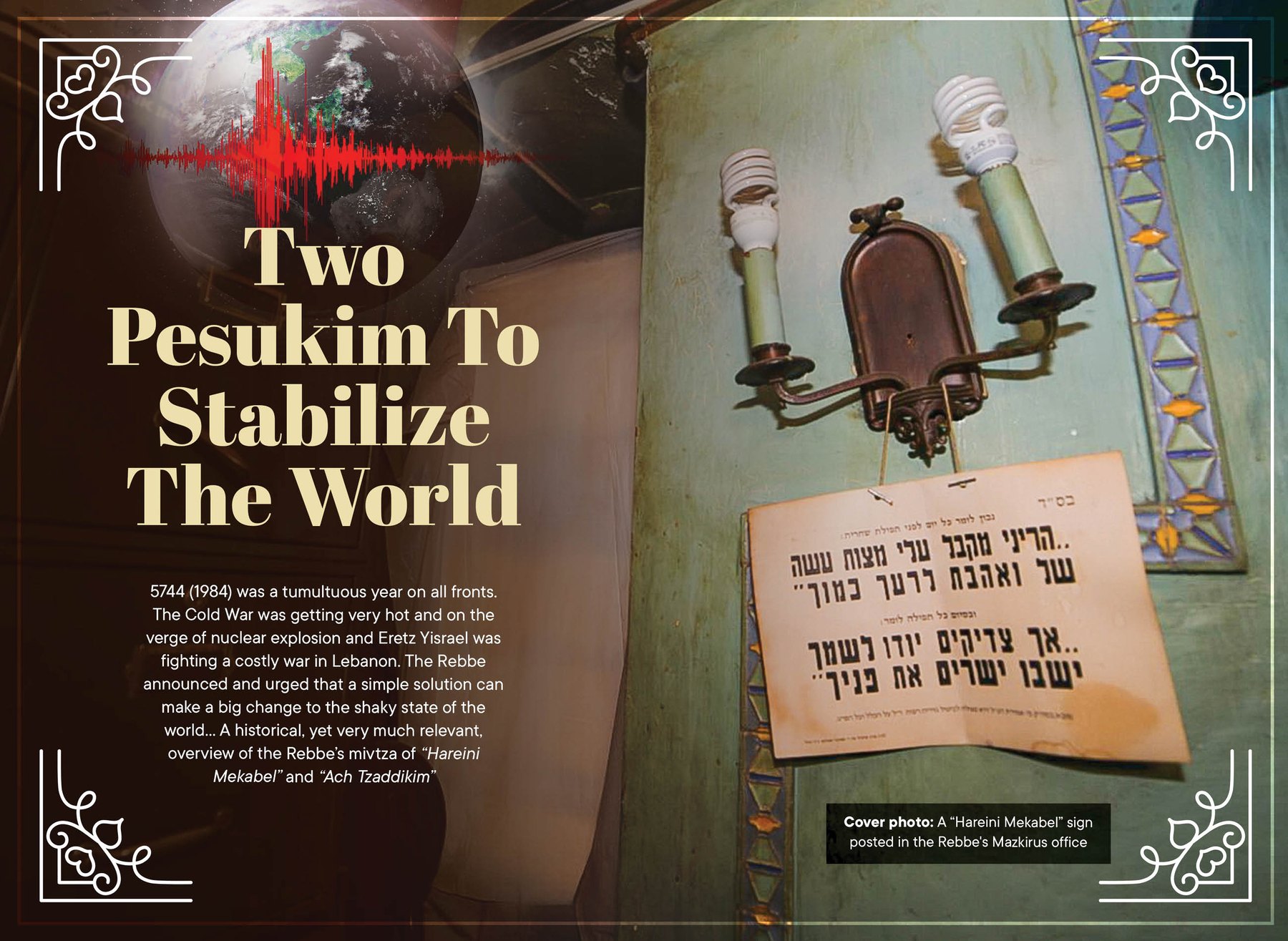
5744 (1984) was a tumultuous year on all fronts. The Cold War was getting very hot and on the verge of nuclear explosion and Eretz Yisrael was fighting a costly war in Lebanon. The Rebbe announced and urged that a simple solution can make a big change to the shaky state of the world… A historical, yet very much relevant, overview of the Rebbe’s mivtza of “Hareini Mekabel” and “Ach Tzaddikim”
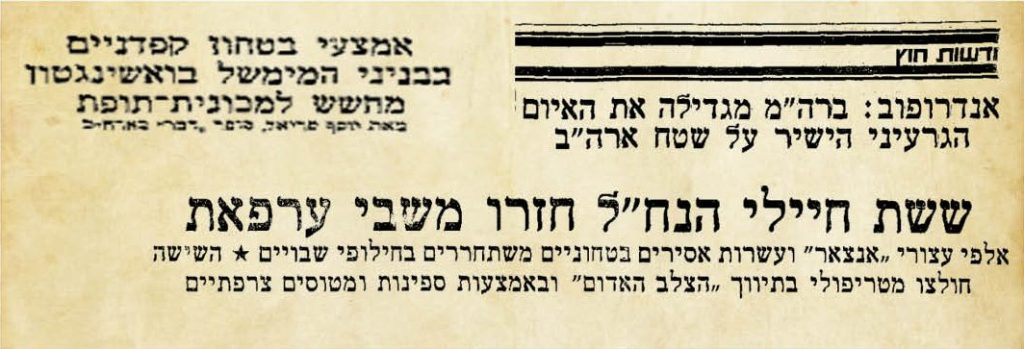
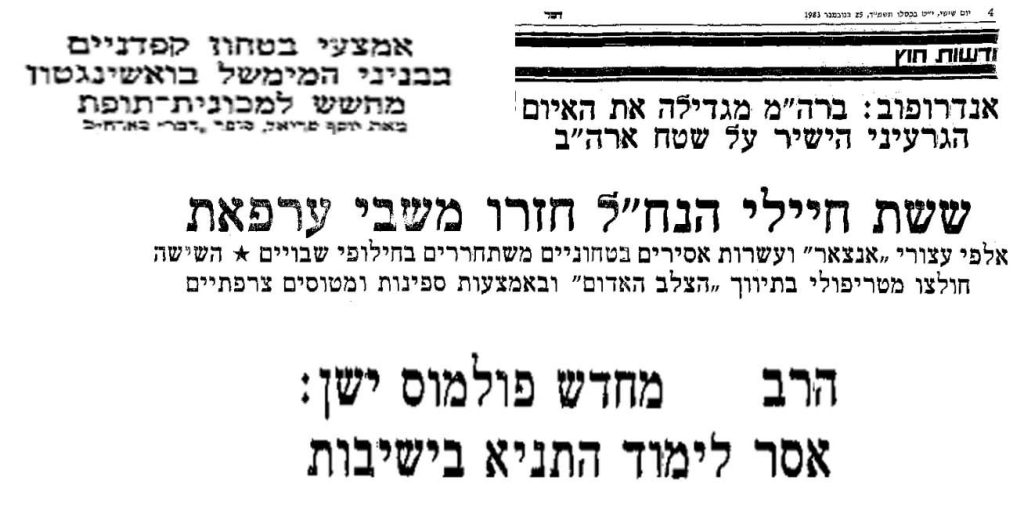
Forty years ago, it was tense politically then too, not just in Eretz Yisrael but throughout the world. At that time, there were a number of major conflicts that threatened world peace. The tension between the United States and the Soviet Union affected the entire world and by extension all other countries east and west. Things continued to heat up until people spoke of a nuclear threat on the part of the Soviet Union against the United States that would lead to World War III.
In Eretz Yisrael, the crisis in Lebanon following the war of Peace in Galilee was still at its height. IDF soldiers fought valiantly in Lebanon, northern Israel sustained missiles, and even the American army which was in the area sustained painful attacks. An attack in Lebanon caused the deaths of 241 American soldiers. The attack was perpetrated by, among others, terrorist Fuad Shukr who was just recently assassinated by Israeli forces.
If that wasn’t enough, a day before the sicha, 17 Kislev, a prisoner exchange took place: 6 Israeli soldiers for 4,765 terrorists. The wildly irresponsible deal took place secretly and was only made public the day after the Rebbe’s sicha, 20 Kislev.
At that time, the Rebbe announced a new takana, an addition in tefilla, albeit a short one. Actually, there were two short additions, one before tefilla and one after tefilla.
The Rebbe gave the reason for this anomalous takana as being because of the “lack of stability in the world,” and because of the problem of the opposite of Ahavas Yisrael. The Rebbe didn’t specify what he meant by “lack of stability” and “fighting among nations.” Nor did he explain what he meant by “opposite of Ahavas Yisrael.”
Among Lubavitcher Chassidim, this wasn’t a chiddush for in the Alter Rebbe’s siddur (according to the Arizal), he says to say these words before starting to daven, saying that the mitzva of Ahavas Yisrael is the gateway by which a person can stand before Hashem and daven, and the way his prayers will be accepted, but among other groups, these words are not customary to recite.
New Takana
Let’s start at the beginning. It was Thursday night, the eve of Yud-Tes Kislev 5744, and a grand farbrengen was held to mark the Chag HaGeula. This farbrengen was also unique because it was broadcast live to Eretz Yisrael (Yerushalayim, Kiryat Malachi, Kfar Chabad and Haifa) for the first time in history.
During the farbrengen, the Rebbe began speaking about current events. “Regarding the world situation which deteriorates from one day to the next, as we have been seeing lately, ‘kingdoms are provoking one another,’ in a most frightful way, especially when they want to, G-d forbid, involve the Jewish people.”
As the sicha went on, the Rebbe announced a new takana by which before Shacharis, everyone would say, “Hareini mekabel olai…” and at the end of davening, everyone would say, “Ach tzaddikim…” The Rebbe stressed that this was meant for every Jew, no matter what nusach he davened.
At the farbrengen two days later, on Shabbos parshas Vayeishev, Chof Kislev, the Rebbe spoke at length about the new campaign. He explained that due to the world situation in which nations are provoking one another, in addition to behavior that was the opposite of Ahavas Yisrael, the Jewish people needed to add to their avoda, particularly in tefilla with these two verses, one to be said before Shacharis and the other to be said at the end of all three tefillos, after Aleinu.
The Rebbe said that saying, “Hareini mekabel…” at the beginning of tefilla accomplishes that Hashem will fulfill even more so our requests in tefilla. Since everything in the world depends on the conduct of the Jewish people, including the situation of kingdoms provoking one another, we need to add in all matters associated with Ahavas Yisrael and Achdus Yisrael.
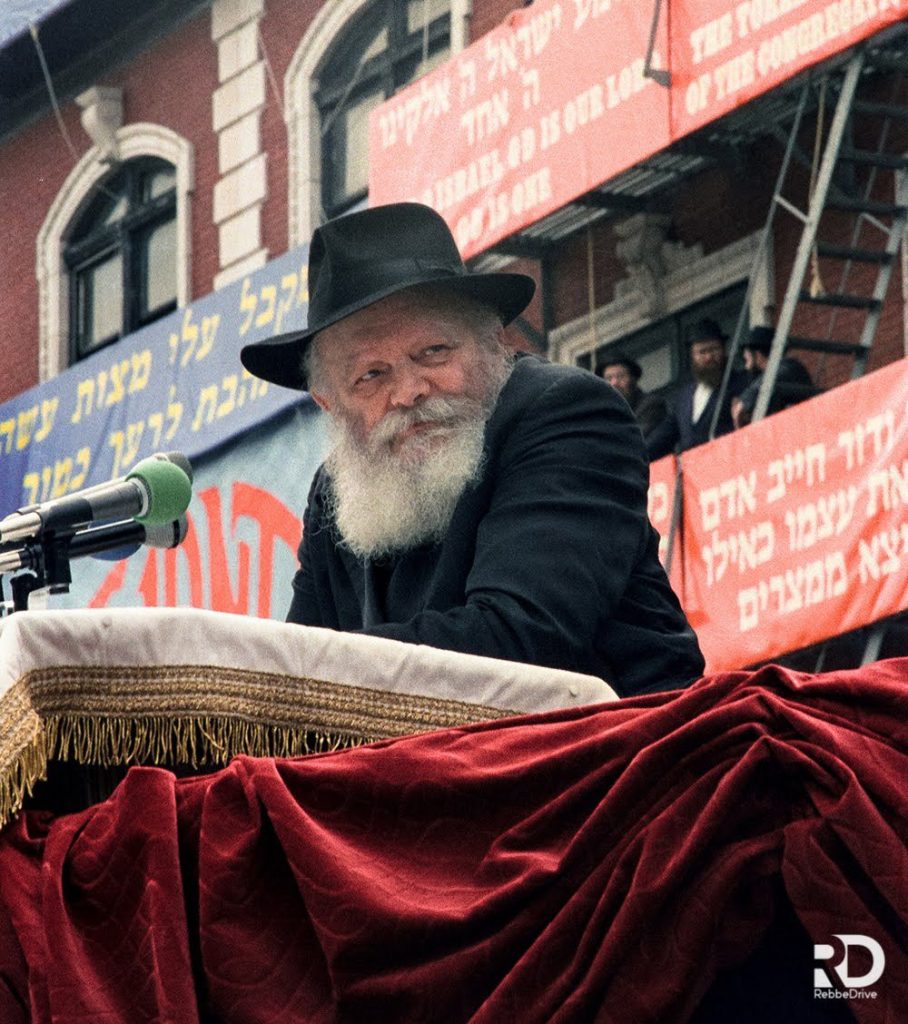
The Rebbe also explained the meaning of the addition of “Ach tzaddikim” – for all Jews are called tzaddikim and we are asking that all Israel be in a state of “sitting,” a restful state without confused and worried thoughts. And also, “the upright should sit in [front of] Your face” means to be seen by Hashem as it says regarding aliya l’regel to the Beis HaMikdash in the imminent Geula.
The Rebbe said these two additions are a segula to correct the situation.
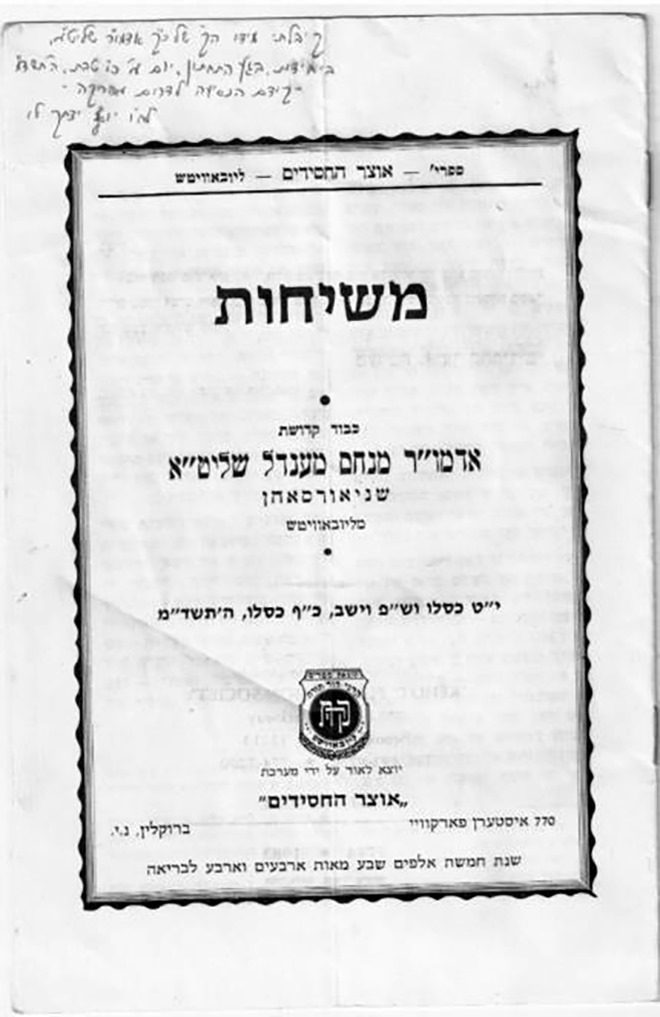
What the Rebbe said at these two farbrengens were combined and edited by the Rebbe and were issued in a kuntrus, in Yiddish and Lashon Kodesh, and disseminated in tens of thousands of copies.
Spreading The News
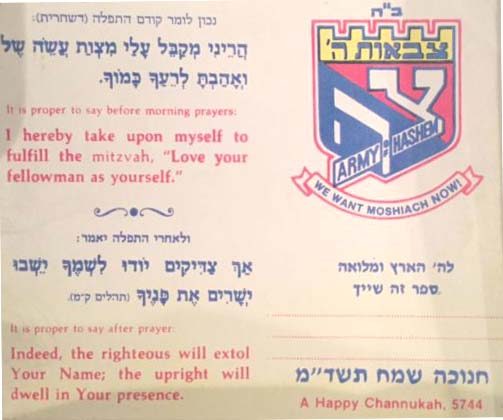
The Rebbe did not only present the idea but saw to its actual implementation, utilizing basic techniques for the purpose of bringing it to the awareness of as many people as possible. Likewise, the Rebbe gave detailed instructions about making stickers with the pesukim, in English translation too, saying the sticker should have the Tzivos Hashem logo on it. The stickers were produced quickly so they could be given out at the children’s rally which took place on Chanuka in 770. The Rebbe himself gave out the stickers to the tankistim who gave them to the children.
At that rally, as the children began davening, the Rebbe said they should say “Hareini mekabel” before Mincha and “Ach tzaddikim” after Aleinu.
Someone asked whether at gatherings of men, women, and children, “Hareini” should be said in order to give the opportunity to those who hadn’t said it at Shacharis and the Rebbe said that was most proper.
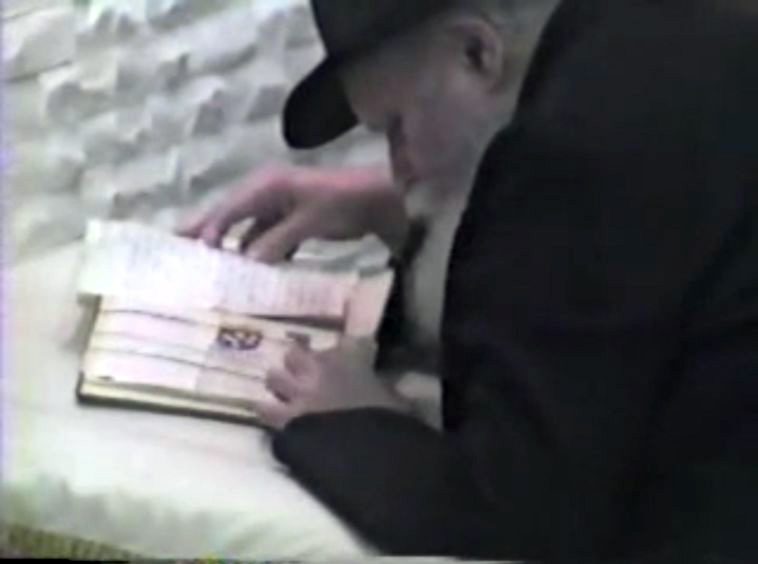
The Rebbe put a sticker in his own siddur and it’s been there ever since. Flyers were published in which the Rebbe’s instruction was explained along with the two additions so that it could be cut out and pasted in a siddur.
On Shabbos, parshas Mikeitz, the Rebbe thanked those involved, “Here is the place to thank those who were involved in publicizing the suggestion about saying ‘Hareini…’ and ‘Ach…’ by printing it in the paper and doing so in such a way that anyone could cut out the section in which it appeared to stick in their siddur, and may they be blessed.”
Tzach in New York also printed stickers. At a certain point, they reported to the Rebbe that a couple who had become close to Lubavitch had donated $500 for the purpose of printing 6,000 of these stickers and had even committed to printing another 18,000 copies, and they asked for a bracha for children. The Rebbe responded, “Great is the merit, etc.”
Another generous person printed 5,000 stickers and at the beginning of 5745 wrote to the Rebbe that he was willing to print another 30,000 copies. The Rebbe responded, “Received with thanks, and it’s a timely thing on the eve of Chof Marcheshvan (when his mazel is predominant [the Yom Huledes of the Rebbe Rashab]), and great is the merit of all those who participate in all [matters] such as this etc. I will mention it at the Tziyun.”
In Eretz Yisrael, Rabbi Yisrael Leibov, director of Tzach, launched a whole program of hanging street posters with the message in all religious areas. At the same time, thousands of signs meant to be hung in shuls were distributed with reminders of the additions.
The Special March From Morocco
When shluchim were sent to communities in Morocco and Tunisia, the Rebbe Rayatz and the Rebbe told them not to change the customs of the local communities. The heads of schools were also told not to change anything in the students’ nusach ha’tefilla.
Still, when the Rebbe announced this campaign, he said that despite what he said earlier, he was requesting the addition of these two pesukim because it wasn’t really a change in the nusach ha’tefilla and that they appear in the siddurim of the Rambam and the Arizal and others.
What the Rebbe said was heard as a live broadcast in a private home in distant Morocco where the shluchim: Rabbi Shlomo Matusof, Rabbi Sholom Edelman and Rabbi Yehuda Leib Raskin, along with tmimim-shluchim crowded. To their astonishment, they heard the Rebbe speaking specifically about Moroccan Jews. [The broadcast was conveyed to a private home and not to the homes of shluchim or Chabad mosdos because the government monitored long phone conversations to western countries.]
The tmimim in Morocco got busy urging the people who davened in the shuls they davened in. Due to the importance that the Rebbe attributed to the matter, the idea was proposed to go to shuls and schools and to suggest putting the sticker into the siddurim. The rabbanim and gabbaim agreed, out of respect for the Rebbe.
Eliezer Avtzon, one of the talmidim-shluchim in Morocco, later did research and discovered that in ancient siddurim of Moroccan Jews, two and three hundred years old, “Hareini” and “Ach” appeared. This fact contributed greatly to the acceptance of the idea among communities in Morocco.
The talmidim-shluchim put the additions to tefilla to a popular tune which they sang at rallies and groups in order to implant the text into the souls of the children. It was the tune of the victory march that Moroccan soldiers sang when going to war against the Algerian army. The children liked singing it over and over.
A few months later, the group of bachurim-shluchim went to New York for Simchas Torah 5745, along with some children who had made great strides in their Jewish growth. During the children’s rally that took place with the Rebbe on Chol HaMoed Sukkos, the children sang the new tune that was brought from Morocco.
On motzoei Simchas Torah, the bachurim and children went for kos shel bracha. As the Rebbe poured the wine, he motioned that they should go up and sing the tune for “Hareini.” The Rebbe encouraged the singing and told the photographer, Freidin, to take a picture. At the end, the Rebbe asked: Did everyone get l’chaim?
On The Radio Too
Rabbi Yosef Wineberg, author of Lessons in Tanya, broadcast a Tanya class every motzoei Shabbos on a radio program. In these shiurim he included points from the Rebbe’s latest sichos.
That motzoei Shabbos, he spoke about the importance of adding “Hareini” and “Ach” and when he wrote this to the Rebbe, the Rebbe responded with another mention of the upheavals around the world: “Surely you will continue in the aforementioned, especially if you read the newspapers where on the front pages of recent days – is news (similar to the old news of the prior days) of the deterioration in the world and the provocation of kingdoms etc., have become renewed all the more etc, and we conclude with the positive in visible and revealed good.
Another answer that he received at that time said: “Especially when you surely also read today’s newspaper and if only it would not be similar tomorrow etc. And we conclude with good.”
In the Rebbe’s secretaries’ office there was a sign about the two pesukim. This room wasn’t exactly the best place to publicize inyanei Chabad but out of all the mivtzaim, this one found its place on one of the walls and it is still there today.
Remembering And Doing
With the world tension today and the deterioration of Ahavas Yisrael, there is no better time to strengthen bitachon and emuna along with Ahavas Yisrael through these pesukim. It’s a good time to let those communities know about it that haven’t yet incorporated saying these pesukim.
RENEWED AWAKENING
Rabbi Meir Schmukler was one of the bachurim-shluchim who went to bolster the yeshiva in South Africa in 5744. Before they went, the Rebbe received them for yechidus and told them that instead of saying a sicha for them, as was customary, he would give them copies of the edited sicha that he said at the Yud-Tes Kislev farbrengen about the world situation and adding portions to the davening, before and after. (The parents who were present also received this.)
The shluchim felt that through this, the Rebbe was essentially giving them the responsibility to be involved in this and they worked a lot on this during their time on shlichus.
As the years passed, the matter subsided and settled into routine. Since that time, nothing in particular was done about the matter. This year, forty years since the Rebbe’s call, R’ Schmukler thought about how there are still many communities that don’t say “Hareini” and “Ach” and he decided to do something about it. He published a special kuntrus with the Rebbe’s sicha along with explanations. In the second part of the kuntrus are photocopies from old siddurim where you see that these pesukim appear as part of the nusach ha’tefilla.
He then began visiting rabbanim to ask them to speak about this to their communities and to incorporate this practice as a part of their regular nusach of davening. He has been successful, especially lately as the world “shakes.” In some communities they accepted it positively. He even reprinted signs for shuls which say, “In light of the situation, one should add and say in prayer…” The rabbanim of those communities allowed him to hang this in their shuls and even spoke about it in their drashos.
Beis Moshiach #1426 • pp. 14-20
© 2026 Beis Moshiach Magazine. All rights reserved.
This article originally appeared in Beis Moshiach #1426. You are welcome to share it with friends and family by email or in print, provided that you do not change, add to or omit any part of it, you credit the author and Beis Moshiach, and you include a link to archive.bmoshiach.org (written out in full in printed copies).
To republish this article in a newspaper, magazine, book or website, please request permission in advance at [email protected].