Get To Know Your Machzor
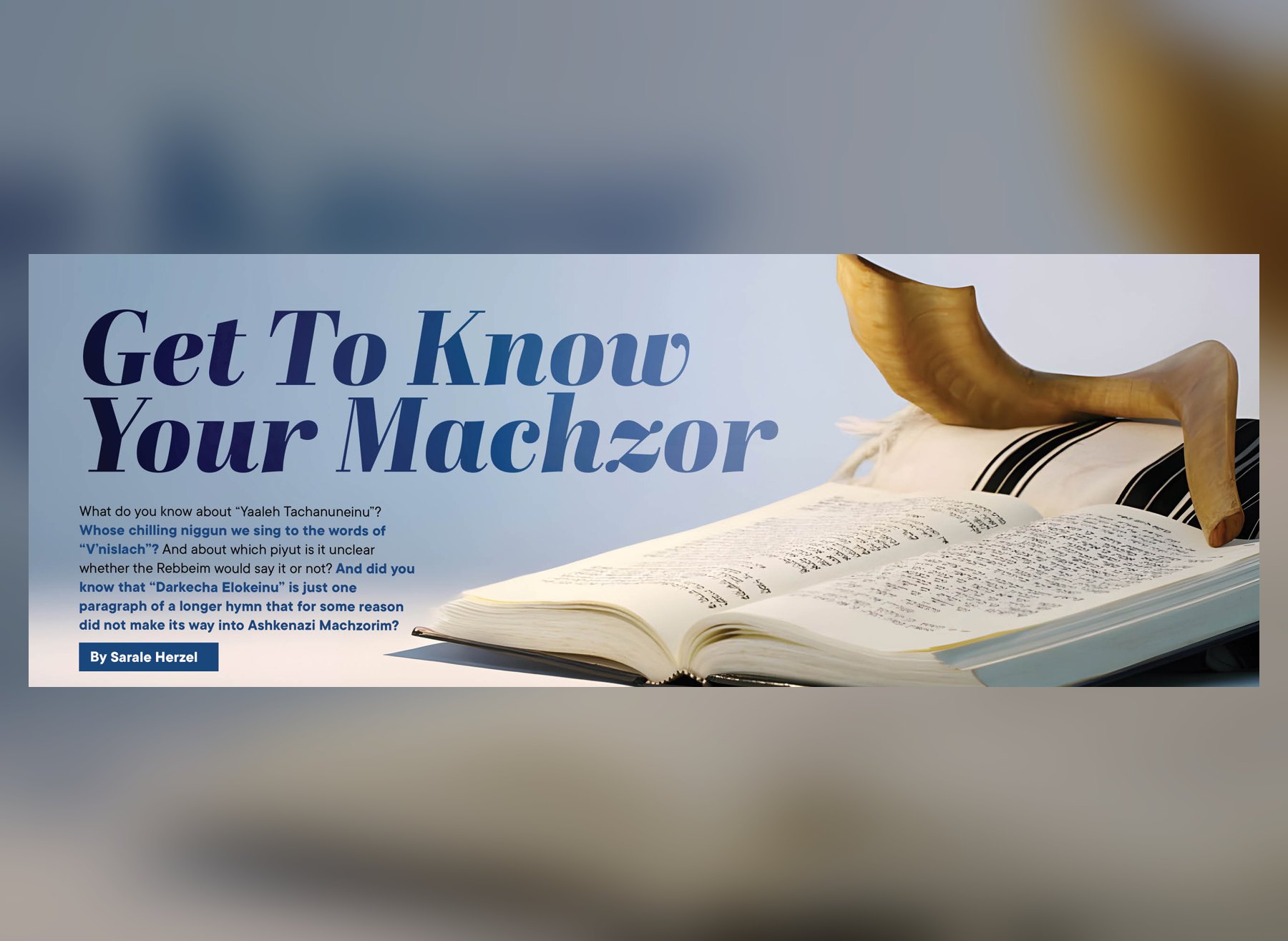
What do you know about “Yaaleh Tachanuneinu”? Whose chilling niggun we sing to the words of “V’nislach”? And about which piyut is it unclear whether the Rebbeim would say it or not? And did you know that “Darkecha Elokeinu” is just one paragraph of a longer hymn that for some reason did not make its way into Ashkenazi Machzorim?
וְנִסְלַח לְכָל עֲדַת בְּנֵי יִשְׂרָאֵל וְלַגֵּר הַגָּר בְּתוֹכָם כִּי לְכָל הָעָם בִּשְׁגָגָה.
As the sun sets on the eve of the holy day, immediately after the “Kol Nidrei” prayer, the cantor and congregation say the following verse three times: “And the entire congregation of the children of Israel shall be forgiven, and the convert that dwells among them; for all the people were in error.”
This verse, whose source is in the book of Bamidbar (Bamidbar15: 26), describes how the Holy One, Blessed be He, accepts the teshuva of the children of Israel. Even when the children of Israel sinned with the grave sin of idolatry, which is equivalent to all the commandments and constitutes a rejection of the yoke of Heaven and a breach of the covenant between the children of Israel and Hashem – nevertheless, G-d forgives and pardons them, and accepts their sacrifice with love and willingness.
Rabbi Eliezer ben Nosson, the Raavan, who was one of the first Tosafists, notes that the meaning of the congregation saying aloud the verse “And the entire congregation of the children of Israel shall be forgiven” is a kind of declaration: We have done our part and returned to You, G-d, and You do as You promised us – to forgive our sins on this day.
The Niggun
The niggun used to sing the words “V’nislach” was sung by the Chassid Rabbi Yechiel Halperin – the chazan in Lubavitch during the time of the Rebbe Rashab.
The melody has three movements, corresponding to the three times the chazan and congregation repeat the pasuk. The melody was recorded as sung by the Chassid Rabbi Shneur Zalman Bronstein, a chazan and composer in Kfar Chabad (see box).
יַעֲלֶה תַחֲנוּנֵנוּ מֵעֶרֶב וְיָבוֹא שַׁוְעָתֵנוּ מִבֹּקֶר וְיֵרָאֶה רִנּוּנֵנוּ עַד עָרֶב.
“May our supplications ascend from evening, and may our cry come from morning, and may our song appear until evening.”
This piyut (liturgical poem) serves as an introduction and prelude to the following order of piyutim recited immediately after the Amida prayer of Maariv on Yom Kippur. This piyut was written in the Middle Ages in Ashkenaz (Germany), and its author is unknown. It is already mentioned in the Sefer Mordechai, which was published over 300 years ago.
The piyut consists of eight stanzas, and each stanza is composed of three parts: Yaaleh (ascend) from evening, V’yavo (come) from morning, and V’yeira’eh (appear) until evening.
The changing words are usually words that express supplication or prayer in the plural, meaning that the prayer-supplication-cry of all the congregation should ascend before G-d from the evening of Yom Kippur through its day and until the closing of the holiday towards the evening of the next day.
The climax is in the last line: “And may He appear to us until evening.” It is not the response that “appears,” but G-d Himself.
Like many piyutim, this one is also constructed and arranged intentionally in the acrostic method, so that the letters at the beginning of each section form a reverse alphabetical sequence using the Alef-Beis (Tachanuneinu, Shavaseinu, Rinuneinu, Koleinu, and so on). In order to complete the piyut in full using this method, the last stanza is composed of three words beginning with the letter Alef. Thus, the piyut has 24 lines in 8 stanzas.
The Niggun
This heartfelt piyut was also adapted to a heartfelt melody sung in our holy court of 770 – Beis Moshiach and other Chabad shuls around the world, expressing supplications and strong confidence in the Holy One, Blessed be He, that He will fulfill the wishes of His people, Am Yisrael.
The tune, whose composer is unknown, appears twice in the Sefer HaNiggunim, as ‘Niggun 76’ without words and as ‘Niggun 243’ with the words of the piyut ‘Yaaleh’… The melody is also known in other Chassidic courts and in the wider world, and is regularly sung with variations in the recitation of Hallel on the words “Odcha ki anisani” and onwards.
דַּרְכְּךָ אֶלֹקֵינוּ לְהַאֲרִיךְ אַפֶּךָ לַרָעִים וְלַטּוֹבִים וְהִיא תְּהִילָתֶךָ. לְמַעַנְךָ אֶלֹקֵינוּ עַשֵׂה, ולֹא לָנוּ, רְאֵה עַמִידַתֵנוּ דַּלִּים וְרֵקִים.
“It is Your way, our G-d, to be patient with the wicked and the good, and this is Your praise.
For Your sake, our G-d, act, and not for us; see how we stand – poor and empty.”
The prayer of “Darkecha Elokeinu” from the night of Yom Kippur is taken from the piyut “Amnam Ashamnu” written by the earliest known Jewish poet named Yosi ben Yosi, who lived in Eretz Yisrael during the period of the Sevoraim and was called “the orphan” and “Kohen Gadol.”
In practice, according to Chabad custom and most Ashkenazi communities, they did not recite most of the piyut, except for the refrain “Darkecha Elokeinu” and the last stanza “Lemaancha Elokeinu aseh.”
The meaning of the prayer is praise and request to G-d to forgive the sins of His people and accept their repentance even though they are not worthy of it and even though they are poor and empty of mitzvos, because His way is patience and forgiveness.
The Niggun
The Rebbe taught the niggun “Darkecha Elokeinu” on the night of Simchas Torah after hakafos towards morning in the year 5716 (1955).
When teaching the niggun, the Rebbe said that although these words are not so positive: “See how we stand – poor and empty,” on Simchas Torah it cannot cause harm and on the contrary, it brings benefit, because an “empty vessel” is a proper vessel to receive the divine hashpaos and hamshachos.
This niggun is ‘Niggun 193’ in the Sefer HaNiggunim.
אָמְנָם כֵּן יֶצֶר סוכֵן בָּנוּ: בָּךְ לְהַצְדֵּק רַב צֶדֶק וַעֲנֵנוּ סָלַחְתִּי:
“Indeed it is so, the evil inclination dwells within us:
It’s up to You to justify, Great in Righteousness, and answer us, I have forgiven.”
This selicha (penitential prayer) piyut attributed to Rabbi Yom Tov ben Yitzchok of Joigny is also recited after the Amida prayer on the night of Yom Kippur.
The piyut is arranged in alphabetical order (Alef-Beis), with each line beginning with a new letter. Each stanza consists of two lines, and it ends with the word “salachti” (I have forgiven).
Each line has three parts, the first two with three syllables (for example: Am/nam/ken) and the last with two syllables (not including short syllables). Each line has internal rhyme (for example: Amnam ken yetzer sochein), and the last two words in each line of the same stanza rhyme with each other (for example: yetzer sochein banu… rav tzedek va’aneinu).
אֵלֶּה אֶזְכְּרָה וְנַפְשִׁי עָלַי אֶשְׁפְּכָה כִּי בְלָעוּנוּ זֵדִים כְּעֻגָּה בְּלִי הֲפוּכָה כִּי בִימֵי קֵיסַר לֹא עָלְתָה אֲרוּכָה לַעֲשָׂרָה הֲרוּגֵי מְלוּכָה.
“These I remember, and my soul pours out within me
For the wicked have swallowed us like a cake without retaliation
For in the days of the Caesar, no healing took hold
For the ten martyrs of the kingdom.”
“Eleh Ezkerah” is a piyut recited at the end of the Seder Avoda in the Musaf prayer of Yom Kippur.
The piyut speaks about the Ten Martyrs – the Tannaim who were killed sanctifying G-d’s name by the [Roman] kingdom, and it is accepted that the reason for this is because they were equivalent in their generation to the ten tribes that sold Yosef HaTzaddik, and therefore they were killed.
These Tannaim included Rabi Yishmael Kohen Gadol, Rabi Akiva ben Yosef, Rabban Shimon ben Gamliel, Rabi Chanina ben Teradyon, Rabi Elazar ben Shamua, Rabi Yesheivav HaSofer [the Scribe], Rabi Chutzpis HaMeturgeman [the Interpreter], and some say also Rabi Chanina Segan HaKohanim.
The piyut is based on the alphabetical order at the beginning of the rhymes. And at the end, the name of the author “Yehudah Chazak” is signed. The piyut tells the story of the decree and the order of its occurrence and is recited on this occasion, for the reason stated at the end of the piyut: “Gracious One, look from on high, the spilling of the blood of the righteous and the essence of the blood, see in Your curtain and remove the stains, G-d who is King and sits on the throne of mercy.”
The piyut has twelve sections, and at the end of each section, we say “We have sinned, our Rock, forgive us, our Creator.”
In ancient times, this piyut was part of a complete order of selichos recited after the Seder Avoda, but in later periods their recitation was canceled, and only the piyut “Eleh Ezkerah” remained alone. In other communities, this piyut is recited as a lamentation in the kinnos for Tisha B’Av.
This Piyut By Our Rebbeim
When the congregation recited the piyut of the Ten Martyrs, the Mitteler Rebbe would say Tehillim, and so did the Rebbe Rashab. Once, at the end of Yom Kippur, they asked the Rebbe Rashab if he recites the piyut “Eleh Ezkerah” of the Ten Martyrs. He did not answer this, but said, “Is it from me that you bring proof?! From the holy Mitteler Rebbe, who said Tehillim with a shtreimel and the shtreimel became wet all the way to its tip, from him they could bring proof.”
In the book “Yemei Bereishis” it is brought that in the year 5711 (1950), while the cantor was saying the piyutim, the Rebbe said all of Tehillim. But this was not his custom in later years.
כִּי הִנֵּה כַּחֹמֶר בְּיַד הַיּוֹצֵר בִּרְצוֹתוֹ מַרְחִיב וּבִרְצוֹתוֹ מְקַצֵּר כֵּן אֲנַחְנוּ בְיָדְךָ חֶסֶד נוֹצֵר לַבְּרִית הַבֵּט וְאַל תֵּפֶן לַיֵּצֶר.
“For behold, like clay in the hand of the potter
Who when he wishes expands and when he wishes contracts
So are we in Your hand, O Preserver of loving-kindness
Look to the covenant and do not regard the evil inclination.”
The origin of the piyut and the identity of its author are unknown, but it appears in Ashkenazi machzorim for more than 800 years.
The piyut was originally written as an alphabetical acrostic, but over the years the text was corrupted and some of the stanzas of the piyut were lost, and today the acrostic reaches (in a corrupted form) only to the letter Mem.
Each stanza of the piyut is built in a fixed style that repeats itself, and only some of the words change. In the changing words, the poet inserted craftsmen, mainly in the field of art, and their absolute control over the material in which they work. The poem likens this absolute control to the nothingness of man before the Creator.
The recurring appeal in the poem, “Look to the covenant and do not regard the evil inclination,” alludes to the covenant of the Thirteen Attributes of Mercy, which has an important place in the prayers of Yom Kippur, as well as to the covenant of circumcision, the covenant of the rainbow in the cloud, and the observance of the commandments. Some interpret the appeal as twofold: on one hand, man’s appeal to G-d to relate to the covenant and not to the sins caused by the evil inclination, and on the other hand, an appeal to man to keep the covenant and not follow his yetzer hara.
The Niggun
The niggun known as “Ki Hineh Kachomer” is a melody composed by the Chassid R’ Sholom Charitonov, who was one of the Chassidic brothers of the Charitonov family from Nikolayev. R’ Sholom, who was the shochet and bodek in Nikolayev, composed many Chabad melodies that inspire self-reflection and the soul’s longing to rise to spiritual life.
This niggun is ‘Niggun 66’ in the Sefer HaNiggunim and originally was without words, but in 770 and Chabad communities, it is customary to sing it together with the words of the piyyut “Ki Hineh Kachomer” which is said in the tefilla of Yom Kippur night.
כִּי אָנוּ עַמֶּךָ וְאַתָּה אֱלֹקֵינוּ, אָנוּ בָנֶיךָ וְאַתָּה אָבִינוּ אָנוּ עֲבָדֶיךָ וְאַתָּה אֲדוֹנֵנוּ, אָנוּ קְהָלֶךָ וְאַתָּה חֶלְקֵנו.ּ
For we are Your people and You are our G-d, we are Your children and You are our Father
We are Your servants and You are our Master, we are Your congregation and You are our Portion.”
This piyut is included in the chazan’s repetition of the Amida prayers of Yom Kippur, and it contains various metaphors for the relationship between the people of Israel and the Holy One, Blessed be He. It is of the type of piyutim known in Shir HaShirim Raba, while basing the metaphors on verses from the Tanach. The author of the piyut is unknown.
The piyut begins with a triple request: “Forgive us, pardon us, atone for us,” followed by metaphors of the relationship between the people of Israel and the Holy One, Blessed be He, which serve as a kind of rationale for this request.
The Niggun
The piyut “Ki Anu Amecha” is sung to two niggunim which were taught by the Rebbe. The more rhythmic melody was taught by the Rebbe on the night of Simchas Torah 5717 (1956), and the quieter melody was taught by the Rebbe at the farbrengen on the night of Simchas Torah in 5724 (1963), after hakafos, just before dawn.
The Rebbe related that he heard this melody from one of the elder Chassidim who hummed it while saying “Ki Anu Amecha” in the Yom Kippur davening, when at the end of Yom Kippur the Chassid burst into an enthusiastic Chassidic dance, repeating the same words over and over again. The Rebbe explained that this niggun is a niggun of teshuva, which is why this melody has no ending, but rather always returns again and again to the melody, which is the truth of the matter of teshuva – never to be satisfied and content, but always to strive for more.
KOL NIDREI IN THE FOREST – FOR THREE SOVIET OFFICERS
R’ Shneur Ashkenazi recounted:
Boruch Hashem, I have had the privilege for many years now to serve as the chazan for “Kol Nidrei,” Every year, before I start the tefilla, I close my eyes and recall the sublime and outstanding tefilla of R’ Zalman Bronstein, the chazan of Kfar Chabad in my childhood years. A davening that so touched and shook the heart, a true outpouring of prayer.
Once I went to his home and asked him, “R’ Zalman where is your ‘Kol Nidrei’ from? What’s the secret behind it?”
R’ Zalman was silent for a moment, and then he opened his heart and told me the following:
During the terrible Holocaust, I was drafted into the Red Army. One day, the commander heard me quietly singing a marching song. He decided that it was a waste for me to die in combat, and he sent me to the Red Army Choir, where I became the soloist.
One of our major performances, a concert for a huge crowd of military doctors, was scheduled to take place on, of all days… Yom Kippur!
On the morning of the great and holy day, I approached the choirmaster as I pointed at my throat, and gave him to understand that a serious infection had temporarily silenced my vocal chords.
He turned white and was distraught, but he realized that this was something beyond my control. So they all left and I remained alone in the barracks. Suddenly there was knocking on the door, and three high-ranking officers barged in, asking, “Bronstein, what day is it today?”
I had no choice but to tell the truth, “Today is Yom Kippur!”
They insisted, “Nu, so sing something, we are also Jews!”
I was terrified that it was a trap, but I had no other choice except to follow them into the nearby forest.
There, I closed my eyes and I begin to sing the tefillos of the Holy Day, as I took flight in my thoughts to a higher, loftier world.
When I opened my eyes, I saw the three officers bent over behind me and bawling like little children. That’s when I discovered a bit about the depth of a Jewish neshama.
Since then, it’s already fifty years that I attempt, each year, to recapture the davening that I did then. Without a minyan and without a machzor, but with the complete voice of the heart.
R’ YOM TOV EHRLICH’S “KOL NIDREI”
The story of a Jewish soul yearning and reconnecting to its source as a result of hearing the tefilla of “Kol Nidrei,” is poignantly captured in the well known song, sung by Avraham Fried in his Yiddishe Otzros album, a collection of songs by Reb Yom Tov Ehrlich [translated into Hebrew in Otzros Yehudiyim].
The song describes the captain of a Russian warship under the communist regime, who has long forgotten his roots. One day, as he approaches the port of Odessa, he hears a tune that awakens deep longing in his heart, the tune of Kol Nidrei, which draws him back to his roots.
Beis Moshiach #1429 • pp. 18-23
© 2026 Beis Moshiach Magazine. All rights reserved.
This article originally appeared in Beis Moshiach #1429. You are welcome to share it with friends and family by email or in print, provided that you do not change, add to or omit any part of it, you credit the author and Beis Moshiach, and you include a link to archive.bmoshiach.org (written out in full in printed copies).
To republish this article in a newspaper, magazine, book or website, please request permission in advance at [email protected].