My Otherworldly Simchas Torah
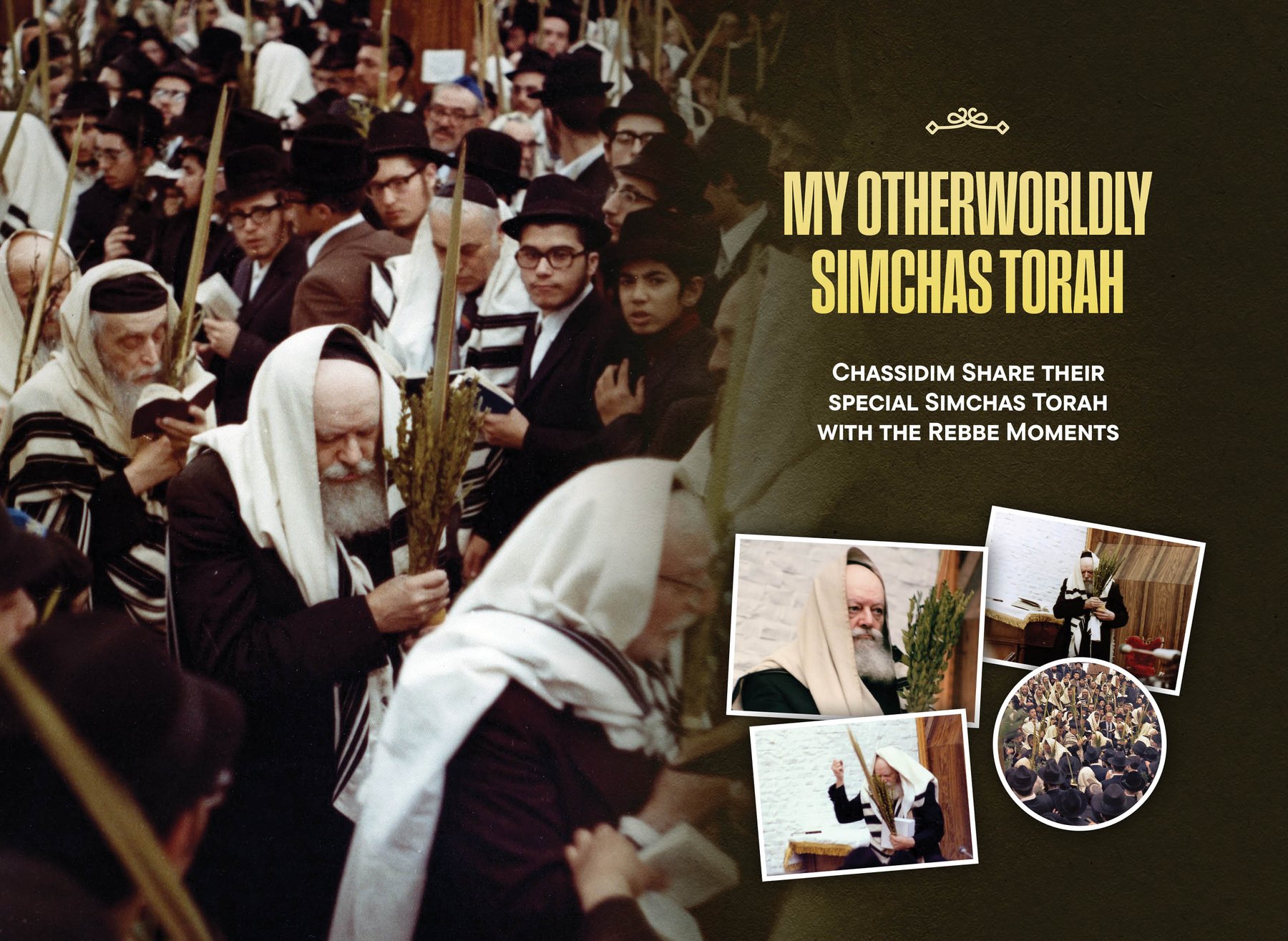
Chassidim share their special Simchas Torah with the Rebbe moments
Tishrei 5727
Rain and Sun in the Rebbe’s Sukka
Rabbi Zushe Gross
On a bright day in mid-Elul of the year 5726, an envelope arrived from abroad in the mailbox of the Vaad Kfar Chabad. The committee members, despite being accustomed to receiving letters from the Rebbe, hurried to open the letter with trepidation and awe. It was a letter from Rabbi Chaim Mordechai Isaac Chodakov.
This is what Rabbi Chodakov wrote to the Vaad Kfar Chabad, “…We hereby inform you that C”K the Rebbe, shlita, has instructed that the eleven individuals listed below […] will be given travel expenses back and forth for the upcoming month of Tishrei with the kevutza. And surely they will soon begin obtaining the visas, etc., through the esteemed Rabbi Ephraim Wolf, so that with G-d’s help everything will be arranged in its right time. With wishes for a kesiva v’chasima tova, Rabbi Chodakov.
At the bottom of the letter, there was a list of the guests who were instructed by the Rabbi to arrange their travel and tickets, one of whom was Rabbi Zushe Gross, who had immigrated a few years earlier from the Soviet Union to Eretz Yisrael.
It was a great surprise for the veteran Chassidim in Kfar Chabad, as well as for the Chassidim who immigrated from Russia to the Holy Land during those years, to receive a personal invitation from the Rebbe for the month of Tishrei, to be his guests.
The Rebbe even went into details about who was eligible to participate in the group, with the main conditions being: immigrants from Russia who arrived in the last seven years and are over the age of twenty. The Rebbe also clarified that “the travel expenses will be arranged from here.”
In the last days of the year 5726, a group of Chassidim left Russia together with a larger group of Chassidim who traveled to the Rebbe on a special charter plane. The entire plane was suffused with the atmosphere of a journey to the Rebbe.
“In every row of seats, they learned a different topic in preparation for the journey,” recalled R’ Zushe Gross. “I myself sat next to Rabbi Zushe Wilyamowsky the partisan. Everyone said ‘l’chaim,’ minyanim were organized, and there was a special atmosphere of preparation in anticipation of…”
On Monday, the 27th of Elul 5726, the guests arrived at Kennedy Airport in New York, and from there they traveled in the cars of the hosts who were waiting for them, and arrived in Crown Heights.
The kiruvim that they received took place throughout the entire month of Tishrei.
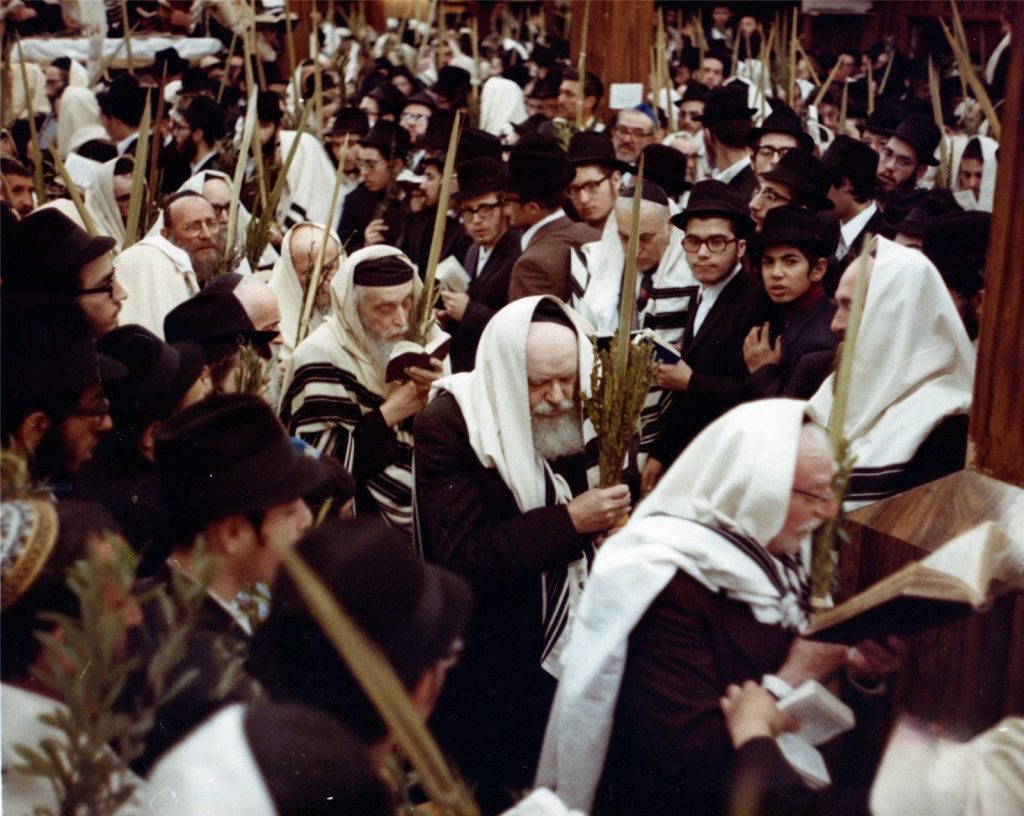
In preparation for Sukkos, eleven members of the group received two esrogim and two lulavaim from the hand of the Rebbe, and they used them throughout the holiday.
On Simchas Torah, the Rabbi instructed to let each of them read a pasuk from the pesukim of ‘Ata Horeisa’ aloud.
“After the hakafos, around four in the morning, suddenly the student Shlomo Reinitz, who was a mashbak in the home of the Rebbe Rayatz, approached me and said to me, ‘Run quickly to the Rebbe Rayatz’s apartment, the Yom Tov meal is about to begin, and the Rebbe instructed that the guests should participate’…”
“It was an extraordinary spiritual experience. I sat near the table on the side where the Rebbe was sitting. Next to me sat Rabbi Shmuel Levitin, and beside him sat a Hungarian Jew whose name I do not remember, and next to him sat the artist Rabbi Hendel Lieberman. Further down, Rashag sat facing the Rebbe. Around stood various people.
“I noticed the royal atmosphere that prevailed in the place, which was reflected in the small details, in the beautiful dishes, in the elegant cutlery set, in the table setting, and of course in the ambiance. The way things were served also needed to be studied. Three courses as well as a dessert, a feast worthy of a royal house. The Rebbe himself sprinkled a thick layer of salt over the fish in such a way that the fish was completely hidden.
“No one present began to eat until the Rebbe himself started. The Rebbe, for his part, looked on and did not take a bite until he ensured that each of the guests received their portion. I noticed that the Rebbe is particular about not using a knife, and also not his left hand, which was resting on his knee the whole time.
“During the meal, various questions were asked of the Rebbe, as has famously been recorded in various places.
“Only at 5:30 in the morning, just before dawn, did the meal come to an end, and the Rebbe was the first to leave the dining room.
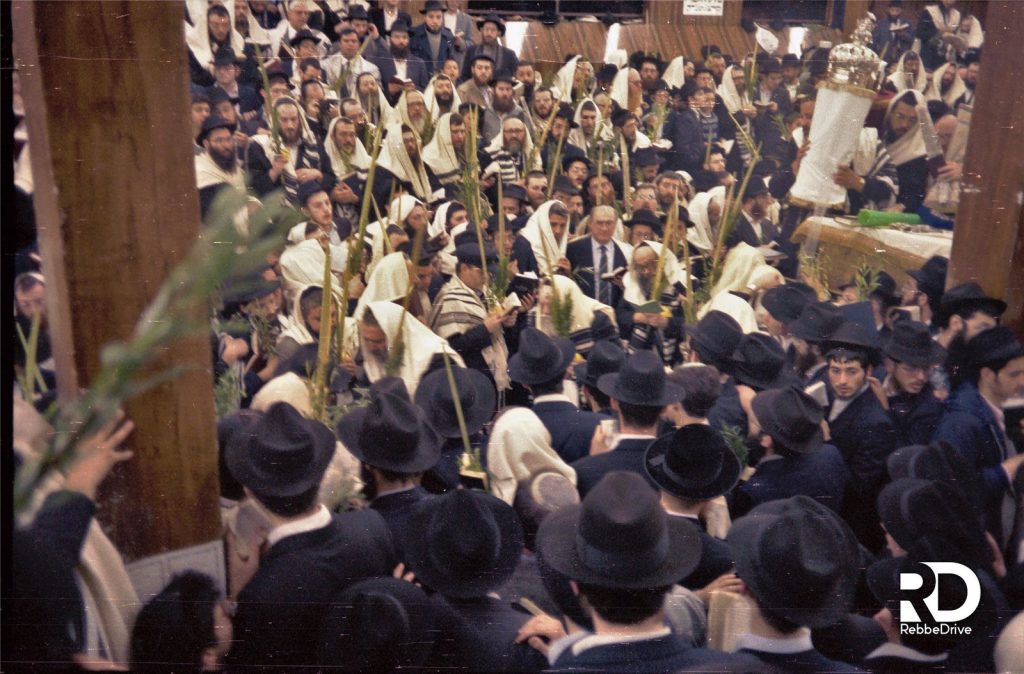
“In the middle of Sukkos, a festive gathering took place in the large sukka that was located in the same spot where the guest sukka stands today. Even though it was a large sukka that could accommodate many Chassidim, nevertheless, the crowding and pushing were immense. It was almost impossible to move.
“A long time before the farbrengen began, the balabatim and bachurim took their places so they could see and hear. Since I arrived from Russia, I stood with a group of ‘distinguished’ guests ‘from Russia’ near the Rebbe. Within the group were also the esteemed Chassidim: Rabbi Asher Sassonkin, Rabbi Mendel Futerfas, Rabbi Leizer Nanes, the brothers Rabbi Michel and Rabbi Ben Zion Weissman, Rabbi Yisroel Brod, Rabbi Berel Gorewitz, Rabbi Elimelech Levenhartz, my father – Rabbi Shmuel Prus, my brother Berel, and I.
“As we stood and waited for the Rebbe’s arrival, suddenly the heavens opened up and torrential rains began to pour down. After a few minutes, the rain began to seep into the sukka, onto the heads of the hundreds of Chassidim waiting for the arrival of the Rebbe.
“The Rebbe came in, and I remember well that his face was shining in an unusual way. The joy of the chag was reflected on his holy face. I noticed that the Rebbe was wearing a coat.
“The Rebbe took his seat and immediately began the farbrengen while the rain continued to fall without pause. Lightning flashed, and thunder roared, and at one moment a ‘window’ opened up in the schach, and a strong stream of water began to pour down on my head, as the water washed over me from head to toe…
“There was some confusion in the crowd; would the farbrengen continue in this manner? And if so, until when?
“While I was still thinking those thoughts to myself, the Rebbe suddenly responded and said something like this: ‘Well, it’s possible that if they take off their coats, the rain will stop.’ And immediately the Rebbe rose from his place, took off his raincoat, folded it, and placed it on the table next to him.
“Obviously, everyone did the same. The first to do this was the Chassid, Rabbi Moshe Slonim, followed by Rabbi Yisrael Leibov and the rest of the crowd. I couldn’t take off my coat due to the terrible crowding, although, in any case, the coat wasn’t helpful…
“At that moment – and I emphasize that it was at that moment – a beam of sunlight broke through the dark clouds and penetrated through the ‘window’ that had opened in the schach. It was a great wonder, for until that moment, dark and heavy clouds covered the sky, and suddenly a ray of sunlight broke through…
“The Rebbe continued to farbreng with great joy. They sang niggunim and said l’chaim. Of course, the flow of water had stopped, and I could focus a bit on the content of the sichos at the farbrengen.
“At the end of the farbrengen, after a bracha acharona, the Rebbe got up, put on his coat again and turned to leave the sukka. A moment after he put on his coat, the heavens opened up again and rains of blessing continued to flood New York.”
Tishrei 5735
In Every Corner of 770, One Feels the Yom Tov
Rabbi Tuvia Zilberstrom
(From letters written to his family at the time): Always, at every event here, I ponder in my heart how unfortunate it is that our family is not among those present here, at least for this month, the seventh month which is abundant and influences all the months of the year. And simply in physical terms as well, meaning what one sees and hears during this month in particular – which gives strength and breathes life into each and every person staying here. And today, I am counted among them, when after the Torah reading, about thirty guests who had just arrived yesterday recited the HaGomel blessing. Afterwards, all Anash of Kfar Chabad entered to present the esrog to the Rebbe shlita. Then he gave a bracha to all those who live in the Kfar, in his room.
Following that, the shluchim from around the world entered to receive the dalet minim, including Rav Chodakov. The people of Tzfas also received them, three of them who are here received all dalet minim. To some of them, besides saying to take no less than four hadassim, he asked them to take another hadas for besamim.
* * *
Here, in every stone and corner of 770, one feels that the chag is in full swing. These are special times, when after the davening, Reb Zushe Wilyamowsky stands ready on the bench, and when the Rebbe shlita motions with his hand, “Heib un” (start), of course everyone joins the circle which always has at least several hundred dancers.
It was in the first days of Chol HaMoed Sukkos, before Mincha etc., and before Maariv, they were dancing in the Beis Medrash, and the Rebbe shlita entered, and of course a path opened up among those continuing to dance in place, as his holy face shone. And so he continued on his way to the bima he stands on, and before he managed to place the siddur on the shtender, here he turned to the crowd and with his full stature danced and clapped, just like the feeling during Napoleon’s March, but this time with joyous movements and sounds. And the joy of course was at its peak, breaking through all boundaries.
The trucks on which a sukka is erected circle every day through the streets of New York and surrounding areas, and they show the victory that is in our hands when Yisrael goes out with their esrogim in their hands, as is known from the Medrash. Farbrengens hold a prominent place among Anash as part of Simchas Beis HaShoeiva. Everywhere one can hear, see and feel if only one wants, and as is known that Chassidus brings to Ruach HaKodesh as the Mishna rules.
* * *
The joy on Simchas Torah in 770 was extraordinary, this following what the Rebbe said in his sicha that by our Rebbeim one saw, with physical eyes, joy beyond all measure and limitation. And similarly the Rebbe’s movements were truly difficult to describe, with all his strength and body. And with all that, the following incident was most wondrous:
After finishing hakafos the Rebbe left his room at about 4:15 AM, and there was someone who wasn’t feeling well during hakafos, and they brought him into the adjacent house of R’ Yehoshua Korik. The Rebbe stood in the street near the aforementioned house for about 45 minutes, until about five, and waited until they brought an ambulance and he spoke with the doctor etc. And this is completely beyond comprehension, considering what time this is happening, and for whom etc.
Only at about 5:00 did the Rebbe go home and at 9:30 AM he was already back for Shacharis. The night after that, he again stayed with us until about 4:30, distributing kos shel bracha, and the night after that, meaning Thursday evening, the Rebbe went home at 6:30 AM, after a long night of yechidus. And obviously on the following Shabbos – in addition to the farbrengen – it’s known that the Rebbe doesn’t sleep. And on Motzoei Shabbos he came back especially to speak about Shabbos candle lighting for Jewish women and girls, and today Sunday will apparently again be a long night of yechidus.
The main thing is that the Rebbe should be healthy with full years, going and increasing.
As mentioned, now we need to start unpacking the packages upon packages that accumulated during the month, with all the experiences and events that are constantly accompanied with new revelations.
Tishrei 5738
I Knocked on the Door and Said I Have Moshiach’s Sefer Torah”
Rabbi Boruch Shlomo Eliyahu Cunin
I have many memories from Shemini Atzeres 5738:
After the Rebbe went up to his room, I and two other friends approached the aron kodesh downstairs and said we are transferring our lives to the Rebbe. Afterwards I saw Moshiach’s Sefer Torah that was placed on the table, there was almost no one in 770. I took the Sefer Torah and went upstairs. I knocked on the door and said I have Moshiach’s Sefer Torah and they let me enter, and I brought the Sefer Torah into the aron kodesh in the small zal upstairs.
On the night of Shemini Atzeres 5738 there were those who wanted to sedate the Rebbe and take him to the hospital. I immediately shouted: “How dare you think like that? Do you think the Rebbe is not a Rebbe now?”
I immediately ran to the back room – the WLCC room, and called my cousin, Dr. Bob Richter (his mother-in-law was the daughter of my grandfather R’ Menachem Mendel Kuntz a”h and she was very close to the Rebbe’s house). He told me: “If you’re calling now something serious must have happened to the Rebbe.”
I told him: “Get in the car immediately, don’t stop at any red lights and get here right away.” He arrived very quickly, went in to the Rebbe, and told the Rebbe there was a very serious heart attack and they must go to the hospital, but the Rebbe refused. Dr. Richter said to the Rebbe: “You are my Rebbe, what would you tell me to do if this happened to the Rebbetzin?”
The Rebbe answered him: “That’s a theoretical question and I don’t have to answer.” Dr. Richter asked the Rebbe: “What should I do?” and the Rebbe told him to bring all the equipment here and make an ICU unit here in the room. Of course he immediately agreed. He was a doctor at Brooklyn Jewish Hospital, so he and R’ Bistritzky went into the hospital, and took out – with the place’s permission – all the medical equipment they needed, and brought it to the Rebbe’s room.
In the morning I went to the mikva, and afterwards I went to 770 downstairs, sat on the Rebbe’s stairs and cried. I said to myself I believe the Rebbe will be healthy; I can’t remain like this. I went upstairs and knocked on the door for them to let me in. They opened the door for me, and I merited to be part of the minyan that was in the Rebbe’s room. I will never forget that scene. We went in for krias haTorah, the Rebbe was lying in bed with an IV, and R’ Dovid Raskin read from the small Sefer Torah.
The Rebbe made the brachos on the Torah, and afterwards the Rebbe said the haftora. I remember how the Rebbe then said the words in the last verse of the haftora “vayeilchu l’ohaleihem smeichim v’tovei leiv al kol ha’tova,” I will never forget it for my whole life. After the Rebbe finished the brachos after the haftora we left the room. Suddenly R’ Leibel Groner called us back and told us the Rebbe asked for us to come back in. The Rebbe nodded his head a bit to each one, and wished each of us “Gut Yom Tov.”
I remember when Dr. Weiss arrived and examined the Rebbe. When he left the Rebbe’s room, I said to him, let’s make kiddush in the sukka. I filled him a full cup of mashke and said to him, from today, every year we’ll return to the sukka on Shemini Atzeres and make kiddush on a cup of mashke and I’ll make a shehecheyanu.
Tishrei 5741 / 5744
I Merited to Be Many Times by the Rebbe for Tishrei
Rav Yaakov Bitton, the Rebbe’s shliach in Sarcelles France
Every Chassid knows that every moment by the Rebbe during Tishrei is a sublime experience that provides ‘fuel’ of Chassidic vitality for the entire year. I personally merited to be with the Rebbe many times in the month of Tishrei, and they are divided into two: the Tishreis before I was a shliach, and those afterwards.
In Tishrei 5741 I was there with a good friend from Morocco, R’ Sholom Elcharar. During hakafos we each got a place in the same pyramid, while he stood above and I stood below. When he momentarily lost his grip, he fell from above and one of his hands was shattered. He was taken out of the hall by Hatzalah volunteers and evacuated to the hospital in Crown Heights. Every day we went to visit him and bring him kosher food so he could eat. For two weeks he was hospitalized there, and every evening, when we would return from the visit, the secretary Rabbi Leibel Groner would come over and ask how he was.
He told us that he is asking on the Rebbe’s behalf and therefore he requests that we be precise about every detail. Thus every single day, until his release after two weeks, we had to give the secretary a status report for the Rebbe.
We were a group of young men, Chabad mekuravim in Morocco, and we felt that the Rebbe related to us in a special way. A few years earlier, in Tishrei 5737, I passed by for kos shel bracha and requested a bottle of ‘mashke’ for u’foratzta activities with youth in Morocco. The commotion and singing were strong and the Rebbe asked “Aha?” So I said again why I’m requesting a bottle.
Upon hearing that, I was then just a boy, the Rebbe smiled a broad smile, that will not depart from my memory, and said in French “Great and extraordinary success,” and gave me a bottle. When I returned to Morocco I was infused with great energy to take action. Every day I went around in places where Jews gathered and put tefillin on with them. I wouldn’t return home until I put tefillin on with at least one hundred Jews. I would also enter non-Jewish bars where I knew Jews were staying. Thanks to my good Arabic, I endeared myself to the owner until he himself announced that he’s stopping all the table games until all the Jews present finish putting on tefillin!
Every single year there were many emotional ‘Tishrei moments’ with the Rebbe; the sichos, Napoleon’s March, Simchas Torah, the tekios, the dancing on Simchas Torah. I will not forget the year 5748 and how the Rebbe waved the Sefer Torah towards the pyramids and in 770 an immense joy erupted the likes of which had never been before.
Speaking about joy, I merited to be from the first nucleus that started the dancing in the streets of the city for Simchas Beis HaShoeiva together with R’ Zushe Partisan. This was in the year 5741. In a sicha on Motzoei Yom Tov of the first days of Sukkos, the Rebbe spoke about the need for there to be joy that breaks all boundaries and even the streets need to turn into a ‘reshus ha’yachid.’
Immediately after the sicha we went out, four Frenchmen, with R’ Zushe at our head, and we followed him on Kingston Avenue without knowing what was going to happen. When we reached the corner of Montgomery, he found a large garbage can, dragged it to the middle of the street, we lifted him onto the can, and we started dancing around him while he vigorously encouraged us with his hands… This was the beginning. Every few minutes more and more people joined, and thus circles formed and the street was closed to traffic until the morning hours…
In Tishrei 5744 I experienced an actual miracle. We went out, ten bachurim from France, on Tahalucha to a distant neighborhood, a two hour walk away, in order to bring joy to Jews in several shuls there. Before leaving we passed like everyone else near 770. The Rebbe came out of his room and accompanied everyone with encouragement and his gaze. I saw that the Rebbe’s mouth did not cease murmuring. I thought to myself why does the Rebbe need to trouble himself to accompany everyone, surely on such days the Rebbe has enough other important things to do. With this thought I set out.
We merited to bring joy to many Jews with a great ‘shturem.’ We returned to Crown Heights late at night and passed through neighborhoods that were full of blacks. Many of them congregated in the yards of houses in large groups. This walk was frightening. We prayed that everything would pass peacefully, no policeman was seen on the horizon and some young blacks provoked us during the way, but we didn’t pay attention and continued with quick walking, wanting to arrive on time for hakafos.
We said Tehillim and reviewed maamarim among ourselves. At one street corner stood a tall young black man who took pleasure in knocking to the ground every bachur who passed. He stuck out a leg to the first who fell, got up, cleaned himself off and continued. After him, he knocked down the second who also got up and continued. I was supposed to be the third to fall. He sent his long leg in my direction, but I, a soccer player in my past, lifted his leg instead of falling over it and as a result he fell to the ground instead of me falling. He apparently took a hard hit and mainly felt a sense of humiliation.
He began to scream, calling to his friends who gathered around us within seconds. They approached us in a threatening manner and we were in great panic. We didn’t know what to do. Running for our lives was not possible, they were faster than us and also surrounded us from all sides. We prayed to be extricated from this dire situation by the skin of our teeth. And then from out of nowhere, two police cars arrived at the scene. The officers quickly understood the situation, went towards the youths, distanced them from us and escorted us until we arrived at 770. When I entered 770, I remembered the thought I had when I left for the tahalucha, and why the Rebbe needs to accompany us. I felt that I had received the answer…
Tishrei 5741
The Rebbe Danced the Hakafa Alone with the Children
Rabbi Yehuda Butman, the Rebbe’s shliach in Ramat HaSharon
On the night of Shemini Atzeret 5741, during the fifth hakafa, the Rebbe requested an announcement be made for children to come to the hakafa. The Rebbe walked with the small Sefer Torah and danced alone with the children. The Rebbe also made sure that no bachurim or secretaries remained there; it was just the Rebbe and the children.
I was privileged to be among those children. The Rebbe danced among the packed crowd of children and was often pushed by them; it was terribly crowded there.
After the hakafa, the Rebbe said to take the “Sefer Torah of Moshiach” to the women’s section so that the girls could kiss it.
When the Rebbe ascended his platform after the hakafa, I stood there with other children, and I remember the Rebbe asking me, “Hast getantzt mit der hakafa?” [Did you dance along in this hakafa?] I was confused and said, “Huh?” I also remember that the Rebbe then turned to Rabbi Shalom Dov Ber HaLevi Wolpo’s son and asked him, “Un du?” [And you?]
It took a long time for the Sefer Torah to reach the women’s section and return to the Beis Medrash below. During all that time, the Rebbe sat in his place on the platform, and the children were on the Rebbe’s platform. There were many children there. I remember a child playing a bit with the Rebbe’s sirtuk, and when Rabbi Groner wanted to take him away, the Rebbe signaled not to intervene.
Tishrei 5750
The Rebbe Knows What One Dreams…
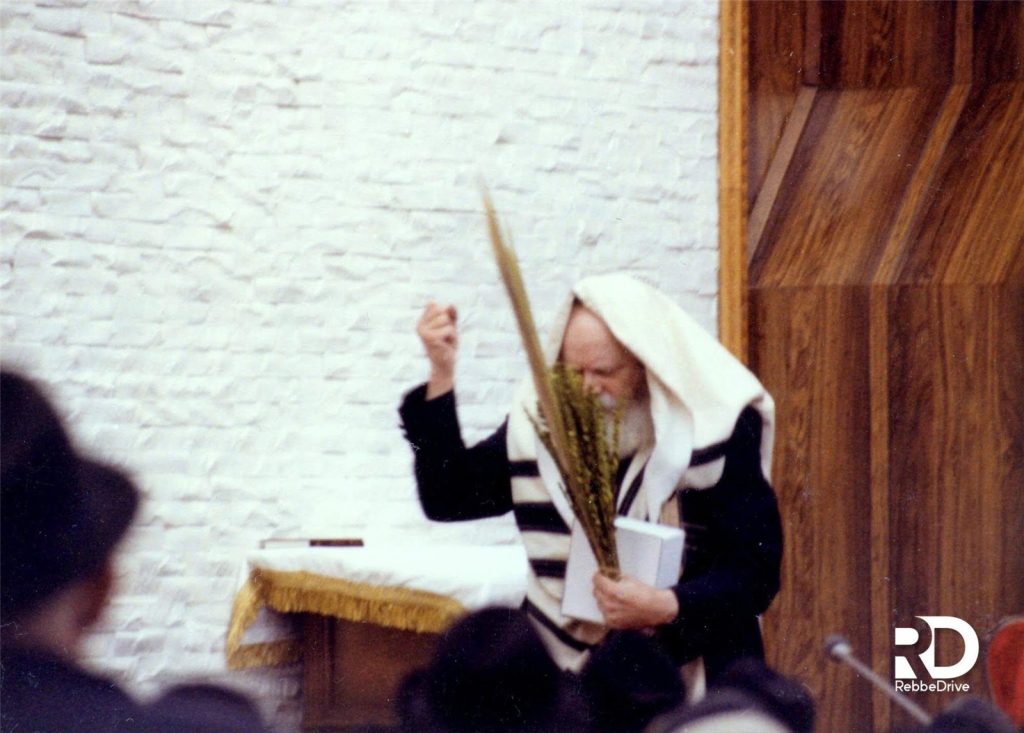
Recounted by Rabbi Yosef Yitzchok Hecht, the Rebbe’s shliach in Sandton, South Africa
In 5750, it was the last Simchas Torah that my father, Rabbi Yaakov Yehuda (JJ) Hecht a’h, was with the Rebbe before he passed away. During the hakafos, as he returned with the Sefer Torah, the Rebbe made to him the sign of a kiss with his hand in a very serious and very warm manner (a very rare occurrence during hakafos, and all of 770 noticed it).
Afterward, he told me that when he entered the sukka at the end of Shemini Atzeres (or on Hoshana Rabba) to bid farewell to the sukka, he fell asleep there and dreamed about wanting to give the Rebbe a kiss.
On the way back from hakafos, he said to someone, “Ich hob gevust az der Rebbe veist vos m’tracht, ober ich hob nisht gevust az der Rebbe veist vos m’cholomt…” (I knew that the Rebbe knows what one thinks, but I didn’t know that the Rebbe knows what one dreams…).
Tishrei 5751
May You Merit to Announce That Moshiach Has Arrived
Rabbi Chaim Baruch Halberstam
On Simchas Torah 5751, after hakafos, I was standing in the hall upstairs, at the beginning of the hall, near the door between the hall and the entrance to 770. When the Rebbe passed by, I said as always, “Derlebn iber a yahr gezunterheit,” and the Rebbe answered, “Amen, you too,” and stopped and said, “Zolst zoche zein unzogn az Moshiach iz gekumen.” [May you merit to announce that Moshiach has arrived].
A few months later, a Kretchnif Chassid named R’ Yaakov Lax passed by during “dollars,” and Rabbi Leibel Groner told the Rebbe that he helped upgrade the broadcast room in 770, and the Rebbe said to him the same words in Hebrew: “May you merit to announce that Moshiach has arrived.”
Tishrei 5747-5751
If the Rebbe Asks – Say Yes
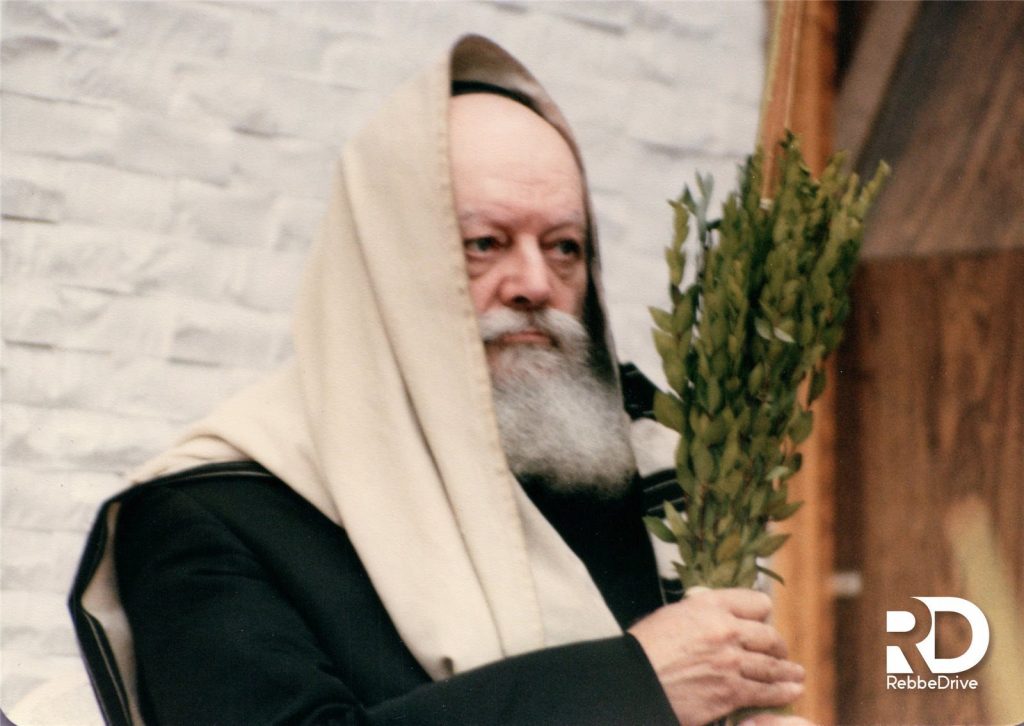
Mashpia, Rabbi Yaakov Zecharia Katan
One year (it was between 5747-5751), I remember standing on Simchas Torah with R’ Daniel Namdar a’h, near the tables that formed the path, and when the Rebbe passed by on the way to the hakafa, ‘‘ Daniel asked the Rebbe for a bracha. The Rebbe asked him, “Did you say l’chaim?” and he answered yes. The Rebbe asked him if there was any left in the bottle, he answered yes; and the Rebbe told him, “Share with all those standing here,” and indicated with his holy hand to share with everyone.
Immediately after, the shliach R’ Moshe Shaikevitz a’h, turned to R’ Daniel and asked him if he understood the Rebbe’s words, and R’ Daniel answered that he didn’t understand. R’ Moshe asked him, “Why did you answer yes if you didn’t understand? The bottle was empty!” And R’ Daniel answered that if the Rebbe asks, you answer yes…
I remember that R’ Chaim Baruch Halberstam was also standing there after many ‘l’chaims,’ and together with R’ Moshe Shaikevitz, they ‘squeezed’ the bottle to fulfill the Rebbe’s words, and extracted the last drops into the cap and said l’chaim!
* * *
R’ Shalom Bruchstat had a place under the table of the ‘ches’ during hakafos 1 and 7 when the Rebbe would go to the center of the Beis Medrash (during the other hakafos, he stood inside the path).
Once when the Rebbe passed by, he said to the Rebbe, “Ich darf hobn ah bracha” (I need a blessing). And the Rebbe said to him, “Ein bracha? A sach brachos!” (One blessing? Many blessings!)
Tishrei 5752
A Good Place for Hakafos
Rabbi Menachem Mendel Sharf, the Rebbe’s shliach in Detroit, Michigan
On the night of Shemini Atzeres 5752, before hakafos; an Israeli bachur who looked like a baal teshuva and in any case, it seemed to be his first time at hakafos – decided to put a piece of wood on one of the protrusions of the pillar in the northeast corner of 770 (the pillar at the corner of the eastern wall and the women’s section on the Eastern Parkway side), to stand on. This way, he could enjoy both worlds, seeing how the Rebbe says the verses of “Ata Hareisa” on the bima, and also when the Rebbe dances hakafos in the center of 770 (by the way, not a bad idea).
The guys who stood in that corner every year decided that he was blocking their view and started shouting at him and pulling him down, and the bachur almost fell. All this was happening as the Rebbe was already entering 770 and on his way to his platform. As the Rebbe approached the Aron Kodesh, the Rebbe raised his holy head to the left side, and immediately all those who were pulling him moved aside, and he remained standing there until the end of hakafos.
The Rebbe Encourages the Entire World…
Rabbi Shmuel Rothman, Boynton Beach, Florida
I remember how at the beginning of Shacharis on Simchas Torah 5752, 770 was relatively empty, and during Shacharis, the Rebbe placed the siddur on the shtender and very strongly encouraged the singing of “Sheyibaneh,” in an extraordinary manner.
A few years ago, I organized a telephone farbrengen together with R’ Eliyahu Shusterman on Motzoei Rosh Hashana for shluchim who don’t have a minyan for Rosh Hashana. Rabbi Yechiel Shlomo Levitansky from Ukraine said then that his chayus in shlichus comes from stories like how the Rebbe sent Rabbi Yosef Wineberg to meet one Jew in a distant place, because this is his daily reality.
He said he remembers this “Sheyibaneh” on Simchas Torah 5752; he remembers seeing how the Rebbe turns the whole world with his movements, and he thought to himself: “For whom is the Rebbe doing this?! There’s hardly any crowd here…” and he understood that the Rebbe is not necessarily encouraging those in 770, but it’s meant to encourage the entire world…
And he concluded: “Every Shabbos morning, with or without a minyan, I sing ‘Sheyibaneh,’ and remember the Rebbe’s movements that are for the entire world.”
Rabbi Yaakov Bitton relates:
My childhood and youth were in Morocco, where I was born. Our family was very close to the shluchim there, Rabbi Shlomo Matusof, Rabbi Leibel Raskin, and Rabbi Sholom Eidelman. From the age of twelve I would learn Chitas with Rabbi Matusof’s children. I became an active participant in all the activities until I became an integral part of the family. My father was a big mekurav of the shluchim and with his influence I became close to the family of shluchim.
That year, 5736, one of Rabbi Matusof’s sons became engaged and although I was only sixteen, I was offered to join the trip to New York. This was before Tishrei and the idea was to spend Tishrei with the Rebbe until after Simchas Torah. Until then, I had only heard great things about the Rebbe. I was happy at the opportunity to see him with my own eyes.
Out of my entire family, I had a big connection with the Rebbe and with Chassidus, perhaps because my birth was a miracle that resulted from the Rebbe’s bracha. When my mother was pregnant, the doctors found that she had heart problems and urged her to end the pregnancy. The doctors warned that the continuation of the pregnancy posed a danger not only to the fetus but to my mother too.
My father brokenheartedly spoke to Rabbi Matusof who, of course, had him write to the Rebbe. My father sent a letter to the secretaries and asked for the Rebbe’s bracha. In response, the Rebbe wrote to check tefillin and mezuzos; refuah shleima.
This answer gave my parents bitachon and emuna. They quickly sent the mezuzos to be checked and amazingly, in one mezuza the word “in your hearts” was erased. They replaced the mezuza and all was well and I was born healthy. I heard this story from my parents many times as I grew up which strengthened my feeling of hiskashrus to the Rebbe.
At the same time, as someone who grew up in a home and environment of bnei edot ha’mizrach, I found it hard to accept the parallel that the Chassidim made between the Rebbe and Moshe Rabeinu. A big tzaddik, yes, but not the Moshe Rabeinu of the generation. I remember that throughout the flight to the Rebbe, in the company of the Matusof family who were so mekushar, I thought about this subject. An inner voice wanted to diminish my excitement but this became irrelevant as soon as I saw the Rebbe for the first time in my life, at Maariv.
As soon as the Rebbe walked in, he gave me a penetrating stare. That turned me into a Chassid; not just someone who says Chitas but one who tries to do whatever will please the Rebbe.
What strengthened this resolve in me was the electrifying atmosphere in 770 that Tishrei, pure joy, endless dancing, mutual aid and farginning. The sight of R’ Zushe the Partisan standing and waving his hand with circles of Chassidim around him, will never leave me.
Beis Moshiach #1430 • pp. 12-24
© 2026 Beis Moshiach Magazine. All rights reserved.
This article originally appeared in Beis Moshiach #1430. You are welcome to share it with friends and family by email or in print, provided that you do not change, add to or omit any part of it, you credit the author and Beis Moshiach, and you include a link to archive.bmoshiach.org (written out in full in printed copies).
To republish this article in a newspaper, magazine, book or website, please request permission in advance at [email protected].