How The Rebbe Maharash Traded in the Petersburg Stock Market…

The Rebbe Maharash was known for “L’chatchila Ariber” and this approach was apparent even in his physical conduct which was wealthy and grand. For his Yom Hilula on 13 Tishrei, we present short stories on the Rebbe Maharash’s wealth and the what its true purpose was
A number of unique aspects characterized the leadership of the Rebbe Maharash that differed from our other Rebbeim. One of these was that he conducted himself in a manner of expansiveness and wealth. This was expressed in his clothing, his home furnishings, his residences, as well as in his ways and even in his holy movements.
This outward behavior “complemented,” so to speak, the focal point of his leadership style of “l’chatchila ariber.”
As the Rebbe said in one of the farbrengens: “With the Rebbe Maharash, the outward conduct was with the greatest expansiveness. The reason for this is – because in order to have an effect on the world in a manner of l’chatchila ariber, one needs wealth in the literal sense.”
The Rebbe adds and emphasizes that this conduct was unique to the Rebbe Maharash: “With the Alter Rebbe – the household conduct was in a constrained manner; with the Mitteler Rebbe – even more constrained. Even with the Tzemach Tzedek, the conduct was not expansive. Also with the Rebbe Rashab and the Rebbe Rayatz, the conduct would vary from time to time – sometimes expansive and sometimes the opposite. This was not the case with the Rebbe Maharash. At all times, even in times when money was tight, the conduct was with great expansiveness like one of the wealthiest people of his day.”
“I don’t know why he is crying… What does he lack?!”
Based on stories and descriptions passed down from generation to generation, we can get a glimpse into the wealthy conduct of the Rebbe Maharash.
It is told that there were periods when the Rebbe Maharash would rise early to daven on weekdays, and afterwards travel to the forest for a walk. For this purpose, his elegant carriage stood harnessed to all the horses, ready for the journey. The wagon driver was instructed by the Rebbe not to tell anyone about the purpose of the trip to the forest.
Outwardly, it all seemed like grandeur and wealth. But beneath the surface, things looked very different…
One of the Chassidim managed to get the non-Jewish wagon driver to talk, and he told him that when he brings the Rebbe to the forest, the Rebbe gets down from the carriage, sits under a tree and begins to cry. Then swarms of ants come from all directions, and they start to climb on him, while the Rebbe does not chase them away. At some point the ants run away, and the Rebbe stops crying. He returns to the carriage and travels back to Lubavitch.
The wagon driver ended the story with a sigh: “I don’t know why he is crying… What does he lack?!”
The Rebbe, upon finishing telling this story at one of the farbrengens said that if that non-Jew had not opened his mouth, one might have thought that the Rebbe Maharash indeed travels every day for a pleasure trip and shows off his wealth. Only thanks to the wagon driver’s loose tongue did we learn that the fancy trip was accompanied by mortifications and suffering.
High Status
The Rebbe Maharash held a high status in the Mogilev province, even among the non-Jews, and this was due to his wealth to some extent. This can be seen in the testimony of the governor of the province at the time, Alexander Dembovetzky: “The first among the tzaddikim is the son of the late famous tzaddik Mendel Schneersohn and he enjoys great honor and abundant income… He has in Lubavitch his own house with many buildings, which occupy an entire quarter. In his house there is a collection of Jewish Talmudic and Kabbalistic books numbering more than two thousand volumes and a study hall. In addition, he has a large stone house in Vitebsk.”
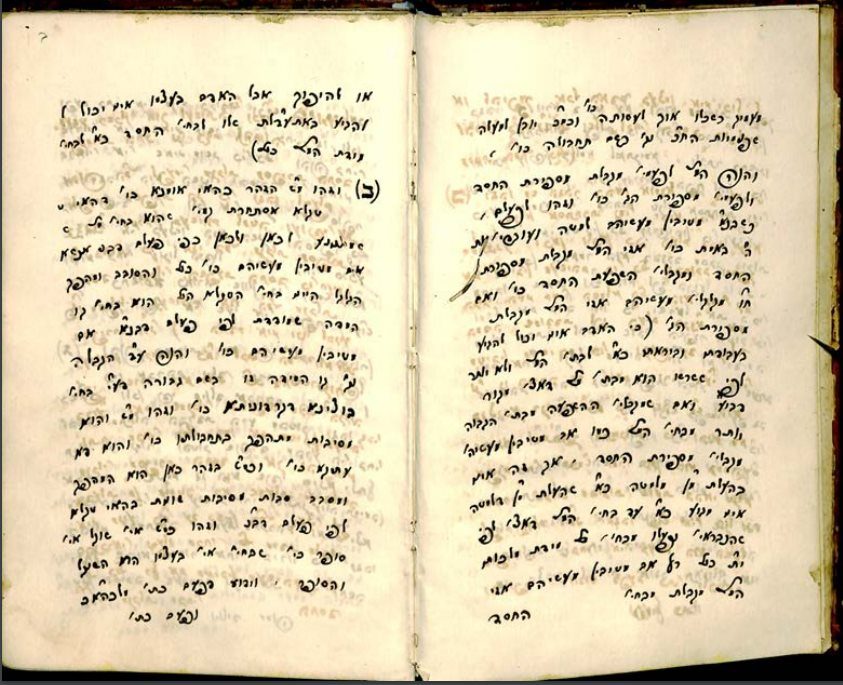
This conduct was present even before he accepted the leadership, as well as after, when the Rebbe engaged in trading securities on the S. Petersburg stock exchange. From Lubavitch, he would send telegrams to his representatives in S. Petersburg what to do and how to do it, which securities and stocks to buy for him and which to sell.
Some of the papers he kept in a safe that his father, the Tzemach Tzedek, had. The Tzemach Tzedek, for his part, recorded for himself in an organized way, all the papers that his son kept with him.
In those times, the fastest update that reached from the capital to the small towns was through the newspaper that arrived long after. Therefore, it was not possible to know in real-time what was worthwhile to invest in. Despite this, the Rebbe Maharash would instruct what to do through quick telegrams. From this stemmed his success and wealth, which was great by the standards of those days.
Once, his representative made a certain transaction on his own without waiting for the Rebbe’s instruction. When a loss resulted from this, he lost it from his own pocket. Even when a profit was made, the Rebbe informed him that this money does not belong to him, and he will not put it into his fund, since this is not his ‘business’…
Despite his great wealth, the Rebbe once expressed his opinion that those fifty coins that so-and-so, a poor teacher in the town, gives for ‘maamad,’ are most precious and cherished to him.
Luxurious and Elegant Apartment
In Lubavitch, the Rebbe owned four houses, each of which had two apartments and two gardens.
The Rebbe Maharash’s room was built with great splendor and elegance befitting ministers and nobles of that time, with the best furniture and design of the period. Two large doors greeted the entrant with their ornate and distinctively large handles. Inside the room stood bookcases full of books around the walls, with large Italian-style windows interspersed between them, through which abundant light entered the room. In the middle of the room stood a round table made by the Rebbe Maharash himself, and from the ceiling above it hung a large chandelier with thirteen branches, also made by the Rebbe.
When the Tzemach Tzedek saw the apartment of his youngest son, he asked him about the large windows. The son replied that it was done so that the room would be bright. The father wondered and said: “In the house of the grandfather [the Alter Rebbe] there were small windows and it was bright…”
It is told that even in the lifetime of the Tzemach Tzedek, a Chassid came to him and wanted to give him luxurious furniture as a gift (on another occasion the Rebbe said it was a sleigh). The Tzemach Tzedek answered him that he did not need it (the Tzemach Tzedek’s furniture was very simple, some not even painted), but immediately added that he should give it as a gift to his youngest son…
The Elegant Household Utensils
Not only the house, but also the Rebbe’s utensils were made of gold. The watch – of gold. In fact, he had two gold watches. As was the custom in those days, he placed them in the pockets of his garment on his chest, a gold watch in the right pocket, and a gold watch in the left pocket. Each such watch was also attached to a gold chain.
Gold was also woven into his clothes.
For smoking, there was a gold box for cigarettes, as well as a gold mouthpiece for a cigarette. Even the box in which the snuff tobacco was placed was made of gold. At the top of his walking stick was a gold ball. Even eating utensils like forks and spoons were made of gold.
The highlight was at the Seder, when all the wealth was displayed on the table, as written in halacha, in the manner of princes. The elegant utensils in the Rebbe’s house were so numerous that they would set up a special table for these utensils. And there were about fifty-sixty lamps, all with lit candles. Among the lamps was also a 13-branched lamp that the Rebbe Maharash made himself.
Interestingly, every half year before a holiday, the Rebbe Maharash would redeem the jewelry that his wife, the Rebbetzin, had pawned during the previous six months to finance her activities in marrying off brides and supporting Torah scholars.
Royal Carriage
Travel from place to place in those years was by wagons or carriages drawn by horses.
The Rebbe also had a carriage, but it was not simple like everyone else’s, but an elegant and luxurious carriage drawn by four (in some places it is written six) noble horses. The cost of the carriage was several hundred rubles. The walls of the carriage were lined inside with silk fabrics, and inside the carriage were a bed, table and place for books and writings. The carriage was also decorated with gold ornaments.
The residents of Lubavitch, a small town, did not know what was happening in the big world. However, one of the Chassidim who served as the estate manager of one of the great landowners, when he saw the Rebbe’s carriage as he arrived in Lubavitch, expressed his amazement aloud and said that the Rebbe’s carriage is incomparably superior to the carriage of his landowner… “Even the horses are nobler and stronger than those found in the landowner’s stables”…
At one of the farbrengens, the Rebbe told in the name of his grandfather, Rabbi Meir Shlomo Yanovsky, who was one of the “yoshvim” by the Rebbe Maharash, that when he returned from Lubavitch to his home, he told the Chassidim how the Rebbe Maharash conducted himself.
One of the listeners wondered: “How is it possible that a Nasi in Israel, elevated above the people, engages in such physical and material matters?”
Rabbi Meir Shlomo replied: “For whom was gold created in the world? Was it for me or for you? Gold was created to begin with, for the tzaddikim”…
A similar story was told about the Rebbe Maharash himself, when once he was asked why he instructs the Chassidim not to conduct themselves expansively, while he himself conducts himself with expansiveness and wealth.
The Rebbe answered them: “We see that every essential thing is found everywhere and for free or cheaply, like air, water, bread, etc. Things that are not essential are more expensive, like gold and silver jewelry, etc. If so, why did G-d create those things that are not essential? Rather, there are people in the world who need such things as well.”
The Rebbe Maharash concluded: “And I am one of those people for whom these were created.”
To this, the Rebbe added regarding this conduct: “Concerning the Rebbe Maharash, not only is there no fault in this, but on the contrary, this is a matter necessary for his service, since due to his generation, the conduct needed to be in a manner of expansiveness.”
Sources: Sefer HaToldos of the Rebbe Maharash. Sichos Kodesh. Hisvaaduyos of the Rebbe, Reshimos and letters of the Rebbe Rayatz. Igros Kodesh.
Beis Moshiach #1430 • pp. 26-30
© 2026 Beis Moshiach Magazine. All rights reserved.
This article originally appeared in Beis Moshiach #1430. You are welcome to share it with friends and family by email or in print, provided that you do not change, add to or omit any part of it, you credit the author and Beis Moshiach, and you include a link to archive.bmoshiach.org (written out in full in printed copies).
To republish this article in a newspaper, magazine, book or website, please request permission in advance at [email protected].