With Tanya in Court…
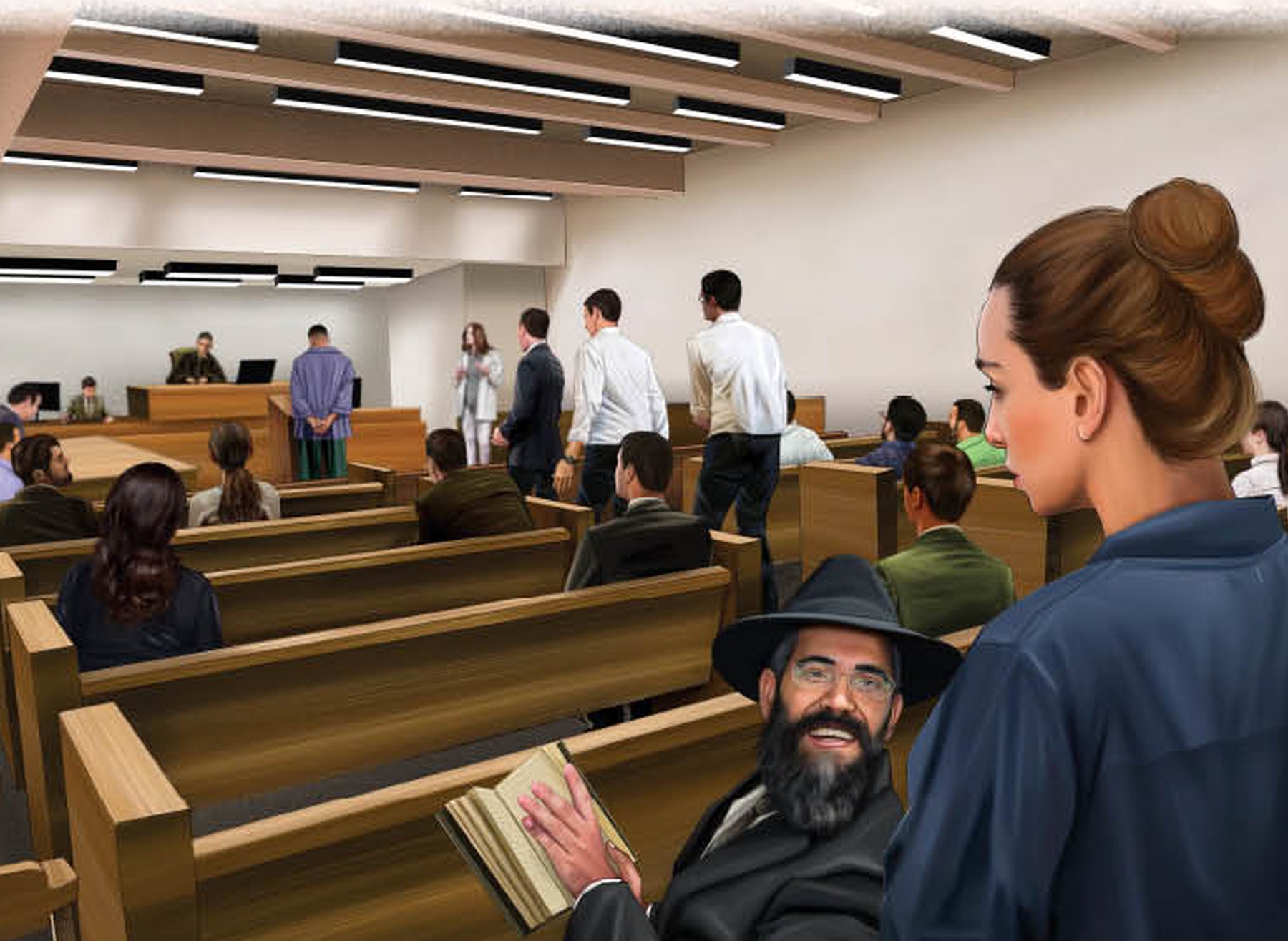
Previously: Rabbi Daniel Shahino is summoned to court for building violations in his shul. He wrote to the Rebbe and got an answer through the Igros Kodesh to study Tanya in depth. He takes a Tanya and a woman in the courtroom sees him learning and starts to ask questions.
From the TzaddikStory.org collection
“GHOSTS??!!” the lady shouted back, as if something amazing had happened. I was very confused. “Ghosts are my favorite topic! I studied all about ghosts in college! I can’t believe I bumped into you! You have to tell me more!”
Oy vey, was all I could think at the time. I need to learn! I need to focus! The Rebbe gave me clear instructions! But she wouldn’t stop asking questions.
“You know, Rabbi,” she said, “I’m not Jewish, but I’m a religious person. I know the Bible. I know about praying. But I’ve never seen anyone pray or learn with such focus as you! Especially while studying ghosts.”
I couldn’t believe it. Here I was, in a courthouse, trying to focus on learning Tanya, and this strange lady was trying to chat with me about ghosts!
She seemed so excited. She was speaking quickly and loudly. I was very annoyed and didn’t know what to do with myself.
“Please tell me what you’re reading,” she told me. “I want to learn about this!”
“EXCUSE ME!” piped in a loud voice. It was the judge. He was screaming at the two of us!
Silence—finally, I thought to myself.
“WILL YOU TWO PLEASE BE QUIET!? WE ARE IN A COURTROOM!”
I apologized and went back to my learning.
But what I thought would be the end of the conversation only made the situation worse. This woman, who was so excited about ghosts, lost her mind completely. She couldn’t control herself at all!
“But I need to know more! Tell me about evil spirits, and when they enter a person’s body. I want to know what the book has to say about that! Does your religion believe in that? Does it? DOES IT, RABBI? DOES IT?!”
Meanwhile, while this lady was going out of her mind, something else entirely was happening in the courtroom.
There, before the judge, stood an Israeli man. It seemed like he was also in trouble for building things without permits, and he was arguing quite a bit. The judge didn’t seem to care about him or what he did one bit.
“You better close that mouth of yours!” snapped the judge. “For every day you don’t fix the problems you created, you’ll have to pay $500! And if you say anything else, you’ll be thrown out of the courtroom!
“NEXT!” yelled the judge, banging his gavel.
After this, everyone noticed that the judge’s behavior had changed. He was in a very bad mood. Every person left with fines of $100, $200, or more for every day they failed to fix the problem at hand.
* * *
As you can imagine, this made me terribly nervous. Here I was, clearly Jewish, just like the Israeli gentleman with broken English, sitting with an enormous stack of fines—far more than anyone else here.
What would the judge say to me? How would he treat me? Would I even be able to speak clearly enough for him to understand? Only Hashem knew the answers.
So, I took a deep breath and went right back to my Tanya. If nothing else, I had clear instructions from the Rebbe. All I could do now was trust in Hashem and keep learning.
But the lady…
She just wouldn’t be quiet.
“And what about souls coming back in another lifetime? People coming back to life? Does the book say anything about that? DOES IT, RABBI? PLEASE, YOU MUST TELL ME!”
At this point, the judge had already asked us to be quiet twice, and I was getting more and more nervous about upsetting him before I even had my turn. I decided I had to put an end to the conversation.
“Look,” I said, trying to stay calm, “we’ve been asked to be quiet again. I can’t talk to you anymore. If you’re really interested, you can come to my synagogue, and I’ll tell you all about the book. Okay?”
“Fine,” she said, but then quickly added, “But please, just one more question. What’s the name of the book?”
“Tanya,” I answered quickly, glancing up for a moment before diving back into the sefer. I didn’t want to lose another second.
The lady jumped out of her chair as if she had been launched into the air.
“WHAT?!?!” she shouted. “I don’t believe you! THIS IS NOT NORMAL! How do you know my name? HOW DO YOU KNOW MY NAME?!”
I blinked, completely confused. “That’s the name of the book,” I said. “It’s called Tanya.”
“You’re a liar! It’s not!” she yelled.
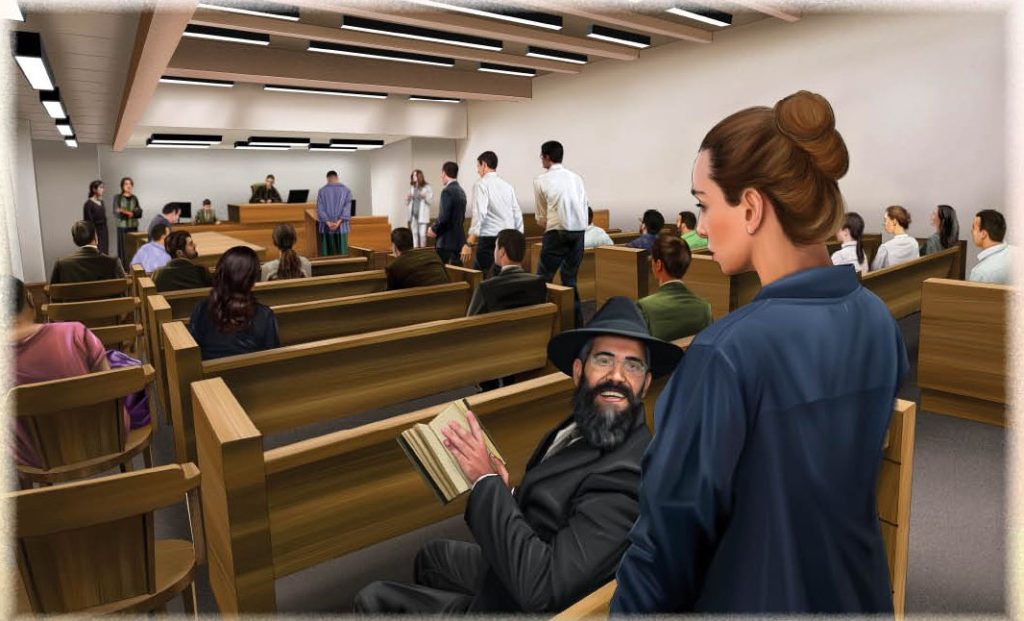
“Okay, fine then. It’s not,” I replied, trying to stay calm and get back to learning.
“Please, just prove it to me,” she begged, her eyes wide with shock.
I sighed, opened the Hebrew sefer, and started looking for some English. By hashgacha pratis, the only English word I could find was right at the beginning: “Tanya.”
I opened the book wide and pointed to the word. “See?” I said.
She gasped so loudly it made the whole room turn.
“OOOOOOOOOOHHHHHHHHH MY GOODNESS!!!” she screamed, almost jumping out of her skin. “THAT’S MY NAME!!! MY NAME IS TANYA!!!”
“Please!” I whispered, leaning closer, desperate to calm her down. “Please, just be quiet! Come to my shul, and I’ll explain everything. Just, please, for now, calm down!”
The whole courthouse stared at us, and I could feel my face turning red. I ducked my head back into the Tanya, hoping the judge wouldn’t notice.
At that moment, I heard a familiar voice again.
“SHAHINO, DANIEL!” The judge was calling my name.
* * *
I quickly took my place at the podium, ready to face the judge. But then I glanced across the room and froze. Standing there, on the other side, was Tanya!
That’s when it hit me—she was the lawyer representing the city of Sunrise! The lady who had been so eager to talk about ghosts and souls was supposed to convince the judge to find me guilty.
She looked just as shocked as I was.
“And what is the name of the lawyer, representing the city of Sunrise in this case?” the judge asked, clearly annoyed.
Tanya didn’t answer. She just stood there, stunned.
“Ma’am,” the judge said, now sounding more frustrated, “has Rabbi Shahino done anything against the rules?”
Again, silence. She just stared at her papers, flipping through them as if trying to find something—anything—to say. It was like she was frozen, unable to speak.
The judge’s patience was growing thin. “I’ll ask one last time,” he said, angrily. “Do you have any claims against the rabbi and his synagogue? Speak now, or this case will be dismissed.”
Tanya flipped through more papers, looking confused and flustered. It seemed like she couldn’t find what she needed. The room was completely silent.
Finally, after 20 seconds of waiting, the judge slammed his gavel.
“That’s it. I’m sorry, ma’am, but we have no case against the Rashbi Synagogue. CASE DISMISSED!”
Then he turned to me and said, “You can do whatever you want in your synagogue, rabbi. We have nothing against you.”
I stood there, stunned. Hashem had truly worked a miracle, right before my eyes.
* * *
In shock, I ran out of the courtroom as quickly as I could.
I knew that a miracle had just happened, a moment of true hashgacha pratis—divine providence.
The words of Pada B’Shalom, the niggun the Alter Rebbe sang upon his release, played in my mind. “Pada v’shalom nafshi, mikrav li, ki b’rabim hayu imadi” — “He has released my soul in peace from the battle against me, for many were with me.”
Through the Rebbe’s guidance to learn Tanya b’iyun and the Hashgacha of a woman named Tanya sitting around in the same courtroom, Hashem fought this battle for me and redeemed us in peace.
Beis Moshiach #1439 • pp. 60-62
© 2026 Beis Moshiach Magazine. All rights reserved.
This article originally appeared in Beis Moshiach #1439. You are welcome to share it with friends and family by email or in print, provided that you do not change, add to or omit any part of it, you credit the author and Beis Moshiach, and you include a link to archive.bmoshiach.org (written out in full in printed copies).
To republish this article in a newspaper, magazine, book or website, please request permission in advance at [email protected].