The Rebbe & The Writer
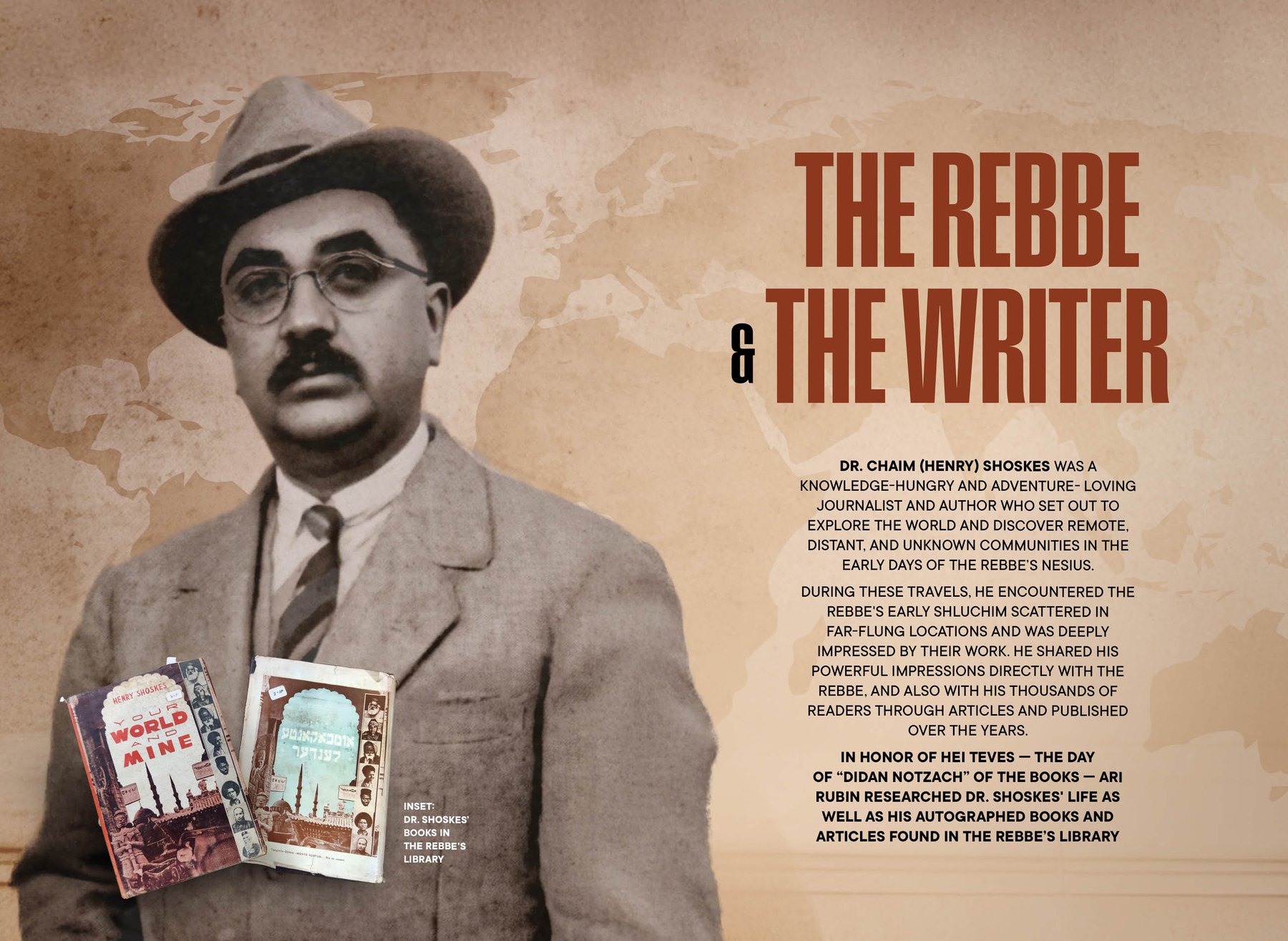
Dr. Chaim (Henry) Shoskes was a knowledge-hungry and adventure-loving journalist and author who set out to explore the world and discover remote, distant, and unknown communities in the early days of the Rebbe’s nesius. During these travels, he encountered the Rebbe’s early shluchim scattered in far-flung locations and was deeply impressed by their work. He shared his powerful impressions directly with the Rebbe, and also with his thousands of readers through articles and published over the years. In honor of Hei Teves – the day of “Didan Notzach” of the books – Ari Rubin researched Dr. Shoskes’ life as well as his autographed books and articles found in the Rebbe’s library
“Perhaps it is not a novelty that at Jewish gatherings in New York, the global metropolis, you meet Jews, whom if you wanted to visit in their homes, both permanent and temporary, you would have to traverse an entire world!
“I happened to attend one of these gatherings recently. It was a Lubavitch party, a gathering for one of the activities carried out by Lubavitch, also known as ‘Chabad Chassidim.’”
These lines seem as if they were written about the Kinus HaShluchim, but they were written many years earlier. They were written at the beginning of the nesius, about those unknown shluchim of the Rebbe, in an era when there were only a few shluchim sent to remote corners of the world, working with the Jews they encountered. They were out of sight, and none of them thought to publicize their activities.
“As I looked at the faces of the guests from different countries, memories of my meetings with these people during various trips I had taken over the years came to mind.”
Such descriptions and more, about the great deeds of the Rebbe’s shluchim, are plentiful among the recollections of Dr. Chaim Shoshkes (1891-1964), some of which we will present in more detail later.
Not only did Shoskes find it proper to track the Rebbe’s shluchim, the more he was exposed to the self-sacrifice of the Chassidim, the more he became a shliach like them, as during his travels around the world, he received secret missions from the Rebbe and conveyed to Jews in the diaspora warm regards from their source of vitality.
Shoskes, a community researcher and veteran activist, continues to write his personal impressions:
“From the matza packages to the tefillin that I came across in Dakar (Senegal) among the eight Jews there who came from eight countries, and a bearded Jew, Rabbi Wineberg discovered them by chance at the Dakar airport and included them in the ‘universal’ mitzva network without which no lasting connection between Jews would exist.
“.. And that Jew, so rich yet so lonely in Elizabethville, Katanga, who came to know me, the chance passerby in Katanga, and asked for details about the activities of the Lubavitchers in New York and throughout the Jewish world. The jewelry store of this Chassid, who was uprooted from Uman, was full of customers, but he left everything, accompanied me to the airport, and asked me to contact his source of longing, the Chabad center in Brooklyn. And I willingly fulfilled this mission.
“…Evenings I spent at the yeshiva in Melbourne, Australia. In my mind’s eye, I see the ‘picture slides’ of the handsome figures, the young faces with thick beards, of Rabbi Yitzchok [Dovid] Groner, the head of the yeshiva in Melbourne, Australia. When I was in Australia, he called me and we met. His distinctive rabbinical attire and his beautiful beard seemed strange and out of place in the Australian hustle and bustle among the polished crowd at the luxury hotel where I was staying…
“But in a short conversation with him – I immediately felt at home. I simply couldn’t believe my eyes when he told me what Chabad had accomplished in the years I hadn’t been in Australia: five hundred children studying in the yeshiva and the girls’ school. I agreed to travel to see the buildings, as well as to speak before the Melbourne community leaders who gathered at Rabbi Groner’s apartment.
“I also saw the new yeshiva building, which is currently being constructed and will surely be a source of pride for the Jews of Australia, both in its external appearance and as a workshop where a completely new type [of Jew] is being forged.”
A Traveler In Jewish Communities Around The World
Dr. Chaim (Henry) Shoskes was born in Białystok to a family affiliated with the misnagdim. At the age of seventeen, Shoskes began studying secular subjects in Charkov while simultaneously becoming involved in the local Jewish community council. Later, he returned to Poland, where he held prominent positions in community organizations in Warsaw until World War II. After the German invasion, he managed to escape from Warsaw and reach the US, where he worked to raise awareness about the destruction of Eastern European Jewry after experiencing it firsthand and surviving.
Dr. Shoskes traveled extensively around the world and visited Jewish communities, also in places where Jews from outside hardly ever reached: behind the Iron Curtain, in hostile Arab countries, and even in distant lands where he hoped to find ancient communities. It goes without saying that in those years, these were almost impossible journeys for an ordinary person, both due to the means of transportation available at that time and the enormous capital required to invest in such travels.
Shoskes used to write his impressions from those visits in newspapers in Eretz Yisrael and the United States, and later published them in books he wrote in Yiddish and English, books that became popular immediately upon their release.
Wonderful Events In South Africa
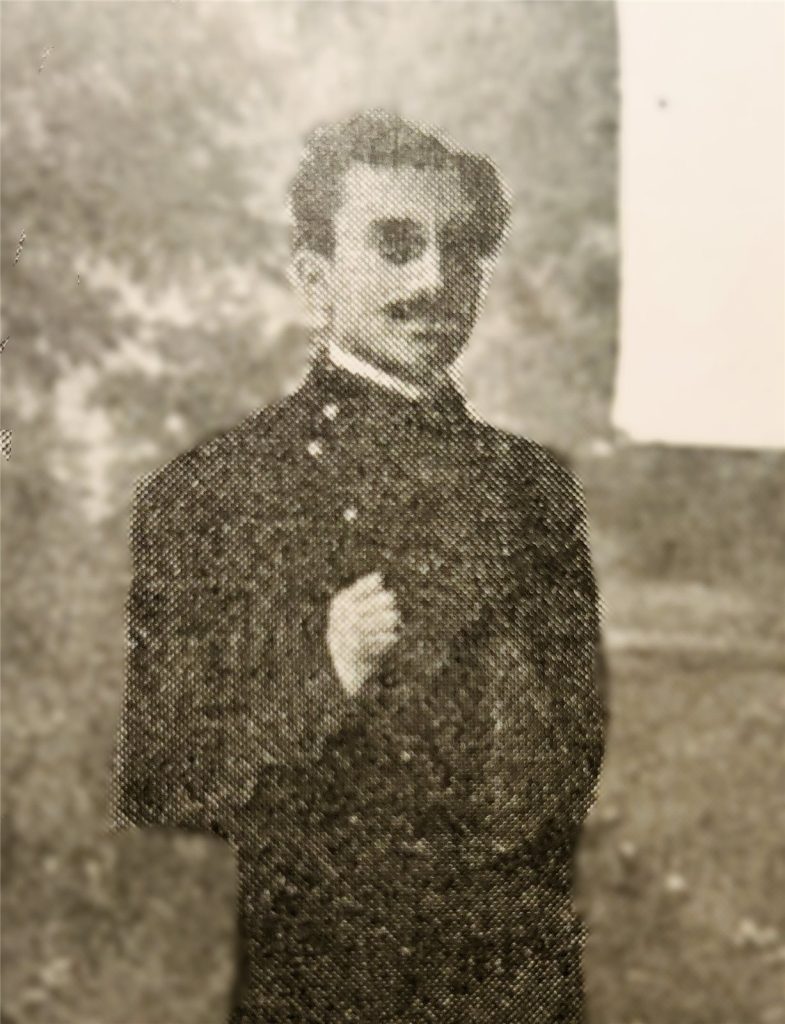
As part of his many journeys to locate remote Jewish communities around the world, Dr. Shoskes visited the Rebbe’s shluchim in the few places they had been sent at that time. He usually published his notes in the press in Eretz Yisrael and New York after returning from the journey.
One of the first places where Shoskes had the opportunity to be exposed to the shluchim of the Rebbe and his power was South Africa. In the summer of 5715 (1955), Shoskes traveled to Madagascar (an island nation located in the Indian Ocean, opposite Mozambique in Southeast Africa) in an attempt to find a possible cluster of Jews who might be living there. This was because, before World War II, the Nazis ym’s, devised a plan to transfer all the Jews of Poland to the island.
Upon arriving in Madagascar, Shoskes entered the Israeli embassy and inquired about Jews residing on the island. To his disappointment, he was told that they only knew of a Jewish couple of Russian descent who had immigrated to the island decades earlier. Besides that couple, they mentioned a few French Jews who had immigrated from France, but they did not consider themselves Jewish.
Shoshkes made the effort and met with them. They told him about their great distance from Judaism, how thirsty they were for a greeting from the Jewish world, and their intense longing for a Jewish environment.
When he realized he had exhausted what he was looking for and had no further interest in staying on the island, Shoskes continued to South Africa, where he stayed in the Jewish community.
A short time earlier, R’ Wineberg received an instruction from the Rebbe to travel to Madagascar. Rabbi Wineberg didn’t even know if there were any Jews in the area. He therefore asked the Chief Rabbi of South Africa, Rabbi Louis Isaac Rabinowitz, to contact the Israeli ambassador in Madagascar to obtain addresses of Jews. But the ambassador was in Eretz Yisrael at that time, and could not be reached. Therefore, R’ Wineberg did not know what awaited him in Madagascar.
One day, while in Johannesburg, R’ Wineberg met Shoskes as he returned from his trip to Madagascar. When Shoshkes heard about R’ Wineberg’s upcoming trip to Madagascar, he hurried to inform him of the Jewish couple’s address, but firmly expressed his opinion that there was no point in going, as neither they nor the ambassador and his assistant would want to receive his help; therefore, it would be better for him to stay in Johannesburg.
Shoskes himself wrote down the story and recounted: “Here begins a chain of events that if you do not wish to call them ‘miracles,’ call them by another name: ‘wonderful events.’”
R’ Wineberg, who understood that there was no Jewish community in the place, turned to the Rebbe, and the Rebbe responded with an enlightening and inspiring letter from which he drew lessons and guidance from the avoda of the Rebbe Maharash, no less!…
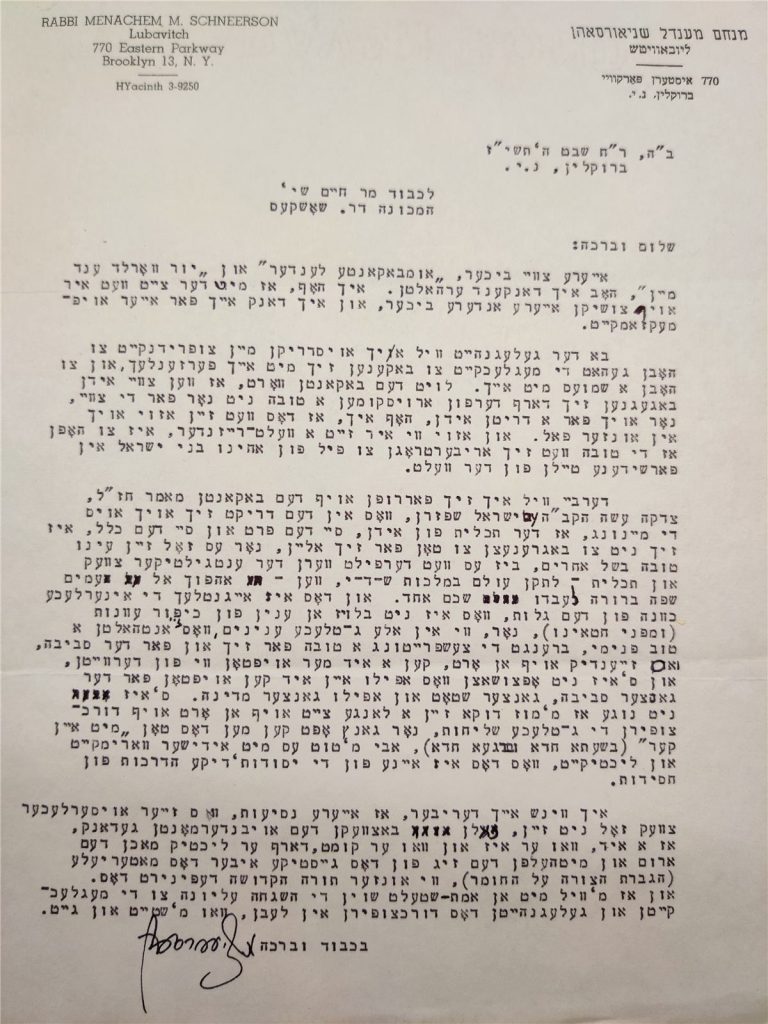
“It would be worthwhile – despite what you wrote in your letter, to visit the city of Elizabethtown, since not every month or even year does one travel to Africa. If it was worthwhile for the revered Rebbe Maharash to travel especially from Marianbad to Paris for the sake of one soul, as is well known from the story, even though he treasured every moment of his time, how much more so for each of us, and for the sake of several souls, and especially as the matter also includes collecting material support. And although it is obvious that we do not have the powers and certainty that the revered Rebbe Maharash had in his journey, we must pray for divine assistance without looking at the possibilities from below and to minimize one’s own metzius, for then we come closer and closer to being like the emissary of Supernal Man who is like Him, so to speak.”
According to the Rebbe’s instruction, R’ Wineberg purchased a plane ticket and began preparations for the trip. In the days leading up to the trip, R’ Louis Rabinowitz suddenly received a letter in French from a government official in Madagascar named Moshe Luzon. He wrote that he has been in Madagascar for six months as an agricultural expert, and since he observes the Shabbos and kosher laws, he has nothing to eat. He was really begging for them to send him kosher canned meat…
R’ Rabinowitz hurried to call R’ Wineberg and asked him to take kosher meat with him for that Jew. R’ Wineberg immediately replied: “You see, the Rebbe was right when he ordered me to go there earlier…”
And so, equipped with kosher meat, mezuzos, tefillin, and a shofar, R’ Wineberg set out for Madagascar, to Antananarivo, the place where Shoshkes had visited only a short time before, and began to search diligently for Jews, but was unsuccessful.
When he arrived in Madagascar, he found the Jewish official there and later discovered eight more families of Iraqi Jews, with whom he stayed for a while and he was mechazek them.
Shoskes wrote the account of R’ Wineberg’s visit to Madagascar later, without hiding his admiration. He suddenly felt the Rebbe’s ruach ha’kodesh and the true righteousness of the mesirus nefesh of his followers:
“R’ Wineberg’s arrival was like a miracle from heaven to the religious Jew in Antananarivo. They immediately brought him to Luzon’s house. Luzon’s wife, who converted before she met her Orthodox husband, and their small son, whom they managed to have circumcised in Paris before their trip, graced R’ Wineberg’s short visit with a genuine Jewish atmosphere.
“R’ Wineberg went straight to the Israeli embassy and there he noticed something that had escaped my attention: there were no mezuzos by the doors. They explained to him that the mezuzos were still on their way from Yerushalayim – for close to a year, but R’ Wineberg took out a few mezuzos and ceremoniously affixed them to the doors of the embassy.
“In the meantime, it turned out that eight more families of Jews of Iraqi origin lived in Madagascar. R’ Wineberg went to them and discovered that these good Jews had no way to teach their children the alef-beis.There is no one here to do this. R’ Wineberg also affixed mezuzos in their homes, even though the Jews of Iraq hesitated a bit at first to allow such a thing.
“On that day, another Jew was ‘discovered’ – someone named Levy who was born in Beitsch in Galicia.” He lived in Vienna and spoke German. The Jews of Iraq got to know him but did not suspect that he was Jewish.
“So R’ Wineberg set out to do something for the education of the children growing up in the above-mentioned families. He passionately convinced the ‘Frenchman’ Luzon, that although his role here is to teach the people of Madagascar agriculture, he has an additional duty to teach the Jewish children on the island something of Israel’s legacy. M. Luzon is not a great scholar, but he knows the Torah and the Neviim, and he agrees to teach the children the Torah once a week.
“The Yomim Noraim were approaching. There was no way to gather a minyan here, even with the Jews from the embassy, Rupin, and Giladi. But someone could blow the shofar. Everyone could gather on Rosh Hashana at Luzon’s house, pray together, and the shofar could sound and herald the Geula.
“R’ Wineberg taught the French expert the art of blowing the shofar and even promised to send matza and everything necessary to maintain the Jewish way of life in the small ‘community’ that was just now discovered in Madagascar.
“And indeed, on the past Rosh Hashana [5717], the sound of the shofar was heard for the first time in history in Madagascar.”
‘Come With Me To Tunisia’
Not long after, Shoskes made his way to Tunisia, where he was astonished to find a whole empire of Lubavitch under the strong leadership of Rabbi Nissan Pinson. Now, having become familiar with the Rebbe’s activities and the tireless work of the Chabad Chassidim, Shoskes embarked on a tour of the Chabad institutions in the city. At the end of the visit, he published his enthusiastic impressions in the press:
“Come with me to Tunisia, where about fifty thousand Jews still reside. Like in the large and small cities of Morocco (Casablanca, Fez, Marrakech, and Meknes). I visited Tunisia in the center of the Jewish quarter, in a yeshiva where Spanish-speaking and Arabic-speaking children (boys and girls separately) receive a complete Jewish education. Five thousand Jewish children in Morocco and Tunisia, from the poorest and most destitute homes in the ghettos, whose parents are starving. These thousands of children are given the opportunity not only to study Torah and general studies but also to receive a nutritious and filling meal and a clean bed to sleep in.
“‘Lubavitch International’ is for me a unique phenomenon and experience: after all, these are the wonderful memories from Johannesburg, from Cape Town, in South Africa… Do you remember when the Lubavitcher Rebbe shlita, instructed his loyal shliach Rabbi Wineberg to visit and find out if there was anything that could be done to help the few Jews on the island of Madagascar? I came from Madagascar to Johannesburg with the information that there was a handful of Jews there not integrated into the Jewish fold. However, R’ Wineberg, whom I met in Johannesburg, listened – and rightly so – to his Rebbe, and traveled to Madagascar. Under his influence, mezuzos were affixed to a number of Jewish homes, and small groups of children received a teacher (the government agronomist from France) who taught them a portion of the Torah as well as parts of tefilla.
“And here we are in the pleasant apartment of the Lubavitch Yeshiva in Tunisia. Already on the stairs, we hear the eternal melody of the Gemara, telling the story of ‘two holding onto a tallis,’ each claiming it entirely belongs to them, but the verdict is they shall share it. – Let there be justice!
“The young Rabbi N. Pinson, with his handsome black beard and sharp eyes, explains to us the Talmud study program in North Africa at the yeshiva: nine-year-olds study Brachos; eleven-year-olds study Bava Metzia; and thirteen-year-olds study Kiddushin. Nice boys, with their bright eyes, brought here ‘with the exile’ from Yerushalayim a few thousand years ago.
“They explain the Gemara in Hebrew and one can see that the children already mastered the language. R’ Pinson has already traveled the same zigzag path that many Chabad Chassidim from Russia have taken: first Vitebsk, then Charkov, and then the dangerous front lines. And now, he is teaching Torah in Tunis. They sent a young rabbi here, Rabbi Simcha Zirkind, from Brooklyn. He also teaches his class Seder Nashim, and I see that in far-off North Africa, seedlings of scholars are sprouting just like the Moshe’lach and Shlomo’lach.
“However, when the dynamic R’ Pinson later took me to the great Lubavitch girls’ school, I got an understanding of what they are accomplishing here: teaching 235 students Yiddishkeit, history, and general studies.
“The principal of the school is Mrs. Rachel Pinson, the wife of the rosh yeshiva, a knowledgeable lady who understands her role and shlichus for the students, from the age of six to eighteen. ‘Do you know?’ Mrs. Pinson says to me, ‘there are children here who come from materialistic, frightful homes, who know nothing about Judaism, neither about lighting candles nor about proper kashrus. And the students bring home Jewish customs and completely change the character of the family in impoverished Tunisia.
“I point out: Well, that’s how we fulfill the command: ‘To learn and to teach.’ And Rabbi Pinson immediately responds: ‘But the Alter Rebbe expanded the interpretation in this sense, that it is necessary not only to learn and teach but also to observe, do, and fulfill. That’s what we aspire to!’
“May you be strengthened,” dear Torah officers at the distant front in Tunisia, Africa!
Producing ‘Loyal Soldiers Of Chabad’
After having the opportunity to get to know the Rebbe’s shluchim more closely and even tracing their origins to the new Lubavitch built in Brooklyn, Shoskes himself came for a private audience with the Rebbe on one of the cold winter nights of the year 5717. What he saw that evening, before the yechidus, he hurried to share:
“In the next room, the students of the Lubavitch Yeshiva were still sitting and studying. It was at that hour, somewhat mystical, ‘neither day nor night,’ when the night was already passing and the sky was reddening with the coming dawn.
“Everything seemed surreal… The Rebbe, a graduate of the Sorbonne in Paris, the engineer-physicist, who expresses his ideas in a scientific and convincing manner against all those who oppose the Jewish conception of Torah and tradition; here are the pale, youthful faces, filled with the spirit of the yeshiva bachurim who swayed, many of whom spoke only English or Spanish at home, and here they have so thoroughly transformed into loyal Chabad soldiers…”
During the yechidus, the Rebbe was impressed by Shoskes’ many travels and saw them as journeys to strengthen Judaism. The Rebbe viewed Shoskes as a shliach in every respect, and therefore, continued to encourage him along this line, and even prompted him on this in the correspondence that began to develop between them in the following years.
In this first letter, dated 20 Cheshvan 5721, the Rebbe encourage Dr. Shoskes to utilize his trips for strengthening Yiddishkeit:
“Rabbi CMA Chodakov informed me about your trip together with your wife, and I wish you a successful journey. Success, in the Jewish sense, means that wherever a Jew goes, he fulfills the mission of the Creator and Operator of the world, a shlichus of influence regarding the way of life according to the Torah of Life and its commandments, about which it is said, ‘and live by them,’ life in the literal sense, even in this world.
… And may you convey to our brothers, Bnei Yisrael, wherever they are, words of inspiration, especially after your visit to the countries behind the Iron Curtain, which can teach them kal v’chomer, that if in those conditions, Jews struggle to remain faithful to G-d and His Torah with self-sacrifice, all the more so that every Jew who has the privilege of living in countries with religious freedom has the duty and right to fully utilize the opportunities in this direction and to extend his good eye to others as far as his hand can reach, and in an ever-increasing manner.
World Travel With A Deeper Purpose
In addition to regular columns in the press, Shoskes published his memoirs in a series of books that he released over the years.
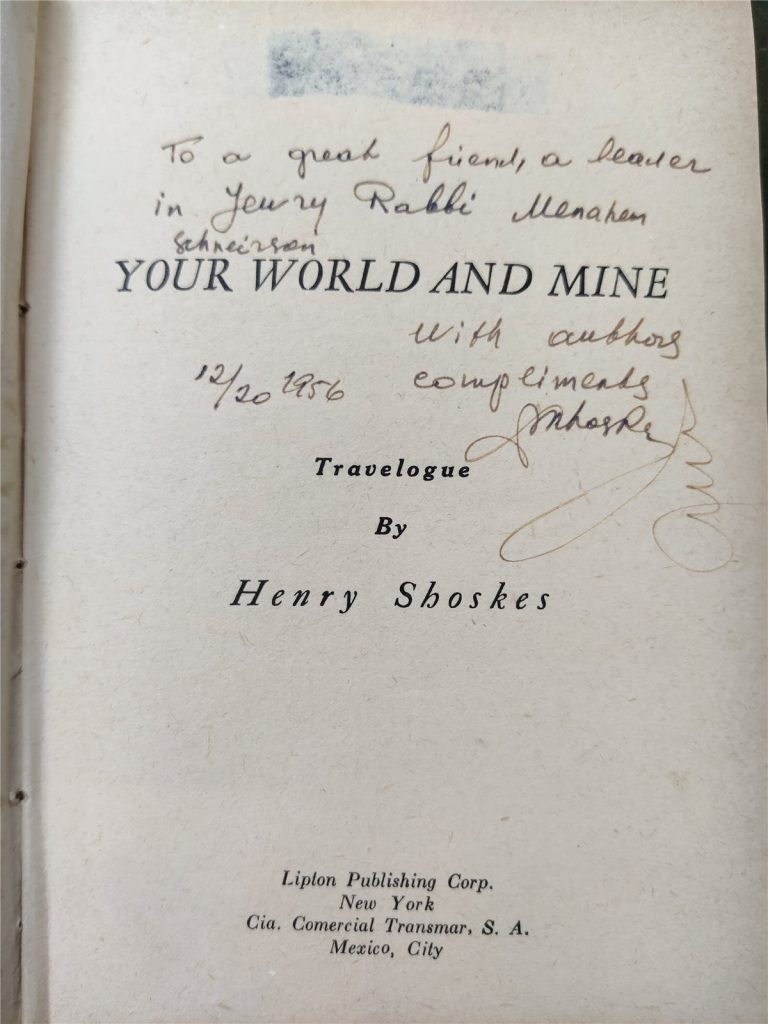
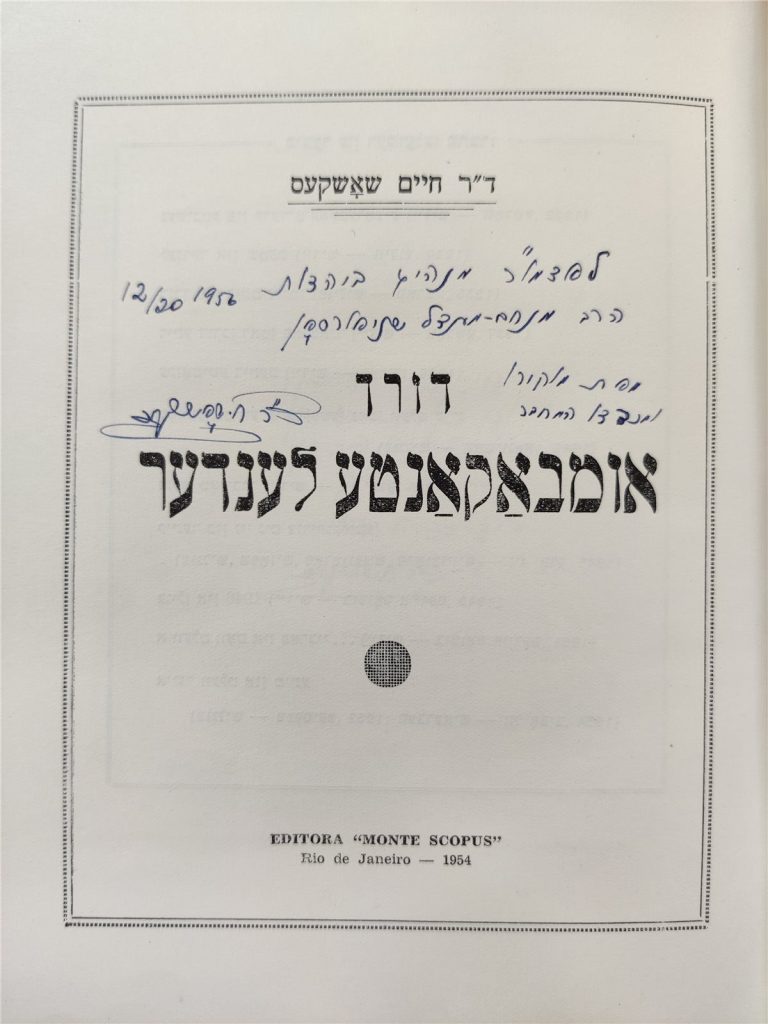
Shortly after the yechidus, Shoskes sent the Rebbe two of his books. On the first page of the books, he wrote a dedication with his signature:
“To the Rebbe, leader in Judaism, Rabbi Menachem Mendel Schneerson, from the one who admires and respects him, the author.” Dr. Chaim Shoskes.
The Rebbe responded in a letter of thanks from the beginning of the month of Shevat 5717, in which he referred to their meeting and the benefit that should come from it for the Jews of the world whom Shoskes visits on his travels. This letter too appears in the “The Rebbe’s Opinion” section in this issue.
No! He Won’t Cry; This Jew Made Of Steel
The Rebbe’s influence on Shoskes bore fruit, and during his visit to the Soviet Union not long after, he became a secret shliach disguised as a journalist from the United States, to deliver tashmishei kedusha and sifrei Chassidus to a number of Chassidim who remained behind the Iron Curtain, as well as regards from 770. And so he recounts in his memoirs:
“What happened in Russia to those Chassidim and tmimim who were forced to leave the yeshivas that were closed down?
“Many years later, I met those same young men, now as elderly Jews, with gray beards still combed in the Lubavitch style: That holy Jew in Charkov who sought after small boys to teach them the alef-beis for if there is no foundation, how can they build a roof?… And the two retired scholarly Jews in Kiev, who ran a ‘cheder’ in a basement apartment; and the Chabad Chassidim, fervent in their abundant Ahavas Yisrael, whom I met in semi-legal minyanim in Riga, Simferopol, and Minsk; and the passionate niggunim sung by Chassidim, without words, in the ‘second bayis’ of the Great Synagogue in Leningrad – all these are remnants of those young men.”
Upon arriving in Riga, Shoskes set himself the goal of fulfilling the mission he received in New York before embarking on his journey.
“Back in New York,” writes Shoskes, “an Orthodox Jew who knows Riga gave me the address of the old synagogue, located on a street called ‘Peyton,’ in some area of Riga, where the houses and streets look like they are from the 17th century.
“That esteemed Jew is the one who also gave me the two small sefarim, in a nice print: the ‘Tanya,’ which is the main text in Chabad Chassidus, and a thick siddur according to Nusach Ari, full and packed like an encyclopedia with all the necessary prayers. ‘I am sure,’ said the esteemed Jew in Brooklyn, ‘that you yourself, with your keen sense for Jews and Judaism, will know to whom to give the siddur and the ‘Tanya’ along with my heartfelt blessings…’
“I asked where the old city and the medieval streets are. Passersby willingly pointed me with their fingers. Thus, I arrived at the street, whose name sounds like Peyton, to a courtyard where a two-story building stands, with an inscription clearly stating: ‘This is the gate through which the righteous will enter.’
“I felt that with this long walk with the ‘Tanya’ in my chest pocket, I was now like a hidden tzaddik, and I began to descend the stairs towards a dark space, from which the eternal melody of Gemara study emerged, until the soul was touched by the warmth of the niggun!
“Yes, around the long wooden table, like in the childhood years in the Beis Medrash, several groups of Jews are sitting by Gemaras, with two or three studying from the same Gemara. And at the head of the table, right under the electric lamp, sits a Jew with a dignified appearance, his beard combed and parted in the typical style of the Chabad Chassidim. A friend once advised me that if I were to be in the Beis Medrash in Riga, I should look for a Jew named Reb Moshe Aharon, who is a tzaddik tamim. He described him to me. And behold, now before my eyes stands the dear R’ Moshe Aharon, who does not allow the Jewish children to forget the shape of the alef-beis, the taste of the commandments, and the sound of the Torah.
“They notice me and make room for me between two Jews sitting across from R’ Moshe Aharon. They do not stop the study, but I constantly feel the penetrating gaze of R’ Moshe Aharon’s eyes. He knows me, even though he has never seen me. He knows that I am a friend from afar, even though he has not yet exchanged a word with me. His kind eyes say ‘hello’ to me, even though his lips do not stop reciting the daf in Pesachim before the others. Did he not feel the ‘Tanya’ in the chest pocket of my coat and his Rebbe’s blessing in a very deep way?
“Now, they finished the lesson. The rabbi and his students – except for two – are over fifty years old. They shake my hand, ask and demand who and what, and I respond that just a month ago I heard the niggun of the Torah from many young men in a certain place in Brooklyn. And there, in the next room, I received the ‘Tanya.’ I take the sefer out and hand it to R’ Moshe Aharon.
“The small bit that I have the power to convey about that mysterious evening hour in the Lubavitch minyan, is filled with a sense of gratitude. We all, in the whole world, owe them for not letting the flames extinguish, for not breaking ‘the covenant of our forefather Avrohom,’ for our core religious principles not turning, G-d forbid, into historical relics. I felt that during the Mincha and Maariv prayers, I had become, without being worthy of it, a shadar from those days, wandering from community to community with tidings and news, comfort and hope. A kind of mysterious messenger in that cellar in Riga.
“…I go out to the street with R’ Moshe Aharon. The time is eleven o’clock at night. But the light is like during the day – you can really read a newspaper. The streets are deserted. You can hardly see a living soul. Two solitary Jews walk on the same stones that were once trodden by the cruel Crusaders. They soaked these stones in Jewish blood all over Europe; but did not wipe out the Jew. Will it be possible now, using the method of extermination without a drop of blood?
“‘Do not despair,’ R’ Moshe Aharon says from the depths of his heart, in the deep silence, ‘Tell them we do not despair! And if the heart bleeds, it is for our small children who are being taken to a foreign world and a strange environment, and we do not know how they will return, unless miracles happen. And we believe in miracles. Tell them there that we need mercy… And you, dear shliach, take with you the blessing from a lonely Jew, from afar. I have no words to bless you for your gifts – our ‘Tanya’ and our siddur: this is the bridge over which generations have walked. Take therefore the blessing from an old Jew from Riga and bring it to your family and to all the Jews in all the Diaspora of Israel. Tell them also in Brooklyn, that my heart is filled with longing for them.’ Now the words are stuck in Moshe Aharon’s throat. Like a kind of hiccup… No, he won’t cry, this steel-made Jew.
“‘I cannot accompany you any further. There, in those streets, it’s not pleasant to walk with my beard, there, behind the theater, is your hotel.’”
Greetings From Lubavitch In New York
In Lviv as well, Shoskes paid a personal visit and met there with the remaining Chassidim and an old minyan that still existed. Afterwards, he went to the home of the esteemed Rabbi Yaakov (Yana) Gurary.
“I visited the modest apartment of the elderly Rabbi Yaakov Gur Aryeh, a close relative of the Rebbe of Lubavitch and formerly a rabbi in Romania.
“I give him greetings from the Lubavitch court in New York where I visited before my trip. The ill man trembles with inner joy, which slowly spreads across his yellowed face. He whispers: ‘In a mitzva, in a great mitzva, you have merited!’
“The Rebbetzin reminds the Rabbi several times that I am American and that he shouldn’t be talking to me… However, the rabbi speaks very little in general, no more than a few family memories and some longing for old friends. The rabbi wipes the tears from his eyes and accompanies me. All of this remains vivid in my memory, from my visit to the only shul that remained in Lviv at that time, from the congregants, the gabbaim, and the rabbanim.
“They clearly exhibited innocent simplicity and prominent signs of difficult lives in cramped rooms, of meager clothing, of that sigh, filled with worry and the confidence that G-d would help…”
Upon his return from his journey in the Soviet Union, Shoskes was invited to many conferences and lectures, and in all of them, he mentioned the remarkable mesirus nefesh of the Chabad Chassidim, who stood firm under the decrees of communism.
And this how Shoskes was quoted in one of the newspapers:
“I did not find anyone throughout the Soviet Union who dared to declare that they still identify as Social Democrats, or Bundists, etc. (some claimed to be ‘Zionists’), whereas these heroes, Chabad Chassidim and religious Jews, despite being persecuted, are not ashamed and not afraid to openly declare that they are religious Jews, believing in the G-d of Israel and His Torah. And many are not ashamed even regarding their outer appearance, and they are adorned with beards and peyos.”
The General Is Proud Of His Army
Chabad Chassidim and the Rebbe’s shluchim he met wherever he went (in the 50s) left a very strong impression on Dr. Shoskes, which he quickly put into writing and shared with his readers. “This elite unit – both those who went and those who stayed – stood the test. From the small towns in White Russia, through Ukraine, through the steppes of Kherson, the torches of the Torah were passed on and implanted all over the world – –
“On a summer night, when dawn had already broken, I sat with the Rebbe of Lubavitch, may his merit protect us, and told him about the anonymous heroes in Russia I had met during my travels; about the wonderful idealists who do not let the ‘eternal flame’ be extinguished.
“Of course, he already knew a lot about them beforehand, but I must have added something, as the Rebbe’s eyes sparkled with the silent pride of a general whose army continues to be moser nefesh, despite everything.”
Sources: The books of Chaim Shoskes: ‘Through Unknown Lands’, ‘A World That Has Passed’, ‘The Travels of Rabbi Chaim’, ‘The Whole World of Rabbi Chaim’, and ‘From the Kremlin to the Pyramids’. Chaim Shoskes Archive. ‘Igros Kodesh’ vol. 14, p. 282, vol. 15, p. 234, vol. 16, p. 34, vol. 22, p. 238. The memoirs of Rabbi Yosef Wineberg and Rabbi Levi Yitzchok Rabinovitch. The newspapers of the period. Reshimos Devarim
When Dr. Shoskes Interviewed the Rebbe Rashab
In 5678, when Chaim Shoskes was a young student in Charkov, he went to the resort and healing spa in Sloviansk, which is between Charkov and Rostov. The town is in a pastoral area on the banks of salt lakes which contain many invigorating minerals. A number of health resorts were built [some of which were still in operation until the current war in Ukraine]. At the time, the Rebbe Rashab was there for health reasons.
As he strolled in the park, Shoskes encountered the Rebbe Rashab time and again. In his memoirs, he describes these special moments.
“I met the Rebbe, tall, joyful, with his golden, patriarchal beard, singing a quiet niggun as he walked in the park.” The Rebbe Rashab walked the paths of the park, with his stick in his hand. Shoskes did not contain his amazement and exclaimed, “A king walks!” “His festive gait during those terrible times [the period of the communist revolution and World War I] drew everyone’s attention.”
After a few days in which he tracked the Rebbe’s movements, Shoskes took the opportunity as the Rebbe sat on a bench and sat down next to him. By the clothing he wore, it was apparent that he was a student from Charkov. A conversation ensued, in Russian. He told the Rebbe he had been elected as a member of the community council there.
That day, the news reverberated in Russia about the assassination of the czar and his family in distant Yekaterinburg. In connection with this, the Rebbe said to Shoskes, “You probably know that we, Lubavitchers, don’t have much reason to love the Romanov dynasty since Paul I held our great ancestor, the first Admor, Reb Shneur Zalman of Liadi in prison. Yet, I see in the future difficult times for Jews, far more difficult times for Jews who are shomrei Torah than in the time of the czars.
“We long greatly to preserve the existence of the yeshivos ‘Tomchei Tmimim,’ which we founded publicly. My heart wants to believe that our yeshiva in Charkov will be supported by the community, for it is the only one in the city…”
What the Rebbe said captivated the heart of young Shoskes and in fact, later when there were harsh decrees against the yeshiva in Charkov, Shoskes, together with his father, R’ Avrohom, took care of all the needs of the yeshiva for several years until it was closed by the Yevsektzia.
After Shoskes discovered the presence of the Rebbe in the town, he began frequently visiting his lodgings, attending fabrengens that took place from time to time, and joining in the conversations and niggunim of the Chassidim.
“Their hands in front of them,” described Shoskes, “their heads up high and from their mouths issues heavenward a wordless tune: ‘ya bom bom, oy!’ How amazing it is that we, the invited guests, neutral misnagdim as it were, are drawn into the circle of dancers and quickly, we also sing with Lubavitch enthusiasm, the ‘ya bom bom, oy!’ as though we had danced and sang since our childhoods at Chassidic gatherings…”
At one farbrengen, the Rebbe Rashab said, “Our connection is not only with those whom I see around me today but with all those who will join our ranks when we will no longer be here, a bond for generations.”
The Rebbe’s words penetrated deeply into Shoskes and formed the basis for his future connections with Lubavitch Chassidim.
Beis Moshiach #1441 • pp. 22-33
© 2026 Beis Moshiach Magazine. All rights reserved.
This article originally appeared in Beis Moshiach #1441. You are welcome to share it with friends and family by email or in print, provided that you do not change, add to or omit any part of it, you credit the author and Beis Moshiach, and you include a link to archive.bmoshiach.org (written out in full in printed copies).
To republish this article in a newspaper, magazine, book or website, please request permission in advance at [email protected].