When the Rebbe Moved Into His Home
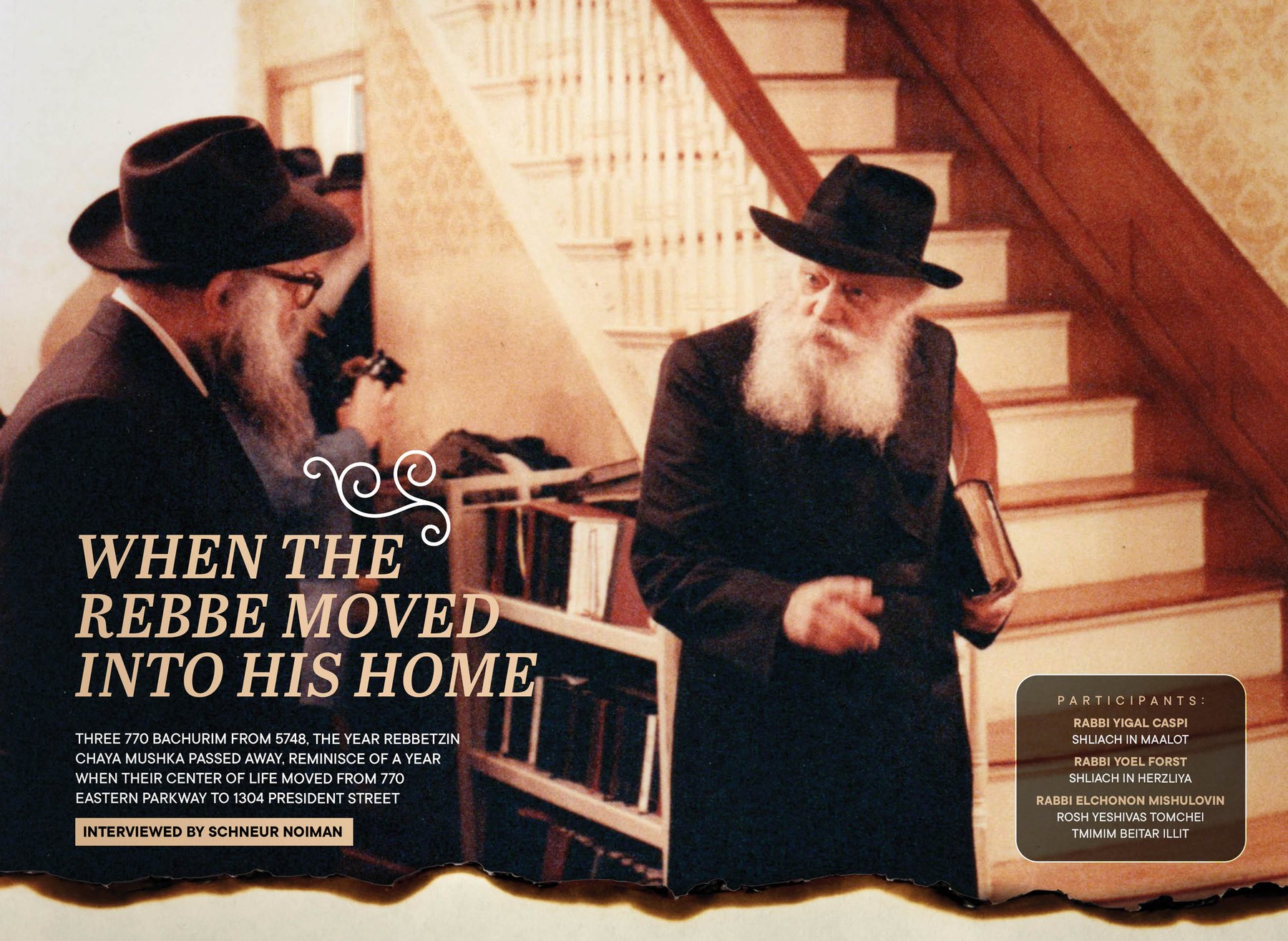
Three 770 bachurim from 5748, the year Rebbetzin Chaya Mushka passed away, reminisce of a year when their center of life moved from 770 Eastern Parkway to 1304 President Street. Participants: Rabbi Yigal Caspi, shliach in Maalot; Rabbi Yoel Forst, shliach in Herzliya; Rabbi Elchonon Mishulovin, Rosh Yeshivas Tomchei Tmimim Beitar Illit
They will never forget the night of Chof-Beis Shevat 5748. It was seared into their consciousness with one word, repeated over and over during that long night: The Rebbetzin… One word, full of meaning, whispered in deep pain, expressing the understanding that an era had ended.
The year that had begun with a storm with Mivtza Hakhel, under the symbolism of ‘tismach’ and ‘tesamach,’ which was supposed to be one of the happiest years in Chabad history – was suddenly cut short with the bitter news of the passing of the Rebbetzin Chaya Mushka a’h.
But on that bitter night, no one imagined that parallel to the era that ended – a new era was beginning. And in the Rebbe’s words, “ah naya tekufa” (a new period). A new period, with a clear Geuladik tone.
* * *
For Chof-Beis Shevat, we spoke with three men who were privileged to be at ‘Beis Chayeinu’ (770) during those days as part of their Kevutza year, and we revisited the events of Chof-Beis Shevat and beyond…
The Hidden Rebbetzin
Rabbi Yoel Forst: For us, the Rebbetzin was ‘hidden.’ We knew of course that she was there, but she was always behind the scenes. The Rebbe’s home was out of the picture, the Rebbetzin naturally out of the picture, and only the Rebbe was front and center.
In fact, despite being on Kevutza 5748 for about half a year, we never saw the Rebbetzin.
On Shabbos, the Rebbe and Rebbetzin would be in an apartment arranged for them in the library building next to 770. We knew that every Friday evening the Rebbetzin would come to 770 but we couldn’t see her coming and going. Her car would enter the parking lot next to the library building, and the Rebbetzin would exit directly from the car to the library door by the parking lot.
We also understood that the Rebbetzin didn’t want to be seen, and naturally we respected her wishes. No one sought it out. Everyone knew that her honor was the Rebbe’s honor.
On Friday nights, long after davening had ended and all the Chassidim had gone home for their Shabbos meal, and even after the bachurim had gone for their Shabbos meal after seder – only a few ‘serious’ guys sat in the small zal and studied, and around ten at night the Rebbe would leave his room for the apartment in the library.
When the time approached, the tmimim would be on alert. They knew that when they heard the Rebbe’s door close, in another moment the door of gan eden ha’tachton (Lower Gan Eden) would open, and the Rebbe would emerge. There was someone regularly waiting for the Rebbe to open 770’s main door, and the Rebbe would tell him “ah dank” [thank you].
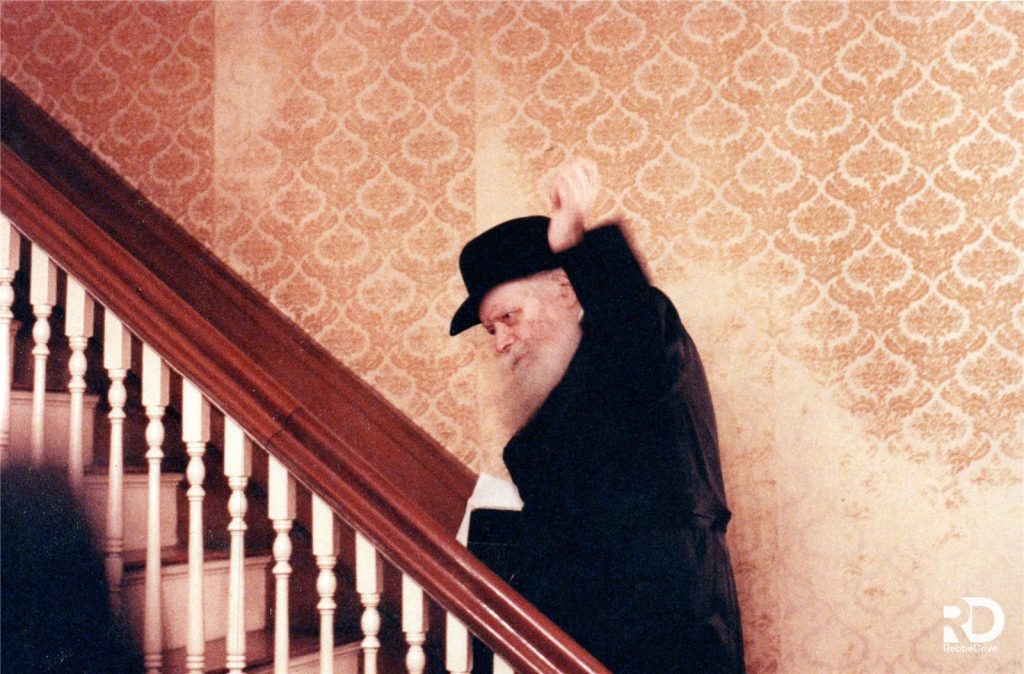
Immediately after the Rebbe left through the main entrance, we would rush to the zal windows facing the sukka courtyard, and we could see the Rebbe walking along the courtyard to the library door near the Tashlich pool. Usually, the Rebbe walked with one hand in his coat. Majestic. Sometimes the Rebbe would look at the bachurim and encourage their singing.
There were guys who would hide behind the Tashlich pool to see the Rebbe enter the library. Personally, I stood there three times. It was moving. The other bachurim would look from the small zal windows, standing ‘one on top of another,’ gazing longingly through the small window squares.
On Shabbos morning, the Rebbe would leave the library building for davening. But then, no one stood outside. There wasn’t an exact time either.
Once I came from Kingston and saw someone coming out. I was still new to things. It seemed to me it was the house after the library, and when I saw someone with a white beard, I thought it was the Chassid, Reb Meir Itkin, who lived there.
I continued walking, and at some point I realized my mistake – this was the library building, and it was none other than the Rebbe himself! I immediately ran to the side. I saw a few other people running to the sides and hiding behind the Hatzalah ambulance that was regularly stationed there. Usually only the children would remain, and the Rebbe would wave to them in greeting. The Rebbe walked from the library to the main entrance path and entered 770.
Practically speaking, we knew the Rebbetzin was in the library on Shabbos, but we didn’t see the Rebbetzin or hear much about her.
One Word That Says It All
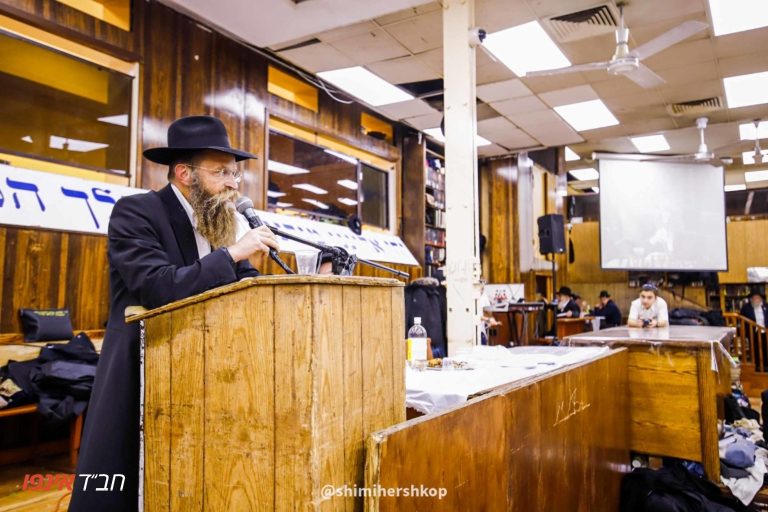
Rabbi Elchonon Mishulovin: On the night of Chof-Beis Shevat, I was sitting in the small zal finishing learning my shiurim. Around 1:30 at night, someone rushed in with a downcast face, and mumbled painfully the bitter news about the passing of Rebbetzin Chaya Mushka… The heart contracted in pain, refusing to believe.
Rabbi Forst: I’ll never forget that night. I was sleeping in the dormitory of Yeshiva Hadar Hatorah, where most of the students of our Kevutza slept. That day I wasn’t feeling well and wasn’t functioning much, so I was awake late. It was 1:25 at night. Most of the bachurim were asleep, and occasionally bachurim would arrive from 770, where life went on around the clock.
I tried to fall asleep, and suddenly there were hurried knocks on the doors, and someone saying in a trembling loud voice: The Rebbetzin!…
The senses and intuition worked very quickly, and I immediately realized something terrible had happened.
I went out and saw from the bachur that the worst possible thing had happened.
As mentioned, we had no connection with the Rebbetzin, but I understood that regarding something very personal in the Rebbe’s life, the worst thing that could happen, had happened – something we never dreamed could happen. We were all in shock. Everyone looked at each other and was absorbed in their thoughts.
Thoughts about a person we didn’t know… we just knew she was a very regal figure. We knew that if the Rebbe is king, then she is queen. But all the glory of the king’s daughter is within. We heard stories here and there, but it was all very blurry. We knew she was a granddaughter of a Rebbe, daughter of a Rebbe, and mainly, that she was the wife of the Rebbe – that was enough to know we’re talking about a very holy and elevated figure.
All the bachurim quickly got dressed and gathered at 770. An atmosphere of Tisha B’Av, times ten. It was quiet. Here and there people exchanged a few words with each other: What happened? When did it happen? What was it? We hadn’t heard that the Rebbetzin wasn’t feeling well. And the next question: Where is the Rebbe now? Beyond that, they didn’t talk or ask.
Everyone grabbed a Tehillim and recited as if possessed. Recited, looked, stopped, was silent. There was a very strange atmosphere, and slowly more and more Chassidim arrived.
This was before the era of cell phones. The public phones at 770 started ringing. Slowly it became known that the Rebbetzin passed away at quarter to one. She hadn’t been feeling well that day and went to the hospital. When the Rebbe accompanied her as she left the house, she naturally made every effort so the Rebbe wouldn’t see that she was suffering too much. Shortly after being admitted to the hospital, she asked for a glass of water and drank, and suddenly her soul ascended to heaven in a storm.
The King Has Brought Me Into His Chambers
Rabbi Mishulovin: Rumors also said to hurry to immerse in the mikva, as we would be able to pass by the pure body to recite Tehillim. At three o’clock they opened the mikva, and everyone immediately ran there. Afterwards we hurried to President Street, where we stood outside the Rebbe’s house with Tehillim in hand.
After the aron arrived, at 5:30, they arranged shifts so each group would enter for ten minutes, say Tehillim and leave. Slowly so many people arrived that it wasn’t possible to stay for ten minutes, and it became like an assembly line.
Rabbi Forst: It was completely strange. When Chassidim would pass on the sidewalk near the Rebbe’s house, they would cross the street. Not even walking on the sidewalk, out of reverence. Like the awe of the Mikdash; it was out of bounds.
We knew not to approach the Rebbe’s house, not even the sidewalk, certainly not to climb the stairs to the house, certainly not to enter the Rebbe’s house – who dared think about it. Most certainly it never occurred to cross the entire first floor of the Rebbe’s house to the kitchen…
And now, after immersing in the mikva, we entered. An entrance room, small hall, living room, everything simple. A dining area with a sofa, small kitchen, equipped like 30 years before, everything simple.
And there, may it never happen again, on the floor lay the pure body of the Rebbetzin… with two candles burning at her head…
We pass in total shock. Say Tehillim and exit through the back porch.
Rabbi Yigal Caspi: At seven in the morning, a siren was heard in Crown Heights. Most people only heard about the news then. Phone calls were made around the world, the public phones at 770 were ringing constantly, with people calling from everywhere asking “Is it true?!..”
The funeral began at 12. The aron went out, and the Rebbe followed. After the Rebbe walked the secretaries. The police led with motorcycles. There was tremendous pushing. We walked until Kingston, where it became impossible to continue. The Rebbe entered a vehicle and they drove to the cemetery. Only about 100 people entered there, rabbanim, mekuravim, etc.
From Pain to Action: And the Living Shall Take to Heart
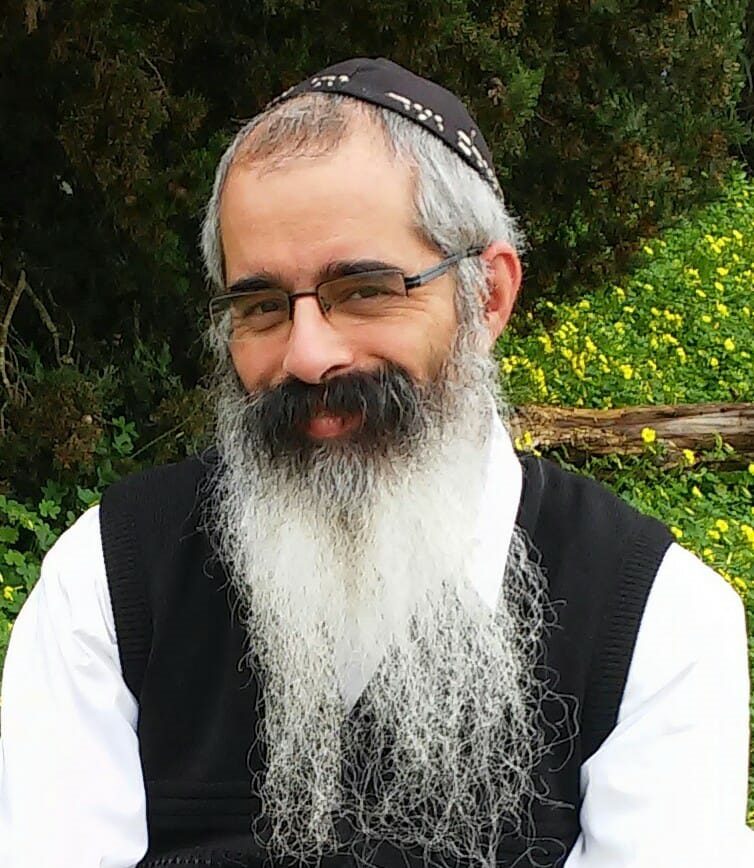
Rabbi Mishulovin: Already in the first sicha, after Mincha, the Rebbe set the tone that would continue and intensify throughout the coming year. ‘And the living shall take to heart.’ Later the Rebbe also edited the sicha, and it was distributed worldwide.
The seven days of mourning began, and the Rebbe’s private home became a pilgrimage site – whether for davening or for nichum aveilim visits by Jewish leaders and public figures (and the records of these meetings have already been printed).
Tmimim and Anash crowded around the house. Everyone wanted to enter, to be with the Rebbe. Since it wasn’t possible for everyone to enter, many remained davening outside around the house. Although it was determined that those entering (a few minutes before davening began) would enter according to alphabetical order of family names, the pressure was still great, and the cold outside during the days of Shevat caused many to prefer davening at 770 and hearing the Rebbe through the speaker that broadcast directly to the upstairs hall at 770.
Rabbi Caspi: At first it was much easier to enter, but later the ‘organizing committee’ didn’t let everyone in. Although there was a lottery by names, there were always those who sneaked in. Sometimes we succeeded, sometimes not.
Later, we entered the Rebbe’s house throughout the year for davening and for dollars. I remember once during the dollar distribution, the son of one of the Rebbe’s doctors stood in front of me. The Rebbe smiled at him and gave him a dollar for his father, saying: “Tell your father that good things come when least expected.” That’s what I heard from the Rebbe.
A Melody of Longing in ‘Lecha Dodi’
Rabbi Caspi: Regarding the Shabbos farbrengen, since it was Shabbos Mevorchim, we knew the Rebbe holds a farbrengen every such Shabbos, according to the instruction from the Rebbe Rayatz to him, even from before his nesius. But initially they didn’t know if the Rebbe would arrive at 770 before Shabbos. In fact, the Rebbe arrived before Shabbos, and from the moment Shabbos began – it was as if nothing had happened.
But what really grabbed me most was Friday night. I remember the tune of ‘Lecha Dodi’ which was a tune of yearning, a niggun of children to their father. People expressed their pain, and the singing was very emotional that Shabbos, with great love. We felt that our mother had passed away. Exactly like that. I won’t forget the intensity of that Shabbos. It’s the most powerful thing I ever experienced.
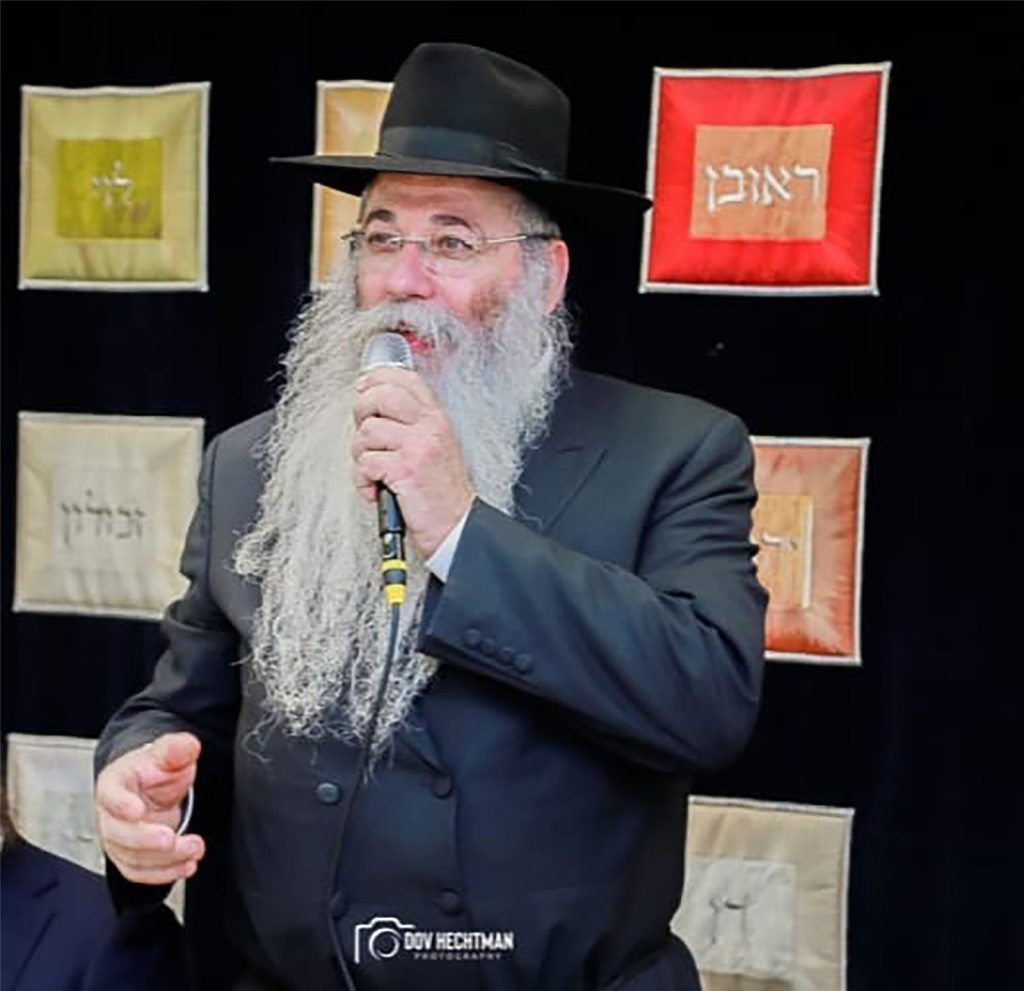
Rabbi Forst: It was a special farbrengen that lasted three hours. The Rebbe spoke about the half-shekel, and about how when one half descends – the other half rises. Like the mashal of the fox and the wolf, when one goes down into the well, the other rises. The Rebbe spoke about how the wolf going down represents the forces of impurity, and the fox represents holiness. The Rebbe spoke about refining the ‘opposite of life,’ refining the lowest levels, which causes the other half to rise very, very high. You could see the Rebbe was talking about the situation, just in the ‘language of a maamar.’
Motzoei Shabbos; Unfathomable Pain
Rabbi Forst: On motzoei Shabbos, there was something very dramatic that I won’t ever forget. After Maariv, it was ‘back to normal’ as far as the laws of mourning. The Rebbe stood at his place in the east, they moved the chair and lectern aside, brought the padded crate used on Tisha B’Av, and the Rebbe sat on it, with his back to the wall.
Suddenly you see the Rebbe, instead of standing by the shtender, sitting on a low seat, and the whole congregation starts passing by to offer condolences… people didn’t know what to do with themselves. They’re standing and the Rebbe is sitting. And the Rebbe raises his head to them and looks at each person.
People said the traditional phrase quickly and fled as fast as they could. It was simply frightening. Relatively speaking, it didn’t take long. About twenty minutes; simply because people couldn’t process such a thing. The Rebbe looked each person in the eyes with such a deep gaze, a gaze I won’t forget.
In the Rebbe’s gaze it seemed that no matter that there were hundreds more people behind you – the Rebbe listened to every word you said. Later it dawned on me that this is what Chazal mean when they speak in terms of ‘accepting consolation.’ When a Jew consoles – there is comfort here, according to Torah, and there is something to receive. And the Rebbe, with all his supreme powers, simply accepted nichumin from one more Jew and one more Jew.
During the week, various rabbanim and Admorim came and the Rebbe spoke with them. Most of the bachurim didn’t pass by during the week, so our first encounter with the Rebbe was on motzoei Shabbos, when everyone who was at 770 passed by and offered condolences.
The Farbrengen at the End of Shiva
Rabbi Mishulovin: I remember the Chassidishe farbrengen in the Rebbe and Rebbetzin’s house at the end of shiva. There was some ‘trepidation in the heart’ knowing that the Rebbe was hearing every word upstairs, alongside a feeling of ‘what a privilege…’
Rabbi Forst: Indeed, at the end of shiva, the Rebbe gave the gabbai a hundred-dollar bill and said to hold a large farbrengen with great splendor and many people. When the gabbai announced that there would be a large farbrengen at 770, the Rebbe corrected him and said the farbrengen should be here, in the house. So the gabbai announced that the farbrengen would start at the Rebbe’s house and continue at 770. But the Rebbe clarified again through the secretary that the intention was for the farbrengen to indeed take place in the Rebbe’s house.
People were in shock. It was one thing that people entered in small groups, visitors, shluchim, rabbis and others, there were only a few dozen, but now a farbrengen in the Rebbe’s house?!
They brought two tables into the living room and Chassidim sat around. It was frightening. To sit in the Rebbe’s house?! To speak?! To sing niggunim?!
Many mashpiim spoke there. Groups entered in rotation, each for about ten minutes. I remember standing with my back to the stairs. What people said mattered less, mainly we felt the fear and elevation from being inside the Rebbe’s house, at the end of shiva, singing niggunim, people speaking, and the Rebbe upstairs. Maybe he’s listening?… Not a simple feeling at all…
In the House, Or at 770?
Rabbi Forst: The Kevutza bachurim were among the ‘privileged’ who entered the house for tefillos with the Rebbe. We could go in for one tefilla, either Shacharis, Mincha or Maariv. We were divided alphabetically. Each day a different tefilla according to the order. What do you do when you can’t be in the Rebbe’s house? So like all Chassidim – we stayed at 770, where the davening was broadcast over the speaker. We stood in the small zal and davened with the Rebbe through the speaker.
After some tefillos, suddenly the Rebbe would begin a sicha, which we heard even better than those who were in the house, because of the speaker. After the talk we would run to the house to receive a dollar from the Rebbe.
During some tefillos, especially at Mincha, I would stand in the house’s courtyard, near the window close to where the Rebbe stood. When the Rebbe davened, there was a small Aron Kodesh to his left, and on the right side of the shtender there was a curtain, behind which was a window. Like any standard American window, it was divided into two parts – upper and lower. Usually the lower part was open a few inches for ventilation. I stood under the window, and for some reason there were only two or three other people there. We heard faintly but we heard. We were actually only a few feet from the Rebbe in actual space.
It was a pastoral atmosphere. We stood on a patch of ground about a meter square, surrounded by vegetation, above us a small tree, and we quietly heard the Rebbe from a distance of about five feet… It was amazing. And there were hardly any people there. These are moments I won’t forget.
Other moments I especially remember were on Shabbos, when the Rebbe came to 770 and was called up to the Torah, and the gabbai made a ‘Mi She’beirach’ for new mothers. “And she shall be called in Israel…”… silence, tension… “Chaya Mushka bas…” 95 percent of the girls were named Chaya Mushka. It was a given. Not only neighborhood residents named their daughters at the Rebbe’s minyan, but every Chabad girl born that year received a ‘Mi She’beirach’ near the Rebbe, and it was clear the name would be Chaya Mushka.
This is what we could give to the Rebbe, that our children would be named after the Rebbetzin. Every Chassid naturally felt that this was a drop of happiness he could bring to the Rebbe, as well as the honor to perpetuate the Rebbetzin’s memory.
For me it was a pleasure to stand close to the Torah reading bima. Not from the front where everyone takes a place to hear the Maftir, but from the side, seeing between the poles around the platform. I followed the ‘Mi She’beirachs,’ and saw the Rebbe’s facial expressions. We don’t understand the Rebbe’s feelings of course, but in a simple sense you could see the expression in the eyes and the light in the face – as much as we small ones can see. We saw he was pleased.
Then I decided, and this was even clearer to me than that the sun would rise in the morning, that my first daughter to be born, I would name Chaya Mushka. That’s what I did when I merited that my firstborn daughter was born on the 2nd of Nissan – the anniversary of the day the Rebbe said the sicha of ‘Yechi HaMelech’ in 1988 – and I named her Chaya Mushka.
A New Era as Preparation for Geula
Rabbi Forst: Immediately after the passing of the Rebbetzin, the Rebbe introduced the phrase “and the living shall take to heart,” and continued with this throughout the year. Just as over the years in every sicha the Rebbe would conclude and link everything discussed before to “action is the main thing,” so in 5748 (1988) the whole year the Rebbe spoke about “the living shall take to heart.”
Rabbi Caspi: The Rebbetzin was the connecting thread between the Rebbe and the Chassidim, as the Rebbe said on 14 Kislev 5714 (1953), that the wedding with the Rebbetzin connected him to us and us to him. After the passing of the Rebbetzin, there was a feeling that we needed to deepen our connection to the Rebbe.
This caused the tmimim to take more responsibility, each one personally in their studies and behavior with true dedication.
We made special efforts regarding the subject of Geula, since we knew this was the Rebbe’s zahir tfei (primary focus), that the Rebbe’s greatest aspiration is the true and complete Geula. It was clear to us that if we want to bring the Rebbe pleasure and satisfaction – we must act with more intensity to bring about the Geula.
When the Rebbe spoke about “awaken and sing,” we immediately thought about the imminent Geula, and it was clear that the entire process was connected to Geula, and indeed the Rebbe explicitly said that a new era had begun then towards the Geula.
Rabbi Forst: After Chof-Beis Shevat, a new era began. The Rebbe explains this well in the Dvar Malchus of 22 Shevat 5752 (1992). And this was tangibly visible then, already in 5748 (1988). Everyone understood, at all levels, men, women and children, that a new era was beginning here.
The question is only how one looks at it. Whether with a human perspective, and then one sees decline; or if one looks with a divine perspective, with the Rebbe’s view, that when one half descends it affects a revelation in the second half, etc.
In every period there was always a choice: either to take it in a human way, and then the situation is stark, or to take it in a divine way as the Rebbe himself teaches us, and then we see Geula.
After the passing of the Rebbetzin, a new era began, and we need to see how the Rebbe sees it. To know how to relate to this new era, we need to look through the Rebbe’s glasses.
The Rebbe’s perspective can be accessed through studying the Dvar Malchus sichos, in the sense of “I myself wrote [my self into] it and gave it.” There, in the last sichos we have heard from the Rebbe for now, lies the Rebbe’s approach that we need to adopt.
Coming from Yud Shevat, we can see how the Rebbe relates to one maamar, the last one, of the Rebbe Rayatz, in which everything is contained. Each year the Rebbe explains one os, and gets into all the precise details, and polishes every word, and develops entire G-dly themes – all on one maamar.
The Rebbe teaches us how a Chassid needs to take every word of the Rebbe. Every word is gold, every word is Elokus, divrei Elokim chaim.
We, who merited to be given the Dvar Malchus – see that when we live these sichos as the Rebbe ‘lived’ the maamar from 5710 (1950), then we see and feel that from day to day we enter into a more elevated period, deeper and more Geuladik.
There’s no need to be confused by the darkness of exile. We should know that the Rebbe gives every Chassid all the necessary strength. We need to be medayek in the Rebbe’s language “and the living shall take to heart” – and remember, that for the living to take to heart, first he needs to be ‘alive.’ For a Chassid to be alive he needs to know that every word of the Rebbe is a living word, and then automatically he knows that the Rebbe is alive. And then everything is wonderful: there is a Chassid who is alive, a Rebbe who is alive, an era that is alive, and we immediately reach the Geula.
L’chaim L’chaim!
Yechi Adoneinu Moreinu V’Rabeinu Melech Ha’Moshiach L’Olam Va’ed!
The Declaration of “Yechi HaMelech” After the Sicha on Beis Nissan
Rabbi Mishulovin relates:
On Sunday, Beis Nissan, the Rebbe went to the Ohel, and when the Rebbe returned home, they davened Mincha and Maariv consecutively as usual, and afterward the Rebbe said a sicha. I was in the small zal and we heard the sicha via broadcast. In that sicha, the Rebbe mentioned the point – that the people need to proclaim “Yechi HaMelech,” and emphasized that there is a practical instruction here: that the people should proclaim Yechi HaMelech.
In those moments I understood that the Rebbe is starting a new mivtza and inyan. Unlike the Rebbe’s approach to dealing with the topic of Moshiach’s identity until then, which rejected the matter, and the sharp sicha of 5745 (1985) is known in which the Rebbe expressed himself in strong terms against those who distance Jews from learning Chassidus etc. – suddenly the Rebbe comes and announces that the people have to proclaim “Yechi HaMelech.” This feeling, that we’re dealing with a new mivtza and inyan that the Rebbe is leading now, brought me back to all the stories – how the Rebbe started the Tefillin campaign, letter in a Sefer Torah etc.; and now, here was a new campaign starting right here and right now!
At the end of the sicha, we heard one of the Chassidim proclaim “Yechi HaMelech” inside the house, at some distance from the loudspeaker. There’s a recording of the sicha and you can hear it. Later when the Rebbe distributed dollars after the sicha, there were some who passed by and said “Yechi HaMelech” to the Rebbe during the distribution. But still this wasn’t a ‘proclamation’ – I felt that something more significant was still missing for all to see, a proclamation with full force, as the Rebbe requested there should be a ‘proclamation.’
However technically, it wasn’t possible to do it, because meanwhile the Rebbe remained in the house. After the sicha and distribution of dollars, the Rebbe went upstairs and the next day again the tefillos were in the house.
Only the next evening did the Rebbe come to 770 for drawing the mayim shelanu (water for matza shmura). The news that the Rebbe was coming to 770 spread quickly throughout the neighborhood, and within a short time, the entire sidewalk and area between the service road and the 770 building was filled to capacity with men, women and children.
I stood on the sidewalk, opposite the windows of gan eden ha’elyon (Upper Gan Eden), and then came the moment when the door opened and the Rebbe came out. As known, since 5746 (1986) the Rebbe stopped entering and exiting from the main entrance; and the procedure was that the car would enter the parking lot until it reached close to Rabbi Groner’s office, and the Rebbe would enter the car without needing to walk a few more steps. At that event the Rebbe came out and moved away from the door about six feet, the Rebbe wore a coat over his sirtuk, the spotlight illuminated the area, and one could see the Rebbe’s face well.
The Rebbe’s face since Chof-Beis Shevat was very serious, and the Rebbe stopped and waited for the car to arrive. Although usually the crowd would sing and the Rebbe would encourage it, during that period, the Rebbe’s demeanor generated such tension that no one thought to start singing…
Hundreds of Chassidim stood and looked at the Rebbe in silence, each with their thoughts. I was thinking about the Rebbe’s pain that we can see with our eyes from our lowly perspective. During these thoughts, after the Rebbe stood like this for several long seconds; standing next to me was a friend from the Kevutza, an introverted bachur in those years, and he whispered to me: Now we need to proclaim “Yechi HaMelech.” As is known, there is a concept called “the reader of the letter should be its implementer,” so I said to him: You proclaim. But in my heart I knew that due to his introverted nature etc. he wouldn’t do it.
Additional seconds passed, and I said to myself: he’s right, two days ago the Rebbe spoke in the sicha about “Yechi HaMelech,” and here there’s an opportunity – a large crowd of hundreds of people, now there’s an opportunity to proclaim “Yechi HaMelech” before the Rebbe. On the other hand, I struggled with myself, because at that time such conduct didn’t exist and I was afraid to take this step – along with this I knew that in a few seconds the Rebbe would drive home, the opportunity wouldn’t return, and the Rebbe’s will wouldn’t come to fruition…
After deliberation that lasted several seconds, I decided that come what may, I would do it: I shouted and proclaimed loudly before the Rebbe – “Yechi HaMelech!”
There’s a video of this, and everyone can see it for themselves. After the first proclamation, only a few individuals from the crowd answered after me. Suddenly I saw that the Rebbe raised his hand in a gesture of welcome. Before that, the Rebbe hadn’t made any gesture, and now he was waving his hand as a sign of welcome. I received encouragement from this and proclaimed again loudly: “Yechi HaMelech” and this time more people answered after me. I remembered that at the children’s Rally gatherings of Tzivos Hashem, they would proclaim “Yechi Adoneinu Moreinu v’Rabbeinu” three times, and therefore I proclaimed for the third time – this time about 50 people answered after me.
When I proclaimed it for the third time, the car arrived, and during the proclamation the Rebbe entered the car, the car started moving and the Rebbe continued to wave his hand to the crowd. I felt that the Rebbe accepted and encouraged the inyan…
Thus I merited to accomplish the first public proclamation of Yechi HaMelech (in the presence of over 500 people), and this was a baptism by fire for everyone to see that indeed the Rebbe meant literally that they should proclaim this in practice!
This added to the internal awareness that we are in a new era, an era of the hisgalus of Melech Ha’Moshiach.
Beis Moshiach #1448 • pp. 12-23
© 2026 Beis Moshiach Magazine. All rights reserved.
This article originally appeared in Beis Moshiach #1448. You are welcome to share it with friends and family by email or in print, provided that you do not change, add to or omit any part of it, you credit the author and Beis Moshiach, and you include a link to archive.bmoshiach.org (written out in full in printed copies).
To republish this article in a newspaper, magazine, book or website, please request permission in advance at [email protected].