Next Stop: Resurrection
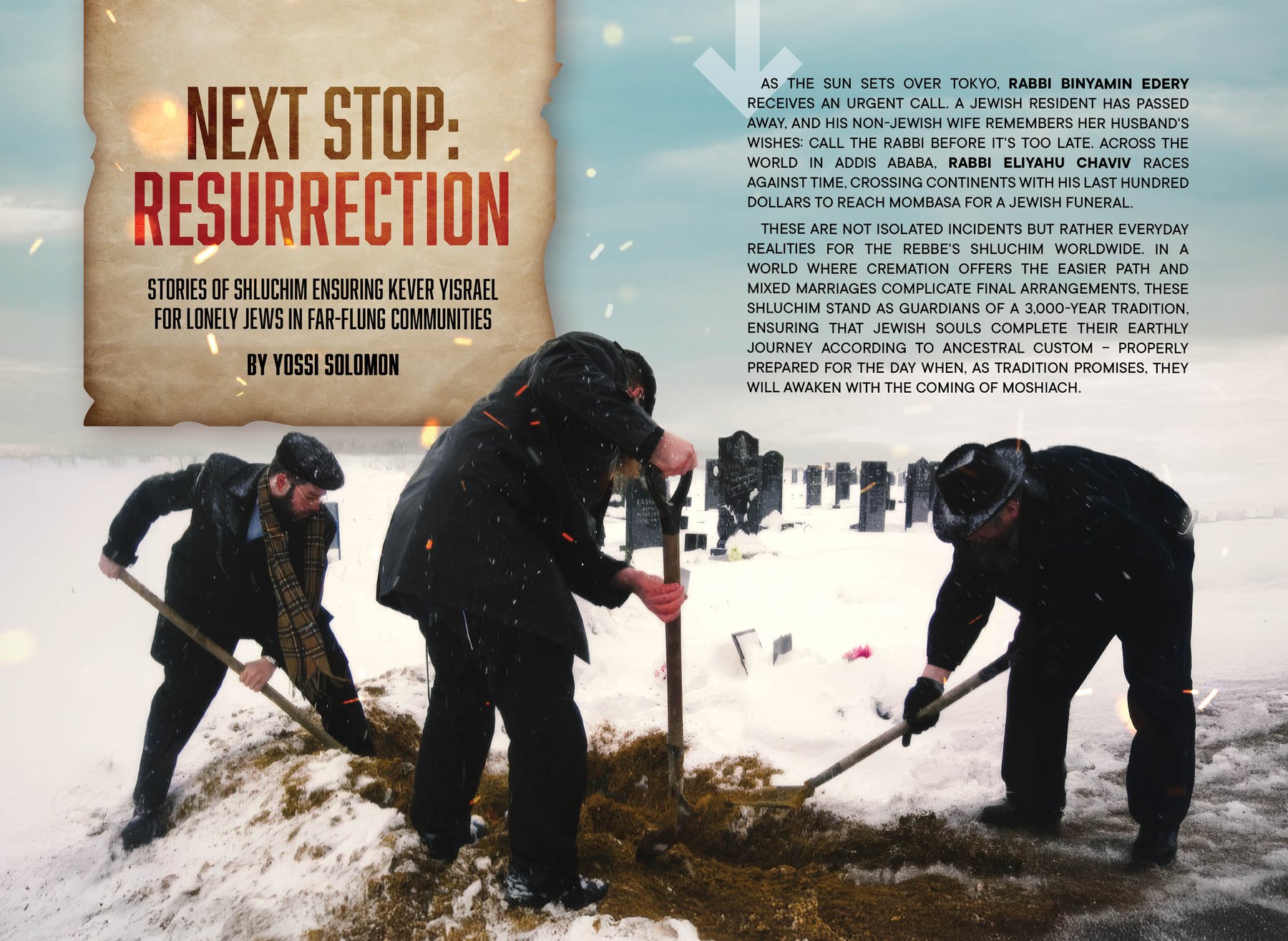
As the sun sets over Tokyo, Rabbi Binyamin Edery receives an urgent call. A Jewish resident has passed away, and his non-Jewish wife remembers her husband’s wishes: call the rabbi before it’s too late. Across the world in Addis Ababa, Rabbi Eliyahu Chaviv races against time, crossing continents with his last hundred dollars to reach Mombasa for a Jewish funeral. These are not isolated incidents but rather everyday realities for the Rebbe’s shluchim worldwide. In a world where cremation offers the easier path and mixed marriages complicate final arrangements, these shluchim stand as guardians of a 3,000-year tradition, ensuring that Jewish souls complete their earthly journey according to ancestral custom – properly prepared for the day when, as tradition promises, they will awaken with the coming of Moshiach.
As shluchim of the Rebbe, they take care of all the needs of Jews in their community: organizing tefillos and minyanim, kosher food, Jewish education. They also serve as attentive listeners in times of distress. They live life with all its complexities.
It turns out that the shluchim’s role doesn’t end with the lives of Jews, but also at the time of their passing, when they are mobilized with the same concern to ensure that the deceased is buried in kever Yisrael according to Jewish tradition. Sometimes these are complex situations that take many days and span continents.
Beis Moshiach spoke with four of the Rebbe’s shluchim around the world and asked about the challenges, solutions, and stories they deal with in their efforts to bring a Jew to kever Yisrael, to prevent another sacred body of a Jew from being cremated against Jewish law, and to assist family members in the spirit of halacha.
The Challenge: Burial According to Jewish Law
The challenges are not simple at all. “Let’s start with the fact that a Jew who comes to live in Japan is probably not very interested in a Jewish burial,” begins Rabbi Binyamin Edery, the Rebbe’s shliach to Tokyo, Japan. “Unfortunately, some even request to have their bodies cremated. The less a Jew knows about the importance of the issue, the more complicated the matter becomes. That’s why one of the things I try to talk about with a Jew who enters the Chabad House is this specific issue.
“The main challenge from their perspective is the financial cost, since cremation is cheaper than burial. Often I tell them that I am willing to bear the financial burden of burial, as long as there is a proper burial.
“Additionally, there are Jews with whom preparatory work and explanation about the importance of burial as a Jew needs to be done. They simply don’t understand the importance of the matter. That’s why I take care of this in advance, even though it’s strange. Currently, dozens of Jews have signed with me that if, G-d forbid, something happens to them, I will bring them to kever Yisrael.”
Rabbi Yonasan Markowitz, the Rebbe’s shliach to Kiev, also believes that the main challenge is the estrangement and consequently the lack of knowledge and understanding of how important it is to be buried in a Jewish burial. “This is something I definitely dedicate time to – the explanation.”
Rabbi Eliyahu Chaviv, the Rebbe’s shliach to Addis Ababa, Ethiopia, speaks about his own lack of knowledge on the matter: “The initial challenge for me was my lack of knowledge on the subject: how do you even conduct a Jewish burial? How many funerals had I attended in my life? As a young man in 770, I would step outside for a funeral that passed by – and that was it. I never thought I would need to know how to bury someone and other related issues. At first, I didn’t even know how essential tachrichim (shrouds) were. But time does its work, and reality forces you to learn the practicalities.”
Rabbi Menachem Mendel Zalmanov, the Rebbe’s shliach to Kostanay, Kazakhstan, divides the issue into several parts: “In Jewish burial, each stage is divided into a separate mitzva, so it very much depends on who the deceased is. There are families who want a complete Jewish burial. There are families who don’t want anything, and there are families who just want the rabbi to come to the funeral, and that’s it… They have no interest in more than that.
“There are also families where the family member was married to a non-Jewish woman, and naturally the family would be less inclined to want a Jewish burial. I’m even talking about Jews who grew up in the shul and led a Jewish lifestyle, but their non-Jewish wife wants them to be buried in the same place, and demands that they be buried in a non-Jewish cemetery.”
How do you handle cases where there isn’t an organized Jewish cemetery, or appropriate infrastructure?
R’ Binyamin Edery: The best thing to do is to send them to places where there is a proper Chevra Kadisha. This is usually what I do. If possible, I try to fly them for burial in Eretz Yisrael. During the last three to four years, I have spent at least one hundred and fifty thousand dollars just for Jewish burial.
R’ Yonasan Markowitz: In the former Soviet Union countries, it’s very rare to have a Jewish cemetery. There are indeed Jewish sections within general cemeteries, but even they are already mixed. Over time, many non-Jews were buried there alongside Jews. Therefore, it’s not a simple issue. So of course we find halachic solutions, or we find a fence for the grave, and then it’s possible to bury there.
R’ Eliyahu Chaviv: We don’t have everything here but, boruch Hashem, we have a Jewish cemetery since there was once a Yemenite Adenite community here that had a proper cemetery according to halacha.
R’ Menachem Mendel Zalmanov: In a case where there isn’t an organized cemetery – and this is indeed what usually happens with us – we convince the family to place a fence around the grave so that it will be by itself, and thus it will be considered an isolated Jewish grave. But even this isn’t always simple, because due to the unfortunate high rate of assimilation, there are many couples who want to be buried together. In such a complicated situation, it’s difficult to make a partition for the Jewish person’s grave. We had such a case where we managed to explain to the family the importance of Jewish burial, and in this case they agreed that we would place a “decoration” of iron bars around the grave that wouldn’t attract special attention – but that was the solution that created the partition between them.
Which halachos do you make sure to observe in situations of death?
R’ Binyamin Edery: To ensure that the burial is Jewish exactly as the halacha requires, along with Jewish minhagim. We have here everything needed for a Jew to attain kevuras Yisrael in purity, even though it’s not easy to implement in a place of goyim. We had a case of a Jew passing away. As such, I wrote in a Whatsapp group of Israelis who stayed with us for Shabbos, asking if there was anyone among them who had previously dealt with burial matters and could help. There was an elderly English Jew who has been living in Israel in recent years, and he replied to me: “Rabbi Binyamin, I have been volunteering with the Chevra Kadisha of England for decades. I would be happy to come and help you…” This was obvious hashgacha pratis. It can be said that, in the end, we always find the right way to conduct the burial in the proper manner.
R’ Yonasan Markowitz: We make sure to observe all the halachos related to burial. In cases where there is no one in the community who can engage in this chessed shel emes, we ask other communities to help us.
R’ Menachem Mendel Zalmanov: There are many important details that need to be observed. One of them is: that the lowering of the coffin into the grave should be done by a Jew. There are certain places where it’s very difficult to find Jews who will lower the deceased into the grave. This is when a lot of effort and creativity are required from the shliach, to see to it that in practice, the final pause before releasing the coffin will be performed by a Jew. Also in covering the grave – there aren’t always enough Jews to cover the deceased, but certainly it’s important that it be done specifically by Jews who are shomrei Shabbos.
Moving Stories
The halachos are clear and the various minhagim are also known. But above all hover extraordinary stories of souls, which sometimes surprise even the shluchim themselves.
R’ Binyamin Edery: There was a Jew here in Tokyo who has been living here for forty years and was married to a non-Jewish woman. He joined a Shabbos that we organized for community members in the mountains. It turned out that he was the tenth man for a minyan. During that Shabbos, he told me that he was suffering from the terrible disease, lo aleinu, and that he didn’t have much time left to live.
In the quarter-century that we have been here on shlichus, I met this Jew only once before, in a Costco store. I took advantage of the situation to explain to him how important it is to be buried as a Jew. As we spoke, I discovered that this man is a ‘Tamim,’ who had previously studied in Tomchei Tmimim…
In the end, we succeeded in convincing him, and he told his non-Jewish wife that if he reached a state where she understood that he only had a few hours left to live, she should call Rabbi Binyamin.
She did as he requested, and when the doctors told her that he had only a few hours to live, she called and asked me to come. I arrived there with my children, we recited several chapters of Tehillim with him, the Vidui, and the proclamation of ‘Yechi’ until his soul departed from his body.
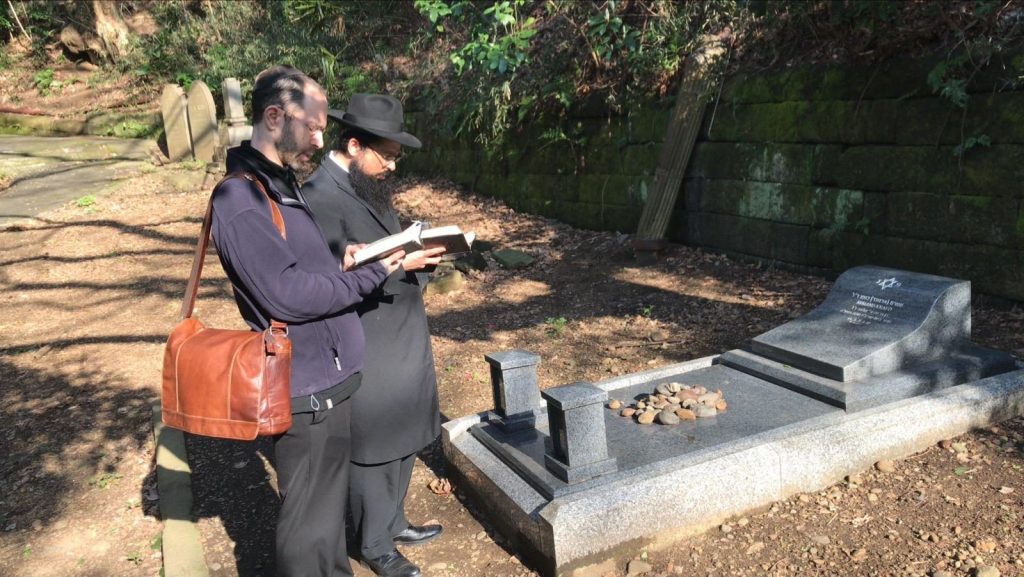
After his passing, I understood from his wife that he had asked either to be cremated or buried, but in any case, it should be in Japan. Unfortunately, we had to keep him refrigerated for two long months until they agreed to bury him in a Jewish cemetery in Yokohama. We conducted the funeral with a minyan of Jews.
R’ Edery shares another story that happened to him very recently:
There is an elderly Jewish woman from France whose daughter lives with her here. She has another daughter who lives in France.
One day, the daughter who lives in France called us and said that her mother was in a hospital in a critical and complex condition, and that she only had a few days left to live. She asked if we could ensure that she would be buried in a Jewish burial.
Despite the fact that the daughter who lived with the mother in Japan wanted to bury her specifically in Japan, we managed to convince her that the mother should be buried in a Jewish burial in France.
R’ Yonasan Markowitz: The locals usually don’t understand the importance of burial according to Jewish law, so they will prefer to choose the easier route, which is cremation. It’s a simple and cheaper process. There are those who want a form of burial as was customary in the Communist countries.
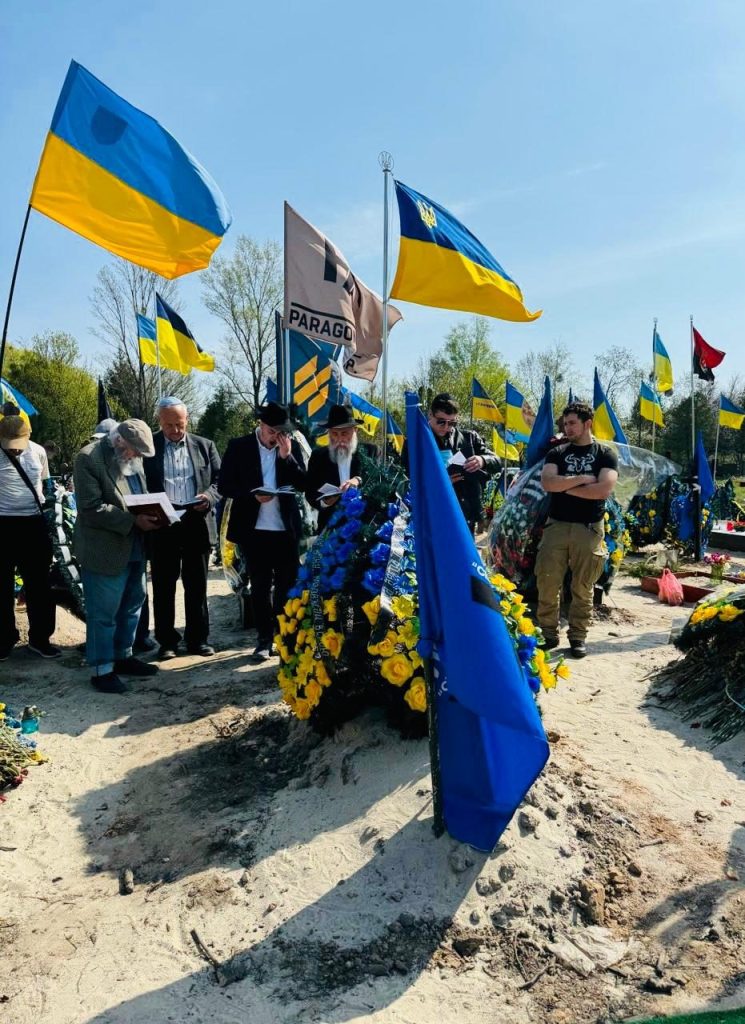
There was a case of a prominent Jewish professor who passed away, and his son decided to cremate the body. I tried to explain to him the importance of Jewish burial, but the son told me that he would agree to it only on the condition that his father would be buried in a Jewish cemetery in the center of Kiev that was already closed for burial. I understood that there was a slim chance they would allow burial in a place where they no longer bury, but I still tried my luck. I called the mayor and he agreed that we should bury the professor there, even though the place was already closed. But, if they’re going to open it especially for him, it’s only for an enormous sum…
Despite the agreement that was hard-won, the son suddenly changed his mind and decided that he didn’t agree to bury his father in a Jewish burial. He even informed me of the time of the funeral.
I did something that is pretty unspeakable. I approached the son in the middle of the funeral procession and made it clear to him that he must bury his father in a Jewish burial as he had committed to me, since I had already arranged it with the mayor, and it would look very strange on my part if after I begged the mayor, the son refused to bury his father in a Jewish burial.
Besides that, I told him that if he cremated his father now, there would be no way back from that. It’s better to bury now and give him a proper last Jewish honor. And if in a year he still wanted to cremate, he would have that option.
It helped, and in the end we brought the professor to a Jewish burial.
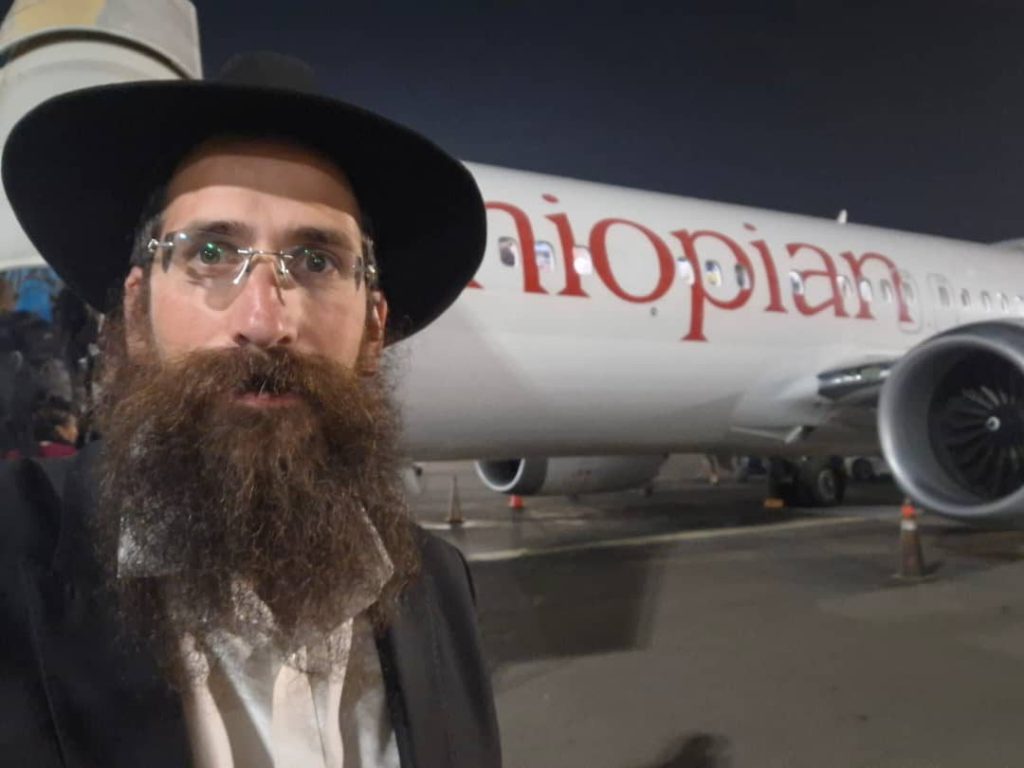
R’ Eliyahu Chaviv: At the Kinus HaShluchim that took place this year, I didn’t travel due to the birth of my son. Suddenly I received a phone call from Rabbi Levi Notik, the Rebbe’s shliach to Kenya. R’ Notik told me that he was at the Kinus, and asked if I could go to Mombasa (in Kenya), since there was a Jew there who had passed away and needed to be brought to a Jewish burial. “If you don’t do it, there’s no one who will do it,” he told me.
I told R’ Notik that I would go and take care of it.
When I checked if there were tickets from Addis Ababa to Mombasa, I discovered that all the tickets were sold out. I had to extend the journey and travel via Nairobi.
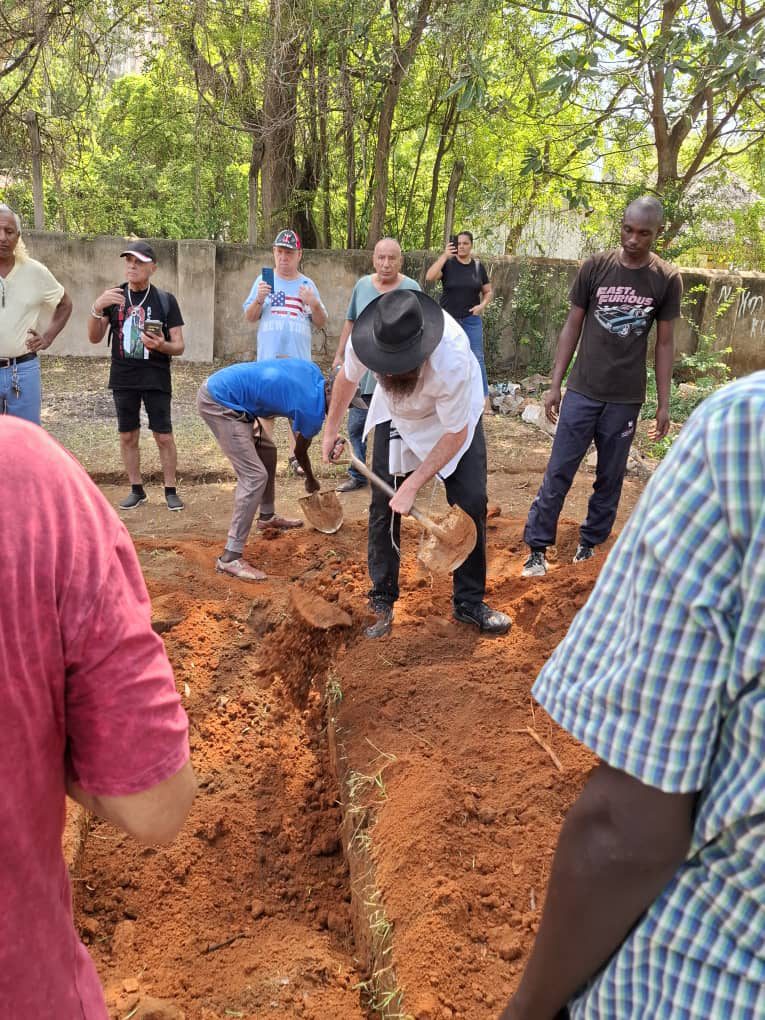
I landed in Nairobi at three in the morning. When I went to buy the connecting tickets for a domestic flight to Mombasa at the terminal, I discovered that there too, tickets were sold out. I looked at the clock and saw that in two to three hours, the funeral was supposed to take place in Mombasa, and I had to get there on time…
With the last hundred dollars I had in cash (because in addition to everything, my credit card was frozen) and additional money that a Jew from Kenya transferred to the clerk, I purchased a ‘standby’ ticket for the flight. By hashgacha pratis, a seat became available just before the plane took off, and I managed to board it and arrive at the funeral and burial on time.
In two hours I had to return to Addis and during that time I managed to arrange for the burial to be as it should be.
R’ Menachem Mendel Zalmanov from Kazakhstan adds: There was a case where the deceased’s family didn’t invite me, but since I found out that there was a funeral for a Jew, I went.
It turned out that his daughter was a non-Jew. The deceased was a professor who built and designed all the trains in the city; therefore, the funeral organizers were those responsible for the trains. When they saw me, a clergyman, they were sure that I had been invited, and they let me conduct the funeral…
I did everything I could to make the funeral as Jewish as possible. I recited chapters of Tehillim and said ‘Keil Malei Rachamim.’ The only Jews who were there were already elderly and couldn’t help with lowering the deceased or covering with soil – I told the workers that they would carry the soil to the entrance of the grave while I would pour the soil into the pit. Thus, the final action before covering the grave was performed by a Jew.
It was a split-second decision in the field, with the aim of making it a Jewish kevura as much as possible. In addition, there were some good things that came out of that funeral. After it ended, I took a Jew with me for a ride. This person agreed to come with me to the shul, and all the way we talked about the importance of putting on tefillin.
When we arrived at the shul, I told him “Come, put on tefillin.” It seems that he still had fear based scars from the KGB regime period, and he looked in all directions. Only after he verified that there was no one watching him, did he agree to quickly put on tefillin. Thus, another Jew came out of the category of ‘karkafta’ (one who has never worn tefillin).”
As I understand, there are often disagreements within the family regarding burial. How do you as shluchim act when your mission of bringing someone to Jewish burial is at stake?
R’ Binyamin Edery: This is indeed a difficult issue that is almost impossible to bridge in the hours after death. In many places, people look to finish the matter as quickly and as easily as possible, and that’s through cremation.
Therefore, preparing the deceased and the family before death is the most important detail and the secret to success in this matter.
I had a case about a year ago of a Jew who died in Korea. He is one of the Jews of our community in Tokyo. He almost also went to cremation ch’v, but as soon as I managed to catch his family members who were in New York, I explained to them that he had asked me to be buried as a Jew. Only then did we manage to stop it and bring him to a Jewish burial in New York. But this is a rare case, because, as mentioned, the main work is preparation in advance, otherwise it’s very difficult to succeed in bringing the deceased to a Jewish burial with the full consent of the family.
I had another case of a Jew who lived with a non-Jewish woman and passed away. His family in Israel asked that we cremate him and not bring him for burial in Israel, since they had no interest in it. The other side of the family was less concerned, and it didn’t matter to them what happened to him, as long as they didn’t have to spend money on him.
I insisted on bringing him to a Jewish burial in Israel, and we succeeded. Today, his family member thanks me for this every time he meets me, and says that he was wrong in his conduct.
R’ Yonasan Markowitz: Usually the disputes are around the issue of money, since cremation costs very little. Most of the time we give the money instead of the family who doesn’t want to pay, the main thing is that the burial should be Jewish according to halacha.
R’ Eliyahu Chaviv: There was a case of a deceased who was married to several women, one of them was Jewish and the rest were non-Jewish. They all started arguing among themselves about where to bury him… One wanted to bury him in Israel, the second in a Christian cemetery, and the third suggested something else.
We had to sit the whole family down and unite them all around one decision. Because the deceased’s eldest son was Jewish, I explained the importance of the firstborn son making the decision about what to do with his father. He made the decision to bring him to kever Yisrael, as indeed happened…
Support Network for Shluchim
It goes without saying that while the shliach can push, persuade, use connections, and organize, at the end of the day, he needs backing and support.
So we asked the shluchim: Is there any support you receive from the community or anyone else?
R’ Binyamin Edery smiles: We are the community.
But, whenever there is a case of Jewish burial, I share the details of the case with everyone who lives here, invite them to be part of it, which causes others to think about Jewish burial.
I had a case a few years ago where a Jew passed away. I traveled together with a few local Israelis to his house to talk to the non-Jewish woman not to cremate him. Unfortunately, this didn’t succeed, and I went to court, but that didn’t succeed either.
On the way back – a distance of 400 kilometers from Tokyo – one of the Israelis who was with me asked me, “Rabbi Binyamin, if something happens to me, please don’t forget me, I want kever Yisrael wherever my family is…”
And so it was! Two years ago, on the 7th of Elul, he passed away, and I went together with my two older sons to the police station. The procedure here is that the police always take – even in the case of natural death – the body for examination to verify that there wasn’t a criminal event.
By a miracle of miracles, within a few hours a pathologist arrived who asked us what we wanted to be written about the circumstances of death. We said that we don’t want anything to be written there… He didn’t even touch the deceased, just wrote that they don’t know the cause of death and it’s probably natural.
Because it was during the COVID period, we flew him posthaste to Israel. At that time, we saw how “tzedek goes before him” is fulfilled in him, since the man had a direct deposit donation set up for the Chabad House that is still active today…
I had to obtain documents that would allow him to be flown to Israel, but all the offices responsible for issuing the permits were closed.
I called the Japanese Deputy Foreign Minister whom I knew at that time, and he got us the documents on the same day…
R’ Eliyahu Chaviv: Regarding burial, this is one of the things that the community is most eager to help with. Everyone pitches in in any way they can so that we can bring Jews to proper Jewish burial.
In addition, there is the ZAKA organization that does truly sacred work. When I encounter a case of death, there is someone who makes sure to alert the ZAKA organization in South Africa and in Eretz Yisrael and they help with what is needed.
R’ Menachem Mendel Zalmanov: The community is very supportive of me. From the people’s perspective, what the rabbi says is fine. On the other hand, there is no material support. I have to raise the resources in order for there to be a Jewish burial. And this is the opportunity to say thank you to Anash who support the shluchim from afar.
What solutions do you find for situations where there is a need to transfer the deceased to another place?
R’ Binyamin Edery: The main work is to find a company that specializes in this and has all the licenses to transfer the body, and together with them to ensure that everything is carried out. Of course, you need to prepare in advance and check what is permitted and forbidden in regards to the transfer of the coffin to Israel by a given airline, because everything has to be according to halacha. Often, halacha contradict the guidelines of the airline, and then maybe you need to promise a bit more money to the company, and that helps…
R’ Eliyahu Chaviv: In Addis, there was a Yemenite community that was buried here. There was a point where their families wanted to bring up the graves of their relatives to Israel, but it’s not simple. The government itself stopped the initiative and forbade this about two years ago because there was a war here, and they were afraid that they would also transfer the bodies of commanders and the like.
We had to go to the government offices and explain it to them time and time again, until finally we managed to find a solution.
* * *
In bringing a Jew to kever Yisrael, the shluchim of the Rebbe express the deep faith in the sanctity of the Jewish soul. Even in the most distant places, emuna is the byword that leads them to overcome every obstacle.
Every Jewish burial according to halacha is a victory of “chessed shel emes” and another step towards the complete Geula, when “wake up and sing, you who dwell in the dust” will be fulfilled immediately.
THE COURT RULES IN FAVOR OF JEWISH BURIAL
Something moving occurred in Bat Yam which was reminiscent of those miraculous stories from yesteryear. A woman contacted Rabbi Shneur Rachimi, shliach in the Amidar neighborhood of Bat Yam, asking for a bracha for a refuah shleima. She said she was seriously ill and the doctors had given up.
“When we visited her home, we found a religious woman who says Tehillim and lights Shabbos candles regularly. We gave her chizuk and asked the Rebbe for a bracha for her through the Igros Kodesh. The woman’s faith was fortified and we left with a good feeling that our shlichus provided strength even in challenging situations like these.
“Three months ago, I called her uncle Nissim to ask how she was. Nissim said the woman had died just that morning. He said that on the death certificate it said that she had to be buried in a Muslim cemetery because she was registered with the Interior Ministry as a Muslim. Her father was an Arab but her mother was Jewish. Nissim, who considered the timing of my call as a sign from heaven, asked for our help.
“The situation was complicated and highly challenging. We immediately began contacting ZAKA, the chief rabbinate and directors of cemeteries to arrange a Jewish burial for her. After much effort, we were able to get permission to bury her in Yarkon Cemetery in the mixed section.
“The problem didn’t end with that. The woman’s brother, a Jew who lives like an Arab and whose name is Achmad, insisted she be buried in the Muslim cemetery in Jaffa. I tried to talking to him and explaining the importance of kever Yisrael but was unsuccessful. As a result, the family went to court.
“In the meantime, we wrote to the Rebbe through the Igros Kodesh and asked for a bracha. The answer we opened to dealt with tahara and mikva and included a bracha which gave us chizuk and bitachon, ‘Yehi ratzon that the statement of our Sages be fulfilled in you, that one who comes to purify is helped, and may Hashem Yisborach fill the requests of your heart for good and may you have good news to tell in all that was said.’
“On motzoei Shabbos, at the Yud-Tes Kislev farbrengen, we invited the uncle Nissim to join us. He said l’chaim with the crowd which prayed and blessed us that we succeed in bringing the deceased to kever Yisrael.
“Sunday morning in court, we presented our relationship with the deceased and the proof that she was Jewish. The court, in an usual decision, said she should be buried in kever Yisrael even though she was registered with the Interior Ministry as a Muslim. We were moved to tears by this ruling which was a victory for truth and Jewish values.
“That evening the woman was laid to rest in kever Yisrael.”
Beis Moshiach #1456 • pp. 20-30
© 2026 Beis Moshiach Magazine. All rights reserved.
This article originally appeared in Beis Moshiach #1456. You are welcome to share it with friends and family by email or in print, provided that you do not change, add to or omit any part of it, you credit the author and Beis Moshiach, and you include a link to archive.bmoshiach.org (written out in full in printed copies).
To republish this article in a newspaper, magazine, book or website, please request permission in advance at [email protected].