Terror Can Burn Down Our Chabad House, But Our Shlichus Is Fireproof!

A Molotov cocktail shattered a summer Shabbos in Grenoble, France, destroying the Lahiany family’s home and Chabad House in an antisemitic arson attack. Their response defied terror’s intent: unwavering commitment to continue the Rebbe’s shlichus undeterred and even stronger! Yossi Solomon in conversation with Grenoble shliach Rabbi Yichya Lahiany.
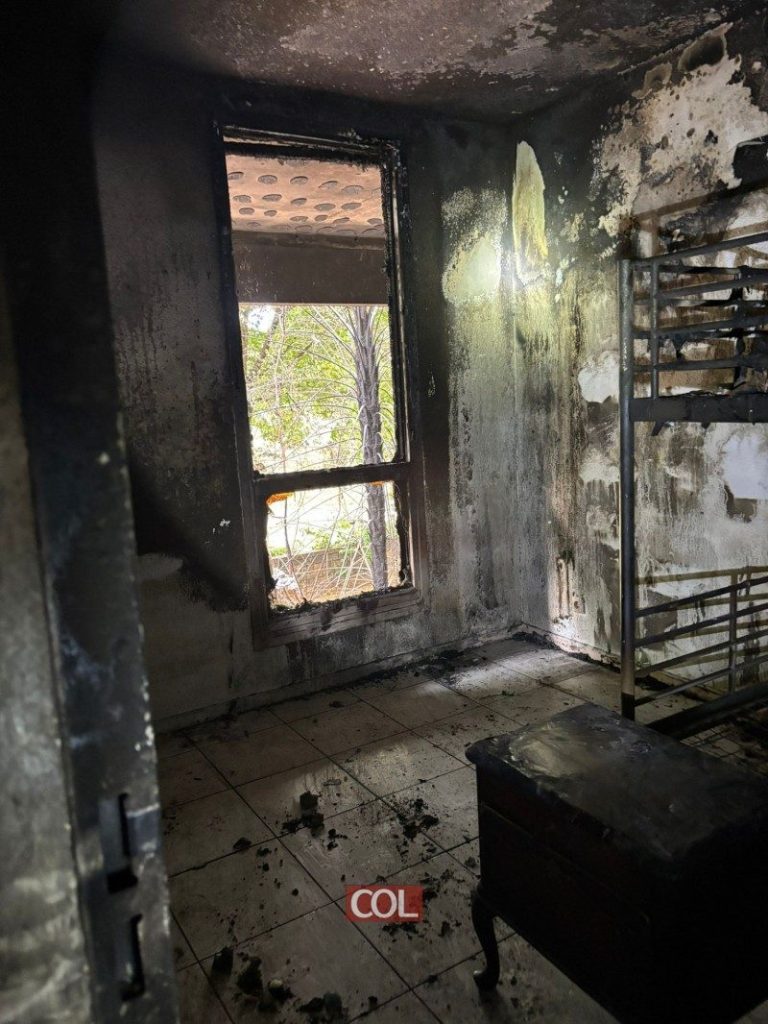
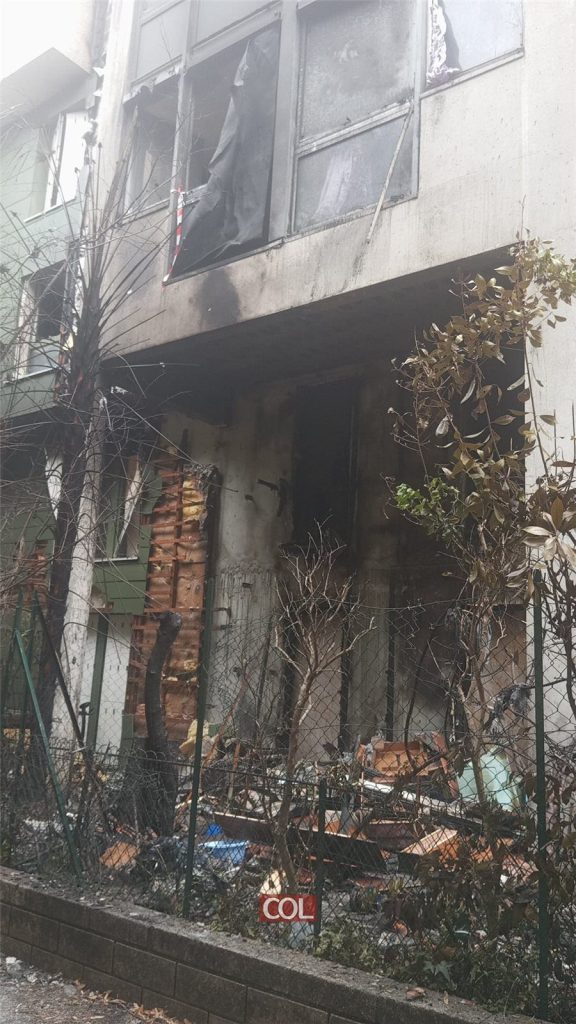
A routine summer Shabbos suddenly turned into a horrifying event. A Molotov cocktail was thrown at the home of the Rebbe’s shluchim, Rabbi Yichya and Batsheva Lahiany, in the city of Grenoble, France. The flames spread quickly, engulfing the house and burning it down to its foundations. The fact that the entire family was out of the house for a seudas hodaya is what saved their lives.
For a while, the shliach and his wife stood in shock in front of the smoke of hatred and the flames of fire, but very quickly they raised their heads, knowing they would continue their shlichus as if nothing had happened.
In a conversation with Beis Moshiach, Rabbi Yichya Lahiany shares what happened on that Shabbos – the understanding that this was a planned antisemitic attack, likely a response to the growing strength of the local Jewish community – and the clear message he sends to every shliach around the world:
“We do not surrender to terror. We continue the shlichus—even when everything burns down.”
When did you find out that your house was on fire? Where were you at that moment?
“It happened on Shabbos, Parshas Chukas,” R’ Lahiany recounts. “The entire family left the house to attend a seudas hodaya organized by my son. About ten minutes before the attack, we had all left the house – which was nothing less than a miracle.”
A seudas hodaya for what?
My son organized the seuda after experiencing a great miracle on Lag B’Omer, about two months ago. He was at the Rebbe when suddenly another car crashed into his. The car he was in was completely crushed – yet he and his entire family emerged unscathed.
He had made that trip to the Rebbe after a previous seudas hodaya – his baby daughter had fallen ill and recovered. At that event, he held a raffle for a trip to the Rebbe, and his son won the ticket. And that’s how it all unfolded.
One miracle after another… Let’s return to your story. It’s Shabbos afternoon, you’re on your way to celebrate and thank G-d together…
Yes, although my daughter Devorah Leah wanted to stay home because she was exhausted from preparing for the summer camp that was set to open two days later. Despite her fatigue, we convinced her to join us – and that saved her life…
And then, in the middle of the meal, our Jewish neighbor burst in and shouted: “Your house is on fire!”
Of course, I got up immediately and ran back home. From afar, I could already see the flames, the smoke, and the fire crews scrambling around.
How did it feel to see your house burning down?
It was definitely a very painful feeling! But we are Chassidim, and we have a way of dealing with things like this.
Later, when I spoke to the members of the community, I shared the well-known story about the parents of the Maggid of Mezritch. Their house had burned down, and the mother cried mainly over the loss of their family yichus records dating back to Dovid HaMelech. Her son Dov Ber said to her: “Mother, don’t cry. A new line of yichus will begin with me.”
I also reminded them of the story of Lot’s wife, who was warned not to look back at the site of destruction – but she did, and turned into a pillar of salt. I told the community: “The disaster is behind us, and we do not look back – only forward. And we continue with our shlichus.”
Currently, I’m living in my daughter’s home. The municipality has promised to find us a replacement residence, but as of now – no solution has been found.
How did the local community – both Jewish and non-Jewish – respond?
(Visibly emotional): We received over 2,000 messages of support! Messages came from all sorts of people: those we had hosted in the past, those who studied with us, those who had simply passed by, and even just local residents. One woman called and reminded me: “The first time I ever lit a menorah was in your home – it feels like I was attacked too.”
The entire Jewish community – not only Chabad – stood united. They demanded an official report from the authorities about what happened. The mayor will, of course, try to ‘put out the fire’ (literally and figuratively), so people don’t say that antisemitism is raging in the city.
It happened on Shabbos, a time meant for spiritual and mental peace. I don’t dare think what could’ve happened if we had stayed home. We wouldn’t have stood a chance…
Have you considered lowering your public profile or moving your activity elsewhere?
(Exclaiming emphatically): Living in another house – yes. But stopping the activity? Chas v’shalom!
The arson happened just two days before the opening of our summer camp. We didn’t cancel it and did not even delay it. We continued as planned. The parents weren’t afraid either – they sent their children, and our full range of activities continued as usual.
You don’t put shlichus on pause, and certainly don’t surrender to terror! My daughter was interviewed on French radio, and she conveyed this message. I know her words created a massive Kiddush Hashem.
Since it was confirmed as an antisemitic attack – were there any threats or warning signs?
The local police concluded definitively: it was arson with an antisemitic motive. Someone threw a Molotov cocktail into the house – after dousing the walls with gasoline to accelerate the fire.
Unfortunately, the atmosphere in France is unpleasant. In many places, Muslims are out of control and act as they please. Jews walking in the street get spat on. One of our cars had its tires slashed. Yes, we saw the early warning signs – but we’re continuing.
Our Chabad House is not far from our private home and continues to operate year-round – spreading light to the entire city of Grenoble.
What’s your message to other shluchim around the world?
We must trust in Hashem, and each of us – wherever we are – must remember: when the local Jews see the shliach standing strong in his faith, they are strengthened in theirs, and they move forward too.
46 Years of Shlichus
The Lahiany family began their shlichus in the city of Grenoble exactly 46 years ago, in Tammuz 5739. They had barely unpacked their bags when Rabbi Lahiany began organizing a summer camp for the city’s Jewish children.
The work began step-by-step – with no infrastructure, no budget, and no permanent location. “There was no Chabad House – we operated out of our home,” he recalls. Only later, after great effort were they able to acquire a permanent location for the Chabad House.
Over time, they saw a significant need for Jewish education, as there was no Jewish school in Grenoble. “We decided that our next shlichus task would be to establish an educational institution – a Jewish home for the community’s children. And boruch Hashem, we succeeded in building a school that became a significant anchor for Grenoble’s Jews – even for those who had not previously observed mitzvos.
Grenoble: A City of Refuge and Renewal
The city of Grenoble is located in southeastern France at the foot of the Alps. It is the capital of the Isère ‘department’ in the Auvergne–Rhône–Alps region. The city lies on a plain at the confluence of rivers descending from the Alps, about 200 meters above sea level. Surrounded by mountains, its location – just a short drive from the Alps – makes it a popular tourist destination: in the summer and spring for hiking and mountaineering, and in winter for skiing.
During World War II, the city was under the infamous Vichy regime. Despite that, the Chassid, Rabbi Zalman Schneerson found Grenoble to be a place of refuge for himself and a group of children under his care. He discovered a large, vacant chateau near the city. The non-Jewish landlord was happy to receive rent money. “We lived there in a state of peace we hadn’t known for a long time,” recalled Rabbi Aharon Mordechai Silberstrom a’h, one of the group’s members.
When the Lahiany family arrived in Grenoble in 1979, they began restoring the Jewish presence to its former glory.
Not long after beginning his shlichus, Rabbi Lahiany received a response from the Rebbe – one he still remembers vividly. “There was a dear local Jew named David Krief who asked me to write to the Rebbe about his brother-in-law who had fallen ill. This was a secular Jew whose medical condition deeply worried everyone. I wrote to the Rebbe and received a two-word response: ‘rofeh yedid (doctor friend).’
“When I told David, he was stunned. He told me that on that very day, he had just left the doctor’s office, and the doctor had told him, ‘Listen to me, I’m your friend.’ From that point, his brother-in-law’s health improved dramatically – and he even began drawing closer to Yiddishkeit and a religious lifestyle.”
One of the highlights of the shlichus at that time was organizing a group trip of Jews from Grenoble to the Rebbe. “We managed to arrange a group trip to the Rebbe. The participants were so excited about the trip and that greatly strengthened me in my own work as an shliach.”
Jewish Education Above All
Jewish education has always been a core element of Rabbi Lahiany’s shlichus – and he sees it as not just a foundation, but something much greater. “When I see our school growing year by year, with more and more children joining, it brings immense satisfaction. Even families that aren’t from religious backgrounds choose to send their children to our school – and that says a lot.
“There was another Orthodox community here that initially considered opening their own school. But when they saw how serious and successful our educational framework was, they decided to enroll their children in our school.
“Over the years, I received consistent encouragement from the Rebbe – not to fear, not to stop, but only to keep moving forward. That’s what I try to do, even when it isn’t easy. We constantly strive to ensure that every Jewish child in Grenoble has the opportunity to learn in a truly Jewish setting – that not even one child should end up in a non-Jewish school.”
The school itself went through many difficult periods. In 5752, for example, the school faced a financial crisis. “For a time, I received support from the mayor for the school, but later, financial complications arose. Eventually, the municipality decided to cut off funding, and the situation became much worse. All my appeals to the mayor and his deputies were unsuccessful.
“At that point, I asked the Rebbe whether to approach the mayor again. This was after the Rebbe’s stroke, and he gave a positive nod.
“My question wasn’t a simple one. The municipality had told me clearly several times: ‘Don’t come back.’ But after receiving the Rebbe’s approval, I went anyway. I prepared a letter for the mayor and decided that if he refused to meet with me, I would leave it with his secretary. Why? Because the Rebbe had told me to go.
“As I was walking up the stairs to the city hall, I met Deputy Mayor Messier Batot. I said to him: ‘You need to help me with the school.’ He looked at me and said, ‘You should know – nobody here wants to help you.’
“Those words were meant to be disheartening – but the Rebbe’s answer gave me strength. I knocked on the mayor’s office door, and to my great surprise, the mayor himself opened it. I said to him, ‘The Rebbe sent me.’ He listened attentively, and I laid out all my requests. B’hashgacha pratis, he agreed to resume funding the school. It was an open miracle!

“From this I learned firsthand that when Moshe of our generation says, ‘Speak to the children of Israel and let them journey,’ we must move forward with pure faith – even when reason says otherwise. And then Hashem helps.”
Were there other moments in your shlichus when you felt you had to set aside logic and move forward with emuna?
(Smiling): I’ll tell you another interesting story: There was a time when I was in deep financial trouble. The school needed construction, and a mikva also needed to be built – but there was no money.
One day, a friend from Strasbourg came to visit, and I told him the situation. He innocently said, “I have an idea. Let’s send letters to all 120 presidents of the Jewish communities in France. We’ll tell them the school is in danger and needs help before it has to close.”
I didn’t believe in that approach. Every community has its own school. But I had no other choice. To this day, I don’t know how – but the money began to pour in. All the money I received, I passed on directly to the lawyer to pay our debts. He would rub his eyes in disbelief – it was truly astonishing.
Later, we needed to build the mikva. I had learned from my earlier experience and said, “Oh, I have a wealthy donor who helped with the school – I’ll approach him.” I wrote to him, and after some time, he replied bluntly, “I support schools – not mikvaos.”
That’s when I understood – it’s all from Hashem and not thanks to my cleverness. We eventually built the mikva too, because Hashem has other ways of helping. But from that, I learned again: we must stay strong and act with joy. As the Baal Shem Tov taught: “With joy, you will go out” – joy lifts you out of all hardships.
Besides the successful Jewish school – where does most of your activity focus?
Our main focus is on community life – strengthening Jewish identity and a deeper connection to tradition and Chassidus. We hold regular Torah and Chassidus classes for men and women, tefillos every Shabbos and holiday, and Shabbos meals at the Chabad House that attract Jews from all backgrounds – religious, traditional, and those just starting their Jewish journey.
During the holidays, we make sure the light of the holiday reaches every Jewish home in Grenoble and the surrounding areas – through holiday kits, public menorah lightings, or special programs for children and families.
Also, because Grenoble is at the foot of the Alps, we work with a large crowd of Israelis and Jews who come here for tourism. For many, our Chabad House is a warm, home-like stop during their journey. They know they can always find tefillin, a Shabbos meal, a smile, and a listening ear.
Over the years, we’ve gotten to see many results of our shlichus; families that became religiously stronger, individuals who reconnected to their Judaism, and people who discovered themselves through connecting with Torah and Chassidus.
One of the stories that made a deep impression on me is about a local Jewish family which wasn’t observant. At a certain point, they decided to register their son in our school. They began to attend our events, to ask questions and they gradually began to connect.
Today? Not only are they religious but they’ve become shluchim themselves! They are mekarev other Jews.
Here, at the foot of the Alps, where people come to hike or ski – how do you spread the message of Geula and Moshiach?
We spread the Besuras HaGeula in every way possible, at every opportunity. Almost every encounter becomes a chance to talk about Moshiach. Since the Rebbe taught that studying about Moshiach is the direct way to hasten the Geula, we have weekly classes on this topic – and people really connect to it.
After each tefilla, we proclaim ‘Yechi’ with a tune that touches the heart and resonates with all who hear it.
We explain to our listeners – some locals, some tourists – that the world is changing before our eyes. We are truly living in the time of the end of exile. Everyone sees it – especially what’s happening in Eretz Yisrael. We point at Israel as an example: look at this small country, surrounded by enemies, repeatedly threatened by giant nations like Iran – and yet it survives, even thrives. The miracles are undeniable – and they are clear signs of Geula.
“No! I Have No Fear”
The conversation continues but R’ Lahiany needs to leave soon for a Torah class.
Back to the arson attack – what are your plans now?
From the damage and destruction, we are looking for ways to grow even more – to expand our activities and reach more souls. Right now, we’re searching for a new home for ourselves, but what truly matters – our activities – doesn’t stop for even a moment. No! I have no fear.
We live in a reality where antisemitism is, sadly, a daily phenomenon. This attack only strengthened our sense that our presence here is vital.
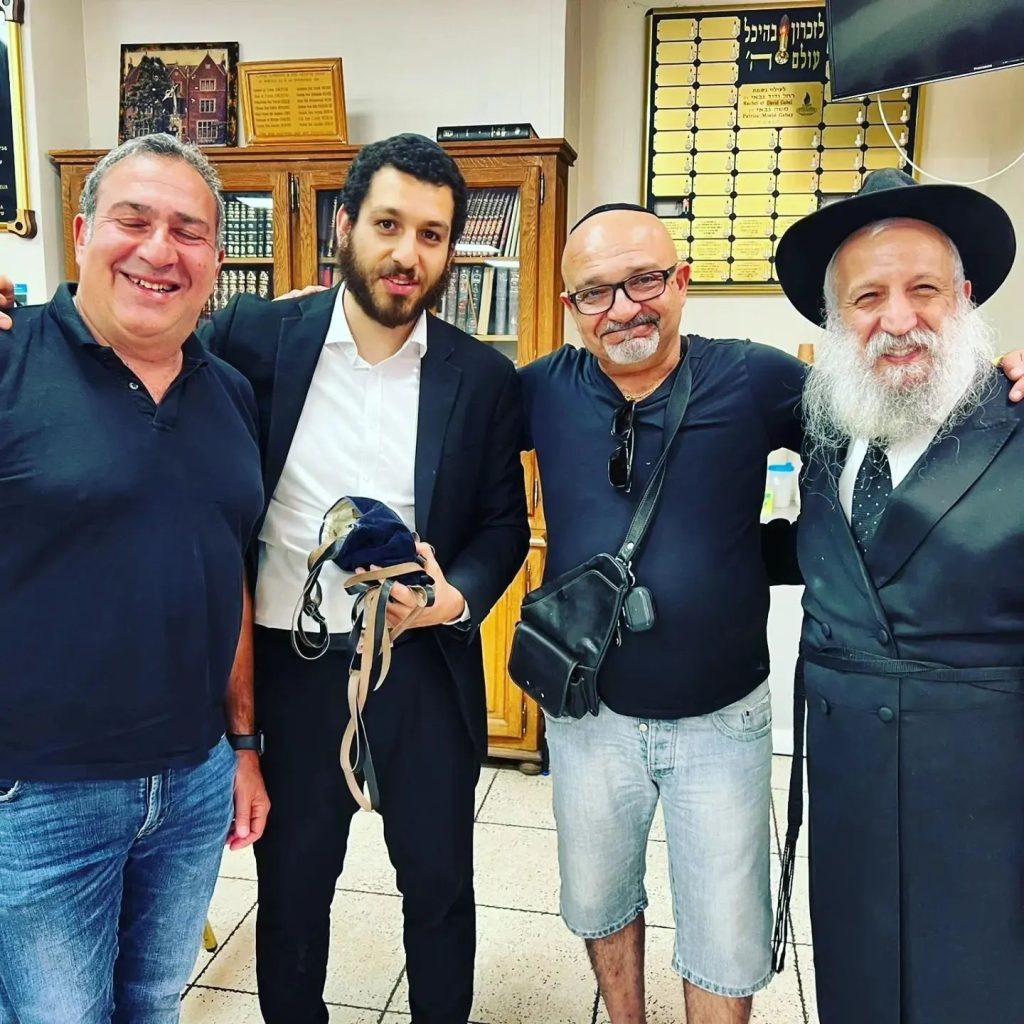
Despite the antisemitism, I continue walking through the streets of Grenoble openly, with my sirtuk and hat. Everyone knows I’m the Rebbe’s shliach. I don’t hide, I don’t apologize, and don’t give in to terror.
How do you strengthen your emuna and shlichus—even when things feel and look so dangerous?
I’ll tell you something: In 5748, about ten years after I began my shlichus, I was going through a severe financial crisis. The lawyer called me just before Shabbos and said, “You’re in serious trouble…” I made Kiddush with tears in my eyes. I didn’t have time to write to the Rebbe before Shabbos, so I turned to the Rebbe in thought and said: “This school isn’t mine, it’s yours, Rebbe! You sent me here – so you take care of it.” I said ‘l’chaim’ and welcomed Shabbos that way.
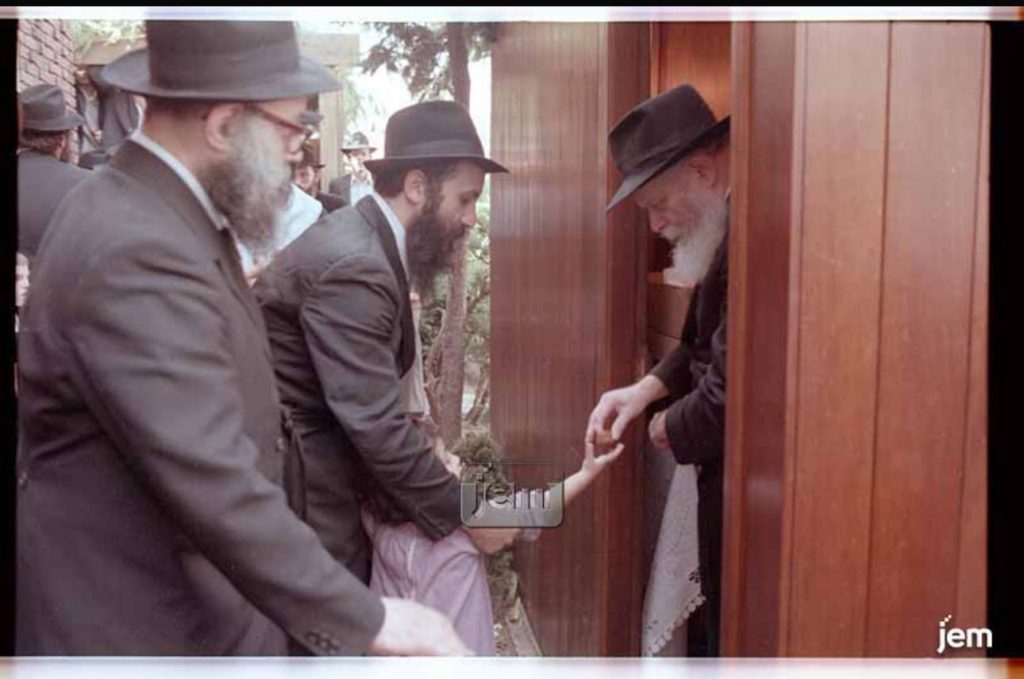
One of my students – Yitzchak Peretz – was with the Rebbe, during the Sunday dollar distribution. The Rebbe gave him a dollar, then called him back and gave him another dollar, saying: “This is for your rabbi in Grenoble.” I immediately felt that the Rebbe sensed me, even from afar… And indeed, not long afterward, I emerged from all the difficulties.
Today – even when our house goes up in flames – I know the Rebbe is with us. I can tell you that while our entire home burned down, the holy picture of the Rebbe remained completely intact. And in that, I felt the Rebbe’s message: Yes, the house was burned – but even in such moments, I am with you.
THE NON-JEWISH SUPERVISOR MET THE REBBE
As mentioned in the article, Rabbi Lahiany and his wife started a school which earned a superlative reputation in the community. Many families send their children there.
Rabbi Lahiany recounted that on September 1, 2011, when the school year began, a non-Jewish supervisor from the French Ministry of Education came to inspect the school. Mrs. Lahiany, the principal, did her best and apologized for not being able to take the woman to the classrooms due to the typical pressures of the beginning of the school year; little children were crying, classes that had moved from one room to another, etc. She suggested that the supervisor come back in a few days.
The woman agreed and they arranged another visit for two weeks later.
The ‘mark’ that the supervisor gives the school is what will determine the government budget assigned to the school. When the woman returned to the school, she asked to see the kitchen, wanting to check the hygiene. Mrs. Lahiany took her to the kitchen where she met a French, non-Jewish worker with a big picture of the Rebbe above him.
The supervisor pointed at the picture and asked the kitchen worker who it was. The man emotionally responded, “He? He saved my life!” He said that years before, renovations were made in the school and on the third floor, near the stairs, there was an area that had no railing, from where you could fall to the bottom of the building.
He had gone there to get something and forgot that it was dangerous. Just then, he saw a picture of the Rebbe hanging there and he felt how the Rebbe in the picture was looking at him. He stopped, mesmerized by the picture. When he finally looked away he suddenly saw that one more step and he would have fallen. Since then, he is grateful to the Rebbe for watching over him and he wanted the same picture to hang in the kitchen.
“Who is this man?” the supervisor asked the principal.
“He is our big rabbi who lives in New York. Why are you asking?”
To her surprise, the supervisor said, “That’s the Rebbe from New York? I’m taken aback because two weeks ago, when I was here at the beginning of the school year, he welcomed me at the entrance to the school, took me to all the classes, and showed me a lot of respect. He is a very good man.”
Mrs. Lahiany began to cry; she was so overcome. The supervisor didn’t know why she was crying and tried to calm her.
As she was about to leave, the principal suggested that she look around the school which the woman had barely done but the woman said, “I don’t need to see more,” and she gave the school the highest mark, saying that nowhere else had she seen such a school “with a heart.”
Beis Moshiach #1474 • pp. 24-33
© 2026 Beis Moshiach Magazine. All rights reserved.
This article originally appeared in Beis Moshiach #1474. You are welcome to share it with friends and family by email or in print, provided that you do not change, add to or omit any part of it, you credit the author and Beis Moshiach, and you include a link to archive.bmoshiach.org (written out in full in printed copies).
To republish this article in a newspaper, magazine, book or website, please request permission in advance at [email protected].