Making Salta Jewish
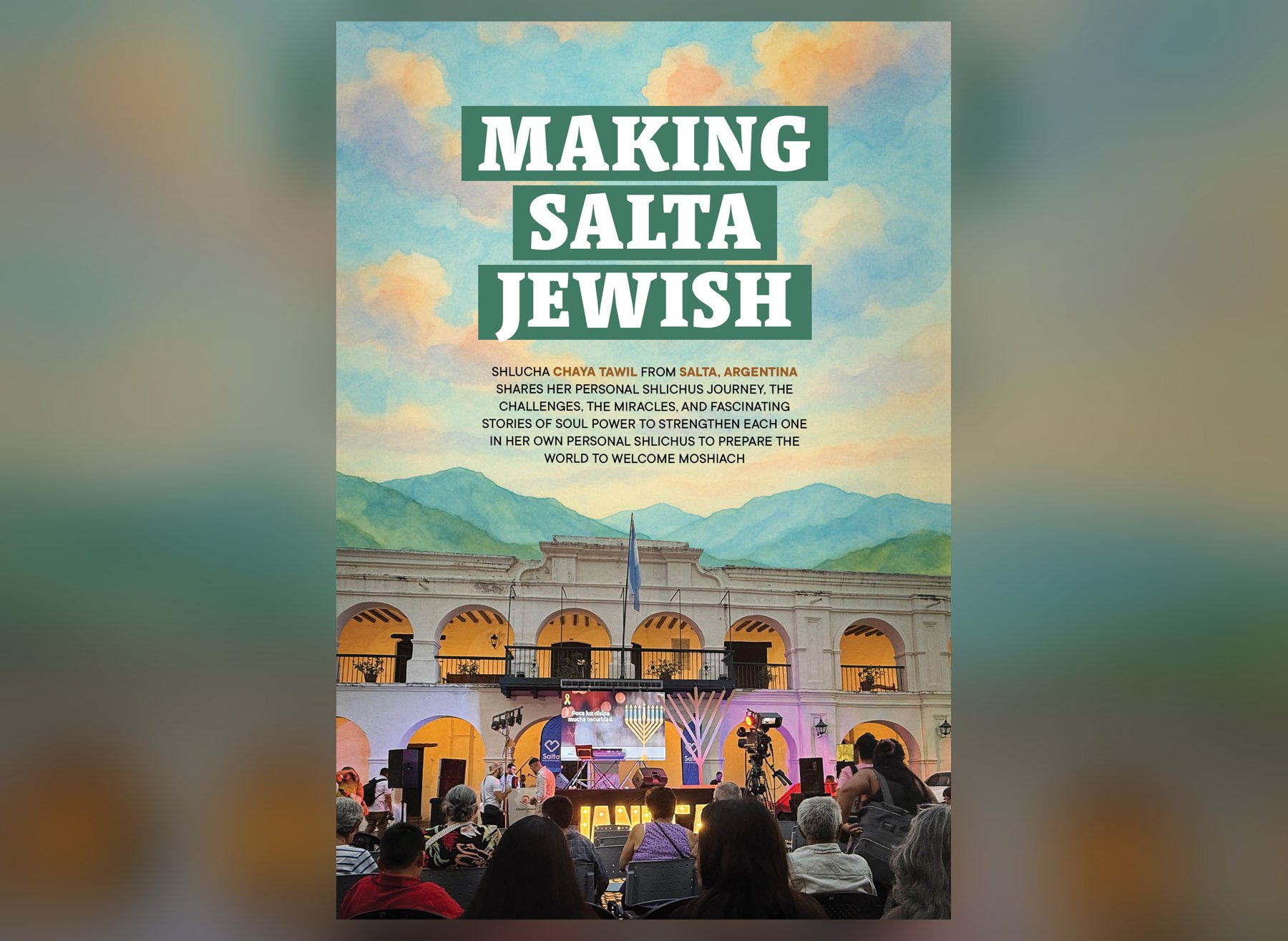
Shlucha Chaya Tawil from Salta, Argentina shares her personal shlichus journey, the challenges, the miracles, and fascinating stories of soul power to strengthen each one in her own personal shlichus to prepare the world to welcome Moshiach
The sun in Salta had set over the Andes Mountains, and Chaya Tawil stood in the kitchen of her home, preparing the Shabbos meal. It was the Shabbos before Yud-Tes Kislev, the first after a long and exhausting lockdown due to the COVID-19 pandemic. The shul had finally opened after many long months, but the restrictions were still in effect – a limited number of worshippers, distance between people, and most importantly – no hosting guests at home.
So, when her husband, Rabbi Rafael, returned from shul accompanied by a stranger, Chaya felt her heart skip a beat. She signaled to him with her hands – ‘What’s going on?’ And he replied with a gesture that said it all: ‘It’s now or never’… The guest was a young man in his thirties, from a family they knew well but had never participated in community activities. Something in his eyes, their deep longing expression, gave Rafael cause to understand that this was a moment that should not be missed.
“My husband couldn’t even hug him due to the COVID restrictions,” Chaya recalls, “but there was an embrace of souls…” The conversation during the Shabbos meal lasted for hours and well into the night.
Today, that young man has already undergone a bris mila and is on his way to establishing a Torah observant Jewish home. But the story doesn’t end there. Due to his efforts, his mother followed him along the path of teshuva, and then his aunt, and the spiritual circles only continue to grow. “Last Chanuka,” Chaya says with a smile, “I saw a large part of his family lighting candles. This was the true light of Chanuka.
“We saw before our eyes what the Rebbe MH”M, always teaches us – that every Jew has a G-dly spark just waiting to be awakened, and we are already in a time of Geula, for which we just need to open our eyes and see.”
This story is one of many in the twenty years of Chaya and Rafael Tawil’s shlichus in Salta, Argentina, a story that illustrates how one moment of listening to one’s inner voice can kindle a light that will continue to shine for a long time.
From My Father’s House To The Other End Of The World
Rabbi Rafael and Chaya Tawil and their five children are the Rebbe’s shluchim in the city of Salta, Argentina. The Tawils began their shlichus there about twenty years ago, and since then they have been working tirelessly to bring Jewish souls closer to Yiddishkeit without being overawed by the challenges and difficulties.
During the interview, I could not help being moved by the intensity of Chaya’s faith and strength, and by her strong desire to help every Jew, both physically and spiritually. I heard in her voice the strong sense of shlichus that accompanies her every step and action, with her every move designed to influence others.
“I grew up in a home that was all about shlichus,” says Chaya, nee Tessler. “My parents were involved in absorbing new immigrants who arrived in Eretz HaKodesh, and our house was always full of immigrants. As a young girl, I saw how every Jew is a whole world, and how every soul shines with a different light.”
While she studied in a Chabad school since first grade, it was during her adolescent years that she began to have doubts about her shlichus. “I wasn’t sure that this was the direction I should take,” she admits honestly. “However, Hashem directs everyone in his own way. With Hashem’s help, I attended a panel on shlichus and it touched my soul.”
At the same time, on the other side of the globe, a young man named Rafael Tawil was growing up in Argentina. At the age of seventeen, he decided to come to Eretz Yisrael, a step that would affect the rest of his life.
Their shidduch was a miraculous case of Divine Providence. “When we met, we felt we had a common dream,” says Chaya. “My husband wanted a shlichus in a Spanish-speaking country, since Spanish was his mother tongue.”
And you?
“I believed that somehow I would be able to manage.”
Two years after the wedding, when their little daughter Miri was a baby, the offer that changed their lives came their way. By Divine Providence, they met the Rebbe’s shliach in Tucumán, Argentina, Rabbi Daniel Levy, who told them about the city of Salta, which is close to his shlichus. Rabbi Levy would occasionally make a trip to the city to spread Yiddishkeit and felt that Salta was ready for its very own shluchim. He suggested that they become the ones.
“The Levy family were indeed the closest shluchim to us geographically – three hundred and fifty kilometers away,” Chaya laughs, “but they became the closest to our hearts.”
“When they told us about Salta, we knew that this was the place for us,” she recalls with enthusiasm. “We felt that this was the shlichus that the Rebbe had designated for us, to be part of the spiritual revolution that would bring the Geula.”
Where is Salta located?
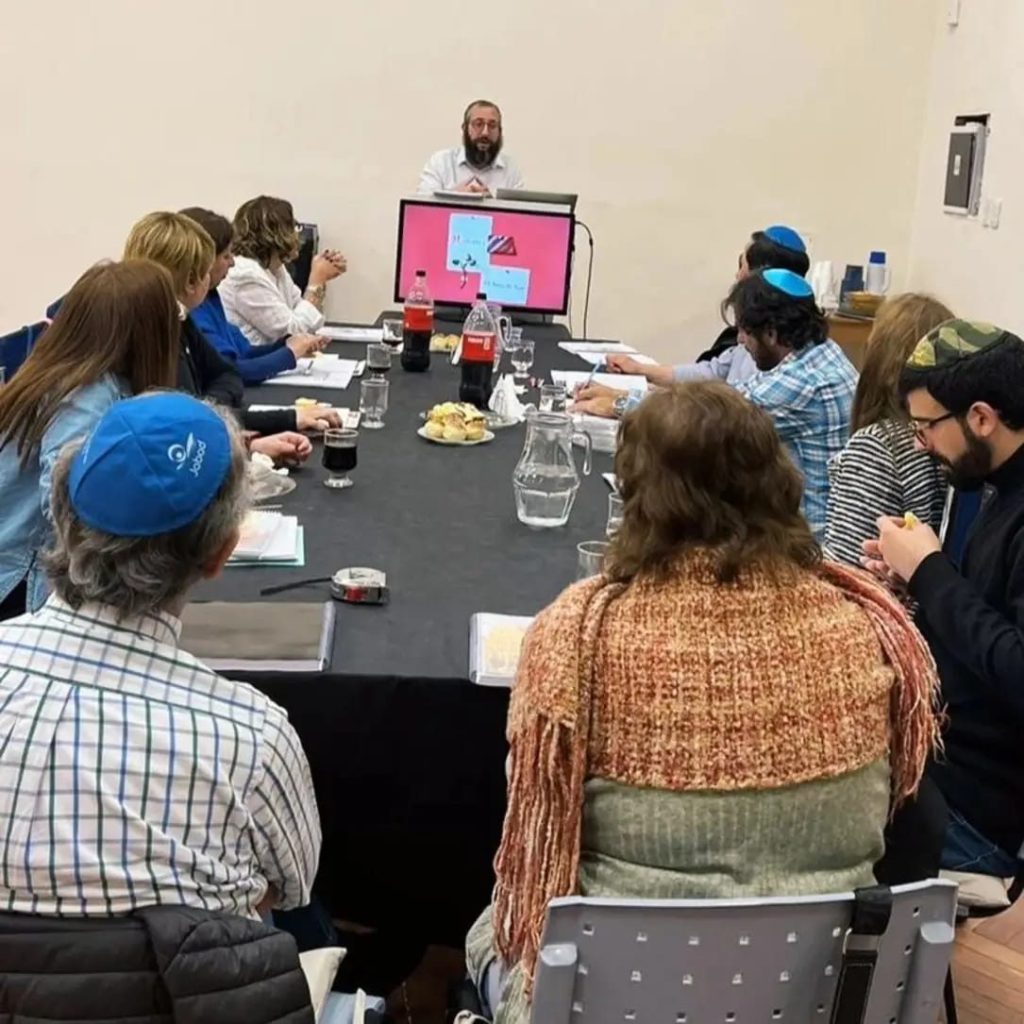
“Salta is a city in northern Argentina. The northernmost point in Argentina where there are shluchim.”
Chaya’s parents embraced the decision with great excitement. “When we left for the airport,” she recalls, “they brought us a shofar as a gift. ‘Go blow the shofar,’ they said, ‘and bring the sound of teshuva to the world along with the sound of Redemption.’ This was the message that accompanied us, and it continues to accompany us to this very day.”
First Steps In A New City
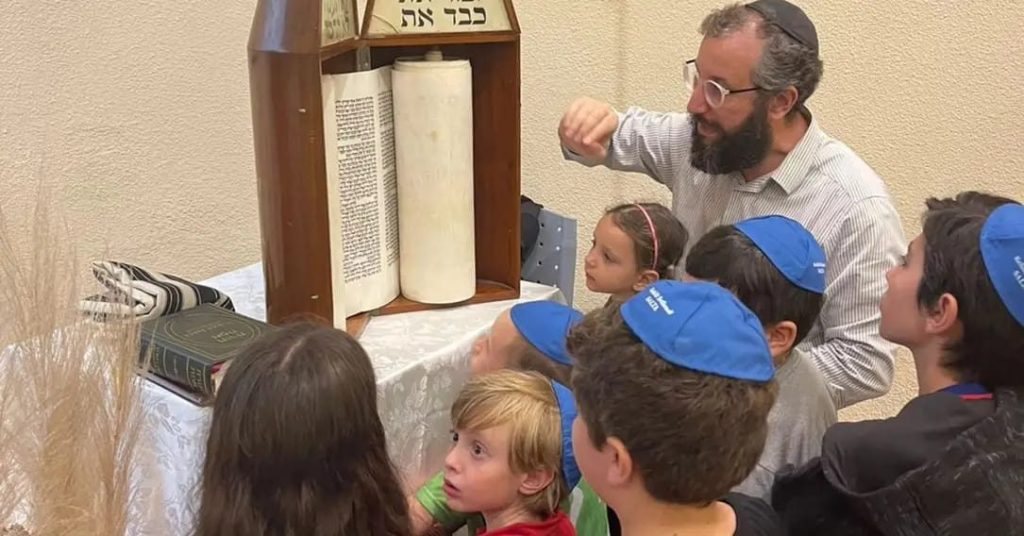
At the beginning of Elul, Chaya and Rafael Tawil landed in Salta, Argentina, with their baby daughter Miri and a shofar…
The first few days were full of challenges and surprises. “Even the weather was confusing,” Chaya laughs. “The seasons here are the opposite of those in Eretz Yisrael. When it was warm, I wore winter clothes and vice versa… However, that was just a small taste of what was still waiting for us.”
The most significant challenge was the language. Rafael, who grew up in Argentina, spoke fluent Spanish, but for Chaya it was a completely foreign language. “My husband turned our house into a classroom,” she says. “He stuck a note on every object with its name in Spanish – ‘mesa’ for table, ‘luz’ for lamp. I felt like a girl in the first-grade learning to read again…”
By hashgacha pratis, help came from an unexpected source. “Travelers passing by the Chabad House left me a textbook for Hebrew speakers learning Spanish,” she recalls. “It was like a gift from Heaven. However, the truth is that life itself was the best teacher – I had to learn, and fast.”
Six months after their arrival, when Chaya barely knew how to explain herself in Spanish, the biggest challenge came – the birth of their son Yanki. “It was a real culture shock,” she recalls. “I was in the delivery room, barely able to explain to the doctor what I was feeling. It was a profound lesson in faith and confidence. However, it was precisely through this difficulty that I saw visible miracles – the medical staff was full of patience and understanding. Since then, I realized that I had to overcome the language barrier, as quickly as possible.”
First Shabbosim
“The first Shabbosim were different from anything I had ever known,” she says. “I sat at home with my songbooks from school and seminary, singing to myself in the afternoons. There were just the three of us – me, my husband, and our Miri. Today, when the house is filled with guests every Shabbos, I sometimes miss the special quiet of those first weeks…”
What was the main difficulty in those early days?
“The connection with the family,” Chaya answered without hesitation. “Today, with the tools of technology, it’s a little easier to communicate with the family compared to two decades ago, when I went on shlichus. In those days, phone calls cost a fortune. Even getting newsletters on the weekly parsha was a complicated process. They had to send it by email and design it until it was finally printed. A whole operation. Today, when everything is available at the touch of a button, I understand what a miracle every little thing was.”
As we said, the shluchim closest to them are the in Tucumán, 350 kilometers away, who have become their extended family. “They were the address for everything,” she says with a smile. “From the mikva to kosher products – they took care of everything we needed. The physical distance seems small when there is true Ahavas Yisrael.”
The Commencement Of Activities
“We started with small steps,” she says. “A small weekly shiur with two women who came regularly. One of them once said something that has been engraved on my heart: ‘I’ve been waiting my whole life for someone to come and remind me who I really am…’ That has directed me towards our goal and mission – rekindling the pintele yid that is in every Jewish soul.”
Salta has turned out to be an important crossroads. “It’s a tourist city that borders several countries,” explains Chaya. “We started meeting Jews from all over the world – Israeli backpackers, tourists from France, families from Brazil. Each one brought with them their own story, customs, and music.”
One of their most exciting moments was the first Pesach Seder they held, conducted in five languages simultaneously, including Hebrew, Spanish, English, and French… “It was like a small ingathering of the exiles in the heart of the Andes Mountains.”
Every Day Has Its Surprises
“When you open your eyes in the morning on shlichus,” says Chaya, “you know that the day will bring surprises with it.” Her routine starts early – even before the house wakes up, she joins a special shiur. “The most blessed part of the shlichus for me during this time was learning Torah with my father,” she shares. “Because of the time difference, I can wake up early, have a cup of coffee with him via Zoom, and learn something together. The COVID period sharpened my desire to take advantage of the time with my parents.”
From there, the day flows at its own pace. “The work here is very personalized, ‘one-on-one,’” she explains. “Asking how the physics test went, whether the medical examination went well. When someone returns from a visit to the Rebbe, I invite them for a Shabbos meal. As we have learned – the physicality of a Jew is spiritual. When you take care of the physicality of another person, you affect their spirituality – and I have seen how it works in a most practical way.”
How many people are there in the Jewish community in Salta?
“It is very difficult to answer because of the high percentage of assimilation. There are families here that may have only one member left who is actually Jewish according to halacha…
“This does not mean that every Jew in Salta is involved in our activities, but it does mean that we still have a lot of work to do, to contact new souls. Some through the gefilte fish and some through the Chanuka lights.”
Over the years, Chaya has developed special initiatives to reach every neshama. “During my pregnancy, when I was confined to bed, I started making videos in Spanish about the weekly parsha,” she says. “It was a novelty in those days. One day, I received a moving message from a woman named Anna, a Jewess who had been distant from the community for years. Suddenly, she wrote how the messages in the videos had touched her heart. It strengthened me to continue.”
The ‘Meidalach’ club was another special initiative. “It was a club for older women. We met once a week, played games to strengthen our memory, and studied together. We saw how these bonds strengthen not only the women but also affect their entire families.
“On the last night of Chanuka, our son surprised us by coming home for a visit. He really loves the shlichus and is very active in it. As soon as he arrived, he arranged for a menorah lighting at our home (in addition to the central lighting). Israelis of all types from all over the country came to participate. For me, this meeting of souls with the light of Chanuka was the greatest miracle on our shlichus – being privileged to get together and be a stop along the way for all kinds of Jewish souls, as we try to be the light for them.
“The shlichus gives us the gift of truly focusing on the souls before us.”
Simchos Away from Family
Over the years, the family has celebrated special moments on shlichus.
“Each of my births was a story in itself with its own special help from Heaven. For my last birth, I was blessed to have my mother come. At previous births, the distance was a serious challenge in terms of who would be with me. There are things that can be seen from afar, but as my mother-in-law says: ‘It’s impossible to hug through a screen.’ So, there are things that simply have no substitute. Sometimes, representatives from the family came, and people from the community also provided considerable assistance. Once my sister came to help me and the children.
“There was another very challenging birth on the tenth of Nissan, four days before Pesach. Apparently, Hashem sends tailored strength for every task, according to what is correct for that time…”
Recently, the Tawils experienced a particularly emotional time with their daughter’s wedding. “Many members of our extended family were planning to come to the wedding in Buenos Aires,” says Chaya. “When flights were canceled because of the war, the family in Eretz Yisrael surprised us by organizing a special event. My brothers gathered and celebrated at my sister’s house with refreshments and everything. They screened the wedding on a huge screen in the living room and danced. They really experienced the wedding with us, and it was very moving. They even celebrated a ‘Sheva Brachos’ the next day…”
What significant challenges do you face today?
“The main challenge is the distance from the family, especially the distance from our parents and also from the children who are far away from us in yeshiva and school. Baruch Hashem, we have been blessed with five children, and each of them lives in a different location, save for the youngest, the five-year-old who is with us on shlichus. One daughter is studying in Eretz Yisrael, one son learns in Italy, our married daughter lives in Buenos Aires, and our younger son is studying in a yeshiva in Buenos Aires.
The Check Sent by the Rebbe
Argentina is undergoing a significant economic upheaval. The entire world is following the results of the economic changes that President Javier Milei is trying to affect in the country.
Chaya recalls a special example of hashgacha pratis: “A few years ago, when the world didn’t yet know who Milei was, my husband went on a fundraising trip. It was very difficult, and he didn’t see much success in his efforts at the time. At the end of the fundraising trip, we wrote to the Rebbe. Then, after writing to the Rebbe via the ‘Igros Kodesh’, we received a response with several things that caught our eye. In particular, there was the following line at the end of the letter: ‘I’ve already sent him the check, I hope it’s already reached him.’
“The last partner (Chaya prefers the title ‘partner’ to ‘donor’) we wanted to invite to participate in our activities gave us the Rebbe’s check. The Rebbe had immediately found a way to send us the check. Since then, we’ve been waiting for a few more checks, and with Hashem’s help, it will occur openly and serenely with an abundance of material well-being, so we may, in good health, fulfill the final shlichus.”
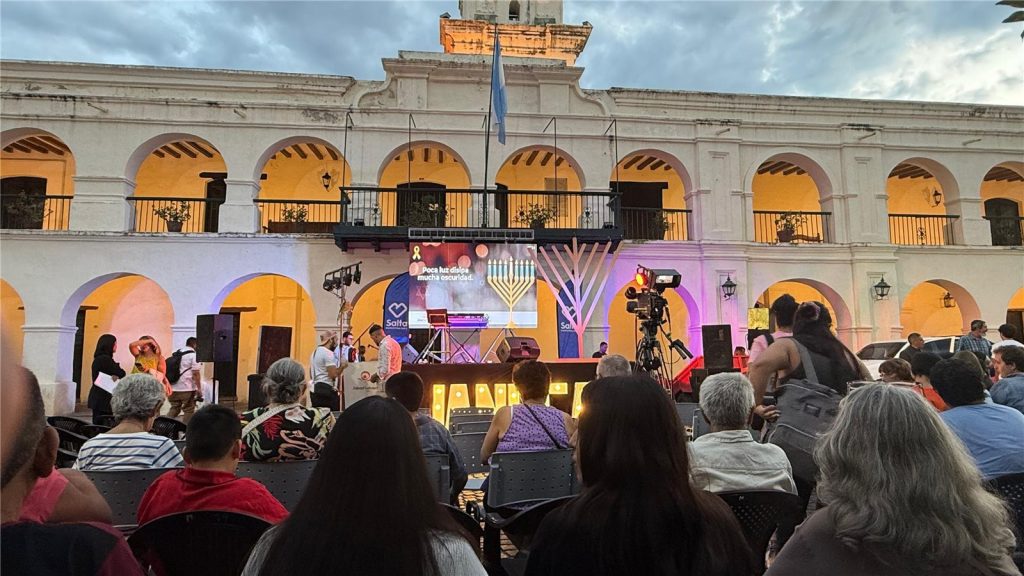
Does the situation in Eretz Yisrael affect the Jewish community in Salta?
“Even in these challenging days, with the complex situation in Eretz Yisrael, the community is showing its strength. People here are very involved,” she says. “Young people from the community have traveled to volunteer in Israel. We have increased vigilance here as a segula so that we shouldn’t need it. On the surface, there aren’t many manifestations of hostility, but every now and then there is a reminder that ‘Eisav hates Yaakov.’ With Hashem’s help, our activities will continue.”
Living Geula
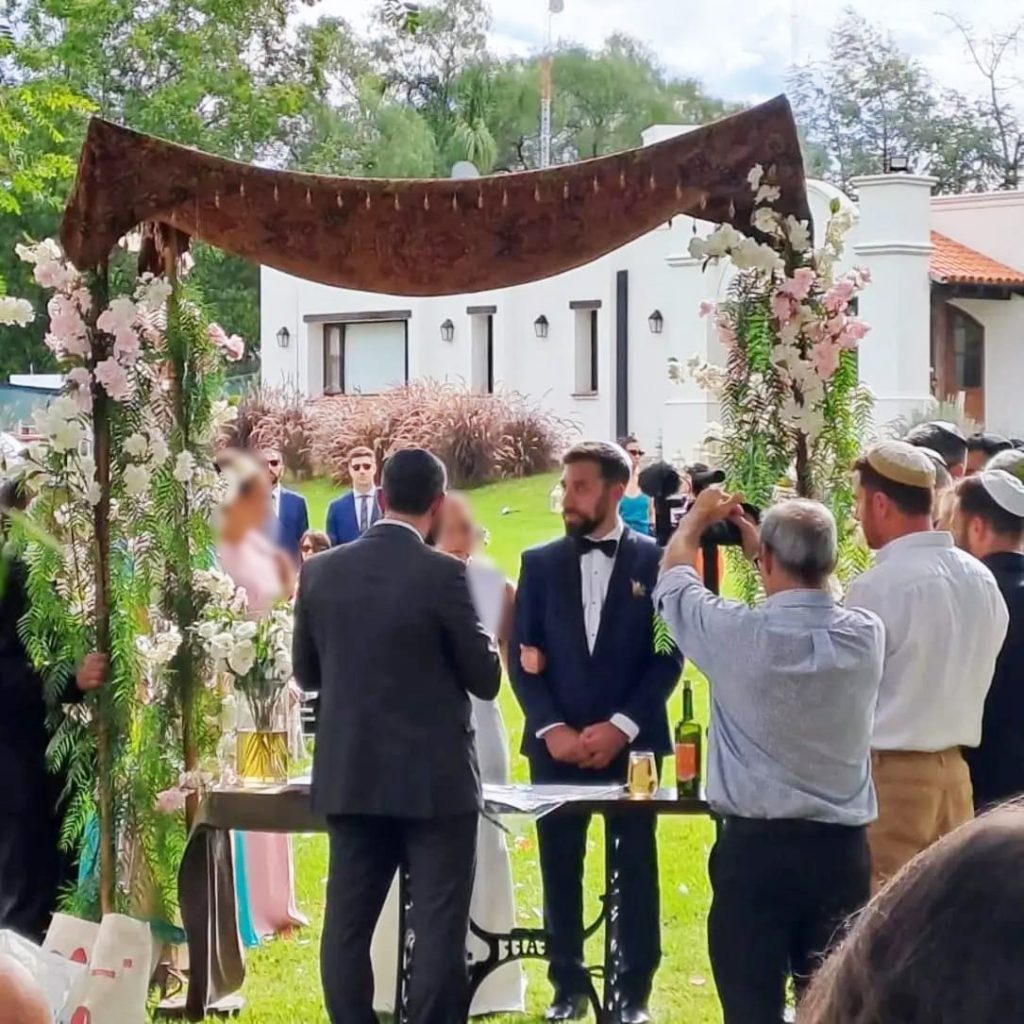
“When I look back on the last twenty years,” she concludes, “I see how every small step, every meeting, every shiur – everything joins into one great mosaic of spreading light. As the Rebbe teaches us – every small action brings Moshiach closer.
“The Rebbe’s way of thinking is to live Redemption now. The greatest gift we received on shlichus is the ability to see every Jew through the eyes of Redemption. No matter what he looks like, no matter what his current situation is – everyone has the Divine spark waiting to awaken.
“We pray that we will be blessed to continue fulfilling the final shlichus, until we are privileged very soon to see the True and Complete Geula.”
Beis Moshiach #1458 • pp. 42-47
© 2026 Beis Moshiach Magazine. All rights reserved.
This article originally appeared in Beis Moshiach #1458. You are welcome to share it with friends and family by email or in print, provided that you do not change, add to or omit any part of it, you credit the author and Beis Moshiach, and you include a link to archive.bmoshiach.org (written out in full in printed copies).
To republish this article in a newspaper, magazine, book or website, please request permission in advance at [email protected].