The Tunisian Rav Who Had No Better Candidate for Moshiach Than the Rebbe
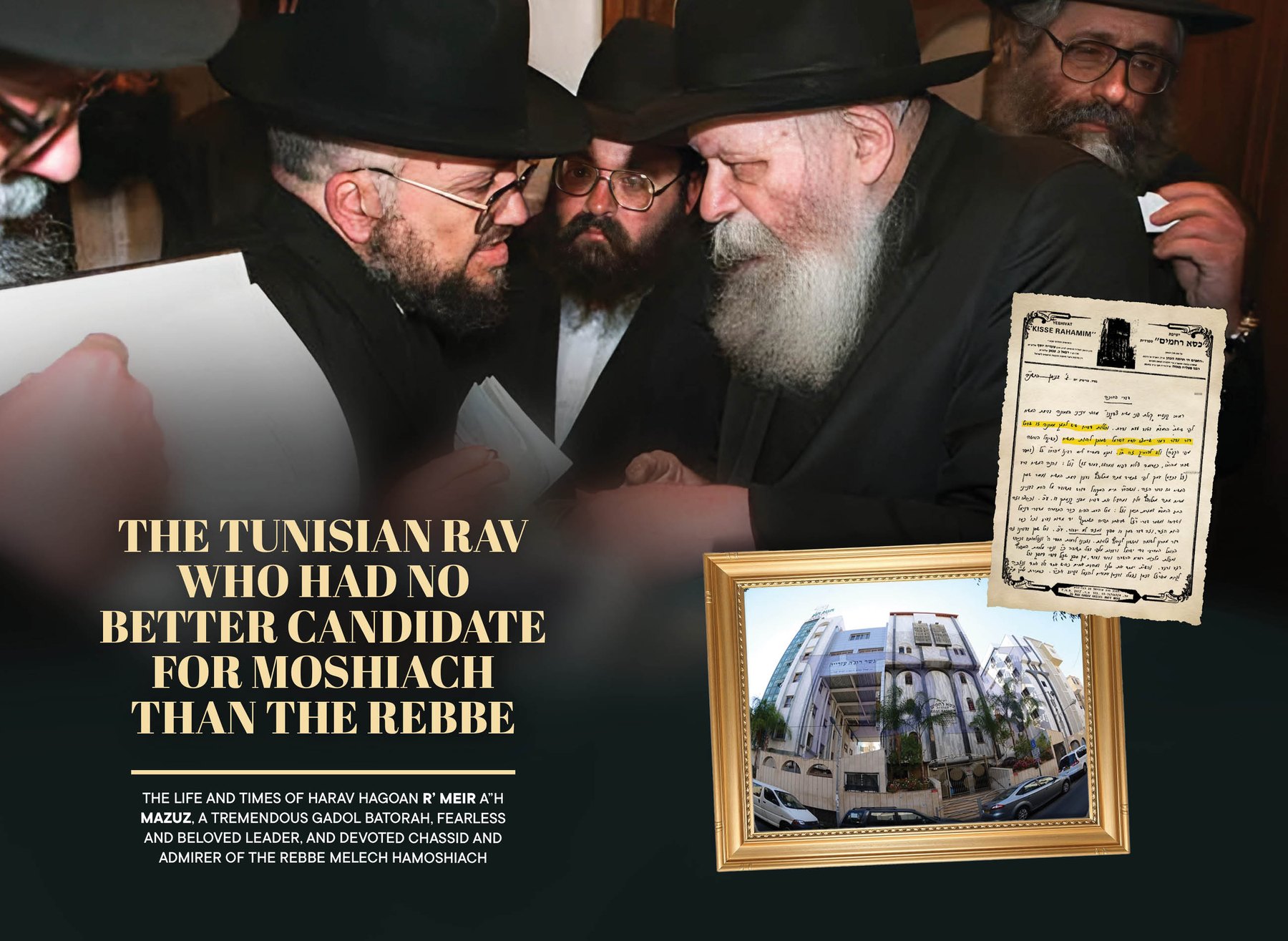
The life and times of HaRav HaGaon R’ Meir a”h Mazuz, a tremendous gadol baTorah, fearless and beloved leader, and devoted Chassid and admirer of the Rebbe Melech HaMoshiach
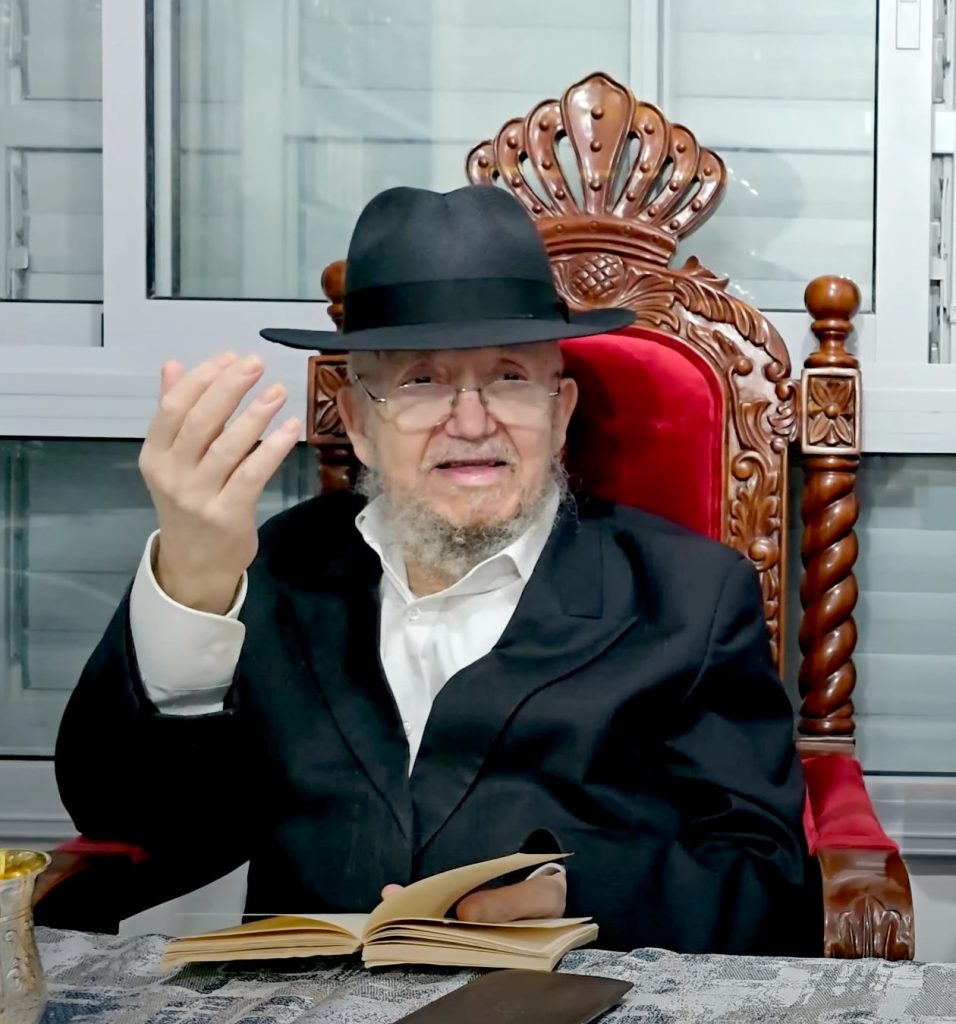
With great sorrow, the news about the passing of the great Gaon Rabbi Meir Mazuz z’l, reached the greater Torah and Jewish world. Rabbi Mazuz, who served as the head of the “Kisei Rachamim” Yeshiva in Bnei Brak, was a leader far beyond his yeshiva – he served as the spiritual leader of the Tunisian Jewish community in Eretz Yisrael, and his influence was broad and encompassing over large multitudes of the Jewish people.
Tens of thousands filled the streets of Bnei Brak, accompanying him on his final journey. Many of them were his distinguished students, crying bitterly after their teacher and rav who passed away following a short illness.
Rabbi Meir Mazuz was born in Tunisia on the 13th of Nissan 5705 (1945). His father, the Gaon Rabbi Matzliach Mazuz, was later murdered by thugs, Hy’d.
Under his father’s guidance, R’ Meir excelled in Torah study from his childhood and was known for his unusual abilities. At the age of six, he knew how to read all of Torah with the proper trup and dikduk, and began studying Gemara. His first teacher was the Gaon Rabbi Eliyahu Algaz z’l, after whom he studied with the Gaonim Rabbi Yitzchok Buchnik and Rabbi Suso HaCohen z’l, and also received guidance in writing Torah chiddushim from the great Gaon Rabbi Rachamim Chai Chavita HaCohen z’l, author of Simchas Cohen. Thus, he continued to excel in Torah study in amazing fashion.
R’ Mazuz merited through his toil and diligence from his youth to become a tremendous scholar even in subjects such as kiddush ha’chodesh, the chochma of dikduk and Lashon HaKodesh, etc. He was also known as a brilliant innovator in gematria and Torah homiletics, and as an eloquent speaker.
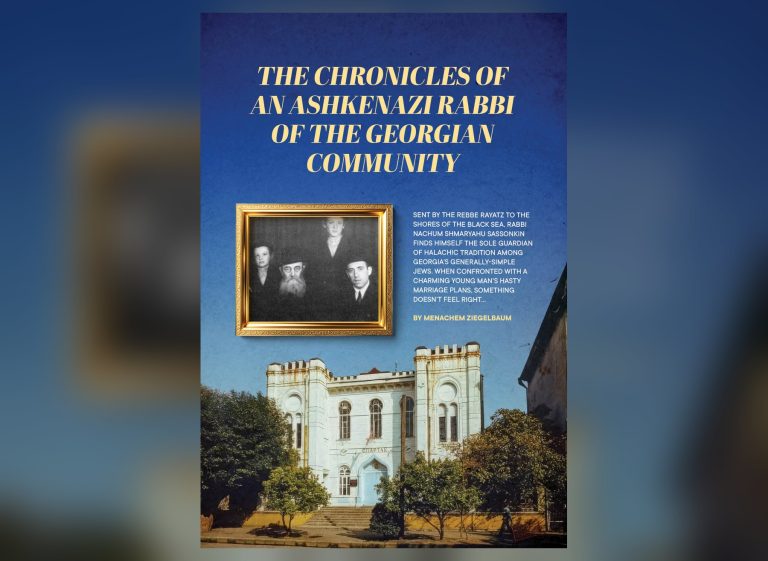
His father, Rabbi Matzliach was one of the greatest rabbis of Tunisia, founder and head of the “Kisei Rachamim” Yeshiva. He served as a dayan in Djerba and later in Tunis the capital, and was one of the most respected rabbinical figures among Tunisian Jewry.
This is the reason that when the Rebbe’s shliach, Rabbi Nissan Pinson, arrived in Tunisia, he earned the respect of the elder Rabbi Mazuz, who even began working with him. From then on, the gates of the community opened before him, as the Jews of Tunisia placed their trust in a Chassid who came from afar with unknown intentions.
“At first, the teachers were afraid to work with him,” R’ Meir Mazuz later recounted, “lest he introduce French studies to them, and there was a ban in Djerba from a hundred years ago against studying French, because the Alliance Israélite Universelle organization had reached almost all Eastern countries and destroyed almost all of them. However, R’ Nissan reassured them: ‘Don’t worry, we intend only to strengthen your Torah study,’ and indeed he strengthened them.”
When R’ Pinson opened the “Oholei Yosef Yitzchok Lubavitch Tunis” Yeshiva, which was in those days a chiddush – both because hundreds of its students studied only religious subjects, and because it was the first yeshiva where students studied in full boarding conditions – R’ Pinson could not have received cooperation from the community without the backing and support of Rabbi Matzliach, who was later appointed as the first rosh yeshiva.
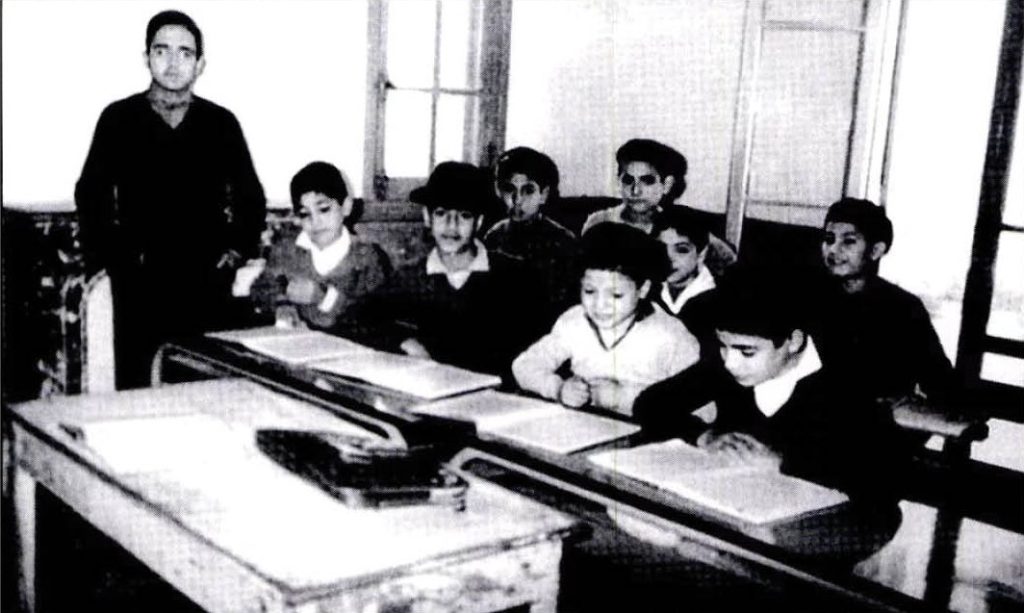
Under the guidance of his distinguished father, R’ Meir drew close to Chabad Chassidus and to the Rebbe. This is why at the age of only seventeen, he began teaching as a maggid shiur in the “Tomchei Tmimim” Yeshiva in Tunisia, and continued in this role for about nine years until he emigrated to Eretz Yisrael. During those years, he was connected with all his heart and soul to R’ Pinson, and would participate in the farbrengens he organized. “R’ Nissan would always tell us stories about the Rebbe,” he noted later.
Decades later, after R’ Pinson’s passing, R’ Mazuz delivered heartfelt words of eulogy, in which he told about those periods when he was in the company of the Rebbe’s shliach:
“Rabbi Pinson was a great chacham and man of deeds. He established a world of Torah in Tunisia. After most of the great rabbis emigrated to Eretz Yisrael or passed away, R’ Nissan came to Tunisia and built an empire of Torah and chinuch. I remember he came to our home on the 28th of Adar 5720 (1960) and brought my father a small ‘Tanya’ sefer, in pocket format, which was a great chiddush for us. I was then 15 years old. I leafed through the sefer and looked there and saw wonderful things.
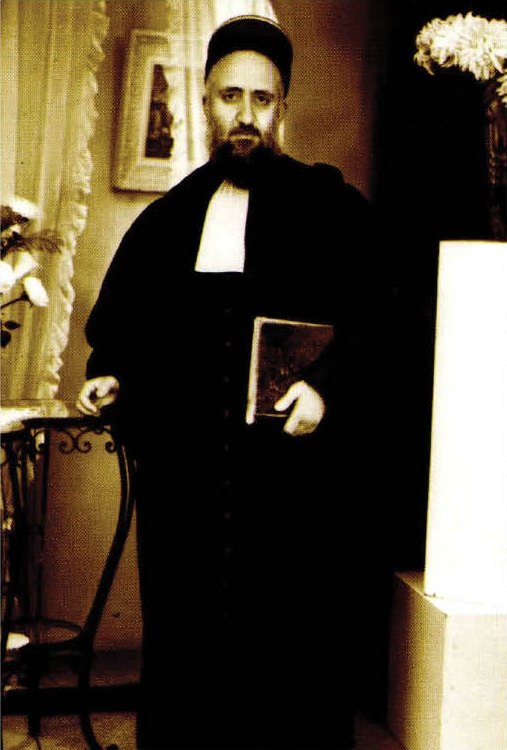
“Slowly the late Rabbi established himself and founded ‘Yeshivat Rabbi Shalom’ on the island of Djerba. Later he founded the’’Oholei Yosef Yitzchok’ Yeshiva in Tunis the capital. I still remember the drasha delivered by Rabbi Binyamin Eliyahu Gorodetzky at the girls school (‘Beis Rivka’) founded by the dear departed… on the night of Yud Shevat 5722. The next day, the yeshiva opened in a quiet building far from the city on ‘Birtuloun’ Street number 13, where I taught for nine years until the month of Nissan 5731 (1971).
“The yeshiva opened with ten students, and by the end of the year (5722/1962) there were already about fifty students, and this was besides the yeshiva in Djerba, which had about two hundred students, while the ‘Chevrat HaTalmud’ Yeshiva founded by the community in Tunis had only about thirty students. A year later, my father founded the ‘Kisei Rachamim’ Yeshiva, and I remained, according to his instructions, to teach at the Chabad Yeshiva. I would give them tests in Gemara, and once the dear departed entered during a test and asked the students: ‘Who is the greatest examiner?’ No one understood the purpose of the question. He answered them: ‘It is the One who examines hearts and kidneys…’ (and I understood his intention that they should not divert their attention from Hashem, while delving into Gemara topics).”
At this point, R’ Mazuz told a moving story that testifies to the depth of the connection between the Rebbe’s shliach and his father:
“On the night of 21Teves 5731 (1971), R’ Pinson saw in his dream that a rabbi with a beard was murdered, and he was fasting that morning because of the dream. Indeed, on that day, my father was murdered by a Muslim assassin…
“R’ Nissan wanted to add a third to my salary so that I would stay in his yeshiva in Tunisia, but I could not leave my brothers and live in the land of blood that was saturated with the blood of my father and teacher, the Gaon of blessed memory, and I emigrated to the Holy Land. But I always have a warm place in my heart for those nine years that I taught at the Chabad Yeshiva.”
In his sefer “MiGedolei Yisrael,” R’ Mazuz dedicated a special chapter to Rabbi Nissan Pinson, and among other things he noted that “those years were the happiest in my life, because R’ Nissan of blessed memory would pay generously and admired the Torah, wisdom, and Sefardic tradition.”
A Miracle and Wonder
In light of the deep connection between the Mazuz family and the Rebbe’s shliach in Tunisia, it is not surprising that when R’ Meir was about to get married in 5725 to Esther from the Loizza family, his father sent a letter to the Rebbe (3rd of Cheshvan 5725) in which he invited the Rebbe to the wedding. A few days later, the Rebbe sent a letter of blessing for the wedding.
“After our marriage, for four years we had no children. R’ Nissan told us: ‘I am traveling to the Rebbe for the month of Tishrei, I will ask him for a bracha for you.’ He wrote down our names and our mothers’ names. This was in 5728. When he returned, after Sukkos, I told him: ‘The miracle has already happened this month.’ He told me: ‘Don’t reveal it yet. The Rebbe says not to reveal until the fifth month.’
“There are thousands of such stories, things that cannot be denied…”
This miracle was the first in a chain of miracles that the Mazuz family merited over the years from the Nasi and manhig of the generation, as will be related later.
Leader to Thousands
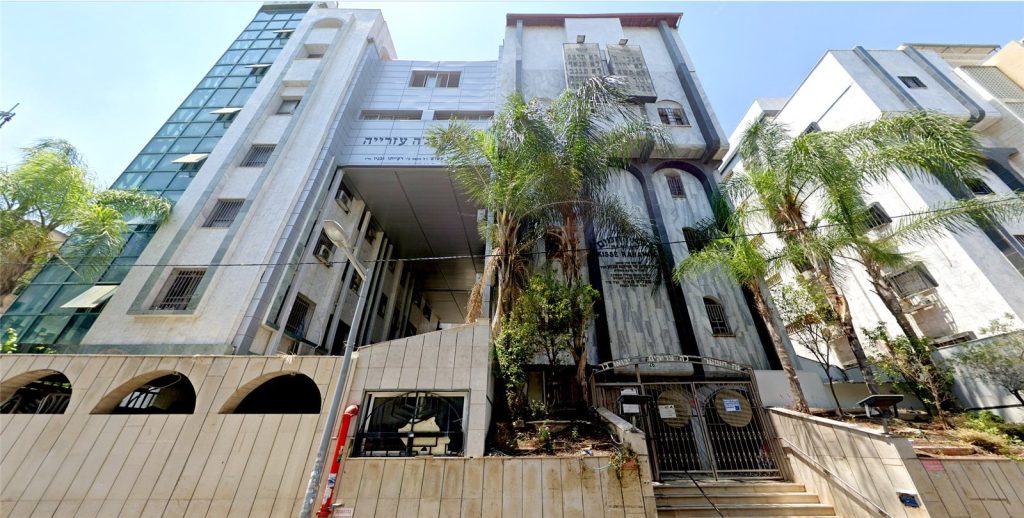
R’ Meir emigrated to Eretz Yisrael together with his brothers, and established the “Kisei Rachamim” Yeshiva in Bnei Brak as a continuation of the yeshiva that was in Tunisia, founded by their father. Since then, he served as the rosh yeshiva.
For decades, he guided his thousands of students to study and understand the Gemara and the Rishonim in the depth of the plain meaning according to the method of his teachers, the chachmei Tunisia, and on the other hand – to manage to study many mesechtos in order to fulfill the mitzva of learning and knowing the entire Torah. Likewise, his influence on his students’ avodas Hashem, tefilla with kavana, the reciting of Tehillim, and study of ‘Chok L’Yisrael,’ was profound.
He also established an institute for editing the Torah chiddushim of Tunisian sages, published many sefarim from great scholars throughout the generations, and restored the crown of glory of Tunisian Torah Jewry.
Over the years, his students increased, families grew, and the “Kisei Rachamim” Yeshiva became a large community, serving many families. Thus, the yeshiva became a network of institutions including daycare centers, kindergartens, Talmud Torahs, a school for girls, a seminary, small yeshivas, large yeshivas, kollelim in Bnei Brak, Yerushalayim, Elad, Emmanuel, Bat Yam, Akko, and other places, where more than fifteen hundred students study.
‘An Open Chabadnik in His Homeland’
Even after his emigration to Eretz Yisrael, R’ Mazuz continued to maintain friendly relations with Chabad Chassidim, and encouraged various activities to spread Judaism, with complete admiration for the Lubavitcher Rebbe.
For example, when he heard about what the Rebbe said regarding the shape of the Luchos, that they were not rounded but square, R’ Mazuz had the giant Luchos placed on the roof of the “Kisei Rachamim” Yeshiva changed.
Another example of his bittul to the Rebbe was in Nissan 5746 (1986), during the celebration for the siyum of the second cycle of daily Rambam. In those days, one of the Litvishe gedolim came out against the Rambam siyumim. Rabbi Mazuz on his part rallied and with his talented pen published an article, in which he proved from the sefarim of the early greats the many virtues that exist in studying the Rambam according to the order of the work (unlike in the ‘yeshiva system’ where most tended to only look up those laws in the Rambam that pertained to the topics they were studying).
The extent of his connections with Chabad can be learned from an answer the Rebbe wrote in the winter of 5748 (1988) to Rabbi Sholom Dov Ber Lifshitz, after the latter reported on his visit to R’ Mazuz as part of the preparations for the Sefardic rabbis’ convention: “I believe that he (his father?) was an open Chabadnik in his homeland and as a continuation of this – in Morocco and Tunisia – at that time there was only Chabad serving as activists and leaders in all communal needs, and all building there was done by Chabad. And the lack of attentiveness – at all of Chabad in the Holy Land to all this and all of the like – has led to the situation that exists now in the Holy Land. I will mention at the tziyun that he should bring good news in all the above and in the convention (attached herewith)…”
He also merited to receive an amazing bracha from the Rebbe that saved his wife’s life. On 4 Tishrei 5751 (1990), Rebbetzin Mazuz had a heart attack followed by a stroke, and was hospitalized. The doctors then determined that she would remain unconscious permanently.
The story of the revealed miracle made waves after the Rebbe blessed her with a complete recovery and saved her life. R’ Mazuz himself mentioned the details of the story on many occasions, and even wrote about it on several occasions, such as in the sefer Shemen Sasson Mei’chaveirecha:
“About four years ago” – R’ Mazuz briefly wrote the details of the story – “a relative had a stroke and the doctors despaired. The avreich, R’ Shabsi Weintraub went to the Rebbe and received a bracha: ‘Great success, good tidings, imminent healing’ with a dollar in hand. He brought me the dollar, and within a few days she regained consciousness.”
R’ Shabsi Weintraub (known to older Beis Moshiach readers as ‘Shai Gefen’), told Beis Moshiach the full details of the amazing story:
“At that time I was studying in ‘Tomchei Tmimim’ in Kiryat Gat. It was a short time after I started studying at the yeshiva. On Wednesday, 22 Elul 5750 (1990), I merited to go to the Rebbe for the first time.
“At that time I was in close contact with my friend Rabbi Shimon Weitzhandler [currently the head of the Tomchei Tmimim Yeshiva in Rishon L’tziyon] who served as a librarian in the Chassidic library in Bnei Brak. From time to time I would call him to send regards and reports from the great giluyim we merited [from the Rebbe in 770].
“It was the day after Yom Kippur, ‘B’Shem Hashem,’ Sunday. As every week, the king went out to the field to receive everyone with a pleasant countenance and to show a smiling face to everyone to bless them with love. The lines for dollars were very long, especially since it was the month of Tishrei. After I passed through the dollar distribution, I went to one of the public telephones on Kingston Avenue to call Israel and tell about the experiences of Yom Kippur.
“Before I could open my mouth, my friend R’ Shimon tells me: ‘There is something here that needs immediate attention, we must ask for the Rebbe’s bracha. R’ Meir Mazuz’s wife had a stroke. Her condition is critical, the doctors have given up and say she will remain unconscious and has no chance. You must therefore pass by the Rebbe and ask for a bracha for her. It’s a matter of life and death,’ he added.
“I remained perplexed. I told him that ‘I just returned from the dollar distribution, and who would dare to pass a second time before the king?!’ ‘There’s no choice,’ he explained, ‘it’s a matter of life and death, and especially since R’ Mazuz is a great friend of Chabad and it’s obligatory to ask for a bracha on this great and auspicious day.’
“I thought to myself what the Rebbe himself would tell me to do. So I decided to gather courage and pass a second time for this important matter.
“I stood in line a second time, trembling. In my heart and mind, thoughts arose ‘What will I say to the Rebbe?’ ‘How will I open my mouth before the Rebbe?’ and in general, my heart was full of pangs of conscience about how I dare to pass a second time. When my turn came, I stood in awe and fear, and began to tell about R’ Mazuz’s wife who had a stroke and mentioned her name. I spoke quietly and trembling. The Rebbe leaned in with his entire holy body and listened to all my words until I finished speaking. Then he handed me a dollar and said ‘Great success, good tidings, imminent healing,’ saying all this in Hebrew with a Sefardic pronunciation, although I spoke in Yiddish…
“Armed with the bracha of the Rebbe, I ran to call Israel again to tell about the special bracha I merited to receive. I noticed the precision in the holy words of the Rebbe who said ‘imminent healing,’ meaning the healing would be quick. I told about the bracha with all the surrounding details of the event.
“In fact, the story was quite forgotten by me. Tishrei, full of experiences and events, doesn’t allow for even a minute of rest.
“One night I made another phone call to my friend R’ Shimon to tell him about the amazing experiences in ‘Beis Chayenu’ (770), when again he bursts into the conversation with joy: ‘Shabsi, don’t ask, the Rebbe’s bracha was fulfilled in full. Indeed there was an imminent healing completely above the natural way. Two days after you passed by the Rebbe for dollars, she woke up and her condition is good and she has already been released home… The doctors cannot explain the magnitude of the huge miracle that happened here…’
“It is impossible to assess the immense joy that filled my heart when I was privileged to be a shliach mitzva and fulfill this mission, such that, through the bracha, the Rebbe’s renown spread even further, including among the chareidim in Bnei Brak.
“R’ Shimon related that R’ Mazuz was deeply moved by the bracha his wife received, and he requested the video of the ‘distribution of dollars’ in order to confirm that the Rebbe indeed said ‘refuah kerova’ (imminent recovery), which, amazingly, he did, as well as the dollar that the Rebbe gave as a bracha for them.
“The rumor of the bracha spread like wildfire, especially in light of the great miracle that the Rebbe performed.
“When I returned to Eretz Yisrael, a siyum haRambam was held by the Chabad House in Shikun Hei. R’ Meir Mazuz came especially in honor of the Rebbe to deliver the keynote address. Before he entered the event, I approached him and told him the entire story, and on the spot, I handed him the Rebbe’s dollar along with the video cassette. He was very moved and did not stop blessing me for fulfilling this mission. Indeed, at that same event, R’ Mazuz shared the miraculous story with the hundreds present, and from then on, at every opportunity and event – and even in his sefarim – R’ Mazuz would tell the story.
“But the miracles did not end there. A year later, in Kislev 5752 (December 1991), I was then a bachur in ‘Kevutza,’ and R’ Mazuz came to New York with his wife and daughter, Geula. Among other things, they came to thank the Rebbe for the bracha and the incredible miracle. I was privileged to accompany them. During the distribution of dollars, he was introduced by Rabbi Yekusiel Rapp, and at that moment, the Rebbe gave him and his wife an abundance of brachos – and nine dollars for blessings!… No one knew why the Rebbe specifically gave her nine dollars.
“In Kislev 5761, nine years after receiving the bracha, Rebbetzin Mazuz passed away. During the shiva, I came to offer condolences with my friend Rabbi Avrohom Ben-Shimon. We sat in the rabbi’s home, and he asked me to repeat every single detail of what the Rebbe had said to me. Afterward, with tears on his cheeks, he said: ‘The Rebbe gave her a gift of nine years…’”
R’ Mazuz himself recounted this story, adding and emphasizing: “Beyond all the wonders and salvations – the main thing is that the Rebbe brought about incredibly great things across the world. Let’s take as an example the tremendous lasting impact that resulted from his care for the Jews of Tunisia. How many people today are learning Torah, studying in yeshivos, and have come closer to Judaism thanks to the Rebbe’s shliach, R’ Nissan, who did many great things there and strengthened people in their faith and Torah. And this must be multiplied by the thousands of shluchim the Rebbe sent to all corners of the world!”
‘Your Ways are Lofty and Profound’
Over the years, R’ Mazuz maintained a strong connection with the Rebbe, describing how he drew great strength from him. For example, in the introduction to his sefer on Kabbalah, Maayan HaChochma, he wrote that the Rebbe’s prophecy regarding the Gulf War gave him encouragement during that time.
In one of his articles about the Rebbe and his work, he wrote with great admiration:
“The Lubavitcher Rebbe, Gaon Olam, Tzaddik Yesod Olam – one could say there was no one like him. Rabbi Yehuda Alharizi wrote a liturgical poem about the Rambam beginning with the words: From you our prince is our praise, in you and from you is all our greatness. Your ways are lofty and profound, you judge our actions by your deeds. You are an angel of G-d, created in the image of G-d. And if you are in our likeness, then it was for your sake that G-d said, ‘Let us make man in our image, after our likeness.’
“Rabbi Yehuda Alharizi’s intent was that when Hashem said, ‘Let us make man in our image,’ he was referring to the Rambam. Similar words can be said about what the Rebbe has done in our generation. He is unique in this mission, unique in his generation. Until the Rebbe came, the chareidi community was in a defensive, retreating posture. Anyone who deviated even slightly was labeled a heretic. The Rebbe is the one who empowered the chareidi world to move from a defensive stance to an offensive one, giving it the tools to explain Judaism.”
R’ Mazuz often participated in Chabad kinusim and events at Chabad Houses throughout Israel, always encouraging Jews to study Chassidus and to connect to the Rebbe.
In addition to his rare greatness in Torah knowledge and its dissemination, he was also a model figure in klal matters – an honest man who feared no one. He always expressed his views openly, without concern for public opinion. When the Oslo government began its dangerous actions, R’ Mazuz was quick to join a group of rabbanim and morei horaah who opposed the government’s perilous steps. He sent letters on the matter and personally participated in protest gatherings organized by the rabbanim. He strongly opposed the governments that supported the dangerous agreements for the Jewish people.
He himself wrote sharply: “Forty and thirty years ago, the Rebbe spoke against relinquishing land, saying it is forbidden to negotiate any concessions in the Land of Israel with the Arabs. The Rebbe cried out and said: Even small concessions will eventually lead to the most dangerous ones – including discussing giving up Yerushalayim. No one believed that would happen – who would dare speak of Yerushalayim? And today everyone understands in retrospect that every word of the Rebbe was more correct and more precious than all the speculations and imaginations of the politicians – all of which are nonsense.
“The Rebbe foresaw it from afar and warned about it already forty years ago. Everything he said – so it was.
“And yet, we see something wondrous. Even though he foresaw the difficult situation we are in today, and was worried – and sometimes even cried about it – on the other hand, the Rebbe was always filled with joy. His face always shone like the brightness of the heavens, and he always acted to ‘revive the spirit of the lowly and revive the heart of the contrite.’ All those who came to him broken, crushed, and despondent – he made them happy. He would bless them with salvation. To this day, his strength in the world continues to grow.”
“Why Shouldn’t He be Moshiach? Do We Have a Better Candidate?”
R’ Mazuz encouraged writing to the Rebbe via the Igros Kodesh, and he actively instructed his students to make use of it. He even gave his approbation to the sefer Yechi HaMelech HaMoshiach by Rabbi Sholom DovBer Wolpo, which openly explains that the Rebbe is Melech HaMoshiach.
In 5752, when he was invited to a farbrengen on Yud Shevat in Bnei Brak, some tried to dissuade him from attending. Nevertheless, he chose to attend and even praised the Chassidim’s belief that the Rebbe is Moshiach:
“One should know that in every generation there is someone who is worthy of being Moshiach. This is a tradition from the Chachmei Yisrael throughout the generations and is also explicitly mentioned in the Gemara, Sanhedrin 98b, where each student of the Beis Medrash saw his own teacher as Moshiach. Rav said that Moshiach is our master Rabbi Yehuda HaNasi. What is wrong with this? It is an explicit Gemara! We even find more than that in the Gemara, where Rav Nachman says, ‘If [Moshiach] is from the living, it is someone like me.’ The father-in-law of the Rema was called Rabbi Shachna, and he added in the Gemara, ‘and I say his name is Shachna.’ The author of Or HaChaim writes in Parshas Re’eh: ‘The name of the Moshiach Hashem is Chaim.’
“So why is there such an uproar nowadays when people say ‘our Rebbe is Moshiach or is destined to be the Moshiach’? What is wrong with that? Many people have begun to increase in mitzvos, tzedaka, and good deeds in preparation for the coming of Moshiach. In my opinion, there is nothing wrong with this. Why shouldn’t he be Moshiach? Do we have a better candidate?…”
In one of his public shiurim, he said that he received a bracha from the Baba Sali to merit seeing the face of the Moshiach. He added: “I haven’t merited seeing him yet – unless, as they say in Chabad, the Lubavitcher Rebbe is Moshiach – then I have seen him…”
In an article he published in the past, he wrote about the Rebbe as the mevaser ha’Geula in our generation:
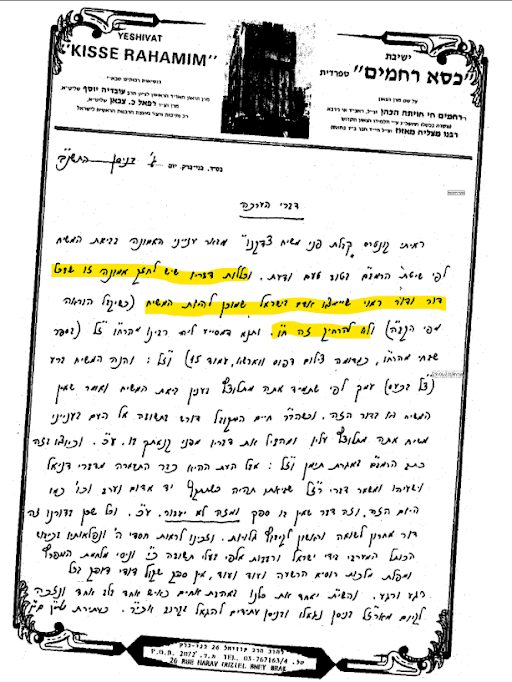
“The Rebbe constantly spoke about the coming of the Geula, something that was previously considered a distant, unrealistic matter. But the Rebbe constantly said that we must await the Goel to come imminently, just as the Baba Sali, used to say: ‘Moshiach is very close.’
“Boruch Hashem, in our generation we see many signs that no one thought would happen. Everyone thought the Iron Curtain in Russia was sealed and that no one could leave – but it all crumbled, and tens of thousands of Jews came from Russia to the Holy Land. A large number of them are returning to their roots – also thanks to the Rebbe’s bracha.
“Although we have not yet merited the actual Geula, we must hope for the Goel’s arrival at every moment. As we say: ‘Even though he may tarry, I will wait for him every day that he may come.’ The Rebbe’s name is hinted in the pasuk, ‘How beautiful upon the mountains are the feet of the herald, announcing peace, bringing good news, announcing salvation, saying to Zion: your G-d reigns.’ The initials of ‘רגלי מבשר משמיע שלום’ spell out: R’ M.M.S. (Rabbi Menachem Mendel Schneerson).
“He is the mevaser ha’Geula in our generation, he always strengthened and encouraged the Jewish people never to despair, but to constantly hope for Moshiach – and to add one more mitzva, one more merit, more Ahavas Yisrael, and one more good deed.”
Beis Moshiach #1460 • pp. 10-19, 20
© 2026 Beis Moshiach Magazine. All rights reserved.
This article originally appeared in Beis Moshiach #1460. You are welcome to share it with friends and family by email or in print, provided that you do not change, add to or omit any part of it, you credit the author and Beis Moshiach, and you include a link to archive.bmoshiach.org (written out in full in printed copies).
To republish this article in a newspaper, magazine, book or website, please request permission in advance at [email protected].