Emotions, Emotions, Emotions
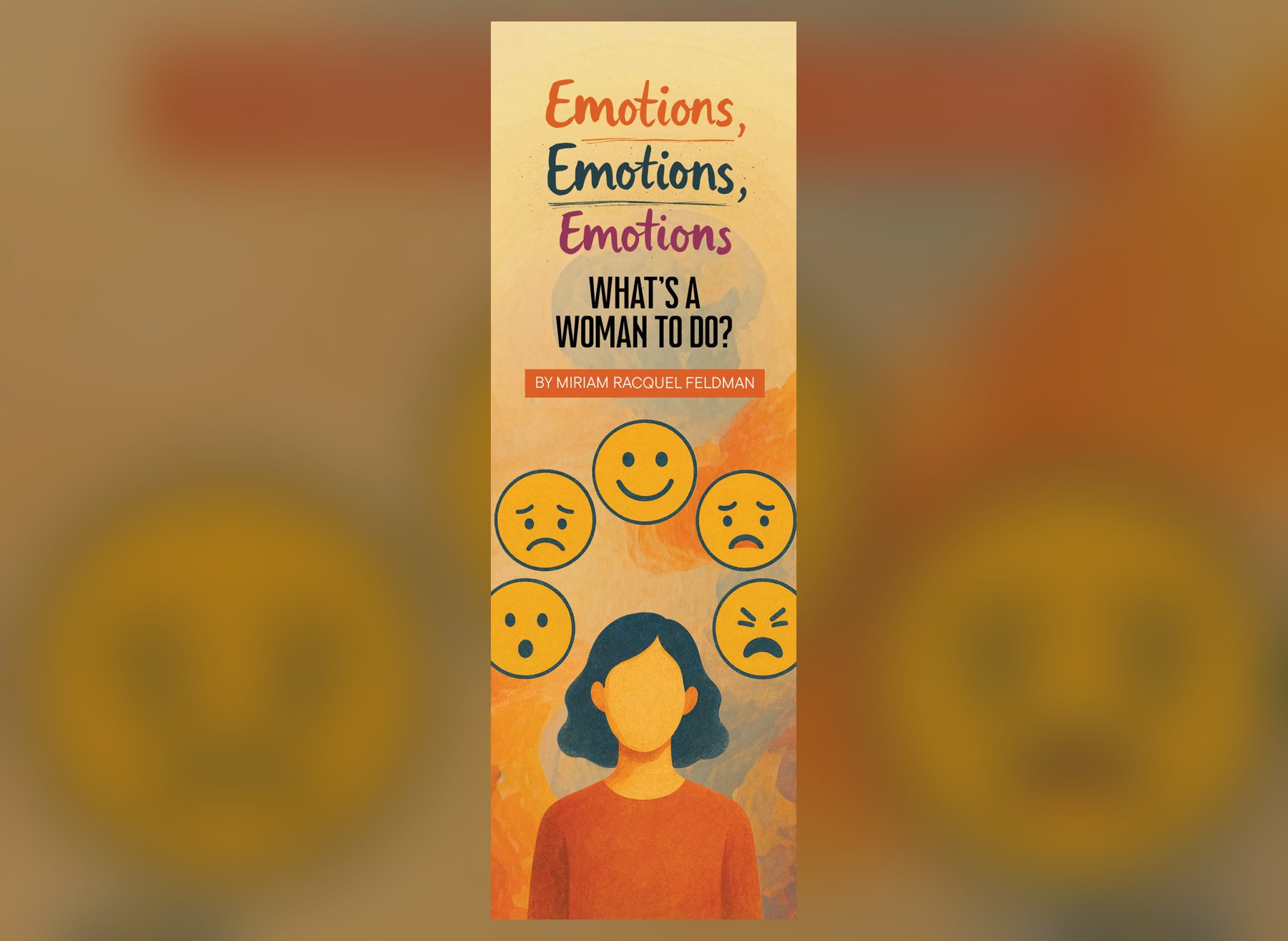
I grew up being labeled as too sensitive. Taking things too seriously. And then given the brilliant advice from those not as sensitive, “just move on, forget about it.” Or better yet, “let it go.”
Seriously? Like I wouldn’t do that if I could?
So I figured out early on, better to stuff my emotions down and pack that sensitivity up and send it sailing.
Does this sound familiar? Are you part of that “too sensitive” tribe?
Well, if you are, I’ve got great news for you! You can remain beautifully sensitive and not stuff down your emotions or dismiss them. You can also learn ways to not let them loose randomly and without purpose.
When I became a somatic healer, I was thrilled to come to an understanding of my emotions and extract the wisdom from them. I learned that they can be used as gateways to shifting unhelpful neural pathways (ones held tightly since childhood) as well as guiding lightposts in taking important actions.
Sometimes with our thoughts, we hold our fists tightly clenched around cell bars in front of us, limiting ourselves greatly. But in truth, there is no jail cell. We can walk out freely. We can release those limiting beliefs. The Rebbe says to see ourselves going out of Mitzrayim every day — Mitzrayim being a state of limitations. We are capable of shifting and changing our thought patterns and we can oftentimes shift and change our situations.
How, do you ask? Maybe you’ve been trying for years to shift mental patterns and wounded childhood beliefs, but to no avail. They still lurk in your mind, even as a 40 or 50 year old. The secret is going through the body. That’s what helps create shifts. Because with each firmly held belief, there is a feeling state, an emotion attached. And emotions are felt through the body, not the mind. Leaving our own inner Mitzrayim mind, body, and soul is a possibility for us all.
“For the later the generation, the closer the time to Mashiach’s imminent arrival; a time when the latent spirituality found within the body will come to the fore, nurturing and sustaining its soul. As such, special care must be given to the body and it should be accorded an additional measure of respect.” – The Lubavitcher Rebbe, Likkutei Sichos, Vol. II, pp. 530-532
With respect to the body, we can recognize that emotions are “energy in motion” felt as subtle physical sensations. Most of us have the habit of staying in our mind and believing that we know our emotional state from that brainy place. But in truth, before your mind knows what you are feeling (sad, afraid, joyful, excited, sad, etc.), your body is abuzz with the energy of that emotion. When you notice the physical, the energy of the emotion often flows, shifts, and releases. And with this, you get wisdom and neural pathway shifts.
Let’s first notice, the body sensations:
Someone criticizes you, G-d forbid, and your jaw tightens and your breath shortens.
You hear good news, and your eyes widen, there’s an uplift in your body, and you smile.
Something frightens you and you jump out of the way intuitively.
Someone acts odd, and your stomach drops (fear).
A situation didn’t go as planned. That disappointment causes you to slump, feel low, and your jaw clenches.
Your child goes far to yeshiva, and you miss them. That sadness and heaviness sits in your torso.
These are your emotions (energies within) speaking to you. This is how your body communicates.
And there are wise messages from these emotions. If suppressed or constantly ignored, the result can lead to physical manifestations like headaches, autoimmune dis-eases, or aches and pains, G-d forbid.
It behooves us to listen to our awesome bodies.
If you’re criticized, the emotional energy of anger provides the message that a boundary has been crossed. You need to get honest with yourself about the person who is criticizing you — see them for how they are choosing to show up. A boundary needs to be made and steps taken to protect yourself. Will you choose to take distance, speak up, or create change in the relationship dynamic? How can you free yourself from being a victim to someone’s unkind behavior in the future?
If you have the childhood or societal/religious belief that a “nice person doesn’t feel anger” or “I should only judge positively,” then you’re ignoring the discerning wisdom of the emotion that just showed up. Going out of Mitzrayim looks like, “Hashem has given me the obligation to care for my wellbeing.” Noticing allows for steps of change.
If fear arises from a situation— what action can you take to protect against the threat? How can you keep yourself safe? Your body will give you a focused awareness of that threat.
Missing someone brings up a sense of sadness (even if it’s for a good reason that change has happened — a child getting married, the leaving of a job for a better one, a child going off to school). Sadness has the message of loss and letting go. What is being released and what can be refreshed?
Disappointment has the message of a course correction — either your expectations were off or something needed to be better communicated or thought out.
And what do we do with the physical sensations? We feel them and listen in. Since it’s energy, it can be processed.

Place your hand on the dropped stomach, clenched jaw, or sadness in chest. Acknowledge your body communicating with you. This also prevents unhelpful rumination. Dropping into the body with awareness and light touch, brings presence and allows that emotional energy to flow.
Bring a sense of compassion to this awareness like you would recognize a loved one’s discomfort.
And then take the action that is necessary to care for yourself. I wrote Somatic Healing for the Modest Goddess—An Anthology of Love and Guidance for the Jewish Woman to help women process their thoughts and feelings through the everchanging situations Hashem puts us in. There are many somatic techniques and they all begin with awareness and a respect for the body.
So you see, sensitivity can be a blessing. Those emotions, when understood on a deeper level, can lead to inspired change. Tuning into the G-d given body that Hashem has blessed you in particular with as a precious individual allows for growth as a soul in body.
BIO:
Miriam Racquel (Meryl) Feldman transforms women’s lives through somatic healing as an award-winning author, dating & marriage coach, and trauma/anxiety specialist. Her innovative somatic approaches have helped thousands of women heal relationships, resolve trauma, and rediscover their inner wisdom and joy. As an international coach, keynote speaker, and podcast guest, she specializes in marriage transformation, painful relationship recovery, career clarity, and embodied healing. Author of the acclaimed memoir God Said What?! #MyOrthodoxLife and Somatic Healing for the Modest Goddess.
More can be found at: MiriamRacquel.com or YourMarriageMagic.com
Miriam Racquel also offers marriage programs together with her husband Dovid Feldman, L.P.C., and author of 52 Tweets to a Great Marriage. DovidFeldman.com
Beis Moshiach #1473 • pp. 44-46
© 2026 Beis Moshiach Magazine. All rights reserved.
This article originally appeared in Beis Moshiach #1473. You are welcome to share it with friends and family by email or in print, provided that you do not change, add to or omit any part of it, you credit the author and Beis Moshiach, and you include a link to archive.bmoshiach.org (written out in full in printed copies).
To republish this article in a newspaper, magazine, book or website, please request permission in advance at [email protected].