Shlichus in the Yoga Capital of the World
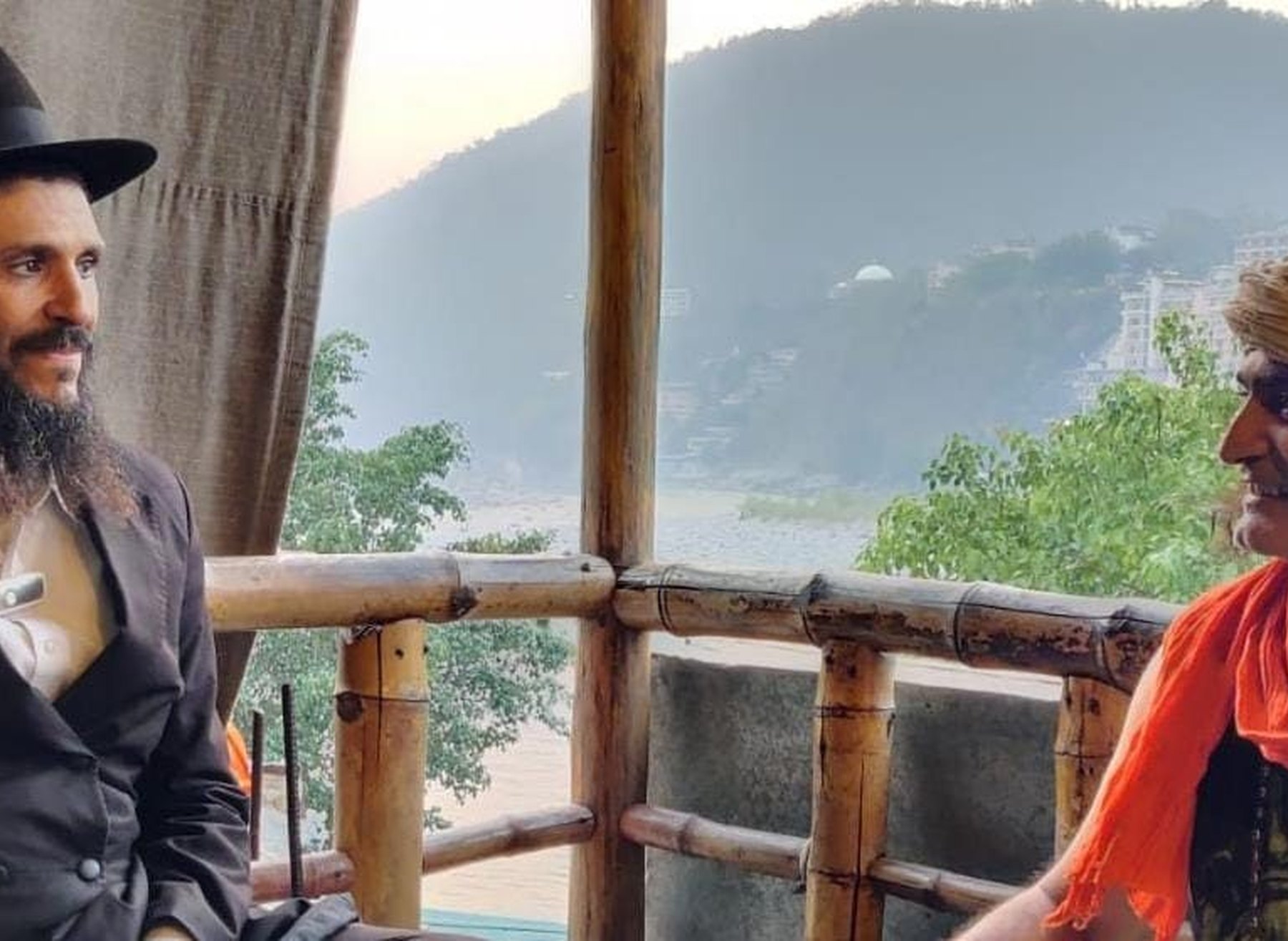
In my previous article, Bracha David shared her life story, leading up to her marriage to Rav Zohar David. For the past five years they’ve been on shlichus together in Rishikesh, where Zohar’s shlichus began 25 years ago. I met Bracha in 770, where she comes to refill her ‘pails’ with simcha and energy for her shlichus.
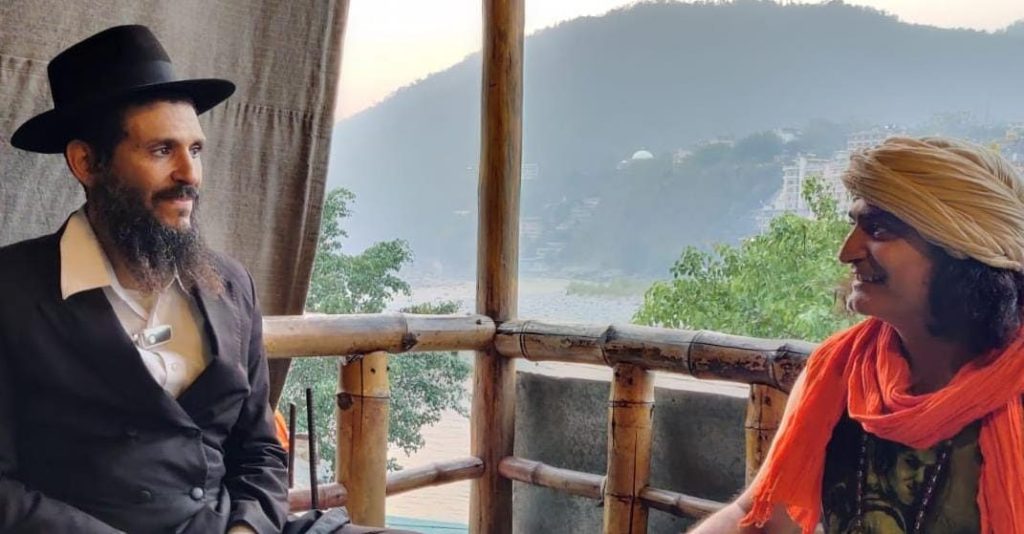
“Rishikesh is a popular hiking destination located in the foothills of the Himalayas,” she begins our interview. “It’s referred to as the yoga capitol of the world, where gurus come to sell their wares, offering courses in meditation, philosophy, reversing and other healing techniques, void of any true spirituality. Zohar’s honorable presence stands out among the locals, and they often stop him on the street and ask him to bless them.”
Home Away from Home
“About 90% of those who frequent our Chabad House are Israeli youth on a backpacking spree after their army service. It’s part of their culture to show up at local Chabad Houses to connect, make friends, and have a taste of home. On Jewish holidays they flock to our Chabad House to celebrate, and therefore we are open from Elul until after Chanuka, and from Purim until after Shavuos. In between, Zohar and I live in a small apartment in Netanya. I’m very busy treating people with CBT and Bach flower remedies, and giving workshops on parenting and sholom bayis, with a specialty in second marriages. My Master’s degree is in behavioral sciences.
“Running our Chabad House is a tremendous amount of work, and we only have one steady laborer helping us with all the necessary tasks. I prepare the Shabbos meals, together with Zohar. I’m the kind of person who begins preparing for Shabbos on Sunday, by Wednesday night everything is ready, on Thursday night the table is set, and on Friday at noon I’m all dressed for Shabbos. But in Rishikesh power shortages are common, and the stove could suddenly stop working right before Shabbos, leaving the challa half-baked and everything else half-cooked.
“Zohar and I do our best, preparing huge quantities of food. We never know how many guests will show up for the meals, but it can be from 120 to 200 guests on a regular Shabbos, and on chagim even more! We make popular Israeli food, such as chumus, matbucha and eggplant salad, which our guests really enjoy. After Shabbos it takes me several hours to wash the dishes and to get our Chabad House back in order.
“But it’s worth it!” she emphasizes. “Every Shabbos meal is an uplifting spiritual experience, which is what our guests are searching for. I give over divrei Torah as the ‘warm-up,’ usually stories of hashgacha pratis, and then Zohar takes over. He speaks on a high level, using esoteric concepts that awaken yiras shomayim and ahavas Hashem. Our styles are different, but I learned to appreciate how much we complement each other.
“Besides his many hours of daily learning, Zohar gives shiurim in Tanya and Chassidus, as well as in Jewish meditation. He’s also a singer and songwriter and produces discs together with his brother Rav Noam David. At farbrengens on special occasions Zohar stirs up a yearning for closeness with Hashem through his heartfelt songs.
“I give workshops to the women on basic halachos of Jewish life and the Jewish home. During the week we operate a restaurant in our Chabad House. It’s an opportunity for Israeli hikers to connect with each other. I have a minhag that when they come in I remind them to call home.”
A Rescue Mission
“Boruch Hashem, we have many stories of igniting Jewish souls but I’ll tell you about our rescue mission,” Bracha shares. “One Friday morning at 11AM a girl called and said frantically, ‘Beit Chabad – can you save us?!’ She was in an ashram located in a forest with her friend. The place was open, there were no locks or gates, but the guru in charge was playing with their minds and they were terrified to leave. It was clear that they were in grave danger. One of them, let’s call her Hila, was very pretty, and she later told me that what frightened her most was that the guru was beginning to ‘pass boundaries.’ Drugs are easily available in Rishikesh, and I wouldn’t be surprised if he was giving them mind-altering drugs as well.
“At first Zohar was reluctant to go, because of tzniyus. But I told him that this was pikuach nefesh and that he must go out to save them immediately!
“We let the security forces know beforehand of our rescue mission, just in case there was any trouble. It reminded me of the missions of Yad L’Achum. I began saying Tehillim and chapters of Tanya so we would succeed.
“The two girls were in their room, and only when they heard Zohar hum the tune of ‘Sholom Aleichem’ outside their window did they dare come out. The guru, who was tattooed from head-to-toe, including with a Magen David, watched them leave, his eyes glaring… He’d almost ‘got’ them!
“Zohar brought the girls to our Beit Chabad, where I had a tasty meal waiting for them. They were both trembling, and as soon as Hila saw me she began crying uncontrollably. She said, ‘When I suddenly heard your husband humming Shalom Aleichem it brought back memories of how I’d absolutely hated that song! My father is a baal teshuva, and on Friday nights he permitted me to leave the house only after he sang Shalom Aleichem and made kiddush. I’d be waiting impatiently for him to finish singing the four long, repetitive stanzas, and then I’d take off. But, as I was waiting to be rescued and I heard your husband humming the song, I told myself that I’d do anything to be back home again and hear my father’s Shalom Aleichem! The song that I had no patience for was what alerted me that we were about to be rescued!
“The girls stayed with us for about a week, and I encouraged Hila to keep sharing her story, with all the details. It helped her process the trauma, and each time her emotions were more toned down. Hila stayed in touch, and when we came to Eretz Yisrael we gave her a Tanya with her name inscribed on the cover.”
Shalom Aleichem – But Where’s the Shalom?
“There’s another story from our Chabad House related to Shalom Aleichem,” Bracha continues. “One Shabbos, during Kabbolas Shabbos, a young man joined the prayer service. A few minutes later, as we began singing Shalom Aleichem, he suddenly turned white and rushed to the door. When I asked him what was wrong, he cried out, ‘I can’t be here! I can’t hear this song! I must leave!’ He tried to get a taxi, a jeep or a rickshaw, but nothing was available.
“I found a quiet spot for him to sit down and encouraged him to share what was bothering him. ‘I grew up in a Chareidi home in Kiryat Sefer,’ he said. ‘One Friday night, in the middle of Shalom Aleichem, my father barged into my room and caught me on my smartphone. A moment later he kicked me out of the house, and I’ve been on the street ever since…’ After a pause, he added, ‘Is that what you call shalom? It’s the opposite of peace!’ There was deep pain in his eyes, and he suddenly began to cry…
“After he calmed down, I asked him, ‘What do you need right now to make you feel better?’ He immediately responded, ‘A shower, a towel and shampoo.’ I gave him what he requested.
“In the middle of our Shabbos meal the young man entered and I sat him down next to Zohar, who noticed that he was very sad, but he had no idea why. Zohar immediately gave him a big hug, and served him Shabbos food.
“This young man stayed with us until after the next Shabbos. The random outbursts of crying continued, but were less frequent. When he heard Shalom Aleichem the following Shabbos he succeeded in controlling himself. Before he left he told us that now he understands that he had to come to our Beit Chabad to heal, and that he has emuna that one day there will be shalom between him and his father.”
Bracha concludes with her heartfelt message, “When someone goes searching, it’s because something in their soul was lost along the way. Our Beis Chabad in Rishikesh is only one station of their journey, and it’s our role to make the most of it by providing meals, classes, a listening ear, acceptance and a huge dose of unconditional love.” Her face is glowing as she concludes, “We don’t always see the fruits of our labor, but ‘זורע צדקות מצמיח ישועות.’ We’re planting the seed, and Hashem will bring the yeshuos.” .
Beis Moshiach #1473 • pp. 42-43, 47
© 2026 Beis Moshiach Magazine. All rights reserved.
This article originally appeared in Beis Moshiach #1473. You are welcome to share it with friends and family by email or in print, provided that you do not change, add to or omit any part of it, you credit the author and Beis Moshiach, and you include a link to archive.bmoshiach.org (written out in full in printed copies).
To republish this article in a newspaper, magazine, book or website, please request permission in advance at [email protected].