The Rebbe’s European Representative
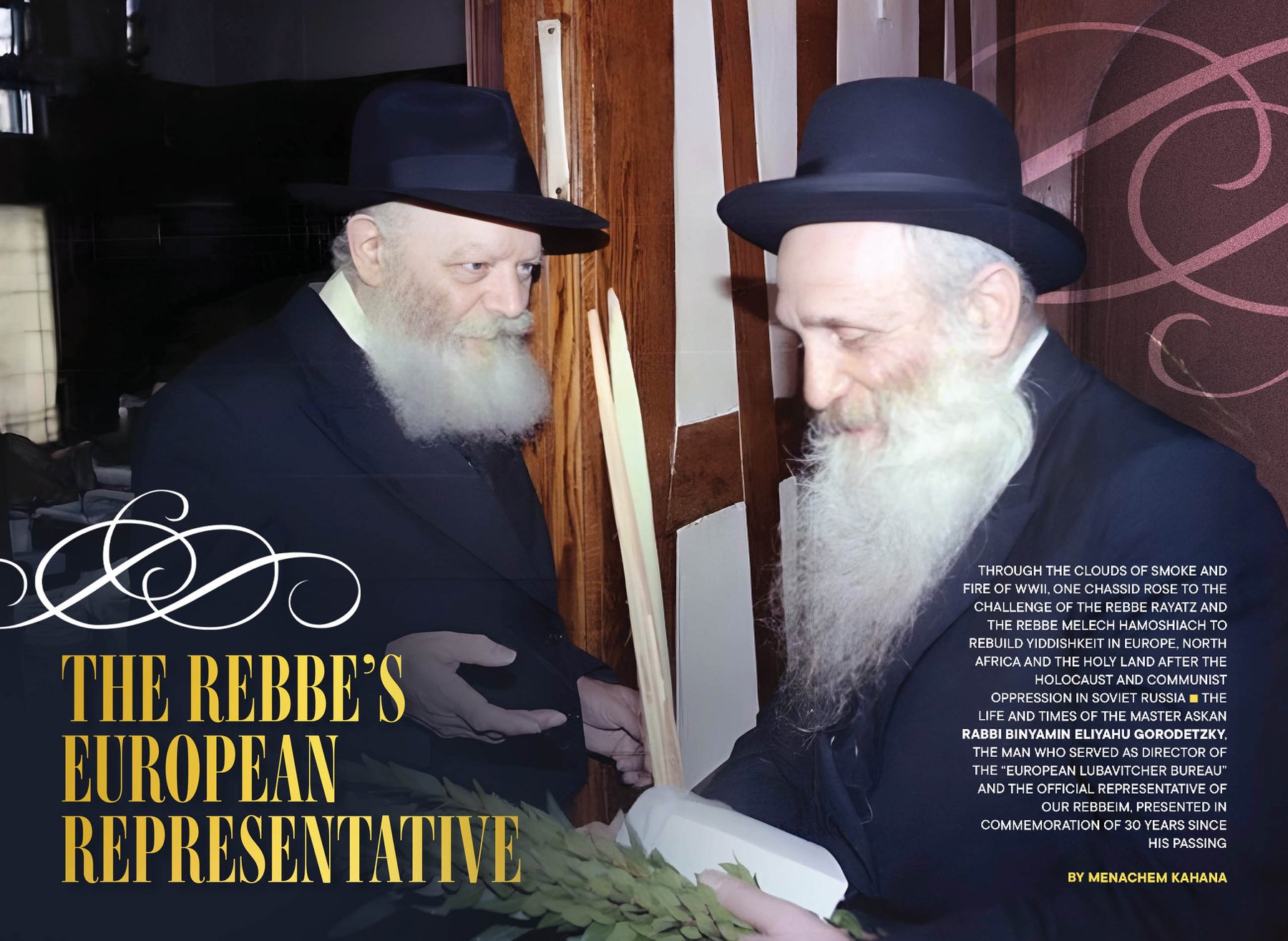
Through the clouds of smoke and fire of WWII, one Chassid rose to the challenge of the Rebbe Rayatz and the Rebbe Melech HaMoshiach to rebuild Yiddishkeit in Europe, North Africa and the Holy Land after the Holocaust and Communist oppression in Soviet Russia. The life and times of the master askan Rabbi Binyamin Eliyahu Gorodetzky, the man who served as director of the “European Lubavitcher Bureau” and the official representative of our Rebbeim, presented in commemoration of 30 years since his passing.
A few years ago, a rare half-hour video clip was published that generated great excitement among Chassidim. In the video, the Rebbe is seen sitting in the big zal during a “general yechidus” and from the side, the Chassid, Rabbi Binyamin Gorodetsky goes over to the Rebbe with reverent awe and begins to converse with the Rebbe. He apparently raises various communal matters that are on the agenda; reporting and updating. The Rebbe listens with special attention, in an unusual, regal sitting posture.
In the second stage of the conversation, the Rebbe begins to respond, answer and speak. It’s impossible to hear what the conversation is about, but the Rebbe speaks in apparent detail accompanied by energetic hand gestures, while Rabbi Gorodetsky responds from time to time.
For about half an hour, this conversation continued – one that was not rare at all (only the location was rare) – one of hundreds of conversations that took place between the Rebbe and his representative in Europe and North Africa – a representative who carried out missions on behalf of the Rebbe with various personalities, institutions, organizations and even governments.
* * *
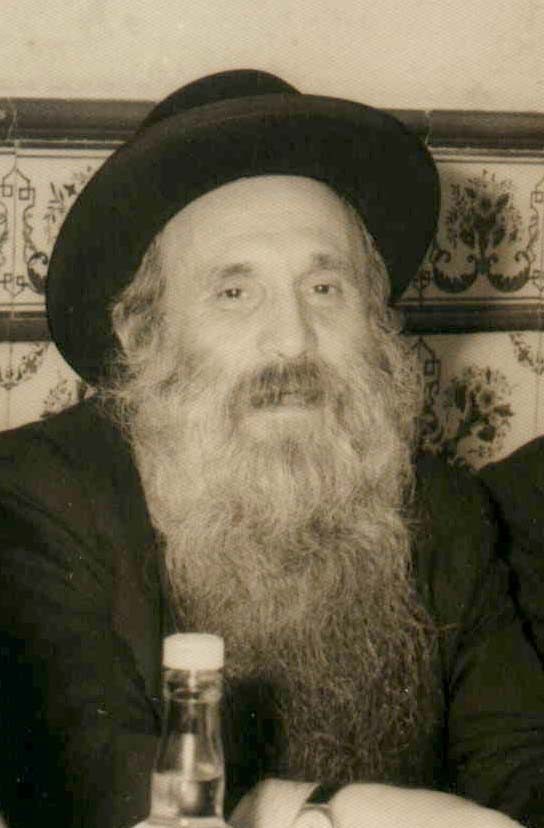
Throughout the years there were many faithful shluchim, wonderful individuals who merited to be conduits for transmitting the Rebbe’s great light to the entire world; but Rabbi Binyamin Eliyahu Gorodetsky was different.
Rabbi Gorodetsky was one of the elder Chassidim, a diligent askan, a courageous man, who was not deterred from fulfilling his shlichus – both that of the Rebbe MH’M, and those that the Rebbe Rayatz had placed upon him, who gave him complete, unconditional trust, and he was like an extension of their arms in the world.
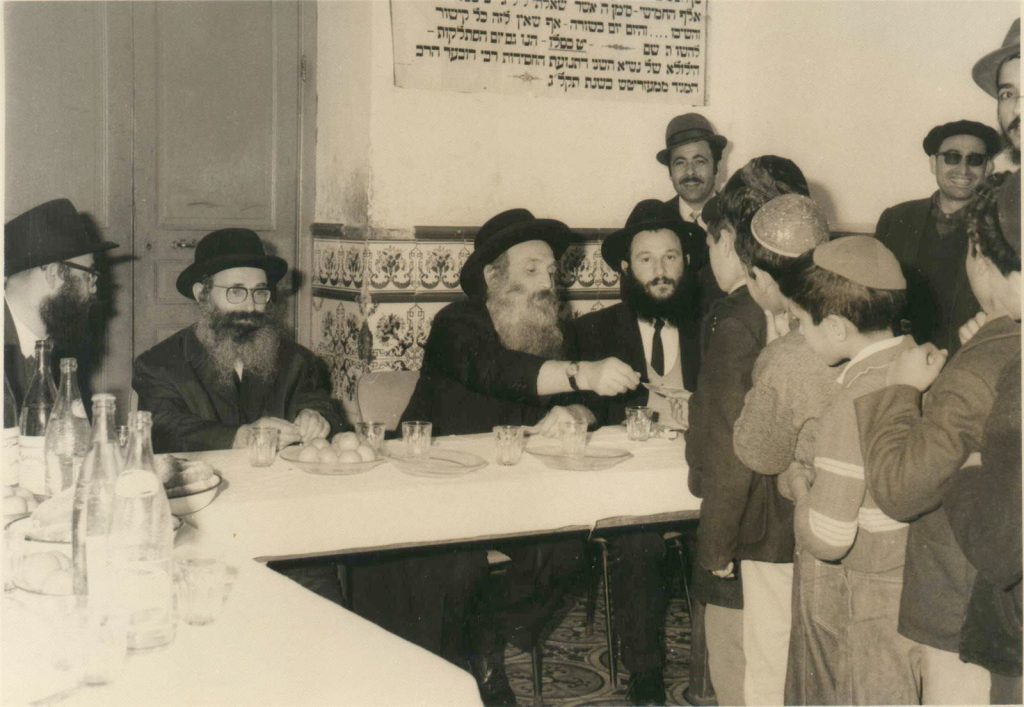
For decades, Rabbi Gorodetsky was in foreign lands, far from his home, going on secret missions on behalf of the Rebbe. It’s enough to look at the ones known to us: establishing the Lubavitch empire in Europe and North Africa and Eretz Yisrael, assisting shluchim in a long list of countries, establishing institutions, obtaining enormous budgets for activities from global organizations, and more.
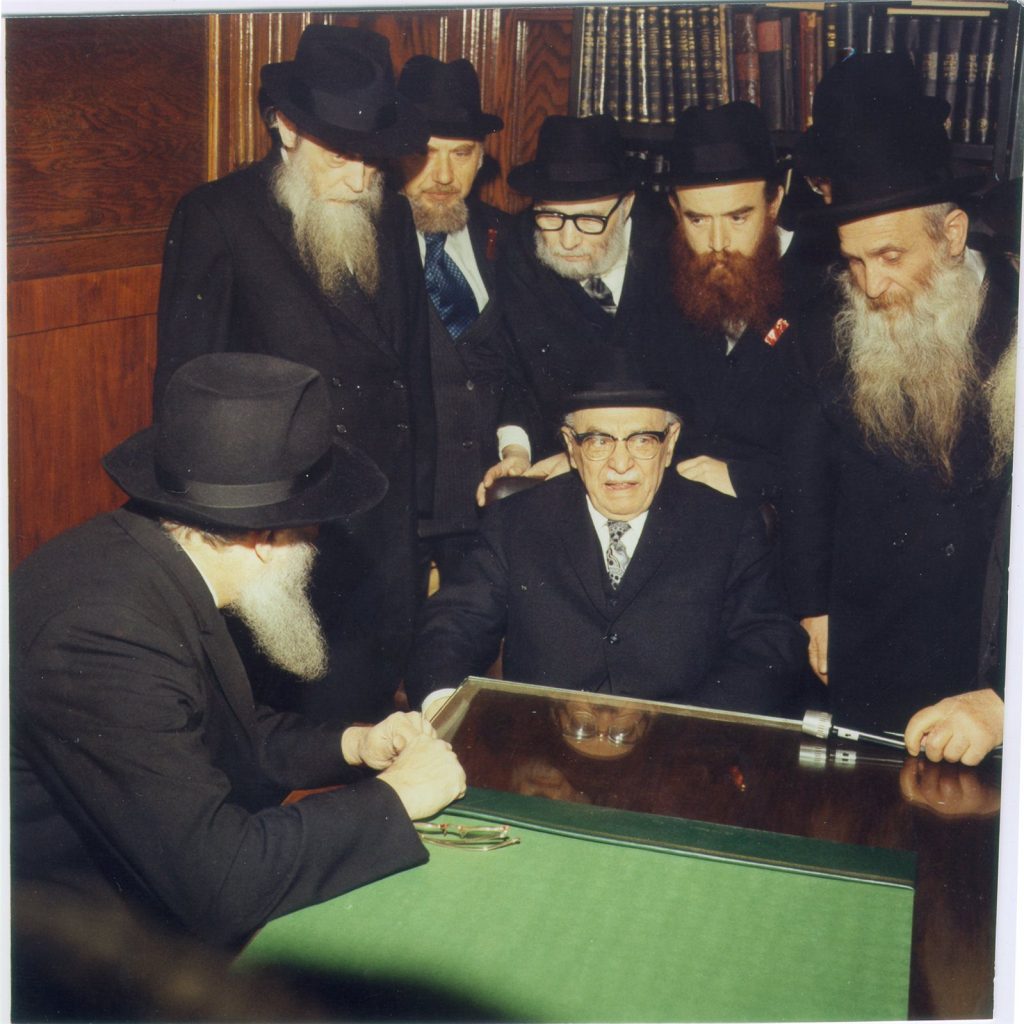
The breadth of his activity, the diversity of areas entrusted to him, and his rare talent for weaving connections with high-ranking personalities and officials, all goal-oriented: advancing Lubavitch enterprises according to the ratzon of our Rebbes and leaders. All these placed Rabbi Gorodetsky in a unique and special position that has no equal.
The storied journey of his life is long and fascinating. It’s impossible to describe his turbulent life story, as well as his work, in one article. His wonderful personality is woven into Chabad history like a scarlet thread, revealing itself as a rich mosaic of action, vision and endless mesirus nefesh.
We will touch somewhat on the first stations of his life – those formative events that laid the foundations for an exceptional personality, devoted in the extreme, who became a spiritual lighthouse for many. The following lines will constitute perhaps a small glimpse into a life of rare dedication and devotion.
In the Heart of Global Storms
Rabbi Binyamin Eliyahu Gorodetsky was born in Kislev 5668 (1907), in the town of Bobruisk in Russia.
His childhood years passed in a turbulent and stormy world. Even before he turned thirteen, the young boy experienced the upheavals of the generation in their full force. World War I broke out, and Russia shook and rumbled. His father, Rabbi Mordechai Leib was forced to distance himself from his family and accept a rabbinical position to avoid conscription into the Tsar’s army.
The upheavals took their toll, and his father, who became ill due to the suffering of the war, was no longer able to work. Thus, while still young, the son took upon himself the burden of livelihood and took care of supporting his father, mother and sister. He was only bar mitzva age when he entered the business world, operating as an equal with stock exchange traders, forming connections that helped support his family.
But the business world was cut short by his own personal choice. It was when the yeshiva, Tomchei Tmimim in Rostov, began to encounter difficulties due to the passing of the Rebbe Rashab. Lubavitch experienced financial crises, struggles with Bolshevik decrees, and later also a move from the city of Rostov.
That being the case, he made a decision. He wanted Torah, and he sought to be among the students of Tomchei Tmimim. After receiving his father’s consent, he traveled to Poltava to study in the yeshiva that had just been re-established there. Unfortunately, the yeshiva in the city did not last long; denunciations to the Communist authorities sealed its fate.
The Chassidim did not despair. Under the devoted leadership of Rabbi Yechezkel (‘Chatze’) Feigin, the yeshiva moved to the city of Nevel. On Lag B’Omer, while the students were celebrating in the home of Reb Gershon Ber Levin, police raided the place and arrested most of the young tmimim. They were released only after committing to leave the city. Binyamin Gorodetsky escaped arrest because at that time he was not with his fellow tmimim, and thus he remained in the town.
Following an instruction from the Rebbe Rayatz, the yeshiva was transferred to Kharkov. Indeed, the talmidim arrived there and studied in the local ‘Meshtchaner Shul’, while Binyamin Gorodetsky remained alone in Nevel.
Given the situation, he traveled to the Rebbe Rayatz who was staying at that time in Moscow, and asked his opinion regarding the continuation of his studies. “The Rebbe told me to travel to Kharkov, and as he said, so I did,” R’ Binyamin recounted in his memoirs.
He was not accepted to the yeshiva so quickly, due to his young age, but finally, after arranging appropriate documents, he was accepted to the yeshiva as a regular student.
Already at this young age, talents for activism and leadership were evident in him, for during that terrible period of persecution, he took upon himself to reorganize the yeshiva in Nevel, with the blessing of the Rebbe Rayatz and under the guidance of Rabbi Yechezkel Feigin. Chassidim like Reb Yehuda Eber, Reb Avraham Maiyor, and Reb Folye Kahan ran the yeshiva spiritually, while the young bachur Gorodetsky took upon himself the organization and arrangement of gashmiyus matters. “I began to organize gabbaim and distribute pushkas in shuls,” he recounted later. “I traveled throughout the area to collect money for this noble purpose. The shiurim developed wonderfully, and gashmiyus matters were also successfully arranged.”
You Must Work with the Kishkas and Sinews – And Not Be Impressed
In the winter of 5686 (1926), when he was eighteen years old, Binyamin Gorodetsky became engaged to the daughter of the Chassid, Rabbi Shmuel Levitin, after he had already received semicha. “At that time I continued to study at the ‘Beis HaMedrash l’Rabbanim,’ and also to combine askanus with it,” he recounted.
His activism, knowledge and resourcefulness, alongside his successes to that point, quickly made him well-known among the Chassidim. The Rebbe Rayatz, who led the campaign to preserve Judaism, also placed great trust in him, relative to his age. “In the summer of 5686, a letter was received at the administration of the Beis HaMedrash l’Rabbanim from our Rebbe expressing his desire to send me as a rabbi to Kiev and the regions, for the purpose of organizing chadarim, Talmud Torahs and yeshivas. Of course, I immediately agreed to the proposal,” R’ Binyamin recounted.
Before leaving for Kiev to establish the chadarim there and serve in rabbanus, he traveled to the Rebbe Rayatz to receive his bracha. In those days, the Rebbe was resting in the city of Luga.
The Rebbe did not like his coming. He expected him to go straight to Kiev to carry out the instructions and begin operating there in harbotzas Torah. “The Rebbe called for me and really told me off: ‘When Chassidim are sent, they get up and travel to the Rebbe,’” wrote Rabbi Gorodetsky. In other words, they just sent you on a mission, and already you’re coming to me?!… Rabbi Gorodetsky said he came to receive the power of the meshaleiach. The Rebbe did not accept this and dismissed it with a wave of his hand, and immediately began to outline for him how he should behave and in what manner he should operate.
Finally, the Rebbe said shocking words, like a prophecy, in view of the self-sacrifice required at this time: “You must work with the kishkas and sinews – and not be impressed!” The Rebbe even quoted a saying in the name of the holy Baal Shem Tov on the pasuk, “And your beginning shall be small, but your end will be very great” – in order for your end to be great, your beginning must be with suffering.
“He blessed me with a bracha for a successful journey, and urged me to travel to Kiev,” R’ Gorodetsky recorded this formative meeting. “Finally he said: ‘The seventh month, the month of Tishrei, is approaching, and surely you will be tempted to travel here [to the Rebbe], therefore beware and guard yourself lest you travel, but remain in your place!’”
Upon arriving in Kiev, young R’ Gorodetsky saw that the spiritual situation was not encouraging, to put it mildly, especially chinuch which was at a low point. Without looking at the danger lurking from right and left, he immediately established a new Talmud Torah. Later he also took charge of managing the underground yeshivas in the area.
Imprisonment in the Dead of Night
His wedding date was set for Purim Katan, 14 Adar 5687, in Nevel. He began preparations from the beginning of the month, and planned to travel to Nevel – where the kalla lived – on the 7th of Adar.
But plans are one thing, and reality is another.
When Rabbi Shmuel Levitin informed the Rebbe about the planned wedding date, the Rebbe answered him: “And who knows if the chassan will be able to participate then in the wedding…”
The words were cryptic, almost heavenly. Some interpreted this as due to the heavy burden placed on the young chassan’s shoulders in the holy work in Kiev. However, reality slapped them in the face. On the intended day, instead of entering under the chuppa, the young chassan sat behind bars. The Rebbe Rayatz saw with his ruach ha’kodesh what would be…
It was the night of the 7th of Adar 5687. Complete darkness enveloped the silent streets of Kiev. Strong knocks on the house door echoed, shattering the silence of the night. Four G.P.U. men in uniform stood at the entrance, grim-faced. The fate of the house’s resident – R’ Gorodetsky – was about to change.
They asked him for his documents and belongings. Calmly, he pointed to his suitcases standing on the side. “Since on that day I was already prepared for travel, my belongings were packed, I pointed to these items. But when they entered my room, they opened another chest, where they found a box with stamps and receipts that I had written when I was in Leningrad at Reb Sender Friedman a’h. In his house there was a copying machine, and there were all kinds of receipts from the yeshivas,” R’ Binyamin recounted what happened to him that night.
They weren’t looking for his neatly folded clothes, but for incriminating material. “When they found this, they were satisfied and stopped the search, as they were content with this material which in their eyes was quite incriminating against me. Praise to Hashem that because of this they did not continue their searches, so other secret material did not fall into their hands, such as the correspondence that had recently been received from many rabbanim regarding the chadarim under their authority, and their request for support for these chadarim, as well as regarding smuggling children to study in Kiev.”
So indeed, some important documents fell into their hands, but the more serious documents were not confiscated.
Due to his perspicacity not to keep any of the Rebbe’s letters with him, he was also saved from this.
When the G.P.U. investigators finished their searches, they asked him to accompany them, and he was led to prison. “I was in the G.P.U. prison for ten days,” he described. “My interrogator was an evil and wicked man; the chief supervisor, Ivanov, was also wicked – but at least he had manners…”
During the interrogation, it became clear to him that he had been under surveillance for a long time. They had even seen him in a chance nighttime conversation with the Chassid, Rabbi Benzion Shemtov on the streets of Kiev.
R’ Gorodetsky, a man of intelligence and great resourcefulness, showed no signs of agitation. He stood before them quietly and simply, presenting a simple claim: “The receipt books and stamps remained with me from many years ago, when I studied in Homil. Since the yeshiva was closed – they have been with me unused.”
The nighttime meeting with Reb Benzion Shemtov he denied. “I claimed ignorance…” When they understood that they would not succeed in extracting any confession from him, he was transferred to the prison notorious for its harshness, Lukianovsky in Kiev.
The days of Nissan approached, and naturally there seemed to be no chance of his release. His suffering, especially mental anguish, overcame him, as he so wanted to celebrate Pesach properly: “I hoped they would release me before Yom Tov, but when 11 Nissan arrived and I still saw no steps toward release, I decided to approach the head of the interrogation department, to order that a special room be allocated to me for Yom Tov…”
Surprising Release
Thus, understanding that he would observe Pesach 5687 under impossible prison conditions, R’ Gorodetsky prepared to arrange this. “In the room where I was,” he described, “eighty non-Jewish men were crowded, eating chometz. It was obviously impossible to consider being under one roof with such people during the days of Pesach.”
Courageously he requested from the supervisor a separate room for Yom Tov, as well as permission to receive the package of matzos in his own hands and not through a messenger – fearing chometz. “He promised me to fulfill my request to receive a separate room. As for the matzos – he said he could not approve that without additional authorization which could no longer be received in time before Yom Tov.”
Faced with uncertainty, he raised his eyes heavenward, knowing that even if he were released – he would not be able to sign the required documents because it would be Shabbos and Yom Tov.
Thus, broken in spirit, “I stood to daven Mincha… I was certain they would not release me.”
And then, suddenly, “I suddenly heard a voice calling: ‘Gorodetsky! With your belongings!’ Meaning immediate release…”
Thanks to the efforts of one of the community leaders close to the authorities, R’ Gorodetsky was released. On his way home, he sent three telegrams to the people dearest to him: to the Rebbe, to his parents, and to his future father-in-law.
He arrived home on the night of 13 Nissan. That evening his friends gathered, and together they farbrenged, rejoicing in his release.
Before Shavuos, R’ Gorodetsky traveled to the Rebbe Rayatz, where he had an aliya for the aufruf. His wedding took place in Nevel on 10 Sivan.
The situation was not simple. After understanding that the secret police knew him well, and all his movements, “I asked our Rebbe for instructions on how to behave.” The Rebbe replied to continue conducting himself as usual, but with wisdom and discretion. “I could serve as a rabbi openly because in those days it was still permitted to officially serve in the position of rabbi.”
After the release of the Rebbe Rayatz from prison, the Rebbe was ordered to leave Russia. Tishrei 5688 marked the end of the Rebbe Rayatz’s stay in Russia.
The next day, on Isru Chag Sukkos 5688, R’ Gorodetsky went to receive a farewell blessing from the Rebbe. The occasion was very moving, but the Rebbe was not occupied with emotions, but with setting a series of tasks to perpetuate the world of Torah in Russia: “Try to carry out the rabbanus and continue your work as before according to the need and where necessary,” the Rebbe said. “Your permanent place will be as before: Kiev, Podolia, Volhynia, and more im yirtze Hashem, will come in writing.”
Indeed, R’ Gorodetsky, with great courage, continued to serve in rabbanus alongside public askanus while struggling to preserve the Jewish ember in this period of terror.
To be continued…
Beis Moshiach #1475 • pp. 20-27
© 2026 Beis Moshiach Magazine. All rights reserved.
This article originally appeared in Beis Moshiach #1475. You are welcome to share it with friends and family by email or in print, provided that you do not change, add to or omit any part of it, you credit the author and Beis Moshiach, and you include a link to archive.bmoshiach.org (written out in full in printed copies).
To republish this article in a newspaper, magazine, book or website, please request permission in advance at [email protected].