The Complete Didan Notzach Calendar
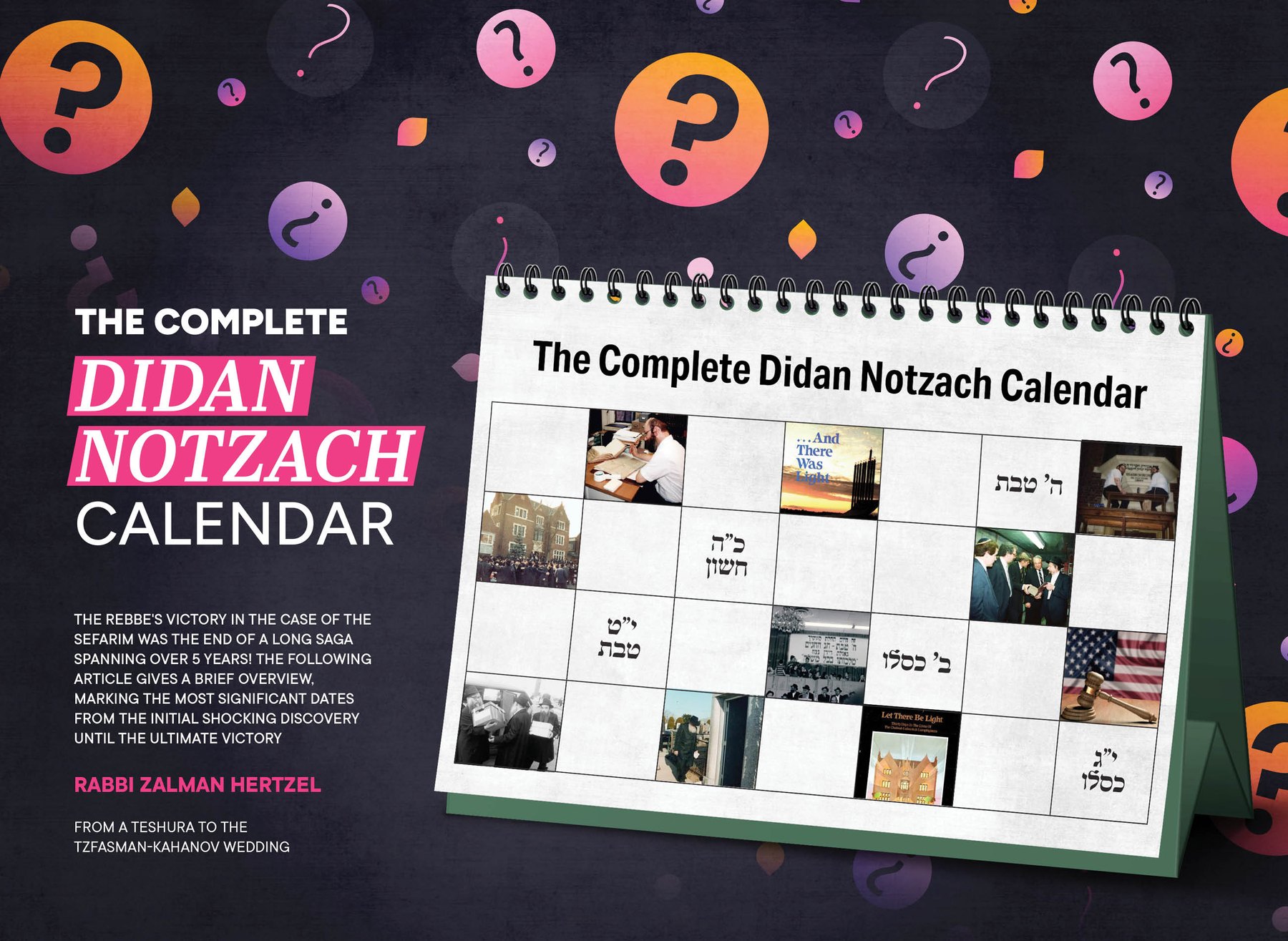
The Rebbe’s victory in the case of the sefarim was the end of a long saga spanning over 5 years! The following article gives a brief overview, marking the most significant dates from the initial shocking discovery until the ultimate victory.
Winter 5745 (1984-85)
During the winter months of 5745, employees at the Lubavitch Library noticed that various books were disappearing from the shelves.
It was only around Shavuos that they succeeded in identifying the thief, who would typically arrive late at night and leave shortly thereafter carrying suitcases full of books. The thief was none other than the Rebbe Rayatz’s grandson (along with two other individuals who participated in the operation). By this time, the thief had managed to steal approximately 550 valuable books, having already sold about 100 of them on the market.
Rosh Chodesh Tammuz 5745: The Rebbe Involves The Board of Agudas Chassidei Chabad
When talks with the thief regarding the return of the books proved unsuccessful, members of Agudas Chassidei Chabad were summoned to yechidus in the Rebbe’s room on Rosh Chodesh Tammuz. The Rebbe addressed them regarding matters connected to this affair, but in keeping with the principle of “revealing a handbreadth while concealing two,” his words remained cryptic to the Aguch members, for whom this was their first exposure to the matter. The Rebbe added that “if the situation is not resolved by Chag HeGeula the 12th of Tammuz, I will speak about this publicly at the farbrengen.”
A special protocol from this yechidus, titled “Zichron Devorim” (Record of Events), included the following:
“Today, Thursday, the 1st of Tammuz 5745 – Chodesh HaGeula – we, the undersigned … merited to be summoned… to enter the holy chamber of the Rebbe shlita at 8:00 PM. The Rebbe shlita stated: ‘No rabbi, no attorney, and no one else can alter the simple fact that there can be no discussion of inheritance here, G-d forbid, because “hu ba’chaim”, he is alive. One does not speak of inheritance when the person is alive… The reality is that the building of 770 belongs to the testator (including the books, manuscripts, bichelach, household furnishings and utensils, etc.). Particularly since “his offspring lives, he too lives”—it will remain so forever and ever, without any division. It is clear that this is the holy will of the testator, the Rebbe [Rayatz]…’”
The Rebbe also added that in Eretz Yisrael, a building should be established in Kfar Chabad in the name of the Rebbe Rayatz, to be called “Ohel Yosef Yitzchok Lubavitch,” and that the Rebbe would fund its construction.
Chag HaGeula 12 Tammuz 5745 – The Rebbe Breaks The News to the Public
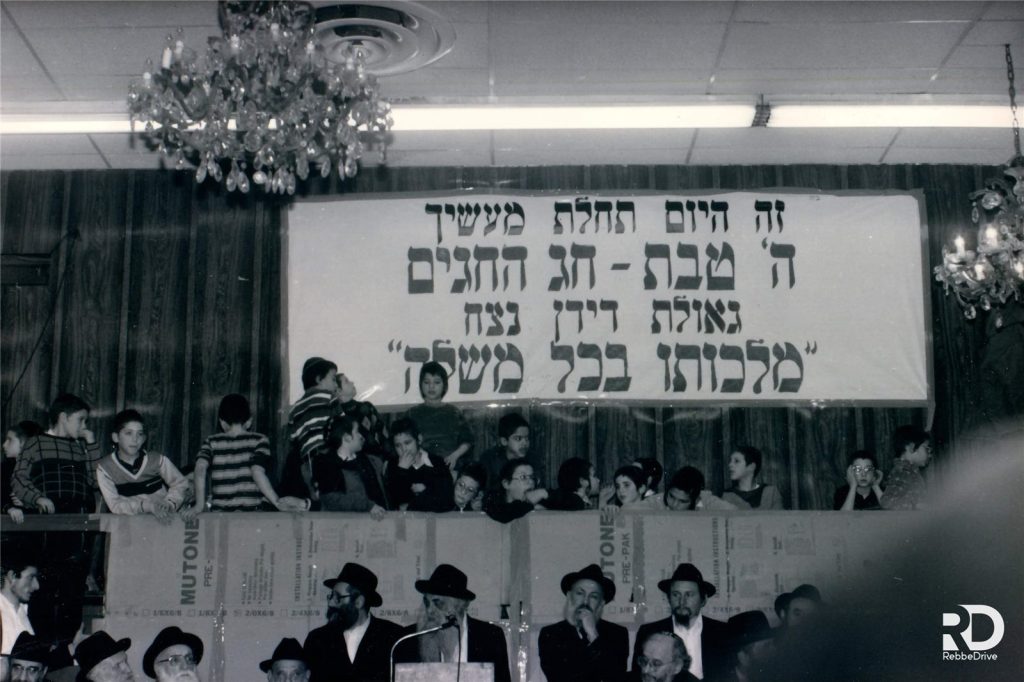
At the grand farbrengen held in honor of the Rebbe Rayatz’s redemption from imprisonment, the Rebbe brought the matter before the entire assembly of Chassidim gathered in his Beis Medrash at 770.
First, the Rebbe announced that Aguch members had convened and adopted the following resolutions:
To publicize that the building of 770 belongs to Aguch, in accordance with the will of the Baal HaGeula.
The yungerleit studying in the kollel will begin learning in the Rebbe Rayatz’s apartment.
An inscription on the building will read: “Beis Agudas Chassidei Chabad, Ohel Yosef Yitzchok Lubavitch.”
The Rebbe then began to describe the events:
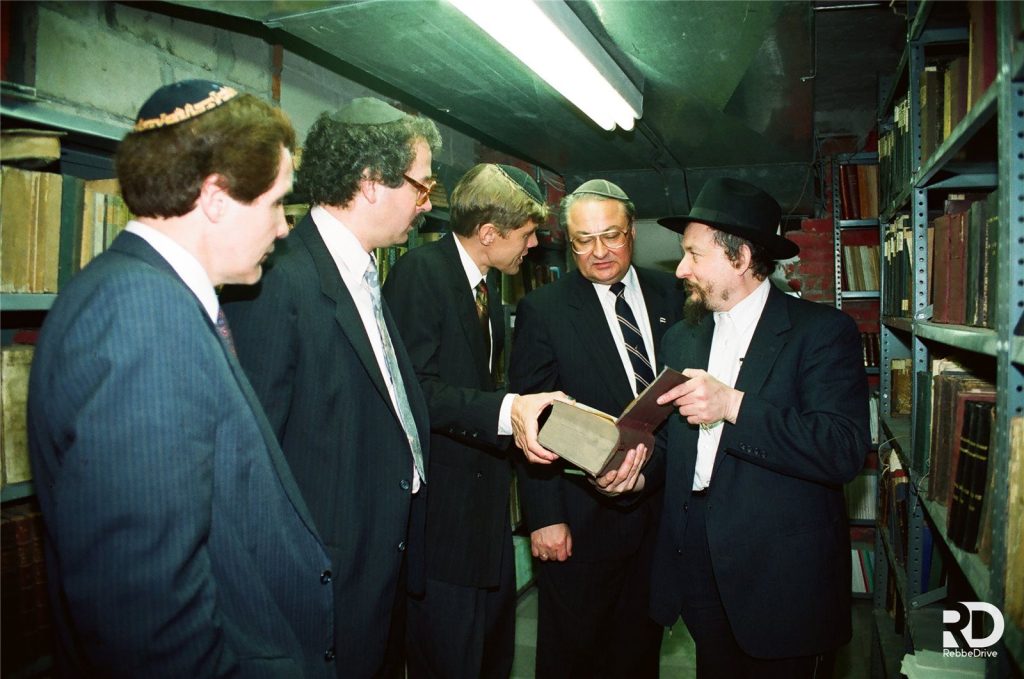
“We find ourselves in doubled and multiplied darkness during this time of galus, to such a degree that, to our great sorrow, an extremely serious incident has occurred – one that no one could have imagined possible: Recently, several individuals entered the Lubavitch Library, which was established and developed by the Rebbe Nesi Doreinu, and removed books from there…”
The Rebbe elaborated at length, describing the incident – the theft of books from the library – and its grave significance. The shocked audience listened intently, though the full picture – who, what, when, and how – remained unclear to them.
Summer 5745 – “Live Bombs!”
At several farbrengens, sichos, and a yechidus klalis for guests following the 12th of Tammuz, the Rebbe spoke extensively about this painful subject to the Chassidim present. During these sichos, profound distress was visible on his holy face. The Rebbe’s words were exceptionally sharp – unlike anything ever heard before. Even the Rebbe’s manner of sitting and mode of speaking were completely atypical.
From the Rebbe’s words, it became clear that the theft of the books was not merely an act of theft per se, but rather a challenge to the very essence of the Nasi HaDor’s leadership and eternal life.
On several occasions, the Rebbe declared: “Let it be known that the books of Nesi Doreinu that are not in their proper place are “live bombs” (“lebedike bombes”), and one never knows when or where a live bomb will explode, G-d forbid! Moreover, let it be known that the house is a place of danger for those inside it and those dwelling in it, G-d forbid!
During the summer, preparations began for what was expected to be a lengthy trial in federal court, after the thief refused to appear before a Din Torah on this matter.
As a first step, they obtained a court order preventing the thief from selling the books and requiring the remaining books in his possession to be held in escrow under court supervision.
Aguch members and the staff of the Rebbe’s library began collecting documents proving that the library was never considered private property, but rather belong to all Chabad Chassidim everywhere – as the Rebbe shlita stated.
During this period, the Rebbe met personally with the team of lawyers and directed them as to the proper line of argument to be presented in court.
28 Cheshvan 5746 – The Rebbetzin’s Deposition
The judge requested testimony from Rebbetzin Chaya Mushka as the daughter of the Rebbe Rayatz – from whose library the books had been stolen. The Rebbe supported this course of action as potentially helpful. The Rebbe even used an English expression indicating that she would emerge “with flying colors.”
The Rebbetzin gave her testimony on 28 Cheshvan in her home. Her testimony lasted many long hours, which were physically and emotionally draining. However, despite the opposing attorney’s presentation of various peculiar questions and attempts to create numerous obstacles, the Rebbetzin responded clearly and firmly without being rattled.
What turned out to be a foundation stone of the judge’s ultimate decision was her answer to the final question:”The books that your father used in the study room and basement of 770 – do they belong to your father or to the Chassidim?”
“They belong to the Chassidim, because my father belongs to the Chassidim!”
Upon completing these words, disappointment was visible on the faces of the opposing attorneys, who threw down their pens in frustration on the table, realizing their case was lost.
13 Kislev 5746 – Will the Rebbe Appear in Court?
During preparations for the trial, the opposing side filed a motion demanding that the Rebbe himself be ch’v subpoenaed to testify in court against his will. The 13th of Kislev was the day the judge was scheduled to decide whether the Rebbe would be required to testify in court. Kollel members designated this day as one of fasting and reciting Tehillim.
The spiritual and material efforts bore fruit. By noon, arrangements were made and the other side pulled their motion which meant that the Rebbe would not be required to testify in court.
Shortly thereafter, the news spread throughout 770, and joy reached the heavens. Anash and tmimim poured into the city streets and danced for hours, with praise and thanksgiving to Hashem, in hope and confidence that very soon there would be a complete “Didan Notzach.”
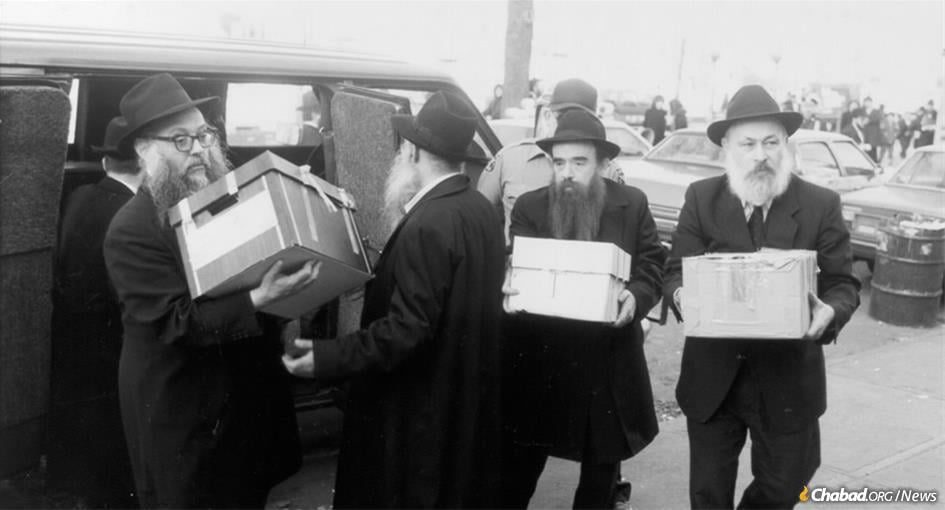
Amidst all the joy and celebration, the melody of the nigun “Ach Ata” was set to new words: “Yakiru v’yedu kol yoshvei tevel, vos iz getrofen oif Yud Gimmel Kislev – All inhabitants of the world will recognize and know, what happened on 13 Kislev,” and thus they sang and danced for hours on end.
Chag HaGeula 19 Kislev 5746 – The Trial Begins
On the 19th of Kislev – the day commemorating the Alter Rebbe’s redemption from imprisonment – the court proceedings regarding the books began. Everyone perceived this as manifest Divine Providence and were confident of victory. The opposing side requested to change the date, but the judge denied their request.
On 19 Kislev itself, there were general discussions about how the trial would be conducted, and on the 20th of Kislev, the actual hearings commenced, lasting 23 days. Nearly every weekday when the trial was in session, the Rebbe traveled to the Ohel.
At the Rebbe’s Yud-Tes Kislev farbrengen, something extraordinary occurred: The Rebbe did not recite the maamar in the customary niggun, nor was the “niggun hachana” sung beforehand. The maamar itself was relatively brief and delivered “k’ein sicha.” This had never happened before on the great Yom Tov of 19 Kislev.
Chassidim saw this as a concealment and veiling of the revelation of Chassidus in the seventh generation, due to the prosecution that had arisen in the Heavenly court, paralleling the trial proceedings unfolding in the earthly court.
Zos Chanuka 5746
On Zos Chanuka, the Rebbe held – unusually – two farbrengens. The Rebbe even addressed this ‘innovation,’ explaining that it was being done to completely nullify all undesirable matters.
At these farbrengens, the Rebbe spoke at great length about the prosecution that existed in the Heavenly court regarding the dissemination of Chassidus during the times of the Maggid of Mezeritch and the Alter Rebbe. The connection to the current situation – the library case – was unmistakable.
The Rebbe continued, addressing claims made by the opposing side in court that “Chabad Chassidim are not active.” The Rebbe dismissed this, saying: This claim has no foundation! However, since such a claim has been voiced, we must respond by adding to and intensifying our activities in spreading the wellsprings of Chassidus outward.
The Rebbe instructed that “all activities of Mivtza Chanuka be conducted on the day of ‘Zos Chanuka’ with the greatest possible intensity, and immediately afterward, send the photographs to be printed in a special album.” The Rebbe later requested that the album be ready by Yud Shevat.
During that period, Chassidim set the words “Didan Notzach”- to the melody of an old Chassidishe niggun, and the Rebbe greatly encouraged this niggun at farbrengens.
8 Teves 5746 – Hearings End
On this day, the “hearing days” in court concluded, and a final deadline was set for submitting trial briefs. It should be noted that the 8th of Teves is the yahrtzeit of Rebbetzin Chaya Mushka, wife of the Tzemach Tzedek, after whom Rebbetzin Chaya Mushka, wife of the Rebbe shlita, was named.
10 Shevat 5746 – Day of Accepting the Leadership
The final deadline for submitting trial briefs fell on none other than the great and holy day of Yud Shevat – the day of the histalkus of the Rebbe Rayatz (whose sefarim were the subject of the entire trial) and the day the Rebbe accepted the leadership of the seventh generation.
In anticipation of Yud Shevat, the album the Rebbe had requested was published – a magnificent English-language album titled “Let There Be Light.” It contains hundreds of beautifully illustrated pages documenting Chabad activities during Chanuka 5746 throughout the world.
Interestingly, in the maamar “Basi L’Gani” that the Rebbe delivered on Yud Shevat, the Rebbe elaborated extensively on explaining the parable of “squandering the treasures” – where the king depletes his hidden treasures in order to achieve victory in war. Chassidim saw in this a direct connection to the current battle affecting the very soul of the King, especially since the chapter of Basi L’Gani of that year was Chapter 16, while this mashal appears primarily in Chapter 11…
5 Teves 5747— The Court Rules That “Didan Notzach!”
On the third day of the week, which in the Torah has the words “it is good” twice, the 5th of Teves, at 11:00 AM, the joyous news arrived: “Didan Notzach!” A victory in a revealed manner – ”before the eyes of all the nations” – in federal court concerning the books and manuscripts of our Rabbeim, our Leaders, in the Lubavitch Library.
When the secretary informed the Rebbe, his holy countenance glowed and profound joy was evident.
The news spread like wildfire through the neighborhood, and Anash, tmimim, and even school children with their teachers began streaming toward 770. The circle of dancers grew and expanded from moment to moment as one donor contributed a thousand dollars as a start toward purchasing mashke – and the Crown Heights neighborhood erupted in joy and celebration.
The floor of 770 was soon drenched with mashke flowing like water, and calls of “Mazel tov!” and “Gut Yom Tov!” resounded from every direction. The mitzva tanks circled the streets broadcasting through loudspeakers the nigun “Didan Natzach,” and wherever news of the King’s victory reached, there was joy and gladness for the Jews.
One of those dancing in the courtyard of 770 climbed onto the fence and proclaimed “Yechi Adoneinu,” with the entire congregation responding after him three times.
It soon became known that the Rebbe would come down to daven Mincha in the large Beis Medrash – an occurrence reserved only for Tishrei. The Rebbe came down for Mincha, and 770 was electrified. Shouts of “Didan Notzach” resounded from every direction.
After Mincha, the Rebbe shlita began an unexpected sicha lasting approximately half an hour. Among other things, the Rebbe said:
“Just as at the time of the Alter Rebbe’s imprisonment and redemption – when prosecution intensified against him for spreading the wellsprings of Chassidus outward – he took from this a lesson regarding his work: that he must add even more to the teaching of Chassidus in a manner of understanding and comprehension – Chabad – specifically. Similarly, the eternal Divine instruction is clear in connection with the current event: that specifically from such arguments and accusations claiming that ‘Agudas Chassidei Chabad’ is not a living and active body, we must derive an instruction for our work now – that along with the great joy, joy that transcends all boundaries, we must now increase even more the dissemination of the wellsprings outward, to an incomparable degree.”
The celebration continued for seven consecutive days, “the seven days of feasting,” with more and more guests arriving from every continent to the “dalet amos of the Nasi HaDor” – to celebrate together with him. Every night bands played lively music in 770 and whoever did not witness this joy never witnessed joy in their lives.
12 Teves 5747 – Back to the Books
The seven days passed, and the time arrived to return to the essence – learning Torah from the sefarim themselves. In a special sicha delivered on the night of the 12th of Teves, the Rebbe explained that the true victory belongs to the holy books themselves, and therefore we must increase and intensify Torah study with diligence and devotion.
The Rebbe announced a preparation campaign for Yud Shevat: During the thirty days (until Yud Shevat), everyone would be tested by their mashpia three times – after each ten-day period. The Rebbe emphasized that this directive applies to everyone – men, women, and children. The Rebbe also requested that the test results be sent to him.
From that moment forward, 770 underwent a transformation. The singing and dancing gave way to the sound of Torah study resonating powerfully, with excitement and anticipation for the great and holy day of Yud Shevat.
It should be added that the Rebbe referred to this day – the 12th of Teves – as the day when “the seven days of the hekef” (from the 5th of Teves) were completed.
25 Cheshvan 5748—Didan Natzach for the Second Time
Even after their defeat – and perhaps because of it – the opposing side did not relent. They attempted to appeal the court’s decision, receiving financial and moral support from circles known for their intense hatred of Lubavitch.
Ultimately, however, thanks to the appeal, the Chassidim merited another Yom Tov! Again on the third day of the week, which was doubled for good, the 25th of Cheshvan in the year of tismach (“rejoice”) – 5748, the appeal was rejected, and a final verdict was rendered by three judges in the appeals court confirming that the books indeed belong to Agudas Chassidei Chabad.
This time, too, joy burst forth from hearts, and the age-old promise of the Maggid of Mezeritch that in all matters “the Chassidim will have the upper hand” was palatably felt. The Beis Medrash filled from wall to wall, and as the song “Didan Natzach” was on everyone’s lips, the Rebbe entered for Mincha – once again in the large zal and on the platform designated for the holiday months.
27 Cheshvan 5748
On Thursday, the 27th of Cheshvan, the court issued an order that the books be returned to their rightful place (the library of Agudas Chassidei Chabad at 770) within a few days.
Before Shabbos, the Rebbe edited a maamar with the opening words “V’Shavti B’Shalom El Beis Avi” (“And I will return in peace to my father’s house”) from the year 5738, which was printed in the kuntres “Rosh Chodesh Kislev 5748.” On Sunday, Rosh Chodesh Kislev, he distributed the kuntres to all the shluchim. Chassidim connected the opening words of the maamar to the return of the books.
Chassidim further relate that when the Rebbe edited the maamar, he added four more footnotes, and in revealed Divine Providence, the total number of footnotes in this maamar is 216 – exactly the numerical value of “Didan Notzach” – 216!
During Shabbos, great joy was visible on the Rebbe’s holy countenance, including during the farbrengen.
2 Kislev 5748 – The Books Return
On the auspicious day of Monday, the week of parshas “V’Shavti B’Shalom El Beis Avi,” the 2nd of Kislev 5748, the books returned to their rightful place at 770. Aguch members wished to mark the occasion with great fanfare, but the Rebbe negated this plan by writing: “Since going forward [matters] will be with an establishment and in peace of mind and body, etc., the procedure should be that they [the books] be delivered quietly…”
This was, of course, and reference to the second luchos, which were given by Hashem to Moshe privately and were preserved (unlike the first luchos, which were given with ‘thunder and lightning’ and were shattered).
The Rebbe traveled to the Ohel at 2:00 PM (before the books arrived at 770), and instructed that when they arrive, several should be brought to him at the Ohel. Upon his departure, several dozen tmimim stood in the courtyard waiting idly. The Rebbe turned to those standing outside and said (emphatically):
“They keep singing ‘Didan Notzach.’ What is meant by ‘Didan Notzach’? That we and our conduct should prevail. I ask you: You can see from the window that people have been standing around for hours. Instead of sitting and learning Torah, they stand here watching the birds, looking this way and that… Do you think you’ll accomplish something by this?! Will this bring satisfaction to the books that are being brought here?”
Naturally, after these sharp words (the above is just a short quote from what the Rebbe said), the students returned to their studies in the Beis Medrash.
Around 3:00, the books arrived at 770 – 13 boxes plus an additional plastic bag. The boxes were brought in with great excitement by Aguch and the Mazkirus members and placed in Gan Eden HaTachton near the Rebbe’s holy room, after which they burst into joyous dancing and l’chaim.
As the Rebbe had requested, several books were immediately sent to the Ohel. The first book that emerged, by Divine Providence, from among the boxes was titled “Mizmor L’Sodah” (“A Psalm of Thanksgiving”). They also brought the Rebbe the book “Derech Emuna” and another volume.
The Rebbe instructed to have the sefer “Derec Emunah,” a work of basic kabbala by the famous mekubal R’ Meir ben Gabbai, reprinted that same week and sell it for the low price of $1! On the following Shabbos, the Rebbe spoke about the book’s significance and content.
5 Teves 5748 – The First Anniversary
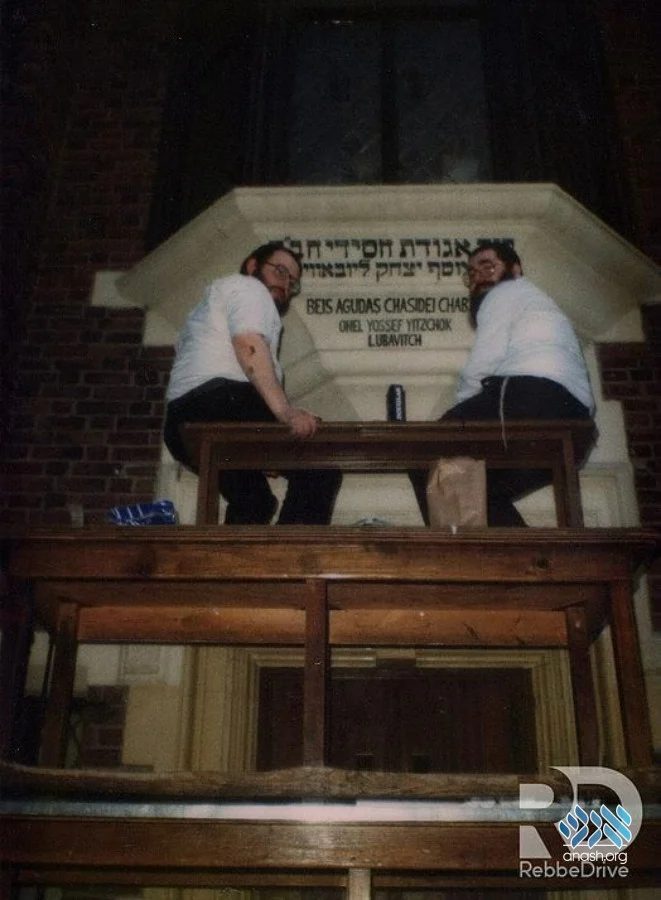
Given the Rebbe’s request surrounding the return of the books that things be kept calmer and quieter, some were wary of turning Hei Teves into a day of celebration. In practice, however, a sign was hung on the western wall of 770 reading in eye-catching letters: “Yom Ha’bahir Hei Teves, The Luminous Day Hei Teves” despite those who cautioned against it.
On Friday night, Parshas Vayigash – 5 Teves 5748, one full year since the initial verdict came, when the Rebbe entered for Kabbolas Shabbos, the congregation sang the niggun “Didon Natzach” with tremendous enthusiasm, and the Rebbe encouraged the singing. The entire atmosphere was highly festive.
At 1:30 PM, the Rebbe entered the farbrengen as a powerful rendition of “Didan Notzach” preceded him. When it became apparent that the Rebbe was about to begin a sicha, anticipation filled the crowd regarding how he would address this special date. The Rebbe first looked toward the sign that the organizers had hung and immediately in the first sicha, the Rebbe spoke about “Didan – of the sefarim – Notzach”:
“First and foremost, we must begin with the topic of the day, as has already been announced with publicity – publicizing the miracle – regarding the event that occurred on this day, the 5th of Teves, last year, when there was ‘Didan Natzach,’ the victory of the books.
“And these days are remembered and observed in every generation and generation, etc.” That is, when this day arrives in the following year, and similarly year after year, these same matters that occurred the first time are “remembered” and thereby “observed”—establishing it as a “special day” and “auspicious time” regarding everything connected to the victory of the books.
In the edited rendition of this sicha that came out in the following week, the on the words “when this day arrives in the following year,” the Rebbe added a footnote:
“When the joy is emphasized in action and revelation even more – after there has already been the ‘redemption of captives’ of the books… on Monday of parshas ‘V’Shavti B’Shalom El Beis Avi,’ the 2nd of Kislev. Note the language of our Sages [regarding Chanuka]: ‘the following year they established it.’”
Now the celebration received the King’s seal. The Rebbe himself established this holiday for all generations! There is no need to describe the tremendous excitement that gripped the Chassidim upon hearing these words, both then and after Shabbos when the news spread to all corners of the world. It should also be noted that ahead of this Shabbos, the Rebbe edited a special maamar, “V’Avdi Dovid”- something typically reserved for established special days and festivals.
26 Tishrei 5750
Despite hopes that peace would return, the opposing side initiated a new lawsuit, this time against the Rebbe himself. The malicious claim alleged that the Rebbe’s words in connection with the library case had incited violence among “extremists.”
In Elul 5749, the judge ordered that this be heard after a month. The other side wanted the Rebbe to testify in this trial. Here it was more difficult to ensure that the Rebbe need not come to court (since this claim was directed personally against the Rebbe).
The Rebbe told Aguch members to decide for themselves whether he should testify. Aguch members worked with almost supernatural means to ensure that the Rebbe would not have to testify in court.
On the 26th of Tishrei 5750 (1989), hearings were held in court. The opposing side arrived with dozens of books and video cassettes showing the Rebbe distributing dollars, attempting to prove that the Rebbe is healthy and capable of testifying.
Here the miracle became evident: The judge stated that he had reached the conclusion that the question was not so much a matter of health, but rather what the Rebbe would add regarding the substance of the case. The judge asked the opposing attorney what he would ask the Rebbe if he’d come to court. The attorney didn’t know exactly how to respond…
The final outcome was that the judge stated he saw no genuine reason for the Rebbe to appear, and the verdict was rendered on Wednesday, the 26th of Tishrei in the year of miracles: The Rebbe will not be forced to come to where he doesn’t want!
When the secretary informed the Rebbe, the Rebbe asked: “Has the olam already made l’chaim?” The mazkir responded that they probably did. The Rebbe then said: “This is indeed a year of miracles, but it should be with limitation…”
The Rebbe came down for Mincha at 3:15, as the crowd sang “Didan Notzach” enthusiastically. When the Rebbe reached his place of prayer, he turned toward the congregation and encouraged the singing with his holy hand. Special joy was evident on the Rebbe’s face, a kind of serenity and peace.
During the chazan’s repetition, they sang at “Sim Shalom,” and the Rebbe encouraged the niggun with his holy hands. At the conclusion of davening, the congregation sang the passages “Al Tira” and “Ach Tzadikim,” and at the end, the Rebbe continued encouraging at the shtender for a while, signaling that they should continue with the niggun “Ki Elokim.”
Immediately after Mincha, a Chassidishe farbrengen began that continued until Maariv. After Maariv, the Rebbe delivered a sicha in which he urged the establishment of new institutions, among other things.
The Rebbe also said that in times of trouble, “Imo Anochi b’tzara” – that Hashem is with us at all times during the trouble. He also stated that we find ourselves in a state of true freedom beyond all measure and limitation.
At 9:30, a large Chassidishe farbrengen was held, organized by Aguch, where they recounted the story of the redemption, emphasizing that the victory here was more sublime than what it was on 5 Teves. The farbrengen continued until morning light.
19 Teves 5750
This case went on for some time, but finally on Tuesday, which was doubled for good – the 19th of Teves 5750, it was finally ruled that there was no case, and once again, “Didan Notzach!”
That day, the Rebbe davened in his home on President Street. After Shacharis, the Rebbe traveled to the mikva. When he emerged from the mikva building, they informed him of “Didan Notzach,” and the Rebbe returned home without traveling to the Ohel.
A large crowd gathered for Maariv in the Rebbe’s home. When the Rebbe came down, the crowd sang “Didan Notzach” with great joy, and likewise after davening, as the Rebbe ascended the stairs, and encouraged with his holy hand. In 770, a large farbrengen was arranged in thanks to Hashem for this miraculous victory.
28 Elul 5750 – Final Settlement
The Rebbe’s brother-in-law, Rashag, the father of the book thief, stood on the Rebbe’s side during this ordeal with great courage and personal sacrifice. Before he passed away he bequeathed in his will all his property to “Agudas Chassidei Chabad.” After his passing on 7 Adar 5749, his son requested funds from his father’s estate. In exchange, he said, he would agree to return the books that had been on his grandfather the Rebbe Rayatz’s table on Yud Shevat 5710 which his grandmother had given him years before the saga.
The Rebbe agreed to a compromise – the only compromise during the entire library case period – namely: that the individual would sign an agreement to cease from a practice he had developed in the recent years – to speak or write against Lubavitch in the press.
After the agreement was reached, on the third day of the week, which was doubled for good – the 28th of Elul 5750 – all the holy articles of the Rebbe Rayatz returned to their rightful place at 770.
Aguch members informed the Rebbe that, baruch Hashem, the entire affair had concluded. It was noticeable that a heavy burden had just been lifted. The Rebbe physically straightened his posture and then asked: “Is that it?” After they confirmed that indeed this was the end of the matter, the Rebbe fixed his holy gaze, and after a minute of silence said: “Nu, now we can say words of Torah.”
The Rebbe asked whether they remembered how the books had been arranged on the Rebbe Rayatz’s table and instructed that they be placed accordingly. The Rebbe also directed that in honor of Rosh Hashana, the holy room of the Rebbe Rayatz should be opened for the public to come in and say Tehillim.
* * *
This chronological account documents one of the most significant events in recent Chabad history—a Divine victory that reaffirmed the eternal connection between the Rebbe, the holy books, and the Chassidim.
May we be zoche for a complete “Didan Notzach” with the return of the rest of the Rebbeim’s sefarim and writings from captivity in Russia, and the ultimate “Didan Notzach” over the galus with the revelation of the Rebbe Melech HaMoshiach teikef u’miyad mamash!’
Beis Moshiach #1489 • pp. 12-25
© 2026 Beis Moshiach Magazine. All rights reserved.
This article originally appeared in Beis Moshiach #1489. You are welcome to share it with friends and family by email or in print, provided that you do not change, add to or omit any part of it, you credit the author and Beis Moshiach, and you include a link to archive.bmoshiach.org (written out in full in printed copies).
To republish this article in a newspaper, magazine, book or website, please request permission in advance at [email protected].