In the Alter Rebbe’s War Room

How a shofar and a network of Chassidishe spies shaped the destiny of Napoleon’s Russian campaign
When Napoleon Bonaparte marched his Grande Armée into Russia, he faced more than a harsh winter and military resistance. Behind the scenes, the Alter Rebbe orchestrated a remarkable campaign of mystical intervention and earthly intelligence gathering. Through secret shofar blasts at dawn, coded messages between Chassidim, and a network of devoted spies who risked everything, the founder of Chabad chose to support the oppressive Tsar over the “liberator” Napoleon. Why would the Alter Rebbe oppose Jewish emancipation? What spiritual dangers did he perceive in Napoleon’s promises of freedom?
The Year 5572/1812
Europe stood on the brink of upheaval that would forever alter it. In the streets of Paris echoed the voices of the French Revolution – a revolution unlike any before it. No longer a struggle over the throne, but a revolutionary idea that would shake the entire world: the people, not the king, should rule.
The waves of revolution quickly reached the Jewish communities, bringing with them both promise and danger. For the first time, the gates of general society opened before the Jews. Equal rights, freedom of residence and occupation – all these seemed like the dawn of a new era. But behind this promising facade lurked a deep danger to Jewish existence.
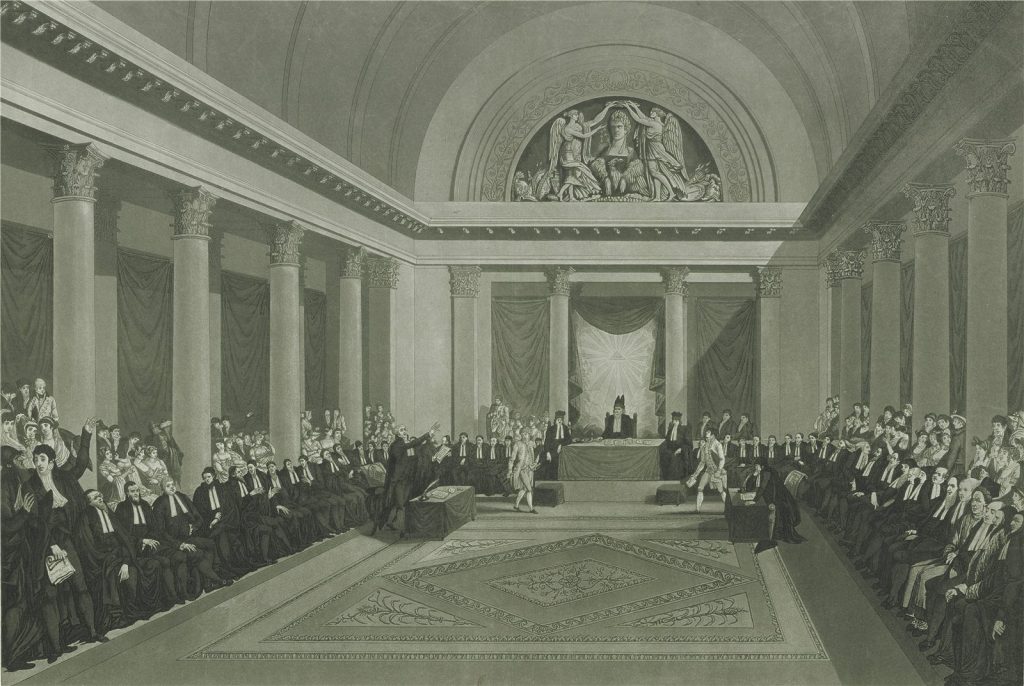
In the sessions of the French legislators, dangerous voices were heard. “There is no doubt that their religious peculiarities will disappear on their own,” declared one of them confidently, “from the sense of freedom and liberation. We must deny the Jews everything as a nation, and grant them everything as individuals. We must abolish the authority of their judges and subject them only to our courts. We must refuse to grant validity to Jewish religious law.”
Behind these words lay a comprehensive plan. The French spirit of “equality” sought to change traditional Jewish education, replace Jewish language and dress, and above all – abolish the independent status of the Torah and its institutions. This spirit, which first blew in France, began spreading rapidly throughout all of Europe, affecting one country after another.
On the stage of history then appeared a man who would change the face of Europe – Napoleon Bonaparte. The brilliant commander, who rose from simple soldier to Emperor of France, began an unprecedented campaign of conquest. One after another, the mighty armies of Europe fell before him. But in the summer of 5572 (1812), when he invaded Russia, Napoleon did not know he was facing an entirely different battle – a spiritual battle in which the great Chassidic leaders would stand against him, led by the Alter Rebbe, the Baal HaTanya.
This is a story of a clash between two worldviews: between the French vision of equality, which threatened to erase the unique Jewish identity, and the struggle to preserve the Mesores Yisrael Saba. A battle in which the Alter Rebbe stood at the spiritual front and decided the fate of the campaign in a wondrous way.
Much has been written on this fascinating subject from the Chabad perspective, even in this important platform. In the following article, we will present fascinating aspects and facts, those less known to the general public.
A Spiritual Battle Between the Tzaddikim of the Generation
When the French invasion of Russia began, the Alter Rebbe believed that if the Russian Tsar won, the Jews would be secure spiritually and morally. In contrast, if Napoleon won, heresy and lawlessness would increase. Therefore, the Rebbe wrote a letter to all the Jews in Russia and instructed them to assist the Russian government in every possible way – with money, labor, and whatever they had. He concluded his letter with the words: “And do not let your hearts be fearful and do not pay attention to the temporary victories of the enemy, for the complete victory will be on the side of the King of Russia.”
“Satan,” the Alter Rebbe called Napoleon, “who opposes the good with every opposition and whose entire chayus is to do only evil.” He referred to Napoleon’s despicable arrogance and described how his pure soul recoiled from that gentile who “attributes everything to his power and might… who in his pride and haughtiness mocks faith in G-d.” In his letter to Reb Moshe Meizlish, the Rebbe expressed concern that Napoleon’s victory would lead, G-d forbid, to a Jewish catastrophe: “If France’s hand prevails and heresy increases in Israel… not one will remain in his Judaism or his possessions.”
In contrast, in Tsar Alexander, the Alter Rebbe saw that he recognizes that Hashem is the One who enthrones kings and from Him comes the crown of kingship. Therefore, he preferred the Tsar’s government, despite its harsh decrees and constant discrimination against Jews. In those days, the Alter Rebbe would complain with enormous bitterness, recite Tehillim all day, and pray with all his heart and soul that G-d would strengthen His kindness and expel the evil, by having the French suffer defeat in war (in the words of the Mitteler Rebbe), and also helped physically to work for the Tsar’s victory.
As mentioned, not all opinions were equal regarding the Russia-France war. There were great Chassidic leaders who expressed their opinion contrary to the Alter Rebbe’s approach. Initially, three of the greatest Chassidic tzaddikim (according to what the tzaddik the “Minchas Elazar” of Munkacs wrote) – the Maggid of Kozhnitz, the Chozeh of Lublin, and at their head Rabbi Menachem Mendel of Rimanov – saw in this war an opportune moment for the Geula shleima. They davened to Hashem that Napoleon be Gog and Magog, and that he succeed in his war against Russia – and then Moshiach would come.
Thus, the three tzaddikim united in one position and supported Napoleon out of hope to hasten the keitz, and they were followed by all the great students of Rabbi Elimelech of Lizhensk.
Against them were other tzaddikim of the generation who feared that hastening the Geula might harm, G-d forbid, the Jewish people, and that they did not have the power to lead such a process. Rabbi Levi Yitzchok of Berditchev was of one opinion with the Alter Rebbe; and the holy Rabbi Naftali of Ropshitz, despite being a close friend and student of the holy Rebbe of Rimanov, also opposed Napoleon. According to stories of Chassidim, Rabbi Naftali even brought about a change in the Maggid of Kozhnitz’s opinion, and the incident went as follows:
On Yom Kippur 5573, before Musaf, the holy Rabbi Menachem Mendel of Rimanov turned to his outstanding student, Rabbi Naftali of Ropshitz, who was to serve as shliach tzibbur, and asked him to focus in his davening on Napoleon’s success. Rabbi Naftali, who strongly opposed Napoleon, was unable to fulfill his teacher’s request. Instead, he changed the seder ha’tefilla: in places where it is customary to sing – he wept, and in places designated for weeping – he sang.
On motzoei Yom Kippur, Rabbi Menachem Mendel expressed his deep displeasure with his student’s behavior, who had reversed the sidrei ha’tefilla against his will. “I have nothing more to do in this lowly world,” he declared in pain, “and I must pass away.”
Rabbi Naftali, who feared his teacher’s anger, hurried to leave immediately after Yom Kippur and traveled to Lublin, hoping to find support for his position. However, the Chozeh of Lublin told him that it was not his way to interfere in the matter and recommended he travel to Kozhnitz.
Rabbi Naftali arrived in Kozhnitz for Shabbos Parshas Yisro and on Friday night, when the Maggid of Kozhnitz reached the recitation of “Mizmor Shir L’Yom Ha’Shabbos,” he announced: “They say the French crossed from Moscow at Berezina, and we say ‘to destroy them forever and You are exalted forever, O Lord!’” The next day, at the Torah reading, when he reached the verse “Navol Tibol” (you will surely wither), he expounded: “Napoleon will fall!”
It is also told that when one of the senior Polish army officers passed through Kozhnitz, many townspeople went out, with the Maggid at their head, to greet him. When he asked if he would succeed in war with Napoleon’s help (against Russia), the Maggid answered in the negative.
The renowned Chassidus researcher, R’ Yitzchok Alfasi, raises the hypothesis that the tzaddikim of Poland initially received Napoleon’s appearance with great enthusiasm, but after some time changed their minds. Then only Rabbi Menachem Mendel of Rimanov remained in his enthusiasm, while the Chozeh retracted and was indifferent or opposed to Napoleon, and the Maggid of Kozhnitz, under the influence of Rabbi Naftali Tzvi of Ropshitz, became hostile toward him.
The Shofar Blowing That Decided the Battle
“On Erev Rosh Hashana,” relates the Mitteler Rebbe, “my father called me and said: ‘I am very distressed, my son, about the war in Mozaisk these days. May G-d grant it be for good, for the enemy is prevailing, and in my opinion he will even take Moscow.’ He wept profuse tears, and I too wept greatly and left him.” But on Rosh Hashana, a significant turning point occurred. “On Rosh Hashana he called us and told us words of joy and comfort: ‘Today I saw in my tefilla that a good change has occurred for the better, and ours has won! Although Napoleon will take Moscow, it will not last, and relief and salvation will stand for us, thus it was written Above today!’” Upon hearing these heavenly tidings, “we ate and drank very well, and we were joyful and glad of heart.”
The Rebbe related in the name of the Rebbe Rayatz about the details of the ancient Chassidic tradition regarding the ‘competition’ between the tzaddikim of the generation on Rosh Hashana over the war’s victory: On Rosh Hashana 5573, the lot was destined to fall in Heaven regarding who would have the war’s victory. The Alter Rebbe and one of the Polish tzaddikim knew that the first of them to blow the shofar would merit tilting the scales of heavenly judgment in his favor, and the side he supported would win.
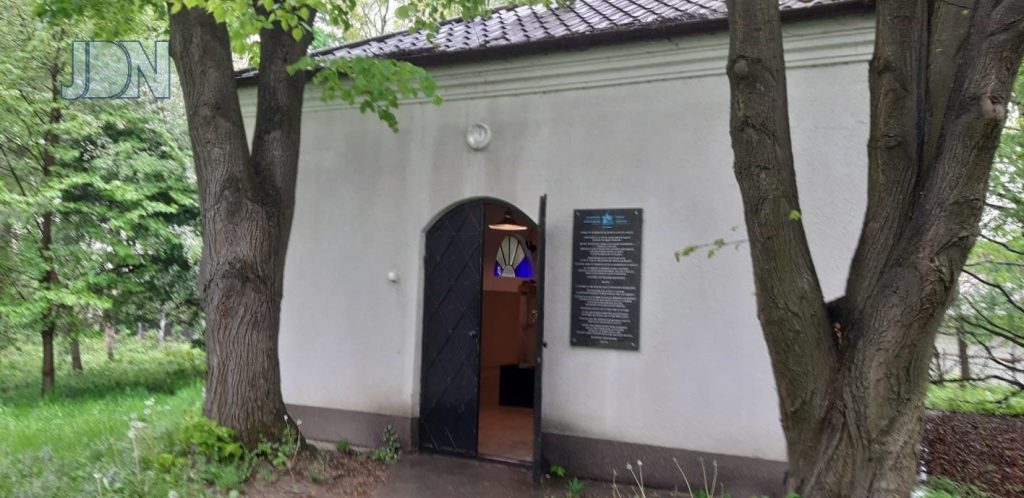
The moment dawn broke on Rosh Hashana, the Rebbe hurried to command his son, the Mitteler Rebbe, and a group of Chassidim who were present, to accompany him to the mikva. The other tzaddik also hurried in his davening to reach the shofar blowing as early as possible, but the Alter Rebbe, who understood the hour of danger, decided to advance the shofar blowing before the davening. Immediately after immersion, he began reciting “LaMenatzeiach Livnei Korach,” recited the brachos and blew the tekios. When the tzaddik who sided with Napoleon’s victory got up to blowing the shofar, he said: “The Litvak (as the Alter Rebbe was called, since he resided in Russia in the Lithuanian section) preceded me.” Thus the victory was already given into the hands of the Alter Rebbe, who supported the Tsar’s kingdom’s victory.
Who was that tzaddik? In one of his talks (Likkutei Diburim Vol. 4 p. 1428, Sefer HaSichos 5691 p. 174), the Rebbe Rayatz said it was the holy Rabbi Shlomo of Karlin. Interestingly, in a letter to Rabbi Shlomo Yosef Zevin, the Rebbe noted about what was written in his book (Sippurei Chassidim) about this incident regarding Rabbi Shlomo of Karlin that it is an error, since Rabbi Shlomo was martyred about twenty years earlier, and most likely it refers to the Maggid of Kozhnitz (Igros Kodesh of the Rebbe Vol. 15 p. 490), who only after Rabbi Naftali of Ropshitz came to him, as brought above, was convinced to cross over to the Alter Rebbe’s side.
In the book Beis Rebbi, another possibility is suggested, that this event occurred in the Russia-Poland war in the year 5552 (1792), in which the righteous leaders were also divided in their support.
On Shabbos Shuva, the Rebbe again said that Napoleon was destined to conquer Moscow, but there would be his downfall, “a fall from which there is none lower.” He revealed the route that Napoleon and his army would take in their flight from the Russians: “They will return through White Russia and not through Ukraine, and everything that happens in their path will be destroyed.”
The Alter Rebbe and his group continued to wander on the roads during the war, until 15 Kislev, when the Rebbe instructed them to drink l’chaim to the downfall of the enemy of the religion and faith of Israel, and said that today they chased him from Moscow. He grieved and wept over the condition of the Jews living in White Russia, who due to the French armies would be plundered and robbed of their remaining possessions.
On the Alter Rebbe’s Chag HaGeula, on Yud-Tes Kislev, the good news arrived about Napoleon’s defeat and flight, “and we were only joyful that everything was fulfilled, not a word or half a word fell,” wrote his son the Mitteler Rebbe.
On 8 Teves, the convoy arrived at the village of Piena, and the Rebbe immediately began to engage in helping the Jews of Russia, in places where the enemies had passed, to rebuild the ruins and provide for their livelihood.
The Alter Rebbe sought to sit in peace, but “due to the enormous bitterness in profound depth more than ever” he weakened and became very ill a short time after arriving in Piena, until within only five days from the beginning of his illness, on Chof-Dalet Teves, his soul ascended to the heavenly heights. “May his merit stand for us all the days, for he literally gave his life apparently, and to the wise and understanding one need not explain further,” wrote his son and successor, the Mitteler Rebbe. And in Beis Rebbi it is written that the Alter Rebbe said that the war took ten years from his life.
The ‘Commander’s’ End
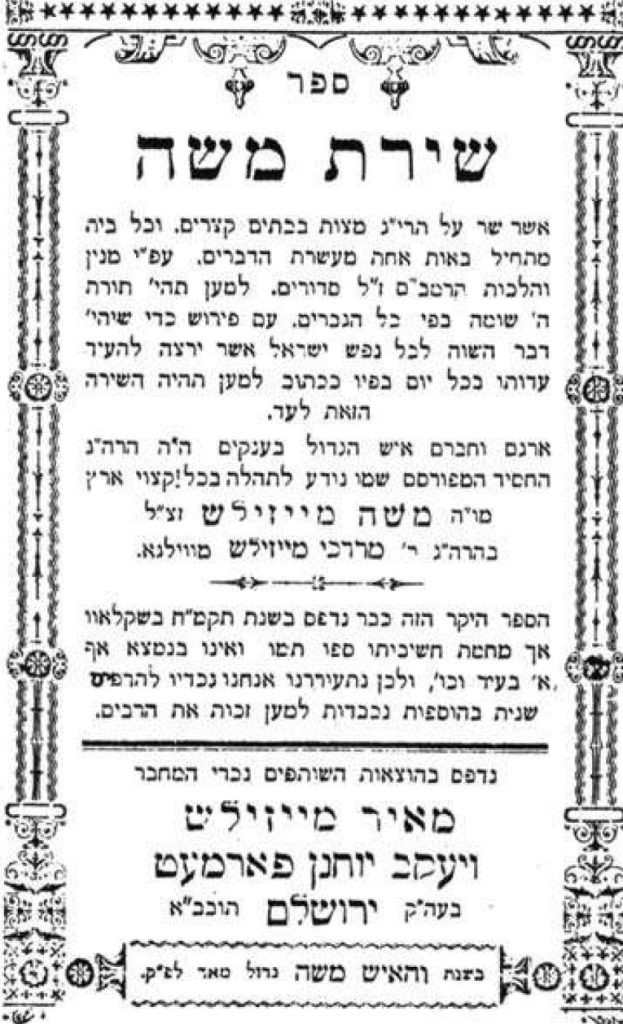
Napoleon’s campaigns to conquer the world’s nations came to an end in the year 5573 (1812-1813), in his war with Russia, where his downfall began at the hand of the Alter Rebbe, who put an end to his rule.
First he retreated from Moscow, and subsequently was forced to withdraw from all Polish territories under his control, which were annexed to Russia. As Napoleon’s failures multiplied, he voluntarily abdicated his kingship. The French agreed to exile him to the island of Elba where he stayed, and Louis XVIII ascended the throne.
In late winter of the year 5575 (211 years ago), Napoleon gathered about four hundred men, left the island, and set out toward France. In his journey he inflamed the masses and warned of the fear that the aristocrats would return to power and equality of rights would be canceled.
He reached Paris, and regained power. Surprisingly, his return aroused enormous fear among neighboring countries, who thought the chapter on Napoleon’s era had already been closed. They immediately surrounded France’s borders and again went to war against it. Several weeks later, Napoleon achieved a certain victory, but immediately suffered a decisive failure. He tried to flee to America but did not succeed, and the English captured him and exiled him to a small, isolated island – S. Helena, where he died. And thus the Alter Rebbe defeated him completely.
The Chassidic Spy’s Account
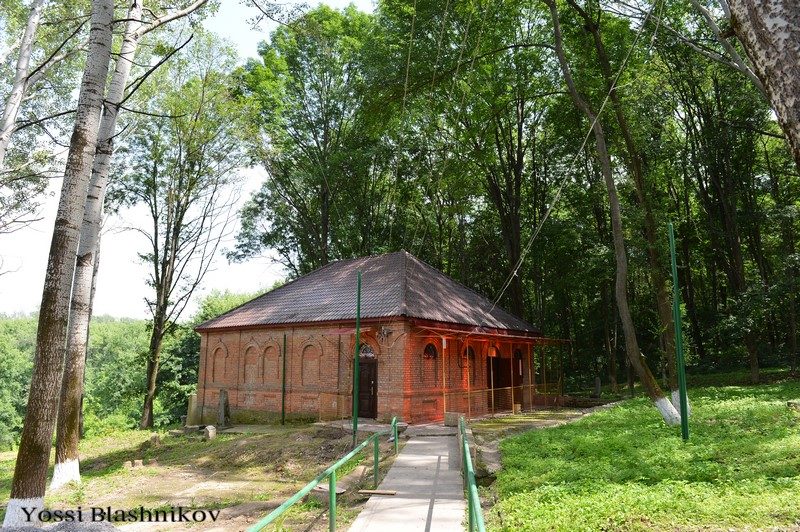
Beyond spiritual assistance for the campaign’s success in favor of Russia, the Alter Rebbe also helped physically, through the renowned Chassid, Reb Moshe Meizlish, who was among his faithful Chassidim. As a student of the Vilna Gaon, he became acquainted with Chassidus, and after several years when it was revealed that he was from ‘the Chassidic sect,’ the opponents persecuted him severely, and he was forced to flee.
During his stay in Germany, R’ Moshe Meizlish served as the Alter Rebbe’s trusted agent, transmitting to him information regarding Napoleon’s wars.
He had an acquaintance with the Russian Emperor due to being a great scholar and fluent in many languages, and during the war was sent to serve as a spy in the French army. But Napoleon suspected that R’ Moshe came to spy (see sidebar), and according to one version succeeded in convincing R’ Moshe that his conquest would be for the benefit of the Jews of the Russian Empire. R’ Moshe wrote about this to the Alter Rebbe, and on this came the Rebbe’s response about Napoleon’s deficiencies that was brought above.
R’ Moshe Meizlish himself described the espionage affair many years later, at age eighty, when he had already ascended to Eretz Yisrael and resided in Chevron, the holy city: “At the beginning of the war between the Emperor of Russia and Bonaparte, I was called to the Tsar’s house when I was then in Vilna [where R’ Moshe resided and was a leader of the Jewish community at that time], and he commanded me to do according to my understanding what I could to befriend Bonaparte until I had an opportunity to show and inform a trusted friend of mine of all his secrets in order to inform the Tsar. Hashem arranged for me that I was with Bonaparte during the war and he gave me a letter to his soldiers and requested that I bring him an answer, and I gave it to the Tsar to read, I did this twice.
“After the war came the time when the Tsar would pay me my wages according to the certificate I received from him that I had done much in the war’s aid, and I remembered the Mishna, ‘Do not make yourself known to the authorities,’ and I was nearly sixty years old. I vowed to cast aside all worldly matters and go to avodas ha’kodesh to the Holy Land and cast aside all wisdoms from upon me, and so I did.”
That is, after Napoleon’s defeat, R’ Moshe Meizlish was entitled to receive payment from the Russian government, but he waived this right.
Thus, at about age sixty, he ascended to Eretz Yisrael. Before this, he still managed to use his influence to prevent harm to the Alter Rebbe’s grave.
The Rebbetzin’s Letter to the Authorities
Several years ago, a letter was published from the wife of the Alter Rebbe, Rebbetzin Sterna, which was sent to the authorities after her great husband’s death (published in the journal Segula, Issue 4, Av 5770), in which she also mentions the aforementioned fact, that the Alter Rebbe also assisted in the technical aspect for the Russian Tsar’s victory and Napoleon’s defeat, and thus the Rebbetzin wrote:
To the honor of His Highness the Military Governor of the Belorussian Province, Commander of the Cavalry, Prince Alexander of Württemberg.
From the Jewess Sterna bas R’ Leib Shneurova, widow of Ober-Rabbi Zalman ben R’ Baruch Shneurov.
Written request.
In the year 1812, during the period of the enemy army’s invasion, my husband and our entire family suffered destruction and impoverishment, which I permit myself to explain below.
My late husband Shneurov resided in the town of Liadi, Babinovich district, and he owned five houses and expensive merchandise, etc.
First, military commanders used him to locate camping places for enemy armies, and due to his successes in this matter, he received a certificate of honor from Army Minister Nivirobsky.
Second, when the enemy approached the town of Liadi, my late husband, a loyal citizen of the Russian Empire who aspired to remain in his homeland, loaded onto twenty wagons – each harnessed to a pair of horses – all his property and merchandise, and of course his extended family, and set out on the road. He passed through various Russian cities, as evidenced by the travel certificate attached here.
In addition to the silk objects that were lost due to the battle in the city of Krasna, he also lost all his other property, and on his return journey he returned his soul to his Creator.
My only hope was that I would have a source of livelihood from the five houses in my possession in Liadi, but to my sorrow I found them burned by the enemy with all their contents, and I and my family are forced to wander from place to place.
The value of our property is estimated at sixty thousand rubles. This matter was described in my request to the ‘Association of Defenders of Those Harmed by the Enemy in 1812,’ and was confirmed by the marshal of Babinovich district and in the district court’s ruling.
May the honor of His Highness look upon the miserable fate of the wretched widow and the orphans crying for help, and honor the diligence of my late husband, famous for his spiritual heroism in generous faithfulness to the homeland, and also as an authority in our community.
May he be gracious, extend his protection, and offer his generous help for our property that was all stolen by the enemy, and present the aforementioned testimonies and my request to the ‘Association of Defenders of Those Harmed.’
The end of the letter is in the handwriting of the Mitteler Rebbe who writes:
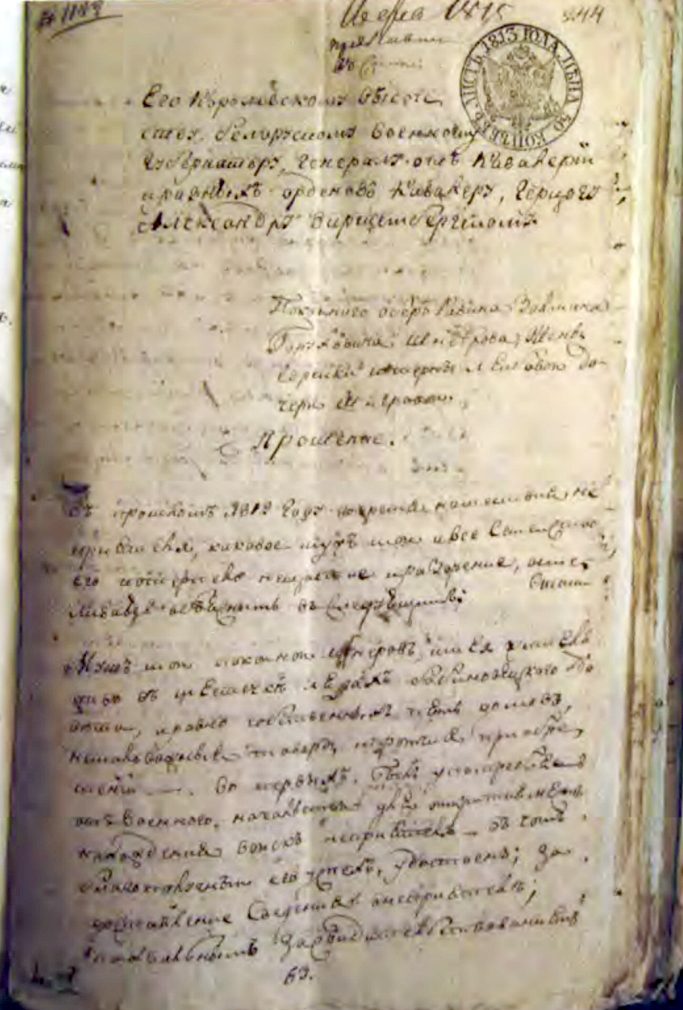
Since my mother does not know how to read and write, I, her son Dov Ber, rabbi of the city of Lubavitch, sign in her place in the Jewish language.
Statement of Dov Ber, son of my master and father the Gaon, our teacher Rabbi Shneur Zalman of blessed memory, may his soul rest in Eden, Shneurov, rabbi of Lubavitch and the district.
France Was Refined
In our generation, we merited the revelation of the Rebbe that now France has already been refined; in a sicha on Shabbos Parshas Vayeishev 5752, the Rebbe noted that indeed during the war the Alter Rebbe opposed France’s victory, fearing that its victory would lead to casting off the yoke and lawlessness. The Alter Rebbe’s prayers and actions caused Napoleon’s fall and the continued spread of Toras HaChassidus. But after many years of avoda by our Rebbeim, the situation changed from one extreme to the other, and now France has become a place that spreads Torah and mitzvos in a manner of ‘poratzta.’
This transformation occurred as a result of the avoda of our Rebbeim in the country of France, when in our generation this work was completed, until the country of France became a positive and redemptive place.
An expression of the transformation in the country of France is the niggun accepted by the Rebbe on Simchas Torah 5734, ‘La Marseillaise’ (the national anthem of France), sung with the words “HaAderes VeHaEmuna.” The singing of this tune by the Chassidim constitutes the sign of France’s transformation as preparation for the true and complete Geula.
* * *
Sources (besides those indicated in the body of the article): Darkei Chaim V’Shalom. Kovetz ‘Tziyon’ 4 (5690) p. 43. HaChassidus (in Hebrew translation, 5714) p. 91. B’Sadeh HaChassidus. Beis Rebbi. Kodesh Hilulim. Eser Orot. Igros Kodesh: The Alter Rebbe, the Mitteler Rebbe, the Rebbe Rayatz. Hisvaaduyos 5744. And more.
When Emperor Napoleon Burst into the Room…
The Rebbe Rayatz relates:
The well-known Chassid R’ Moshe Meizlish of Vilna – who was one of the younger members among the disciples of our master the Alter Rebbe – said to the renowned gaon and Chassid, Rabbi Yitzchok Aizik HaLevi of Homil: “The aleph of Chassidus saved me from actual death.”
“The Rebbe,” R’ Moshe told Rabbi Yitzchok Aizik, “taught us that the aleph of Chassidus is to utilize one’s natural traits in avoda, and that the beginning of one’s avoda should be to use the natural kochos – such as the nature of moach shalit al ha’lev (the mind ruling over the heart).
“This type of avoda,” R’ Moshe said, “the Rebbe told us, must begin in a natural, habitual way – to train oneself. And when Hashem helps and one learns the aleph of Chassidus by utilizing one’s natural traits in avoda, one then advances further.”
During Napoleon’s war, the Chassid, R’ Moshe was among those present at the French general headquarters, since he was educated, multilingual – speaking German, Russian, Polish, and French – and was a very wise man. The Alter Rebbe chose him to associate with the French officials until they would accept him into a position, and everything he learned he was to convey, in absolute secrecy, to the officers of the Russian army. After some time he found favor in the eyes of the senior officials and learned all their secrets.
R’ Moshe saved the weapons depot in Vilna from destruction, unlike what happened to the weapons depot in Švenčionys, by revealing to the depot officials that they should post a proper guard. Those who intended to set the depot on fire were caught.
“Once,” R’ Moshe recounted, “the officials of the French army command were sitting and arguing over the army’s movements and the arrangement of the flanks in the battle plan. The maps were spread out on the floor, and senior officers were studying the roads and routes, yet they had not reached a decision. The day of battle around the city of Vilna was set for the next day, or at the latest the day after, and time was very short.
“While the officials were still arguing, suddenly the door was flung open with great force, so much so that even the guard inside was startled and wanted to fire his pistol, because from the force with which the door opened everyone thought the enemy army had burst in to seize the general headquarters.
“But immediately the face of Emperor Napoleon appeared as he rushed in, speaking with a scowl and in a thunderous, angry voice, asking whether the order for arranging the flanks and evaluating the battle had already been given.
“‘And who is this foreign man,’” pointing at me, R’ Moshe relates, “‘standing here?’ And in an instant he approached me and said in French, ‘You are a Russian spy!’ He placed his hand on my heart to feel whether my heart would pound like one caught red-handed. At that moment the aleph of Chassidus stood by me to save me from death and in clear language I answered that the distinguished officials of the French emperor had taken me as an interpreter, since I was proficient in the languages required for their official duties.” (Based on Igros Kodesh of the Rebbe Rayatz, vol. 3, pp. 313–314.)
In the sefer HaChassidus by Rabbi Aharon Marcus, the story of R’ Moshe Meizlish’s conduct while spying at the French army headquarters appears differently (and in a sicha on the first day of Sukkos 5687, the Rebbe Rayatz told the story in a version similar to this), but with the theme of “the mind ruling over the heart”:
“As eyewitnesses who knew him personally related to me,” Marcus writes about R’ Moshe, “he fulfilled his role successfully, yet nevertheless narrowly escaped the noose. One evening he arrived with important information and was brought into Napoleon’s tent. The emperor was sprawled on the floor over the war map and deeply engrossed in it, allowing the Jew to stand at the threshold and carefully examine the drawing on the map. The Jew noticed a certain line that the emperor had engraved on the map and wished to etch it into his memory; to that end he scratched a mark with his thumb on the lead knob of his cane.
“This movement did not escape the eyes of the French commander, who suddenly sprang up, rushed to the man standing by the entrance, and placed his hand on his heart. The Chabad Chassid, whose mind was accustomed to rule over his heart with unbounded control, remained calm and composed.”
Marcus concludes the story with a unique ending: “With a piercing gaze that caused ministers to quake, Napoleon muttered: ‘You deserve to be shot, but it would be a pity for a fellow like you. Go – and do not return again.’”
Napoleon’s March
“When the Rebbe [the Alter Rebbe] left Liadi on the eve of Shabbos Mevorchim Elul 5572 (1812), because of Napoleon’s war, he instructed that they inform him which march the French army used when it crossed the Russian border at the Prussian crossing. When they brought the tune and played it before him, he said that it was a song of victory, entered a state of intense dveikus and said: ‘At last, our side will be victorious.’” (Sefer HaSichos 5703, p. 118, translated from Lashon HaKodesh)
Regarding this, the Rebbe MH’M added (at the second farbrengen of Shabbos Bereishis 5734):
“Since then this tune has been accepted and called by the name of the opponent, ‘Napoleon’s March’ – this niggun (of victory) expresses someone who seeks material benefit (as many do). Yet the Alter Rebbe was in great dveikus at the time he ‘adopted’ the niggun, meaning that this niggun was refined and elevated into holiness!”
Beis Moshiach #1491 • pp. 12-23
© 2026 Beis Moshiach Magazine. All rights reserved.
This article originally appeared in Beis Moshiach #1491. You are welcome to share it with friends and family by email or in print, provided that you do not change, add to or omit any part of it, you credit the author and Beis Moshiach, and you include a link to archive.bmoshiach.org (written out in full in printed copies).
To republish this article in a newspaper, magazine, book or website, please request permission in advance at [email protected].