Come Into the Teiva

Breakfast, carpool, dishes, work. Where exactly does davening fit?
In the stormy sea of troubles surrounding us from every side, our parsha throws us a life preserver—”Come into the teiva.” As is known, the Baal Shem Tov explains that “teiva” (ark) hints at the “teivos” (letters/words) of Torah and tefilla. In other words, a person should enter into the letters of Torah and tefilla, surround themselves with them, and thus be saved from the raging flood of this world’s troubles and upheavals.
Sounds wonderful, but in real life everything is so challenging… How many of us can say we manage to daven every single day, not to mention daven with kavana?
You get up in the morning, rushing to work, need to organize the kids, wake them, dress them, make sandwiches, scribble last-minute notes, hurry along the chronic dawdlers. And get each child to their own school. A daily race. And when it’s finally over… oh well, in another moment you’re starting your own workday, and tefilla, what becomes of it?
And even if you don’t work outside the home and you return home after all the children leave, who has time on an ordinary weekday to sink into tefilla full of kavana? Who isn’t overwhelmed by dishes, laundry, errands, urgent phone calls, and more and more? When is there time to daven?
Maybe on Shabbos? Even then, it’s not necessarily conducive. Maybe only if your time is truly your own, and your children have grown and no longer need your care, can you walk to the shul and daven there in peace.
But if you’re not there yet, then either the children happen to sleep in and you use every possible moment to catch up on the sleep that the baby took from you the night before, or they’re already up and you must supply them with food, activities, a trip to the playground, and everything else. As for tefilla, what becomes of it?
But must you really wait for the day when your tefilla can be perfect? Is there truly no value to a snatched tefilla, one said in the in-between moments?
The Obligation to Daven
The subject of tefilla can be divided into two parts: the halachic part, the question of a woman’s obligation in tefilla, and the inner part, the Chassidic explanation.
Halachically, according to the Alter Rebbe, a woman is obligated in Shacharis and Mincha. If her time is her own, she can daven the entire Shacharis. If she is pressed for time, the parts she is obligated in are: the Birchos HaShachar, the Korban Tamid, the Shema with the blessings of Emes V’yatziv and Go’al Yisrael, Shemone Esrei, Aleinu, and on Yom Tov and Chol HaMoed also Hallel and Musaf.
If you manage to daven at home, wonderful. But if you can only daven on your way to work, you may do so while walking, though it’s preferable to say the Amida in a place that allows concentration. That covers the halachic obligation.
The Essence of Tefilla
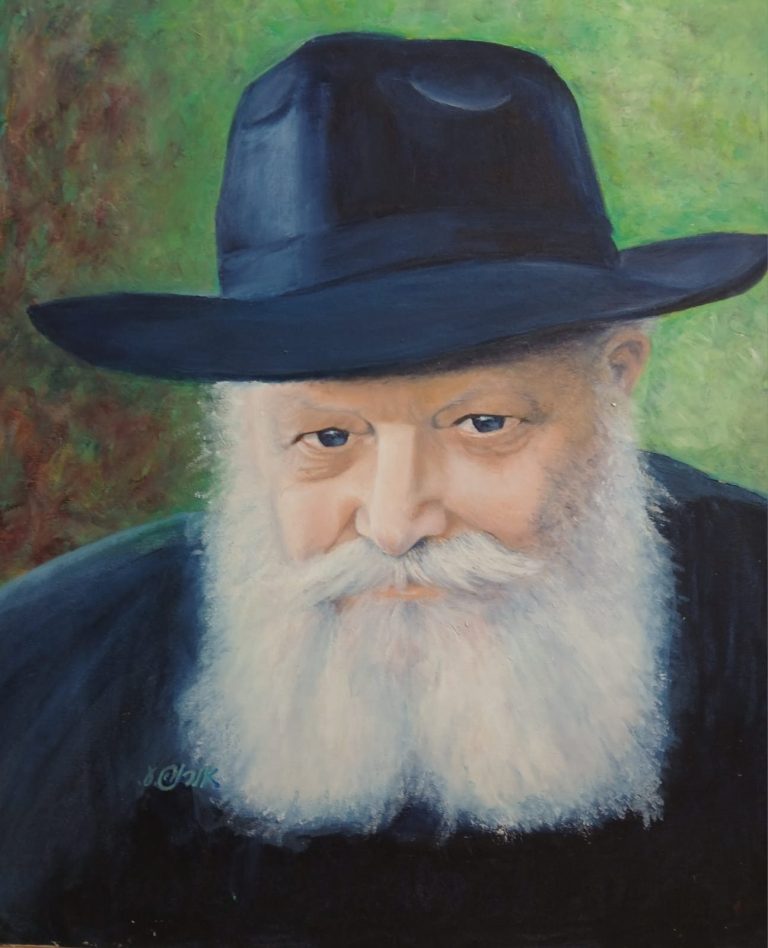
Beyond the halachic obligation there is the inner dimension. Even if you can’t focus in tefilla like the great Chassidim, contemplating every word after hours of deep Chassidic study, the Rebbe MH’M guides us to understand the meaning of tefilla, of “coming into the teiva” and connecting.
The first thing we do in the morning is say “Modeh Ani,” giving thanks to Hashem for returning our neshama. Then come the morning brachos in which we bless Hashem for things that seemingly already exist: “who releases the bound,” “who clothes the naked,” and so on. The Rebbe asks: but you already have clothes to wear, a closet full of them, so what is this bracha for? And so too with the other brachos, your eyes are already open, your body already upright… why do we have these brachos altogether?
The Rebbe explains that when a person contemplates deeply, they understand that the existence of the world is essentially nothing, and Hashem animates and brings it into being anew at every single moment. Therefore the fact that I had clothing to wear a moment ago teaches nothing about the next moment. As the Zohar relates, Rav Yeisa Sabba would daven to Hashem for his food even when the food was already set before him because at every moment Hashem brings the world into being from nothing, so the fact that the food is here right now doesn’t prove it will still be here the next moment. That depends on Hashem’s will to bring it into being again, and for that he davened.
And this, the Rebbe tells us, is the depth of “coming into the teiva.” When you surround yourself with the letters of Torah and tefilla, wrapping yourself in the understanding that true reality is Hashem, and everything else—all the busyness of this world and its affairs—is simply vanity of vanities, your entire outlook on the world changes. Kedusha and tefilla become the essence, and everything else becomes merely a means toward creating a dwelling place for Hashem in the lower worlds (Likkutei Sichos, vol. 1, pp. 5–7).
Finding the Time
When we reflect on the significance of tefilla, we will find the time to daven, just as we find time for all the “very important” things of this world. Let us recognize the importance of our tefilla, and treasure the moments when we turn to the Creator. Let us understand the depth of tefilla, the spiritual protection and the strength it grants us against all the flood-like troubles that trouble us without end. When you daven with this awareness, your entire day is different.
So even if you didn’t manage to say the whole tefilla, and even if you sometimes mumble the words with half-closed eyes, your kavana is beloved and desired before Hashem, and the strength you receive from Him to get through the day is immeasurable.
Sometimes one can daven straight from the heart, without any set text at all. Who better than we women know the power of tefilla at all times, especially the tefilla of a Jewish mother? There were women in previous generations who couldn’t read or write, who didn’t know the words of the tefillos, but their entire day was tefilla. From the moment they rose in the morning until they lay down to sleep, they spoke with Hashem in their own language at every step, asking and pleading over every matter big and small, living with the understanding that one cannot get through this world without tefilla, and that everything comes from Him.
We too can use every free moment for tefilla, for saying a perek of Tehillim, or simply for talking with Hashem, asking Him for what we need. And who lacks something to daven for? Children, health, livelihood, success in all sorts of matters great and small, and more and more. In this way we surround ourselves all day long with the letters of Torah and tefilla, with the understanding that this is the true reality and the only way to get through our day-to-day life in peace and with Hashem’s help, may our own “Noach’s teiva” travel upon calm waters despite the raging flood outside.
I’ll end with an amazing story about the power of sincere prayer from the heart (heard from Rabbi Bussi):
There was a woman who was on a routine drive when she suddenly got stuck in traffic. It turned out the jam had formed because of a car accident further down the road. It was a serious accident, and it took a long time before the road reopened to traffic. Sitting idle in her car, she decided that instead of grumbling and complaining about the wasted time, she would dedicate those “wasted” minutes to reciting chapters of Tehillim for the recovery of those injured in the accident. So for a long hour she sat and said Tehillim, directing her tefilla toward the healing of the injured until the road reopened and she could continue on her way.
One ordinary afternoon, a long time after that day, which had already faded from her memory, there was a knock at her door. Standing there was a woman she didn’t recognize, holding a bouquet of flowers, who excitedly told her she had come to say thank you. Thank you for what?
The woman explained that she had been among those injured in that very accident. Her condition had been very serious, and she had reached a state of clinical death. Her soul hovered above her body, and she watched the medical team trying to resuscitate her. Suddenly, she saw letters of Tehillim rising up from a car further down the road. These letters rose into the air and reached her, and slowly, slowly, they pulled her back down and returned her soul to her body.
When she woke up in the hospital, she remembered the license plate number of the car from which those holy letters had come. It took her time to track down the owner of the car, and now she had come to thank her for saving her life.
The words of tefilla and the chapters of Tehillim that that woman had said so simply, without knowing exactly for whom she was directing them, did their work and brought a woman back to the land of the living!
So let us not give up on our tefillos, the ones in the siddur and the spontaneous ones said throughout the day, and may they redeem us and all around us from the raging floodwaters, until the teiva comes to rest on a safe shore, with the coming of Moshiach, miyad mamosh.
(The halachic information in this article was taken from teshuvos by the rabbanim of Machon Halacha Chabad.)
Beis Moshiach #1526 • ה׳ חשון תשפ״ז • pp. 48-50
© 2026 Beis Moshiach Magazine. All rights reserved.
This article originally appeared in Beis Moshiach #1526. You are welcome to share it with friends and family by email or in print, provided that you do not change, add to or omit any part of it, you credit the author and Beis Moshiach, and you include a link to archive.bmoshiach.org (written out in full in printed copies).
To republish this article in a newspaper, magazine, book or website, please request permission in advance at [email protected].