The Connection Between Sukkos and Tzivos Hashem
Military tents and weapons not like what you thought… In order to win in battle, the children of Tzivos Hashem have to use every tool. A sicha that the Rebbe said to children:
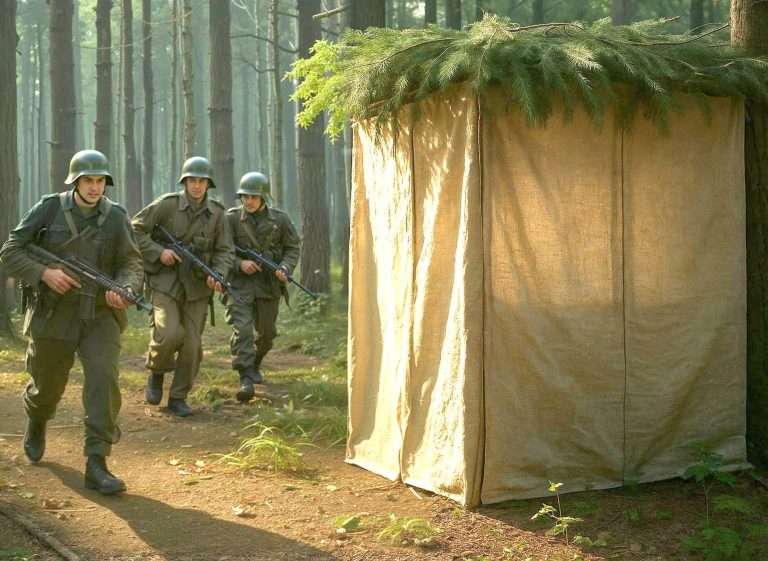
The mitzvos of Sukkos are very much connected to Tzivos Hashem. First of all, the mitzva of sukka has a special connection to the army since it is the practice of every army to set up special tents and huts for its soldiers on the field of battle.
This is the way it was when the Jewish people, Tzivos Hashem, left Mitzrayim, as it says, “For in sukkos, I placed the Jewish people.” As a result, we were given the mitzva to sit in a sukka so that we know and remember that we dwelt in sukkos when we left Mitzrayim.
We sit in the simcha with joy and chayus as is fitting for “Zman Simchaseinu,” and every Jew recites the “shehechiyanu” bracha. This bracha expresses joy and pride that we belong to Tzivos Hashem.
Second, the mitzva of lulav is connected to Tzivos Hashem. The custom in the world is that when an army is victorious in war, its soldiers go out and demonstrate their strength on the streets of the city by displaying their weapons.
So too, on Sukkos, after the avoda of teshuva during the Aseres Yemei Teshuva in general and on Yom Kippur in particular, when the Jewish people fought the yetzer hara, the Jewish people go forth with lulavim and esrogim and demonstrate their victory to the world.
Just like in an actual army there are various types of weapons like rifles, bullets, bayonets etc. so too, in Tzivos Hashem, the spiritual army, there are weapons:
The esrog is like a grenade. The lulav is like a gun. The hadas is like a knife, etc. Since the Jewish people are confident in their victory in battle, they are confident that through teshuva and vidui, Hashem forgave them on Yom Kippur and said, “and Your nation are all righteous, they will inherit the land forever, they are the branch of My planting, the work of My hands, in which I take pride” – they go forth and show everyone their weapons which are the dalet minim, and with great joy they say “shehechiyanu.”
For this reason, we take the dalet minim in the sukka which represents the military hut, because by shaking the dalet minim we are proclaiming to the world that “These trust in chariots and these in horses, but we we mention the name of Hashem Elokeinu.”
However, there is a difference between actual weapons of war that cause harm and bloodshed and weapons used in the war against the yetzer hara, which we fight with Torah study and fulfillment of mitzvos, especially with the mitzva of the dalet minim.
The real victory in the battle with the yetzer hara is when even the yetzer hara itself is happy that we didn’t listen to it and its enticements. For the real mission of the yetzer hara is not to trip us up, chas v’shalom, but just to try and reveal the powers hidden within each soldier, every boy and girl who belongs to the “wise and discerning nation” and does not cave in to the temptations of the yetzer hara.
Going out with the dalet minim, which announces the fact that “we mention the name of Hashem,” and doing so with great joy that is expressed in the shehechiyanu bracha, this causes it to be a blessed day, a blessed holiday, and a chag somayach.
This draws down blessing and success and joy for the entire year, “and all its types of produce for good,” so that every year is a blessed year for the parents of the child and his relatives, with health and parnassa and delight.
This also brings success in successfully eradicating the yetzer hara and, furthermore, in bringing the yetzer hara to a state where it is grateful that we did not listen to it and it is happy about this, and from now on, it stops confusing us, seeing that that it cannot accomplish anything.
This leads to peace of mind from the confusions of the yetzer hara, and this peace of mind enables an addition in diligence in Torah study and the fulfillment of mitzvos, and in joy.
(Based on a sicha of Sukkos 5744)
Salute #1478 • pp. 2-3
© 2026 Beis Moshiach Magazine. All rights reserved.
This article originally appeared in Beis Moshiach #1478. You are welcome to share it with friends and family by email or in print, provided that you do not change, add to or omit any part of it, you credit the author and Beis Moshiach, and you include a link to archive.bmoshiach.org (written out in full in printed copies).
To republish this article in a newspaper, magazine, book or website, please request permission in advance at [email protected].