Sukkos: The Divine Swaddle
A letter from the Rebbe Melech HaMoshiach in the first year of his nesius that was penned as an introduction to the Kuntres of Maamarim of the Rebbe Rayatz that was published for Sukkos 5711 (1950)

י״א תשרי תשפ״ו·October 3, 2025

A letter from the Rebbe Melech HaMoshiach in the first year of his nesius that was penned as an introduction to the Kuntres of Maamarim of the Rebbe Rayatz that was published for Sukkos 5711 (1950)

The final portion of the Rebbe’s introduction to Kuntres Sukkos 5711 ( the final pargaraph of “The Rebbe’s Opinion” in this issue) where he names all the Chassidishe Ushpizin, and for the first time adds the Rebbe Rayatz:
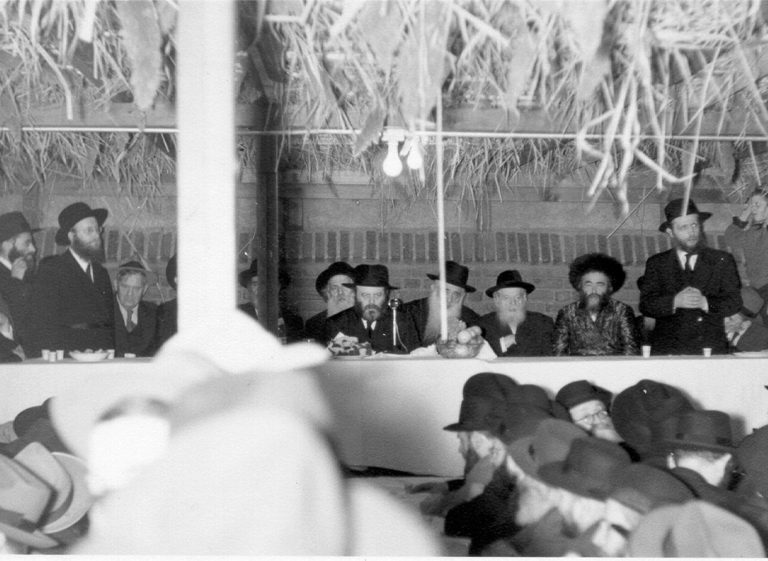
After the Rebbe accepted the nesius, a small sukka was built for him in the area between 770 and 784, next to the public sukka. The story of the Rebbe’s sukka over the years, in photos.
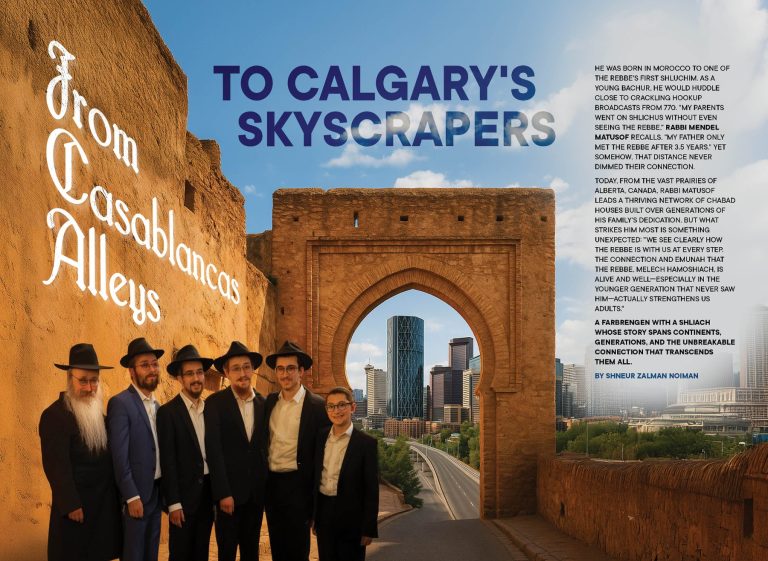
He was born in Morocco to one of the Rebbe’s first shluchim. As a young bachur, he would huddle close to crackling hookup broadcasts from 770. “My parents went on shlichus without even seeing the Rebbe,” Rabbi Mendel Matusof recalls. “My father only met the Rebbe after 3.5 years.” Yet somehow, that distance never dimmed their connection. Today, from the vast prairies of Alberta, Canada, Rabbi…
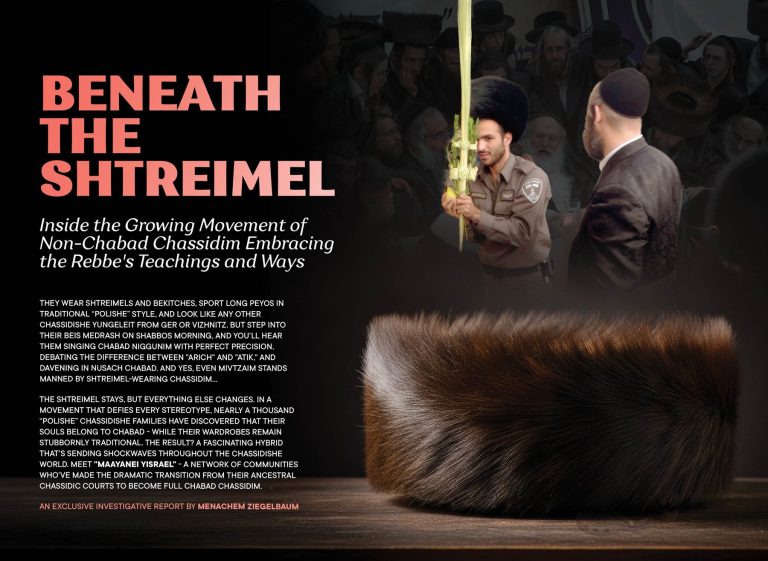
They wear shtreimels and bekitches, sport long peyos in traditional “Polishe” style, and look like any other Chassidishe yungeleit from Ger or Vizhnitz. But step into their beis medrash on Shabbos morning, and you’ll hear them singing Chabad niggunim with perfect precision, debating the difference between “Arich” and “Atik,” and davening in Nusach Chabad. And yes, even mivtzaim stands manned by…
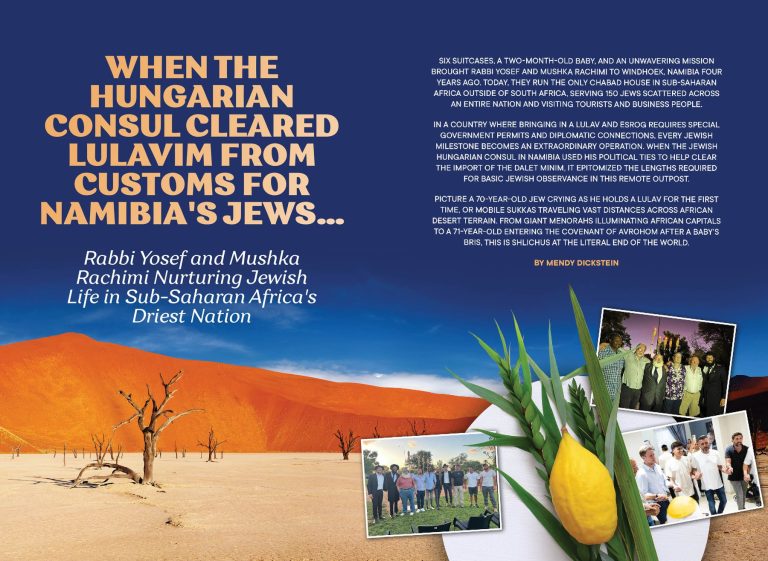
Six suitcases, a two-month-old baby, and an unwavering mission brought Rabbi Yosef and Mushka Rachimi to Windhoek, Namibia four years ago. Today, they run the only Chabad House in Sub-Saharan Africa outside of South Africa, serving 150 Jews scattered across an entire nation and visiting tourists and business people. In a country where bringing in a lulav and esrog requires special government…
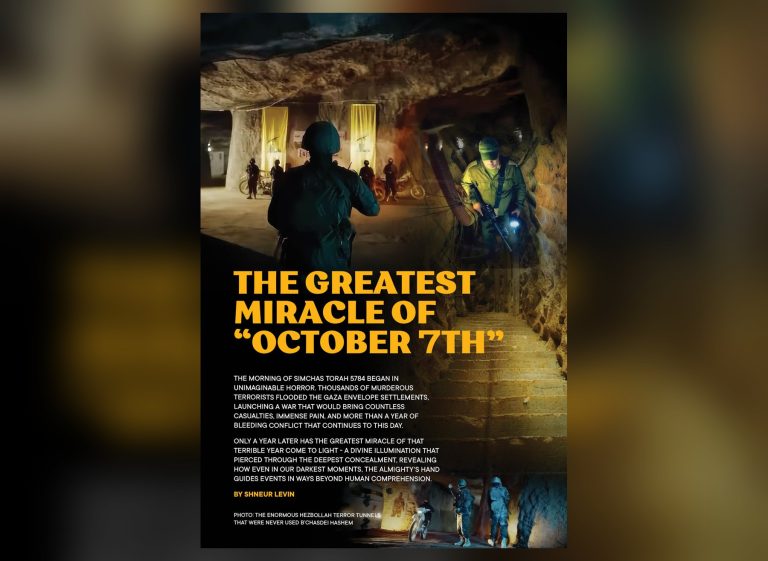
The morning of Simchas Torah 5784 began in unimaginable horror. Thousands of murderous terrorists flooded the Gaza envelope settlements, launching a war that would bring countless casualties, immense pain, and more than a year of bleeding conflict that continues to this day. Only a year later has the greatest miracle of that terrible year come to light – a Divine illumination that pierced through…
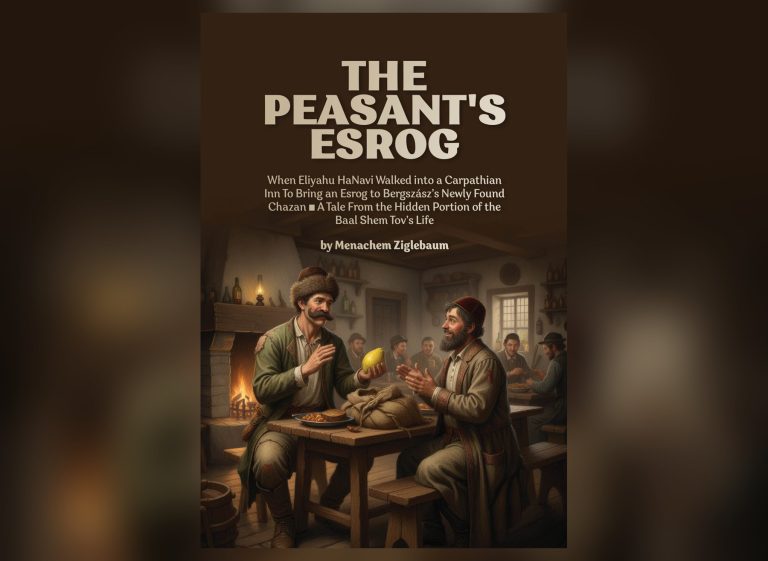
When Eliyahu HaNavi walked into a Carpathian inn to bring an esrog to Bergszász’s newly found chazan. A tale from the hidden portion of the Baal Shem Tov’s life.

In honor of Simchas Torah, we present a fourth installment of practical Q&As on halachos of Krias HaTorah (previous installments appeared in Issues #1462-1464). These halachos are from AskTheRav.com, under the auspices of the Crown Heights Beis Don, and written or reviewed by HaRav Yosef Yeshaya Braun, Mara D’Asra and member of the Crown Heights Beis Din

Towards the end of Parshas Haazinu, the Torah tells of G-d’s command to Moshe Rabeinu: “And the L-rd spoke to Moshe b’etzem ha’yom ha’zeh – on that very day, saying: Go up to this mountain of Avarim, Mount Nevo, and die on the mountain” (Haazinu 32:48-50). Moshe is supposed to go up to Mount Nevo, to see the Promised Land from afar, and then… to depart from the world. Why is it important for…