What The World Says & L’chatchila Ariber
A Free translation of excerpts of the farbrengen of Shabbos Parshas Tazria-Metzora, 3 Iyar 5747 (1987)

ז׳ אייר תשפ״ו·April 24, 2026

A Free translation of excerpts of the farbrengen of Shabbos Parshas Tazria-Metzora, 3 Iyar 5747 (1987)

One year, the mazkir Rabbi Leibel Groner, wrote the following message for the Rebbe: “Rabbi Levi Bistritsky, sheyichye, of Tzfas, requested to convey that today, the 13th of Iyar, most of Anash, sheyichyu, of Tzfas visited the beis ha’chaim [cemetery], recited Tehillim, and gave tzedaka in honor of the yahrtzeit of the 13th of Iyar.”

On Rosh Chodesh Kislev 5751, at the end of 1990, two prominent Israeli public figures stood before the Rebbe at the Sunday Dollar Distribution, separated by barely half an hour. To Ron Nachman, mayor of Ariel, the Rebbe spoke in concrete security terms – Iran and Syria, he warned, were more dangerous than Saddam Hussein. Then Binyamin Netanyahu stepped forward. The Rebbe said nothing about…

The statistics are staggering: in Nairobi’s Jewish community of some five hundred families, the intermarriage rate hovers around 80%. For most people, that number signals a lost cause. For Rabbi Levi Notik, it signals exactly why he’s there.

A collection of halachic Q&A’s on the topic of Kedusha. The Q&A’s are from AskTheRav.com and Halacha2Go, under the auspices of HaRav Yosef Yeshaya Braun, Mara D’Asra and member of the Crown Heights Beis Din

I am writing this column while still under the powerful influence of Seudas Moshiach. Seudas Moshiach is a time when we literally make Moshiach part of who we are and we strengthen our commitment to follow the Rebbe’s “direct path to bring Moshiach” which is learning about concepts of Moshiach. In the farbrengen on Tazria-Metzora 5751, exactly 35 years ago, the Rebbe made clear that we should…

Stories of our Rebbeim and their Chassidim highlighting concepts we learn in the daily Tanya. In this installment – Chapter 46

At the beginning of this week’s parsha, Acharei Mos-Kedoshim, the Torah describes the service of the Kohen Gadol on Yom Kippur. Among the many duties placed upon the Kohen Gadol on that day, there is one small, seemingly marginal detail that is usually pushed aside – almost completely overlooked.
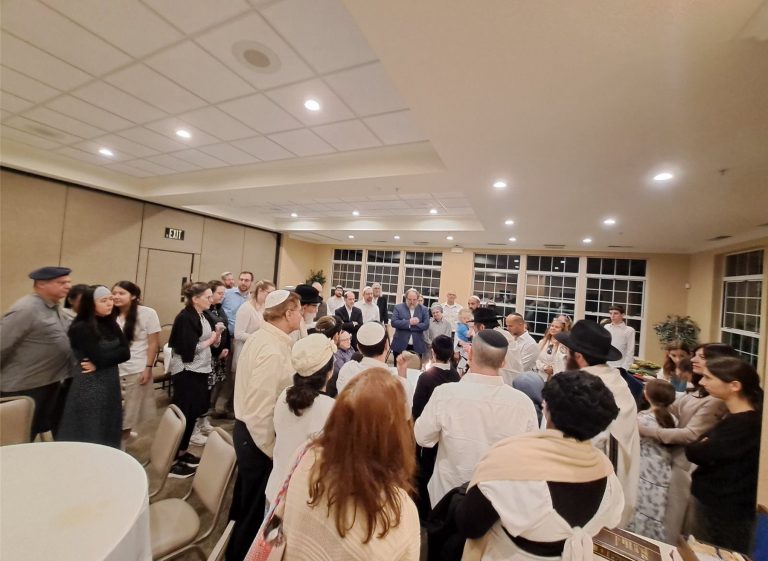
Shoshana Lifshitz is a shlucha in Cincinnati, Ohio. She’s very warm, open, down-to-earth, energetic, and is known for her byword, ‘take the first step.’

When Rivka and her husband Rabbi Tomer Rotem set out for Quito with four suitcases, mishloach manos, and a Sefer Torah, they weren’t just starting a new Chabad House – they were completing a picture. Ecuador was the last country in South America without a shliach. An entire continent was waiting. “The Chassidishe Vibe” sat down with Rivka Rotem to hear the story of a shlichus built from nothing…

The baby’s conceptual world develops slowly. He seems to understand so little.

Our story takes place in the kingdom of Yehuda during the reign of Yoshiyahu HaMelech – the king who fought tirelessly against the avoda zara that had spread throughout the Holy Land. Despite his best efforts, a sizable portion of the nation continued to worship idols in secret.
When a car with diplomatic plates follows them, Leibele’s family joins the Kitovs under heavy security. After Sholi chases away suspicious-looking people in the yard by clanging pots and pans, he surprises everyone by saying he would join Mendy and Leibele at school, for the first time.
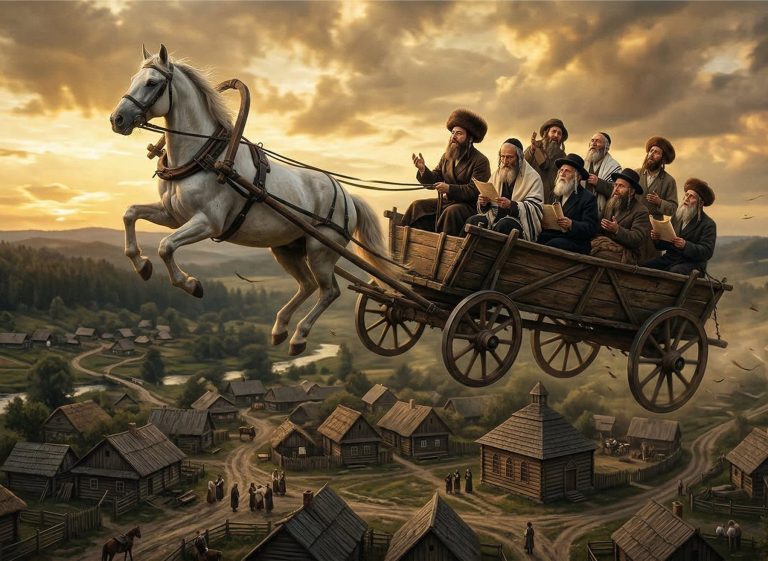
The Life of Reb Menachem Mendel of Vitebsk, for his Yom Hilula on The Second Day of Rosh Chodesh Iyar
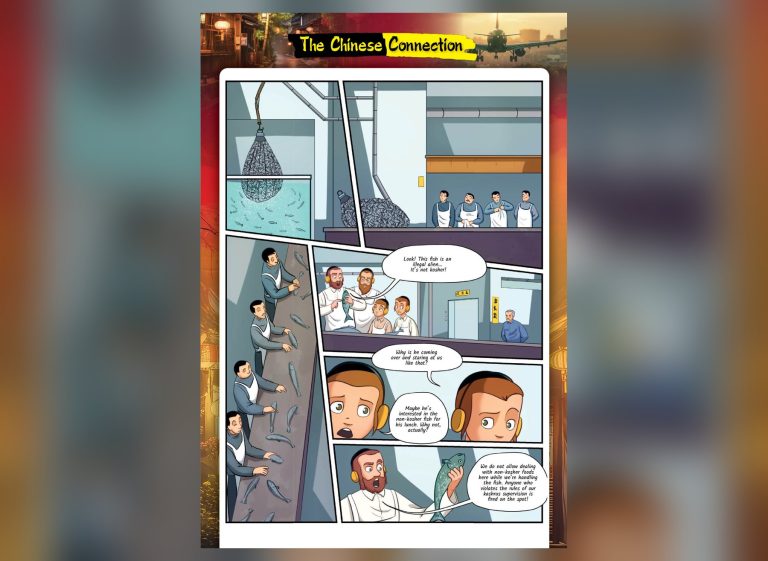
Chapter 26 of the The Chinese Connection comic.