Gefilte Fish in Kenya

The statistics are staggering: in Nairobi’s Jewish community of some five hundred families, the intermarriage rate hovers around 80%. For most people, that number signals a lost cause. For Rabbi Levi Notik, it signals exactly why he’s there.
The Notik family’s journey didn’t begin on an airplane – it began with an old aspiration waiting for the right moment. “From the very first moment after our wedding, we knew we wanted to go on a shlichus,” says Rabbi Levi Notik. “But there was a period when we weren’t sure we could handle all the challenges of being shluchim. In the early years after our marriage, we decided to stay in Eretz Yisrael – but we kept the possibility of going on shlichus open.
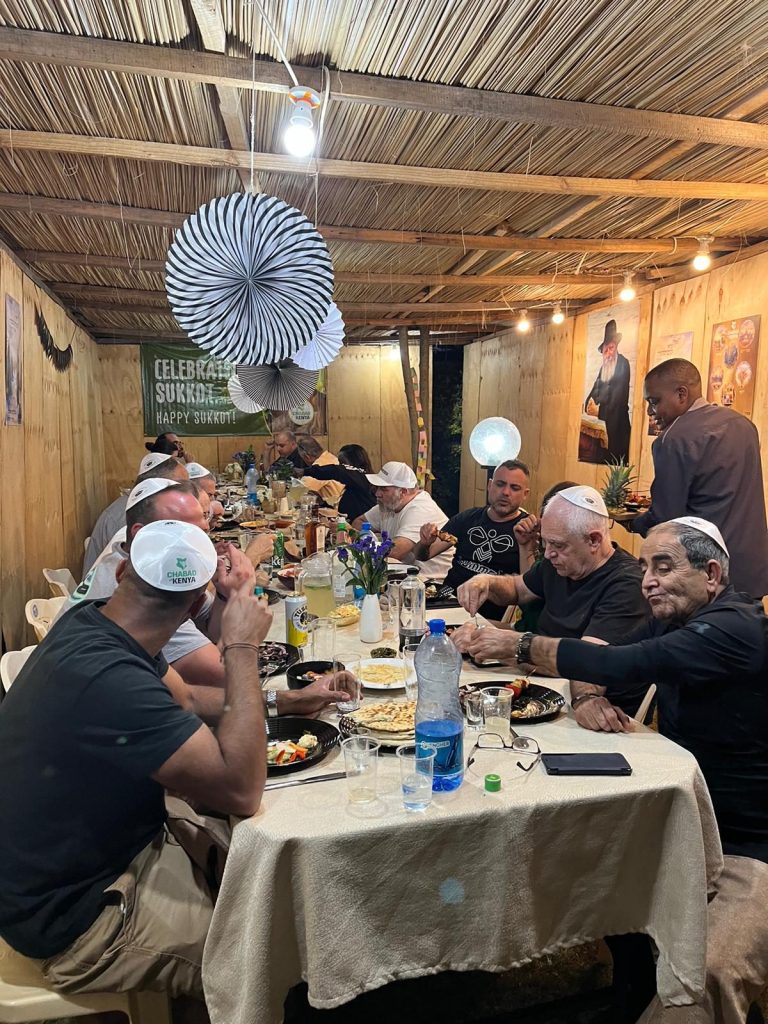
“I knew Kenya well from the time my brother, Rabbi Shmulik, was there on shlichus until he was forced to leave following a robbery that he and his family experienced. In the years after my brother was no longer there, I would go to Kenya because of my business that had developed in Africa, and I would often stay there for several Shabbosos. Over time I met more Jews who were thirsting for Yiddishkeit and for a home that would unite the community. In Nairobi alone there are hundreds of Jewish families; this is the highest concentration of Jews in East Africa.”
His wife Chaya Mushka completed her studies and “We decided that now we wanted to do something more meaningful, and we deliberated about going on shlichus in Kenya. We wrote to the Rebbe with all our deliberations and concerns, and we merited receiving a targeted response: ‘When one goes on shlichus, one goes with kabbolas ol – without making a firm decision as to how long that kabbolas ol continues; but a day will come and we will see that life is much better even materially.’ The Rebbe also added that he wished every Jew would utilize one hundred percent of the strength within him, which can change the lives of thousands of Jews.”
The final sign came the very next day: “When my wife came home from school, she told me that that very day the principal had called her in to ask whether she wanted to continue as a teacher the following year. She told her no – since we were planning to go on shlichus in Kenya. The next day we began to organize ourselves, and after three or four months, we set out.”
The Challenges of the Shlichus: Between Kashrus and Security
Landing in Kenya made it immediately clear to the couple that their lives were about to completely change. “You can understand on your own that there are no basic kosher products in the stores here,” says Rabbi Levi Notik about the reality. “No milk, no tuna, not even ketchup. What is available costs a great deal. For example: paprika that costs six shekels in Israel costs thirty here, and so on. We import almost everything from Israel, the US, or France. Quite a few people who come here understand that this is Africa and they offer their help bringing kosher products. There are also Chassidishe businessmen from the US who come here for their business. You can see how Chassidus has an impact on a person who also cares for others.”
The security situation is equally complex and challenging. “Since the outbreak of the ‘Iron Swords’ war, we have tightened our safety protocols. No one enters here without prior coordination and presentation of a passport. Other Chabad Houses are less aware of the danger, but in my opinion this is how things need to be run. There was also a period when we received instructions from the Ministry of Defense to place 24/7 security around the Chabad House. The cost of something like that is, of course, very high.”
Alongside the physical security, there is the spiritual challenge of loneliness. “There is no organized Jewish life in Kenya whatsoever. When we went to Israel one summer, my son pointed at a Chassid he saw on the street and said, ‘He looks Jewish to me – he’s fair-skinned and walking around with a hat and a suit’… The nearest shliach to us is an hour’s drive away.”
And the infrastructure? “Sometimes there are power outages, or you open the tap and sewage water comes out. I recall that on Erev Rosh Hashana, twenty minutes before candle-lighting, with eighty guests in the Chabad House who had come to celebrate with us – sewage water started flowing from the tap. We immediately ordered a tanker truck with 300–400 liters of mineral water, and we had to verify that none of the food had been contaminated with the sewage water. Boruch Hashem, during Yom Tov the regular water returned, and we overcame the situation.
“There have also been challenging power outages. Several times the electricity went out Friday night, and when we woke up in the morning we discovered all the food had spoiled. But our situation is relatively fine compared to other countries in Africa,” says R’ Notik with his inexhaustible optimism.
The Gefilte Fish That Changed Lives
On one of the toughest fronts of the shlichus, the Notik family faces alarming intermarriage statistics. “The local community numbers about five hundred Jewish families. The rate of intermarriage here is estimated at around 80%. The subject of intermarriage is one of the things we have to confront again and again.”
One of the things that bothered him most, when he heard about the possibility of going to Kenya, was when people said to him: ‘What’s happening there is appalling – but there’s nothing to be done.’ But he thought to himself optimistically, ‘I’m certain it can be stopped.’
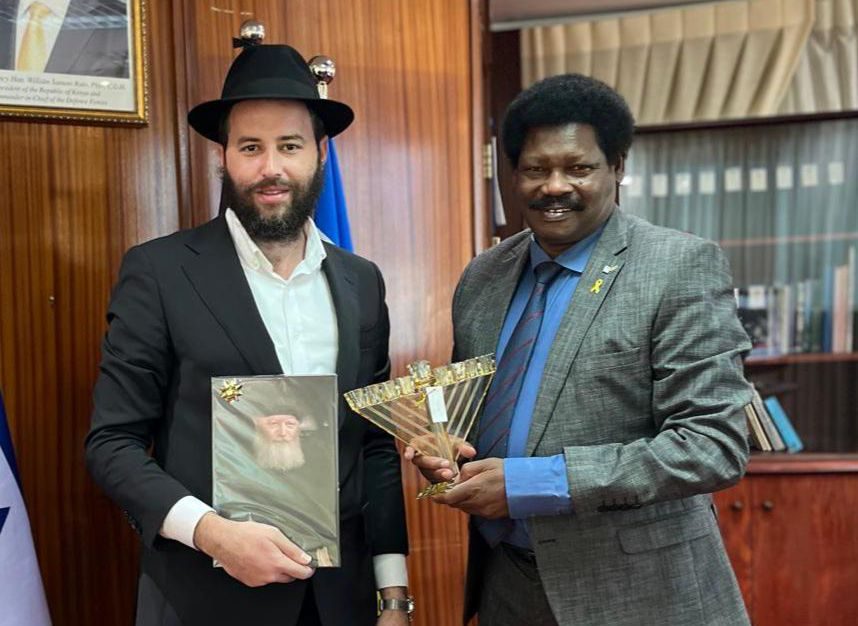
“We talk about the topic quite a lot, including in classes. The subject requires great sensitivity because nearly all of the regular participants are married to non-Jewish women. But what has changed in the past two years is that today they are already willing to admit the consequences of their actions, and they say openly: ‘My child is not Jewish; we won’t be able to make him a bar mitzva.’
“I have not seen a single Jew – including those who define themselves as atheists – who is not troubled in his heart by the fact that his son is not Jewish. I know a Jew who married a non-Jewish woman; his 20-year-old son went to convert, but I’m not sure that’s a solution – most likely he’ll come back to Kenya and also marry a non-Jewish woman. This is a topic that surrounds us from every direction – at every event and activity.
“Boruch Hashem, we can say today that we are already seeing beautiful results.”
When asked to share a story that illustrates those “beautiful results,” he tells of the gefilte fish that changed lives: “Once, an older Jewish man called me. He was a former security professional whose life had brought him to Kenya. He’d heard that a Chabad House had opened here and wanted me to sell him ‘gefilte fish.’ I told him that I had brought jars with me from Israel because I know how important it is to Ashkenazi Jews, and that he was welcome to come as a guest for a Shabbos meal. He told me that since he was married to a non-Jewish woman, he couldn’t come – but he’d send someone to pick it up. I explained that if he didn’t come in person, I wouldn’t give him gefilte fish. He told me he had no problem coming, but he was married to a non-Jewish woman. I told him, ‘Even though you’re married to a non-Jewish woman, you can come to the Chabad House.’
“He did come. And afterward he came again to the Chabad House, participated in a Torah class, and after two or three months said he wanted to buy tefillin rather than having me suggest it every time we met. I made sure to get him tefillin and also brought him a Shema reading card. He was offended and said to me, ‘Do I look like a child to you? I’m 75 years old – sit with me and teach me the entire order of the tefiila.’ I sat with him and taught him from Korbanos to the end of the davening, with index cards showing when to stand, when to sit, and so on. After a while I asked whether he still puts on tefillin every day. He said not every day, but at least 4–5 times a week he goes into his office and prays the entire tefilla there and says Tehillim, and it takes him 45 minutes.”
From the Supermarket to the Shores of Mombasa
Life in Kenya brings many encounters with hashgacha pratis. Rabbi Notik shares several such moments:
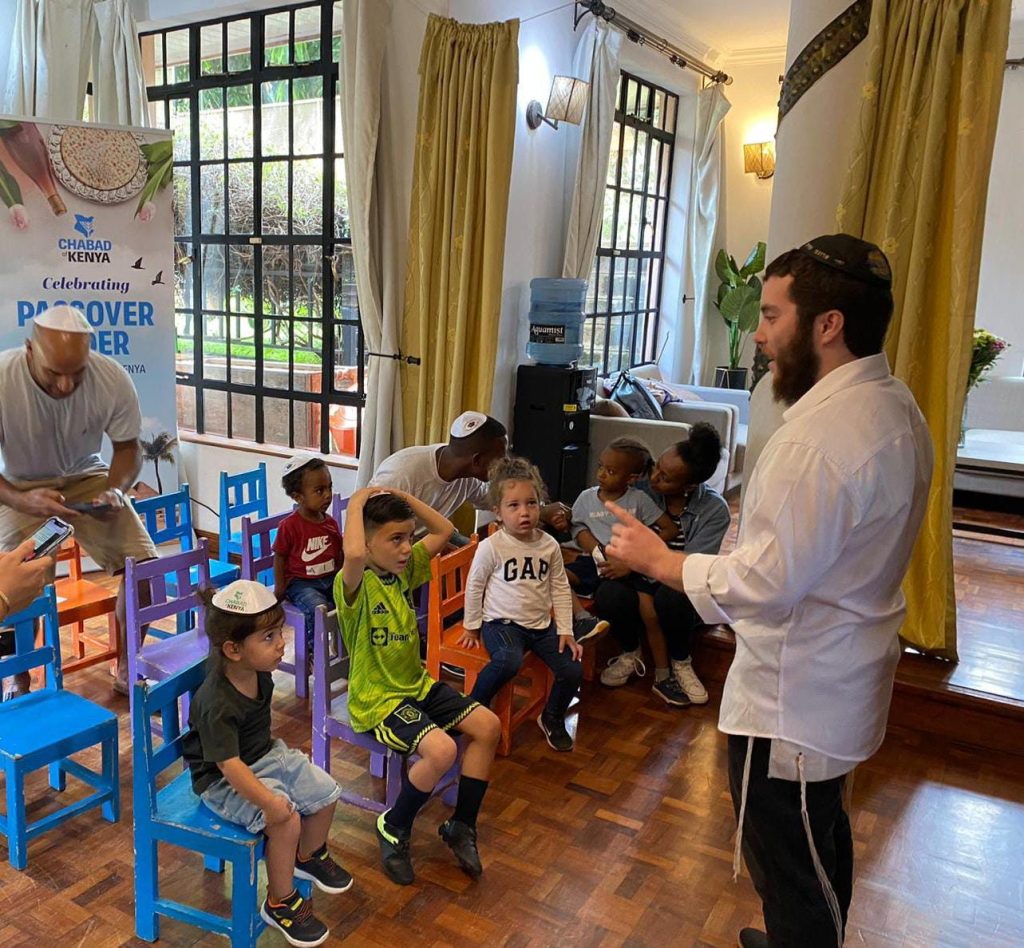
“On Erev Pesach, a young man called me who seemed far removed from religious observance. He said he wanted to pick up matzos for himself and five of his friends. Of course, I brought him shmura matza and square matzos to cover all of Pesach. I naturally also invited them to the public Seder at the Chabad House, but he said they couldn’t come since they were working that evening – so they’d take the matzos and conduct a Seder by themselves according to halacha. I said no problem, and I’d also bring them an extra package of matzos so that when they came home from work they could eat matzos.
“I offered him to put on tefillin, and he told me he was 32 and had never put on tefillin – but he had no objection. I was surprised, because usually you have to work hard to convince someone like that. I asked him how it was possible that he’d never put on tefillin until now. He answered that he grew up in a certain state in the US, in a Jewish family far removed from anything connected to Torah and mitzvos. The only place he’d perhaps seen tefillin was on the internet.
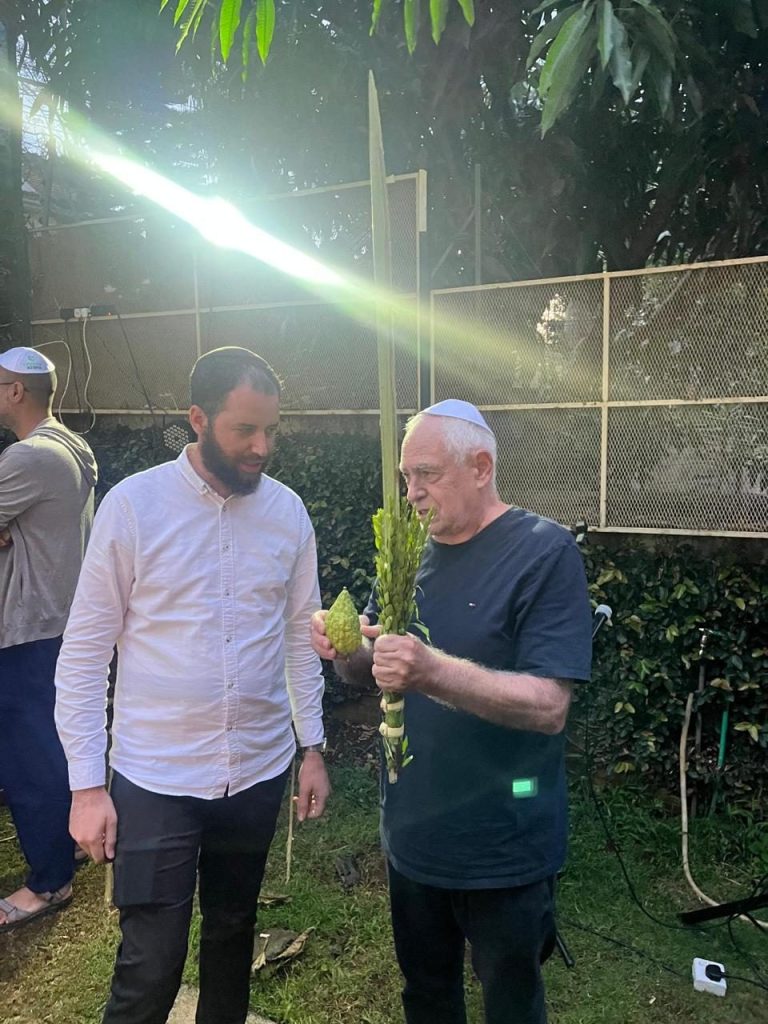
“He came to our shul, and we made a bar mitzva for him. Afterward he updated me that he had eaten the matzos I brought him at the Seder.”
R’ Notik knows how widespread the intermarriage problem is, and it genuinely disturbs him: “When we arrived here, I met a young Belgian Jewish man who has a Kenyan girlfriend. The two had begun talking about the possibility of marriage.
“From the beginning of my time here, we’ve been on good terms; today we even have a Tanya chavrusa that has lasted more than a year and a half. One day he came to me and said he understood there was a problem with marrying a Kenyan woman, but it didn’t bother him personally, and he would probably marry her. I told him that if it truly didn’t bother him, he wouldn’t have come to me to talk about it. I explained at length that this wasn’t good for him personally – not only because the Torah says so – but because I personally care about him.
“Afterward I saw that the Rebbe speaks about the need to speak to a person from a place of personal concern. After two hours of conversation, I was surprised to hear him decide not to marry her. But since he had already been with her for quite some time, he felt uncomfortable telling her himself that they were separating – so he asked me to explain the complexity of the situation to her myself. I told him that if she asked for a solution, we could offer her conversion, but ideally that’s not the first approach.
“I explained the situation to her and she sobbed. She asked what the solution was. I answered that she could undergo conversion, but she needed to think about it seriously, and I elaborated on the matter of accepting the yoke of mitzvos. Despite everything, she declared that she wanted to convert. We decided that even though we don’t generally deal with conversions, we would help them.
“We began a conversion process, and she studied with my wife every week. Before the chagim, she went to Israel to do a ‘Maayanot’ course in Chassidus and halacha. Today both of them observe Shabbos and keep kosher – a truly observant family. When she returns from Israel, they will separate until the wedding k’das Moshe v’Yisrael.
“Last week a young man called and said he wanted to talk to me. I asked if he was here with a girlfriend, and he said that he had met ‘the love of his life’ here. I told him that right now he thinks she’s the love of his life, but it’s not that simple. I explained that his children would not be Jewish, and so on. He told me that actually, ever since he’s been with her, he has begun keeping Shabbos.
“I suggested that I wanted to sit with him for a conversation to present him with an additional perspective on the matter. He said he very much appreciated that, and said that he had grown up until the age of 25 in one of the large Chassidic courts in New York – and therefore understood the importance of hearing an additional perspective.
“I told him that since my wife was about to give birth, I couldn’t invite him just then, as my schedule could change in an instant – but he was certainly welcome to talk after the birth.
“Two or three days later he called and told me that he had thought a great deal about what we’d discussed, and that for now he was not going to continue strengthening the relationship. He was definitely waiting to speak with me, since marrying a non-Jewish woman was not such a simple matter…”
Tefillin Half an Hour Before Sunset
Encounters with Jews of the African continent include stories crossing national borders:
“One day a Jewish man, over six feet tall, covered in tattoos, one of them even written in Yiddish, called me. He sounded warm toward Judaism, and said he wanted to come to the Chabad House to say ‘l’chaim’ with me. He did come to say l’chaim and put on tefillin.
“His partner also joined the meeting – she appeared to be of Arab background. I asked her about her origins and she told me ‘from Iran.’ This was after the outbreak of war after October 7. Naturally I became alert and asked her, ‘What’s your life story?’ She told me that she was half-Israeli. Her mother – an Israeli – had traveled to India after finishing university, where she met an Iranian man also traveling there, and they decided to marry. She called her parents to tell them. Her parents didn’t quite know how to digest the fact that their daughter had met a Muslim from Iran and was moving to live with him in Iran (this was before the radical revolution in Iran).
“Later she was born, and since she decided to visit Israel, she could no longer return to Iran. She remembered some signs of Jewish identity from her parents’ home – for example, how her mother would light two candles every Friday evening, and throughout Shabbos would refrain from doing laundry.
“The moment I understood she was Jewish, my attitude toward her changed, of course,” says R’ Notik, and you can hear his wave of relief as if he had just discovered her Jewishness anew.
And here is another story from the shores of East Africa:
“One of the times we were on our way to visit Eretz Yisrael, we stopped in Mombasa – a coastal city located about six hours’ drive from us. There is a Jew there who runs a business, and I had helped him a lot with the kashrus of his business. He very much requested that I come to visit. I thought to myself, if I’m already in the area, I’ll use it as an opportunity for mivtzaim.
“I hired a driver, and for several hours I made rounds to various places. The driver knows this Jew and where he likes to sit with his friends. He took me to a kiosk near the coastal area where I found him with two of his friends – also Jews. The moment I stepped out of the car, they asked me, ‘How can we help you?’ I said simply that I had come especially to meet them. They replied that this was not an appropriate place for religious people, and they were uncomfortable having me walk around there. ‘If the place is so spiritually lowly, let’s put on tefillin,’ I told them. At first they refused, but after a long conversation – half an hour before sunset – they agreed, after many long years of not having done so.”
Daily Activity and Saving Neshamos
“Because the community here isn’t very large, we can help everyone personally – whether through learning one-on-one, activities with children, home visits, and whatever is needed.”
The situation in Kenya, far from any Jewish center in the world, is not always simple, as R’ Notik relates about one particularly striking case of saving a person’s life:
“A few months after we arrived on shlichus, a man called me and said that he had lived and worked here for decades as part of an Israeli company. Because his family had remained behind in Israel, it had fallen apart. He decided to continue living in Kenya even after the factory that employed him closed, but his personal situation deteriorated until he was reduced to a crust of bread. He was living in a hut; he sent me photos of himself from the past when he appeared dignified and full of life, and now he had become a skeleton. His mental state was not good either.
“Although we had never met in person, since he lived ten hours’ drive from us – I would occasionally send him various packages including food baskets, and holiday packages. From time to time I urged him to return to Israel, where they would be better able to help him, but he held back for his own reasons.
“A few months ago he called me and said he agreed that the time had come to return to Israel. I offered to help with all matters related to his travel difficulties. Since he had been here for decades, he had the status of an illegal resident, and if he tried to leave he would be arrested. Through the embassy we arranged a waiver of the illegal residency, and the Israeli Embassy official even came to the airport to make sure he wasn’t stopped. We bought him a plane ticket, and boruch Hashem, he returned to Israel. We found him a place to stay for a few weeks, and since then he has been trying to recover and rehabilitate himself.”
William’s story is another testament to the warm bond formed between the shliach and the Jews of Kenya:
“Once I walked into a supermarket and saw an elderly man in unstable health, trembling all over, with a foreign caregiver by his side. When he saw me, he became very moved and greeted me warmly with ‘Shalom Aleichem.’ I asked him, ‘Who are you and what are you doing here?’ He introduced himself – an elderly Jew without a wife or children; his name was William.
“Following that meeting, we made sure he came to us every Shabbos, and we brought him soup with a straw since his hands trembled so severely he could not eat otherwise.
“Then he stopped coming. He lived in a hotel in a not particularly safe area, as that neighborhood is cheaper. I thought that perhaps he had passed away in the hotel, but I didn’t know exactly which hotel he was in. On the other hand, when I sent him a message, there were two blue check marks on WhatsApp. I asked everyone I knew who knew William whether they knew what had happened to him, but everyone answered that they had no idea.
“After four months, someone told me they’d seen him walking down the street. I breathed a sigh of relief and told myself that at least he was alive.
“A year later he sent a message in the Chabad House WhatsApp group: ‘How are you, Rabbi?’ He shared that he had been hospitalized due to kidney failure, and that hardly any of his friends had come to visit him. I gave him my number and told him that when he was hospitalized, he should make sure to update me.
“About two months later he was hospitalized again and updated me as to the location of the medical center where he was staying. At the next shiur I asked each of the participants to take on a good resolution to go visit William. Of course, I also went. It was on Erev Rosh Hashana; later more people from the community came to visit him. It affected him for the better. He understood that he had a home. During the hospitalization I brought him tefillin, and he began putting them on regularly.”
“These are cases – two among many – of truly saving souls.”
Besuras HaGeula and the Vision for the Future
Even in a country so far away, the shliach does not forget the true mission – speaking with people about Geula and Moshiach. “I always connect it to the Rebbe, and explain to people that our entire purpose is to prepare the world for the coming of Moshiach,” he explains.
From what I understood, people there aren’t particularly preoccupied with the questions of Moshiach and Geula…
Indeed, the people here are very far from the Jewish world. Most of the time we’re busy explaining to them the gravity of intermarriage. But yes – even people like these feel a thirst to hear more about Moshiach, especially since the outbreak of the ‘Iron Swords’ war. They ask me again and again when Moshiach will finally come.
What are your future plans for the shlichus?
I wrote to the Rebbe about purchasing land for a Chabad House, and the Rebbe wrote back that we should go ahead in the same manner as Nachshon ben Aminadav who jumped into the waters – and when one does that, one discovers that all the challenges one imagined appear far smaller than one feared. B’ezras Hashem, we are going to purchase land where we will build a Jewish center that will house a shul, a mikva, a kindergarten, and guest rooms. All of this will of course expand our activities and illuminate all of Kenya with Jewish light.”
Beis Moshiach #1502 • pp. 22-30
© 2026 Beis Moshiach Magazine. All rights reserved.
This article originally appeared in Beis Moshiach #1502. You are welcome to share it with friends and family by email or in print, provided that you do not change, add to or omit any part of it, you credit the author and Beis Moshiach, and you include a link to archive.bmoshiach.org (written out in full in printed copies).
To republish this article in a newspaper, magazine, book or website, please request permission in advance at [email protected].