“My Man Was There”
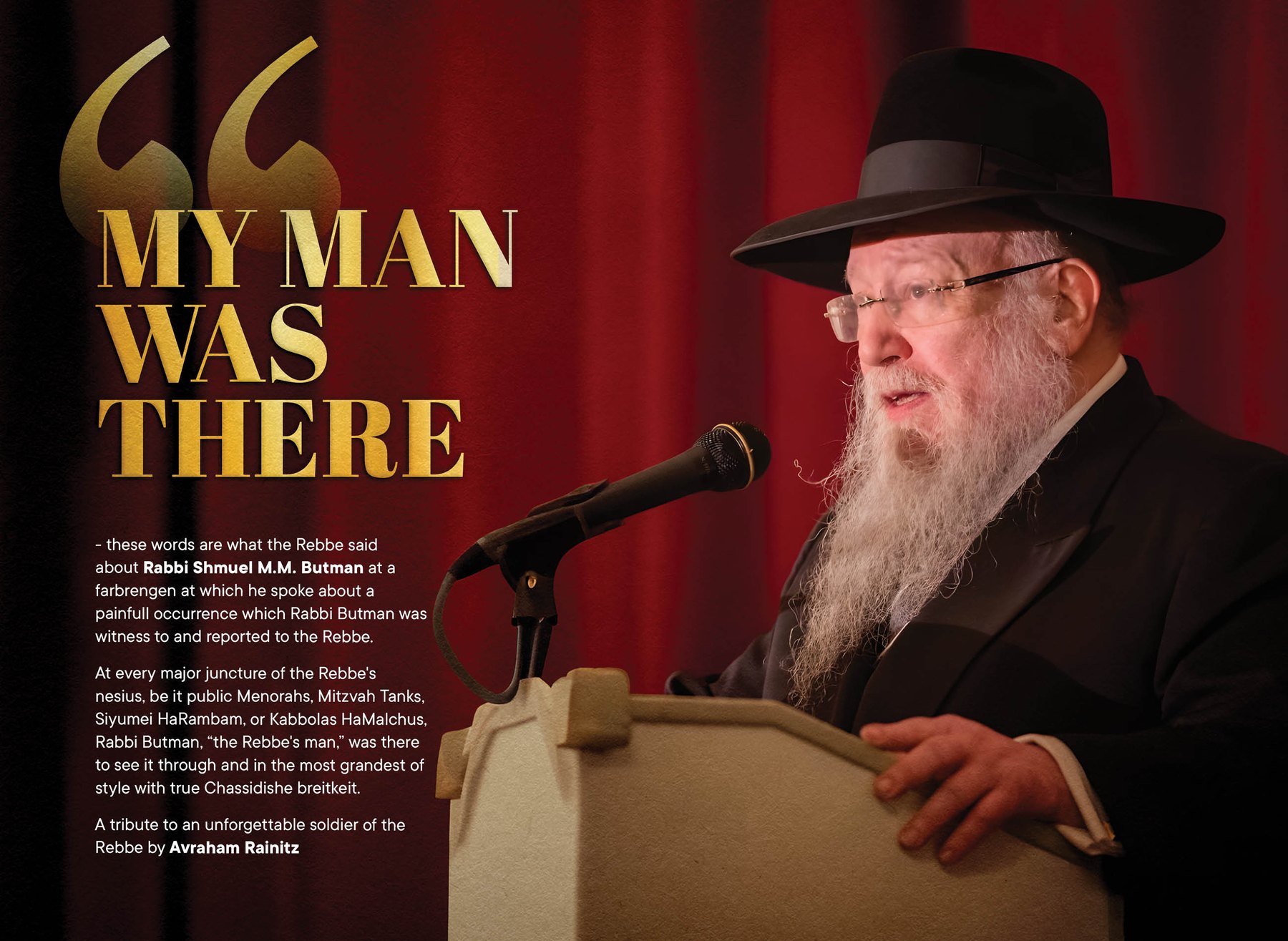
A Tribute To Rabbi Shmuel M.M. Butman
“My man was there” – these words are what the Rebbe said about Rabbi Shmuel M.M. Butman at a farbrengen at which he spoke about a painful occurrence which Rabbi Butman was witness to and reported to the Rebbe. At every major juncture of the Rebbe’s nesius, be it public Menorahs, Mitzvah Tanks, Siyumei HaRambam, or Kabbolas HaMalchus, Rabbi Butman, “the Rebbe’s man,” was there to see it through and in the most grandest of style with true Chassidishe breitkeit. A tribute to an unforgettable soldier of the Rebbe
There was thunderous applause at the end of Prime Minister Shimon Peres’ speech and dozens of wealthy Jews, public opinion leaders in the United States, stood up. Only one person, Rabbi Shmuel Butman, remained seated. He had joined the group as a guest of honor. He remained seated to protest what the prime minister said in his speech, against, “the Rebbe of Lubavitch who sits in Brooklyn and speaks against the actions of the government.”
Right after the speech, he went over and retrieved the prime minister’s notes. That same day, he sent them to the Rebbe’s secretariat.
At the farbrengen the following Shabbos, the Rebbe quoted what Shimon Peres said and spoke about it sharply. He said, “How do I know what was said there? I had meiner a mentch (my man) there who gave me an accurate report…”
On another occasion, in a letter that the Rebbe sent to one of the supporters of Tzeirei Agudas Chabad (Lubavitch Youth Organization), the Rebbe said he was pleased to hear about him, “from our esteemed, mutual friend, Rabbi Shmuel Butman.”
Indeed, throughout his life, R’ Butman was the Rebbe’s man in a variety of venues and as one of those who came to console the family put it: If you review all of the Rebbe’s campaigns in the last sixty years, you will find R’ Butman – either responsible for the project or taking a significant role in realizing the Rebbe’s wishes.
With R’ Butman’s passing on 16 Tammuz, we lost a key person who devoted his life to spreading Yiddishkeit and Chassidus in accordance with the Rebbe’s wishes.
R’ Butman, known as “Reb Mulle,” was a multi-faceted personality and played a leading role in building up Chabad outreach in the United States. He combined deep devotion to the Rebbe’s inyanim and extraordinary capability for making things happen, bridging the old generation of Chabad Chassidim and the young generation of Chabad shluchim around the world.
Roots And Childhood
R’ Butman was born on 24 Shevat 5703, in the middle of World War II, to an illustrious Chabad family. His father, Rabbi Shneur Zalman of Nevel was a distinguished member of Anash, and his mother, Mrs. Yehudis Butman, was the daughter of Rabbi Menachem Mendel Schneerson, a son-after-son of Rabbi Boruch Sholom, the son of the Tzemach Tzedek, cousin of the gaon and mekubal, Rabbi Levi Yitzchok Schneerson, father of the Rebbe.
R’ Butman’s earliest childhood years was a series of travails, when his family had to wander the Soviet Union. At a certain point, the family arrived in Samarkand where many Chabad Chassidim had gone and they ran an underground cheder and yeshiva.
Despite the enormous difficulties, his father made sure his children learned Torah even when this entailed danger to life.
First Encounter With The Rebbe
In 5706, the Butman family escaped the Soviet Union along with many other Chabad Chassidim. They crossed the border using forged Polish passports and arrived in DP camps in Austria. From there, they went to France a few months later where they were hosted by their uncle, the Chassid, Rabbi Shneur Zalman Schneerson.
In 5707, while still a little boy, he met the Rebbe for the first time. This was when the Rebbe went to Paris to meet his mother, Rebbetzin Chana, who had just left Russia. The Rebbe stayed in Paris for a few months which included Pesach and Shavuos.
In an interview with Beis Moshiach, R’ Butman described the first encounter:
“We arrived in Paris on Sunday, 2 Nissan. That day, the Rebbe came, as usual, to visit his mother. When he saw my father from the distance, he approached with a luminous countenance and said smilingly, ‘You must be R’ Zalman Butman.’ My father responded in kind, ‘You must be the Rebbe’s son-in-law.’ The Rebbe smiled broadly at this.” Thus began a special period in the life of the Butman family.
It was a golden opportunity for Anash who left Russia to get acquainted with the Rebbe. The Butman family had this all the more, since the Rebbe would visit his mother twice a day in the house where the Butmans were staying.
“On Shabbosos,” said R’ Butman, “the Rebbe would daven in a small shul on the third floor. After the davening, he and his mother came to us for the Shabbos meal in the dining room. We had the privilege of the Rebbe eating the Shabbos meals in our house during that time.”
He added, “The Rebbe held the Pesach sedarim, as well as the other Pesach meals, in our house. The Rebbe sat at the head of the table with his mother on his right side. Every so often, the Rebbe would explain a portion of the Haggada and everyone sat quietly and listened.
“Before he left Paris, the Rebbe gave a personal gift to each member of our family. The Rebbe gave me a bike with brakes and training wheels. This bike was an attraction for all the children who came to our house and asked for a turn.”
In 5714, the Butman family moved to the United States and settled in Crown Heights. In the first yechidus, the Rebbe asked the children smilingly, “Children, do you remember me?” and without waiting for an answer, he said, “I remember you!”
These memories, engraved in the heart of a little boy, teach of the special bond that developed between the Rebbe and the Butman family, a bond that greatly influenced R’ Butman’s path in life. Later on, when his mother passed away in 5720, the Rebbe went to the family for nichum aveilim.
R’ Butman began to learn in yeshivas Tomchei Tmimim – 770 where a deep hiskashrus developed, along with absolute bittul to the Rebbe’s wishes, something that guided him for the rest of his life. In 5722, when he was a young bachur, the Rebbe sent him as a shliach to the Chabad yeshiva in Lud. This was an opportunity for him to gain experience in the avoda of shlichus and spread the light of Chassidus in Eretz Yisrael.
Devoted To The Rebbe’s Wishes
R’ Butman married his esteemed wife, Rochel, daughter of Rabbi Moshe Aharon Geisinsky, in 5726. R’ Geisinsky was a product of underground yeshivos Tomchei Tmimim in the Soviet Union and later one of the esteemed members of Anash in Crown Heights. Right after they married, R’ Butman began working intensively for Tzeirei Agudas Chabad (Tzach). He was an employee in the organization which was founded by the Rebbe in 5715 to direct Chabad’s outreach activities. Later, he was appointed menahel of the organization serving alongside the director of Tzach, Rabbi Dovid Raskin.
R’ Butman was a role model for utter dedication to the Rebbe’s ratzon. In Tzach’s founding letter of 2 Iyar 5715, the Rebbe set the parameters of activity for each member of the organization – “avoda im atzmo” (working on himself) and “avoda im ha’zulas” (working with others). R’ Butman took this very seriously and put all his energy into these two realms.
On the one hand, he worked on himself incessantly, growing in Torah study, avodas ha’tefilla, and darchei ha’Chassidus. On the other hand, he worked tirelessly to spread Yiddishkeit and Chassidus among others, initiating and organizing many programs to spread the wellsprings outward.
Promoting Judaism In A Big Way
One of R’ Butman’s more prominent projects was the lighting of the tallest menorah in the world on Fifth Avenue in Manhattan. Every year, starting in 5737, he would organize this menorah lighting, an event that became a symbol of pirsumei nissa and kiddush Hashem on a grand scale.
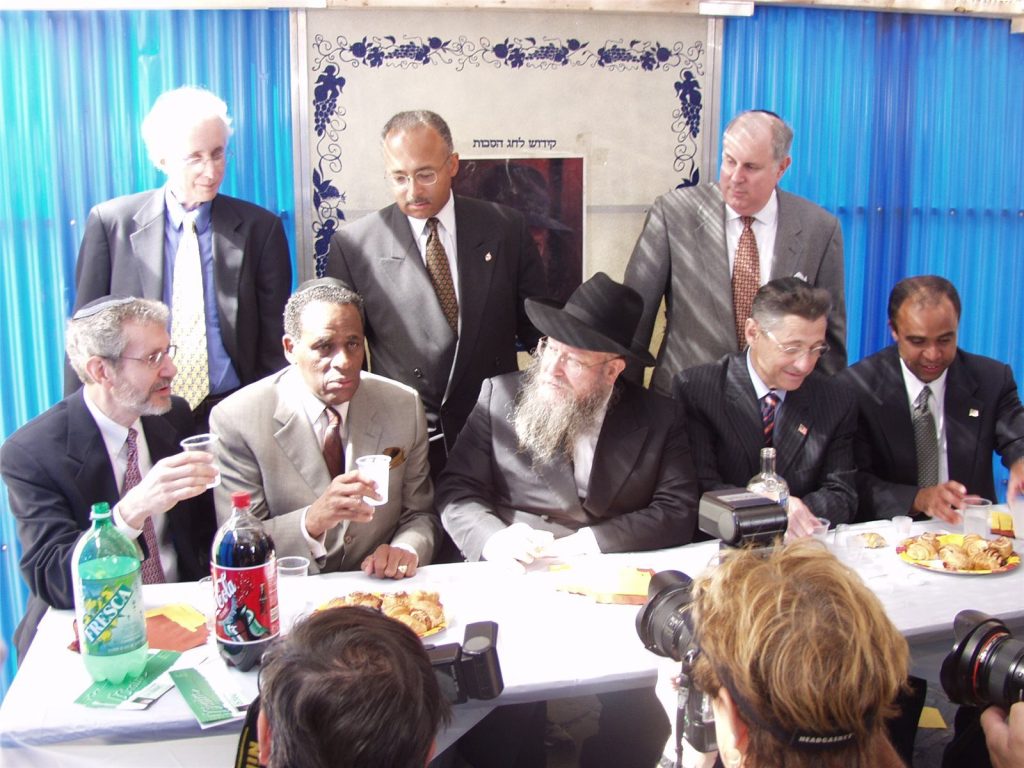
Mayors, governors and many public figures attended this event, which brought the light of Chanuka to millions of people around the world. R’ Butman was pleased to say, “This menorah in miniature was on the Rebbe’s desk and the Rebbe personally approved the design.”
The first year it was lit, Rebbetzin Chaya Mushka asked R’ Krinsky to take her to Manhattan to see the menorah and upon seeing it, in the heart of Manhattan, she marveled and said, “Now I see that my husband’s work is accepted in the world.” When R’ Butman heard this, he connected it to the purpose of the seventh generation, to bring the Shechina down to this lowly world.
[On one of R’ Butman’s visits to the Rebbetzin, she said to him, “We are pleased with your work,” and from the fact that she said this in the plural, R’ Butman understood that the Rebbe and the Rebbetzin were pleased with his work. On another occasion, she asked him details about a certain project and since it was something that was not made public, he realized that the Rebbe told her in detail about the project and she really appreciated that.]
One year, R’ Chodakov called him and asked who would be lighting the menorah. R’ Butman mentioned the names of the people who were going to light like the mayor, the attorney general, senators, etc. Then, R’ Chodakov asked him, “What about Bob Abrams, is he going to light?” At that time, Bob Abrams was the borough president of the Bronx.
When R’ Butman said that had not been his plan, R’ Chodakov declared: Bob Abrams needs to light the menorah. From his tone, R’ Butman gathered that this was the Rebbe’s request and so, of course, he did it. He invited Mr. Abrams who came and lit the menorah. Some years later, Abrams ran for attorney general of New York State and upon being elected, he came and lit the menorah again.
A short while later, someone sent a letter to the Rebbe, asking why he told his Chassidim to light the menorah in public places when this went against American law which separates church and state. The Rebbe responded in a most original way: How can you say it’s against the law when the attorney general of New York State, Mr. Bob Abrams, who represents the law, personally lit the menorah!
When R’ Butman saw this letter, he understood the reason for the Rebbe’s insistence on inviting Bob Abrams to light the menorah.
* * *
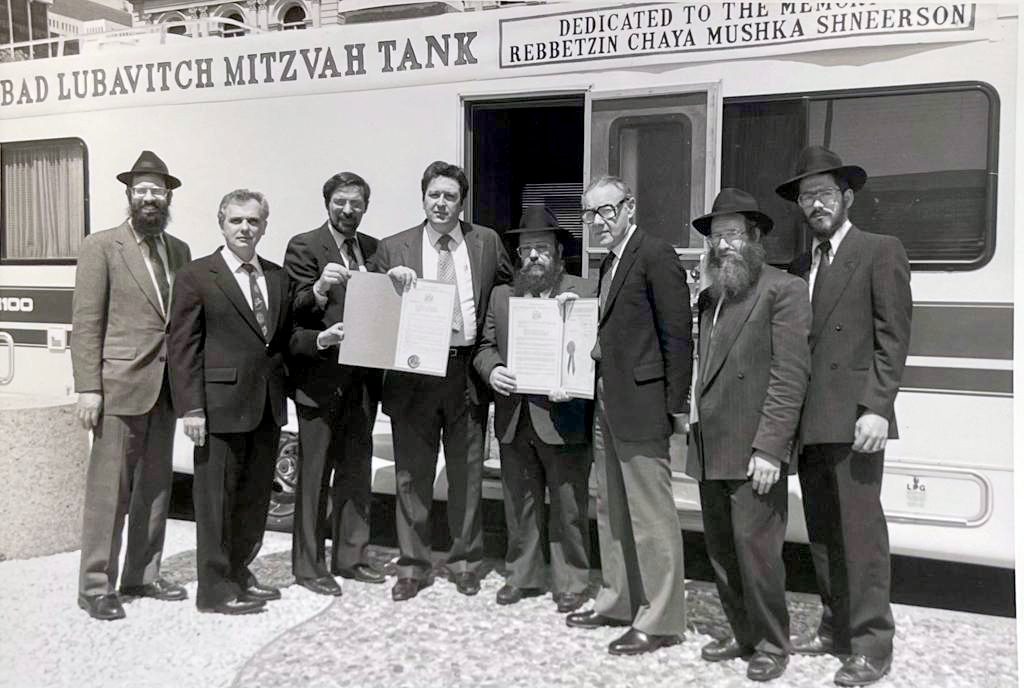
Every year, around 11 Nissan and Pesach, R’ Butman would arrange an impressive event with government figures of the state of New York in the state capital, Albany. He would go with a distinguished delegation, usually with Rabbi Dovid Raskin and the shliach in Albany, Rabbi Yisrael Rubin. At this event, the governor and members of the two houses of legislature would sign on an Education Day declaration in honor of the Rebbe. This brought the Rebbe’s messages to the highest places in the American government.
R’ Butman was also very active in Mivtza Matza, giving out shemura matza to public figures and Jewish leaders in New York and beyond. This wasn’t just about giving out matza but an opportunity to draw many Jews close to Judaism and Chassidus.
Every year, R’ Butman also provided matza for all the senior Israeli representatives in New York like the consul general, member of the security and economic delegations, the heads of Israel Bonds, etc. along with outreach to public figures and businessmen in New York. He was in touch with many of them and aside from fundraising for Tzach on an impressive scale, he was mekarev them to Yiddishkeit and Chassidus.
Multifaceted Personality
R’ Butman was a multifaceted personality who combined many, varied traits. He was a Chassid, mekushar and battel to the Rebbe, a true student of Tomchei Tmimim and a “Chassidishe Yid” in the full sense of the term. He possessed a big heart and a broad mind, as well as a generous portion of expansiveness, initiative and drive.
He was gifted with a variety of talents, a seamless writer and an excellent speaker, and he had rare skills of organization and implementation. He was a pleasure to chat with, friendly towards all from big to small, an insightful man with much life wisdom, such that many consulted him for his sage advice. During the shiva, the family found out about many acts of kindness with which he was discreetly involved.
Above all else, he was a yerei shomayim suffused with Chassidus, a baal tefilla and a baal menagen whose davening and singing of niggunim stirred hearts. After Gimmel Tammuz he also became a baal tefilla during the Yomim Noraim in 770 in the Rebbe’s minyan.
One of R’ Butman’s outstanding traits was his power of oratory. He was known as “a mouth that gives forth pearls,” with a rare ability to adjust the content and style of his speech to his audience. Whether he spoke in rich Yiddish to a frum crowd at Simchas Beis HaShoeiva or spoke in superlative English to donors and businessmen, he always managed to keep his audience riveted and conveyed a Chassidic message in a deep, convincing way.
At Tzach dinners and on festive occasions, when the crowd was of another sort, he would stir the crowd with impressive speeches given in excellent English. At more ‘heimish’ events, like the annual melava malka of the organization of descendants of the Alter Rebbe, of which he was the director, or at Chassidishe farbrengens of Tzach on special days, he would speak in authentic Lubavitch style.
R’ Butman was also a sought after subject of interviews in the media in New York and beyond. He would convey the teachings of the Rebbe and the messages of Chabad in a dignified and inspirational manner.
Boundless Energy
Despite his advanced age, R’ Butman preserved his youthfulness until his final days. As the Rebbe said, the concepts of “old” and “young” are not based on the “passport,” in other words, on your date of birth on official documents, but are matters of the spirit.
Indeed, all his life, even recently, R’ Butman belonged to “Chabad Youth.” The energy, enthusiasm, fervor, eye on the goal and the readiness to act with indefatigable devotion, traits that are characteristic to young people, were prominent elements of his personality.
As a Chabad representative, he would often bring elected officials to the Rebbe for blessings and advice. In one case, in 5750, he brought Senator Daniel Patrick Moynihan to the Rebbe. The senator expected the Rebbe to make requests on behalf of the Jewish community or for support of policies that would help them. Instead of that, the Rebbe asked him to help the Chinese-American community in Chinatown whom the Rebbe said were missing out on benefiting from government programs due to their reserved natures.
Afterward, Moynihan said how amazed he was that a religious leader looked out for a community other than his own. He asked why this was so and R’ Butman said, it’s because the Rebbe cares about everyone.
United Jewish Appeal
R’ Butman cultivated close relationships with members of the United Jewish Appeal (UJA). He often brought them to the Rebbe whether to receive a bracha before trips to Eretz Yisrael or on other occasions.
One year, R’ Butman received dollars for tzedaka for all participants in the mission. During the trip they flew to Eilat and while landing, the pilot noticed at the last minute that the runway was very short and he had to use the emergency brakes. Many passengers who were not buckled in, flew off their seats and it was a miracle that nobody was injured. R’ Butman told them that this was because of the dollars for tzedaka from the Rebbe.
In a report that he sent to the Rebbe after the trip, he wrote this and the Rebbe underlined the part where he wrote that everyone was saved because of the dollars from the Rebbe for tzedaka.
On another trip to Eretz Yisrael, before takeoff, R’ Butman wrote to the Rebbe that he was sitting on the plane and feeling that the Rebbe was traveling with him. The Rebbe underlined this to express his agreement.
The Rebbe’s Question: Nu?
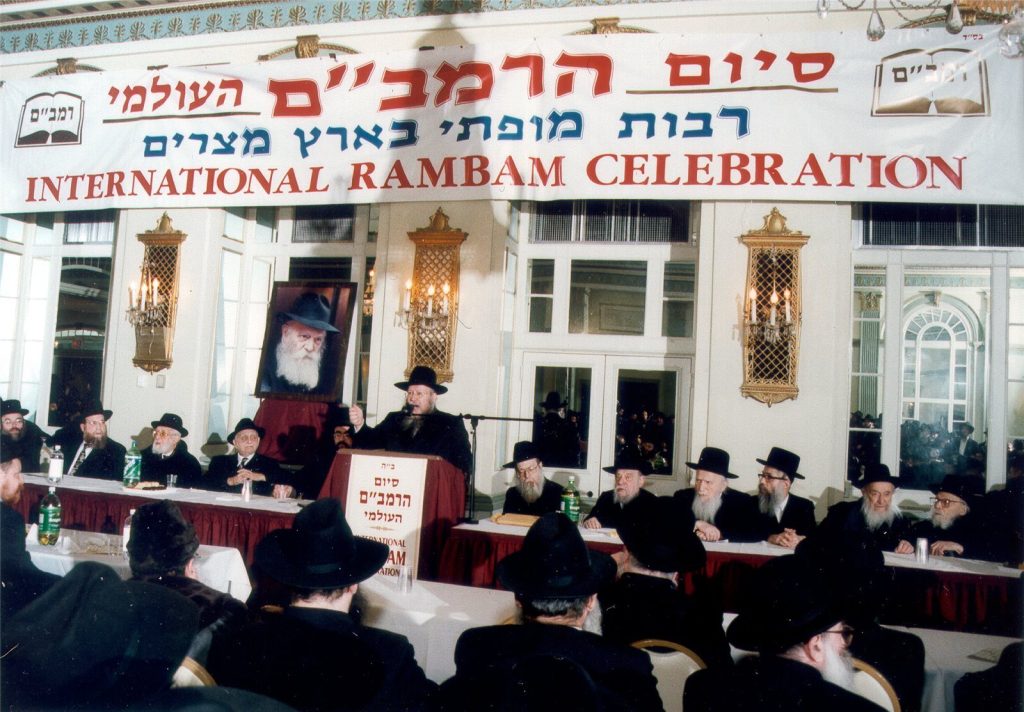
The Siyum HaRambam is a chapter of its own in the lifework of R’ Butman. Every year, at the conclusion of the daily study cycle of Rambam, as the Rebbe enacted, for the three-chapters-a-day cycle and the Sefer HaMitzvos, R’ Butman arranged an “International Rambam Celebration.”
The event is attended, cycle after cycle, by thousands of those who learn and complete the Rambam, and is honored with the presence of Admorim, Rabbanim and Roshei Yeshivos from all walks of Yiddishkeit in the greater New York area. This was run for forty years by R’ Butman who had the burden of organizing it, advertising, as well as producing and managing it. This surely contributes to the strengthening of the holy takana of the Rebbe.
In 5749, after that year’s international siyum, which was conducted with all due pomp, R’ Butman was called to the Rebbe that winter. At this time, after the passing of the Rebbetzin, the Rebbe was staying at his home on President Street. It was there that the Rebbe assigned R’ Butman the task of publishing an album of divrei Torah that were said at the main siyum events, along with pictures and graphics, with special prominence for the event in New York.
The Rebbe even stated a date by when the album should be completed, Purim Katan of that year. In other words, in seven weeks. That would seem to have been impossible, but an order from the Rebbe confers the power to do even the impossible. A Chassid and devoted askan such as R’ Butman didn’t hesitate for a moment to execute the order he was handed. He quickly gathered an editorial team who threw themselves into the work, day and night. He spoke with an advertising agency, hired teams of professionals for typing, design, printing, and binding on the highest level. At the same time, he spoke with wealthy individuals to raise the considerable funds needed for a quality product.
Purim Katan of 5749 was on a Sunday. On Friday, 12 Adar I, the Rebbe wrote a note to R’ Butman which said, “Nu?”
R’ Butman was happy that he had completed the assignment and he told the secretary who gave him the note that the albums were on their way from the binder and that one would be given to the Rebbe at “dollars” on Sunday, Purim Katan. Before then, R’ Butman managed to have one album bound in expensive leather for the Rebbe.
R’ Butman gave the album to the Rebbe as the editorial team, donors and members of the committee passed by the Rebbe. One could see that the Rebbe was pleased. As people remember well, the Rebbe even asked whether the album had a ribbon bookmark and was happy to hear that it did.
It was a rare occurrence, in which the Rebbe expressed his confidence in R’ Butman’s abilities and talents.
Dedicated To Bringing Moshiach
Among all of R’ Butman many activities, what is particularly memorable is his deep involvement in activities to bring Moshiach. On 3 Iyar 5751, a few days after the alarming sicha of Chof-Ches Nissan, R’ Butman was chosen to lead the “Matteh HaOlami L’Havoas HaMoshiach.”
“It was an enormous zechus,” said R’ Butman in an interview with Beis Moshiach, “but also a very great responsibility. We felt that the Rebbe was expecting us to work full force to bring the Geula.”
The Matteh devised many original, daring initiatives.
“All along the way, we got nonstop encouragement from the Rebbe. On every letter, the Rebbe responded with a bracha. When we gave the Rebbe material that we published, the Rebbe responded with yashar koach and said he would take it with him to the Ohel.”
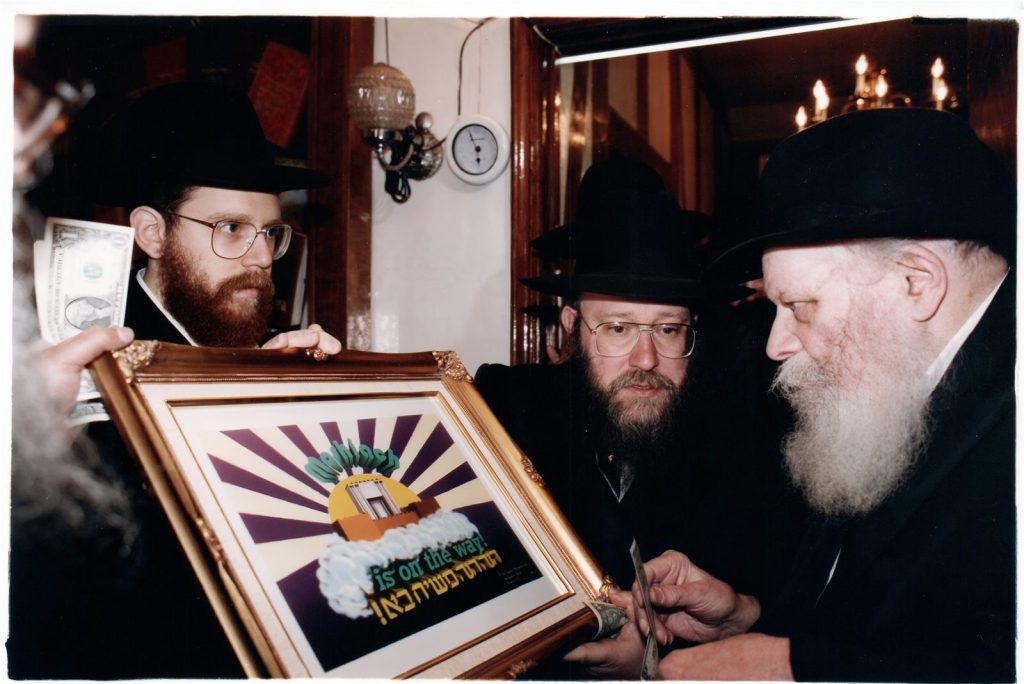
One of initiatives was printing T-shirts that said, “Moshiach Is On The Way.” When they showed one to the Rebbe, he asked how many were made. “We told the Rebbe that 2000 were printed, and the Rebbe said he would take one ‘and that will leave you with 1999.’” He even added in Yiddish, thank you for the T-shirts.
“At the beginning of Adar 5752, in reaction to our report, the Rebbe added, ‘Shira v’zimra shishim yom’ (song and melody for sixty days). At first, we didn’t fully understand this. Then the Rebbe spoke about it the following Shabbos. Since then, every year, we arranged simcha and dancing in 770 in the month of Adar.”
The high point of the Matteh’s work was arranging the coronation event on Yud Shevat 5754. “It was a keystone event,” said R’ Butman emotionally. “We broadcast the Rebbe encouraging the singing of ‘Yechi’ via satellite to the world. It was a moving sight, the Rebbe was on the porch for eight minutes, much longer than usual, and he encouraged the singing intensively.”
Despite initial opposition, R’ Butman remained firm. “We knew that this is what the Rebbe wanted. When we got his explicit permission, everything changed. Suddenly, rabbanim from all over the world joined us.”
The event got enormous exposure. “There were over twenty representatives from the major television stations. By divine providence, it was broadcast before the Superbowl. Tens of millions of people watched the Rebbe MH”M.”
R’ Butman considers this event a turning point. “After that, the topic of Moshiach was out there. We began to see massive activity everywhere. For example, Tzeirei Chabad in Eretz Yisrael disseminated explanatory material about the Rebbe as Moshiach.”
R’ Butman’s devotion to spreading the Besuras HaGeula was a perfect example of his deep hiskashrus to the Rebbe and the shlichus given to him. It demonstrates how he translated the Rebbe’s instructions into action while dealing with challenges and obstacles, and with deep emuna in the goal.
At one of the kinusim in 770, R’ Butman suggested that since in the tefilla, “shomeia tefilla” we can make personal requests, every Chassid should ask, “Yechi Adoneinu Moreinu V’Rabeinu Melech HaMoshiach L’Olam Va’ed,”which he himself did.
In his final days, when his strength ebbed and his sons davened with him, there were sections that he said out loud and with a special chayus, the pesukim for the Rebbe’s name that are said at the end of Shemone Esrei and “Yechi Adoneinu.”
R’ Butman spoke fervently about Moshiach and always believed and anticipated the moment of the hisgalus when he would see the Rebbe and be able to stand there as one of the Chassidim, ready for the next assignment. With his passing, a true Chassid was lost, whose entire life was one chain of mesirus nefesh and deep hiskashrus to the Rebbe.
R’ Butman is survived by his esteemed wife, sons and daughters and grandchildren who go in his ways. His passing is a great and painful loss to his family, Tzach, the shluchim in the greater New York area, Chabad Chassidim, and many Jews of all backgrounds who came in contact with him over the years and benefited from his many and varied activities..
Beis Moshiach #1422 • pp. 10-19
© 2026 Beis Moshiach Magazine. All rights reserved.
This article originally appeared in Beis Moshiach #1422. You are welcome to share it with friends and family by email or in print, provided that you do not change, add to or omit any part of it, you credit the author and Beis Moshiach, and you include a link to archive.bmoshiach.org (written out in full in printed copies).
To republish this article in a newspaper, magazine, book or website, please request permission in advance at [email protected].